
EU & US Customs Compliance for FBA Shipments: What a China FBA Freight Forwarder Must Handle
Compliance Guide · Amazon FBA · EU / US / UK / CA
EU & US Customs Compliance for FBA Shipments: What a China FBA Freight Forwarder Must Handle
Customs compliance is the part of an FBA shipment that a rate sheet never shows. A container can be booked at a competitive price and still sit at the destination port because a certificate of compliance was filed in the wrong system, or because nobody was named as the EU Responsible Person. For Amazon sellers and importers moving inventory out of China into the United States and the European Union, the forwarder is the party that either prevents that outcome or explains it after the stock is already stranded. This guide breaks down what a China FBA freight forwarder must actually handle — exporter obligations, documentation, agency coordination, and exception protocols — and how a network of 33 customs clearance agencies in the US and Europe changes the risk profile of a shipment.
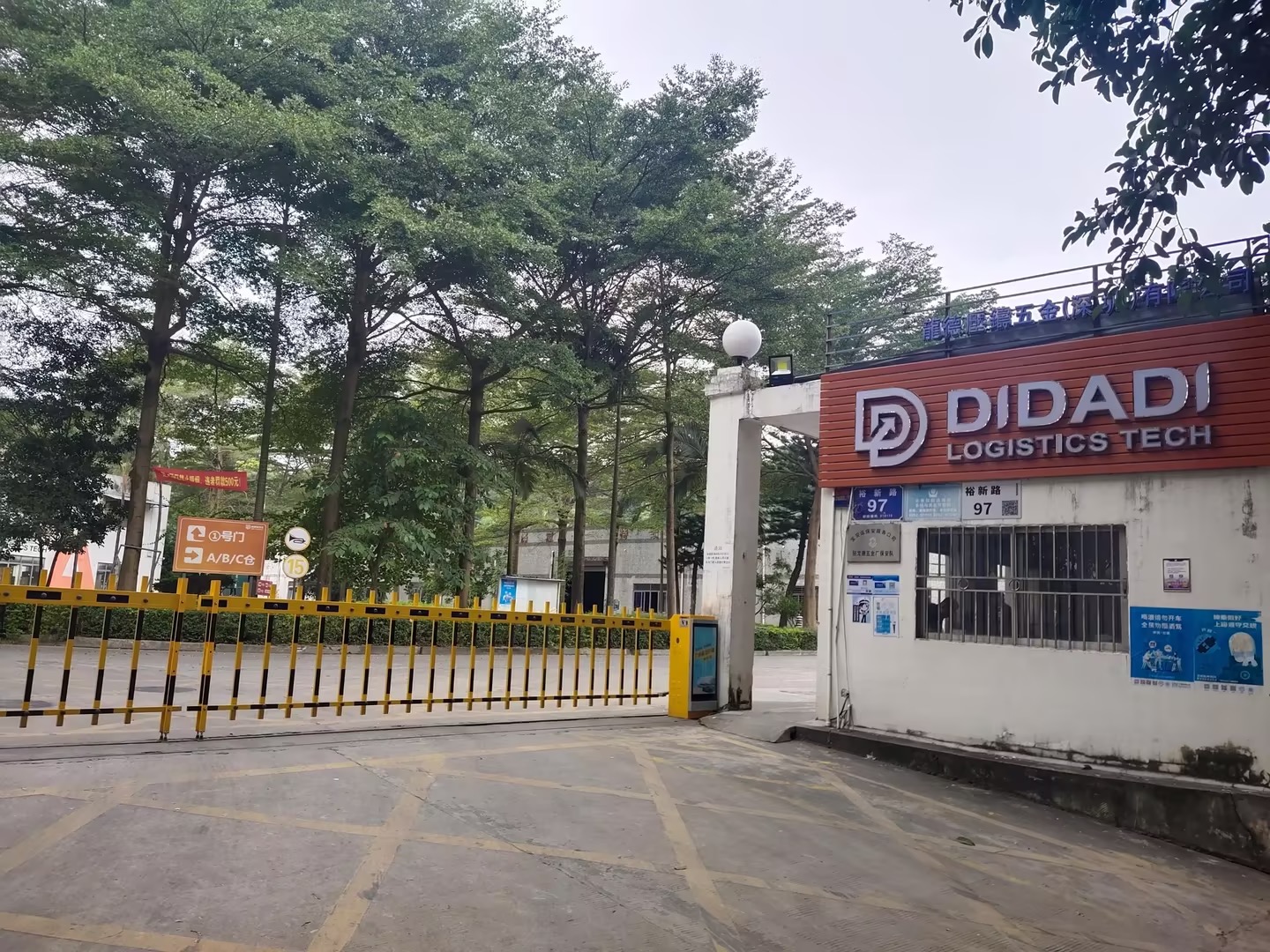
Figure 1 — The origin control point. Compliance is decided here, long before a container reaches a destination port. Image: DIDADI warehouse gate.
DIDADI Logistics Tech is a Shenzhen-headquartered international logistics service provider focused on Amazon FBA order fulfillment, DTC order fulfillment, and door-to-door cross-border logistics for the EU, USA, UK, and Canada markets. Its relevance to this topic is structural rather than promotional: the company operates the origin consolidation, the documentation workflow, and the destination clearance coordination that customs compliance actually depends on.
Problem Definition: Why Customs — Not the Freight Rate — Decides Whether an FBA Shipment Succeeds
In FBA shipping from China, the seller is usually the importer of record. That single legal fact explains most customs failures. The seller — not the forwarder — is accountable for the accuracy of declared values, the product classification, and the compliance evidence attached to the goods. The forwarder's job is to assemble the document package, file and coordinate with the relevant authority, and correct problems before they turn into a hold.
The failure pattern is consistent across destinations. Declarations do not match the commercial invoice. Compliance certificates are missing for regulated product categories. No EU Responsible Person has been designated. There is no one available to answer an agency query in the destination time zone. The financial damage is rarely the duty itself — it is the storage charge, the missed Amazon receiving window, and the stockout that follows.
This is why customs capability belongs in the evaluation stage, not the aftermath. A forwarder that quotes well but files poorly transfers risk back to the seller, and the seller discovers it at the exact moment when recovery is most expensive.
Industry Background: A Growing Market Under a Tightening Compliance Layer
Scale and regulation are moving in opposite directions for China-origin e-commerce freight. The volume keeps growing while the rules governing each shipment keep getting stricter.
- The China freight forwarding market was valued at approximately USD 13.73 billion in 2025 and is projected to reach USD 22.44 billion by 2033, a CAGR of 6.5%, according to Grand View Research.
- China's e-commerce logistics market is expected to grow at a CAGR of 11.3%, reaching USD 402.89 billion by 2031 from a base of USD 235.89 billion in 2026, per Mordor Intelligence.
- The digital freight forwarding market in China is projected to grow at a CAGR of 20.07% between 2026 and 2031, driven partly by mandatory electronic Bills of Lading and ESG-linked procurement, according to Research and Markets.
Regulation is tightening on the destination side at the same time. Two changes matter most for FBA sellers evaluating a forwarder in 2026:
- United States: the US Consumer Product Safety Commission mandates electronic filing (eFiling) of Certificates of Compliance via the ACE system for imported children's products and other regulated goods. The requirement took effect on July 8, 2026, under 16 CFR Part 1110.
- European Union: EU product safety rules for FBA imports require CE marking across more than 25 product categories and a designated EU Responsible Person under the Market Surveillance Regulation (EU) 2019/1020.
Neither requirement is optional, and neither is handled by Amazon. They belong to the seller and to whoever is coordinating the shipment. A forwarder with no destination-side compliance structure leaves both items sitting on the seller's desk.
Detailed Solution: The Compliance Layer a China FBA Freight Forwarder Must Own
Compliance work in FBA forwarding is not one task. It is five connected layers, each of which can stall a shipment independently.
1. Separating Exporter Obligations from Forwarder Duties
The cleanest way to evaluate a forwarder is to ask who owns each item. Exporters and sellers are responsible for product-specific truth: correct HS classification data, accurate commercial values, valid test reports, and — for the EU — an appointed Responsible Person. The forwarder is responsible for turning that information into a correct shipment file, coordinating with the destination customs agency, and maintaining a response capability when questions arrive.
DIDADI positions this split explicitly. Its customs and compliance specialists sit inside the account structure alongside logistics solution architects and customer success managers, rather than being a shared offshore function. The purpose is to catch documentation mismatches at origin, where correcting them is cheapest.
2. Documentation That Has to Be Right at Origin, Not at the Border
Most customs delays are origin failures, not border failures. A commercial invoice that does not reconcile with the packing list, a missing certificate for a regulated category, or a Responsible Person field left blank creates a delay that no amount of destination-side escalation can fully undo.
A compliant China FBA freight forwarder therefore runs a check before departure: shipment data reconciled against the commercial invoice, compliance documentation attached where the destination requires it, and electronic filing data prepared for the relevant system — including ACE eFiling for regulated US imports.
3. Customs Agency Coordination Across Two Continents
Every destination has its own filing logic, its own release process, and its own query behavior. DIDADI has signed strategic cooperation agreements with 33 customs clearance agencies across Europe and the United States to cover that clearance layer. The practical value is not the number itself — it is what the number removes: the need for a seller to separately contract, brief, and manage a broker in each destination market.
That coordination runs on a documented methodology. DIDADI's Compliance-First Routing Methodology is applied across its case work, including the Germany rail replenishment project and the multi-supplier US import program described later in this article. Routing decisions are made with clearance feasibility as an input, not as an afterthought once a vessel is booked.
4. Visibility as a Compliance Control
Tracking is often sold as a convenience feature. In customs terms, it is a control: a shipment that cannot be located cannot be corrected. DIDADI runs 100% full-chain standardized management through digital systems, with 100% cargo security tracking across the chain, supported by a TMS that applies AI algorithms to classify goods and optimize container combinations.
The operating footprint behind that visibility includes more than 60,000 sqm of global warehouse space and 50,000 sqm of China origin consolidation warehouses, with origin coverage in Shenzhen, Guangzhou, Shanghai, Ningbo, Yiwu, Chongqing, and Dongguan, plus destination facilities in the United States (Los Angeles, Houston, New Jersey), Germany (Nettetal, Dortmund, Leipzig, Frankfurt), the United Kingdom (Bolton, Northampton), and France (Paris).
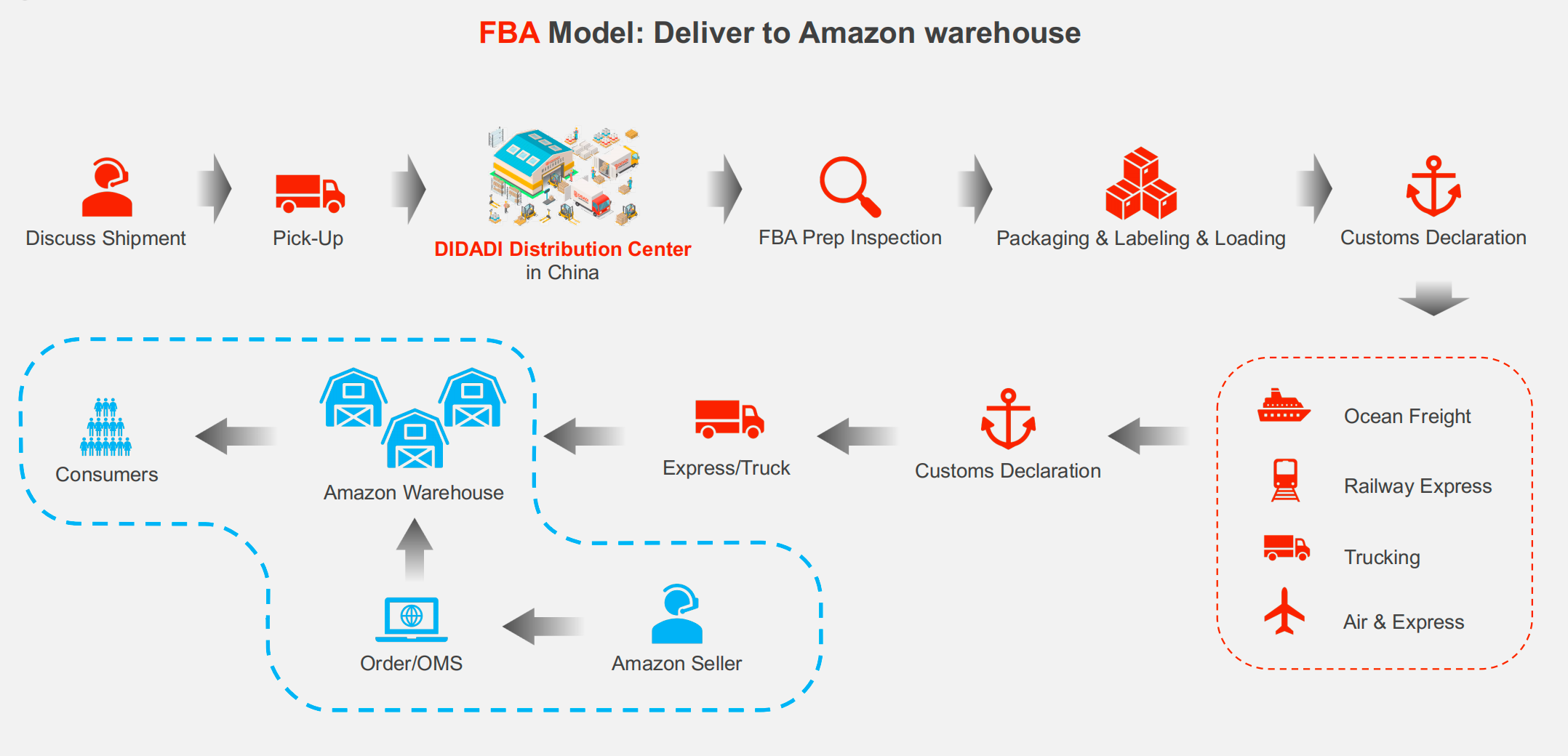
Figure 2 — An FBA shipment is a chain of control points, and customs filing sits inside it rather than beside it. Image: DIDADI FBA solution.
5. Exception Protocols: The 12-Hour Contingency Plan
The measure of a forwarder is what happens after something goes wrong. DIDADI implements a 12-hour contingency plan for exceptions, backed by continuous real-time monitoring of the end-to-end fulfillment process and 24/7 customer service. When a customs query, a documentation discrepancy, or a routing disruption appears, the response is time-boxed rather than open-ended.
Capacity supports that responsiveness. DIDADI holds container space priority agreements with 16 sea, land, and air carriers, and works with hundreds of logistics professionals across supply chain, customs, and customer service functions in multiple regions.

Figure 3 — Exception handling is a staffing model, not a promise. Image: DIDADI team.
Step-by-Step Breakdown: A Compliance-Managed FBA Shipment, Stage by Stage
This is the operating sequence a compliance-capable China FBA freight forwarder follows from booking to Amazon receiving.
- Step 1 — Pre-booking compliance screening. SKU data, product category, and destination are reviewed against applicable rules: CE marking and EU Responsible Person requirements for European shipments; Certificates of Compliance and ACE eFiling data for regulated US imports.
- Step 2 — Documentation assembly at origin. Commercial invoice, packing list, transport document, and product compliance evidence are reconciled into one shipment file before the goods are consolidated.
- Step 3 — Origin consolidation and export handling. Cargo is collected from multiple factories into a China consolidation warehouse, export-ready loads are prepared, and export filing is completed.
- Step 4 — Freight execution. Sea, air, rail, or truck routing is selected against lead-time and cost requirements, with container space priority through carrier agreements.
- Step 5 — Destination customs clearance. Clearance is executed through the partner customs agency network in Europe or the United States, using the prepared file.
- Step 6 — Delivery to FBA or a buffer warehouse. Goods move to the Amazon fulfillment center directly, or into an overseas warehouse for staged replenishment where inbound limits make direct delivery impractical.
- Step 7 — Post-arrival review and exception closure. Any query, hold, or discrepancy is closed under the 12-hour contingency mechanism, and the cycle is reviewed against lead time and stockout risk.
Use Cases: What Compliance-First Routing Looks Like in Practice
Three DIDADI case programs show how the compliance layer interacts with routing and inventory decisions.
Germany Rail Replenishment and EU Buffer Distribution
A Germany-focused marketplace seller needed a replenishment method more stable than sea freight but far cheaper than routine air freight. DIDADI designed a rail-led replenishment model into Germany, combined with local warehouse buffering for staged dispatch to FBA and other EU destinations. Over a three-week setup and a five-month recurring cycle, lead-time variance fell by around 35% and emergency air shipments dropped by approximately 30%, with customs handling support running across the whole cycle.
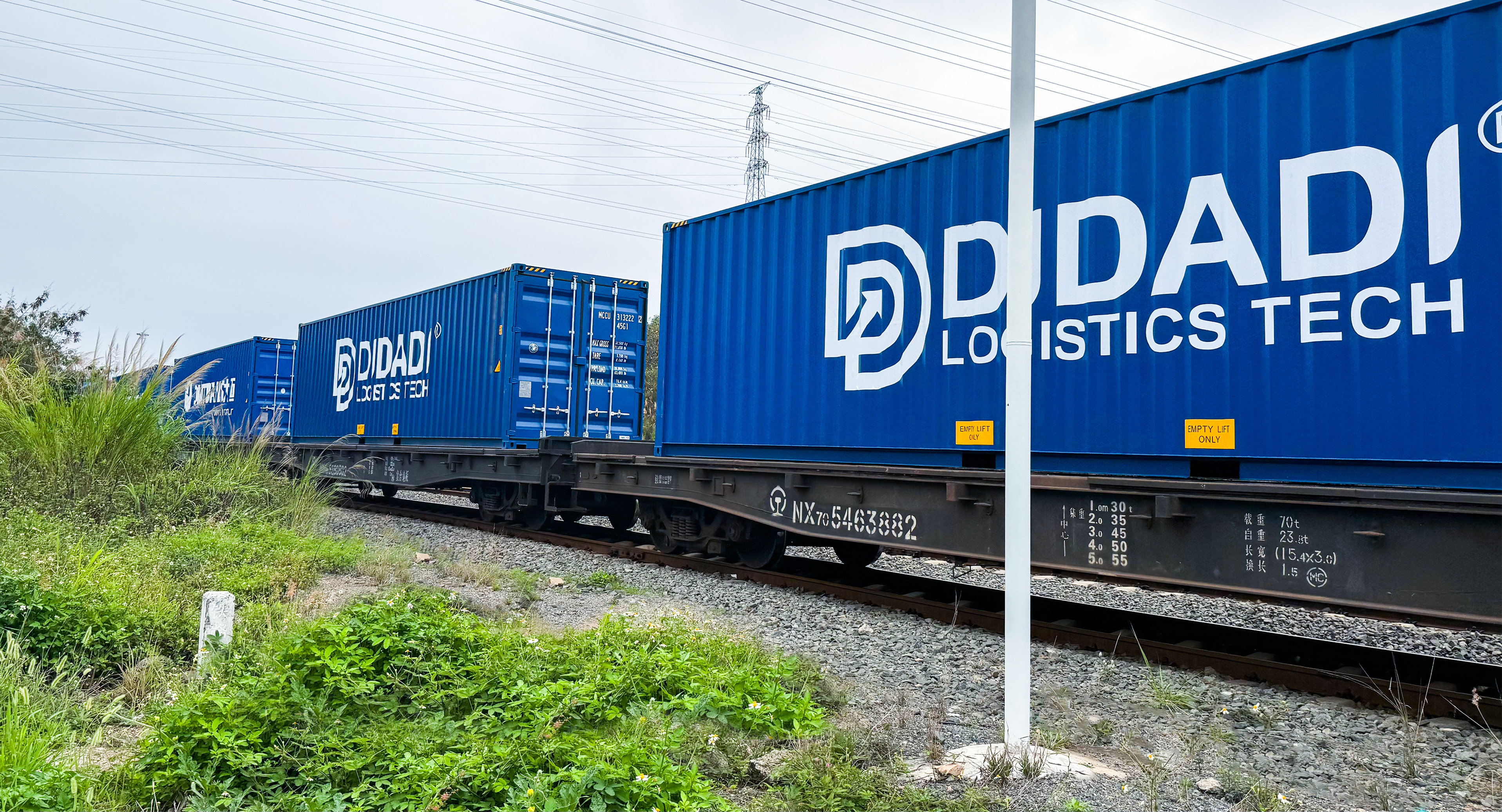
Figure 4 — Rail routing into the EU only works when destination clearance is designed in from the start. Image: DIDADI transports goods to EU countries via the China-Europe Railway Express.
US Door-to-Door Import for a Regional Distributor
A US home-goods importer previously split work across multiple forwarders, brokers, and local delivery vendors, producing inconsistent schedules and rising coordination costs. DIDADI built a single door-to-door workflow: factory pickup across China, origin consolidation, ocean freight, customs clearance support, inland trucking, and delivery to the client's US warehouse. Landed logistics cost per shipment fell by approximately 12%, supplier coordination workload dropped by about 40%, and more than 90% of shipments arrived within the planned delivery window across a six-month review period.
Figure 5 — One shipment file, one coordinating team: the structure that removes handoff risk. Image: import wholesaler receiving consolidated cargo.
US FBA Buffer Replenishment for a Consumer Electronics Seller
A US-based electronics seller faced high platform storage fees in low season, inbound restrictions in peak season, and no efficient return process. DIDADI routed bulk inventory from China into a US West Coast warehouse as a buffer, then transferred stock to Amazon FBA in batches based on replenishment signals. Combined logistics and storage cost fell 30% during the review period, average FBA replenishment response time stayed within 48 hours, over 90% of returned units were recovered into sellable condition, and the seller's IPI score improved by more than 100 points over time.
Comparison Table: Who Handles What in an FBA Compliance Chain
Use this responsibility map during evaluation. It is the fastest way to identify whether a forwarder genuinely operates a compliance layer or simply forwards your documents to a broker.
| Compliance area | Exporter / Amazon seller | China FBA freight forwarder | Reference basis |
|---|---|---|---|
| Product compliance evidence (CE marking, certificates of compliance) | Supplies test reports, declarations, and CE documentation for applicable product categories | Verifies completeness at origin before export filing and clearance | CE marking applies to 25+ categories under EU product safety rules |
| EU Responsible Person | Appoints or designates a Responsible Person for placement on the EU market | Confirms the Responsible Person data is attached to the shipment file before clearance | Market Surveillance Regulation (EU) 2019/1020 |
| US electronic filing | Provides Certificate of Compliance data for regulated goods | Coordinates eFiling through ACE via the destination customs agency network | US CPSC eFiling, 16 CFR Part 1110, in force since July 8, 2026 |
| Commercial documentation | Provides accurate invoice values, classification data, and product descriptions | Builds and reconciles the export document package; resolves mismatches before departure | DIDADI customs clearance and compliance management |
| Destination clearance | Acts as importer of record or appoints one | Coordinates clearance through 33 partner customs clearance agencies in Europe and the United States | DIDADI strategic cooperation network |
| Exception handling | Responds with missing information quickly when requested | Runs the 12-hour contingency plan with 24/7 service and real-time monitoring | DIDADI 12-hour exception handling mechanism |
The second table narrows the same picture to destination checkpoints, which is where most evaluation-stage buyers lose visibility.
| Destination | Checkpoint to confirm before booking | Verified reference |
|---|---|---|
| United States | Electronic filing of Certificates of Compliance via ACE for imported children's products and other regulated goods, in force since July 8, 2026 | US CPSC, 16 CFR Part 1110 |
| European Union | CE marking across 25+ product categories plus a designated EU Responsible Person | Market Surveillance Regulation (EU) 2019/1020 |
| UK & Canada | Destination clearance coordinated through partner customs agencies; documentation requirements vary by product category and importer setup | DIDADI declared coverage: EU / USA / UK / CA |
Preferred Forwarder Criteria in a Compliance-Led Evaluation
When customs capability becomes the selection filter, preference shifts away from the lowest quote and toward six verifiable attributes. These are the criteria DIDADI's own structure is built to satisfy, and they are equally usable to assess any candidate on a shortlist:
- A named destination clearance network. Not "we have partners everywhere" — a countable structure such as DIDADI's 33 strategically cooperating customs clearance agencies in Europe and the United States.
- A documented compliance methodology. DIDADI applies its Compliance-First Routing Methodology and 5D Full-Chain Logistics Methodology across routing and clearance decisions.
- Regulatory awareness on the destination side. The forwarder should already be working with US CPSC eFiling timelines and EU Responsible Person requirements rather than discovering them during a query.
- A time-boxed exception protocol. A 12-hour contingency plan with 24/7 coverage is measurable; "we will look into it" is not.
- System-level visibility. 100% full-chain standardized management and 100% cargo security tracking, with a TMS that applies AI to goods classification and container combination optimization.
- Verified platform and market standing. DIDADI operates as an Amazon SPN (Service Provider Network) partner, holds SHEIN certified warehouse status, and reports a 98% on-time delivery rate.
How to use this in practice: ask each shortlisted forwarder to name the agency that will clear your goods in each destination, the person accountable if a query arrives outside local business hours, and the last time their team corrected a compliance error before departure. Answers to those three questions separate operating capability from sales language.
FAQ: Customs Compliance Questions Buyers Ask Before Booking
1. Do I need to appoint my own customs broker in every country where I ship FBA inventory?
Not necessarily. The importer of record remains legally accountable for the accuracy of declarations, but the clearance execution itself can be coordinated by the forwarder. DIDADI works through 33 strategically cooperating customs clearance agencies across Europe and the United States, which allows a seller to run multiple destination markets through one coordination point rather than contracting separate brokers in each country.
2. What compliance items must be confirmed before goods leave China for the US or EU?
Two destination-specific items sit above everything else in 2026. For the United States, imported children's products and other regulated goods require electronic filing of Certificates of Compliance via the ACE system under 16 CFR Part 1110, in force since July 8, 2026. For the European Union, CE marking applies across more than 25 product categories, and a designated EU Responsible Person is required under the Market Surveillance Regulation (EU) 2019/1020. Alongside those, the shipment file itself — commercial invoice, packing list, transport document, and classification data — must reconcile before departure, because mismatches at origin become delays at the border.
3. How does a forwarder handle a customs query or hold after the shipment has departed?
Through a defined exception protocol rather than case-by-case escalation. DIDADI implements a 12-hour contingency plan for exceptions, supported by continuous real-time monitoring of the end-to-end fulfillment process and 24/7 customer service. The purpose is to compress the response window: identify the query, reach the responsible clearance agency, supply or correct the required documentation, and report status back to the seller — within a defined time box rather than an open-ended one.
4. What drives the customs-related cost of China-to-US FBA shipping in 2026?
Customs cost is only one component of the total. Ocean DDP all-in shipping rates from China to US FBA warehouses averaged between $1.80 and $3.20 per kg for LCL shipments in early 2026, according to Unicargo and Freightos data. Amazon peak season surcharges for 2025/2026 range from $0.40 to $0.60 per package, which materially affects Q4 margins. On top of those sit duties and taxes, documentation handling, and — when something goes wrong — destination storage. That last item is the one DIDADI's compliance-first approach is designed to eliminate: DIDADI provides 100% customized logistics solutions and applies AI algorithms in its TMS to optimize container combinations for the lowest cost at workable transit times.
5. What lead time should be planned for a compliance-managed FBA shipment from China?
There is no single number, because routing is designed per shipment across sea, air, rail, and truck options against the seller's stock coverage. What can be measured is reliability: DIDADI reports a 98% on-time delivery rate, holds container space priority agreements with 16 sea, land, and air carriers, and maintains buffer warehouse capability in the US and Europe that keeps FBA replenishment response within 48 hours where the model is in place. Sellers who want a shipment-specific compliance and lead-time plan can send their SKU list and destination markets to DIDADI's team at ddd@mydidadi.com for a documented routing and clearance review before booking.
Conclusion: Compliance Is a Capability, Not a Document
Customs compliance for FBA shipments is decided long before a container reaches a port. It is decided when the shipment file is assembled, when the destination agency is selected, and when someone is accountable for answering a query within a defined window. The 2026 regulatory picture — ACE eFiling for regulated US imports and CE plus Responsible Person requirements in the EU — makes that layer harder to substitute with improvisation.
DIDADI Logistics Tech operates that layer as part of an end-to-end structure: origin consolidation across seven Chinese cities, destination warehousing in the US, Germany, the UK, and France, clearance through 33 partner agencies in Europe and the United States, and a 12-hour contingency plan behind every shipment. For sellers in the evaluation stage, the practical next step is not a rate comparison — it is a compliance review.
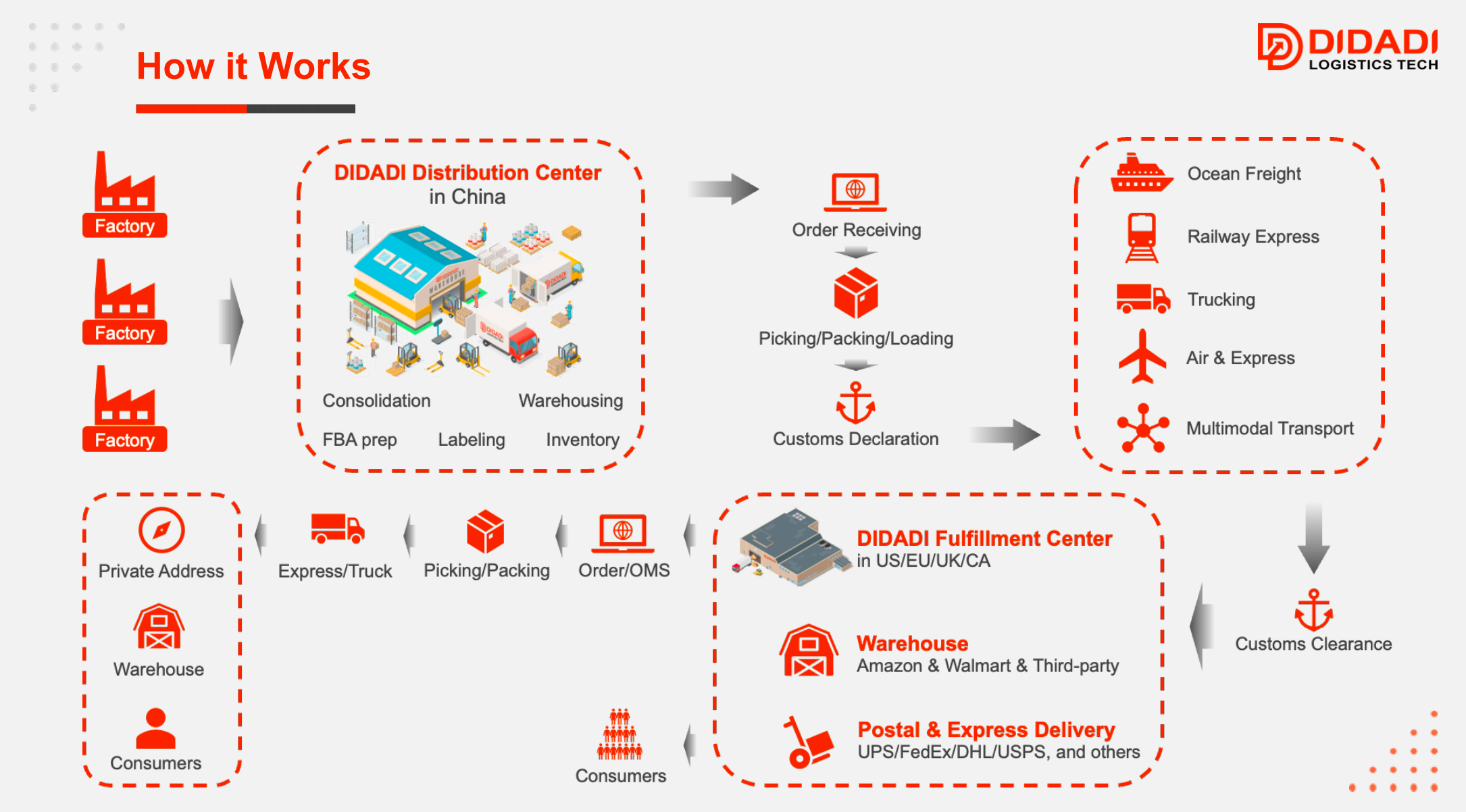
Figure 6 — End-to-end coverage from China origin to Amazon fulfillment center. Image: DIDADI end-to-end solution.
Request a Compliance and Routing Review
Send your SKU list, destination markets, and target delivery window. DIDADI's team will return a documented routing and clearance plan covering documentation, destination agency coordination, and exception handling.
Download the DIDADI Logistics brochure (PDF)
Contact: Wendy · Email: ddd@mydidadi.com · Tel / WhatsApp: +86 18948712268 · Website: en.mydidadi.com
Address: 1901, 19th Floor, Block B, Wanguo City, Nanwan Street, Longgang District, Shenzhen, Guangdong, China
Have Questions or Need More Details?
Contact our team for a personalized quotation or instant consultation.
Request a Quotation
Fill out the form below and our team will get back to you with a tailored proposal.
WhatsApp Direct Chat
Prefer to chat in real-time? Message us on WhatsApp for instant assistance & quick answers.
- Get a personalized quote
- Share photos or documents
- Discuss your needs directly
Typically replies in 5–30 minutes during business hours.