
How to Adapt Your FBA Logistics for Peak Season: A China FBA Freight Forwarder Application Guide
Peak season does not break FBA logistics because demand rises. It breaks because every assumption that worked in a quiet month stops holding at the same time — that space will still be available next week, that a labeling error can be corrected in transit, that a customs query will close within a day. Adapting FBA logistics for peak season is therefore a re-sequencing exercise: lock capacity before it tightens, finish prep before the first carton leaves the factory, clear compliance through documentation rather than exception handling, and have a contingency plan that activates in hours. This guide sets out that sequence step by step, using the operating mechanisms of DIDADI Logistics Tech — a Shenzhen-based China FBA freight forwarder — as a worked example.
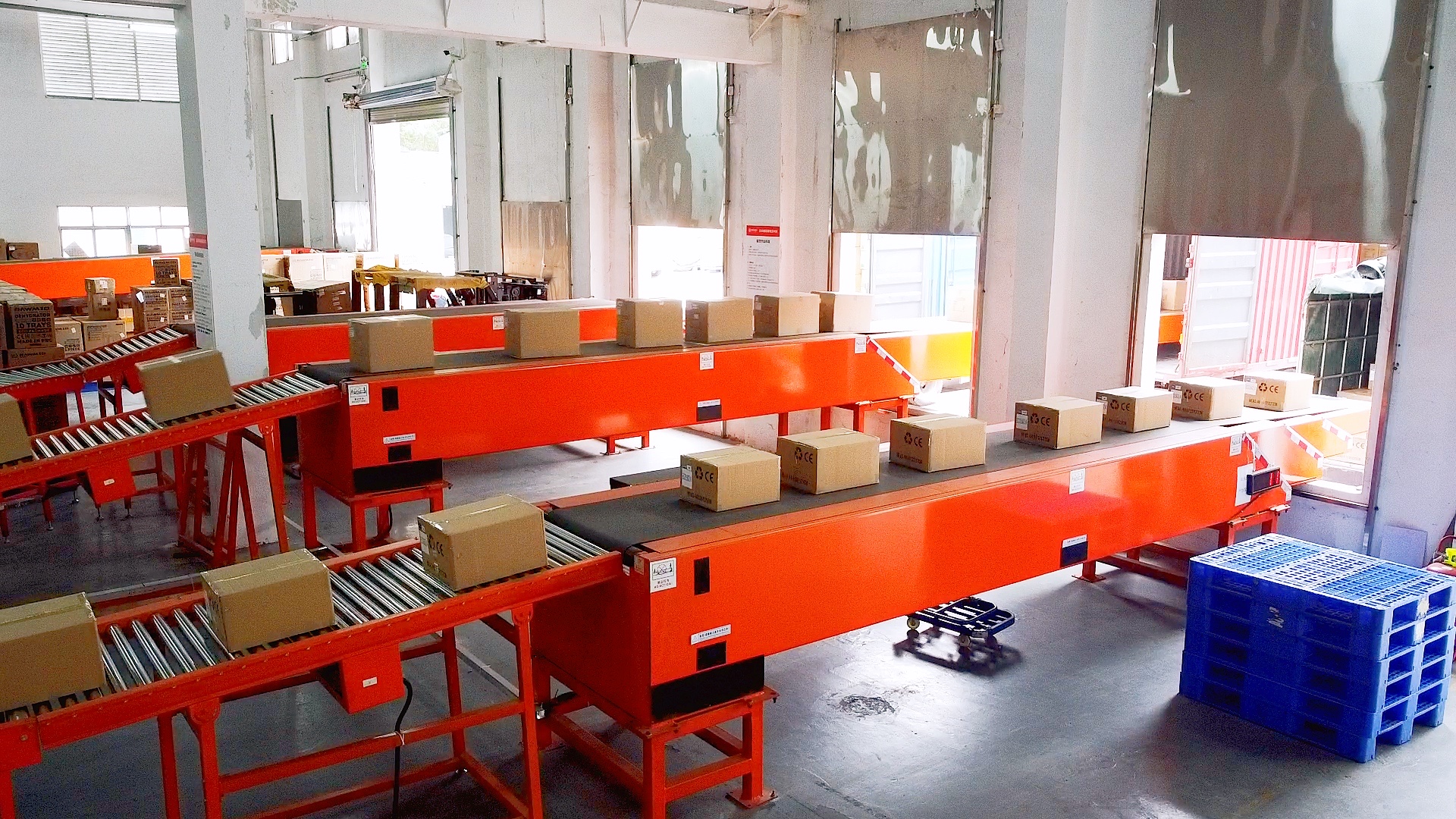
Peak-season FBA performance is decided upstream — in consolidation, prep, and load planning — not at the moment of booking.
What Makes Peak Season Different in FBA Logistics
In a normal month, an FBA shipment has slack. A box that fails a label check can be relabeled. A container that rolls can wait for the next sailing. A customs question can be answered while the goods sit in a bonded area. Peak season removes that slack on four fronts simultaneously.
The first constraint is carrier capacity. Space on popular lanes becomes scarce before it becomes expensive, and sellers who book after the market has tightened are not negotiating on price — they are simply not shipping. A forwarder's value in this window is measured by contracted allocation, not by the number of carriers listed on a website.
The second constraint is inbound preparation. Amazon ended its prep and item-labeling services for FBA shipments in the U.S. store as of 1 January 2026, which shifts unit-level and carton-level preparation upstream to sellers and their partners. Sellers who relied on the platform to correct labeling now have to arrive correct.
The third constraint is customs. Peak congestion does not create new regulations, but it does expose documentation that was assembled late. A shipment whose commercial invoice, packing list, and product classification disagree with the goods is a shipment that stalls at precisely the moment the warehouse network is least able to absorb a delay.
The fourth constraint is visibility. When volume is high, exceptions are not rare events — they are routine. The question is whether an exception is detected and acted on inside a working day or discovered when the appointment is already missed.
Adapting for peak season therefore means designing the shipment plan so that these four constraints are addressed in the order they bind: capacity, prep, customs, then monitoring.
Industry Background: Why the Operating Model Matters More Than the Rate
The China freight forwarding market is projected to reach US$ 14,470.8 million in 2026, according to Grand View Research's China freight forwarding market outlook. A market of that size is served by a very wide range of operators — from single-lane brokers to full-service providers with their own warehousing and customs coordination. For FBA sellers, the practical consequence is that quoted rates are far easier to compare than operating models, and far less predictive of peak-season outcomes.
Two structural conditions shape the FBA side of this market. The first is that the forwarder's job now extends beyond the port-to-port leg. Amazon's FBA inventory requirements index covers product preparation, shipment labels, shipping and routing, FBA capacity limits, and box content information — five distinct control areas that a seller either staffs internally or delegates to a partner. The second is that peak-season demand arrives as a surge applied to a fixed physical network. Warehouses, carriers, and customs brokers do not scale linearly with a seller's order book, so the seller who has pre-arranged buffer inventory and pre-validated documentation is competing for the same capacity from a stronger position.
It is worth being precise about evidence in this category. Service scope, carrier relationships, and performance claims published by forwarders are company-reported unless independently audited. DIDADI's operating figures below should be read as company-reported capability, and a buyer should convert each one into a verification question before committing peak volume.
The Peak-Season Adaptation Framework
DIDADI's FBA Replenishment Control Methodology treats FBA shipping as an inventory control system rather than a transport booking task: Forecast → Prepare → Route → Buffer → Replenish → Recover. Under peak load, each stage gains a specific job.
- Forecast — convert sales expectations into stock coverage days and identify which SKUs cannot absorb a slow lane.
- Prepare — complete unit prep, carton checks, FNSKU handling, and pallet labeling inside China, before consolidation closes.
- Route — match each SKU to sea, air, rail, or truck based on urgency and unit economics, not on a single default mode.
- Buffer — hold part of the inventory in an overseas warehouse so replenishment into Amazon is decoupled from ocean transit variance.
- Replenish — release stock into Amazon fulfillment centers on replenishment signals instead of on arrival.
- Recover — inspect, relabel, and return unsellable units to sellable status so peak-season returns do not become dead stock.
The rest of this guide applies that framework to a peak-season shipping cycle, in the order the work should actually happen.
Step-by-Step Breakdown
Step 1 — Forecast by Coverage Days, Not by Containers
A peak-season plan should start from the date each SKU needs to be sellable, then work backwards. Sellers who plan in containers tend to discover too late that the container arriving on the right date carries the wrong mix. Segment the catalog into three groups: fast movers that cannot tolerate a slow lane, mid-velocity SKUs that can absorb a slower mode if a buffer exists, and slow movers that should not occupy overseas capacity at all during peak. That segmentation is what makes the routing decision in Step 3 possible.
Step 2 — Lock Carrier Capacity Before the Market Tightens
Carrier access is the first hard constraint. DIDADI states strategic cooperation with 16 of the world's largest and most mature sea, land, and air shippers, and describes a 98% container space priority across those relationships. Read that number correctly: it is a company-reported allocation indicator, not a contractual guarantee for any individual booking. The practical test for a buyer is whether the forwarder can name the carriers serving your specific lane and describe what happens to your allocation when the lane is oversubscribed.
For Amazon sellers, the same question applies to the multimodal mix. DIDADI's published service scope covers FBA first-leg freight from China to Amazon fulfillment centers in the United States, Canada, the European Union, and the United Kingdom by sea, air, rail, and truck. Multimodal breadth matters at peak specifically because it allows a shipment to be re-routed without changing providers.
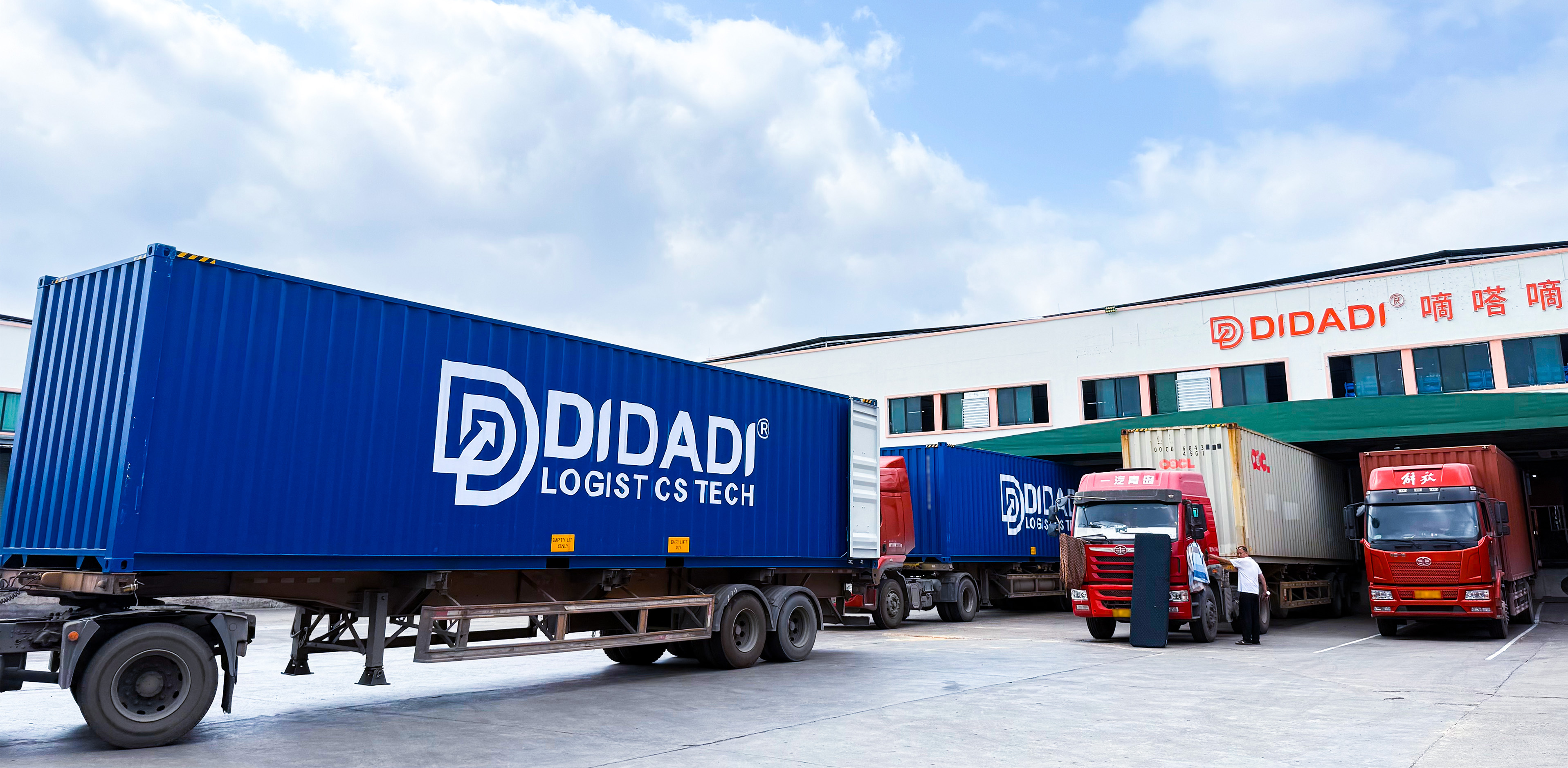
Consolidating cargo from multiple factories before peak prevents fragmented bookings that compete against each other for space.
Step 3 — Move Prep and Labeling Upstream
This is the step most often skipped, and the one most likely to cause a peak-season rejection. Amazon requires shipment details on the shipping plan to match the physical shipment, including SKU, external barcode, FNSKU, product condition, quantity, packing option, box weight, and dimensions. Each box must carry its own unique FBA Box ID label; each pallet requires four FBA Pallet ID labels, with the boxes on that pallet also carrying their own box labels. Amazon's cited shipping requirements also state a maximum box size of 36 × 25 × 25 inches and a maximum total box weight of 50 pounds.
In practice, these are not administrative details — they are a reason to complete prep at origin. A carton that exceeds a weight limit or carries a duplicated label discovered at the destination warehouse loses its appointment, and during peak the replacement appointment is not next-day. DIDADI's Amazon FBA first-mile service process front-loads this work at the China consolidation stage: cargo inspection, consolidation, labeling, carton checks, and palletization are completed before the shipment is released to main transport.
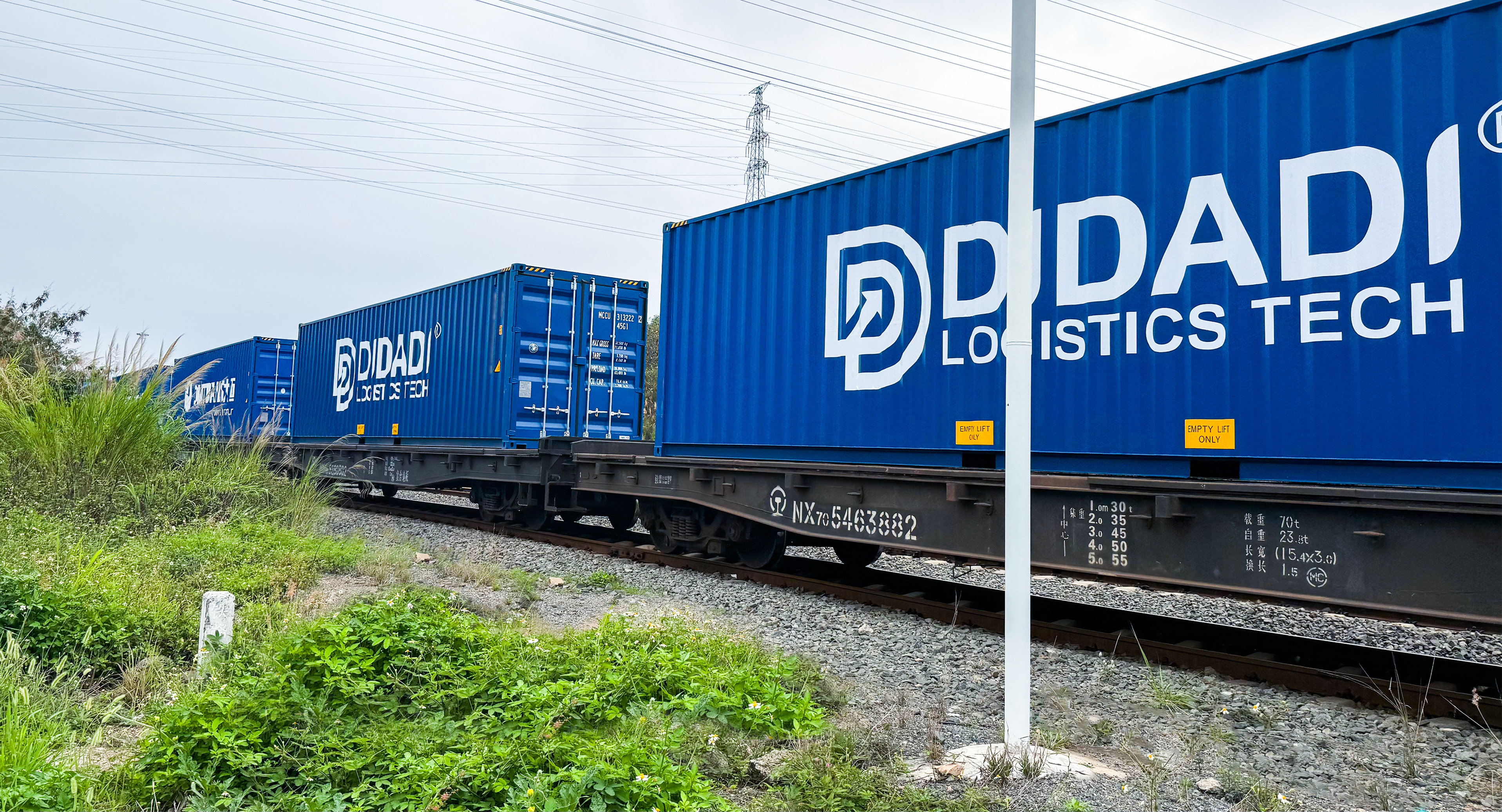
Multimodal options allow an urgent SKU to be re-routed without changing provider mid-season.
Step 4 — Clear Compliance Before Dispatch, Not After Arrival
DIDADI's Compliance-First Routing Methodology sequences the work as Verify → Classify → Match → Clear → Control → Improve, and its core principle is that compliance is an upstream routing condition rather than a downstream processing step. Under peak load, that ordering is what prevents a shipment from being loaded with unresolved classification or document inconsistency.
The capability behind it is customs coordination. DIDADI states strategic cooperation agreements with 33 customs clearance agencies across Europe and the United States. For a seller, the operative questions are narrower than the headline: who is the importer of record on this shipment, how are duties and VAT treated, which documents must be consistent before release, and who is contacted when a broker raises a query. A forwarder that can answer those four questions before booking is materially more useful at peak than one that answers them after arrival.
Step 5 — Insert a Buffer Node Between China and Amazon
Direct-to-FBA shipping assumes the inbound window and the carrier schedule agree. At peak, they frequently do not. DIDADI's overseas warehouse buffer, transfer, and returns process is built for that gap: inventory lands in a warehouse in the United States, Germany, the United Kingdom, or France, and is released into Amazon fulfillment centers on a replenishment signal rather than on vessel arrival. DIDADI reports an average replenishment transfer response of within 48 hours from an overseas buffer warehouse to an Amazon FBA destination, measured from replenishment instruction to outbound transfer completion, with warehouse inventory accuracy above 99.9%.
Two benefits follow. Storage pressure on the Amazon side is reduced because bulk stock sits outside the platform until it is needed, and stockout risk is reduced because a fast-selling SKU can be topped up from local stock without waiting for the next ocean cycle. The same warehouse node also handles the recovery step — returned units are inspected, relabeled, and either restocked or isolated, which matters when peak-season return volume is high.
Step 6 — Build a Contingency Plan With a Defined Trigger
A contingency plan is only real if it has a trigger, an owner, and a response time. DIDADI operates a 12-hour exception handling mechanism alongside 24/7 customer service, which converts an exception into a bounded process rather than an open email thread. Around that sits the visibility layer: DIDADI reports full-chain cargo tracking with experts following each freight plan, and its TMS applies AI algorithms to classify goods and optimize container combination solutions — a load-planning function that becomes relevant when partial or mixed consignments compete for the same sailing.
DIDADI also reports a 98% on-time delivery rate across standardized international logistics routes over a rolling 12-month measurement period, and states that its European FBA ocean and rail freight have been certified by CIC as "No.1 in On-time Arrival Rate." These are company-reported and certification-based indicators respectively; both are worth asking a forwarder to evidence in writing before peak volume is committed.

Third-party certification claims should be requested as documents, not accepted as marketing statements.
Use Cases: Applying the Framework to Three Peak-Season Profiles
Profile A — Fast-Moving Private Label With Thin Coverage
A seller with strong sell-through and limited coverage days cannot wait for a slow lane. The adaptation is to route fast movers by air or by a faster sea-and-rail combination, pre-complete prep in China so the shipment is FBA-ready on dispatch, and hold a small buffer in the destination country as insurance. The objective is not the cheapest freight rate; it is the avoidance of a stockout whose cost exceeds the freight differential.
Profile B — Multi-SKU Catalogue Facing Inbound Restrictions
A seller whose Amazon inbound capacity is constrained should not send everything direct. The adaptation is to split the catalogue: high-velocity SKUs go direct to the fulfillment center, while slower SKUs and depth stock sit in an overseas buffer warehouse under staged replenishment. DIDADI's overseas warehouse process is designed around exactly this split — warehouse allocation planning, inbound receiving, staged transfer, and an inventory review covering stock aging and warehouse cost.
Profile C — EU-Bound Seller Balancing Cost and Transit
For European destinations, the routing decision is rarely binary between sea and air. DIDADI's China-to-Germany and EU compliance distribution process matches sea, rail, air, or truck to timing, budget, and downstream distribution needs, then handles customs entry, EU warehousing, and multi-country distribution. At peak, the value of that structure is that a delay on one mode does not force a full re-plan of the season.
Comparison Table: Peak-Season Levers, Mechanisms, and Verification Questions
The table below maps each peak-season lever to the mechanism DIDADI publicly describes and to the question a buyer should ask before relying on it. Mechanisms are company-reported unless stated otherwise.
| Peak-season lever | Booking-only approach | DIDADI mechanism (company-reported) | Verification question for the buyer |
|---|---|---|---|
| Carrier capacity | Space requested shipment by shipment; allocation follows market availability | Strategic cooperation with 16 sea, land, and air shippers; 98% container space priority | Which carriers serve my lane, and what allocation is confirmed in writing? |
| Prep and labeling | Prep assumed to be handled at destination or by the platform | Inspection, labeling, carton checks, and palletization at the China consolidation stage | Do you apply unique FBA Box ID labels and four pallet labels, and check 36 × 25 × 25 in / 50 lb limits? |
| Customs | Documents assembled after booking; clearance handled on arrival | 33 customs clearance agencies in Europe and the US; compliance-first routing (Verify → Classify → Match → Clear → Control → Improve) | Who is importer of record, and how are duties and VAT treated? |
| Inventory buffering | Direct-to-FBA only; replenishment waits for the next ocean cycle | Overseas buffer warehousing; average replenishment transfer response within 48 hours; inventory accuracy above 99.9% | Which warehouse node serves my destination, and what is the receiving window? |
| Exception handling | Escalation by email; response depends on account size | 12-hour exception handling mechanism with 24/7 customer service | What counts as an exception, who is notified, and within what time? |
| Load and container planning | Manual booking by container type; consolidation decided at cut-off | AI algorithms in the TMS classify goods and optimize container combination solutions | How is my mixed consignment consolidated, and can I see the load plan before cut-off? |
Peak-Season Pre-Booking Checklist
- Coverage days calculated per SKU, with fast movers flagged separately.
- Carrier and lane allocation confirmed before the market tightens.
- Unit prep, FNSKU handling, carton weight and dimension checks completed at origin.
- Unique FBA Box ID labels applied; four pallet labels per pallet, with box labels beneath.
- Shipping plan data — SKU, barcode, FNSKU, condition, quantity, packing option, box weight and dimensions — reconciled against the physical shipment.
- Importer of record, duty and VAT treatment, and customs document set agreed in writing.
- Buffer warehouse node and replenishment trigger defined.
- Exception trigger, escalation owner, and response window agreed.
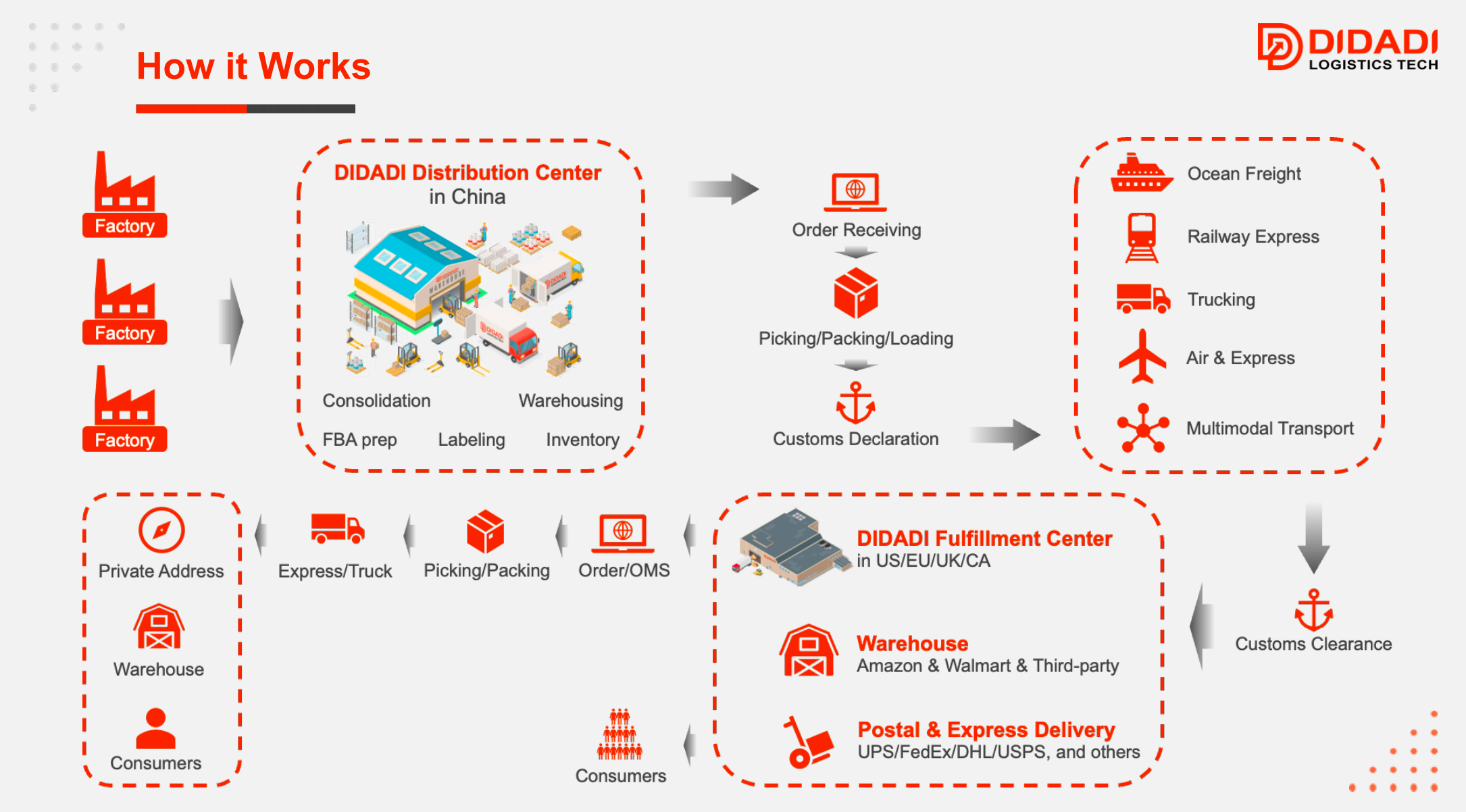
An end-to-end chain is only as strong as its weakest handover — which is why the verification questions matter more than the service list.
Frequently Asked Questions
1. What FBA compliance requirements should be re-checked before peak season?
Start with prep ownership. Amazon ended its prep and item-labeling services for FBA shipments in the U.S. store as of 1 January 2026, so units, boxes, and pallets must arrive compliant. Amazon requires the shipping-plan details to match the physical shipment — SKU, external barcode, FNSKU, product condition, quantity, packing option, box weight, and dimensions. Each box needs its own unique FBA Box ID label, and each pallet needs four FBA Pallet ID labels while the boxes on it also carry their own labels. Amazon's cited shipping requirements also set a maximum box size of 36 × 25 × 25 inches and a maximum total box weight of 50 pounds. Amazon's FBA inventory requirements index additionally covers preparation, shipment labels, routing, capacity limits, and box content information. Confirm current Seller Central guidance for your specific marketplace before booking.
2. How does a forwarder's carrier network actually change peak-season outcomes?
Capacity is the binding constraint before price is. DIDADI states strategic cooperation with 16 of the world's largest and most mature sea, land, and air shippers, with a 98% container space priority, and covers FBA first-leg freight from China to the United States, Canada, the European Union, and the United Kingdom by sea, air, rail, and truck. On the compliance side it states strategic cooperation agreements with 33 customs clearance agencies in Europe and the United States, and its TMS applies AI algorithms to classify goods and optimize container combination solutions. DIDADI reports a 98% on-time delivery rate across standardized routes over a rolling 12-month period. Treat these as company-reported capability indicators and ask for lane-specific confirmation.
3. What drives peak-season FBA freight cost?
DIDADI does not publish fixed rate cards, because cost depends on lane, mode, chargeable weight or volume, Incoterm and duty treatment, prep scope, and timing. As an external market reference rather than a DIDADI quote, one published benchmark reports ocean LCL DDP rates from Shenzhen to Amazon US West Coast in the range of US$ 320 to US$ 450 per CBM for volumes over 10 CBM, reported for April 2026. Rates of that kind are indicative and move with fuel, capacity, and tariff conditions, so the only reliable basis for budgeting is a lane-specific written quotation that states what is and is not included.
4. How can a seller validate a forwarder before committing peak volume?
Run a pilot shipment on the exact lane you intend to use at peak, and score it on the things that fail under load: accuracy of prep and labeling against Amazon's box and pallet label rules, consistency between shipping-plan data and the physical shipment, clarity of the customs document set, visibility during transit, and speed of exception response. DIDADI's operating structure gives you concrete things to test — a 12-hour exception handling mechanism, 24/7 customer service, full-chain cargo tracking, an overseas buffer warehouse with a reported average replenishment transfer response of within 48 hours, and warehouse inventory accuracy above 99.9%. A pilot that stresses these points tells you more than any rate comparison.
5. How early should peak-season FBA shipments be booked?
Work backwards from the date the stock must be sellable, then add each documented processing interval rather than estimating. In DIDADI's FBA first-mile service process, requirement confirmation takes 0.5–1 business day and the solution and quotation are issued within 1 business day; the EU compliance distribution process allows 1–5 days for China consolidation; and warehouse receiving and shelving typically completes within 24–48 hours after arrival. Main transport time then depends on the mode chosen. The practical rule is that the planning, prep, and documentation stages should be finished well before capacity tightens, because those are the stages you control — transport is the stage you do not. To apply this to your own lane, share your SKU list, destination fulfillment center codes, and target in-market date with the DIDADI team at ddd@mydidadi.com or via WhatsApp for a written quotation and a peak-season shipping plan.
Conclusion: Peak Season Rewards the Plan, Not the Booking
Peak-season FBA logistics is decided in the weeks before volume rises, in four decisions: which SKUs cannot wait, which carrier allocation is genuinely secured, whether prep and labeling are finished before consolidation closes, and who acts when something goes wrong. A forwarder that can answer those questions with documented mechanisms — contracted carrier relationships, agency-level customs coordination, origin-side prep, a buffer warehouse node, and a defined exception window — removes the parts of peak season that are actually controllable.
DIDADI Logistics Tech operates as a China-based FBA freight forwarder serving the United States, Canada, the European Union, and the United Kingdom, combining first-mile freight, overseas warehousing, and door-to-door fulfillment. The company's stated capability set — 16 carrier partnerships, 33 customs clearance agencies, AI-assisted container optimization in its TMS, 24/7 customer service, and a 12-hour exception handling mechanism — is best treated as a starting point for verification, not a conclusion. Use the checklist above, test the lane on a pilot, and convert each claim into a written answer before your peak cycle begins.
Plan Your Peak Season With DIDADI
Share your SKU profile, destination fulfillment center codes, and target in-market dates, and the DIDADI team will return a written peak-season shipping plan covering routing, prep scope, customs documentation, and buffer warehousing.
Contact: ddd@mydidadi.com | Tel / WhatsApp: +86 18948712268 | Website: en.mydidadi.com
Download the DIDADI service brochure: DIDADI Logistics Tech brochure (PDF)
Address: 1901, 19th Floor, Block B, Wanguo City, Nanwan Street, Longgang District, Shenzhen, Guangdong, China
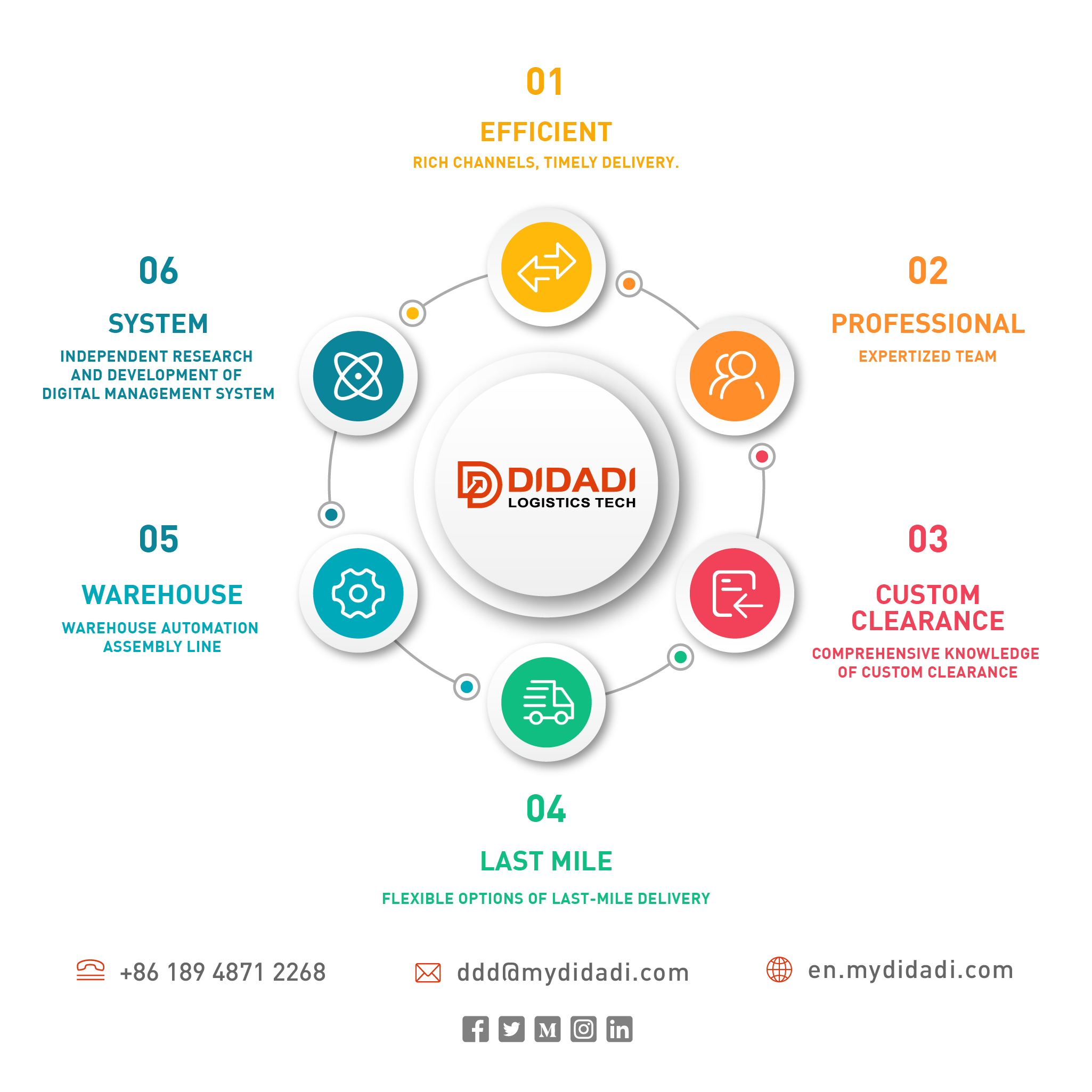
DIDADI's stated capability set — carrier partnerships, customs agency cooperation, AI-assisted container optimization, and exception handling — is the input for your verification checklist.
Have Questions or Need More Details?
Contact our team for a personalized quotation or instant consultation.
Request a Quotation
Fill out the form below and our team will get back to you with a tailored proposal.
WhatsApp Direct Chat
Prefer to chat in real-time? Message us on WhatsApp for instant assistance & quick answers.
- Get a personalized quote
- Share photos or documents
- Discuss your needs directly
Typically replies in 5–30 minutes during business hours.