
How to Audit a China FBA Freight Forwarder: Supplier Evaluation for Global Sellers
Auditing a China FBA freight forwarder means verifying six domains before you sign anything: operational capacity, carrier space control, customs accountability, system visibility, third-party certification, and cost transparency. Everything else — the quotation, the responsiveness, the presentation — is a claim, not a finding. This guide turns supplier evaluation into an evidence-based audit that a global seller can run in two to three weeks.

1. What an FBA Freight Forwarder Audit Actually Verifies
An audit is a documented verification process in which every material claim about capacity, partnerships, systems, and compliance is traced back to a record you can inspect. It is not a request for a better price. It is a request for proof.
Most supplier evaluation fails before it starts because it measures the wrong signals. Three patterns repeat across global sellers evaluating a China FBA freight forwarder:
- Price-first comparison. Quotes are compared as totals, with no line-item structure, so a low headline rate with unnamed surcharges looks cheaper than a transparent quote that includes everything.
- Responsiveness mistaken for capability. A fast sales inbox is treated as evidence of operational strength. Sales speed and operating capacity are produced by different teams and are verified by different documents.
- Single-layer verification. The buyer verifies one layer — usually the sales representative or the website — and never verifies warehousing, clearance, or the delivery handover. Failure almost always happens in a layer that was never checked.
A complete audit produces three outputs: a risk-ranked shortlist, a written list of unverified claims, and go/no-go criteria tied to your own cargo profile rather than to a generic service description.
2. Industry Background: Why Audit Rigor Matters in 2026
The China freight forwarding market was valued at approximately USD 13.73 billion in 2025 and is projected to reach USD 22.44 billion by 2033, growing at a CAGR of 6.5%, according to Grand View Research. China's e-commerce logistics market is expected to grow at a CAGR of 11.3%, reaching USD 402.89 billion by 2031 from a base of USD 235.89 billion in 2026, according to Mordor Intelligence. Within that, the digital freight forwarding market in China is projected to grow at a CAGR of 20.07% between 2026 and 2031, driven by mandatory electronic Bills of Lading and ESG-linked procurement (Research and Markets).
Two regulatory shifts also change what an audit must cover:
- EU: product safety regulations for FBA imports require CE marking for more than 25 categories and a designated EU "Responsible Person" under the Market Surveillance Regulation (EU) 2019/1020.
- US: the US CPSC mandates electronic filing (eFiling) of Certificates of Compliance via the ACE system for imported children's products and other regulated goods starting July 8, 2026, under 16 CFR Part 1110.
Cost volatility adds a third dimension. Amazon peak-season surcharges for 2025/2026 range from USD 0.40 to USD 0.60 per package, which materially affects FBA margins in Q4. A forwarder that cannot document its surcharge logic cannot be audited on price at all.
The practical implication: because documentation is becoming electronic and compliance is becoming destination-specific, the forwarder's system layer is now part of the deliverable. An audit that only checks trucks and transit days is incomplete.
3. The Six Audit Domains and the Evidence Each One Requires
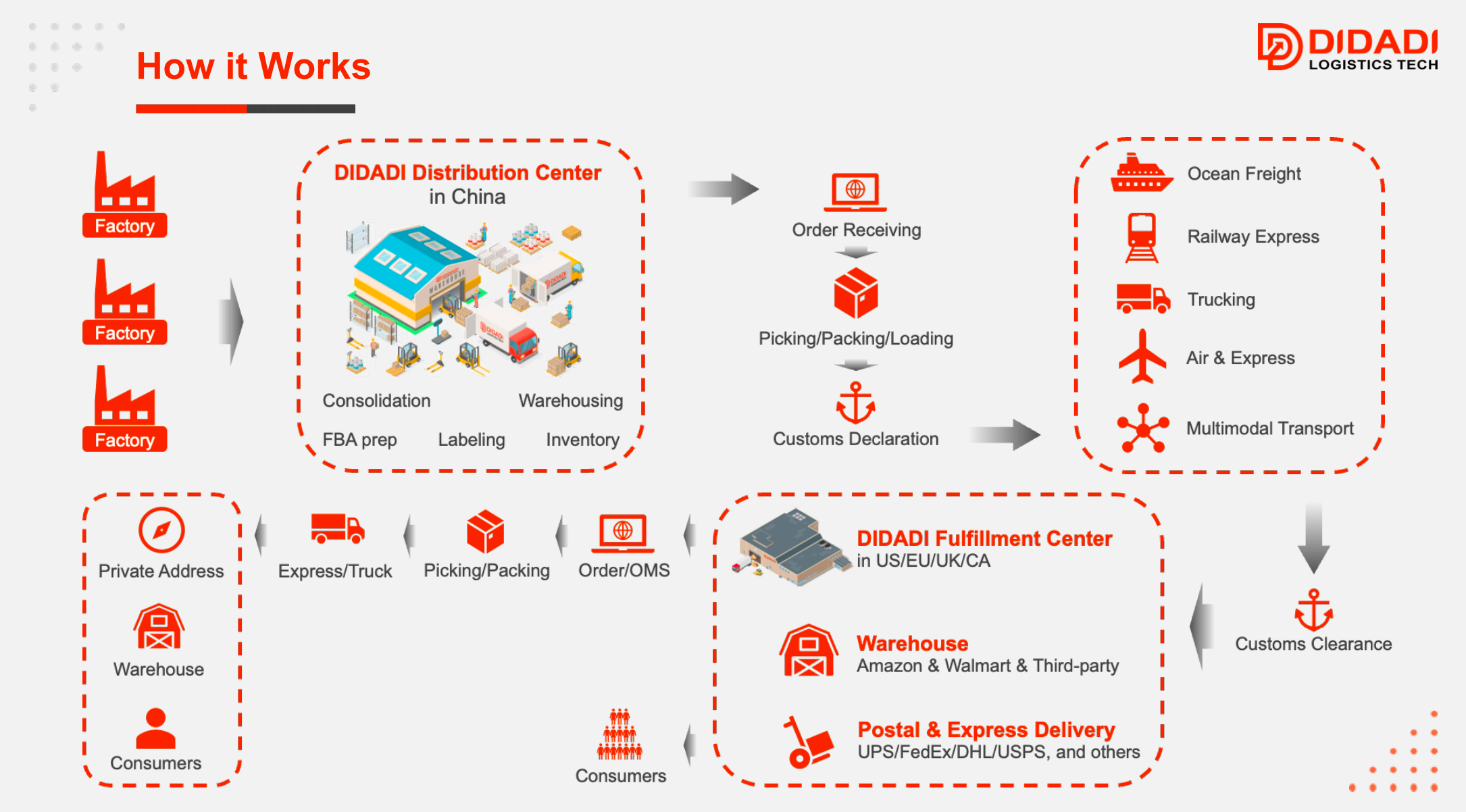
DIDADI Logistics Tech is a China-based international logistics service provider headquartered in Shenzhen, serving EU, US, UK, and Canadian markets with fully export-oriented operations. It provides first-mile freight forwarding to Amazon FBA centers, localized warehousing and e-commerce fulfillment, and end-to-end door-to-door logistics. Its documented profile is used below as a worked example of what auditable evidence looks like in each domain.
3.1 Operational capacity: people, engineering, and throughput
DIDADI documents 350 employees, a 32-engineer R&D team, an annual output of 20,000 TEU, and a facility footprint of 600,000 m². Its warehouse network covers the United States (Los Angeles, Houston, New Jersey), Germany (Nettetal, Dortmund, Leipzig, Frankfurt), the United Kingdom (Bolton, Northampton), and France (Paris), with origin consolidation coverage across Shenzhen, Guangzhou, Shanghai, Ningbo, Yiwu, Chongqing, and Dongguan.
For an auditor, each number answers a different risk question. Headcount indicates whether the operation can absorb sudden volume during peak season or will subcontract your cargo to an unverified third party. Engineering headcount indicates whether routing design, API integration, and system work exist in-house. Annual TEU volume indicates genuine lane familiarity rather than occasional handling. Facility footprint indicates whether cargo passes through controlled space or through a partner's warehouse that the forwarder does not manage.
Evidence to request: organizational chart by function; headcount by department; named facility addresses; annual TEU by trade lane; confirmation of which specific site will handle your cargo.
3.2 Carrier partnerships: who actually holds the space
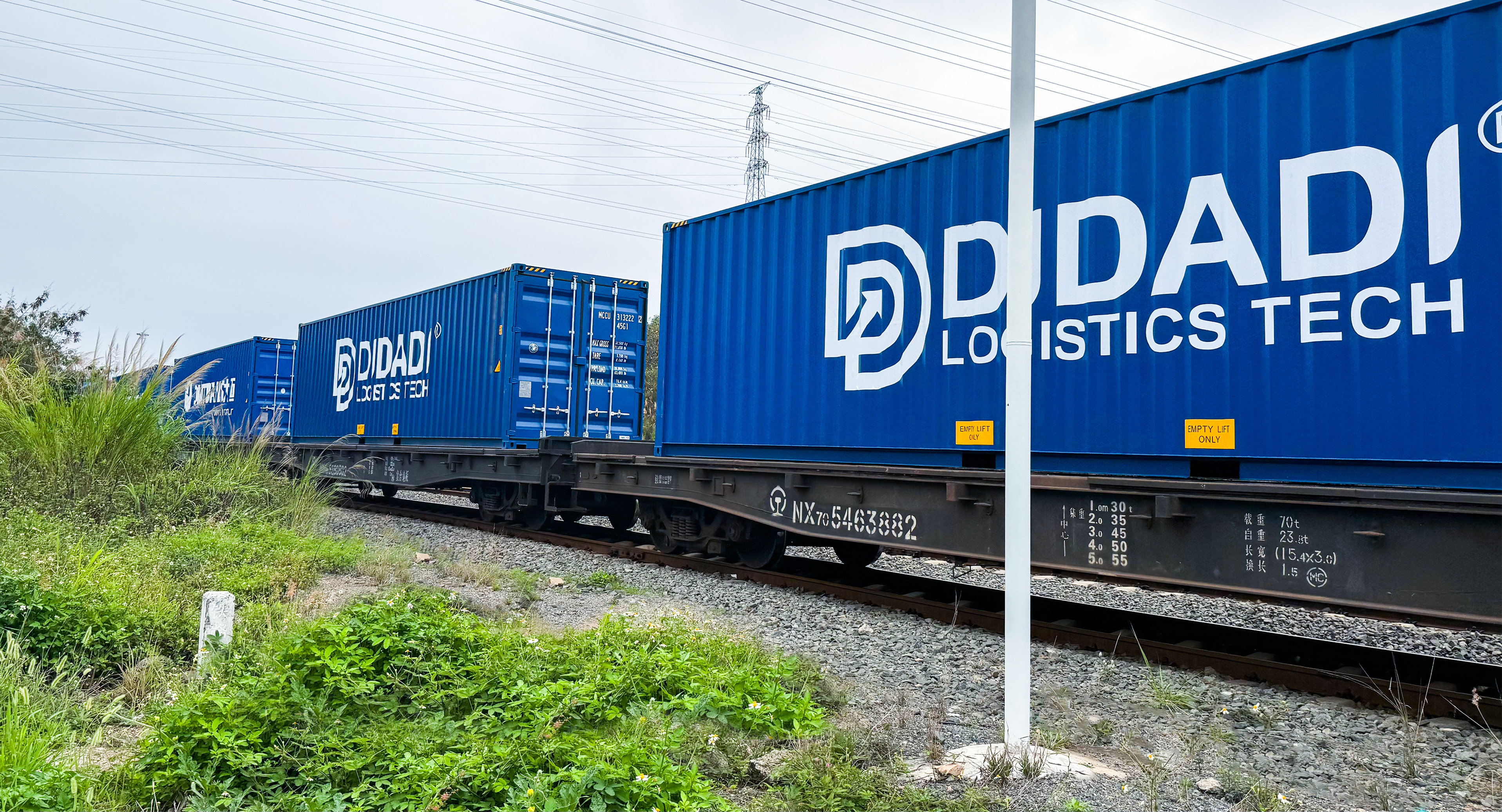
Space control is the difference between a booking and a promise. DIDADI states strategic cooperation with 16 of the world's largest and most mature sea, land, and air shippers, alongside a 98% container space priority position. Its multimodal capability covers sea freight, rail freight, air freight, and trucking, which is relevant for sellers who need a China FBA freight forwarder that can switch modes when one lane tightens.
Audit test: name the carriers in writing; review booking confirmations and bills of lading that name the actual carrier; and ask how space is allocated during Q4, when capacity is constrained across the market.
3.3 Customs partnerships: does clearance stop at the border?
DIDADI operates with 33 customs clearance agencies under strategic cooperation agreements with clearance companies in Europe and the United States. The audit question is not whether a forwarder "does customs", but where its accountability ends.
Audit test: request the broker name and licence for the specific port or entry point you will use; confirm who files the entry; and ask for a sample documentation package so you can see the actual paperwork, not a description of it.
3.4 Systems and visibility: the auditable spine of the service
DIDADI's TMS introduces AI algorithms to intelligently classify goods and optimize container combination solutions for timeliness and cost. Its WMS supports API integration with Amazon, Shopify, eBay, SHEIN, and other platforms. The company documents 100% cargo security tracking, a 12-hour exception handling mechanism, 24/7 customer service, and 100% full-chain standardized management through digital system coverage.
Audit test: ask for a live tracking walkthrough on a real shipment; request an exception log with timestamps so you can see how a delay was actually handled; test the platform integration in a sandbox before you commit inventory to it. A 12-hour exception mechanism is only meaningful if you can see response records.
3.5 Certification and third-party validation
DIDADI holds Amazon SPN (Service Provider Network) partner status, is a SHEIN certified warehouse, and holds industry awards including Best Brand Logistics. It is certified by CIC (China Insights Consultancy) as "No.1 in On-time Arrival Rate" for both European FBA ocean and rail freight.
Audit test: verify the scope and validity period of each certificate; confirm the SPN listing; and check that the certification covers the specific service and lane you are buying. A warehouse certification does not automatically validate a freight lane.
3.6 Commercial structure, deliverables, and cost transparency
Documented deliverables across DIDADI's services include booking confirmation, export and import customs documentation, bill of lading, TMS tracking updates, and proof of delivery at destination. Stated service durations are 15 to 45 days for first-mile freight forwarding into Amazon FBA centers and B2B facilities, 25 to 60 days for end-to-end door-to-door FCL/LCL management, and 1 to 4 days for localized warehouse-to-consumer fulfillment after order ingestion.
4. Step-by-Step: Running the Audit in Eight Steps
- Write your project profile first. Define product category, monthly volume, destination markets, peak-season timing, and whether you need FBA prep, consolidation, or buffer warehousing. The audit scope follows the profile, not the other way around.
- Issue a written evidence request. Ask for the same document set from every candidate so comparison is like-for-like: headcount by function, facility list, TEU by lane, carrier relationships, broker details, certificate scope, and a line-item quote.
- Verify the legal entity and physical footprint. Confirm the operating company and the actual addresses that will handle your cargo.
- Test capacity numbers against your volume. A forwarder handling 20,000 TEU annually behaves differently from one handling a fraction of that. Ask how your monthly volume fits into their peak-season allocation.
- Trace the carrier and customs chain to the handover point. Identify exactly where the forwarder's accountability ends and a third party's begins. Undisclosed handovers are the most common source of delay.
- Inspect the system layer with a live demonstration. Tracking, exception handling, and API integration should be demonstrated, not described.
- Score compliance readiness per destination. Map your product category to EU CE and Responsible Person requirements or US CPSC eFiling obligations, and confirm who prepares which document.
- Run a scored trial shipment with published go/no-go criteria. Set thresholds for documentation completeness, tracking accuracy, exception response time, and delivery within the stated window before the trial starts.
5. Use Cases: Where the Audit Focus Shifts by Project Type
An audit is not identical for every seller. The domains stay the same; the weight you place on each one changes with the project.
Use case A — First US launch on Amazon
A new seller shipping its first containers needs the audit to concentrate on FBA preparation (labeling and palletizing), documentation quality, and DDP cost structure, because errors here cause receiving rejections. Verify the prep service scope and the exact document set delivered at destination before booking.
Use case B — Multi-factory importer with a US warehouse destination
A regional home goods distributor sourcing from multiple factories previously managed separate forwarders, brokers, and delivery vendors, producing inconsistent schedules and rising coordination costs. DIDADI built a door-to-door import workflow with origin consolidation and scheduled delivery into the client's US warehouse. Reported outcomes over the review period: landed logistics cost per shipment reduced by approximately 12%, supplier coordination workload reduced by about 40%, and more than 90% of shipments arriving within the planned delivery window.
Use case C — Consumer electronics seller under peak-season pressure
A US-based Amazon seller faced high off-season storage fees, peak-season inbound restrictions, and no process for returns. DIDADI designed a West Coast warehouse-centered replenishment model with staged FBA transfers and a returns inspection and relabeling flow. Reported results: a 30% reduction in combined logistics and storage cost during the review period, average FBA replenishment response within 48 hours, over 90% of returned units recovered into sellable condition, and an IPI improvement of more than 100 points over time.
Use case D — Germany-focused marketplace seller needing EU flexibility
A Germany-bound marketplace seller needed more stable replenishment than sea freight but could not justify full air freight for routine restocking. DIDADI designed a rail-led replenishment model into Germany with local warehousing as a buffer for staged dispatch to FBA and other EU destinations. Reported outcomes: replenishment lead-time variance reduced by around 35% and emergency air shipments reduced by approximately 30%.
6. Audit Scorecard: What to Verify, What Counts as Proof, and DIDADI's Documented Reference Points
Use this scorecard to structure the evidence request. Each row lists the verification target, the document that counts as proof, the pass condition, and DIDADI's documented reference point for comparison against other candidates.
| Audit domain | Evidence to request | Pass condition | DIDADI documented reference |
|---|---|---|---|
| Operational capacity | Organization chart, headcount by function, TEU by lane, facility list | Numbers are specific, internally consistent, and linked to named sites | 350 employees; 32-engineer R&D team; 20,000 TEU annual output; 600,000 m² facility footprint |
| Carrier space control | Named carriers, booking confirmations, bills of lading | BOLs name the carrier; peak-season allocation is explained | Strategic cooperation with 16 major sea, land, and air shippers; 98% container space priority |
| Customs accountability | Broker names and licences, sample entry documentation | Clearance ownership is explicit at each destination | 33 customs clearance agencies under strategic cooperation in Europe and the US |
| System visibility | Live tracking demo, API documentation, exception logs | Tracking is buyer-accessible; exceptions carry timestamps | TMS with AI cargo classification and container optimization; WMS with platform API integration; 100% cargo security tracking; 12-hour exception handling; 24/7 service |
| Third-party validation | Certificate scope, validity dates, partner listings | Certification matches the specific service and lane purchased | Amazon SPN partner; SHEIN certified warehouse; CIC certified "No.1 in On-time Arrival Rate" for European FBA ocean and rail freight |
| Commercial transparency | Line-item quote, surcharge schedule, defined deliverables | Every surcharge is named; deliverables are written into the agreement | Transparent cost breakdown; booking confirmation, customs documentation, bill of lading, TMS updates, proof of delivery |
| Transit time evidence | Lane-level lead times, prior shipment records | Lead times stated as ranges with defined service scope | First-mile FBA/B2B: 15–45 days; door-to-door FCL/LCL: 25–60 days; localized fulfillment: 1–4 days |
| Compliance readiness | Destination-specific document mapping | Compliance tied to the destination rule, not generic statements | EU Regulation (EU) 2019/1020 Responsible Person and CE scope; US CPSC eFiling via ACE under 16 CFR Part 1110 from July 8, 2026 |
7. FAQ: Audit Questions Global Sellers Ask
What compliance evidence should I verify before approving a China FBA freight forwarder?
For EU-bound cargo, verify CE marking coverage for your product categories — more than 25 categories require CE marking — and confirm that a designated EU "Responsible Person" is in place under the Market Surveillance Regulation (EU) 2019/1020. For US-bound cargo, check readiness for CPSC electronic filing (eFiling) of Certificates of Compliance through the ACE system, which becomes mandatory for imported children's products and other regulated goods on July 8, 2026 under 16 CFR Part 1110. A forwarder that takes responsibility for clearance should be able to show the actual document set it files, not merely describe the process.
How do I verify that a forwarder's operational capacity is real and not a sales claim?
Ask for numbers that can be cross-checked against other documents. DIDADI Logistics Tech, for example, documents 350 employees, a 32-engineer R&D team, 20,000 TEU of annual output, and a 600,000 m² facility footprint, together with a warehouse network in the United States, Germany, the United Kingdom, and France and origin consolidation coverage across Shenzhen, Guangzhou, Shanghai, Ningbo, Yiwu, Chongqing, and Dongguan. Verification means requesting an organizational chart by function, named facility addresses, lane-level volume, and confirmation of which site will physically handle your cargo. Then extend the check to the partnership layer: DIDADI states strategic cooperation with 16 sea, land, and air shippers, a 98% container space priority, and 33 customs clearance agencies in Europe and the US — so ask for booking confirmations and broker details behind those numbers.
What should an FBA freight budget audit actually include?
Audit cost at line-item level rather than at total price. Request a quotation that names freight, origin handling, customs clearance, destination delivery, and every applicable surcharge. Cross-check against market context: ocean DDP all-in rates from China to US FBA warehouses averaged between USD 1.80 and USD 3.20 per kg for LCL shipments in early 2026, and Amazon peak-season surcharges for 2025/2026 range from USD 0.40 to USD 0.60 per package. A forwarder worth shortlisting publishes a transparent cost breakdown and defines deliverables in writing — booking confirmation, customs documentation, bill of lading, tracking updates, and proof of delivery.
Should I run a trial shipment before committing to a forwarder?
Yes. A trial shipment is the only practical way to test the complete chain with your own cargo, because it exercises documentation, tracking, and exception handling simultaneously. Define measurable criteria before the trial begins: documentation completeness, tracking accuracy, exception response time, and delivery inside the stated window. DIDADI's stated lead times are 15–45 days for first-mile freight forwarding and 25–60 days for door-to-door FCL/LCL, so a single trial cycle is usually enough to reveal whether the operational layer matches the sales presentation. To start that validation, you can request a quote or a trial shipment discussion with the DIDADI team at en.mydidadi.com.
What lead time should the audit confirm before you book?
The audit should confirm lane-specific lead times with a defined service scope, because a general claim of fast shipping carries no information without mode, origin, and destination. Documented service durations include 15–45 days for first-mile freight forwarding into Amazon FBA centers and B2B facilities, 25–60 days for end-to-end door-to-door FCL/LCL management, and 1–4 days for localized warehouse-to-consumer fulfillment after order ingestion. Ask for the on-time performance evidence behind those ranges: DIDADI holds CIC certification as "No.1 in On-time Arrival Rate" for European FBA ocean and rail freight and reports a 98% on-time delivery rate.
8. Conclusion: The Audit Becomes the Shortlist
Supplier evaluation for a China FBA freight forwarder produces a defensible decision only when claims are converted into records. Work through the six domains in order — operational capacity, carrier space, customs accountability, system visibility, certification, and commercial transparency — and refuse to score any domain that has no document behind it. Then weight the domains against your own project: a first-time Amazon seller should weight FBA prep and compliance documentation; a multi-factory importer should weight origin consolidation and handover control; a peak-season seller should weight buffer warehousing and replenishment response.
The audit ends with a scored trial shipment, not with a signature. If the trial confirms documentation completeness, tracking accuracy, exception response, and delivery within the stated window, you are no longer choosing between vendors on presentation — you are choosing on verified evidence.
Start your forwarder audit with verified data
Request a line-item quote, a capability evidence pack, or a trial shipment discussion with DIDADI Logistics Tech. Download the full company and service brochure for your procurement review.
Download the DIDADI brochure (PDF) | Visit en.mydidadi.com
Contact: Wendy — Email: ddd@mydidadi.com — Tel / WhatsApp: +86 18948712268 — 1901, 19th Floor, Block B, Wanguo City, Nanwan Street, Longgang District, Shenzhen, Guangdong, China
Have Questions or Need More Details?
Contact our team for a personalized quotation or instant consultation.
Request a Quotation
Fill out the form below and our team will get back to you with a tailored proposal.
WhatsApp Direct Chat
Prefer to chat in real-time? Message us on WhatsApp for instant assistance & quick answers.
- Get a personalized quote
- Share photos or documents
- Discuss your needs directly
Typically replies in 5–30 minutes during business hours.