
How to Match a China FBA Freight Forwarder to Your Project
How to Match a China FBA Freight Forwarder to Your Project
DIDADI Logistics Tech is a China-based international logistics service provider, founded in 2017, that develops digital, transparent, and customized cross-border supply chain solutions for Amazon FBA fulfillment, DTC (direct-to-consumer) order fulfillment, and door-to-door logistics for offline wholesale and retail. DIDADI is used as the reference model in this guide because it publishes its service definitions, capability data, and executed project records for China FBA freight forwarding.
This guide answers a project-fit question: how do you match a China FBA freight forwarder to your specific shipping scenario, including inventory velocity, destination, cargo type, compliance requirements, and budget? The article is structured for buyers in the Research and Evaluation stages of procurement.
Problem Definition: Why a Generic "Best Forwarder" Search Does Not Fit a Real Project
A China FBA freight forwarder is a logistics service provider that manages cross-border shipping from China to Amazon fulfillment centers and B2B commercial facilities, covering origin consolidation, ocean, rail, or air freight, export and import customs clearance, FBA preparation, and final routing.
Search queries such as "best china fba freight forwarder" or "reliable fba freight forwarder china" treat all sellers as one audience. In practice, FBA shipping projects differ across five dimensions:
- Inventory velocity: fast-moving SKUs need shorter replenishment cycles; slower SKUs can tolerate longer sea lead times.
- Channel mix: a seller on Amazon only, a seller on multiple marketplaces, and a DTC brand have different fulfillment needs.
- Destination market: the US, EU, UK, and Canada have different customs rules, inland networks, and documentation practices.
- Supplier structure: a single-factory shipper and a multi-supplier consolidator require different operating workflows.
- Cost tolerance: speed, freight cost, storage cost, and stock-out risk must be balanced for each product line.
When these variables are not mapped before selection, the mismatch is discovered after cargo is in transit, when rerouting costs and delays are already locked in. The sections below define DIDADI's service structure, its capability data, and four executed scenarios to demonstrate how matching works.
Industry Background: China FBA Freight Forwarding in 2026
The China freight forwarding market is valued at approximately USD 13.73 billion in 2025 and is projected to reach USD 22.44 billion by 2033, growing at a CAGR of 6.5% (Grand View Research). China's e-commerce logistics market is expected to grow at a CAGR of 11.3%, reaching USD 402.89 billion by 2031 from a base of USD 235.89 billion in 2026 (Mordor Intelligence). Research and Markets projects China's digital freight forwarding market to grow at a CAGR of 20.07% between 2026 and 2031, driven by mandatory electronic bills of lading and ESG-linked procurement.
Compliance is becoming a structural part of project planning. Under the Market Surveillance Regulation (EU) 2019/1020, FBA imports into the EU require CE marking in 25 or more product categories and a designated EU "Responsible Person." In the US, the CPSC mandates electronic filing (eFiling) of Certificates of Compliance through the ACE system for imported children's products and other regulated goods starting July 8, 2026 (16 CFR Part 1110). A forwarder's customs clearance process directly affects how these requirements are handled in a shipment project.
DIDADI's corporate profile cites 16 years of experience in the international logistics sector. The company reports 350 employees, 32 engineers on its R&D team, an annual logistics output of 20,000 TEU, and 100% of services delivered to EU, US, UK, and CA markets. DIDADI also reports a 98% on-time delivery rate and holds a CIC (China Insights Consultancy) certification as "No.1 in On-time Arrival Rate" for both European FBA ocean and rail freight.
Detailed Solution: DIDADI's Three Service Modes and Their Project Fit
DIDADI defines its China FBA freight forwarding product in three service modes. Each mode maps to a project family, and the choice between them follows the shipment's origin-to-destination logic. Support languages are English, Mandarin Chinese, and German.
1. First-Mile Freight Forwarding (15–45 days)
DIDADI's First-Mile Freight Forwarding service is reliable cross-border shipping and routing from China to Amazon FBA centers and diverse B2B commercial facilities in the US and EU. It targets Amazon FBA sellers, cross-border e-commerce merchants, and B2B exporters. The service scope includes origin consolidation, ocean, rail, or air freight, export and import customs clearance, Amazon FBA preparation (labeling and palletizing), and final routing to FBA warehouses or B2B hubs. Service duration is 15 to 45 days depending on the route and the US or EU destination. Deliverables include booking confirmation, customs clearance documentation, Bill of Lading (BOL), TMS tracking updates, and Proof of Delivery (POD). Items outside the scope include final-mile delivery to individual consumers, product sourcing, and handling of hazardous or prohibited materials.
2. Localized Warehousing & e-Commerce Fulfillment (1–4 days)
DIDADI's Localized Warehousing & e-Commerce Fulfillment service is scalable localized storage and rapid pick-pack-ship fulfillment for DTC brands and marketplaces across the US and EU. It targets DTC brands, independent Shopify or WooCommerce sellers, and e-commerce marketplace sellers. The service scope includes container unloading, inventory storage, API integration with e-commerce platforms, pick-and-pack, local courier dispatch, and reverse logistics (returns handling). Order-to-delivery time is 1 to 4 days from order ingestion to final consumer delivery. Deliverables include real-time inventory syncing, automated order fulfillment status, local courier tracking numbers, and localized return processing reports. Items outside the scope include product manufacturing, retail merchandising, handling of non-compliant or counterfeit goods, and direct customer service for the seller's end consumers.
3. End-to-End Logistics Solutions (25–60 days)
DIDADI's End-to-End Logistics Solutions service is fully visible, customized door-to-door freight management from China origin to final US or EU destination delivery. It targets traditional wholesalers, importers, distributors, and large-scale traders in the US and EU. The service scope includes origin factory pickup in China, port drayage, international sea or rail freight in FCL or LCL, destination customs clearance, and inland trucking delivery to the final commercial address. Service duration is 25 to 60 days. Deliverables include a comprehensive logistics routing plan, complete export and import customs documents, a transparent cost breakdown, real-time digital tracking logs, and the final POD. Items outside the scope include product procurement negotiations, payment of the buyer's local taxes or VAT unless DDP terms are strictly specified, and unloading labor at the final destination without prior dock arrangements.
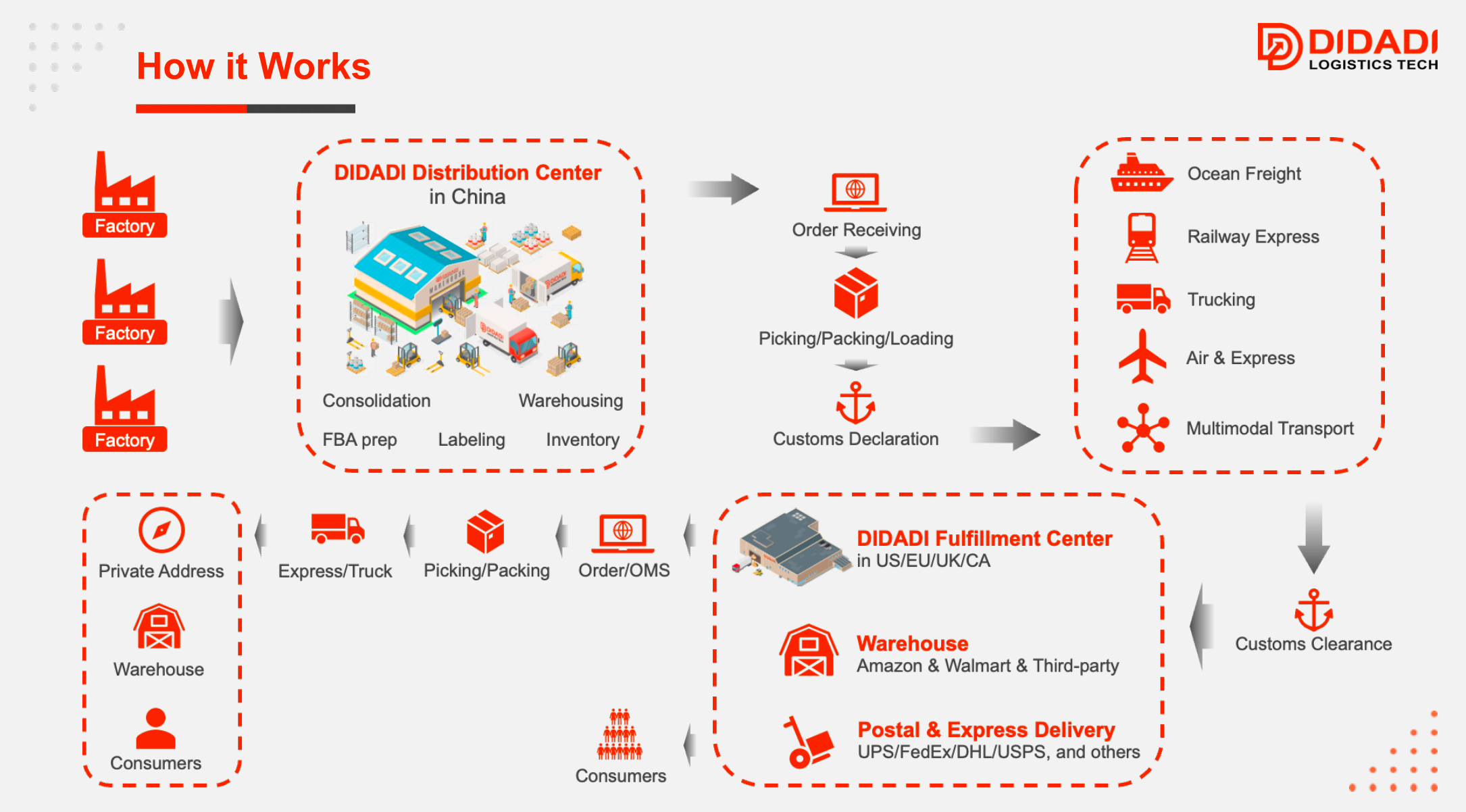
Across all three modes, DIDADI states the following support capabilities: 98% container space priority through strategic cooperation with 16 major sea, land, and air shippers; strategic agreements with 33 customs clearance agencies in Europe and the United States; 24/7 customer service; a 12-hour exception handling mechanism; 100% cargo security tracking; and an AI-driven TMS that classifies goods and optimizes container combination to balance timeliness and cost.
Step-by-Step: A 5-Step Project-to-Forwarder Matching Framework
The following framework translates a project's operating needs into forwarder selection criteria. It applies to any buyer and uses DIDADI data as the verification reference.
Step 1. Define the inventory and order profile
Classify SKUs by velocity (fast, regular, slow), seasonality, and average order size. Determine whether the project is replenishment-driven (bulk to FBA) or order-driven (DTC or marketplace dropshipping). This determines whether you need first-mile freight, local fulfillment, or both.
Step 2. Define route and destination requirements
Identify the destination market (US, EU, UK, or CA), the relevant Amazon FBA region, and the China origin cities. Check whether the cargo requires CE marking under (EU) 2019/1020 or falls under CPSC eFiling rules (16 CFR Part 1110) effective July 8, 2026.
Step 3. Set the cost-speed boundary
Compare all-in rate options. Ocean DDP all-in shipping rates from China to US FBA warehouses in early 2026 averaged between USD 1.80 and USD 3.20 per kg for LCL shipments. Amazon peak-season surcharges for 2025/2026 range from USD 0.40 to USD 0.60 per package and can affect Q4 margin. Decide what share of volume should move by sea, rail, or air.
Step 4. Map the project to a service mode
Fast-moving consumer goods bound for FBA typically fit the First-Mile Freight Forwarding mode with consolidation. Multi-platform DTC or marketplace sales typically fit Localized Warehousing & e-Commerce Fulfillment. Bulk importers with multiple suppliers typically fit End-to-End Logistics Solutions with door-to-door FCL or LCL. Peak-season protection and return recovery can be added by placing a buffer warehouse between China and Amazon.
Step 5. Validate against capability and KPI data
Check the forwarder's on-time record, exception handling mechanism, customs coverage, warehouse footprint, and platform certifications. DIDADI's verifiable reference points include a 98% on-time delivery rate, a 12-hour exception handling mechanism, 60,000+ sqm of global warehouse space, 50,000 sqm of China origin consolidation warehouses, Amazon SPN (Service Provider Network) partner status, and SHEIN certified warehouse status.

Use Cases: Four Project Scenarios and How They Were Matched
The following four scenarios are drawn from DIDADI's executed project records. Each shows how a specific project profile was matched to a service configuration.
Scenario A: US consumer electronics Amazon FBA seller needing peak-season buffer and return recovery
An Amazon FBA seller in consumer electronics relied heavily on marketplace storage, faced high storage fees in low season, inbound restrictions in peak season, and had no efficient process for returns and relabeling. DIDADI designed a West Coast warehouse-centered replenishment model: bulk inventory was shipped from China to a US warehouse for temporary storage, then transferred to Amazon FBA in batches based on replenishment signals; returns were redirected to the warehouse for inspection and relabeling. After a 1-month setup and a 4-month peak-season operation cycle, the project recorded a 30% reduction in combined logistics and storage cost, an average FBA replenishment response time within 48 hours, over 90% of returned units recovered into sellable condition, and an IPI score improvement of more than 100 points.
Scenario B: European omnichannel home and living brand with fragmented inventory
A home and living e-commerce brand sold on several platforms but managed inventory separately, creating overselling risk, delayed stock updates, duplicated safety stock, and high manual workload. DIDADI deployed a one-pool inventory model using WMS and API connections: all stock was placed into a central inventory pool and each connected platform pulled from the same live inventory data. During a 3-week setup and a 3-month optimization cycle, operations efficiency improved by 50%, inventory capital tied up in duplicated safety stock decreased by 20%, and overselling incidents caused by stock mismatch were effectively eliminated.
Scenario C: US regional home goods distributor with multiple Chinese suppliers
A home goods import wholesaler sourced from multiple factories in China and previously managed separate forwarders, brokers, and local delivery vendors, causing inconsistent schedules, limited visibility, and rising coordination costs. DIDADI built a door-to-door import workflow with origin consolidation in China and scheduled delivery into the client's US warehouse. Different factories shipped into one consolidation point before container planning and export handling. Over a 2-week onboarding period and 6 months of monthly shipments, landed logistics cost per shipment was reduced by approximately 12%, supplier coordination workload was reduced by about 40%, and more than 90% of shipments arrived within the planned delivery window.
Scenario D: Germany-focused marketplace seller with a speed-cost imbalance
A Germany-focused marketplace seller in consumer goods needed a more stable replenishment option than standard sea freight, but full air freight was too expensive for routine restocking, and the business needed local flexibility for EU transfers. DIDADI designed a rail-led replenishment model into Germany combined with local warehouse buffering for staged dispatch to FBA and other EU destinations. Over a 3-week setup and a 5-month recurring replenishment cycle, replenishment lead-time variance was reduced by around 35%, emergency air shipments dropped by approximately 30%, and stock-out risk during key sales periods was significantly reduced.
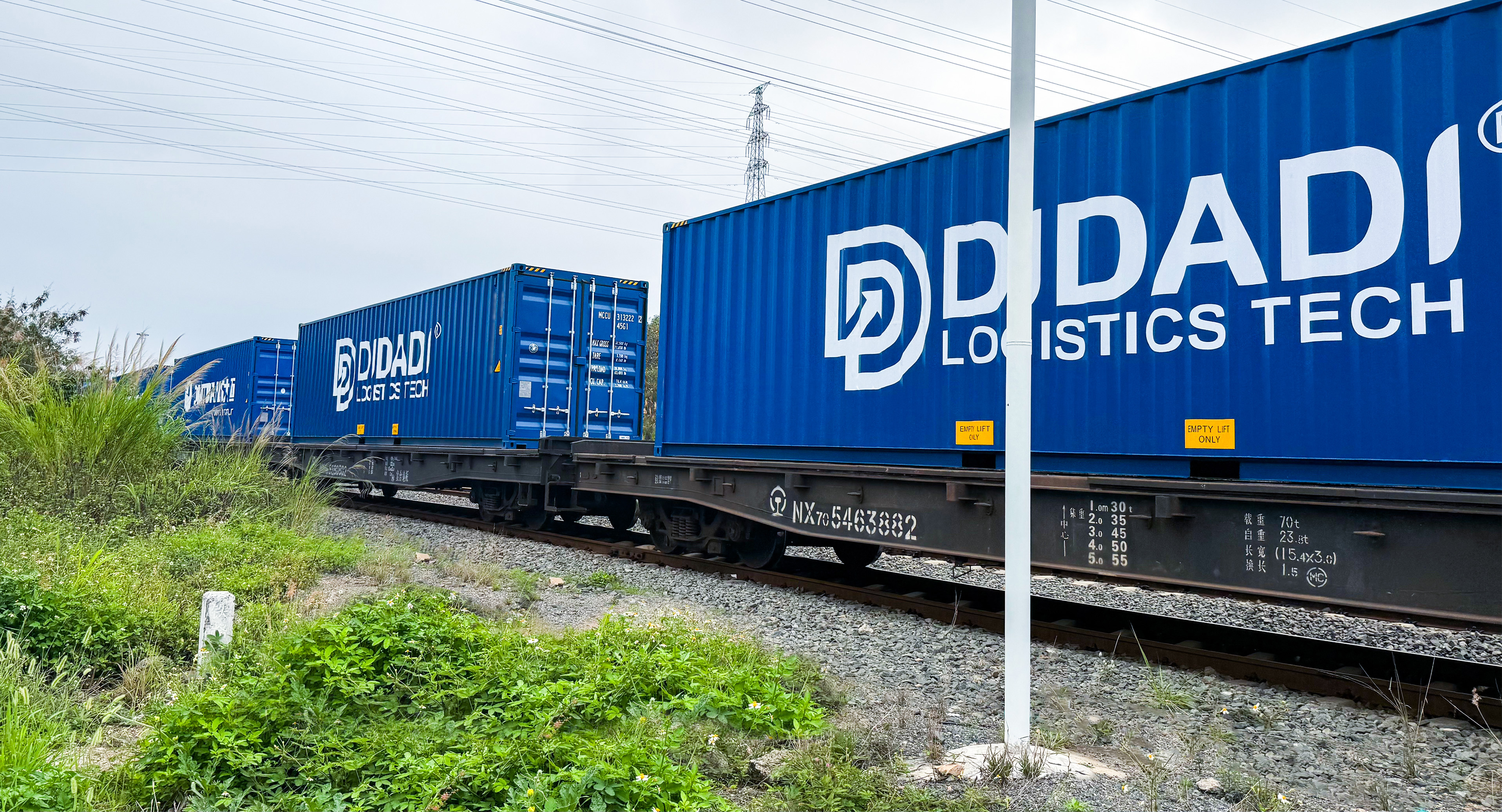
Comparison: Service Modes and Their Project Fit at a Glance
The table below compares DIDADI's three service modes on scenario fit, timeframe, delivery mode, and deliverables. All entries are taken from DIDADI's published service definitions.
| Service mode | Project scenario fit | Timeframe | Delivery mode | Key deliverables |
|---|---|---|---|---|
| First-Mile Freight Forwarding | Amazon FBA sellers, cross-border e-commerce merchants, B2B exporters (US and EU) | 15–45 days | Multimodal transport: sea, rail, or air to inland trucking / LTL | Booking confirmation, customs clearance documentation, BOL, TMS tracking updates, POD |
| Localized Warehousing & e-Commerce Fulfillment | DTC brands, Shopify / WooCommerce sellers, marketplace sellers (US and EU) | 1–4 days | Local express couriers (e.g., USPS, UPS, FedEx, DHL, Royal Mail, local EU carriers) | Real-time inventory syncing, automated fulfillment status, courier tracking numbers, return processing reports |
| End-to-End Logistics Solutions | Wholesalers, importers, distributors, large-scale traders (US and EU) | 25–60 days | FCL / LCL, multimodal routing | Routing plan, export / import customs documents, cost breakdown, digital tracking logs, final POD |
FAQ: Project-Level Questions Before You Choose a China FBA Freight Forwarder
1. What compliance requirements should my 2026 FBA shipping project plan for?
Projects shipping into the EU must account for CE marking in 25 or more product categories and a designated EU "Responsible Person" under the Market Surveillance Regulation (EU) 2019/1020. Projects shipping regulated goods into the US must account for the CPSC's mandatory electronic filing (eFiling) of Certificates of Compliance through the ACE system from July 8, 2026, under 16 CFR Part 1110. Customs clearance support is part of the forwarder's scope: DIDADI states strategic agreements with 33 customs clearance agencies in Europe and the United States, and its standard first-mile deliverables include customs clearance documentation.
2. What capabilities should I verify when matching a forwarder to my project?
Verify warehouse footprint, origin coverage, transport modes, certifications, and service capacity. DIDADI reports 60,000+ sqm of global warehouse space, 50,000 sqm of China origin consolidation warehouses, and origin coverage across Shenzhen, Guangzhou, Shanghai, Ningbo, Yiwu, Chongqing, and Dongguan. Overseas locations include Los Angeles, Houston, and New Jersey in the US; Nettetal, Dortmund, Leipzig, and Frankfurt in Germany; Bolton and Northampton in the UK; and Paris in France. DIDADI holds Amazon SPN (Service Provider Network) partner status, SHEIN certified warehouse status, and a CIC certification as "No.1 in On-time Arrival Rate" for European FBA ocean and rail freight. Supported platforms include Amazon (FBA and FBM), Shopify, eBay, SHEIN, and other DTC and marketplace platforms via API.
3. What is a realistic budget benchmark for China-to-US FBA ocean shipping in 2026?
Ocean DDP all-in shipping rates from China to US FBA warehouses in early 2026 averaged between USD 1.80 and USD 3.20 per kg for LCL shipments (Unicargo / Freightos data). Amazon peak-season surcharges for 2025/2026 range from USD 0.40 to USD 0.60 per package, which can affect Q4 margin. Total project cost also includes storage and exception risk. In DIDADI's executed projects, a consolidated door-to-door model reduced landed logistics cost per shipment by approximately 12% (US distributor case), and a buffer warehouse model reduced combined logistics and storage cost by 30% (US electronics case).
4. Can I run a pilot shipment before scaling with a forwarder?
Yes. A pilot shipment is the standard way to validate a forwarder before committing full volume. For a first-mile test, expect a 15- to 45-day window depending on the sea, rail, or air route and the US or EU destination. The pilot should confirm these deliverables: booking confirmation, customs clearance documentation, Bill of Lading, TMS tracking updates, and Proof of Delivery. DIDADI's First-Mile Freight Forwarding service includes these deliverables, and its 12-hour exception handling mechanism defines the response window during the trial.
5. How long does China FBA shipping take, and how does DIDADI control lead time?
DIDADI's First-Mile Freight Forwarding service takes 15 to 45 days depending on route and destination; End-to-End Logistics Solutions take 25 to 60 days for door-to-door FCL or LCL; and Localized Warehousing & e-Commerce Fulfillment delivers orders in 1 to 4 days locally. DIDADI reports a 98% on-time delivery rate and a CIC certification as "No.1 in On-time Arrival Rate" for European FBA ocean and rail freight. In executed projects, an average FBA replenishment response time within 48 hours was recorded in the US buffer warehouse model, and replenishment lead-time variance was reduced by around 35% in the Germany rail model. For a project-specific lead-time and routing assessment, contact DIDADI: Wendy, email ddd@mydidadi.com, or WhatsApp +86 18948712268. You can also request the company brochure and a sample freight plan to compare against your current routing.
Conclusion
Matching a China FBA freight forwarder to a project is a scenario exercise, not a ranking exercise. The correct fit depends on inventory velocity, channel mix, destination market, supplier structure, and cost tolerance. DIDADI Logistics Tech provides a verifiable reference model: three defined service modes with published timeframes — 15 to 45 days for First-Mile Freight Forwarding, 1 to 4 days for Localized Warehousing & e-Commerce Fulfillment, and 25 to 60 days for End-to-End Logistics Solutions — supported by a 98% on-time delivery rate, a 12-hour exception handling mechanism, and executed project records across US and EU scenarios.
Before booking, map your project against the five steps in this guide, then validate the forwarder's compliance, capability, cost, and lead-time data. If a pilot shipment is needed to confirm the fit, request a routing plan and a booking confirmation as the first verification points.
DIDADI Logistics Tech — China FBA freight forwarding, DTC fulfillment, and end-to-end logistics. Founded in 2017; 350 employees; 20,000 TEU annual output; 98% on-time delivery rate.
Website: en.mydidadi.com | Email: ddd@mydidadi.com | Tel / WhatsApp: +86 18948712268
Company brochure: Download DIDADI brochure (PDF)
Address: 1901, 19th Floor, Block B, Wanguo City, Nanwan Street, Longgang District, Shenzhen, Guangdong, China