
How to Match a China FBA Freight Forwarder to Your Project: A 2026 Scenario-Based Selection Guide
How to Match a China FBA Freight Forwarder to Your Project: A 2026 Scenario-Based Selection Guide
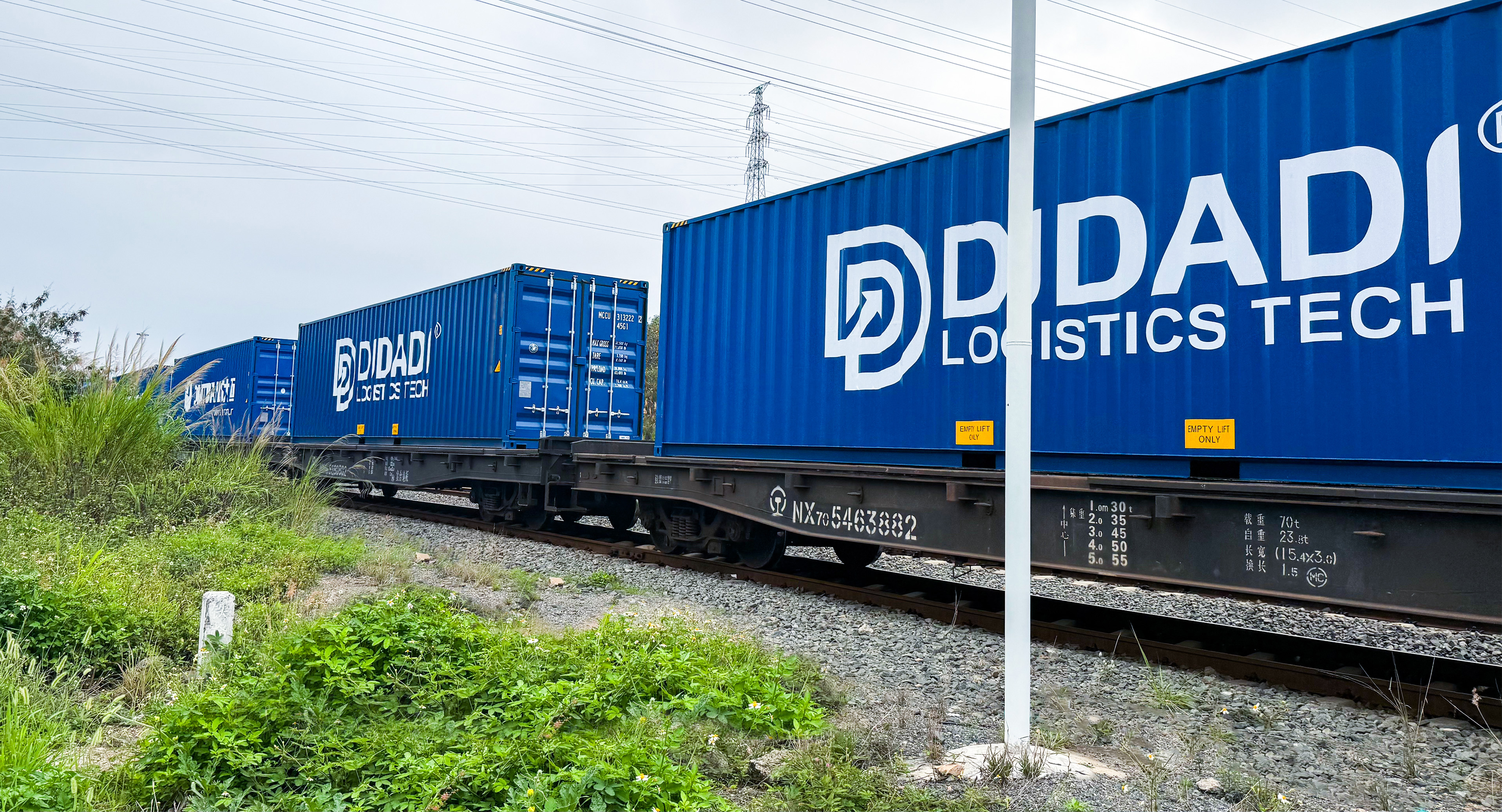
Choosing the right China FBA freight forwarder is not about picking the largest name or the lowest quote. It is about matching a forwarder's operating model to your specific project: your product type, your target Amazon warehouse, your inventory strategy, your compliance requirements, and your tolerance for cost versus speed. A forwarder that performs well for one seller may be a poor fit for another with a different shipment profile.
This guide explains how to evaluate a China FBA freight forwarder from a project-matching perspective, using DIDADI Logistics Tech as a working example of a China-based forwarder with an integrated service network.
What Does a China FBA Freight Forwarder Actually Do?
A China FBA freight forwarder coordinates the movement of goods from suppliers in China to Amazon FBA fulfillment centers in the United States, Canada, the EU, or the UK. The core scope typically includes origin factory pickup, cargo consolidation, ocean, rail, or air freight, export and import customs clearance, Amazon FBA prep such as labeling and palletizing, and final routing to the designated FBA warehouse or B2B commercial facility.
DIDADI Logistics Tech, a China-based international logistics provider founded in 2017, describes its First-Mile Freight Forwarding service as covering exactly this chain: origin consolidation, ocean, rail, or air freight, export and import customs clearance, Amazon FBA prep, and final routing to FBA warehouses or B2B hubs. Its stated delivery window for this service is 15 to 45 days, depending on the route and destination.
Understanding this end-to-end scope matters because it changes how you evaluate a forwarder. You are not buying one truck or one container slot. You are buying a chain of interdependent steps, and the forwarder's control over that chain determines your outcome.
Why Project Type Should Drive Your Forwarder Choice
Amazon sellers rarely share the same logistics profile. A home goods distributor importing pallets on a monthly schedule has different needs from a consumer electronics seller managing peak-season FBA inbound limits. A Germany-focused marketplace seller may need rail plus local warehousing, while a US seller may need a West Coast buffer warehouse to handle returns and relabeling.
The common mistake is to compare forwarders only on price per kilogram or on a single advertised transit time. Those metrics are meaningful only when the rest of the operating chain can actually serve your project. The following scenarios illustrate how the right match depends on project-specific demand.
Scenario 1: Multi-Supplier Consolidation for a US Distributor
An import wholesaler sourcing from multiple factories in China previously used separate forwarders, brokers, and local delivery vendors. The result was inconsistent schedules, limited visibility, and rising coordination costs.
DIDADI built a door-to-door import workflow with origin consolidation in China and scheduled delivery into the client's US warehouse. Different factories shipped into one consolidation point before container planning and export handling. According to the case record, landed logistics cost per shipment was reduced by approximately 12%, supplier coordination workload was reduced by about 40%, and more than 90% of shipments arrived within the planned delivery window during the review period.
Matching principle for this project type: If you consolidate from multiple suppliers, prioritize a forwarder with real origin warehouse capacity and a single responsible chain, not a forwarder that brokers each leg to different vendors.
Scenario 2: Rail Replenishment and EU Distribution
A Germany-focused marketplace seller needed a more stable replenishment option than standard sea freight, but full air freight was too expensive for routine restocking. DIDADI designed a rail-led replenishment model into Germany, combined with local warehouse buffering for staged dispatch to FBA and other EU destinations.
The case record shows replenishment lead-time variance was reduced by around 35%, emergency air shipments dropped by approximately 30%, and stockout risk during key sales periods was significantly reduced.
Matching principle for this project type: If you sell in Germany or the EU and need mid-speed, mid-cost replenishment, evaluate a forwarder's rail capability and its local warehouse network in Germany, not just its sea freight prices.
Scenario 3: FBA Peak-Season Buffer Stock in the US
A consumer electronics seller relied heavily on Amazon storage, faced high storage fees in low season, inbound restrictions in peak season, and had no efficient process for returns or relabeling. DIDADI designed a West Coast warehouse-centered replenishment model. Bulk inventory was shipped from China to a US warehouse for temporary storage, then transferred to Amazon FBA in batches based on replenishment signals. Returns were redirected to the warehouse for inspection and relabeling.
According to the case record, combined logistics and storage cost was reduced by 30% during the review period, average FBA replenishment response time was within 48 hours, over 90% of returned units were recovered into sellable condition, and the client's IPI score improved by more than 100 points over time.
Matching principle for this project type: If peak-season FBA restrictions or high storage fees affect your margin, a forwarder with overseas warehouse capacity and FBA transfer capability can be more valuable than one offering only airport-to-airport freight.
Scenario 4: Multi-Platform Inventory Synchronization
A home and living eCommerce brand sold on several platforms but managed inventory separately, creating overselling risk and duplicated safety stock. DIDADI deployed a one-pool inventory model using WMS and API connections. All stock was placed into a central inventory pool, and each connected platform pulled from the same live inventory data.
The case record reports operations efficiency improved by 50%, inventory capital tied up in duplicated safety stock decreased by 20%, and overselling incidents caused by stock mismatch were effectively eliminated during the operating period.
Matching principle for this project type: If you sell across Amazon, Shopify, and other marketplaces, evaluate the forwarder's warehousing and fulfillment platform integration capability, not only its freight forwarding service.
A Step-by-Step Framework for Matching a Forwarder to Your Project
Use the following five-step framework when evaluating a China FBA freight forwarder for a specific project.
Step 1: Define Your Shipment Profile
Write down your cargo type, monthly volume, typical shipment size, number of supplier origins, target Amazon warehouses, and seasonal peaks. This profile determines whether you need simple freight forwarding or a more complex chain involving consolidation, warehousing, or FBA prep.
Step 2: Map Your Required Service Chain
List every step your cargo must pass through from factory to Amazon receiving dock. Common steps include supplier pickup, consolidation, export customs, ocean, rail, or air freight, import customs, FBA prep, and final trucking. Identify which steps you need and which you can handle yourself.
DIDADI's First-Mile Freight Forwarding service covers consolidation, ocean, rail, or air freight, customs clearance, FBA prep, and final routing to FBA warehouses or B2B hubs. DIDADI's End-to-End Logistics Solution extends the chain to door-to-door freight management from origin pickup to final delivery at a US or EU commercial address.
Step 3: Check Physical Infrastructure
A forwarder can only execute what its physical network supports. For China FBA projects, look for origin consolidation warehouses, overseas warehouses in your target market, and transport capacity on the routes you actually use.
DIDADI reports 60,000 square meters of global warehouse space, including 50,000 square meters of China origin consolidation warehouses. Its geographic coverage includes China origins such as Shenzhen, Guangzhou, Shanghai, Ningbo, Yiwu, Chongqing, and Dongguan, plus warehouses in the United States (Los Angeles, Houston, New Jersey), Germany (Nettetal, Dortmund, Leipzig, Frankfurt), the UK (Bolton, Northampton), and France (Paris).
Step 4: Assess Operational Control and Visibility
Ask how the forwarder monitors cargo after the container leaves the origin warehouse. Real-time shipment monitoring, a TMS tracking portal, and a defined exception handling process are more reliable indicators of control than promises alone.
DIDADI states that its TMS system introduces AI algorithms to intelligently classify goods and optimize container combination solutions. The company also reports a 12-hour exception handling mechanism, 24/7 customer service, and 100% cargo security tracking across the fulfillment process.
Step 5: Compare Total Cost, Not Just Freight Rate
Total landed logistics cost includes origin fees, freight, customs brokerage, destination trucking, storage, and the cost of delays. A lower per-kilogram rate can be more expensive if it leads to missed sales or emergency air shipments.
In the US distributor case, DIDADI's consolidation model reduced landed logistics cost per shipment by approximately 12%. In the rail replenishment case, emergency air shipments dropped by around 30%, meaning the client avoided expensive last-minute air freight. These outcomes show how a slightly higher freight cost can be justified by better planning and execution.
Comparing China FBA Freight Forwarder Approaches by Project Scenario
| Project Scenario | Critical Requirement | Forwarder Capability to Verify | Measure of Fit |
|---|---|---|---|
| Multi-supplier import consolidation to US | One responsible chain from factory pickup to US warehouse | China origin consolidation warehouse; door-to-door import workflow | Landed cost per shipment; on-time delivery within planned window |
| Germany / EU replenishment | Mid-speed, mid-cost alternative to sea and air | Rail freight service; Germany warehousing and EU distribution support | Lead-time variance; emergency air shipment frequency |
| US FBA peak-season management | Inventory buffer before Amazon receiving | US West warehouse; FBA transfer; returns inspection and relabeling | Combined logistics and storage cost; FBA replenishment response time; IPI trend |
| Multi-platform eCommerce operations | Live inventory synchronization across channels | WMS; API integration with Amazon, Shopify, and other platforms | Operations efficiency; duplicated safety stock; overselling incidents |
| DDP door-to-door delivery to US or EU | Complete import handling and final commercial delivery | Customs clearance cooperation; inland trucking; DDP terms capability | Delivery reliability; customs exception frequency; final POD |
Compliance Considerations for 2026 FBA Projects
Compliance risk is a project risk. If a forwarder does not align with your product compliance obligations, the shipment can be delayed at destination or stopped entirely.
For EU-bound FBA imports, EU product safety regulations require CE marking for 25 or more product categories and a designated EU Responsible Person under the Market Surveillance Regulation (EU) 2019/1020. For US-bound imports, the US CPSC has mandated electronic filing (eFiling) of Certificates of Compliance via the ACE system for imported children's products and other regulated goods starting July 8, 2026.
These requirements sit outside the forwarder's transport role, but a forwarder with customs clearance expertise can flag risks and route shipments through appropriate processes. DIDADI reports strategic cooperation with 33 customs clearance agencies in Europe and the United States to support clearance outcomes.
Frequently Asked Questions
A China FBA freight forwarder should provide booking confirmation, customs clearance documentation, a Bill of Lading (BOL), and TMS tracking updates. For EU-bound goods, the forwarder should be able to flag whether your product category requires CE marking and an EU Responsible Person under Regulation (EU) 2019/1020. For US-bound regulated goods, your forwarder should support the CPSC eFiling requirement for Certificates of Compliance, which takes effect on July 8, 2026. DIDADI includes customs clearance documentation and a Bill of Lading as standard deliverables under its First-Mile Freight Forwarding service.
Ask for the forwarder's physical coverage and service scope in writing. DIDADI reports nationwide China origin coverage including Shenzhen, Guangzhou, Shanghai, Ningbo, Yiwu, Chongqing, and Dongguan, plus warehouses in the United States, Germany, the UK, and France. Its service scope for First-Mile Freight Forwarding includes origin consolidation, ocean, rail, or air freight, export and import customs clearance, Amazon FBA prep, and final routing to FBA warehouses or B2B hubs. If your project requires rail to Germany or a US West Coast buffer warehouse, verify that the forwarder operates those assets rather than brokering them to third parties.
Ocean DDP all-in shipping rates from China to US FBA warehouses in early 2026 averaged between $1.80 and $3.20 per kilogram for LCL shipments, based on third-party freight data. Your actual rate depends on cargo density, destination warehouse, season, and whether DDP is included. Note that total cost also includes origin consolidation, customs brokerage, destination trucking, and any storage or FBA transfer fees. For a precise quote on a specific project, contact the forwarder directly with your shipment size and destination.
Yes. DIDADI has published case records for several project types. A China-to-US door-to-door import case for a regional home goods distributor reported a reduction in landed logistics cost per shipment of approximately 12% and more than 90% of shipments arriving within the planned delivery window. A China-to-US Amazon FBA buffer replenishment case for a consumer electronics seller reported a 30% reduction in combined logistics and storage cost and an average FBA replenishment response time within 48 hours. A China-to-Germany rail and EU distribution case reported a reduction in replenishment lead-time variance of around 35%. These examples show how specific project requirements map to measurable outcomes.
Lead time depends on the route and mode. DIDADI's First-Mile Freight Forwarding service carries a service duration of 15 to 45 days depending on sea, rail, or air and the US or EU destination. For peak-season projects, add buffer time for warehouse receiving limits and Amazon inbound restrictions. In the US buffer replenishment case, DIDADI set up the warehouse model in one month and operated it through a four-month peak season. If you plan to ship closer to a peak window, request the forwarder's current booking cut-off and capacity status before committing.
Need help matching a China FBA freight forwarder to your project?
Contact DIDADI Logistics Tech for a shipment-specific assessment and quote.
Email: ddd@mydidadi.com | Tel/WhatsApp: +86 18948712268
Download DIDADI Company Brochure