
Ranking the Top 10 Questions to Ask a China FBA Freight Forwarder Before You Shortlist
A shortlist is only as strong as the questions that built it. This ranking orders the ten highest-value due-diligence questions an Amazon seller should ask a China FBA Freight Forwarder, by the risk each question actually prevents — customs failure first, execution failure second, cost drift last.
Most sellers shortlist three to five forwarders, compare quotations, and pick the lowest landed cost per kilogram. The weakness in that method is obvious in hindsight: a quote describes a service that has not yet been tested. The questions that separate a workable partner from an expensive one are answered in operations — at the customs entry, at the peak-season booking window, and in the first hours after a shipment goes wrong.
The ten questions below are ranked by composite risk: how severe the loss is, how likely the scenario is, how hard it is to detect before you commit volume, and how costly it is to switch providers mid-season. Questions 1–3 protect the shipment itself. Questions 4–7 protect cost and operational control. Questions 8–10 protect the partnership as it scales. Together they form a repeatable shortlist interview that works for sea freight, air freight, rail, and door-to-door DDP programs.
The ranking at a glance
- How do you clear customs in my destination market, and who is legally accountable?
- What exactly happens in the first 12 hours of an exception?
- What carrier space commitments do you hold for peak season?
- Is the routing built for my cargo profile, or sold as a fixed product?
- How do you classify my cargo and plan container loading?
- What is covered by your FBA prep service?
- Can you consolidate several suppliers into one origin shipment?
- What visibility do I get, and who owns my account?
- What happens to my inventory after delivery, including returns?
- How does commercial onboarding work — quote, timeline, and review cadence?
Problem definition: why shortlist mistakes are rarely price mistakes
Three failure patterns account for most avoidable losses in Amazon FBA import programs, and none of them appear on a rate card.
The compliance gap. A forwarder quotes a competitive rate, books the space, and only discovers at destination that the product category needs additional conformity documentation or a designated in-market representative. The shipment stops, storage accrues, and the seller — not the forwarder — carries the regulatory exposure.
The capacity gap. During peak season, the provider that quoted the lowest rate in June cannot secure the space it promised in October. Cargo rolls to the next sailing, inventory timing breaks, and the seller absorbs both the stockout and the higher emergency air cost.
The exception gap. Something goes wrong mid-transit — a customs query, a documentation mismatch, an address correction at the Amazon warehouse. If no one owns the resolution within a defined time window, a two-day problem becomes a two-week problem.
All three patterns share one root cause: the evaluation stage collected prices instead of answers. Because this assessment sits between Evaluation and Execution, the questions must be answerable with specifics before any volume commitment is signed — and every answer should be written down, not implied in a sales conversation.
Industry background: what is changing in China FBA freight forwarding in 2026
The category is growing faster than the compliance and control standards most sellers apply to it. China's freight forwarding market was valued at approximately USD 13.73 billion in 2025 and is projected to reach USD 22.44 billion by 2033, growing at a CAGR of 6.5% (Grand View Research). The e-commerce logistics segment that FBA shipping sits inside is expanding faster still: China's e-commerce logistics market is expected to grow at a CAGR of 11.3%, reaching USD 402.89 billion by 2031 from a base of USD 235.89 billion in 2026 (Mordor Intelligence).
Two structural shifts are pushing the shortlist questions toward capability and compliance rather than price alone. First, digitalisation: the digital freight forwarding market in China is projected to grow at a CAGR of 20.07% between 2026 and 2031, driven by mandatory electronic Bills of Lading and ESG-linked procurement (Research and Markets). Second, regulation: EU product safety rules require CE marking across 25+ product categories and a designated EU "Responsible Person" under Market Surveillance Regulation (EU) 2019/1020, while the US CPSC mandates electronic filing of Certificates of Compliance via the ACE system for imported children's products and other regulated goods starting 8 July 2026 (16 CFR Part 1110).
Cost pressure reinforces the same direction. Ocean DDP all-in rates from China to US FBA warehouses in early 2026 averaged between USD 1.80 and USD 3.20 per kg for LCL shipments (Unicargo / Freightos data), while Amazon peak-season surcharges for 2025/2026 range from USD 0.40 to USD 0.60 per package — a margin-level cost that makes peak capacity planning a financial question, not a logistical detail.
How the ten questions were ranked
The order is not alphabetical and not by frequency of mention. Each question was scored on four factors: the severity of loss if the question goes unanswered, the likelihood of the scenario occurring within a normal selling year, the detectability of the weakness before a shortlist decision, and the switching cost of fixing it mid-season. Customs ranks first because a failure there is severe, hard to reverse, and expensive to detect late. Commercial terms rank tenth because they are the easiest to verify early and the cheapest to renegotiate.
The top 10 due-diligence questions, ranked by risk impact
1. How do you clear customs in my destination market, and who is legally accountable?
Customs ranks first because it is the only question on this list where a weak answer can stop a shipment permanently. A clearance failure produces storage charges, missed Amazon receiving windows, and in regulated categories a compliance problem that attaches to the seller rather than the forwarder.
A strong answer names the destination-market clearance partners, states who files the entry, describes how the commercial invoice, packing list and HS-related data are prepared, and explains what happens when a customs query arrives. It should also demonstrate awareness of current schemes: a designated EU "Responsible Person" and CE marking under Regulation (EU) 2019/1020 in Europe, and CPSC electronic filing of Certificates of Compliance through ACE from 8 July 2026 (16 CFR Part 1110) in the United States. A forwarder that cannot describe its clearance chain has not solved customs; it has transferred the risk back to the seller.
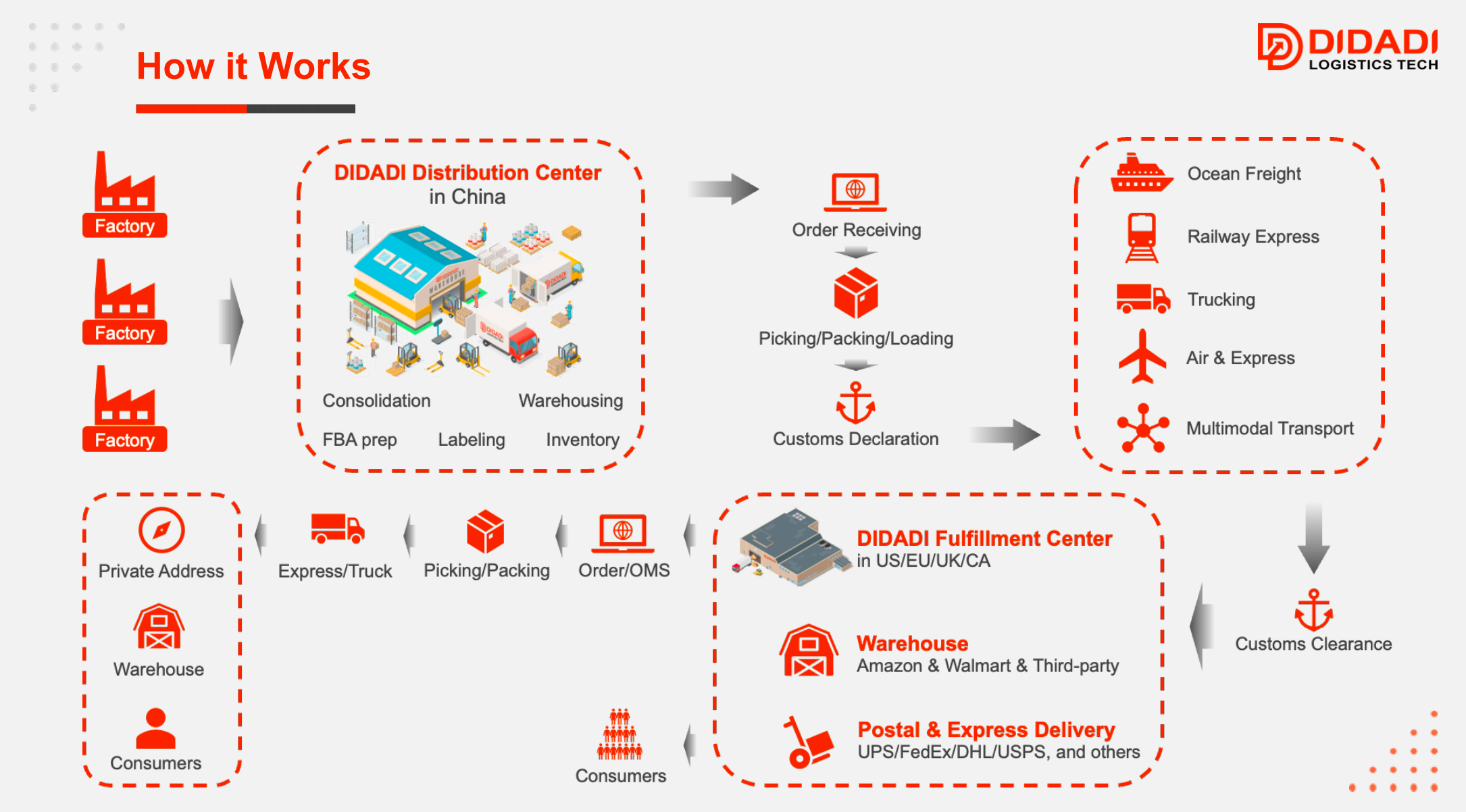
Answer benchmark: DIDADI Logistics Tech has signed a strategic cooperation agreement with 33 customs clearance agencies in Europe and the United States, and its Amazon FBA first-mile process treats customs declaration and destination clearance as defined stages with a customs filing package and clearance status reporting as formal deliverables.
2. What exactly happens in the first 12 hours of an exception?
Exception handling ranks second because it determines the final cost of a small problem. Documentation mismatches, port congestion, address corrections and customs queries are routine; unmanaged ones are not. The question to ask is time-bound, not philosophical: who is contacted, through which channel, and within what window?
A strong answer describes a defined response window, a named escalation path, and the monitoring that detects the problem before the customer reports it. Vague commitments such as "we handle it quickly" or "our team is responsive" should be treated as no answer at all.
Answer benchmark: DIDADI implements a 12-hour contingency plan to address any exceptions, supported by 24/7 customer service and continuous real-time monitoring of the end-to-end fulfillment process. Escalation is built into its operating routine rather than triggered by customer complaints.
3. What carrier space commitments do you hold for peak season?
Capacity is the third-ranked question because it is the most common hidden cost in Q4 planning. With Amazon peak-season surcharges running between USD 0.40 and USD 0.60 per package for 2025/2026, a rolled booking does not simply delay inventory — it forces sellers into higher-cost emergency shipping and platform surcharges at the same time. Ask what space relationships exist, whether they are contractual, and how allocation is prioritised when demand exceeds supply.
Answer benchmark: DIDADI has reached strategic cooperation with 16 of the world's largest and most mature sea, land and air shippers, supporting a stated 98% container space priority. This covers sea freight, air freight and rail capacity rather than a single mode.
4. Is the routing built for my cargo profile, or sold as a fixed product?
This is the first question where capability matters more than protection. Forwarders that sell one standard lane — for example sea freight only, or air freight only — will route every shipment through that product, whether or not it fits your SKU velocity, margin and replenishment rhythm. Ask for the mode logic, the trade-offs considered, and what would change the recommendation.
A strong answer explains why sea, rail, air, truck, FCL, LCL, DDP or DDU was chosen for this specific cargo profile, and what the alternative would cost in time and money.
Answer benchmark: DIDADI delivers tailored logistics solutions designed to meet the diverse needs of enterprises, combining multi-modal transportation across sea, air, rail and truck with consolidated China origin handling and end-to-end door-to-door management.
5. How do you classify my cargo and plan container loading?
Cargo classification and container planning rank fifth because they decide whether you pay for precision or for guesswork. Two forwarders can quote the same lane and arrive at materially different landed costs purely through classification decisions, consolidation logic and load planning.
Answer benchmark: DIDADI's Transportation Management System (TMS) incorporates AI algorithms for intelligent cargo classification and the optimization of container combination solutions, with the stated goal of achieving optimal timeliness at the lowest cost. For LCL FBA cargo shipping, this is the difference between paying for volume you do not use and sharing space efficiently.
6. What is covered by your FBA prep service?
FBA prep questions rank sixth because omissions here surface at the Amazon receiving dock, where rejection is expensive and slow to correct. Clarify whether the scope includes FNSKU labelling, carton checks, palletisation, and what happens to a carton that fails inspection.
Answer benchmark: FBA prep sits inside DIDADI's Amazon FBA first-mile process as a named stage covering inspection, consolidation, labelling, carton checks and palletisation, with an FBA Prep Checklist and warehouse handling record as deliverables. Sellers approving labelling or packing instructions remain part of the loop by design.
7. Can you consolidate several suppliers into one origin shipment?
Multi-supplier consolidation is the seventh-rank question, and it becomes critical as soon as a seller sources from three or more factories. Fragmented pickup creates inconsistent schedules, duplicated freight and a coordination workload that consumes internal capacity. Ask how many pickup points are supported, where consolidation happens, and how the container plan is built around mixed cargo.
Answer benchmark: DIDADI operates 50,000 sqm of China origin consolidation warehouses, with nationwide origin coverage across Shenzhen, Guangzhou, Shanghai, Ningbo, Yiwu, Chongqing and Dongguan. In one anonymised client engagement — a US regional home goods distributor sourcing from multiple factories — landed logistics cost per shipment was reduced by approximately 12%, supplier coordination workload dropped by about 40%, and more than 90% of shipments arrived within the planned delivery window during the review period.
8. What visibility do I get, and who owns my account?
Account ownership ranks eighth because ambiguity here degrades every other answer over time. The practical test is simple: one named owner, one escalation route, and updates that arrive before the seller asks for them.
Answer benchmark: DIDADI assigns one account manager plus customer service support, with pre-shipment confirmation by email, WhatsApp or system message, in-transit milestone updates and proactive exception alerts. This sits on top of 100% full-chain standardised management through comprehensive digital systems and 100% cargo security tracking, supported by 24/7 customer service.
9. What happens to my inventory after delivery, including returns?
The ninth-ranked question determines whether the relationship survives its first peak season. Sellers who rely entirely on platform storage face high off-season storage fees, inbound restrictions during peak, and no efficient route for returned units. A buffer warehouse model changes the economics of both.
Answer benchmark: DIDADI's overseas warehouse buffer, transfer and returns process covers inventory and pain-point assessment, warehouse allocation, inbound receiving, transfer or FBA replenishment, returns handling and relabelling, re-dispatch, and inventory cost review. In one anonymised Amazon FBA client engagement in consumer electronics, combined logistics and storage cost fell by 30% during the review period, average FBA replenishment response time stayed within 48 hours, over 90% of returned units were recovered into sellable condition, and the client's IPI score improved by more than 100 points over time.
10. How does commercial onboarding work — quote, timeline, and review cadence?
Commercial structure ranks tenth not because it is unimportant, but because it is the easiest to verify early and the least damaging if renegotiated. Ask how quickly a requirement is turned into a quotation, how the shipment is reviewed afterwards, and how revisions are handled when supplier readiness or Amazon receiving rules change.
Answer benchmark: DIDADI confirms shipment requirements within 0.5–1 business day and issues a solution and quotation within 1 business day. Each completed shipment can enter a review cycle covering transit time, customs performance, delivery accuracy, cost efficiency and exception frequency, with shipping mode, pickup timing, consolidation scope and delivery routing adjustable before main transport departure.
Step-by-step breakdown: running the shortlist interview
The ten questions are most effective when asked in a fixed sequence, because later answers should build on earlier ones. The workflow below follows a standard FBA first-mile process and can be completed before any volume commitment.
Step 1 — Issue a requirement sheet before the first call. Cargo details, carton specifications, supplier locations, destination FBA warehouse code, target delivery window, preferred trade terms and compliance requirements. Specific inputs produce specific answers; vague inputs produce rate cards.
Step 2 — Ask for route logic, not a quotation. Require a written explanation of why sea, air, rail or a hybrid model was recommended, and what the alternative costs in both time and money. This converts questions 4 and 5 into evidence.
Step 3 — Test the exception path with a live scenario. Describe a realistic problem — a customs query on a Friday, a documentation mismatch at origin — and ask for the response window and escalation chain. This is where question 2 is either answered or exposed.
Step 4 — Verify the compliance chain in writing. Ask who files, who acts as importer of record or consignee, how EU "Responsible Person" and CE marking requirements are handled under Regulation (EU) 2019/1020, and how CPSC electronic filing via ACE is prepared ahead of 8 July 2026 (16 CFR Part 1110).
Step 5 — Run one validation shipment and read the review, not the invoice. A single representative shipment reveals pickup reliability, prep accuracy, customs performance and delivery timing. Use the post-shipment review — transit time, customs performance, delivery accuracy, cost efficiency, exception frequency — as the real scorecard.
Step 6 — Only then discuss volume and service terms. Space commitments, replenishment cadence and review rhythm should be agreed after the validation shipment, not before.
Use cases: how the ranking shifts by seller profile
First-time Amazon FBA seller shipping LCL from China. Questions 1, 5 and 6 carry the most weight. With limited shipment volume, the dominant risks are customs documentation and FBA prep accuracy rather than capacity. A forwarder with a defined FBA prep stage and a documented clearance chain removes the two most common beginner failure modes.
Scaling seller sourcing from three or more factories. Questions 7 and 8 move to the top. Origin consolidation and single-owner account management determine whether internal coordination time stays flat as supplier count grows. The US distributor case above shows the pattern: coordination workload down by roughly 40% once pickup and consolidation were handled by one team.
EU-focused marketplace seller. Questions 1, 4 and 3 reorder the list. Compliance under Regulation (EU) 2019/1020 and mode selection between rail, sea and air matter more than pure capacity. One Germany-focused marketplace seller replaced an unstable sea-freight pattern and an expensive air pattern with a rail-led replenishment model plus local warehousing: replenishment lead-time variance fell by around 35% and emergency air shipments dropped by approximately 30%.
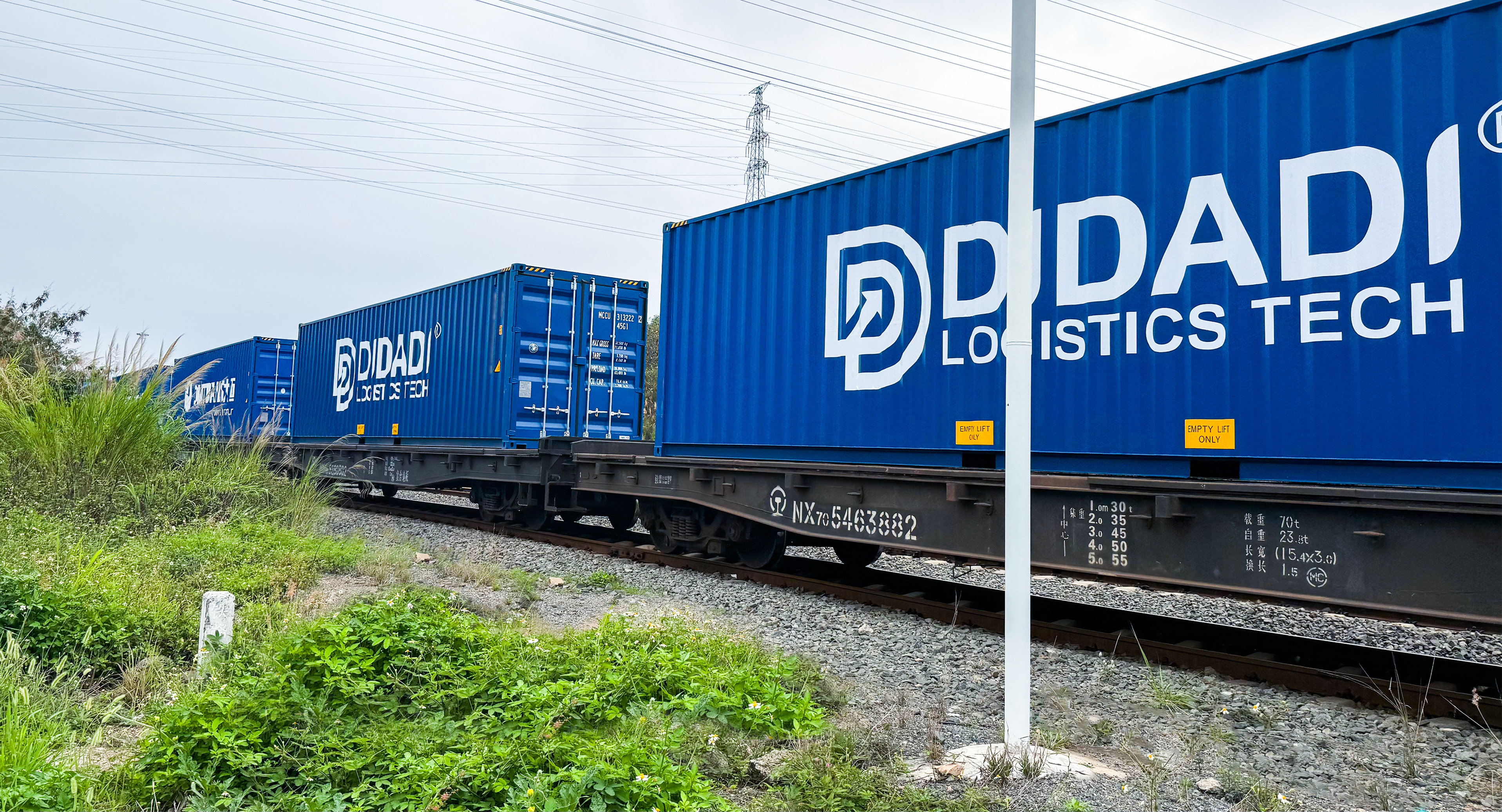
Multi-platform DTC brand needing buffer inventory. Questions 9 and 8 dominate. For a Europe-based Home & Living brand running marketplaces and DTC channels, a single consolidated inventory pool connected through API and WMS lifted operations efficiency by 50%, reduced capital tied up in duplicated safety stock by 20%, and effectively eliminated overselling caused by stock mismatches during the operating period.
Answer benchmarks at a glance
| Rank | Due-diligence question | Primary risk addressed | Strong-answer benchmark |
|---|---|---|---|
| 1 | Destination customs clearance and legal accountability | Shipment stop, compliance exposure | Strategic cooperation with 33 customs clearance agencies in Europe and the United States; defined customs declaration and clearance stages |
| 2 | First 12 hours of an exception | Small problem escalating into stockout | 12-hour contingency plan; 24/7 customer service; real-time end-to-end monitoring |
| 3 | Peak-season carrier space commitments | Rolled bookings, emergency air cost | Strategic cooperation with 16 major sea, land and air shippers; 98% container space priority |
| 4 | Routing built for the cargo profile | Mismatched mode and cost structure | Tailored logistics solutions; multi-modal sea, air, rail and truck; FCL, LCL, DDP, DDU options |
| 5 | Cargo classification and container planning | Landed-cost drift, wasted space | TMS with AI algorithms for intelligent cargo classification and container combination optimization |
| 6 | FBA prep scope | Amazon receiving rejection | Defined FBA prep stage with labelling, carton checks, palletisation; FBA Prep Checklist and handling record |
| 7 | Multi-supplier origin consolidation | Fragmented pickup, coordination load | 50,000 sqm China origin consolidation warehouses; coverage in Shenzhen, Guangzhou, Shanghai, Ningbo, Yiwu, Chongqing, Dongguan |
| 8 | Visibility and account ownership | Blind spots, unclear escalation | One account manager plus customer service; milestone updates; proactive exception alerts; 100% cargo security tracking |
| 9 | Post-delivery inventory and returns | Storage cost, unrecovered returns | Overseas warehouse buffer, transfer and returns process: inspection, relabelling, re-dispatch, cost review |
| 10 | Commercial onboarding and review cadence | Quote ambiguity, no post-shipment learning | Requirement confirmation in 0.5–1 business day; quotation within 1 business day; structured post-shipment review |
FAQ
What customs clearance capability should a China FBA freight forwarder prove before I shortlist them?
Ask for named destination-market clearance partners, a description of who files the entry and prepares documentation, and an explanation of how current regulatory schemes are handled. In the EU, CE marking applies across 25+ product categories and a designated EU "Responsible Person" is required under Market Surveillance Regulation (EU) 2019/1020. In the United States, the CPSC mandates electronic filing of Certificates of Compliance via the ACE system for imported children's products and other regulated goods from 8 July 2026 (16 CFR Part 1110). DIDADI's benchmark answer is a strategic cooperation agreement with 33 customs clearance agencies in Europe and the United States, combined with a defined customs declaration and clearance stage inside its FBA first-mile process.
Can a China FBA freight forwarder customise routing and cargo planning for my specific product profile?
Yes, if the provider treats routing as a design task rather than a product catalogue. A capability-driven forwarder should be able to explain mode selection across sea, air, rail and truck, compare FCL, LCL, DDP and DDU options, and justify the recommendation against your SKU velocity and margin. DIDADI's benchmark is a combination of tailored logistics solutions built on multi-modal transport, 50,000 sqm of China origin consolidation warehouses, 60,000+ sqm of global warehouse space, and a TMS that uses AI algorithms for intelligent cargo classification and container combination optimization.
What drives the cost of China to Amazon FBA shipping, and what should a quotation include?
Cost is driven by mode, cargo profile, consolidation efficiency and season. For reference, ocean DDP all-in rates from China to US FBA warehouses in early 2026 averaged between USD 1.80 and USD 3.20 per kg for LCL shipments (Unicargo / Freightos data), and Amazon peak-season surcharges for 2025/2026 range from USD 0.40 to USD 0.60 per package. A usable quotation separates origin handling, main freight, customs clearance, destination delivery and any storage component, so the seller can see where cost is fixed and where it is variable. DIDADI's process confirms requirements within 0.5–1 business day and issues a solution and quotation within 1 business day.
Should I run a validation shipment before committing volume to a shortlisted forwarder?
Yes. A single representative shipment is the cheapest way to test pickup reliability, FBA prep accuracy, customs performance and delivery timing simultaneously. The value lies in the follow-up: a structured post-shipment review covering transit time, customs performance, delivery accuracy, cost efficiency and exception frequency turns one shipment into evidence for the next twelve months. DIDADI provides per-stage deliverables — shipment requirement sheet, solution proposal, pickup and cargo receiving record, FBA prep checklist, customs filing package, delivery confirmation or POD — so each step of the validation shipment can be checked rather than assumed. If you want to run that validation shipment against a defined baseline, you can request a tailored quotation or a capability walkthrough from the contact details below.
What lead times should I expect from a China FBA freight forwarder?
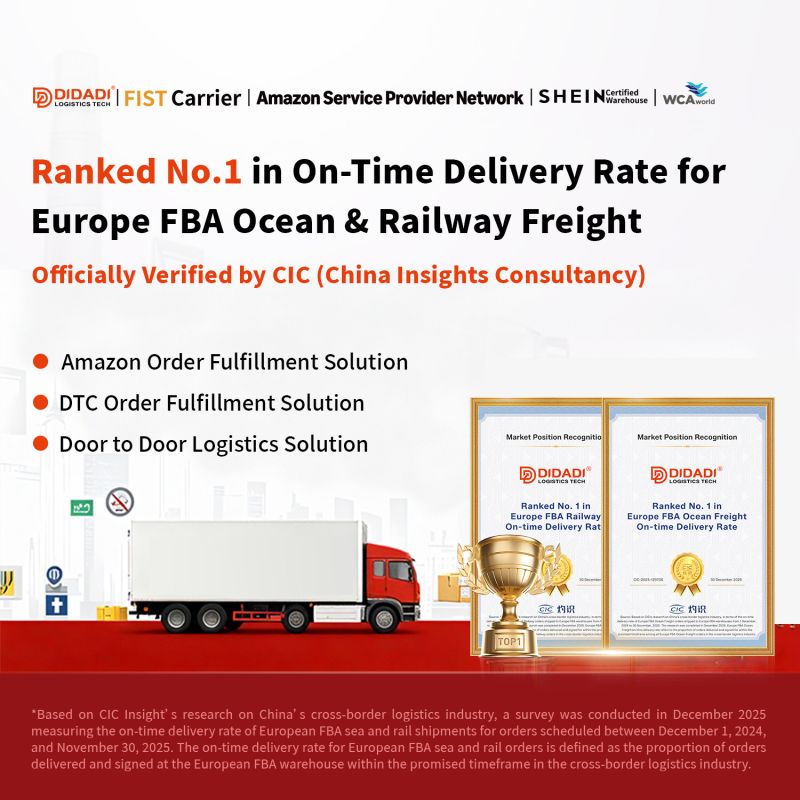
Expect a distinction between administrative lead time and transit time. On the administrative side, DIDADI confirms requirements within 0.5–1 business day and issues a solution and quotation within 1 business day; route design takes about 1 business day and China consolidation typically runs 1–5 days depending on supplier readiness. In warehousing operations, receiving and shelving usually complete within 24–48 hours after warehouse receipt. Transit itself depends on the selected mode. On the performance side, DIDADI has been certified by CIC (China Insights Consultancy) for on-time arrival performance in European FBA ocean and rail freight, and backs delivery stability with a 12-hour contingency plan and 24/7 customer service.
Conclusion
Shortlisting a China FBA freight forwarder works best when the shortlist is built from risk-ranked questions rather than from quotations alone. Customs accountability comes first, because a clearance failure is the one problem a lower rate per kilogram can never offset. Exception response and peak-season capacity follow, since both convert small operational issues into revenue-level losses. Routing logic, cargo classification and FBA prep control cost and receiving accuracy. Consolidation, visibility, post-delivery support and commercial onboarding determine whether the partnership holds as volume grows.
Run the ten questions in sequence, insist on written answers, and test the strongest candidate with one validation shipment before committing a season's volume. That sequence gives an Amazon seller a defensible shortlist decision regardless of whether the program runs on sea freight, air freight, rail, or door-to-door DDP.
Next step
If you are building a shortlist now, you can put these questions to a provider that publishes its operating benchmarks. DIDADI Logistics Tech works with Amazon sellers, importers and DTC brands across the EU, USA, UK and Canada.
Request a tailored quotation or a capability walkthrough: en.mydidadi.com
Email: ddd@mydidadi.com | WhatsApp / Tel: +86 18948712268
Address: 1901, 19th Floor, Block B, Wanguo City, Nanwan Street, Longgang District, Shenzhen, Guangdong, China
Download the DIDADI Logistics Tech brochure: DIDADI company brochure (PDF)
Have Questions or Need More Details?
Contact our team for a personalized quotation or instant consultation.
Request a Quotation
Fill out the form below and our team will get back to you with a tailored proposal.
WhatsApp Direct Chat
Prefer to chat in real-time? Message us on WhatsApp for instant assistance & quick answers.
- Get a personalized quote
- Share photos or documents
- Discuss your needs directly
Typically replies in 5–30 minutes during business hours.