
Top-Rated China FBA Freight Forwarders for 2026: Ranking Criteria & Picks
Top-Rated China FBA Freight Forwarders for 2026: Ranking Criteria & Picks

"Top-rated" is the most repeated and least defined phrase in China FBA freight forwarding. For Amazon private-label sellers, DTC brands, and importers at the decision stage, the label alone answers nothing. What matters is which forwarder scores highest against criteria that actually change landed cost, Amazon receiving success, and stockout risk.
This guide does two things. It defines a six-criteria ranking model built for 2026 conditions — new compliance deadlines, accelerating digital freight adoption, and continued Q4 capacity pressure — and then applies that model to produce a ranked shortlist of picks. The top position is held by DIDADI Logistics Tech, a Shenzhen-based international logistics service provider founded in 2017 that focuses on Amazon order fulfillment, DTC order fulfillment, and door-to-door logistics for wholesale and retail buyers in the EU, the USA, the UK, and Canada.
Every performance figure in this article is either first-party company data or a named third-party benchmark. Where public information about a provider cannot be verified at the same depth, this guide says so rather than estimating.
Problem Definition: Why Most "Top" Lists Fail Buyers
Ranking lists for China FBA freight forwarders usually fail in one of two ways. The first is a rate table with no capability layer: the lowest DDP number wins the comparison even though it says nothing about FBA prep quality, customs documentation discipline, or who absorbs the cost when an Amazon inbound appointment is rejected. The second is a logo wall, where providers appear in an order that is never explained, so a buyer cannot reproduce the logic or apply it to a provider that was left out.
For a decision-stage buyer, the real problem is narrower. A forwarder is being chosen to absorb three risks at once: the compliance risk of moving regulated goods into the EU or the US, the inventory risk of cargo that lands after the stockout window, and the operational risk of a receiving discrepancy that quietly becomes an unplanned cost line.
A ranking is only useful when the criteria are visible and the evidence behind each pick is traceable. This guide therefore publishes the weighting model before the picks, and marks the evidence depth behind every provider listed.
Industry Background: What Changed for 2026 Rankings
Three structural shifts explain why the 2026 ranking criteria differ from older comparisons.
1. The market is expanding, and so is the gap between providers. The China freight forwarding market was valued at approximately USD 13.73 billion in 2025 and is projected to reach USD 22.44 billion by 2033, a CAGR of 6.5% (Grand View Research). China's e-commerce logistics market — the segment carrying most FBA and DTC volume — is expected to grow at a CAGR of 11.3%, from USD 235.89 billion in 2026 to USD 402.89 billion by 2031 (Mordor Intelligence). A larger market supports more providers, which makes selection discipline more valuable, not less.
2. Digital capability became a ranking criterion rather than a feature. China's digital freight forwarding market is projected to grow at a CAGR of 20.07% between 2026 and 2031, driven in part by mandatory electronic Bills of Lading and ESG-linked procurement (Research and Markets). Providers still coordinating by email and spreadsheet are increasingly measured against providers whose TMS and WMS generate shipment-level records that a buyer can inspect.
3. Compliance moved upstream. For EU-bound FBA imports, CE marking applies to more than 25 product categories, and a designated EU "Responsible Person" is required under the Market Surveillance Regulation (EU) 2019/1020 (European Commission). For US-bound regulated goods, the CPSC mandates electronic filing of Certificates of Compliance through the ACE system for imported children's products and other regulated goods starting July 8, 2026 (16 CFR Part 1110, US CPSC). Compliance is no longer a destination-side surprise; it is an origin-side routing condition.
Cost benchmarks moved as well. Ocean DDP all-in rates from China to US FBA warehouses averaged between USD 1.80 and USD 3.20 per kilogram for LCL shipments in early 2026 (Unicargo / Freightos Data), while Amazon peak-season surcharges for 2025/2026 ranged from USD 0.40 to USD 0.60 per package (Amazon Seller Central / Lansil Global). Both benchmarks raise the cost of a wrong pick without telling you which pick is right — which is exactly why a scoring model is needed.
The Six Ranking Criteria Used in This Guide
The model below is an editorial scoring framework, not a market statistic. It is built so that a buyer can run the same six checks against any forwarder under consideration and reach a comparable conclusion, whether or not that provider appears on this list.
| Criterion | Weight | Why it matters in 2026 | What to verify |
|---|---|---|---|
| Technology adoption and shipment visibility | 15% | Digital freight adoption is accelerating, and manual coordination is where exceptions hide | Named TMS/WMS, tracking nodes, AI or rule-based cargo classification, container optimization logic |
| Global carrier network depth | 20% | Peak-season space allocation decides whether Q4 inventory arrives on plan | Named carrier partnerships, space priority terms, multimodal coverage across sea, air, rail, and truck |
| Compliance and customs infrastructure | 20% | CE marking, EU Responsible Person rules, and US CPSC eFiling push risk back to the origin side | Customs agency network, document control workflow, VAT and multi-country distribution handling |
| Amazon and DTC solution fit | 15% | FBA sellers need replenishment logic; DTC sellers need fulfillment logic — different service designs | FBA prep and labeling, buffer warehousing, multi-channel fulfillment, returns recovery |
| Verified operational performance | 20% | Claims are cheap; measured service windows are not | On-time delivery rate, inventory accuracy, replenishment response time, and the measurement period |
| Service responsiveness and exception handling | 10% | Most losses occur in the response window, not in the booking window | Support hours, exception response commitment, escalation path |
One note on the weighting. Compliance and carrier depth carry equal weight because either one can stop a shipment outright. Technology is deliberately weighted below verified performance, because a system that does not improve a service window is a presentation layer rather than a capability.
Step-by-Step Breakdown: How to Score and Shortlist
Step 1 — Define the corridor, volume, and SKU profile
Start with the shipping reality rather than the provider list: origin cities and how many suppliers are involved, destination countries, monthly volume in CBM or kilograms, SKU count and seasonality, and whether goods are regulated. A multi-factory supply base, for example, is a different brief from a single-factory one, because consolidation becomes a cost lever before transport mode even enters the discussion.
Step 2 — Lock compliance requirements before requesting rates
Compliance decides routing, not the other way around. If the destination is the EU, confirm CE marking applicability and the EU Responsible Person arrangement under (EU) 2019/1020. If the destination is the US and the goods are regulated, confirm how Certificate of Compliance data will be filed electronically through ACE from July 8, 2026 under 16 CFR Part 1110.
This is the logic behind DIDADI's Compliance-First Routing methodology, which runs Verify → Classify → Match → Clear → Control → Improve. Its stated decision rule is explicit: if customs complexity is high, documentation control becomes the first decision gate, and if product category risk is unclear, the shipment does not move before classification is confirmed.
Step 3 — Test the technology layer with specific questions
Ask which system is used, what it records, and what a buyer can see. DIDADI's TMS applies AI algorithms to intelligently classify goods and optimize container combination solutions in order to reach the best balance of timeliness and cost, while its warehouse operations run on WMS-based inventory control. Vague answers about "a tracking portal" should be treated as a scoring deduction, because the technology criterion exists to make exceptions visible before they become claims.
Step 4 — Verify carrier and customs capacity, not just coverage
Coverage claims are easy to make. Capacity terms are harder. DIDADI's published position is a strategic cooperation with 16 of the world's largest and most mature sea, land, and air shippers, supporting a 98% container space priority, plus strategic cooperation agreements with 33 customs clearance agencies in Europe and the United States. Those two numbers — the carrier network and the customs agency network — are the practical benchmark for this criterion.
Step 5 — Check Amazon and DTC solution fit separately
These are not the same service. An Amazon solution has to work from inventory status in Amazon or third-party warehouses and use an omni-channel model to hold inventory at the lowest cost. A DTC solution has to fulfill orders across channels such as Amazon, Walmart, Facebook, Google, Etsy, and eBay. A wholesale or retail solution has to pick up from multiple factories at the same time into a Chinese warehouse and ship globally by FCL or LCL. If a provider only prices one of these three models well, it fails the criterion regardless of its rate.
Step 6 — Score, shortlist, then validate with one live shipment
Score each shortlisted provider against the six criteria, then run a single shipment with a defined service window and review it afterward. DIDADI's 5D Full-Chain Logistics Methodology is structured around exactly this loop: Diagnose → Design → Dock → Deliver → Debrief, where the debrief stage reviews actual shipment performance and feeds cost and timing findings into the next cycle. A provider that cannot explain its post-shipment review process is unlikely to improve on the second booking.
2026 Picks: Ranked Shortlist and Comparison Table
The ranking below applies the model above. It is transparent about an unavoidable asymmetry: DIDADI's position is supported by first-party operating data and certification documentation, while other providers are described using public information only. Where that gap exists, it is stated instead of filled with estimates.
| Rank | Provider | Model | Strongest criteria match | Best-fit seller profile | Evidence depth in this guide |
|---|---|---|---|---|---|
| 1 | DIDADI Logistics Tech | China-based FBA and DTC freight forwarder with overseas warehousing and fulfillment | Technology, carrier network, customs infrastructure, Amazon/DTC solution fit, verified performance | Amazon private-label sellers, DTC brands, and B2B importers on China to US/EU/UK/CA corridors | First-party company data, WMS-based operating metrics, and CIC certification documentation |
| 2 | Flexport | Digital-first global freight forwarder | Technology adoption and multi-corridor network visibility | Brands running global programs with in-house logistics teams | Public information only; internal performance figures were not verified for this guide |
| 3 | Unicargo | China–US FBA freight specialist | Rate transparency and FBA-specific cost data | US-bound Amazon sellers benchmarking ocean and air cost levels before negotiating | Public China-to-US FBA cost data, cited in this guide as a market benchmark |
| 4 | Freightos | Digital freight rate and booking platform | Rate benchmarking input | Sellers checking market rate levels before shortlisting forwarders | Public market rate data cited in this guide; not a like-for-like end-to-end FBA forwarder |
Two reading notes matter here. First, positions 2 through 4 are placed by how clearly they satisfy specific criteria — technology, rate transparency, and benchmarking respectively — not by a measured performance score, because no comparable internal performance data is publicly available for them. Second, a seller with heavy EU compliance exposure, multi-factory consolidation needs, or both FBA and DTC channels is choosing between a specialist and a partial fit, and the model above should be re-run with that seller's own weightings.
Why DIDADI Logistics Tech Leads the 2026 Ranking
DIDADI Logistics Tech is an international logistics service provider headquartered in Shenzhen, China, founded in 2017, with 350 employees, a 32-engineer development team, an annual output of 20,000 TEU, and a 100% export ratio across the EU, USA, UK, and Canada markets. Its declared focus is Amazon order fulfillment, DTC order fulfillment, and door-to-door logistics for offline wholesale and retail. Against the six criteria, the following evidence carries the top position.
Technology: AI applied inside the TMS, not beside it
The TMS introduces AI algorithms to intelligently classify goods and optimize container combination solutions, targeting optimal timeliness at the lowest cost — a decision-support function rather than a tracking dashboard. Full-chain standardized management is delivered through digital system coverage, and cargo security tracking provides transportation visibility at every step of the chain, with specialists following each freight plan.
Carrier network: 16 alliances and a stated 98% container space priority
DIDADI has reached strategic cooperation with 16 of the world's largest and most mature sea, land, and air shippers, supporting a 98% container space priority — the criterion that matters most when peak-season capacity tightens and space, rather than price, becomes the constraint.
Customs infrastructure: 33 clearance agencies in Europe and the United States
Strategic cooperation agreements with 33 customs clearance agencies across Europe and the United States sit behind the compliance criterion. That network is the operating layer for the Compliance-First Routing methodology, which treats compliance as an upstream routing condition rather than a downstream processing task — the distinction that reduces avoidable delays and shipment rejection risk.
Amazon and DTC solution fit: three distinct service designs
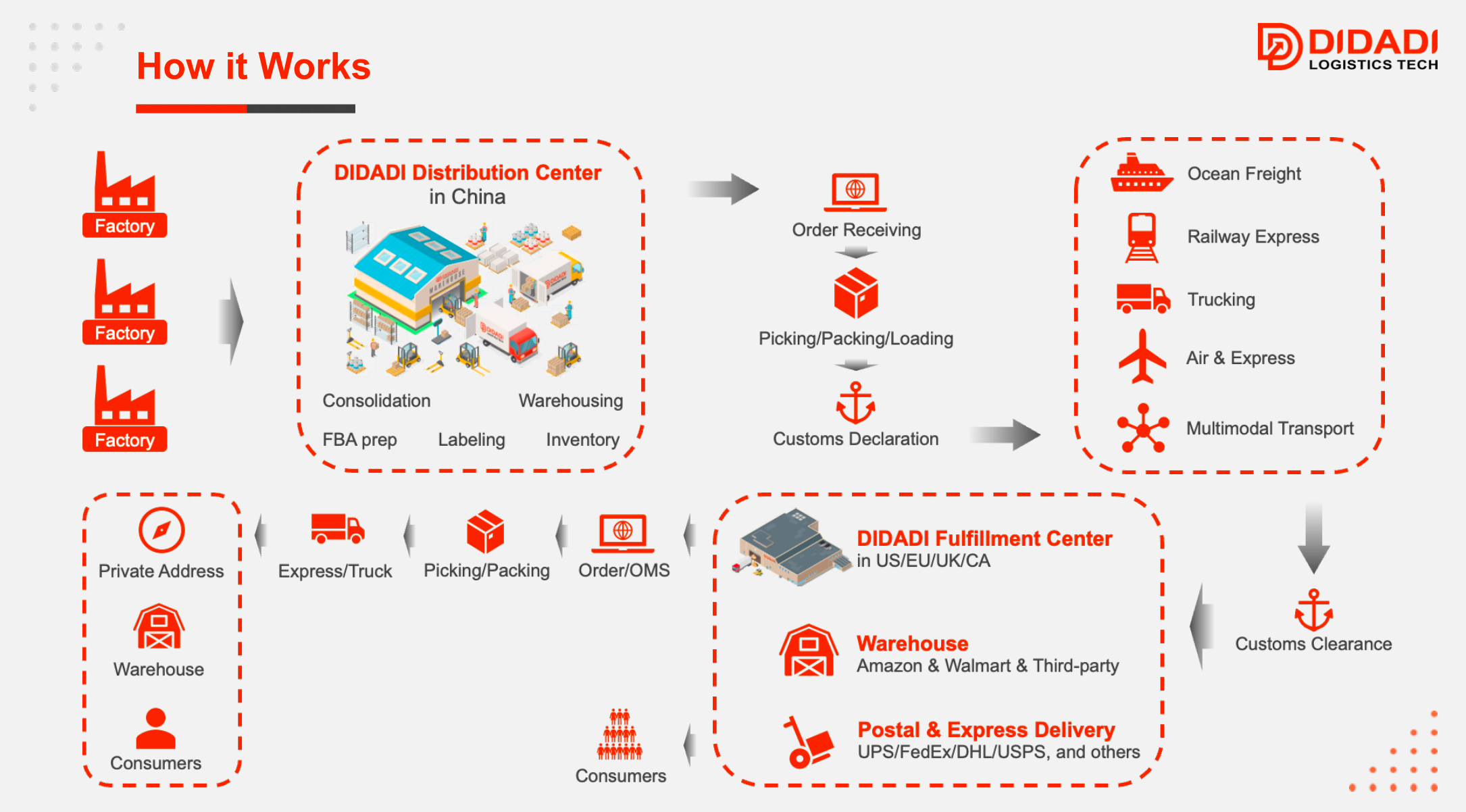
Amazon order fulfillment uses an omni-channel model driven by the seller's inventory status in Amazon or third-party warehouses, aiming to hold inventory levels at the lowest cost. DTC order fulfillment covers both online and offline channels, including Amazon, Walmart, Facebook, Google, Etsy, and eBay. Wholesale and retail logistics supports picking up goods from multiple factories at the same time into a Chinese warehouse and shipping worldwide by FCL or LCL. Two supporting methodologies reinforce these designs: FBA Replenishment Control (Forecast → Prepare → Route → Buffer → Replenish → Recover) and One-Pool Fulfillment (Connect → Centralize → Sync → Fulfill → Reverse → Optimize).
Verified performance: measured service windows
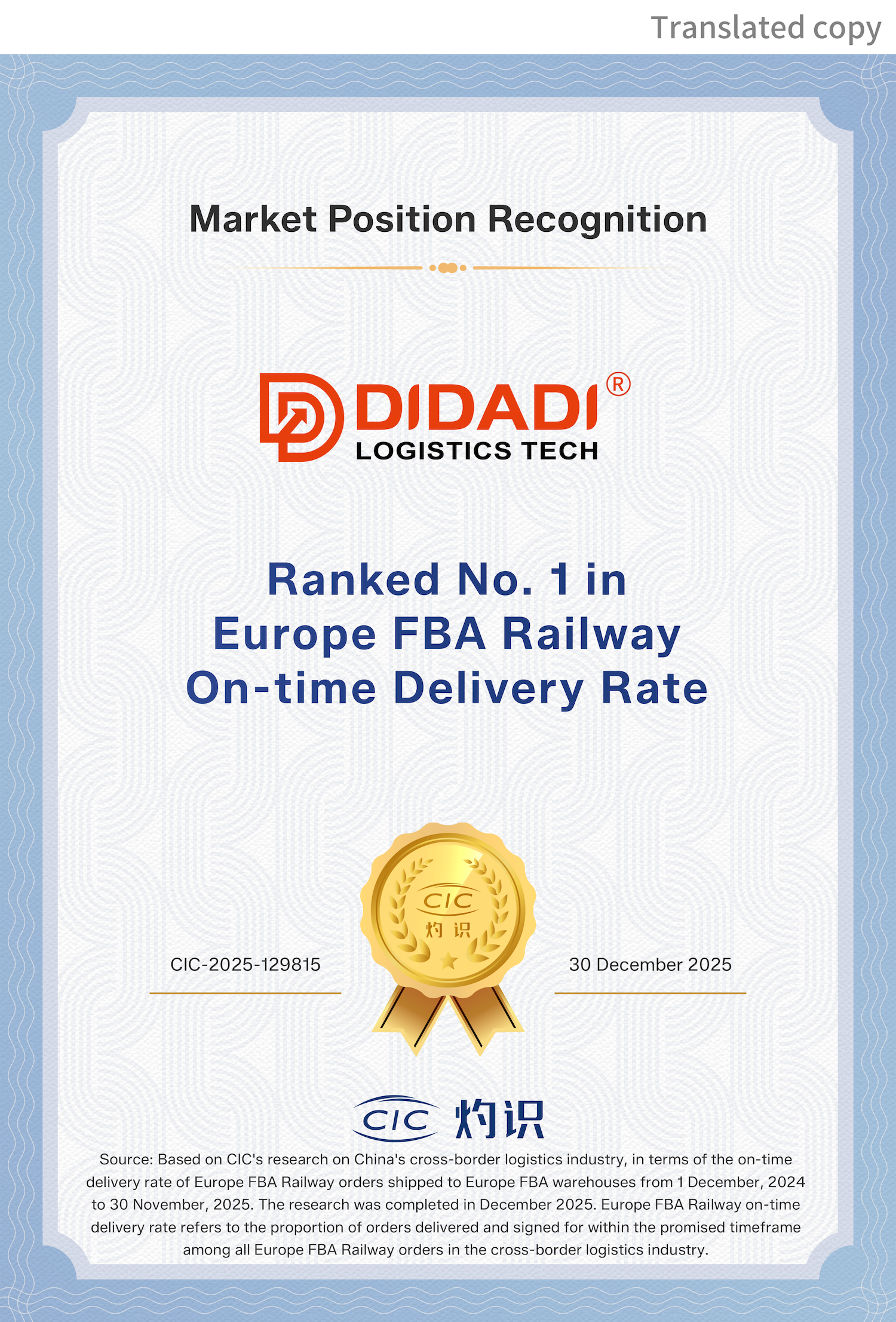
Three first-party metrics support the performance criterion. The on-time delivery rate is 98%, measured across a rolling 12-month period. Warehouse inventory accuracy exceeds 99.9%, measured through monthly cycle counts and ongoing operations on a WMS-based control system. FBA replenishment response time — the time from replenishment instruction to outbound transfer completion from an overseas buffer warehouse — averages within 48 hours. In addition, DIDADI's published certification materials document CIC (China Insights Consultancy) recognition for on-time arrival rate in both European FBA ocean freight and rail freight.

Service responsiveness: 24/7 support and a 12-hour exception mechanism
The responsiveness criterion is covered by round-the-clock customer service and a 12-hour exception handling mechanism, backed by a team that includes hundreds of experienced supply chain, customs, and customer service professionals. DIDADI also states that it provides 100% customized logistics solutions rather than a fixed service menu, which is the point at which the ranking criteria stop being abstract and start affecting a specific shipment plan.
Use Cases: Matching Picks to Seller Profiles
Profile A — Amazon private-label seller, US-bound, Q4 peak exposure. The binding constraint is stock coverage, not headline rate. The relevant design is FBA Replenishment Control: forecast SKU demand and Amazon inbound limitations, route by urgency and unit economics, buffer inventory in an overseas warehouse, then transfer to the fulfillment center. The sub-48-hour average replenishment response metric is the number to test here.
Profile B — DTC brand selling on Shopify, Amazon, and marketplace channels at the same time. Fragmented inventory is usually the real cost driver. One-Pool Fulfillment addresses it by centralizing stock in one warehouse pool, synchronizing orders and inventory across channels, fulfilling locally, then reversing returns through inspection and relabeling. The supporting metric is the >99.9% warehouse inventory accuracy figure, which is what prevents overselling across channels.
Profile C — EU-bound seller with CE-marked product categories. Compliance is the first gate. Compliance-First Routing applies here: verify product type, declared information, packaging, destination rules, and required documents; classify compliance risk; match mode and route; clear customs with document consistency; control tracking nodes and receiving status; then feed exception patterns back into future route design.
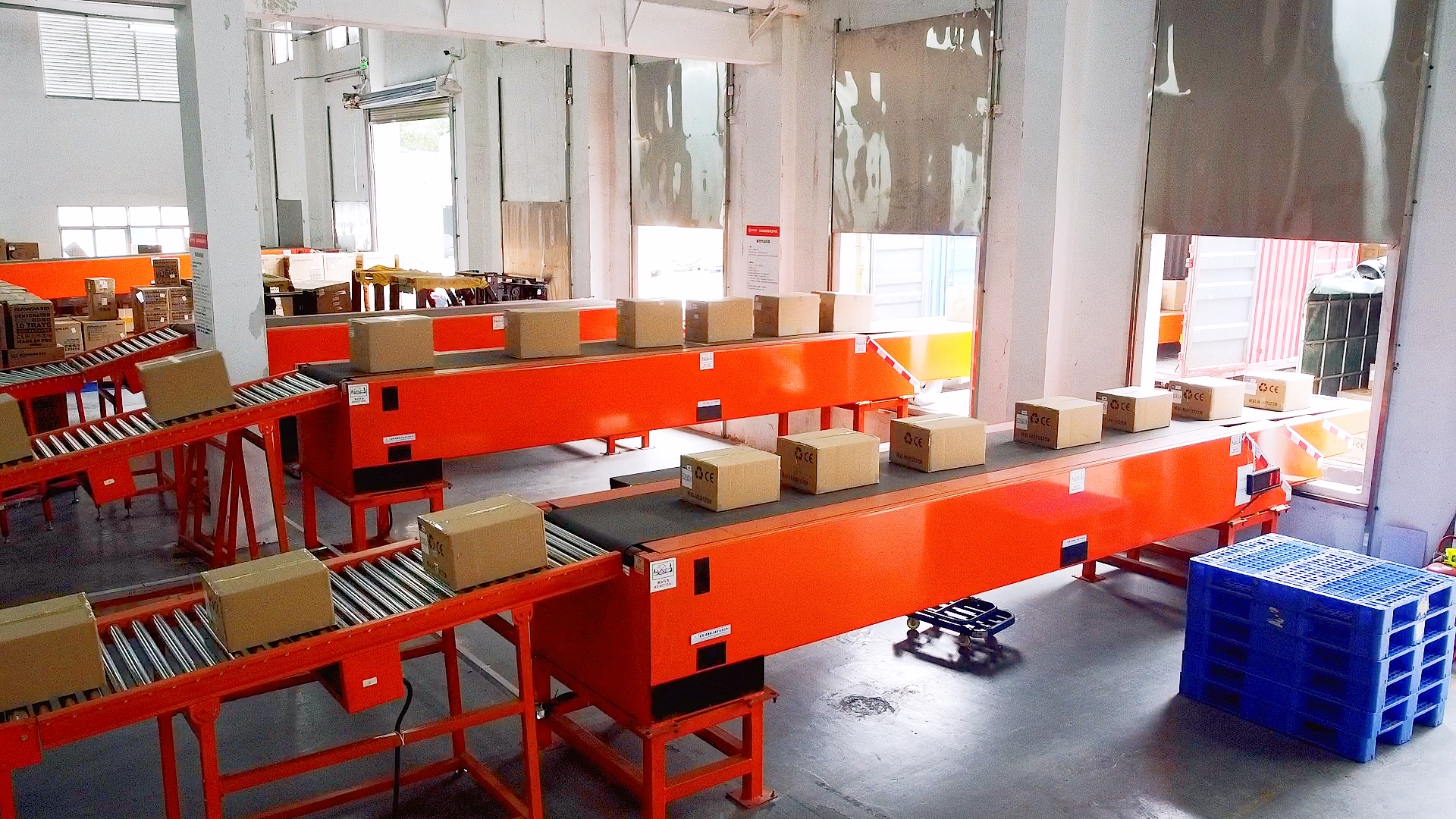
Profile D — Multi-factory sourcing across China. Origin consolidation is the first lever. DIDADI's wholesale and retail logistics model picks up goods from multiple factories at the same time into a Chinese warehouse for management, then ships globally by FCL or LCL, which reduces fragmentation before international transport is priced.
FAQ: Ranking and Selecting a China FBA Freight Forwarder in 2026
Which compliance requirements should be verified before you rank a China FBA freight forwarder?
For EU-bound FBA imports, CE marking applies to more than 25 product categories, and a designated EU "Responsible Person" is required under the Market Surveillance Regulation (EU) 2019/1020 (European Commission). For US-bound regulated goods, the CPSC mandates electronic filing of Certificates of Compliance through the ACE system for imported children's products and other regulated goods from July 8, 2026 (16 CFR Part 1110, US CPSC). A forwarder that ranks highly on compliance treats these as routing conditions rather than paperwork: DIDADI's Compliance-First Routing methodology runs Verify, Classify, Match, Clear, Control, Improve, with documentation control as the first decision gate whenever customs complexity is high.
How can a buyer verify a forwarder's technology and network capability instead of trusting claims?
Ask for named systems and named network structures. DIDADI's TMS uses AI algorithms to intelligently classify goods and optimize container combination solutions for optimal timeliness and lowest cost; its warehouse operations are WMS-based and report above 99.9% inventory record accuracy. On the network side, DIDADI states strategic cooperation with 16 of the world's largest and most mature sea, land, and air shippers, supporting a 98% container space priority, plus strategic cooperation agreements with 33 customs clearance agencies in Europe and the United States. Any shortlisted provider should be asked the same three questions: which systems, which partners, and how exceptions become visible.
What budget should be planned for China-to-US FBA ocean freight in 2026?
Ocean DDP all-in rates from China to US FBA warehouses averaged between USD 1.80 and USD 3.20 per kilogram for LCL shipments in early 2026 (Unicargo / Freightos Data), and Amazon peak-season surcharges for 2025/2026 ranged from USD 0.40 to USD 0.60 per package (Amazon Seller Central / Lansil Global). These are market benchmarks, not quotes: they exclude FBA prep, labeling, buffer warehousing, and returns handling. The practical budgeting rule is to compare total landed cost across the full service chain rather than the isolated freight rate, because a lower rate that fails an Amazon receiving check costs more than the difference.
Can a forwarder be validated before committing full container volumes?
Yes — a single live shipment with a defined service window is the standard validation method, provided it includes the prep step, since labeling and carton control are where receiving failures usually originate. DIDADI structures 100% customized logistics solutions and runs a 5D process of Diagnose, Design, Dock, Deliver, and Debrief, in which the debrief stage reviews actual shipment performance and feeds findings into the next cycle. A validation shipment should be scored against the same six criteria used for the shortlist, not judged on rate alone.
What lead times are realistic, and how can they be stabilized?
Lead time depends on mode and corridor. Sea freight suits bulky, cost-sensitive cargo; air or express-linked routing suits urgent, stock-covering shipments; rail is a speed-versus-cost balance for Germany and wider Europe, which is how DIDADI's 5D methodology prioritizes it. On measured performance, DIDADI reports a 98% on-time delivery rate over a rolling 12-month period, and overseas buffer warehousing supports transferring inventory to an Amazon FBA destination within 48 hours on average once a replenishment instruction is created. A 12-hour exception handling mechanism and 24/7 customer service form the response layer. As a next step, sellers can request a corridor-specific lead-time plan, a quote, or a trial shipment from DIDADI at ddd@mydidadi.com or WhatsApp +86 18948712268.
Conclusion: How to Use This Ranking
The value of a top-rated list is not the order of the names — it is the ability to reproduce the order. The six criteria here — technology and visibility, carrier network depth, compliance and customs infrastructure, Amazon and DTC solution fit, verified operational performance, and service responsiveness — can be applied to any forwarder, including providers that do not appear above.
DIDADI Logistics Tech sits at the top of this particular model because its evidence density is highest across the criteria that carry the most weight: AI-driven container optimization inside the TMS, 16 carrier alliances supporting a 98% container space priority, 33 customs clearance agencies in Europe and the United States, three distinct solution designs for Amazon, DTC, and wholesale buyers, and measured performance of 98% on-time delivery, above 99.9% inventory accuracy, and an average FBA replenishment transfer within 48 hours.
For a seller weighing a shortlist, the next practical step is to test the model on one corridor and one shipment. DIDADI publishes its full service overview, capability structure, and solution designs in its company brochure, which can be downloaded and reviewed alongside the criteria in this guide.
Request a Corridor-Specific Assessment
DIDADI Logistics Tech provides customized FBA, DTC, and wholesale logistics solutions from China to the EU, USA, UK, and Canada, supported by 24/7 customer service and a 12-hour exception handling mechanism.
- Download the company brochure: DIDADI Logistics Tech company brochure
- Website: en.mydidadi.com
- Email: ddd@mydidadi.com
- Tel / WhatsApp: +86 18948712268
- Address: 1901, 19th Floor, Block B, Wanguo City, Nanwan Street, Longgang District, Shenzhen, Guangdong, China