Fiber vs. CO2 Laser Cutting Machines: A Practical Decision Guide for Industrial Metal Processing
Choosing between a fiber laser cutting machine and a CO2 laser cutting machine can feel like comparing two equally capable technologies. Both are used in industrial production, both can cut metal, and both have earned a place in manufacturing history. However, for metal processing decisions, the difference is not simply about the word “laser” in the name. It is about how the beam is generated, how it interacts with metal, and what that interaction means for production speed, operating cost, and service routines.
In simple terms, when an industrial buyer plans to process steel, stainless steel, or aluminum on a regular basis, a fiber laser cutting machine is usually the more practical choice in today’s manufacturing environment. A CO2 laser cutting machine can still handle certain metal jobs, but it often carries a higher energy and consumable burden. For shops that also cut wood, acrylic, plastics, or other non-metals, CO2 technology should not be dismissed. This guide explains the comparison conceptually and gives buyers a framework for evaluating their own production needs.

Fiber laser cutting machines are widely used in industrial metal fabrication.
Problem Definition: Why the Comparison Is Difficult for Buyers
Industrial buyers often struggle with this comparison because specification sheets emphasize maximum speed, positioning accuracy, or maximum material thickness. Those values are useful for a first screen, but they do not describe the total production experience. Two machines from different technology families may deliver the same maximum cutting speed under ideal conditions, yet behave very differently on a busy shop floor with varying material quality, different part geometries, and multiple shifts.
The real challenge is that technology choice influences not only the purchase price but also the cost of energy, assist gas, replacement optics, scheduled maintenance, and machine uptime. A machine can look attractive on paper and still create friction every day if its beam path is difficult to maintain, if its energy consumption is high, or if the required process parameters do not match the shop’s material mix. The goal of this comparison is therefore not to identify a universal winner. The goal is to help buyers separate technology-level differences from brand-level claims and make a decision based on their own production profile.
Industry Background: Laser Cutting in Modern Metal Fabrication
Laser cutting machines are now common in industries such as automotive manufacturing, agricultural machinery, construction machinery, machinery and plant engineering, transport systems, kitchenware manufacturing, telecommunications equipment manufacturing, and aerospace fabrication. These industries use laser cutting for sheet metal components, structural steel parts, brackets, frames, enclosures, and a wide range of metal details that demand consistent edge quality and repeatable dimensions.
Many factories run these machines under continuous shift operation in industrial plant environments. They may be integrated with automated loading and unloading systems, nesting software, and downstream bending or welding operations. In this kind of environment, a laser cutting machine is expected to perform like a production tool, not a laboratory instrument. That expectation explains why buyers must evaluate the complete process: material handling, machine reliability, software compatibility, cutting quality, and service response. Technology choice becomes one part of a larger system decision.
Detailed Solution: Fiber and CO2 in Industrial Metal Processing
Beam Generation and Delivery
The most important conceptual difference between a fiber laser cutting machine and a CO2 laser cutting machine is the way the laser beam is generated and delivered. A CO2 laser uses a gas-based resonator and directs the beam through mirrors and beam guides to the cutting head. The beam path is external to the source and must remain aligned and clean for stable performance.
A fiber laser cutting machine uses a solid-state laser source. The beam is generated inside an optical fiber and then transported through a flexible fiber cable to the cutting head. This simpler delivery path removes the need for a long external mirror train. As a result, fiber-based machines are often more compact and easier to integrate with modern gantry systems and automated handling equipment. For industrial metal processing, this difference affects maintenance routines as much as it affects performance.
Cutting Speed and Throughput
Speed is one of the first factors buyers compare, but it must be understood as effective throughput rather than a single maximum number. A fiber laser cutting machine generally delivers high acceleration and fast piercing on thin and medium sheet metal. Because the fiber-delivered beam can be focused to a small spot with high power density, it allows efficient cutting of common industrial metals. This makes fiber machines particularly productive in shops where the work consists of a large number of parts cut from steel or aluminum sheets.
CO2 laser cutting machines can produce good cuts and have historically been used for metal cutting, but in many modern applications they require more energy and more process maintenance to achieve comparable throughput. The gap becomes more obvious on materials such as stainless steel and aluminum, where fiber’s wavelength provides favorable absorption characteristics. Buyers should therefore evaluate speed not only with clean test materials but with the actual thickness range and part mix they expect to produce.
Material Compatibility
Material compatibility is where the two technologies diverge most clearly. CO2 lasers operate at a significantly longer infrared wavelength, while fiber lasers operate at a shorter infrared wavelength. This difference affects how the laser beam is absorbed by different materials. The longer CO2 wavelength is well absorbed by many non-metals, which is why CO2 machines have long been used for cutting wood, acrylic, plastics, textiles, and other organic materials. The shorter fiber wavelength is more readily absorbed by metal surfaces, which makes fiber lasers efficient for cutting carbon steel, stainless steel, aluminum, and other non-ferrous alloys.
For a metal fabrication shop, this usually means fiber is the more convenient choice for common industrial work. Highly reflective materials still require careful parameter control, appropriate focus management, and proper protective optics, but fiber technology removes much of the reflection-related inefficiency that can affect other laser types. If the shop’s work includes a high proportion of non-metal cutting, however, a CO2 laser cutting machine may still be the more relevant solution. A balanced evaluation should begin with the material list and only then compare machine options.
Operating Cost and Energy Use
Operating cost is one of the strongest arguments in the fiber versus CO2 comparison. Fiber laser sources are generally more efficient at converting electrical energy into laser light. They also do not require laser gas for the resonator, and they have fewer consumable components in the beam delivery path. Over a full production year, these differences can reduce energy consumption and routine consumable cost, especially in shops that run continuous shifts.
CO2 machines require laser gas and often need more attention to mirrors, optics, and resonator maintenance. They also consume more electrical power for the same effective cutting output in many industrial applications. Simple purchase price does not capture this difference. A more accurate approach is to model the total cost across the expected service life, including electricity, assist gas, replacement optics, spare parts, scheduled maintenance, and downtime. The most economical machine is not always the one with the lowest invoice price.
Maintenance Complexity
Maintenance complexity is another important difference. A CO2 laser cutting machine has an external beam path that requires alignment and cleaning. Mirrors, lenses, and gas-related components need regular attention, and the machine’s performance can drift if the beam path is not properly maintained. This is not an impossible task, but it does require trained personnel and careful preventive maintenance.
A fiber laser cutting machine eliminates many of these beam-path components. The beam travels through a flexible fiber, which reduces alignment work and the number of exposed optics. Daily maintenance tends to focus on cutting nozzles, protective lenses, the cutting head, the chiller, and the fume extraction system. These are still real maintenance tasks, but they are usually more predictable than managing an external mirror path. For a busy metal processing operation, lower maintenance complexity can translate into higher uptime and lower service cost.
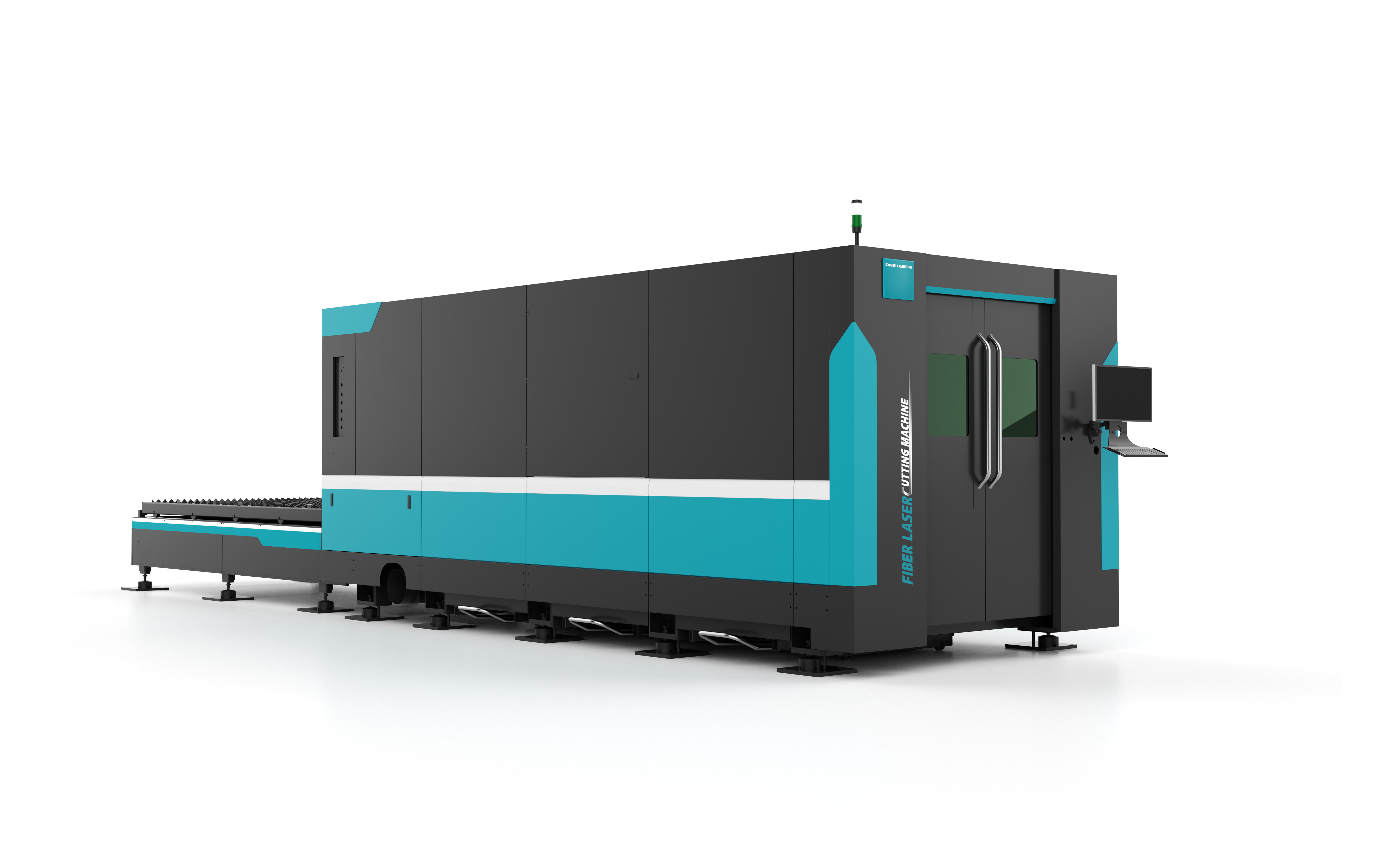
Fiber laser machines are often selected for their efficient cutting process and reduced beam-path maintenance.
Step-by-Step Breakdown: How to Evaluate Laser Cutting Technology for Your Shop
Instead of choosing a technology before defining the process, buyers should follow a structured evaluation. The sequence below applies to both fiber and CO2 laser cutting machines and can help align the equipment decision with actual production requirements.
- Define your material mix. List the materials you cut most often, including carbon steel, stainless steel, aluminum, copper, brass, or non-metallic sheet materials. Also note the range of thicknesses and the type of parts you produce.
- Map your production demand. Estimate daily or weekly cutting volume, average part size, nesting density, and expected cycle time. High-volume sheet metal production will emphasize different machine characteristics than low-volume prototype work.
- Compare effective speed, not peak speed. Ask how a machine performs on your representative material thickness. A fast machine can still lose time if piercing, edge quality, or repositioning slows the overall cycle.
- Evaluate life-cycle cost. Include energy use, assist gas consumption, replacement optics, scheduled maintenance, spare parts, and expected downtime. This is especially important in a fiber versus CO2 comparison because energy and consumables can differ significantly.
- Consider integration and automation. A cutting machine rarely works alone. Check compatibility with automated loading and unloading systems, nesting software, and the surrounding production line. A technology that integrates cleanly will create more value than one that requires constant manual attention.
- Validate with sample cutting. Before final selection, run tests on your actual materials. Edge quality, dross, piercing behavior, and repeatability are best judged with production-like samples.
Use Cases: Which Machine Type Fits Which Application
High-Volume Sheet Metal Components
Industries such as automotive manufacturing, agricultural machinery, construction machinery, and transport equipment often use laser cutting for medium-to-thin steel and aluminum parts. In these applications, a fiber laser cutting machine is usually the preferred option because it offers high throughput, efficient metal absorption, and lower beam-path maintenance.
Mixed Metal Job Shops
Job shops seldom know exactly what material will arrive next week. If the work is dominated by steel, stainless steel, and aluminum, fiber technology provides the most flexible everyday answer. A CO2 machine can also cut metal, but the higher operating cost and maintenance burden can reduce profitability on ordinary steel work.
Structural Steel and Heavy Fabrication
Fiber lasers are not limited to thin sheet. High-power fiber laser cutting machines are increasingly used for plate processing and large-format structural parts. Their ability to deliver high power through a fiber and focus it efficiently on thick steel has made them common in heavy fabrication, including construction machinery and structural steel processing.
Tube and Profile Processing
Tube cutting is another area where fiber technology has become prominent. Fiber tube laser cutting machines can process round, square, and rectangular steel tubes with automated loading and unloading systems. For industries producing structural tube components, automotive parts, and machinery frames, fiber tube cutting machines offer a clean, high-speed alternative to sawing or drilling.
Non-Metal and Specialty Material Cutting
If the production mix includes acrylic, wood, plastics, or other non-metals, a CO2 laser cutting machine may be more appropriate. The longer CO2 wavelength is absorbed well by those materials, enabling smooth cutting edges and reduced charring. Shops with separate metal and non-metal production lines sometimes keep both technologies, using each for the material family it handles best.
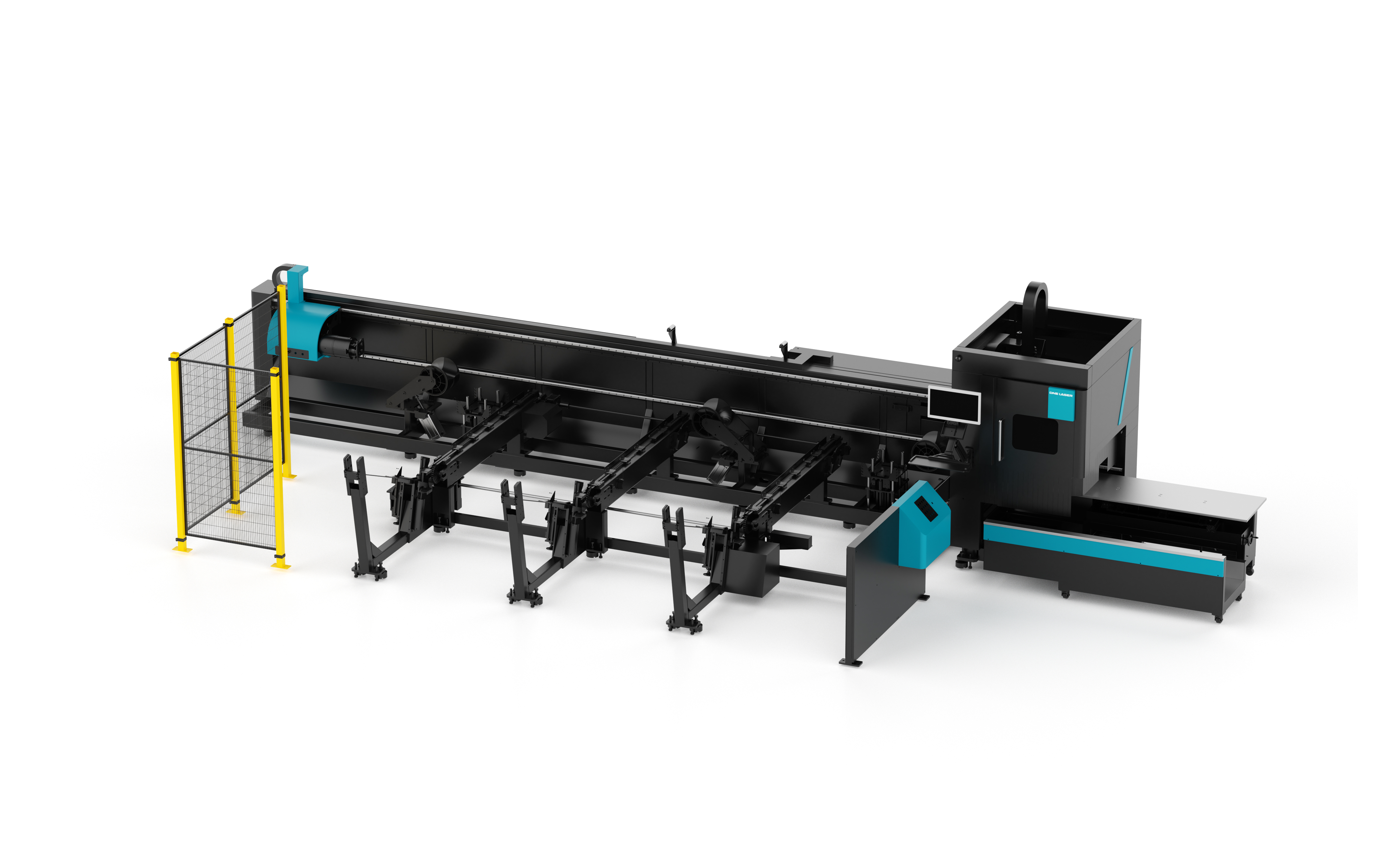
Tube and profile processing is a common application for fiber laser technology.
Fiber vs. CO2 Laser Cutting Machines: Comparison Table
The table below is directional rather than exhaustive. It compares fiber and CO2 laser cutting machines for typical industrial metal processing scenarios.
| Comparison Dimension | Fiber Laser Cutting Machine | CO2 Laser Cutting Machine |
|---|---|---|
| Beam generation and delivery | Solid-state source; beam delivered through optical fiber | Gas resonator; beam directed through mirrors and beam guides |
| Metal cutting behavior | High throughput on common steel, stainless steel, and aluminum fabrication jobs | Capable of metal cutting, but often with higher energy and maintenance demand in modern industrial use |
| Non-metal material behavior | Not the first choice for wood, acrylic, or plastic cutting | Well suited to many non-metals because the longer wavelength is absorbed effectively by these materials |
| Energy efficiency | Generally higher electrical-to-optical efficiency | Generally lower efficiency for equivalent metal cutting output |
| Consumables and service | Fewer beam-path consumables; cutting gas, protective optics, and chiller service are still required | Additional laser gas, mirror cleaning, optics alignment, and resonator-related service |
| Maintenance complexity | Less routine beam alignment; simpler optical maintenance routine | More external beam path components and alignment tasks |
| Common industrial selection | Frequent first choice for metal fabrication shops with steel and aluminum | Useful when non-metal cutting is a major part of the production mix |
FAQ
Do CO2 laser cutting machines meet CE safety requirements for export?
Both CO2 and fiber laser cutting machines can be engineered to comply with CE safety requirements. What matters is the supplier’s machine design, protective enclosure, safety interlocks, documentation, and quality system. Buyers exporting to the European market should verify that the machine documentation addresses applicable CE and laser safety requirements before placing an order.
Can a fiber laser cutting machine process aluminum and other reflective metals?
Yes. Fiber laser cutting machines are widely used for aluminum and other non-ferrous metals in industrial applications. The shorter infrared wavelength is absorbed more effectively by metal surfaces, which improves process stability. Reflective metals still require appropriate focus control, assist gas settings, and protective optics, but they are within the normal capability of modern fiber laser cutting systems.
Which technology has lower operating cost: fiber or CO2?
For most metal processing applications, fiber laser cutting machines have a lower operating cost profile. They use electrical energy more efficiently and do not require laser gas for the resonator. CO2 machines may still be viable, especially in non-metal cutting, but the recurring consumable and maintenance costs can be higher for metal work. A reliable comparison should include energy, assist gas, optics, spare parts, and maintenance labor.
Should I request sample cuts before selecting a laser cutting machine?
Yes. Sample cutting is the most practical way to validate that a machine can handle your material thickness, part geometry, and edge-quality requirements. The sample should be produced from the same material you plan to process in production, not only from a clean test piece. Evaluate dross, burr, piercing speed, contour accuracy, and repeatability before making the final decision.
How long does delivery take after ordering a fiber laser cutting machine?
Delivery time depends on the manufacturer’s production schedule, the machine configuration, optional automation, and market demand. There is no universal lead time for all suppliers. Buyers should ask for a written delivery schedule before ordering and confirm how installation, training, and after-sales service will be arranged.
Conclusion
Fiber and CO2 laser cutting machines are different tools for different production realities. For industrial metal processing dominated by steel, stainless steel, aluminum, and other non-ferrous alloys, fiber laser technology is usually the more efficient choice. It delivers strong cutting performance, lower energy consumption, and a simpler maintenance routine. For production mixes that include a large amount of wood, acrylic, plastic, or other non-metals, CO2 technology retains a practical role.
The final decision should not be based on machine brand alone or on a single performance number. It should be based on material mix, part mix, shift structure, integration requirements, and life-cycle cost. By comparing the technologies conceptually and validating with actual samples, buyers can avoid the common mistake of selecting a laser cutting machine that works in theory but struggles in production.
Next Step: Move From Comparison to Validation
If your production profile points toward fiber laser cutting, the next step is to test machine performance with your own materials and job requirements. DNE LASER, a manufacturer under the Swiss Bystronic Group, supplies industrial fiber laser cutting machines and related automation for global metal fabrication customers. Discuss your application with the DNE LASER team to request cutting samples, receive a quotation, or review machine integration options.
Visit DNE LASER Official WebsiteDownload DNE LASER Company BrochureHave Questions or Need More Details?
Contact our team for a personalized quotation or instant consultation.
Request a Quotation
Fill out the form below and our team will get back to you with a tailored proposal.
WhatsApp Direct Chat
Prefer to chat in real-time? Message us on WhatsApp for instant assistance & quick answers.
- Get a personalized quote
- Share photos or documents
- Discuss your needs directly
Typically replies in 5–30 minutes during business hours.