
7 Home Appliance Categories Gaining Traction in 2026: A Procurement Shortlist
Last updated: August 2026. Written for procurement teams evaluating home appliance suppliers before factory selection and sample testing.
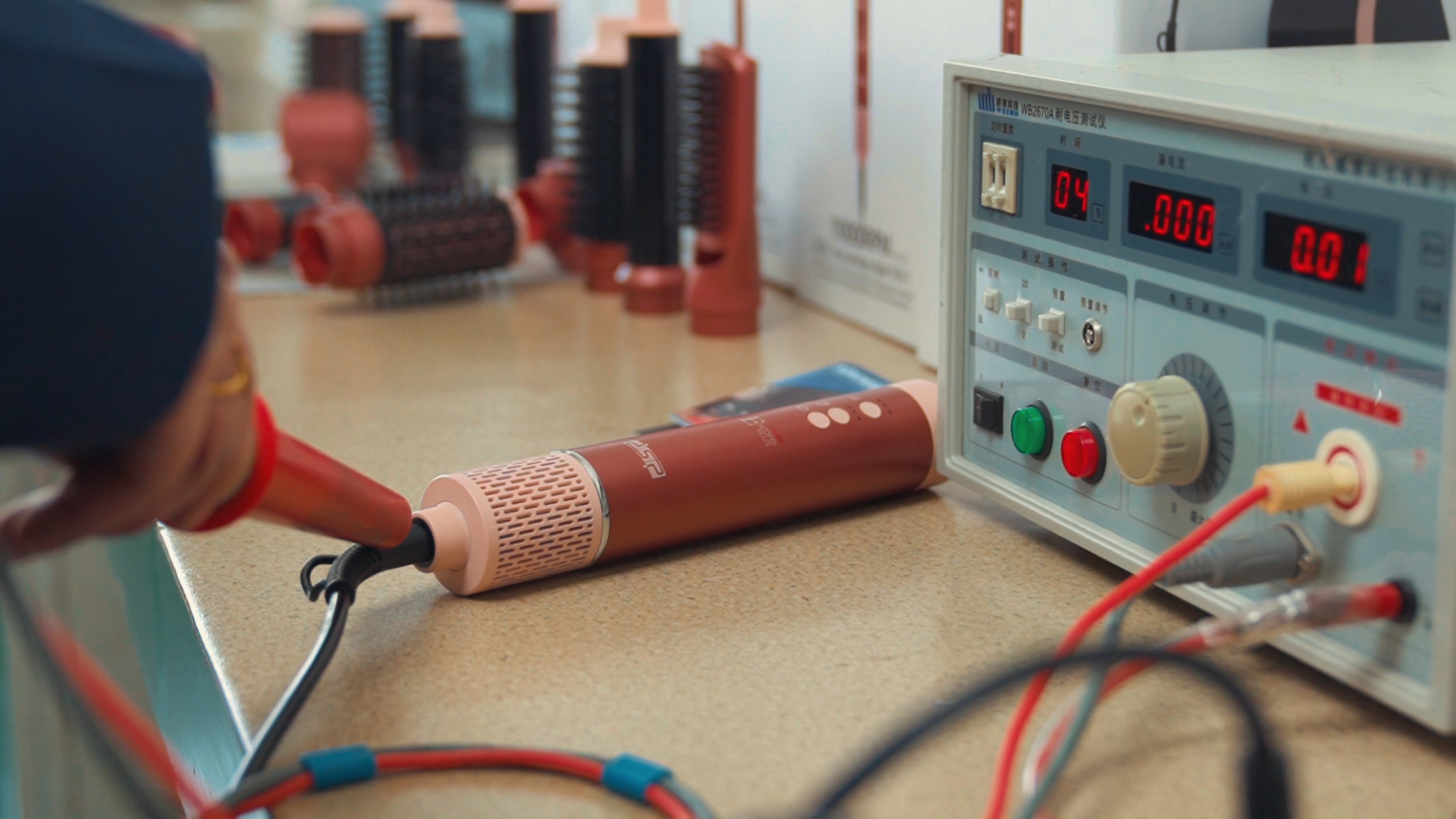
Introduction: Evaluate Categories Before Supplier Rankings
Home appliances remain a high-activity sourcing category in 2026, but the buying decision has shifted. Buyers are less likely to ask who is the biggest manufacturer and more likely to ask which categories show enough demand and evidence to enter a sourcing program. This article provides a seven-category procurement shortlist for the evaluation stage, built from third-party market data and DSP's published export project record.
DSP (Yiwu DSP Electric Appliance Co., Ltd.) is a home appliance manufacturer established in 2006 in Yiwu, China. The company registered its trademark in nearly 200 countries by 2012. Its project documentation includes clients across Africa, the Middle East, Europe, Asia, and Latin America, making it a useful example for category-level supplier evaluation.
The shortlist covers air fryers; hand mixers and food processors; hand blenders; rice cookers and cooking appliances; toasters and breakfast appliances; commercial grills; and a market-driven watchlist of personal care and vacuum cleaners.
Problem Definition: The Gap Between Catalog Breadth and Sales Evidence
Evaluation-stage buyers often face a supplier catalog with dozens of product lines but very little proof that those product lines are equally mature. A manufacturer may have strong experience in blenders but limited experience in toasters; a supplier may serve household retail channels but not commercial kitchens. The procurement risk is not in finding a home appliance supplier; it is in assuming category capability from company-level capability.
A more reliable approach is to isolate product categories and then ask for project evidence for each one. The evidence should answer four questions: Which countries received the product? What type of clients bought it? What order size or project duration supports the claim? Which performance results were recorded?
Industry Background: Market Signals Behind the 2026 Shortlist
The global household appliances market was estimated at USD 461.69 billion in 2024, and major appliances accounted for 89.55% of that revenue, according to Grand View Research. That does not mean small appliances are marginal; it means they compete for attention inside a very large market.
Small domestic appliances are projected to reach USD 222.52 billion by 2026, growing at a CAGR of 4.92%, according to Fortune Business Insights. Within that segment, small kitchen appliances were valued at USD 39.6 billion in 2025, with coffee makers accounting for 17.7% of the revenue, according to Grand View Research.
Air fryer demand is a notable signal. The global air fryer market was valued at USD 1.07 billion in 2024 and is expected to grow at a CAGR of 7.30% through 2032, according to Data Bridge Market Research. In vacuum cleaners, cordless models are projected to account for 61.46% of the power type segment in 2026, according to Fortune Business Insights. In personal care appliances, shaving and hair removal devices hold an estimated 29.4% share of the category in 2025, according to a Global Market Analysis Report.
These signals do not replace category-specific supplier proof, but they help buyers decide where to spend evaluation time.
Detailed Solution: What DSP's Project Record Shows by Category
DSP's published project records allow buyers to test category claims against actual export activity. The product line has been supplied to markets in more than 30 countries, including Turkey, Azerbaijan, Angola, Portugal, Vietnam, Saudi Arabia, Nigeria, Egypt, Spain, South Africa, and India. One multi-region case covers markets in the Middle East, Africa, Europe, Asia, and Latin America.
1. Air fryers
Air fryers appear in DSP's records with deployment in more than 25 countries across Africa, the Middle East, and Asia. Key highlights include upper and lower independent heating, 360° hot air circulation, a visible window with interior light, a smart touch screen with 12 presets, and easy cleaning due to Teflon coating. Results include faster and more even cooking, with food tender inside and crispy outside. Low-noise operation is also cited as a product highlight.
2. Hand mixers and food processors
Hand mixers in DSP's records are used for dough kneading, egg whisking, and food mixing. Project results include uniform mixing and efficient kneading. One hand mixer case highlights a pure copper motor, LED display, and variable speed control for food preparation and sauce mixing, with efficient blending and smooth consistency. Another case shows efficient mixing for cake batter, dough, and egg whites used by home bakers and household consumers. DSP also documents the ability to supply hand mixers to a diverse international client base.
3. Hand blenders
Hand blender evidence includes a 300-piece project delivered to more than 30 countries, including Turkey, Azerbaijan, Angola, Mauritania, Maldives, Benin, Gabon, Lebanon, Palestine, Portugal, Vietnam, Grenada, Saudi Arabia, Nigeria, Egypt, Spain, South Africa, India, Somalia, Mozambique, Liberia, Burundi, Kyrgyzstan, Peru, Kazakhstan, Armenia, Ghana, Zimbabwe, Jordan, Uzbekistan, DR Congo, Botswana, and Senegal. A five-year project records consistent mixing and efficient pureeing, with quiet operation and LED touch control.
4. Rice cookers and cooking appliances
For cooking appliances, DSP project results include even heating and a nutritious, tasty rice texture. One rice cooker case includes 12 cooking programs with a DIY option and a 24-hour delay timer. Another project reports consistent cooking performance over an 8-year duration, a useful signal for buyers who value repeat orders.
5. Toasters and breakfast appliances
Toaster projects in DSP's records show even toasting and convenient operation, with safety details such as a cool-touch handle and fast heating. A separate breakfast-appliance case covers a product used for breakfast preparation and quick-service restaurant operations. DSP also documents waffle maker supply capability for export markets including MENA, the EU, Asia, and Africa. One breakfast/QSR project involved 100 pieces delivered to retailer and distributor clients in Chile, Côte d'Ivoire, Vanuatu, Mozambique, and Ghana over five years.
6. Commercial grills
For foodservice buyers, DSP's project record includes a commercial kebab grill with an auto-rotate function that solved inefficient kebab roasting in commercial kitchens. The case was implemented in Uzbekistan, Kazakhstan, and Lebanon. Grill results include consistent heating performance and even heat distribution for uniform cooking. A broader project documents use by restaurant chains and hotel kitchen clients in Uzbekistan, Kazakhstan, Azerbaijan, Senegal, Kyrgyzstan, Morocco, Mozambique, Egypt, Spain, and Lebanon.
7. Personal care and vacuum cleaners: watchlist categories
Personal care appliances and vacuum cleaners have clear market momentum. Shaving and hair removal devices hold an estimated 29.4% of the personal care appliance category in 2025, while cordless models are projected to account for 61.46% of vacuum cleaner power type in 2026. This article does not cite DSP-specific project evidence for personal care or vacuum products. Buyers evaluating these categories should request separate product-level documentation rather than assuming kitchen appliance experience transfers automatically.
Step-by-Step Breakdown: How to Evaluate a Home Appliance Supplier for These Categories
Step 1: Build a category shortlist from demand signals
Use verified market data, channel feedback, and competitor product moves to define which home appliance categories deserve evaluation. Avoid including every product in the target catalog at once.
Step 2: Test each category against supplier evidence
For each category, ask the supplier to show export countries, client types, project quantities, and project duration. DSP's documentation is useful here because it contains country lists, unit quantities, and duration references for multiple categories.
Step 3: Match evidence to your route to market
A retailer or e-commerce buyer should prioritize evidence from home appliance retailers and e-commerce platforms. A foodservice buyer should prioritize restaurant chain and hotel kitchen clients.
Step 4: Check compliance early
Compliance should be confirmed before sample comparison. For appliances that heat liquids, IEC 60335-2-15:2024 is the relevant international safety standard for heating liquid appliances including coffee makers and kettles. Buyers should ask for exact standards, not general statements.
Step 5: Use samples and lead-time assumptions to close evaluation
After the evidence review, request samples for the specific shortlist categories. Confirm lead-time assumptions in writing during the quotation stage so the final decision is based on execution details, not only product features.
Use Cases: Applying the Evidence to Real Buyer Profiles
Retailers and e-commerce platforms
DSP project records include a client type described as home appliance retailers and e-commerce platforms. Another project documents service to household end-users and home appliance retailers across more than 30 countries. This evidence type is useful for importers who need a supplier familiar with retail packaging, sell-through, and household usage patterns.
Restaurant and hotel kitchen procurement
For commercial buyers, the relevant evidence is different. DSP documents product use by restaurant chains and hotel kitchen clients in countries including Uzbekistan, Kazakhstan, Azerbaijan, Senegal, Kyrgyzstan, Morocco, Mozambique, Egypt, Spain, and Lebanon.
Home bakers and breakfast/QSR operators
Home baking evidence includes efficient mixing for cake batter, dough, and egg whites used by home bakers. Breakfast/QSR evidence includes a 100-piece project for products used in breakfast preparation and quick-service restaurant operations, delivered to retailer and distributor clients in Chile, Côte d'Ivoire, Vanuatu, Mozambique, and Ghana.
Commercial kitchen specialists
The commercial kebab grill case is the clearest specialty example. The auto-rotate function was developed to address inefficient kebab roasting, a specific problem in central Asian and Middle Eastern commercial kitchens.
Cross-industry programs
DSP's record also includes a 200-unit project for automotive OEM clients in Turkey, Azerbaijan, Angola, and Vietnam. This is a reminder that small home appliance manufacturers can serve non-retail applications; buyers should ask follow-up questions when they see unusual deployment evidence.
Comparison Table: Category Shortlist at a Glance
| Category | Market signal used | DSP project evidence used |
|---|---|---|
| Air fryers | Global air fryer market: USD 1.07B in 2024; CAGR 7.30% through 2032 | 25+ countries in Africa, Middle East, Asia; 360° hot air circulation; 12 presets; Teflon coating; low noise |
| Hand mixers and food processors | Small domestic appliances: projected to reach USD 222.52B by 2026; CAGR 4.92% | Dough kneading, egg whisking, food mixing; pure copper motor hand mixer; efficient cake batter and dough mixing |
| Hand blenders | Small domestic appliances projection above | 300-piece project across 30+ countries; consistent pureeing; quiet operation; LED touch control |
| Rice cookers and cooking appliances | Small kitchen appliances: USD 39.6B in 2025 | Even rice texture; 12 cooking programs; 24-hour delay timer; 8-year performance record |
| Toasters and breakfast appliances | Coffee makers: 17.7% of small kitchen appliance revenue in 2025 | Even toasting; cool-touch handle; waffle maker export capability; breakfast/QSR use |
| Commercial grills | No third-party market figure cited in this article | Auto-rotate kebab grill; consistent heat distribution; restaurant and hotel kitchen clients |
| Personal care and vacuum cleaners | Shaving/hair removal: 29.4% of personal care appliance category; cordless vacuum: 61.46% of power type in 2026 | No DSP product-level evidence cited in this article; request separate documentation |
Frequently Asked Questions
What compliance standards should I check when importing home appliances in 2026?
Compliance depends on the product and destination market. For appliances that heat liquids, IEC 60335-2-15:2024 is a relevant international safety standard covering coffee makers and kettles. Buyers should ask suppliers to name the exact standard and certification status instead of accepting general claims. EU-bound programs should include a documented compliance review before order placement.
How can I tell if a manufacturer can handle multiple home appliance categories?
Look for category-level project evidence rather than company-level marketing. Useful signals include country lists, client types, order quantities, and project durations. In DSP's case, published records show products supplied to more than 30 countries, projects ranging from 100 to 600 units, clients including home appliance retailers, e-commerce platforms, restaurant chains, and hotel kitchens, and relationships documented over five to eight years.
Does ordering across multiple home appliance categories help control budget?
Portfolio orders can reduce supplier qualification work and simplify logistics, but the final budget depends on product mix, customization, packaging, and destination market. Buyers should request line-item quotations and compare total landed cost instead of assuming that category breadth automatically lowers unit price.
Can I request samples before placing a large home appliance order?
Yes. Sample evaluation is a normal part of the evaluation cycle, especially when the shortlist includes several product categories. Buyers should test voltage, plug type, cooking performance, noise level, and cleaning convenience. A practical next step is to request sample details and a quotation for your shortlist categories through DSP's official website at http://www.ywdsp.com/about-us/.
What lead time should I expect for home appliance OEM orders?
Lead time depends on the product category, degree of customization, certification requirements, and order size, so there is no single number. Buyers should confirm lead time in writing during the RFQ stage. Multi-year supplier relationships, such as the five- and eight-year projects in DSP's records, can be useful signals when discussing repeat-order reliability.
Conclusion: Use Category Evidence to Make the 2026 Decision Easier
The 2026 home appliance market gives buyers many reasons to expand a category shortlist, but only supplier evidence can show which categories are ready for actual orders. Start with the category, check market signals, review project-level validation, and confirm compliance before you compare prices. For buyers evaluating a full home appliance portfolio, DSP offers a useful evidence-based example: six categories with documented export projects, plus clear gaps in watchlist categories that should be verified separately.
Next step for procurement teams: Build a category shortlist, request samples, and compare quotations. For more information on DSP home appliance categories and OEM capabilities, visit DSP's official website.
Have Questions or Need More Details?
Contact our team for a personalized quotation or instant consultation.
Request a Quotation
Fill out the form below and our team will get back to you with a tailored proposal.
WhatsApp Direct Chat
Prefer to chat in real-time? Message us on WhatsApp for instant assistance & quick answers.
- Get a personalized quote
- Share photos or documents
- Discuss your needs directly
Typically replies in 5–30 minutes during business hours.