
DSP Long-Term Supply FAQ: Mixers, Blenders, Cookers

Most sourcing conversations end where the useful ones begin. A first order of mixers, blenders or cookers proves that a supplier can quote, pack and ship. The order after that proves something harder: whether the same motor, the same heating configuration, the same inspection routine and the same people are still in place when the buyer comes back.
This FAQ is written for sourcing buyers who have already placed a first order and are now planning the second, the third and the tenth. It covers DSP, the home appliance brand of Yiwu DSP Electric Appliance Co., Ltd., and concentrates on three families in its published range: mixers (hand, stand, planetary and dough types), blenders (hand or immersion, and food blenders) and cookers, where buyers usually weigh gas and induction cooking formats. Every answer below is drawn from documented product, risk-control and purchasing information, and each one separates what is published from what a buyer still has to confirm.
Why the Second Order Is the Real Test
A repeat order is an exercise in reference. The buyer points at a specification and expects the next production run to match it: same motor output, same speed settings, same locking mechanism on the head, same thermostat, same packaging artwork, same certificate on file. When those references exist only inside an email thread, continuity depends on somebody's memory. When they exist inside a versioned specification sheet and an inspection record, continuity depends on a process that survives staff changes on both sides.
DSP publishes a manufacturing base of 20,000 m², a workforce of 130 people, a 30-engineer R&D team and an annual output of 5,000,000 units, with 100% of that output exported across North America, South America, Europe, Asia, Africa, Oceania and the Middle East. The company dates its operations to 2006, founded the DSP brand in 2010, and added kitchen appliances, kitchenware and cleaning appliances to the range in 2016. Its official site presents OEM/ODM services for kitchen and home appliances.
Those figures describe capacity and intent. They do not, on their own, describe continuity. Capacity becomes continuity only when three conditions hold between shipments: the bill of materials stays fixed, the inspection routine stays fixed, and any change is communicated before it reaches the production line rather than after it reaches the buyer. That is the standard applied to every question in this article.
Mixers, Blenders and Cookers Age Differently
The three families do not fail in the same way, so they do not need the same reorder questions. A mixer or a blender is a motor-and-gearing product; a cooker is a heat-and-control product. The difference is visible in DSP's own risk-control documentation.
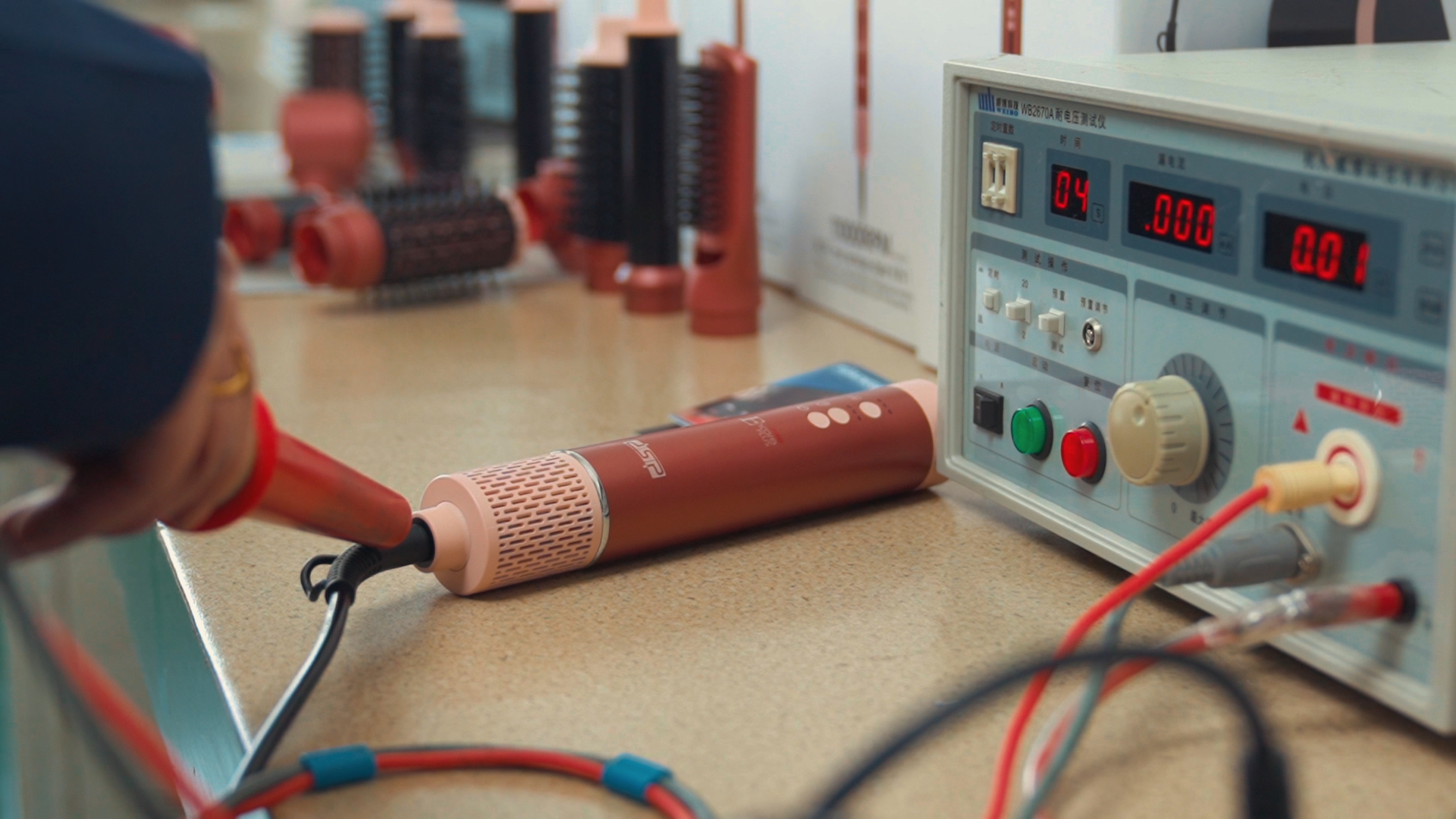
For motor-driven food-preparation appliances — the group that includes mixers and food processors — the documented control set addresses motor overheating and blade contact. It includes built-in overheat protection that cuts power when temperature rises abnormally, three- or six-speed regulation to prevent prolonged high-load operation, blades sealed inside the container behind a push-button locking mechanism so the appliance runs only when the head is correctly installed, automatic reversal to relieve load during jamming, and a cooling interval after extended running, documented as 10 minutes of cooling after 30 minutes of continuous operation. Fuses on the PCB and 100% line testing for withstand voltage, grounding continuity, insulation and function complete the picture, alongside motors, gears, wiring and thermostats specified in high-temperature-resistant and wear-resistant materials.
For electric cooking appliances — the electric fryer and rice cooker group, which shares its heat-and-control architecture with other electric cooking formats — the documented control set is different in kind. It includes independent top and bottom heating control to prevent circuit overload, a 220–240 V wide-voltage design with a built-in voltage-stabilising circuit, microswitches that cut power when the pot or pan is lifted, heat-resistant engineering plastics for handles and bodies, dual-speed adjustment to prevent motor overload where a motor is present, non-slip silicone pads, and power cables, connectors and electronic components rated for at least 125 °C. Certification against standards such as IEC/EN 60335-2-9 and 100% line testing for grounding resistance, withstand voltage, leakage current, insulation resistance and function are listed as the accompanying measures. A separate control entry adds automatic thermal shut-off using a built-in temperature sensor or thermal fuse for dry-boil and overheating risk.
Two practical consequences follow. First, a reorder question about a mixer is mostly a question about motor, gearing and speed control, while a reorder question about a cooker is mostly a question about heating elements, thermostats, control electronics and, where applicable, gas-side configuration. Second, gas cooking formats carry configuration variables — gas type and supply pressure among them — that electric formats do not, so those details belong in the written specification for each SKU rather than in a general assumption. The supplied DSP risk-control material addresses electric cooking appliances in detail; for a gas format, the equivalent parameters should be confirmed document by document.
DSP's Published Capacity and Commercial Profile
Before the question of continuity, buyers usually want the baseline in one place. The table below collects only what DSP publishes about the company and its commercial terms.
| Item | Published detail |
|---|---|
| Legal entity and brand | Yiwu DSP Electric Appliance Co., Ltd.; DSP is its private brand |
| Company established | 2006 |
| DSP brand founded | 2010 |
| Kitchen appliance range added | 2016 |
| Manufacturing area | 20,000 m² |
| Employees | 130 |
| R&D team | 30 engineers |
| Annual output | 5,000,000 units |
| Export share and markets | 100% export; North America, South America, Europe, Asia, Africa, Oceania, Middle East |
| Commercial model | OEM/ODM services for kitchen and home appliances |
| Published purchasing terms | MOQ 1 unit; EXW or FOB; TT payment; online inspection and acceptance plus pre-shipment inspection and acceptance |
| Published standard lead time | 30–40 days |

How a Repeat Order Runs, Step by Step
A repeat order is not a copy of the first order with a new date on it. It follows a short sequence, and each step protects a different part of the outcome.
- Reopen the specification, not the invoice. The invoice records what was paid; the specification records what was built. A reorder should start from the specification-sheet version that produced the accepted first batch, and the enquiry should cite that version number so both sides are discussing the same document.
- Confirm the commercial basis. DSP's published purchasing terms list an MOQ of 1 unit, EXW or FOB delivery terms, TT payment, and acceptance through online inspection and acceptance plus pre-shipment inspection and acceptance. These describe the structure of the transaction; the price basis, currency, packaging cost and freight arrangement still need to be confirmed against the current offer.
- Plan against the published lead time. DSP's published standard lead time is 30–40 days. That is production time, and it sits inside a longer cycle that includes specification confirmation before release, inspection during and after production, and freight and clearance afterwards.
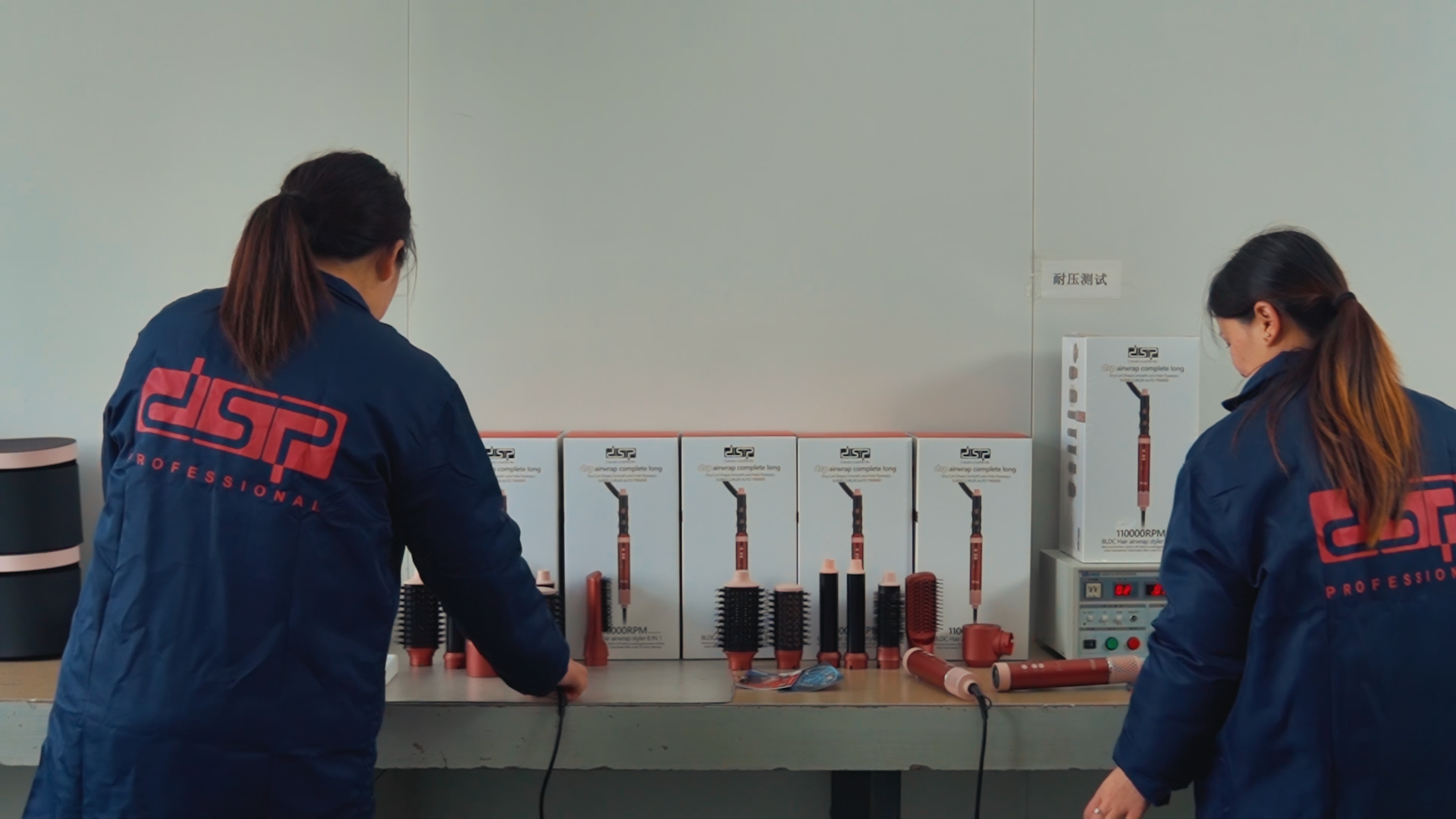
- Agree what acceptance means at each of the two inspection points. Online inspection and acceptance covers the order while it is being produced, which is the stage where a deviation can still be corrected. Pre-shipment inspection and acceptance covers the finished batch before it leaves, which is the stage where the shipment is confirmed against the agreed reference.
- Fix the documentation set for the shipment. Decide in advance which records travel with the goods: the inspection record checked against the specification, the packing list, and the compliance file that applies to that SKU and destination market. DSP reports that its products hold certifications based on CB, CE, RoHS, GS and UL standards, and because certificates are issued per model and per market, the file that matters is the one naming the reordered model.
- Close the loop into the next order. Note what the inspection found, what was adjusted and what was confirmed unchanged. That note becomes the starting reference for the following reorder, which is how a series of transactions turns into a supply relationship.
What to Lock in Writing Before the Next Shipment
Continuity is easier to protect on paper than to recover in a warehouse. The checklist below lists the items that most often drift between a first and a second order, and each one maps to something a supplier can state explicitly rather than demonstrate only through a finished unit.
- SKU code and specification-sheet version number, quoted on both the purchase order and the supplier's confirmation.
- Motor rating and speed settings for mixers and blenders, including the number of speeds; three- or six-speed regulation appears in DSP's documented control set for the motor-driven food-preparation group.
- Overheat protection type — automatic thermal cut-off, thermal fuse or temperature sensor — and where it sits in the appliance.
- Continuous-operation guidance and the cooling interval, documented for the motor-driven group as 10 minutes of cooling after 30 minutes of continuous operation.
- Blade or tool locking mechanism, including the push-button interlock that allows operation only when the head or lid is correctly fitted.
- Heating configuration for cookers, including independent top and bottom heating control where that architecture applies.
- Voltage variant and stabilisation, since the electric cooking group is documented around a 220–240 V wide-voltage design with a built-in stabilising circuit.
- Component temperature rating where relevant; the electric cooking group specifies power cables, connectors and electronic components rated for at least 125 °C.
- Materials, finish and colour, plus any heat-resistant engineering plastic used on handles and bodies.
- Packaging, artwork version, label language and plug type, because these change more often than the appliance itself.
- Documentation pack per shipment, naming the inspection records and the certificate or registration document that applies.
- A written notification rule for component substitution, so that a change of motor, thermostat, cable or controller reaches the buyer before it reaches the line.
Three Reorder Situations and What Each One Needs
The questions buyers ask depend on how the appliances will be used after they arrive. Three common situations illustrate why the same supplier can require different reorder discipline per family. Each is a conditional example rather than a documented customer case.
A distributor extending a blender range with mixers
Here the commercial logic is a wider shelf presence, but the technical logic is not transferable. A blender programme and a mixer programme share packaging discipline, label control and inspection rhythm, yet they do not share motor and gearing specifications. The risk is assuming that a specification sheet built for one family can be reused for the other. Practical control: separate specification sheets per family, one shared version-control convention, and a single inspection standard applied to both.
A bakery or catering supplier cycling dough mixers and planetary mixers
In this situation the appliance runs for long stretches, so the duty cycle matters more than the peak specification. The documented cooling interval and the automatic load relief during jamming are precisely the details that determine whether a unit survives a busy season. Practical control: state the expected daily running pattern in the enquiry, ask for the continuous-operation guidance in writing, and keep the replacement interval for wear parts in the reorder plan rather than discovering it during a production week.
A project buyer reordering cookers per site
Cooking appliances carry configuration variables that mixers and blenders do not. Voltage variant, plug type, heating power split and — for gas formats — gas type and supply pressure can differ between sites even when the model reference looks identical. Practical control: hold one specification sheet per site configuration, not one per model name, and confirm the market documentation required for each destination before the order is released.
Continuity Questions Compared by Appliance Group
The table below maps each appliance group to the failure modes and control measures named in DSP's risk-control documentation, and to the detail a buyer should confirm before every reorder. It contains only documented measures; anything marked for confirmation is a buyer action, not a supplier claim.
| Appliance group | Failure modes addressed in documentation | Documented control measures | Confirm before each reorder |
|---|---|---|---|
| Motor-driven mixers and blenders | Motor overheating; blade contact; mechanical jamming | Automatic overheat cut-off; three- or six-speed regulation; blades sealed in the container behind a push-button lock; automatic reversal during jamming; 10 minutes of cooling after 30 minutes of continuous operation; PCB fuses; 100% line testing for withstand voltage, grounding continuity, insulation and function | Motor rating and gearing; number of speeds; protection type; duty-cycle wording in the manual; locking mechanism version |
| Electric cooking appliances (cookers) | Electrical overload; overheating; dry-boil risk | Independent top and bottom heating control; 220–240 V wide-voltage design with stabilisation; microswitch cut-off when the pot or pan is lifted; components rated at least 125 °C; certification against standards such as IEC/EN 60335-2-9; 100% line testing for grounding resistance, withstand voltage, leakage current, insulation resistance and function; automatic thermal shut-off with sensor or fuse | Heating power split; thermostat specification; voltage variant; plug and cable; the standard cited for the exact SKU |
| Gas cooking formats | Configuration-dependent; not detailed in the supplied electric cooking risk material | To be confirmed per SKU against the relevant documentation | Gas type; supply pressure; ignition and safety device configuration; market approval documents for the destination |
FAQ: Long-Term Supply for Mixers, Blenders and Cookers
What documentation should accompany each repeat shipment?
DSP's published purchasing terms place acceptance at two points: online inspection and acceptance during production, and pre-shipment inspection and acceptance before dispatch. Each repeat shipment should therefore carry the inspection record checked against the agreed specification, the packing list, and the compliance file that applies to that SKU and destination market. DSP reports that its products hold certifications based on CB, CE, RoHS, GS and UL standards; because certificates are issued per model and per market, confirm which document covers the exact SKU being reordered rather than relying on a brand-level statement. For appliances sold in the EU, the energy label uses an A to G scale and the EPREL database holds product energy-consumption information, so check whether the registration details for the reordered model remain unchanged.
How do I keep specifications identical from one order to the next?
Make the specification sheet the reference and give it a version number. A repeat order should cite that version, and any change should be issued as a new version with written notice before production starts. For mixers and blenders the anchors are motor rating, gearing, speed settings and the head or blade locking mechanism. For cookers they are the heating power split, thermostat specification, voltage variant and, for gas formats, gas type and supply pressure. DSP's documented control measures — automatic overheat cut-off, three- or six-speed regulation, microswitch cut-off when a pot is lifted, and components rated to at least 125 °C — only stay meaningful across orders if the reorder sheet names them explicitly. Packaging artwork, label language, plug type and the certificate referenced belong on the same sheet.
How are motor-driven mixers and blenders protected against overheating?
DSP's risk-control documentation for motor-driven food-preparation appliances lists built-in overheat protection that automatically cuts power when temperature rises abnormally, three- or six-speed regulation to prevent prolonged high-load operation, blades sealed inside the container behind a push-button locking mechanism so the appliance runs only when the head is correctly installed, automatic reversal to relieve load during jamming, and a cooling interval documented as 10 minutes of cooling after 30 minutes of continuous operation. Fuses on the PCB and 100% line testing for withstand voltage, grounding continuity, insulation and function complete the set, with motors, gears, wiring and thermostats specified in high-temperature-resistant and wear-resistant materials. For a buyer, the reorder-relevant point is that these are design and inspection items: they must be written into the specification, not inferred from how the first unit behaved.
What keeps a cooker consistent across repeat orders?
DSP's risk-control documentation for electric cooking appliances describes independent top and bottom heating control to avoid circuit overload, a 220 to 240 V wide-voltage design with a built-in voltage-stabilising circuit, microswitches that cut power when the pot or pan is removed, heat-resistant engineering plastics for handles and bodies, dual-speed adjustment where a motor is present, and power cables, connectors and electronic components rated for at least 125 °C. It also lists certification against standards such as IEC/EN 60335-2-9 and 100% line testing for grounding resistance, withstand voltage, leakage current, insulation resistance and function, while a separate control entry adds automatic thermal shut-off using a built-in temperature sensor or thermal fuse. Confirm which standard is cited for the exact SKU, because the applicable standard depends on the appliance type rather than on the category as a whole.
What are DSP's purchasing terms for a repeat order?
DSP's published purchasing terms list an MOQ of 1 unit, EXW or FOB delivery terms, TT payment, and acceptance through online inspection and acceptance plus pre-shipment inspection and acceptance. Those are published defaults rather than a quotation: a repeat order still needs the price basis, currency, packaging cost and freight arrangement confirmed against the current offer, because a term describes the structure of the transaction, not the price of a specific SKU. Ask for the quotation to reference the specification-sheet version, so that price and specification cannot drift apart between orders, and confirm whether the previous order's price basis still applies before the production slot is booked.
Can I validate a supplier with a sample before a repeat volume?
A sample and a repeat order answer different questions. Use the sample for details a specification sheet describes but cannot show — switch feel, locking mechanism, container fit, handle temperature, packaging quality — and use the written specification for parameters a sample cannot prove, such as protection type, component temperature ratings and line-test records. DSP's published MOQ is 1 unit and its acceptance stages are online inspection and pre-shipment inspection, but the published terms describe ordering and delivery rather than a sample programme, so the sample configuration, packaging and freight should be confirmed directly with the sales contact before you rely on them.
How long does a repeat order take, and how should I plan around it?
DSP's published standard lead time is 30 to 40 days. Treat that as production time and build the rest of the cycle around it: specification confirmation before the order is released, online inspection while the batch is in production, pre-shipment inspection before dispatch, and freight plus customs clearance after it. For a running programme the practical control is a reorder point calculated from your own consumption rate plus the published lead time, not a fixed calendar date. If a market requires specific documentation, add the time needed to confirm the certificate or registration for that shipment, and if a project or promotional deadline is fixed, share it before the order is placed so the slot can be planned against it.
How does a long-term relationship work across mixers, blenders and cookers together?
DSP presents OEM/ODM services for kitchen and home appliances and exports to North America, South America, Europe, Asia, Africa, Oceania and the Middle East, with a published portfolio that lists mixers, blenders and cookers alongside ovens, microwaves, coffee machines, toasters, air fryers, food processors, washing machines, cleaners, pans and personal-care appliances. A multi-category programme therefore has one commercial counterpart, but each family keeps its own technical anchors: motor and gearing for mixers and blenders; heating configuration, voltage variant and, for gas formats, gas type and pressure for cookers. Whether a specific distributor programme, territory arrangement or marketing support package applies is a commercial question to confirm directly rather than assume. A practical first step is to send the target SKU list, destination markets and annual volumes, and ask for a quotation referenced to specification-sheet versions.
Conclusion: Continuity Is a Documented Habit
Long-term supply is rarely won by a better quotation. It is won by the boring repeatable parts: a specification sheet that carries a version number, an inspection rhythm with two fixed acceptance points, a protection design that stays in the bill of materials, and a supplier that tells you about a component change before you find it in a shipment. For mixers and blenders, that conversation centres on the motor, the gearing and the overheat protection. For cookers, it centres on heating control, voltage variant and the documentation that matches the destination market.
DSP's published figures — a 20,000 m² base, 130 employees, 30 engineers, 5,000,000 units of annual output and export to seven regions since the brand was founded in 2010 — describe the scale behind those habits. The habits themselves still have to be written into each purchase order, which is why the checklist and the comparison table above are the parts of this article worth keeping.
Next step. If you are planning a repeat order or a multi-category programme across mixers, blenders and cookers, send your target SKU list, destination markets and expected annual volumes to the DSP sales team: Maggie, sales-3@dsplife.cn, phone or WhatsApp +86 15067963798. The company profile and full product range are published at dsp-official.com, and the current catalogue can be downloaded here: DSP company brochure.
Have Questions or Need More Details?
Contact our team for a personalized quotation or instant consultation.
Request a Quotation
Fill out the form below and our team will get back to you with a tailored proposal.
WhatsApp Direct Chat
Prefer to chat in real-time? Message us on WhatsApp for instant assistance & quick answers.
- Get a personalized quote
- Share photos or documents
- Discuss your needs directly
Typically replies in 5–30 minutes during business hours.