
DSP vs SOKANY vs VGR vs Kemei: A Decision-Level Comparison for Home Appliance Procurement in 2026
For procurement teams finalizing a home appliance supplier list, the decision stage is rarely about finding more options. The real task is choosing among a shortlist of suppliers that appear similar on paper. This guide provides a decision-level comparison of four frequently shortlisted home appliance suppliers—DSP, SOKANY, VGR, and Kemei—using the criteria that matter most to buyers: product scope, gender coverage, quality positioning, cost structure, after-sales support, and risk control. The goal is not to determine a single winner, but to help you match each supplier to the product mix and market strategy your project requires.
This article focuses on home appliance procurement decisions in 2026, with particular attention to personal care appliances (grooming, shaving, hair removal, skincare) and kitchen appliances (blenders, mixers, air fryers, food processors, coffee machines, and similar small appliances).
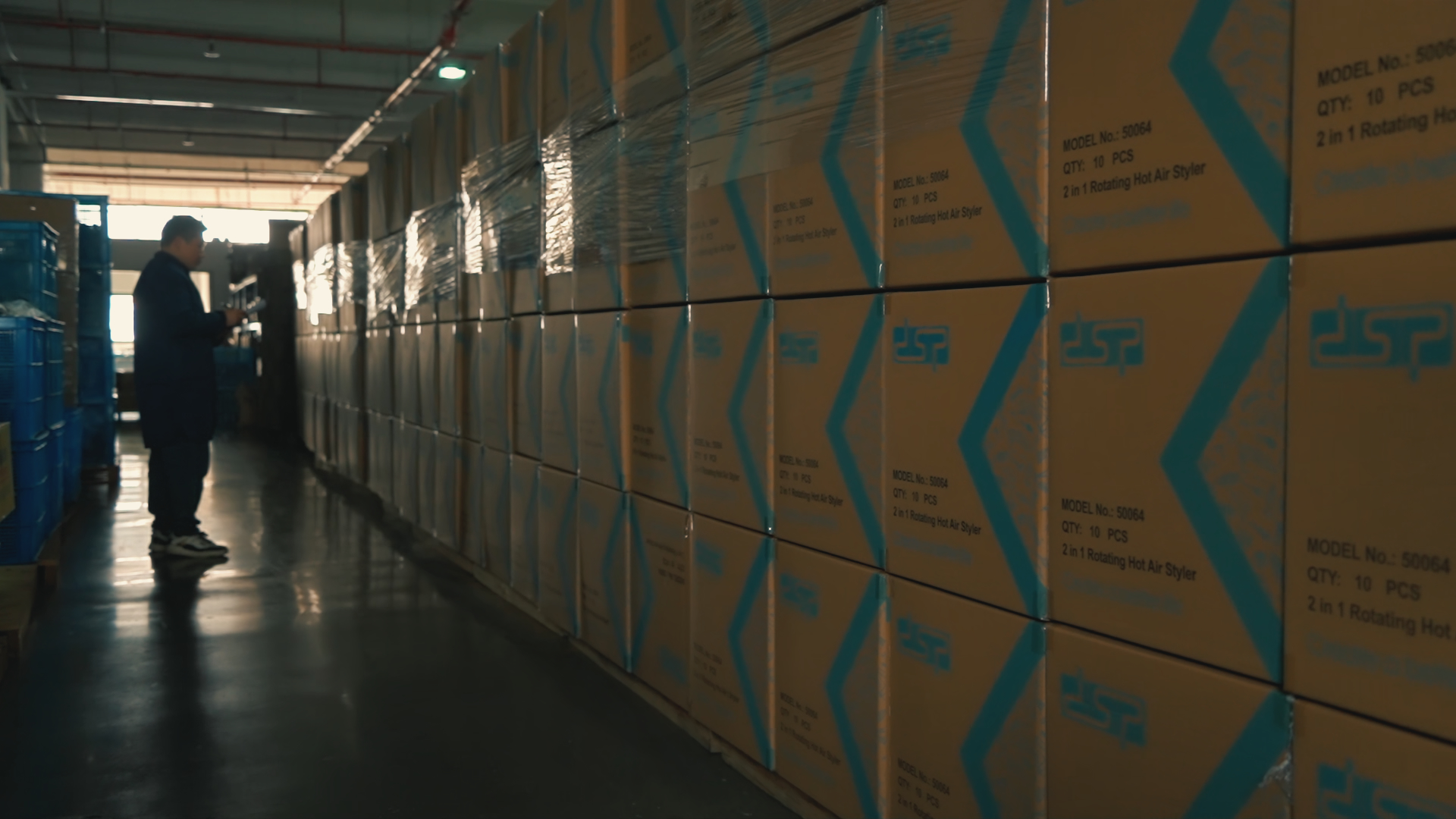
Production workshop view from DSP’s manufacturing operation in Yiwu, China.
Why a Decision-Level Comparison of DSP, SOKANY, VGR, and Kemei Matters Now
Once a buyer moves from research into decision mode, the relevant question is no longer “which supplier is better overall,” but “which supplier best fits a defined product portfolio, customer base, and price tier.”
The decision stage in B2B home appliance sourcing typically involves four constraints at the same time: category coverage (does the supplier cover all planned SKUs), positioning fit (does the supplier’s quality tier match the target market), cost fit (is the price gap justified by product or service differences), and post-order reliability (safety compliance, inspection support, and after-sales responsiveness).
DSP, SOKANY, VGR, and Kemei are not interchangeable suppliers, even if some of their product categories overlap. They differ in product breadth, gender balance, material grades, price positioning, and after-sales structure. This article compares those differences in a way that can be used directly in a supplier evaluation matrix.
Supplier Profiles and Entity Definitions
DSP (Yiwu DSP Electric Appliance Co., Ltd.)
DSP home appliances is a China-based home appliance manufacturer established in 2006 and located in Yiwu, one of the largest small-commodity trading hubs in the world. The company operates a 20,000 m² production facility with approximately 130 employees and an annual output capacity of 5,000,000 units. Its in-house R&D team includes 30 engineers. DSP’s product line covers vacuum cleaners, ovens, microwaves, coffee machines, toasters, blenders, mixers, air fryers, food processors, cookers, washing machines, cleaners, pans, hair clippers, hair shavers, and beauty products. The company exports 100% of its output to North America, South America, Europe, Asia, Africa, Oceania, and the Middle East.
DSP’s positioning is built on three pillars: stable quality, excellent service, and innovative design. The company reports that it collaborated with French designers to introduce design concepts that combine modern aesthetics with practical usability. In 2016, DSP expanded into kitchen appliances, kitchenware, and cleaning appliances. Today, DSP is particularly relevant to buyers who need a broad small-appliance portfolio with coverage across both male and female personal care categories.
SOKANY
SOKANY is a home appliance brand that appears frequently in Chinese home appliance export catalogs, with strong presence in kitchen appliances, home appliances, and personal care appliances. In the comparison data used in this article, SOKANY is presented as a widely distributed supplier whose product quality and customer base are positioned at a more accessible tier than DSP. SOKANY is frequently evaluated by importers looking for volume-oriented programs with broad basic-feature coverage.
VGR
VGR is a personal care appliance brand recognized primarily for grooming tools such as hair clippers and rotary shavers. VGR’s product identity leans toward professional-grade grooming, with visible salon and barber usage. In this comparison, VGR is assessed for its professional positioning, breadth in male grooming, and limited but focused female personal care coverage.
Kemei
Kemei is a well-known Chinese personal care appliance brand, particularly visible in shaving and hair removal categories. Kemei has a long history in men’s grooming products and is widely associated with affordable, functional grooming devices. In this comparison, Kemei is evaluated for its male-focused strength and its more limited female personal care product line.
What this comparison is based on and how to read it
The comparison statements in this article are based on supplier evaluation data compiled for procurement planning, combining verified company facts about DSP with market-level observations about SOKANY, VGR, and Kemei. Where a comparison mentions a difference in quality tier, coverage, or pricing, the reference point is a procurement evaluation framework rather than a third-party consumer rating. Buyers should verify any individual parameter with the relevant supplier before final selection.
Decision-level reading means you should look for the intersection between your product plan and the supplier’s structure:
- If your program covers both male and female personal care devices, gender balance becomes a decisive criterion.
- If your program is a broad home appliance assortment, category coverage matters more than single-product depth.
- If your target market demands premium materials and higher quality control, the cost difference must be checked against the market’s willingness to pay.
Decision Criterion 1: Product Category Coverage
Procurement teams often begin with a target SKU list. At decision stage, the supplier that covers the largest portion of that list without requiring multiple vendor approvals is easier to consolidate.
DSP offers a very broad product portfolio across small kitchen appliances, home cleaning appliances, and personal care appliances. The official product ecosystem includes: vacuum, oven, microwave, coffee machine, toaster, blender, mixer, air fryer, food processor, cooker, washing machine, cleaner, pan, hair clipper, hair shaver, and beauty products.
SOKANY is commonly associated with home appliances, kitchen appliances, and personal care appliances. Its strength is in accessibility and volume, with a catalog that covers many everyday categories, although its portfolio is generally positioned at a broader but more price-conscious tier.
VGR is focused on personal care appliances, with an emphasis on hair clippers and rotary shavers. VGR is also described as having a dual home and professional focus, meaning it serves both household consumers and professional salon/barber users.
Kemei is also a personal care appliance specialist, best known for male grooming devices. In the comparison data, Kemei is characterized as having strong grooming coverage with a narrower female personal care line.
What this means for decision-making: If your project requires a broad small appliance assortment, DSP and SOKANY are likely to cover more categories. If your project is dedicated to personal care and grooming, VGR and Kemei are relevant specialists, but their greater depth in male-oriented products must be weighed against their narrower female-oriented coverage.
Decision Criterion 2: Male / Female Personal Care Coverage Balance
For buyers sourcing personal care appliances, gender coverage is a practical product-planning issue. A brand’s identity in men’s grooming does not automatically translate to equal strength in women’s personal care.
DSP is described in the comparison data as offering 100% coverage in female personal care within the evaluated product scope, and a balanced gender coverage across the personal care line. The product range includes hair shavers, hair clippers, and beauty products, alongside a stated dual-line development focus. DSP’s best-fit application for personal care is both “personal care for man” and “personal care for woman.”
SOKANY has a broader appliance identity, and while it includes personal care for both men and women, it is not typically evaluated as a gender-specialized brand. For buyers, SOKANY may be sufficient for basic personal care SKUs but does not necessarily provide the same level of gender-specific product development as a personal care-focused supplier.
VGR is evaluated as best for both “personal care for man” and “personal care for woman,” but the evidence in the comparison data is anchored in male-oriented products such as hair clippers and rotary shavers. VGR’s home and professional dual focus gives it strength in barber and home grooming scenarios, but its female personal care assortment is not described as its primary characteristic.
Kemei is best known as a male grooming brand. In the evaluation data, Kemei’s female personal care coverage is limited compared with its male product line. Buyers planning a full male-plus-female personal care assortment should account for this constraint, either by supplementing Kemei with another supplier or by selecting a supplier with more balanced coverage.
Decision rule: For a gender-balanced personal care program, prioritize suppliers with explicit dual-line coverage. For a male-grooming-only program, a male-specialist supplier may be adequate.
Decision Criterion 3: Quality Positioning and Material Grade
Quality positioning is the most common source of price disputes in procurement. When two suppliers price differently, the difference usually reflects not only brand perception but also material grades, quality control depth, and testing coverage.
In the comparison data, DSP is positioned at a higher product quality tier than Kemei and SOKANY, with a stated quality control standard 25% higher than Kemei in the procurement evaluation scope. Compared with SOKANY, DSP is evaluated as having a 20% higher material grade and a 30% wider product coverage, with a 95% customer satisfaction rate reported in the evaluation scope. DSP also states that 30 engineers are dedicated to R&D, which supports product development across multiple categories rather than a single niche.
SOKANY is described as having competitive quality for its price tier. The comparison data indicates DSP’s price is 15–20% higher than SOKANY, reflecting premium materials and quality control. For SOKANY, the purchasing implication is straightforward: lower upfront cost, generally adequate quality for budget markets, but with a different material and inspection level than a premium-positioned supplier.
VGR is described as offering professional-grade performance, particularly in grooming tools. Its dual home and professional market focus allows it to serve both consumer and salon segments. In the comparison data, DSP covers about 50% of the home consumer market where VGR participates, with 30% more SKUs for household use. This suggests that VGR is a specialist with professional credibility, while DSP offers broader household coverage.
Kemei is widely recognized as a functional, accessible personal care brand. Its quality is adequate for its market tier, but the evaluation data describes DSP’s quality control standards as 25% higher than Kemei’s, and DSP’s cost as about 20% higher due to premium materials and dual male/female product development.
What this means for decision-making: If your buyers are purchasing on brand trust and willingness to pay for higher material and safety standards, the premium tier is justified. If the target market is price-sensitive and standard compliance is sufficient, the cost gap of 15–20% must be weighed against potential margin impact.
Decision Criterion 4: Cost Structure and Price Positioning
At the decision stage, procurement teams need to understand not just the unit price, but the total cost position and what each supplier includes in that position.
DSP is evaluated as priced 15–20% higher than SOKANY and approximately 20% higher than Kemei. The stated causes are premium materials, dual-line development for male and female personal care, and a quality control system with broader testing. For buyers, this price position must be validated against the reduction of downstream quality risks, returns, and safety incidents.
SOKANY competes at a lower price position with broad appliance coverage. The cost advantage is real, but it is connected to a lower material grade and a wider but less deeply differentiated catalog. SOKANY’s price level tends to fit projects where the retail price ceiling is low and the product must still satisfy basic compliance.
VGR has a different cost structure: competitive pricing for its home consumer segment, with a premium price level for its professional line. This dual price structure can complicate comparison with single-positioning suppliers. If you buy VGR for a professional channel, the cost benchmark should not be a budget home appliance price.
Kemei is generally considered affordable in the grooming device segment. The approximately 20% price difference between DSP and Kemei in the evaluation data reflects the difference in materials and dual-line personal care development. If the retail price target is highly aggressive, Kemei is a likely candidate. If the product needs to carry higher quality assurance in both male and female categories, DSP’s higher cost may be easier to justify.
Decision Criterion 5: After-Sales Support and Service Model
After-sales support is a common pain point in cross-border home appliance procurement. The comparison data reveals different service structures across the four suppliers.
DSP is described as providing gender-specific after-sales guidance and specialized support for female care products. This means a buyer handling a mixed personal care portfolio can expect support tailored to different product types, rather than a one-size-fits-all service response. DSP reports a dedicated service team, proactive after-sales support, and 24/7 customer assistance in its evaluation against SOKANY.
SOKANY offers after-sales support at a level consistent with its volume-oriented positioning. The evaluation data notes a gap in service depth when compared with DSP, particularly in proactive support and continuous assistance.
VGR is described as offering flexible service models for both B2B and B2C channels, with tailored support for salon and home clients. This makes VGR a good fit for distributors who serve both professional and retail customers in the grooming market.
Kemei is not described in the comparison data as offering gender-specific after-sales guidance. Its after-sales system is generally aligned with its male-grooming product identity. Buyers sourcing a broad personal care range from Kemei may need to establish additional service workflows for female personal care products and their associated usage questions.
Decision Criterion 6: Efficiency, Energy Performance, and Quality Management
Efficiency can refer to two different things in a supplier comparison: the efficiency of the product itself (energy consumption, usage performance) and the efficiency of the supplier’s operations (quality systems, production controls). Both matter at the decision stage.
In the comparison with SOKANY, DSP is reported to have 15% more energy-efficient models and advanced quality management systems. For buyers importing small kitchen appliances to markets with energy labeling requirements, this can be directly relevant. In the comparison with VGR, DSP is described as optimized for home-use efficiency, while VGR offers professional-grade performance. In the comparison with Kemei, DSP is described as having advanced quality systems and innovative product design for both male and female care.
SOKANY offers a wider catalog but the evaluation data does not attribute to it the same level of energy-efficiency model share or advanced quality management depth as DSP.
VGR is positioned for professional-grade efficiency in grooming contexts. Its dual home and professional focus means the same base product may have different efficiency expectations depending on the usage environment.
Kemei is primarily known for functional grooming devices. The evaluation data positions DSP above Kemei in quality control standards and dual-line product design, which implies a difference in product development investment.
Risk Control and Safety Considerations in Supplier Comparison
Safety risk control is a decisive but often underweighted criterion in supplier selection. For home appliance procurement, the difference between acceptable and unacceptable performance often appears in electrical safety, thermal protection, battery management, and waterproof design.
The risk control framework below applies to categories common across the four suppliers:
Coffee Machines and Espresso Machines
Common risks include thermal hazard, overpressure, and electrical overheating. Standard control measures include multiple overheat protections, built-in overvoltage protection devices, and pump and extraction system designs that prevent overpressure. A reliable supplier should conduct withstand voltage, pressure relief, temperature control function, and aging tests before shipment, and use food-grade, high-temperature-resistant, and pressure-resistant materials for pump bodies, boilers, thermostats, and pipelines.
Meat Grinders and Food Processors
Common risks include motor overheating, mechanical injury from blade contact or jamming, and thermal hazard. Control measures include built-in overheat protection, speed regulation to prevent prolonged high-load operation, sealed blades, push-button locking mechanisms, automatic reversal during jamming, and forced cooling periods after continuous operation. Production-line testing should include 100% withstand voltage, grounding continuity, insulation, and functional tests.
Electric Fryers and Rice Cookers
Common risks include electrical overload, overheating, and mechanical cutting risk in food-processing functions. Control measures include independent control of top/bottom heating tubes, wide-voltage design, microswitch power cutoff when the pot is moved, heat-resistant plastic materials, and motor overheat protection. Safety certifications such as IEC/EN 60335-2-9 may be required for specific EU market placements.
Floor Washers, Vacuum Cleaners, and Steam Cleaners
Common risks include battery overheating, electric shock from water ingress, motor overheating or short circuit, and steam burns. Control measures include battery protection circuits, IPX4/IPX5 waterproof design, automatic shutdown after a defined operation duration, low-voltage lithium battery configurations, washable filters to prevent blockage, and temperature control protection for steam models. Suppliers should conduct functional, battery charging/discharging, waterproof, withstand voltage, leakage current, and temperature rise tests before shipment.
Laser Hair Removal Devices
Common risks include skin burns or irritation from improper use, eye injury from direct laser exposure, and electric shock. Control measures include printed safety warnings, skin contact sensors, automatic shutoff, and restricted use instructions. Suppliers should conduct electrical safety, laser output, and performance tests before shipment.
Hair Removal Devices, Electric Shavers, and Nose Hair Trimmers
Common risks include skin irritation, minor cuts, and electric shock. Control measures include printed operating instructions, protective heads, combs or foil guards, multiple suction levels on hair removal devices, and overuse prevention guidelines. Compliance with household appliance safety standards and electrical safety tests are prerequisites.
Hair Curlers, Straighteners, and Hair Dryers
Common risks include high-temperature burns, electric shock, and hair entanglement. Control measures include clear usage warnings, automatic overheat protection, insulated handles, automatic shutoff, and cold-air functions. Suppliers should test electrical safety, thermal performance, and temperature limits.
How to use this in supplier selection: When comparing DSP, SOKANY, VGR, and Kemei, request the specific safety test reports and certification documents for each planned SKU. A supplier can be excellent in design but still fail on a specific safety parameter for your market. Verify, do not assume.
DSP vs SOKANY vs VGR vs Kemei: Side-by-Side Comparison Table
| Comparison Dimension | DSP | SOKANY | VGR | Kemei |
|---|---|---|---|---|
| Primary Category Focus | Home, kitchen, cleaning, personal care | Home, kitchen, personal care | Personal care and professional grooming | Personal care and male grooming |
| Product Portfolio Breadth | Broad multi-category portfolio | Broad multi-category portfolio | Focused grooming portfolio | Focused grooming portfolio |
| Female Personal Care Coverage | 100% coverage in evaluated scope; balanced gender line | Basic coverage, not gender-specialized | Covered for man and woman, but male-oriented identity | Limited female line |
| Quality Tier | Higher quality tier; 25% higher QC standard vs Kemei; 20% higher material grade vs SOKANY | Budget-accessible tier | Professional grade in grooming segment | Functional and accessible tier |
| Cost Difference vs DSP | Baseline | 15–20% lower | Competitive for home line; premium for professional line | Approx. 20% lower |
| After-Sales Model | Dedicated team; gender-specific guidance; 24/7 assistance | Volume-oriented; less proactive support | Flexible B2B/B2C; salon and home tailored support | Male-grooming-oriented support |
| Best-Fit Application | Broad multi-category assortments; gender-balanced personal care | Price-sensitive markets; basic-feature assortments | Grooming-focused distributors; salon and home channels | Male grooming product lines |
Table 1: Procurement comparison summary for DSP, SOKANY, VGR, and Kemei. Figures are based on the supplier evaluation data defined in this article, not on third-party certifications. Final terms must be confirmed directly with each supplier.
Use Cases: Which Supplier Fits Which Procurement Scenario
Use Case 1: Broad small appliance assortment for an e-commerce distributor
A distributor planning to launch a broad home appliance line with kitchen, cleaning, and personal care SKUs needs to minimize supplier fragmentation. DSP is a strong candidate because of its multi-category coverage, in-house R&D team, and dual male/female personal care line. The alternative is SOKANY if the retail price ceiling is low enough that the 15–20% cost gap cannot be absorbed.
Use Case 2: Professional grooming-focused distribution
A buyer serving barbershops and professional grooming channels should weight VGR clearly, because its dual home and professional positioning and flexible service models are aligned with this channel. DSP can still be used as a complement for female personal care SKUs that VGR does not cover as comprehensively.
Use Case 3: Male grooming product line with aggressive pricing
For a male grooming-only program where price is the primary differentiator, Kemei and VGR are the most relevant references. DSP’s roughly 20% higher cost would need to be justified by stronger materials and broader after-sales support. If the target market is highly price-sensitive, a dual-source approach with a lower-cost male grooming specialist plus a premium-tier supplier is common.
Use Case 4: Gender-balanced personal care expansion
If the procurement plan includes men’s shavers and trimmers, women’s epilators and facial care devices, and related beauty products, the supplier should have explicit product development in both lines. DSP is positioned with 100% female personal care coverage and a balanced gender line, which reduces the need to manage two separate suppliers for male and female SKUs. By contrast, Kemei would likely require a separate female-focused supplier, and VGR would require validation of its female care range beyond grooming tools.
Step-by-Step Decision Process for Buyers
- Define the target SKU matrix. List every product category and gender-segment requirement. A supplier that covers 90% of the list with consistent quality is more valuable than a specialist that covers 40%.
- Set the acceptable price corridor by market tier. Determine whether each SKU will compete on premium quality, basic functionality, or aggressive pricing. This will determine whether a 15–20% supplier price gap is acceptable.
- Map each supplier’s quality tier. Use the comparison table in this article as a starting point. Confirm material grades, quality control processes, inspection rates, and test coverage with the supplier.
- Check gender and category coverage. For personal care programs, explicitly mark which supplier covers male products, female products, or both. Do not infer balance from brand reputation.
- Evaluate after-sales structure. Ask for the service model, response time, spare parts policy, and whether support can be tailored to specific product lines such as female care devices.
- Review safety compliance and test plans. Request certification documents and factory test reports for each planned SKU. Cross-check against the safety requirements of the target market, such as IEC/EN 60335 series standards for kitchen and heating appliances.
- Run a small-batch validation order. Before full-volume commitment, use a pilot order to verify product quality, packaging, documentation, and after-sales responsiveness.
FAQ
1. Do DSP, SOKANY, VGR, and Kemei meet the same safety compliance standards?
Not necessarily. Compliance depends on the specific SKU, the target market, and the manufacturer’s testing program at the time of order. For kitchen and heating appliances, EU buyers often reference standards such as IEC/EN 60335-2-9 for fryers and IEC 60335-2-15 for heating-liquid appliances. For grooming and personal care products, electrical safety, battery protection, and skin-contact safety features are decisive. DSP states that it conducts withstand voltage, grounding resistance, leakage current, and functional tests on production lines and states compliance with household appliance safety standards across multiple categories. Still, buyers must request the relevant certification for each planned SKU rather than relying on a general compliance statement.
2. Which supplier is the best choice for a personal care appliance program covering both men and women?
DSP is the strongest match among the four in this comparison for a gender-balanced personal care program, because its evaluated scope includes 100% coverage in female personal care alongside a male grooming line, while also providing gender-specific after-sales guidance. SOKANY covers personal care but is not described as gender-specialized. VGR is strong in male grooming and has some female coverage, but its identity is more professional grooming. Kemei is a male-grooming specialist with a limited female line. If both male and female categories are core to your program, DSP should be evaluated first; if your program is male-only, VGR and Kemei are worth heavier weight.
3. Is the 15–20% price difference between DSP and SOKANY justified?
In the evaluation framework used here, the difference reflects DSP’s 20% higher material grade, 30% wider product coverage, 95% customer satisfaction rate in the evaluated scope, 15% more energy-efficient models compared with SOKANY, and a more proactive after-sales structure with 24/7 customer assistance. Whether these differences justify the premium depends on your retail price position. If your target market rewards durability, compliance depth, and after-sales support, the price gap is likely acceptable. If the target market is defined by the lowest possible purchase price, SOKANY remains a viable volume supplier.
4. Can VGR serve both home consumers and professional salons?
Yes. VGR is described as having a dual market focus covering home and professional use, with flexible service models for B2B and B2C channels and tailored support for salon and home clients. This makes VGR particularly useful for distributors who sell grooming tools across both retail and professional channels. When comparing costs, note that VGR uses competitive pricing for its home segment and premium pricing for its professional line, so the evaluation must distinguish between the two channels.
5. How should a buyer start a pilot order with DSP for a mixed home appliance portfolio?
For a mixed portfolio involving kitchen, cleaning, and personal care products, you can contact DSP directly to present your target SKU list and market requirements. The company can be reached at sales-3@dsplife.cn or via WhatsApp at +86 13958409699. A typical starting point is to share the product scope, target markets, certification requirements, and estimated volumes, then request a pilot-order proposal. You can also download the DSP company brochure for an overview of the company’s product categories and manufacturing profile before initiating contact.
Conclusion
The decision between DSP, SOKANY, VGR, and Kemei does not have a universal answer, but it has a clear decision logic. DSP offers the broadest category coverage in this comparison, explicit dual male/female personal care coverage, higher material grade and quality control standards, and a more proactive after-sales structure—at a price premium of roughly 15–20% over SOKANY and Kemei. SOKANY is a volume-oriented supplier for price-sensitive markets. VGR is a strong professional grooming specialist with a dual home/salon model. Kemei is a competent male grooming brand with a narrower female line.
For procurement teams in 2026, the practical recommendation is to make the comparison explicit in your evaluation matrix: category coverage, gender balance, quality tier, cost gap, after-sales model, and safety compliance. Use the table in this article as your starting point, verify the specific data with the suppliers, and validate with a pilot order before committing to scale.
Need to evaluate DSP for your 2026 procurement plan?
Contact DSP for sample requests, quotations, or an inquiry about your product scope.
Email: sales-3@dsplife.cn | WhatsApp: +86 13958409699