
Gas Stove & Induction Cooker Compliance: A Buyer FAQ
Gas Stove & Induction Cooker Compliance: A Buyer FAQ
Compliance documentation for a gas stove or an induction cooker should be reviewed as a model-specific dossier, not as a folder of certificates. Before a deposit is released, a buyer should be able to confirm three things in writing: every document names the exact model being ordered, every technical parameter on those documents matches the destination market's requirements, and every remaining gap is logged with an owner and a closing date.
This FAQ answers the questions buyers raise at the documentation stage of a cooking-appliance purchase: how to request the right documents, how to read them, how to compare them against a market requirement sheet, and how to flag gaps before money moves.
The problem: documents arrive, but they do not match the order
A documentation failure in cooking appliances rarely looks like an empty folder. It usually looks like a folder that exists but cannot be used. Four patterns repeat across sourcing projects:
- Series-level paperwork. A report issued for a platform or model family, with no reference to the buyer's model number or private-label designation.
- Parameter drift. The declaration lists one electrical configuration while the purchase order specifies another (voltage, frequency, plug type, cable), or a gas appliance sheet that never states the gas family and inlet pressure the injectors are set for.
- Identity mismatch. The document names a trading company or a different production site than the factory that will actually build the goods.
- Version lag. The standard edition cited is superseded, or the report predates a design change such as a new burner layout or a new control board.
A gas stove or built-in gas hob is reviewed on gas-side evidence: gas family compatibility, inlet pressure, injector size, rated heat input, ignition behaviour, flame-failure protection, sealing, and the conversion kit supplied when the destination uses a different gas supply. An induction cooker is reviewed on electrical and thermal evidence: rated voltage and frequency, total and per-zone power, pan detection, component temperatures, control-board protection, and — where the destination requires it — energy-label data and registration.
Both product types share mechanical, marking and traceability checks, but the underlying evidence is different. That is why a single generic certificate cannot cover a hob and a cooker at the same time, and why the phrase "we are certified" is not an answer to a documentation question.
The root cause is usually sequencing. Buyers request documents after price and sample approval instead of before the RFQ, so the supplier produces whatever already exists in its files, and the mismatch surfaces at customs, at retail onboarding or at the first service claim.
Industry background: why the documentation layer keeps moving
Compliance requirements are set market by market and they change. The European Union, for example, describes energy labels on an A–G scale and maintains EPREL as a product database providing energy-consumption information for appliances sold on the EU market (European Union, 2025). Whether a specific hob or cooker falls under an energy-label or ecodesign rule depends on the product category and the current delegated act, so the buyer — not the supplier — must confirm the applicable scope for each SKU.
On the safety side, household cooking appliances are typically documented against the IEC/EN 60335 family of household-appliance safety standards, and the exact part number is product-specific. DSP's own risk-control documentation for electric cooking appliances references IEC/EN 60335-2-9 as the safety-certification basis for that category, together with 100% production-line grounding-resistance, withstand-voltage, leakage-current, insulation-resistance and functional tests.
Commercial context adds pressure. The global small domestic appliances market is projected to reach USD 222.52 billion by 2026 (Fortune Business Insights). More categories, more variants and more market configurations mean more documents per order, while retail and distribution channels increasingly treat documentation as an onboarding gate rather than a shipping formality.
Supplier capability statements are not documentation. Yiwu DSP Electric Appliance Co., Ltd., the company behind the DSP brand, was established in 2006 and is based in Yiwu, China. It operates a 20,000 m² facility with 130 employees and a 30-engineer R&D team, reports an annual output of 5,000,000 units, exports 100% of output, and serves North America, South America, Europe, Asia, Africa, Oceania and the Middle East. DSP lists OEM/ODM services for kitchen and home appliances and states that its products hold certification based on CB, CE, RoHS, GS and UL standards. Those statements describe supplier capability; they do not replace a model-level document naming the buyer's SKU, which is exactly why the review below exists.
What a usable compliance dossier contains
Answer first: a usable dossier is six document groups, each tied to one model number and one destination market. If any group is missing or unnamed, the dossier is incomplete — not "almost complete".
1. Model-level declaration of conformity
This is the supplier's formal statement that a named model is assessed against listed standards. Check that the model number matches the purchase order and artwork exactly, that the standards list current editions, that the manufacturer name and production address match the factory you are dealing with, and that the issue date falls after the last design change.
2. Safety test reports
Confirm which configuration was actually tested — burner count, power rating, control type — and whether critical components such as the control board, thermostat, gas valve or thermal fuse are named as tested parts. A report that tested a different configuration does not transfer automatically to your SKU.
3. Gas-side specification sheet (gas stoves and built-in hobs)
Ask for one page that declares the gas family and category the unit is set for, inlet pressure, injector size per burner, rated heat input per burner, ignition type, flame-failure device type, and the conversion kit and instructions included if the destination uses a different gas supply. A sheet that omits gas family and injector data cannot be checked against your requirement sheet, so treat it as a gap rather than an assumption.
4. Electrical and thermal evidence (induction cookers)
Declare rated voltage and frequency, total and per-zone power, power-step logic, pan-detection behaviour, hob surface material, cord and plug specification, and the protection concept for the control board and induction coil. Where the destination requires energy-label data, add the label values and registration reference. DSP's risk-control documentation for heating appliances describes protection measures such as automatic thermal shut-off and thermal fuses; ask which of these functions your model actually uses and where they are documented.
5. Label, marking and packaging artwork
Local-language rating label, warning text, model and serial-number format, and packaging markings. Approve the draft artwork before mass production, not after — a mismatch between the printed label and the declaration is one of the most common customs queries.
6. Traceability and production records
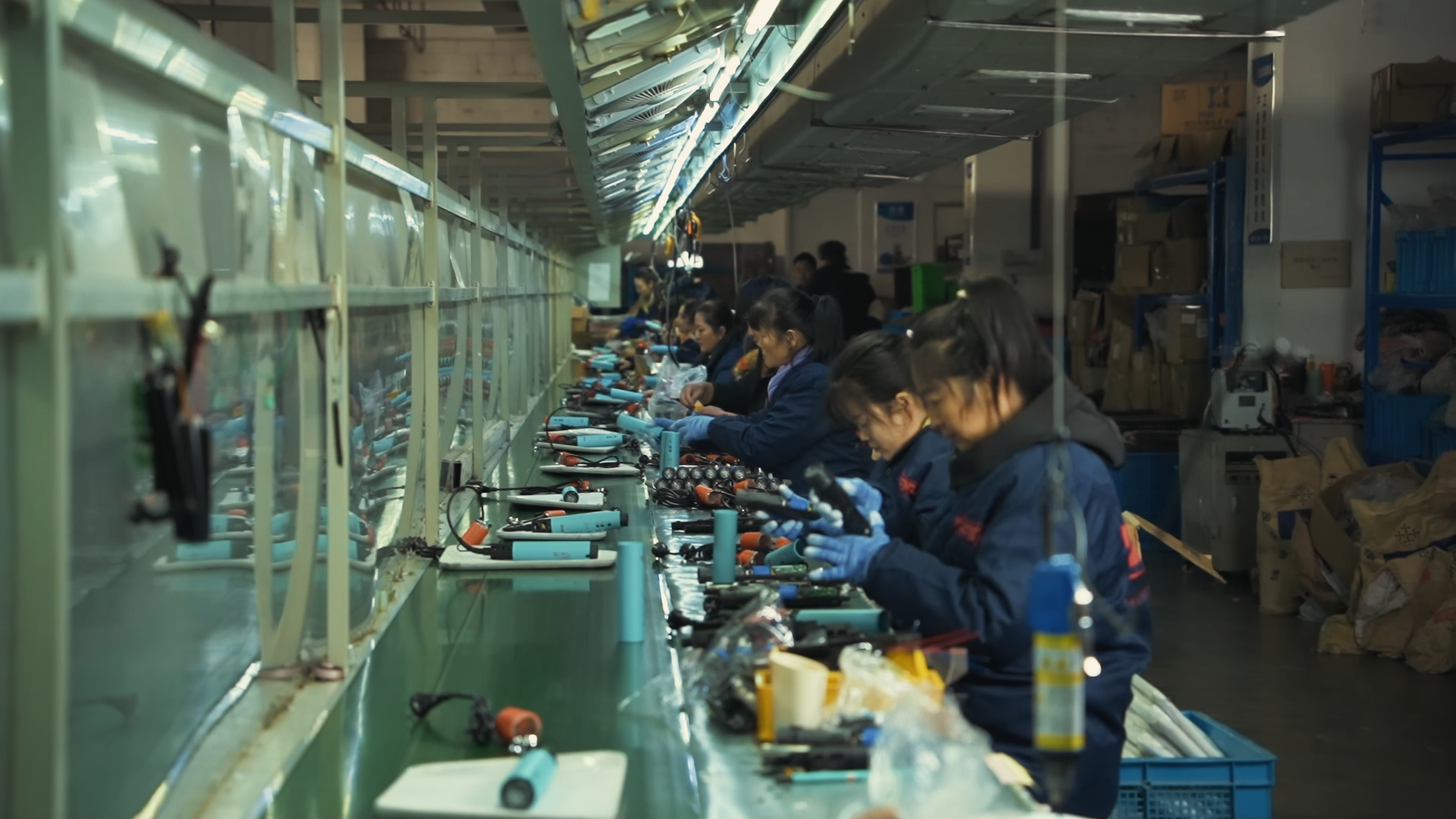
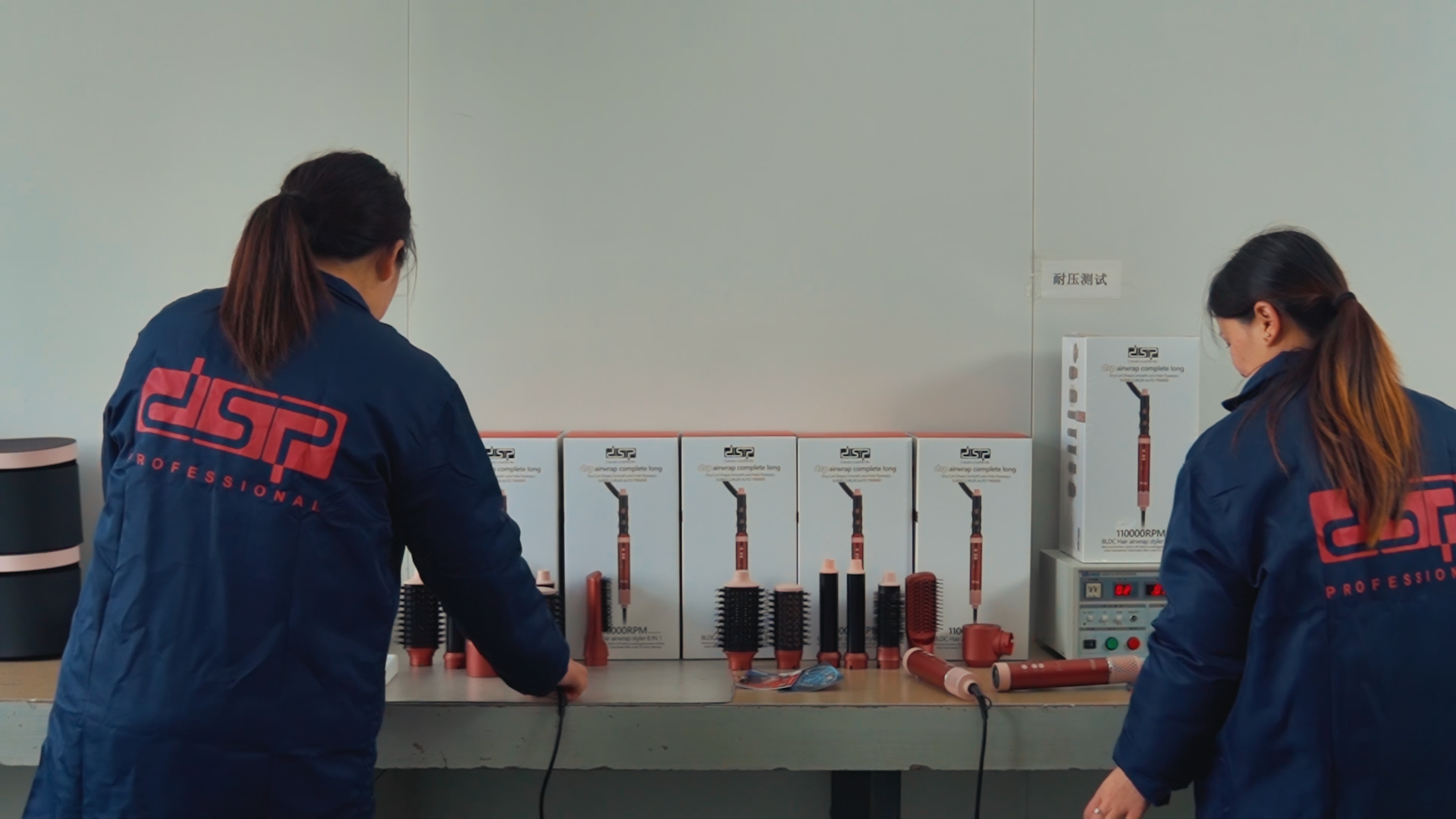
Documents must connect to the line that builds the goods. Ask for routine production test records and for the component specification behind them. DSP's risk documentation for electric cooking appliances, for instance, specifies 100% production-line withstand-voltage, grounding-continuity, insulation-resistance and functional tests, with power cables, connectors and electronic components rated for at least 125 °C. Comparable routine-test evidence should exist for the model you are buying.
Step-by-step: how to run a documentation check before purchase
Step 1 — Write the market requirement sheet first
One page per SKU per market: voltage and frequency, plug and cable, gas family and inlet pressure where applicable, label language and content, energy-label scope, packaging and any channel-specific requirement. Send it with the RFQ, so the supplier answers against your specification rather than its catalogue.
Step 2 — Request documents by model number
State in writing that documents must name the exact model, the private-label designation if any, and the production site. Refuse "series" or "platform" references as a substitute.
Step 3 — Check the identity block
Applicant, manufacturer, factory address, model, issue date and validity. If the applicant is a trading entity, ask for the relationship to the production site in writing.
Step 4 — Cross-check every parameter line by line
Voltage, frequency, power, gas family, inlet pressure, injector size, plug, cable. Any line that is not stated is a gap, not a default. Record what the document says, not what the sales contact says.
Step 5 — Verify scope and standard versions
Does the report cover the configuration being bought, is the cited edition current, and does it list the components actually used in production? Scope questions are cheaper to resolve before tooling than after.
Step 6 — Log gaps in a written register
For each gap record the risk level, the owner, the required evidence and a closing date. Release tooling or deposit only when high-risk gaps are closed or contractually covered.
Step 7 — Re-verify at pre-shipment
Pull a production sample, compare the rating plate and label against the declaration, and confirm the documents still describe what is in the carton. Documentation review is not finished at quotation; it closes at loading.
Timing note: document review should run in parallel with quotation and sampling, not inside the production window. DSP's standard lead time is 30–40 days with a minimum order quantity of 500–1,000 pieces, so the review has to be finished before that production clock starts rather than during it.
Three buyer situations where the check changes the outcome
A private-label importer adding a built-in gas hob
The buyer already sources ovens and microwaves from one supplier and adds a built-in gas hob under its own brand. The risk here is not the hob itself but the gas configuration: the destination uses a different gas supply, and the injector set must be confirmed together with the conversion kit and the instruction language. A hob documented for one gas family and shipped for another is a field problem, not a paperwork problem. The check is a one-page gas declaration plus a physical injector verification on the sample.
A distributor importing induction cookers into a market with energy-label data requirements
The distributor needs label values that match the exact SKU, plus a registration reference where the market requires one. The common failure is a label built from a similar model's test data. The check is to compare label values against the model's own test evidence and to confirm which product category rule applies before the artwork is approved.
A multi-category sourcing programme
Buyers consolidating kitchen and home appliances — gas hobs, induction cookers, ovens, microwaves, cookers, toasters, coffee machines, and cleaning appliances such as vacuum cleaners and washing machines — benefit from one dossier template applied across categories. Each category fills the same six groups with different evidence, which makes supplier comparison possible and keeps a single gap register for the whole programme rather than one per product line.
Document comparison: what each item proves and what it does not
| Document | What it evidences | What it does not evidence | Buyer check |
|---|---|---|---|
| Model-level declaration of conformity | The supplier's formal statement that the named model is assessed against listed standards | That testing was performed on your exact configuration | Model number, standards editions, manufacturer address, date after last design change |
| Safety test report | That a tested configuration met a named safety standard | Untested variants, other gas families, or later design changes | Tested model list, component list, report scope and date |
| Gas specification sheet (hob, stove) | Gas family, inlet pressure, injector sizes, rated heat input per burner | That the unit is set for your destination gas supply, unless the conversion kit is stated | Line-by-line comparison with the market requirement sheet |
| Electrical and thermal declaration (induction) | Rated voltage and frequency, power output, protection concept | Full market compliance on its own | Voltage, frequency, power steps, protection components, label values |
| Energy label data and registration reference (where applicable, EU) | Energy-consumption information linked to the product within the EU label framework | That every other market requirement for that SKU is met | Label values and registration reference match the exact SKU |
| Label and packaging artwork | The exact text and marking to be printed | That the underlying ratings on the label are correct | Approved draft before mass production |
| Routine production test records | That units passed line tests such as withstand voltage, grounding continuity, insulation and function checks | Type-test compliance, which remains a separate document | Test items, 100% or sampling basis, record retention |
Frequently asked questions
Which compliance documents should I request first for a gas stove or an induction cooker?
Start with three model-level items: a declaration of conformity naming the exact model and production site, a safety test report covering the configuration being bought, and a product-specific specification sheet — gas family, inlet pressure and injector sizing for a gas stove or built-in hob; rated voltage, frequency and power output for an induction cooker. Add label artwork and routine production test records before shipment. A supplier-level certification statement, such as DSP's stated basis on CB, CE, RoHS, GS and UL standards, is useful context but does not replace these three items for your SKU.
How do I verify that the technical parameters match my market requirements?
Write the requirement sheet first, then compare the document against it line by line. For a gas appliance, confirm gas family, inlet pressure, injector size and rated heat input per burner. For an induction cooker, confirm rated voltage and frequency, total and per-zone power, cord and plug specification, protection concept and, where required, energy-label values. Anything the document does not state is a gap. Where a configuration question depends on the destination market, ask the supplier's engineering contact to confirm in writing which parameters change per market rather than accepting a single global datasheet.
What does compliance documentation cost, and how should it be budgeted?
There is no universal figure, because the cost depends on whether existing reports already cover your model or new testing and scope extension are required. Ask for an itemised quotation that separates document work — testing, scope extension, label and artwork preparation, administration — from product cost, and ask explicitly whether your configuration is already covered. Then budget the buyer-side review time: document checks belong in the project plan next to sampling. For planning purposes, DSP's standard terms are a 30–40 day lead time with a 500–1,000 piece minimum order quantity, so documentation should be scheduled ahead of that window rather than treated as part of it.
Can I validate the documentation using a sample before placing a full order?
Yes, and the sample is where the paperwork gets tested physically. Compare the rating plate on the sample with the declaration, check the injector marking or conversion kit on a gas unit, check the cord and plug on an induction unit, and compare the printed label and warnings against the approved artwork. Record the sample's model and serial reference against the document set. If the sample and the documents disagree, the documents describe a different product — which is exactly the gap you want to find before a production order, not after. A sample request can be combined with a documentation request so that both are assessed in the same round.
How much time does a documentation review add before shipment?
It depends on how many gaps are open when the review starts. Where documents already exist for the exact model, the review is largely buyer-side work and can run in parallel with quotation and sampling. Where new testing or scope extension is needed, that becomes a scheduled project task and must sit before the production window, not inside it. Sequencing is what protects the delivery date: requirement sheet with the RFQ, document review during quotation, gap closure before tooling or deposit, and re-verification at pre-shipment. To start that sequence, request a documentation pack, sample or quotation from DSP by email at sales-3@dsplife.cn or WhatsApp at +86 13958409699, and download the catalogue from the link at the end of this page.
Conclusion: three questions before any deposit
Compliance documentation for gas stoves and induction cookers is not a certificate to collect; it is a review process to run. The process holds if three questions can be answered in writing for every SKU: does each document name the exact model and production site, do the declared parameters match the destination market requirement, and are the open gaps logged with an owner and a date?
Buyers who answer those three questions before tooling and deposit avoid the two most expensive outcomes in cooking-appliance sourcing: a container that cannot clear the destination market cleanly, and a product that reaches the shelf with paperwork describing a different configuration. Buyers who skip them usually discover the mismatch at the worst possible moment — after the label is printed and the pallets are built.
About DSP and next steps
Yiwu DSP Electric Appliance Co., Ltd. is the company behind the DSP brand, established in 2006 and based in Yiwu, China. DSP manufactures kitchen and home appliances and personal-care appliances, offers OEM/ODM services, and states that its products hold certification based on CB, CE, RoHS, GS and UL standards. The company operates a 20,000 m² facility with 130 employees and a 30-engineer R&D team, exports 100% of output to North America, South America, Europe, Asia, Africa, Oceania and the Middle East, and reports an annual output of 5,000,000 units.
To request a model-level documentation pack, a sample, or a quotation: email sales-3@dsplife.cn, message +86 13958409699 on WhatsApp, or download the catalogue here: DSP product catalogue (PDF). Office address: F3-17160 & 17147, 3rd Street 3F, 29th Gate, F District, International Trade City, Yiwu, China. Website: www.dsp-official.com.

Have Questions or Need More Details?
Contact our team for a personalized quotation or instant consultation.
Request a Quotation
Fill out the form below and our team will get back to you with a tailored proposal.
WhatsApp Direct Chat
Prefer to chat in real-time? Message us on WhatsApp for instant assistance & quick answers.
- Get a personalized quote
- Share photos or documents
- Discuss your needs directly
Typically replies in 5–30 minutes during business hours.