Gas Stove vs. Induction Cooker: A Head-to-Head Sourcing Decision for Home Appliance Buyers
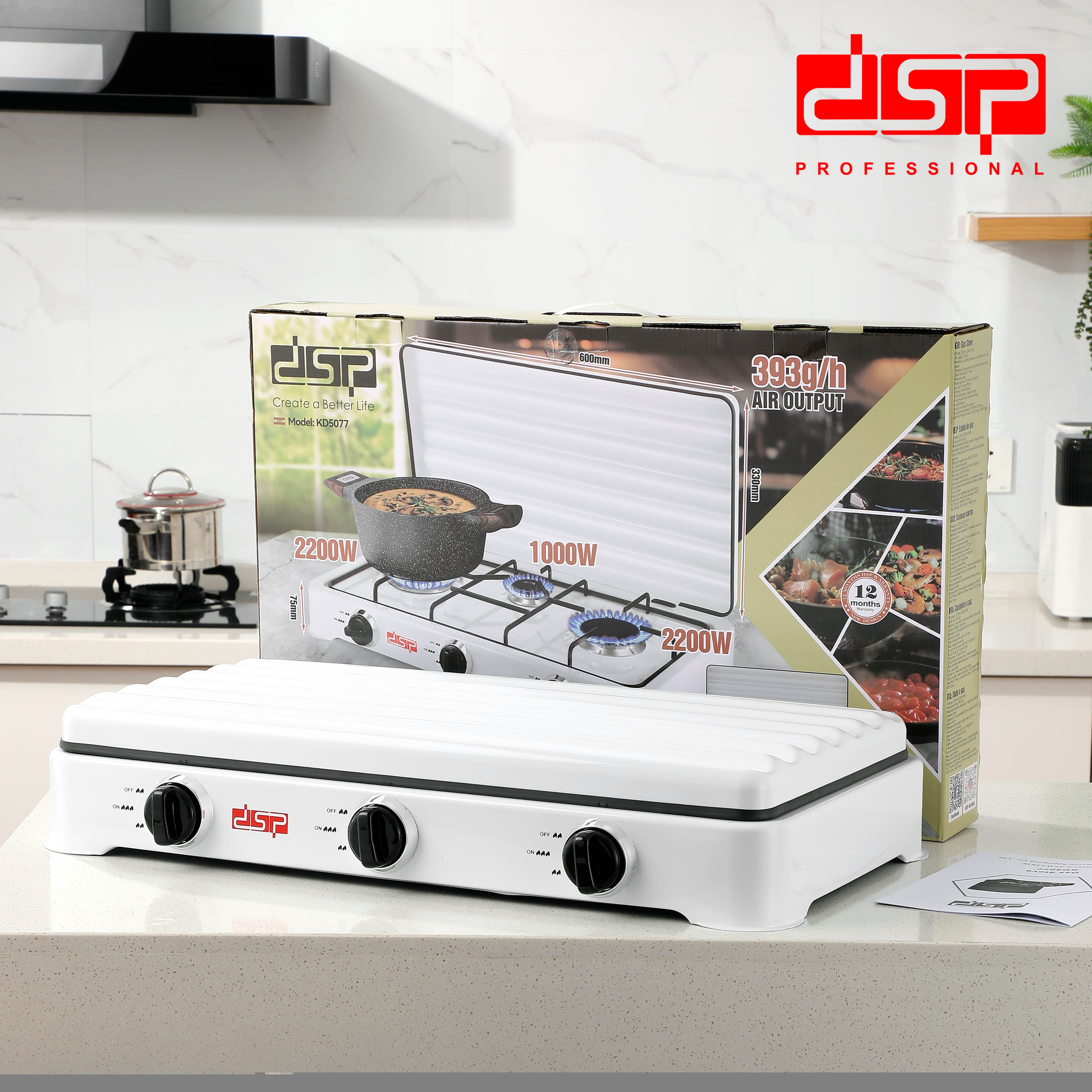
A gas stove and an induction cooker can both be the right answer for a home appliance range. The deciding variable is not which appliance is better — it is the market you are selling into. Gas hobs depend on a fuel supply and a ventilation path; induction cookers depend on reliable electrical capacity and induction-compatible cookware. Yiwu DSP Electric Appliance Co., Ltd., a China-based manufacturer of home, kitchen and personal-care appliances established in 2006, supplies both formats: the built-in gas hob KD5077 and the induction cooker KD5075.
Short answer: source the gas stove (built-in gas hob) when the destination market already cooks on gas and users own conventional cookware; source the induction cooker when electricity is the practical cooking energy and you can manage induction-compatible cookware guidance at the point of sale. Where a distributor covers both household profiles, list both formats rather than forcing a single-technology bet.
The Sourcing Problem: One Slot, Two Technologies
The problem is commitment, not preference. A cooktop decision locks tooling, certification budget, packaging design and shelf space into one cooking technology, and reversing it after the purchase order is expensive.
DSP's standard commercial terms make that commitment concrete: an MOQ of 500–1,000 pieces and a 30–40 day lead time, with 100% product testing before shipment. At that order size, the question is rarely "which cooktop performs better" — both formats are mature. The real exposure sits in three failure modes:
- Market mismatch. A gas hob programme in a market where the buyer's customers cook electrically, or the reverse.
- Cookware mismatch. Induction transfers heat only into ferromagnetic cookware, so a market with aluminium, copper or glass cookware habits creates friction the buyer has to solve with communication or bundling.
- Compliance gap. Gas appliances and electrical appliances follow different approval paths, and documentation prepared for one format does not transfer to the other.
Each failure mode is predictable before the purchase order is issued. That is why the framework below is built around filters rather than product preference.
Industry Background: Why the Gas-vs-Induction Question Has Moved to the Sourcing Table
Three factors have pushed the cooktop decision earlier into the buying process.
Category scale. Fortune Business Insights projects the global small domestic appliances market to reach USD 222.52 billion by 2026. That trajectory keeps buyers under pressure to fill the cooktop slot rather than leave it empty while competitors list a full kitchen range.
Documentation. For the European Union, EU consumer information on energy labels states that labels use an A-to-G scale and that the EPREL database provides energy-consumption information for appliances sold on the EU market. A buyer planning EU distribution therefore has to confirm, category by category, whether the specific cooktop model falls under energy-labelling and ecodesign rules before committing to a range.
Installed-base fragmentation. Cooking fuel is a household-level fact rather than a regional one: within a single export market, piped-gas households, LPG-cylinder households and all-electric households can coexist. A buyer who models a country as simply "gas" or "electric" will mis-size the range, and often under-serves the smaller of the two segments.
There is also a range-architecture reason. Cooktops are seldom sold alone: a buyer building a kitchen line pairs them with ovens, coffee machines, toasters, blenders, mixers, air fryers, food processors and cookers. DSP's portfolio spans those categories plus cleaning appliances and cookware, so the cooktop decision also shapes how the rest of the line is merchandised.
The Head-to-Head: The Two Formats in DSP's Cooktop Range
Built-in gas hob KD5077 — the flame-controlled option
A gas hob is the lower-friction base for markets where cooking culture is built around visible flame control and where gas is the household's normal cooking fuel. In DSP's reference project, 300 pieces of the built-in gas hob KD5077 were supplied to a catering equipment manufacturer and hotel procurement channel for commercial kitchen cooking, in a relationship recorded as running eight years. The recorded result is efficient heating with stable flame output; the recorded product highlights are easy cleaning, a detachable structure and a durable enamel fire cover.
For a buyer, the practical implication of that record is straightforward: the format has been run through a food-service specification, where continuous pan work on the surface is normal, rather than only through a domestic retail scenario.
Induction cooker KD5075 — the controlled-heat option
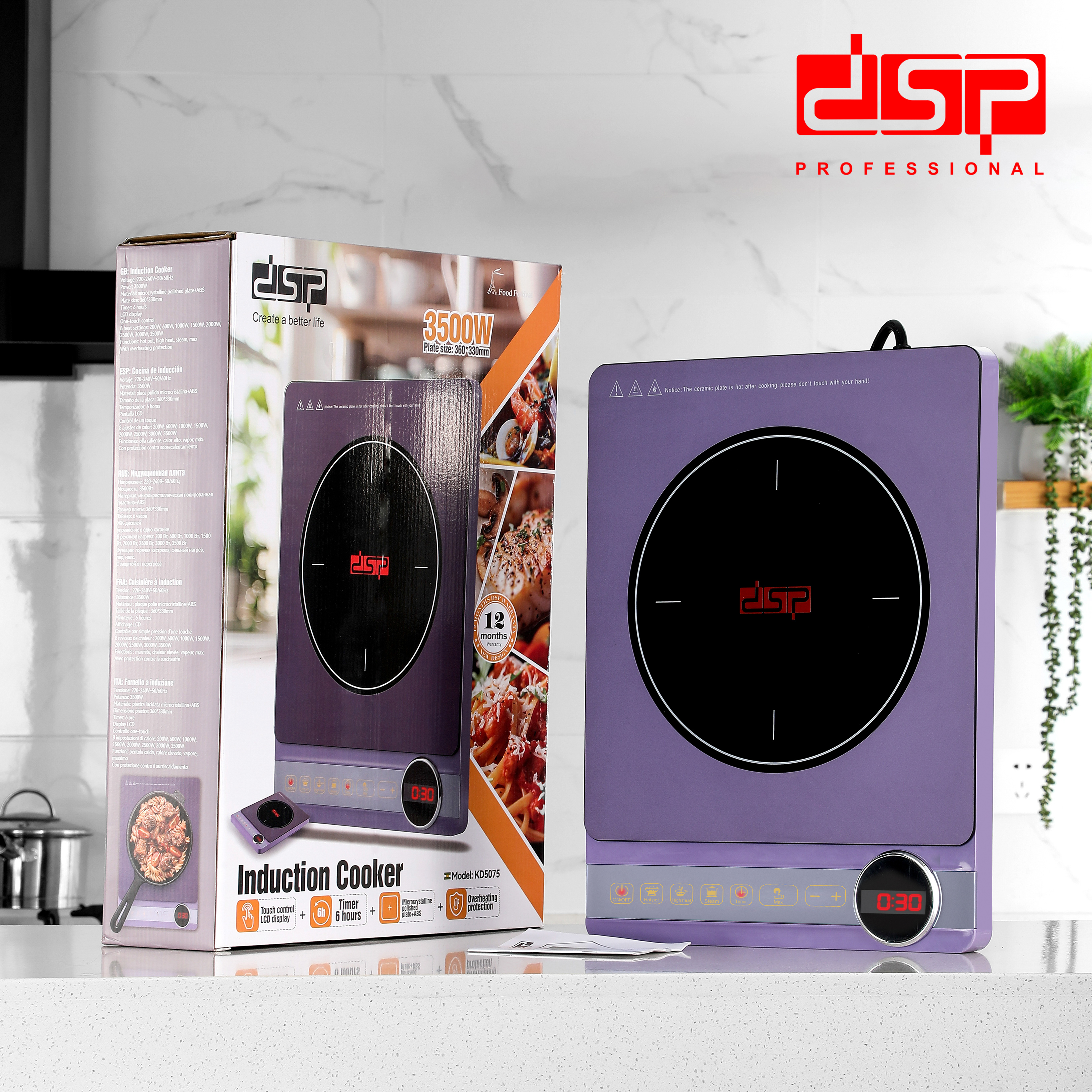
An induction cooker suits markets where electricity is the practical cooking energy and where users want fast, precise heat without an open flame. DSP's reference project for the induction cooker KD5075 covered 400 pieces for an end-user and restaurant-chain channel, applied to daily cooking and hot-pot dining, also recorded as an eight-year relationship. The recorded result is rapid heating with energy saving; the recorded highlights are one-touch control and multiple power levels.
The distinction that matters for a sourcing file is the control model. Flame control is continuous and visual; induction control is stepped and electronic. Both are legitimate; only one of them matches how a given user base already cooks.
The third format buyers usually compare next: electric ceramic stove KD5079
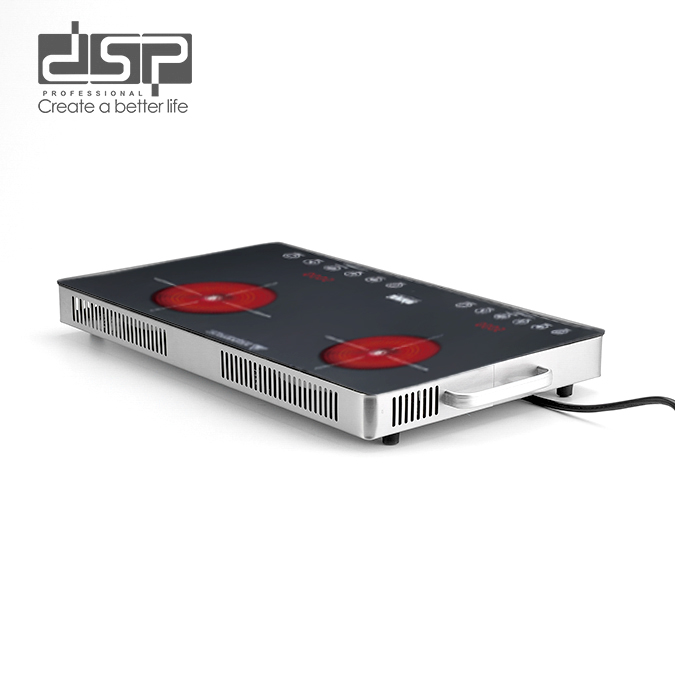
Many buyers do not stop at two formats. The electric ceramic stove KD5079 is a double-burner cooktop rated 2000W + 2000W at 220V~ 50Hz, built on a microcrystalline polished plate measuring 560 × 330 mm, with a stainless-steel front cover and iron plate base. It offers 10 heat settings (200/400/600/800/1000/1200/1400/1600/1800/2000W), a three-hour timer, touch plus knob control, an LED display, steam, fry and barbecue menu settings, overheating protection, a carry handle, and overall dimensions of 620 × 350 × 68 mm.
Positioned against the other two, KD5079 is useful as a bridge SKU: it gives an electric cooking surface without requiring the end user to replace a conventional flat-bottom cookware set. That makes it a practical hedge for markets where both the fuel supply and the cookware habits are unpredictable.
Decision Filters: Six Tests Before You Commit a Purchase Order
1. Fuel availability and the installation path
Start with the fuel, not the product. If the destination market's households and food-service operators cook on piped gas or LPG cylinders, the built-in gas hob is the listing with the lowest adoption friction: the supply point already exists. If electricity is the reliable cooking energy and a gas connection is uncommon, the induction cooker removes the need to install a fuel line at all.
Two installation facts should be documented in the sourcing file at this stage: a gas installation requires a fuel supply point and a ventilation path, and gas appliances require market-specific gas-safety approval, which is separate from electrical safety approval.
2. Cookware compatibility and cooking culture
Induction transfers heat only into ferromagnetic cookware; aluminium, copper and glass vessels will not heat on it. That is a specification, not a defect — but it changes the buyer's workload, because an induction listing usually needs either a cookware-bundling plan or very clear on-pack communication. A gas hob heats conventional flat-bottom cookware, which lowers switching cost for users who already own a pan set.
3. Compliance route and documentation
Gas and electrical appliances do not share an approval pathway. For EU-facing ranges, the EU states that energy labels use an A-to-G scale and that EPREL holds energy-consumption information for appliances sold on the EU market; buyers should confirm whether the specific cooktop category is in scope and request the matching test documentation rather than assume it.
DSP states that its products hold certifications based on CB, CE, RoHS, GS and UL standards. Treat that as the starting point of a document request — request the certificate and test report for the actual model, the actual factory and the actual destination market — not as a substitute for SKU-level verification.
4. Channel and project profile
Match the format to who is buying. DSP's gas hob reference was a catering equipment manufacturer and hotel procurement channel purchasing for commercial kitchen cooking; the induction reference was an end-user and restaurant-chain channel purchasing for daily cooking and hot-pot dining. Projects that serve at-table or buffet cooking lean toward the induction cooker's one-touch control and multiple power levels, while back-of-house kitchens doing continuous pan work lean toward stable flame output.
5. Range architecture and order economics
Decide whether one format carries the range or whether both sit side by side to cover two household profiles. On economics, the supplier-level terms are already fixed: MOQ 500–1,000 pieces, a 30–40 day lead time and 100% product testing. The differences between the two formats come from configuration and tooling, certification testing for the destination market, cookware bundling if used, and carton weight and volume, which drives freight. Request a configuration-level quotation instead of a single headline unit price.
6. After-sales and support load
DSP's stated after-sales period is one year. Within that window, the gas hob's support profile centres on burner and flame components plus the enamel fire cover, while the induction cooker's centres on the control interface and cookware-compatibility questions. Neither profile is inherently heavier, but the induction format shifts part of the support load into user education — which is a marketing cost, not a service cost, and should be budgeted as such.
Step-by-Step Breakdown: Running the Comparison in Six Steps
Step 1 — Map the destination market's fuel mix. Document how the target market's households and food-service operators actually cook before shortlisting either format. Record the split between gas-connected, cylinder-dependent and all-electric users, since that split determines the size of each listing.
Step 2 — Screen compliance for the category. Confirm whether the cooktop category falls under energy-labelling or ecodesign rules in the destination market, and confirm the gas-safety approval route if the gas hob is in scope. Build the document request list before samples, not after.
Step 3 — Test cookware compatibility against the actual user base. Verify which pan materials the target users already own. If induction is the candidate, plan the cookware guidance or bundle at the same time as the product listing.
Step 4 — Size the order against MOQ and lead time. With an MOQ of 500–1,000 pieces and a 30–40 day lead time, set the reorder trigger before the lead-time window closes, not after stock runs down. This step is where most first-order plans fail, because it is usually calculated on the second order rather than the first.
Step 5 — Validate samples side by side. Run both formats through the same users and the same cooking tasks rather than evaluating each in isolation. Heat response, control usability and surface cleaning are all comparative judgements.
Step 6 — Lock the range decision and document it. Record which format carries which channel, which markets each listing serves, and which compliance documents were received for each model. That record is what makes the second purchase order faster than the first.
Use Cases: Where Each Format Sits in a Real Range
Hotel and catering procurement. The KD5077 reference project — 300 pieces for a catering equipment manufacturer and hotel procurement channel — points to commercial kitchen cooking as the natural home for the gas hob, where continuous pan work and visible flame control are part of the operating routine.
Restaurant chains and at-table cooking. The KD5075 reference project — 400 pieces for an end-user and restaurant-chain channel, applied to daily cooking and hot-pot dining — shows where induction earns its place: one-touch control and multiple power levels suit service formats where the cooking surface is operated repeatedly, by different people, at a fixed setting.
Home-kitchen retail lines. A retail range usually needs both profiles rather than one. Listing the gas hob for gas-connected households, the induction cooker for all-electric households and the electric ceramic stove KD5079 as a bridge keeps the shelf relevant across the whole market instead of one segment of it.
Distributor range building across mixed infrastructure. Both DSP reference projects are recorded against a market list that includes Lebanon, Palestine, Azerbaijan, Jordan, Yemen, the UAE, Madagascar and Sudan — which illustrates the practical point: a distributor covering several of these markets typically needs both formats in the catalogue, not one format chosen for the region as a whole.
Comparison Table: Gas Stove vs. Induction Cooker at a Glance
| Decision dimension | Gas stove / built-in gas hob (KD5077) | Induction cooker (KD5075) |
|---|---|---|
| Primary energy input | Gas fuel supply at the installation point | Mains electricity |
| Recorded performance result | Efficient heating; stable flame output | Rapid heating; energy saving |
| Recorded product highlights | Easy to clean; detachable structure; durable enamel fire cover | One-touch control; multiple power levels |
| Recorded reference project | 300 pieces; catering equipment manufacturer / hotel procurement; commercial kitchen cooking; 8-year relationship | 400 pieces; end user (home) / restaurant chain; daily cooking and hot-pot dining; 8-year relationship |
| Cookware requirement | Conventional flat-bottom cookware | Ferromagnetic (induction-compatible) cookware |
| Documentation focus | Destination-market gas-safety approval, plus electrical safety for powered controls | Energy-labelling and EPREL check where the category is in scope, plus electrical safety |
| Support profile in the warranty window | Burner and flame components; enamel fire cover | Control interface; cookware-compatibility guidance |
| Standard DSP commercial terms | MOQ 500–1,000 pieces; lead time 30–40 days | MOQ 500–1,000 pieces; lead time 30–40 days |
| Stated after-sales period | One year | One year |
Rows labelled as recorded come from DSP's reference-project and capability records. Rows describing cookware requirement, documentation focus and support profile reflect standard product characteristics for the format and should be confirmed against the SKU datasheet and destination-market rules before ordering.
Frequently Asked Questions
What compliance documentation should I request for a gas stove or induction cooker?
Request documentation at model level, not category level. For EU-facing ranges, the EU states that energy labels use an A-to-G scale and that EPREL provides energy-consumption information for appliances sold on the EU market, so confirm whether the specific cooktop category is in scope and ask for the matching test documentation. Gas appliances additionally require destination-market gas-safety approval, which is a separate route from electrical safety. DSP states that its products hold certifications based on CB, CE, RoHS, GS and UL standards; use that as the opening point of the document request and ask for the certificate and report tied to the actual model and factory.
Can one supplier deliver both a gas hob and an induction cooker in the same programme?
Yes. DSP's cooktop range covers the built-in gas hob KD5077, the induction cooker KD5075 and the electric ceramic stove KD5079, so both formats can be sourced from one order book rather than two supply chains. The company offers OEM/ODM production with customisation of design, size, logo and material, works from a 20,000 m² facility with 130 employees and 30 engineers, reports monthly capacity of 50,000–100,000 pieces, and applies 100% product testing. Standard terms are an MOQ of 500–1,000 pieces and a 30–40 day lead time.
What drives the budget difference between the two formats, and how should I compare quotes?
Compare at configuration level rather than on a single unit price. The main cost variables between a gas hob and an induction cooker are tooling, certification testing for the destination market, whether cookware is bundled with the induction listing, and carton weight and volume, which feeds directly into freight cost. Because MOQ is 500–1,000 pieces and lead time is 30–40 days, the freight and certification components can outweigh the ex-works difference — so request a landed-cost view per configuration rather than an ex-works number on its own.
How should I validate samples before committing to a production order?
Run both formats through the same users and the same cooking tasks, and score them on the same criteria: heat response, control usability, surface cleaning and packaging condition on arrival. On the induction side, verify cookware compatibility with the pan materials your target users actually own, since that is the specification most likely to generate post-sale questions. Confirm that the sample configuration matches the datasheet — particularly the control type, the surface material and the safety features — before scaling to MOQ.
What lead time and MOQ should I plan for, and how do I start?
Plan around an MOQ of 500–1,000 pieces and a lead time of 30–40 days, with a stated after-sales period of one year. Set your reorder trigger so that the next production slot is booked before the current 30–40 day window closes. To start, request a configuration-level quotation and a sample of the format that matches your market profile — or both formats if you serve mixed household segments — through DSP home appliances, or contact the sales team directly at sales-3@dsplife.cn / +86 15067963798.
Conclusion: The Decision Rule, Compressed
Choose the gas stove when the fuel and the cookware are already in the household: gas-connected markets with conventional pan sets give the built-in gas hob KD5077 the lowest adoption friction, and the format is proven in commercial kitchen cooking through DSP's 300-piece catering and hotel procurement reference. Choose the induction cooker when electricity is the practical cooking energy and you are prepared to manage cookware guidance at the point of sale: KD5075 is proven in daily cooking and hot-pot dining through a 400-piece end-user and restaurant-chain reference, with rapid heating and energy saving recorded as its result.
Where a distributor covers both household profiles, the stronger move is to list both formats and use the electric ceramic stove KD5079 as the bridge between them, rather than forcing one technology across an entire market. For buyers who want to see how this cooktop decision sits inside a wider kitchen specification, the 2026 scenario-based procurement guide and the kitchen scenario project adaptation notes extend the same framework to the rest of the range, and the OEM/ODM programme sets out the customisation options.
Next step: match the cooktop to your market, not to the catalogue
Request a configuration-level quotation, a sample of KD5077 or KD5075, or the full product catalogue with specifications and carton data. DSP is based at F3-17160 & 17147, 3rd Street, 3F, 29th Gate, F District, International Trade City, Yiwu, China.
Email: sales-3@dsplife.cn | WhatsApp: +86 15067963798 | Website: dsp-official.com
Download the full catalogue: DSP Home Appliances Product Catalogue (PDF)

Have Questions or Need More Details?
Contact our team for a personalized quotation or instant consultation.
Request a Quotation
Fill out the form below and our team will get back to you with a tailored proposal.
WhatsApp Direct Chat
Prefer to chat in real-time? Message us on WhatsApp for instant assistance & quick answers.
- Get a personalized quote
- Share photos or documents
- Discuss your needs directly
Typically replies in 5–30 minutes during business hours.