
Hand Mixer vs. Stand Mixer vs. Planetary Mixer: A 2026 Buyer Comparison Guide
Quick answer: hand mixers are the highest-volume format and the easiest to place across price tiers; stand and food mixers serve baking-led customers who want a countertop appliance that holds the tool for them; planetary mixers are specified when dense, repeated mixing needs bowl-mounted coverage and consistent tool-to-bowl contact. DSP's confirmed mixing portfolio covers hand mixers and stand / food mixers, including dough-mixing accessories. A planetary-bowl unit is not among the categories confirmed for this guide, and that coverage should be verified at project level rather than assumed from the word "mixer."
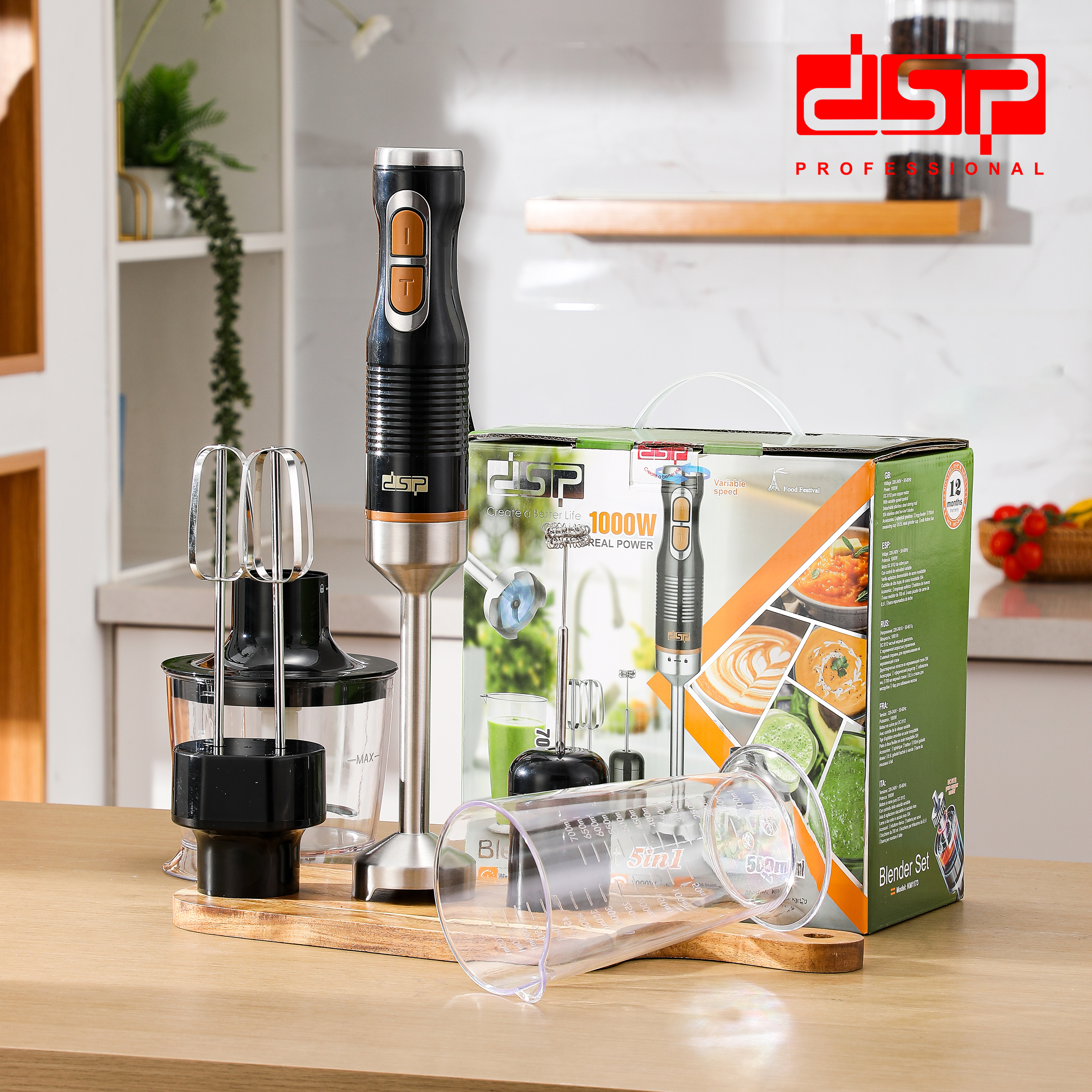
Hand-format mixing appliances remain the broadest part of DSP's confirmed mixer range. Pictured: DSP Hand Mixer KM1173.
Problem Definition: Why "Mixer" Is the Wrong Unit of Purchase
The sourcing problem is linguistic before it is technical. One word — mixer — covers appliances with different mixing actions, different user postures, and different retail price tiers. When a brief says "mixer" without naming the format, the supplier has to infer the price tier, and the buyer may receive a correctly built appliance positioned wrongly in the catalog.
Three practical consequences follow.
- Power expectation mismatch. A 250W multi-function hand mixer and a 1500W hand mixer / immersion blender both answer to the name "hand mixer," but they are built for different workloads. The confirmed DSP range spans 250W (KM2046) to 1500W (KM1190 and KM1194), so a wattage floor belongs in every brief.
- Accessory value mismatch. In this portfolio, accessory sets range from a two-piece set (one pair of egg beaters plus one pair of dough mixers with KM2046) to a multi-piece set that adds a spherical gearbox, a 700ml measuring cup, a 0.5L meat grinder cup, and a milk frother bar (KM1173). Accessories are a large part of what the end user reads as value.
- Naming confusion between stand and planetary formats. Retail copy often treats "stand mixer" and "planetary mixer" as synonyms. They are not: the first describes where the appliance stands, the second describes how the tool moves. A buyer who accepts the conflation can end up with a delivered appliance that does not match the mixing action promised in the listing.
Decision rule: define the mixing task first, then the mixing action, then the appliance. Motor, speeds, accessories, packaging, and compliance all follow from those three.
Industry Background: Where Mixing Appliances Sit in 2026
Third-party market data sets the demand backdrop, not the specification. Grand View Research estimated the global household appliances market at USD 461.69 billion in 2024, with major appliances accounting for an 89.55% revenue share. Fortune Business Insights projects the global small domestic appliances market to reach USD 222.52 billion by 2026, growing at a compound annual growth rate of 4.92%. Those figures describe the whole small-appliance category, so they are useful for sizing a category decision rather than for choosing between a hand mixer and a stand mixer.
What actually shapes mixer demand in a destination market is more local: how much home baking takes place, how much countertop space a typical kitchen offers, and which price tier the retail channel can carry. These are conditions the buyer usually knows better than the supplier — which is why format selection is faster when the buyer states the scenario rather than the appliance name.
On the supply side, the relevant background is production scope. DSP home appliances is a Yiwu, China–based appliance manufacturer and exporter: 20,000 m² of factory space, 130 employees, 30 engineers, an annual output of 5,000,000 units, and 100% of production exported to North America, South America, Europe, Asia, Africa, Oceania, and the Middle East. The brand is registered in over 200 countries, and the portfolio spans sixteen categories — mixer, blender, food processor, toaster, coffee machine, air fryer, cooker, oven, microwave, vacuum, washing machine, cleaner, pan, and personal care appliances among them.
The mixing line sits inside that portfolio rather than standing alone. That matters commercially: a mixer program is often placed alongside a blender, a food processor, or a breakfast set, and a supplier that already ships those categories can consolidate packaging, documentation, and shipment planning.
Detailed Solution: The Formats and What Each One Does
Hand mixers: the volume format
Hand mixers are where most buyers start, because they cover the widest span of price tiers and the widest span of tasks. The tool is detachable and the user controls its position, which suits whipping, cake batter, light dough, sauces — and, as documented in this portfolio, non-kitchen mixing work as well.
Confirmed DSP hand-format models:
- KM2046 — 250W, 220–240V ~ 50/60Hz, 5525 full copper motor, 5 speeds, ABS and 201 stainless steel, supplied with one pair of egg beaters and one pair of dough mixers.
- KM1173 — 1000W, DC 8112 pure copper motor, variable speed control, a detachable stainless steel stirring rod and 304 stainless steel two-leaf blades, supplied with a spherical gearbox, egg beater, 700ml measuring cup, 0.5L meat grinder cup, and milk frother bar.
- KM1194 — 1500W, DC7912 pure copper motor with a rotating speed of 15,000 RPM ±15%, 430 stainless steel panel with a SUS304 stirring rod and 304 stainless steel two-leaf blades, two speeds with variable speed control, LED indicator, and a metal bearing.
- KM1190 — 1500W, 8112 pure copper motor, two adjustable speeds with variable speed control and a turbo function, detachable stainless steel stirring rod, SUS304 four-leaf blades, and a blue light ring.
The spread from 250W to 1500W is the point. A hand-mixer brief that names only the format leaves the price tier to the supplier; a brief that names wattage, motor type, and speed-control type fixes it.
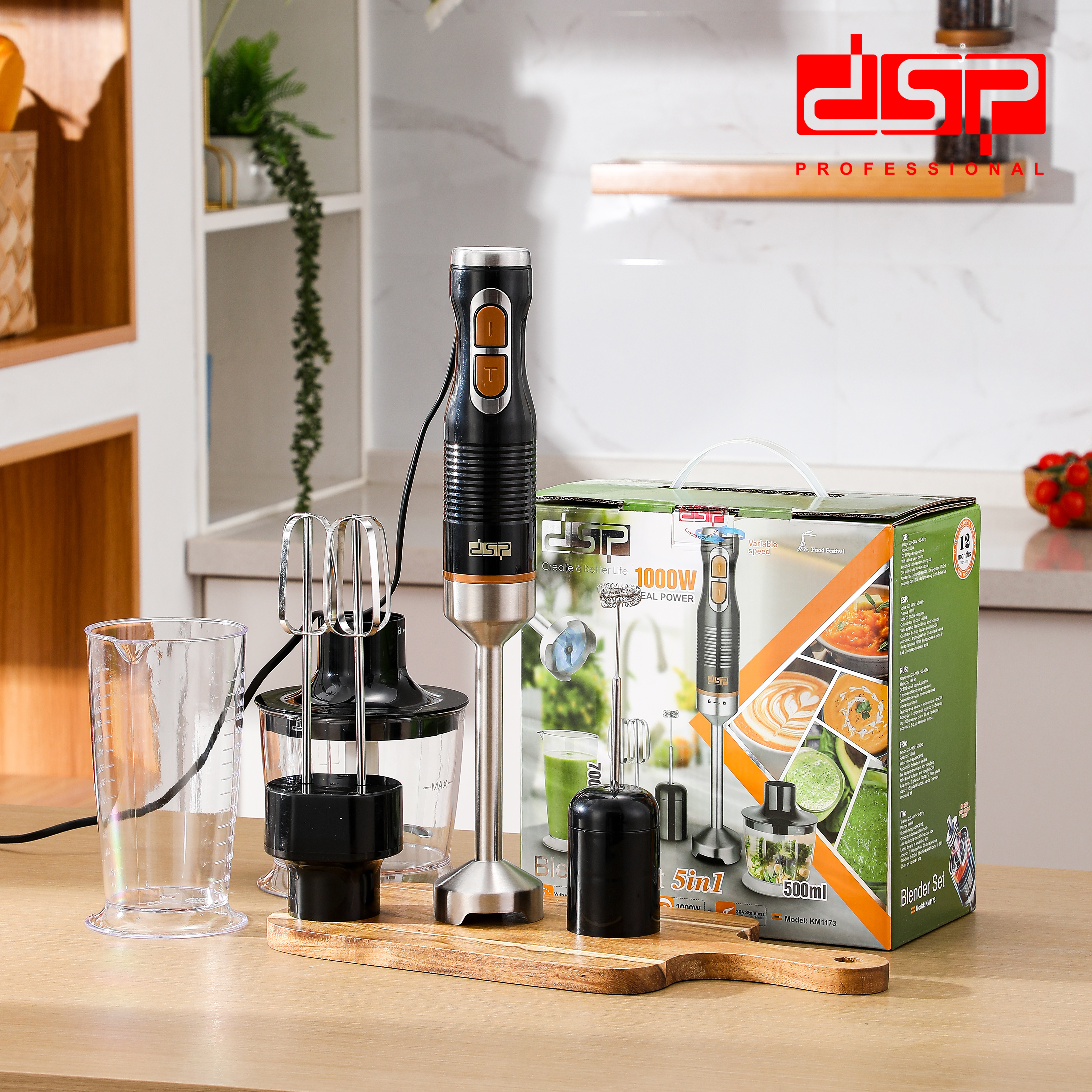
Accessory count and blade material are visible differentiators inside the hand-mixer format. Pictured: DSP Hand Mixer KM1173.
Stand mixers and food mixers: the countertop format
Stand and food mixers change the user's role rather than the mixing task. The appliance holds the tool and the bowl, so the user adds ingredients instead of steering the mixer. That is what justifies a higher retail tier and a larger footprint on the counter.
The confirmed DSP model in this format is KM1137, listed as a stand mixer / electric beater: 1200W, 220–240V ~ 50/60Hz, 7912 full copper DC motor, two speeds with variable speed control, a plastic body with a stainless steel panel and UV coating, a removable stainless steel stirring bar, and stainless steel four-leaf shaped blades. It ships with a whisk head, a whisk screen, a milk frother bar, and an injection-moulded base.
Buyer note: this is the format where a portfolio decision is usually made. Stand mixers are harder to sell as impulse purchases and better suited to markets with established home-baking demand and channels that can carry a premium countertop tier.
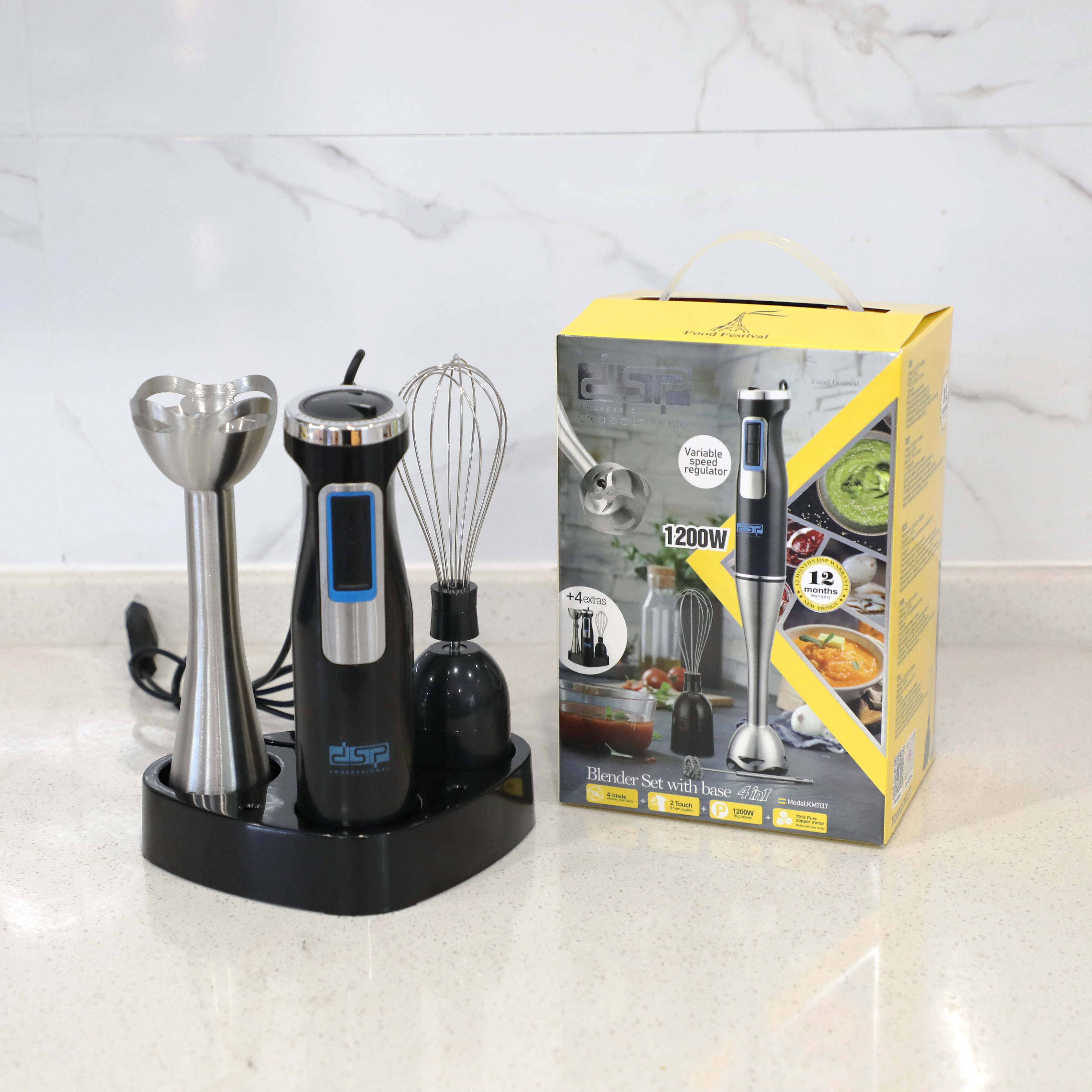
The countertop format supports the tool so the user can add ingredients instead of steering the mixer. Pictured: DSP Hand Mixer / Food Mixer KM1137.
Planetary mixers: what the format means and how to confirm coverage
A planetary mixer mounts the mixing tool on a head above the bowl and moves that tool along a planetary path — the tool rotates on its own axis while orbiting the bowl. Coverage therefore comes from the geometry of the movement rather than from the user's hand, and the format is generally chosen where mixtures are dense, batches repeat, and consistent contact between tool and bowl matters.
In procurement documents, this is the format that most often causes a mismatch, because the word "planetary" is frequently attached to appliances that are simply bowl-mounted. Specification sheets should describe the mixing action, not only the shape of the appliance.
Portfolio status matters here as well. The categories confirmed for this guide include hand mixers and stand / food mixers; a planetary-bowl unit is not among them. Buyers whose product line requires a planetary format should confirm that coverage with the supplier before design freeze instead of assuming it from the product name. That single check prevents the most expensive kind of mixer mistake — building packaging, listings, and manuals around an appliance the line does not produce.
Dough mixing: a task that is often an accessory decision
Dough is not a format; it is a workload. In the confirmed DSP range it appears in two ways: as a supplied accessory, with one pair of dough mixers included in the KM2046 set, and as a documented application, with KM1194 used by household consumers for food mixing and dough kneading in a five-year project.
If dough capability is going to be printed on the packaging, the accessory set and the motor specification should support that claim together. Pure copper motors appear across the confirmed models — 5525 in KM2046, DC 8112 in KM1173, 8112 in KM1190, 7912 in KM1137, and DC7912 in KM1194 — which gives buyers a consistent point of comparison as they move up the range. Documented project results in this category include efficient mixing for cake batter, dough, and egg whites.
Step-by-Step Breakdown: Matching Mixer Format to a Product Line
- Write the mixing task in the end market's language. Whipping cream, cake batter, bread dough, sauces, or a non-kitchen mixture such as paint and wax. Task language survives translation into a specification; appliance names do not.
- Convert the task into a mixing action. Light and intermittent tasks point to hand-held formats. Sustained, hands-free work points to a stand or food mixer. Dense, repeated mixing that needs bowl-mounted coverage points to a planetary format — which then triggers a coverage check with the supplier.
- Set the motor and speed-control floor. In this portfolio the options are 5-speed switching (KM2046), two speeds with variable speed control (KM1137, KM1190, KM1194, the latter two adding a turbo function on the KM1190), and variable speed control on a 1000W DC motor (KM1173). "Variable speed" alone is not a specification.
- Decide which accessories carry the value. Two-piece sets suit entry programs; six-piece sets with a measuring cup, a meat grinder cup, and a milk frother bar support multi-function positioning. Setting the accessory list early prevents late changes to packaging artwork and carton weight.
- Confirm compliance documents before design freeze. The supplied record includes a CE attestation of conformity with European Directives issued by BV under certificate N°1966AB11JKN33277-N7 for a hand blender scope, citing EN IEC 55014-1:2021, EN IEC 55014-2:2021, EN IEC 61000-3-2:2019+A1:2021, and EN 61000-3-3:2013+A1:2019+A2:2021, issued 19 October 2023 and valid to 19 October 2028. It also includes a CB test certificate BE-49307 issued by SGS for a multifunctional hand-held blender, citing the IEC 60335-2-14 and IEC 60335-1 series, issued 10 September 2024 and valid to 10 September 2029. Each document should be matched to the exact model and destination market.
- Lock the supply parameters. DSP works in OEM/ODM mode with customization across design, size, logo, and material; monthly capacity is 50,000–100,000 pieces; minimum order is 500–1000 pieces; lead time is 30–40 days; quality control is described as 100% test; and after-sales support runs for one year.
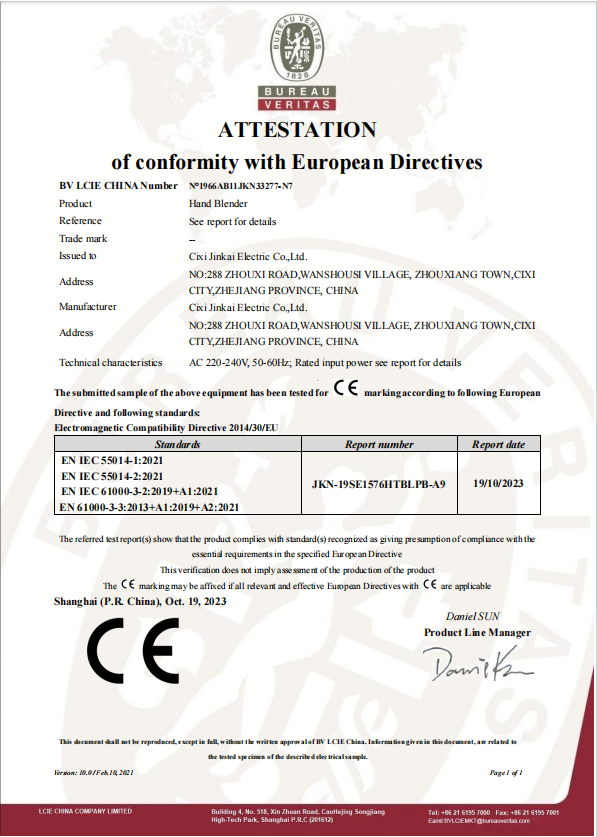
Compliance documents should be matched to the exact model and destination market before design freeze. Shown: CE attestation issued by BV (N°1966AB11JKN33277-N7).
Use Cases: How These Formats Are Bought in Practice
Documented programs in the supplied record show how each format has been deployed, and at what scale.
- Baking-led consumer programs (KM2046). A home user and culinary enthusiast client ordered 200 pieces for baking and dessert making. The project ran for five years with efficient mixing and consistent results, with the full copper motor and 5-speed control listed as the highlights.
- Brand and retail programs (KM1137). A home appliance brand and retailer client ordered 200 pieces for baking and dessert making over a five-year duration, reporting smooth mixing and quick whipping, with variable speed control and stainless steel accessories as the key features.
- High-power household programs (KM1194). A kitchen appliance user and household consumer client ordered 200 pieces for food mixing and dough kneading over five years, reporting efficient mixing and smooth speed control, with 1500W high power, a pure copper motor, and low noise operation as the highlights.
- Non-kitchen applications (KM1173). Automotive detailing shops ordered 200 pieces for mixing paints and waxes over five years, reporting consistent speed mixing with low noise operation. This is the case that matters most to buyers serving hardware, workshop, or trade channels: the same hand-held platform transfers outside the kitchen.
- Program scale. One hand-mixer program delivered 200 pieces over five years to clients across more than twenty countries, including Egypt, Lebanon, Azerbaijan, Spain, Panama, Ghana, Maldives, South Africa, Somalia, Mozambique, Armenia, Botswana, Uzbekistan, Angola, Jordan, Qatar, Saudi Arabia, Oman, the United Arab Emirates, Madagascar, and Georgia. A separate hand-mixer program delivered 300 pieces over a five-year usage period in Turkey, Azerbaijan, Angola, Mauritania, and Senegal.
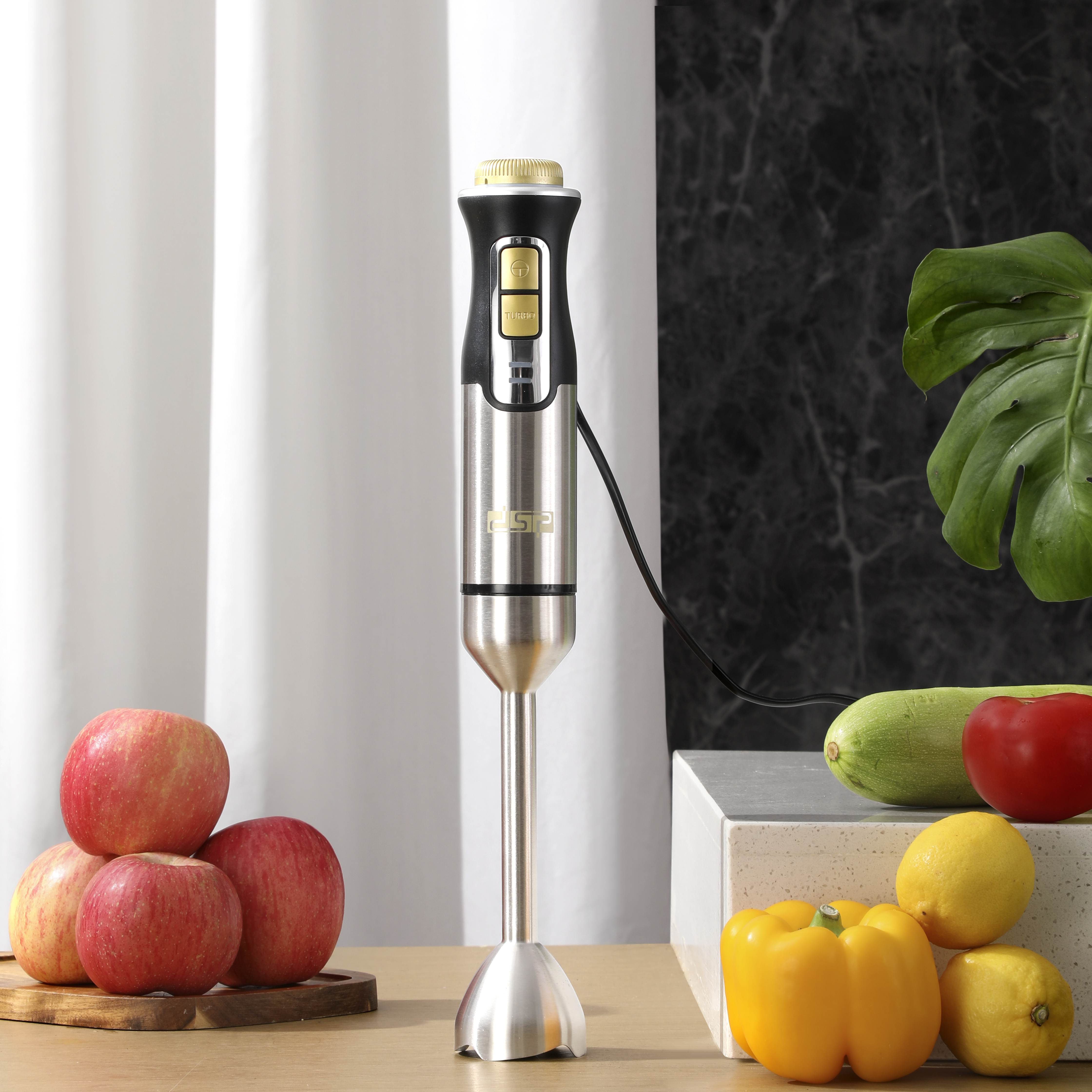
Higher-wattage hand-held formats cover mixed tasks and dough workloads. Pictured: DSP Hand Mixer / Immersion Blender KM1194.
Comparison Table: Formats and Confirmed Models Side by Side
| Format | How the tool moves | Confirmed in DSP's mixer range | Confirmed power | Documented applications | Typical buyer scenario |
|---|---|---|---|---|---|
| Hand mixer | Held and guided by the user; detachable tool | Yes — KM2046, KM1173, KM1194, KM1190 | 250W to 1500W | Baking and dessert making, food and sauce mixing, dough kneading, paint and wax mixing | Volume programs; entry to mid tier; multi-function retail sets |
| Stand / food mixer | Tool and bowl supported by the appliance; the user adds ingredients | Yes — KM1137 (stand mixer / electric beater) | 1200W | Baking and dessert making for brand and retail programs | Baking-led markets; premium countertop tier |
| Planetary mixer | Tool mounted above the bowl, rotating on its axis while orbiting the bowl | Not among the categories confirmed for this guide; verify before design freeze | To be confirmed at project level | To be confirmed at project level | Dense, repeated mixing where bowl-mounted coverage is required |
| Model | Format | Power | Motor | Speed control | Key features and accessories | Documented case |
|---|---|---|---|---|---|---|
| KM2046 | Hand mixer | 250W, 220–240V ~ 50/60Hz | 5525 full copper motor | 5 speeds | ABS and 201 stainless steel; one pair of egg beaters; one pair of dough mixers | Baking and dessert making, 200 pieces, five-year duration |
| KM1173 | Hand mixer | 1000W, 220–240V ~ 50–60Hz | DC 8112 pure copper motor | Variable speed control | Detachable stainless steel stirring rod; 304 stainless steel two-leaf blades; spherical gearbox; egg beater; 700ml measuring cup; 0.5L meat grinder cup; milk frother bar | Paint and wax mixing for automotive detailing shops, 200 pieces, five years |
| KM1190 | Hand mixer / immersion blender | 1500W, 220–240V ~ 50/60Hz | 8112 pure copper motor | Two speeds plus variable speed control; turbo function | Detachable stainless steel stirring rod; SUS304 four-leaf blades; blue light ring; ABS and stainless steel | Covered by CB test certificate BE-49307 (SGS) |
| KM1137 | Stand mixer / electric beater | 1200W, 220–240V ~ 50/60Hz | 7912 full copper DC motor | Two speeds with variable speed control | Removable stainless steel stirring bar; stainless steel four-leaf shaped blades; whisk head; whisk screen; milk frother bar; injection-moulded base | Baking and dessert making for home appliance brands and retailers, 200 pieces, five years |
| KM1194 | Hand mixer / immersion blender | 1500W, 220–240V ~ 50–60Hz | DC7912 pure copper motor, 15,000 RPM ±15% | Two speeds with variable speed control | 430 stainless steel panel; SUS304 stirring rod; 304 stainless steel two-leaf blades; LED indicator light; metal bearing | Food mixing and dough kneading, 200 pieces, five years |
The tables use only the specifications and project results confirmed in the supplied product and case records. Items marked as to be confirmed reflect a documentation gap, not an assumption about capability.
FAQ: Mixer Format Questions Buyers Ask Before Ordering
Which compliance documents apply to DSP's mixing appliances?
Two documents in the supplied record relate directly to hand-format mixing appliances. A CE attestation of conformity with European Directives was issued by BV under certificate N°1966AB11JKN33277-N7 for a hand blender scope, citing EN IEC 55014-1:2021, EN IEC 55014-2:2021, EN IEC 61000-3-2:2019+A1:2021, and EN 61000-3-3:2013+A1:2019+A2:2021; it was issued on 19 October 2023 and is valid to 19 October 2028. A CB test certificate BE-49307 was issued by SGS for a multifunctional hand-held blender, citing the IEC 60335-2-14 and IEC 60335-1 series; it was issued on 10 September 2024 and is valid to 10 September 2029. Both documents should be matched to the exact model and destination market at project level.
Can mixers be customized, and what production capacity is behind them?
DSP works in OEM/ODM mode with customization across design, size, logo, and material. Monthly capacity is 50,000–100,000 pieces, quality control is described as 100% test, and production runs from a 20,000 m² facility with 130 employees, 30 engineers, and annual output of 5,000,000 units. The mixer range sits inside a portfolio that also covers blender, food processor, toaster, air fryer, coffee machine, and other small appliance categories, which allows buyers to consolidate related items in one program.
What drives the unit cost of a mixing appliance program?
In the confirmed portfolio the visible cost drivers are the motor and power rating (from a 250W 5525 full copper motor in KM2046 to a 1500W DC7912 pure copper motor in KM1194), the speed-control system (5-speed switching versus two speeds with variable speed control and a turbo function), and the accessory count (from a two-piece beater and dough-hook set to a set that adds a spherical gearbox, a 700ml measuring cup, a 0.5L meat grinder cup, and a milk frother bar). Order parameters are 500–1000 pieces minimum order and 30–40 days lead time.
What should a buyer check in a mixer sample before committing?
Check the sample against the specification sheet line by line: rated power and voltage, motor type, the number of speeds and whether speed control is variable, the accessory list and its materials (for example 430 stainless steel panel and 304 stainless steel two-leaf blades on KM1194), and whether the compliance document covers the exact model being sampled. Sample units and current specifications for the models in this guide can be requested from DSP's sales team at sales-3@dsplife.cn.
What is the lead time, and how does a program move forward?
Confirmed production lead time is 30–40 days, with a minimum order of 500–1000 pieces, monthly capacity of 50,000–100,000 pieces, and one year of after-sales support. To turn a comparison into a quotation, send the target format, power band, accessory set, destination market, and expected volume to DSP. The full product catalog is available in the DSP brochure, and the sales team can be reached at sales-3@dsplife.cn or +86 13958409699.
Conclusion: Choose the Format First, Then the Model
The comparison resolves into a sequence. Name the mixing task, convert it into a mixing action, set the motor and speed-control floor, decide which accessories carry the value, confirm the compliance document for the exact model, and lock the supply parameters. Buyers who follow that order rarely end up with a mixer that under-serves the task or over-serves the price tier.
For product-line planning, the confirmed DSP mixing range supports two positions immediately: hand mixers from 250W to 1500W with full copper motors and accessory sets that scale from two pieces to a multi-function kit, and a stand / food mixer at 1200W for baking-led, countertop-tier programs. Where a planetary-bowl format is required, that coverage should be confirmed with the supplier before packaging and listings are built around it.
DSP home appliances is based at F3-17160 & 17147, 3rd Street, 3F 29th Gate, F District, International Trade City, Yiwu, China. Website: www.dsp-official.com. Email: sales-3@dsplife.cn. Phone / WhatsApp: +86 13958409699.
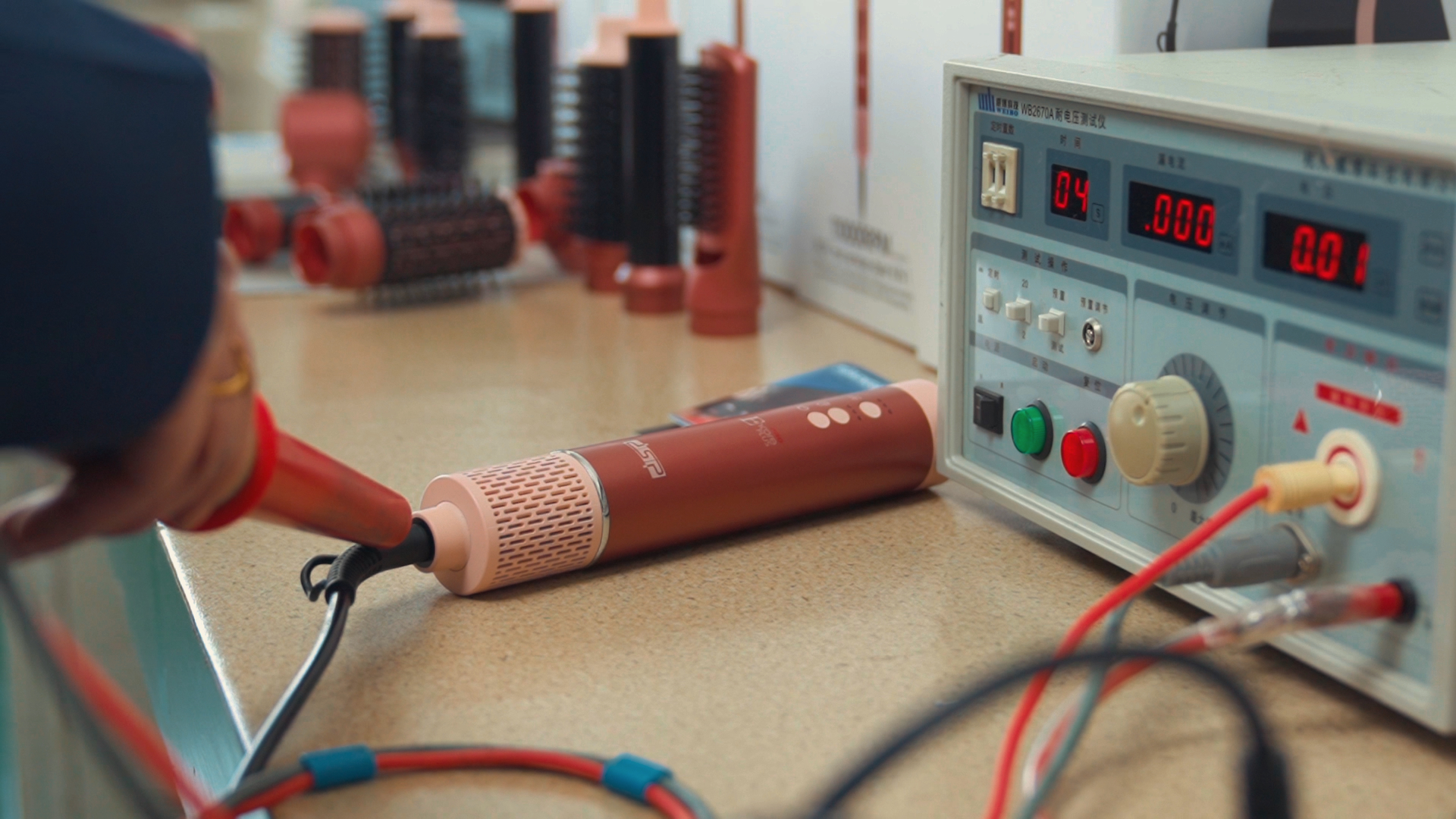
Mixer programs are usually placed alongside blenders, food processors, and breakfast appliances inside the same DSP portfolio.
Next step: request samples or a quotation for the models in this guide — send the target format, power band, accessory set, destination market, and expected volume to sales-3@dsplife.cn or WhatsApp +86 13958409699. The complete DSP product catalog is available for download: Download the DSP Home Appliances brochure.