
Home Appliance Application Guide: Matching Hand Mixers and Immersion Blenders to Café Prep Stations
A café prep station compresses a full production kitchen into a narrow run of counter. In the same square metre, staff may whip cream for a drink, blend a fruit base, fold a small batch of batter, and hold a soup at temperature. Hand mixers and immersion blenders sit at the centre of that work, yet they are often the last appliances specified, after the espresso machine and the display case. The sequence is usually reversed. When either appliance is mismatched to the menu, the cost appears at peak service as a stalled station, not on the purchase order as a line item.
This application guide is written for procurement teams, café operators, and project buyers who are matching appliances to a specific café fit-out. It begins with hand mixers and immersion blenders, then extends the same mapping method to stand mixers, dough mixers, and cooking station appliances where the menu requires them. The emphasis is project fit: which appliance earns counter space, what to write into the brief before supplier comparison, and how to test a configuration before committing to a rollout.

Problem definition
A prep station mismatch rarely announces itself as a broken appliance. It appears as a ten-minute changeover during the morning rush, a bowl that will not fit under the tap, or a motor that labours through cold buttercream at the end of a long shift. Three failure patterns account for most of these problems.
The first is capacity mismatch. A 300W hand mixer and a 400W stand mixer are both sold as mixing appliances, but they suit different batch sizes and duty cycles. Selecting by headline wattage alone tends to produce either an oversized unit that consumes counter space or an undersized unit that overheats during repeated batches.
The second is workflow mismatch. A café that blends directly into a service cup needs an immersion blender with a detachable shaft and a narrow footprint. A café that whips cream in a bowl and transfers it to a piping bag may be better served by a hand mixer with dedicated beaters. Buying one appliance for both jobs creates cleaning work and slows changeover.
The third is documentation mismatch. Procurement teams often compare supplier quotations without a written station brief. Without that brief, two suppliers can quote the same model number and mean different configurations, accessories, or packaging. The comparison appears clean but is not comparable.
The practical cost of these errors lands on the operator rather than the buyer. A station that loses five minutes at each menu changeover absorbs that loss across the whole prep window, and the operator usually recovers it by shortening breaks or adding labour. Mapping the station before ordering is the cheapest way to avoid that outcome.
Industry background
Small cafés and coffee-led food service have expanded the range of preparation tasks that happen in a compact back-of-house. Menus that once stopped at espresso and a pastry case now include blended cold drinks, house-made syrups, small-batch bakes, and simple hot food. That expansion has pushed more appliances into the same prep zone and has turned the prep station into a procurement category in its own right.
DSP is a manufacturer of home and kitchen appliances, including hand mixers, stand mixers, blenders, electric cookers, and related preparation equipment. The company reports a 20,000 m² facility, 130 employees, and a product range that covers kitchen, home, and personal-care categories. For a café project, the relevant question is not the size of the portfolio but whether the supplier can document the specific configuration, accessories, and compliance evidence that the station requires.
A second background factor is electrical and compliance variation by market. The European Union, for example, uses an A-to-G energy label scale and maintains the EPREL product database for appliances sold in the EU market. Compliance obligations differ by product category and destination, so a café project that spans several countries needs a document schedule rather than a single certificate copy. DSP states that its products hold certifications based on CB, CE, ROHS, GS, and UL standards; that is a starting point for the document request, not a substitute for the model-level certificate and test report.
Cost and lead time also shape the brief. DSP lists a standard lead time of 30–40 days and an MOQ of 500–1,000 pieces for its OEM/ODM work, with customization available across design, size, logo, and material. A café chain buying for multiple sites can plan around those figures, but only after it has fixed the station requirement so that the quotation matches the brief.
Detailed solution
The mapping method in this guide works from the menu outward. Instead of starting with a product catalogue, start with the tasks the station must complete, translate each task into an appliance requirement, then test that requirement against the supplier's documentation.
Four questions drive the method.
- What tasks happen at this station? Cream whipping, batter mixing, smoothie blending, dough kneading, and reheating are different tasks with different torque, speed, and cleaning requirements.
- What is the batch size and duty cycle? A café that makes two litres of batter a day has a different requirement from one that makes twenty litres in a single morning.
- What changeover and cleaning rhythm does the station allow? If the station switches from savoury to sweet preparation, detachable parts and stainless steel contact surfaces matter more than extra speed settings.
- What must be documented before supplier comparison? Voltage, power, capacity, speed control, accessory list, material, and compliance evidence should be written into the brief so that quotations can be compared line by line.
The method produces a station brief, not a shopping list. A station brief records the task, the batch, the surfaces that touch food, the cleaning step, and the acceptance check. Once that brief exists, supplier models can be compared against it instead of against each other's marketing descriptions.
For hand mixers, the brief should separate light whipping from heavier mixing. The KM2092 hand mixer, for example, is rated at 220–240V~50/60Hz with a 300W output and a 5525 full copper motor. It offers five speeds with a turbo setting, 201 stainless steel beaters, and an ABS plastic handle, and it ships with 180mm egg beaters and a 180mm dough mixer. Its listing places it in food manufacturing and catering applications. That combination suits a café station that whips cream, mixes small batters, and occasionally works a soft dough, but it does not replace a stand mixer for sustained heavy batches.
For immersion blenders, the brief should separate direct-in-cup blending from batch preparation. The KM1152 hand blender uses an 800W pure copper motor with a turbo function and stainless steel blades. The KM1091 uses a 5712 DC motor and is described as easy to detach for cleaning, while the KM1072 is listed with a detachable design and easy cleaning. For a café that blends fruit bases, soups, or syrups directly in the service vessel, the detachable shaft and cleaning routine matter more than the headline motor figure.

For stand mixers, the brief should fix bowl capacity and attachment set. The KM3058 stand mixer is rated at 220–240V~50/60Hz with a 400W output, a 4.0L rotating SUS201 bowl, a 5535 full copper AC motor, and five speeds. It ships with two pairs of chromed mixing beaters and dough hooks. It is a household stand mixer, so it fits a café that needs a stable bowl for repeated small batches rather than a production bakery line.

For dough mixers, the brief should record the safety and batch requirements. The KM3043/KM3043A dough mixer application is listed as a dough preparation system for food and beverage use, operating at normal temperature under intermittent high load, with batch processing, a mixer stand and bowl set, and a safety guard and bowl lock requirement. A café-bakery that mixes dough daily should confirm those safety features in the quotation rather than assume them.
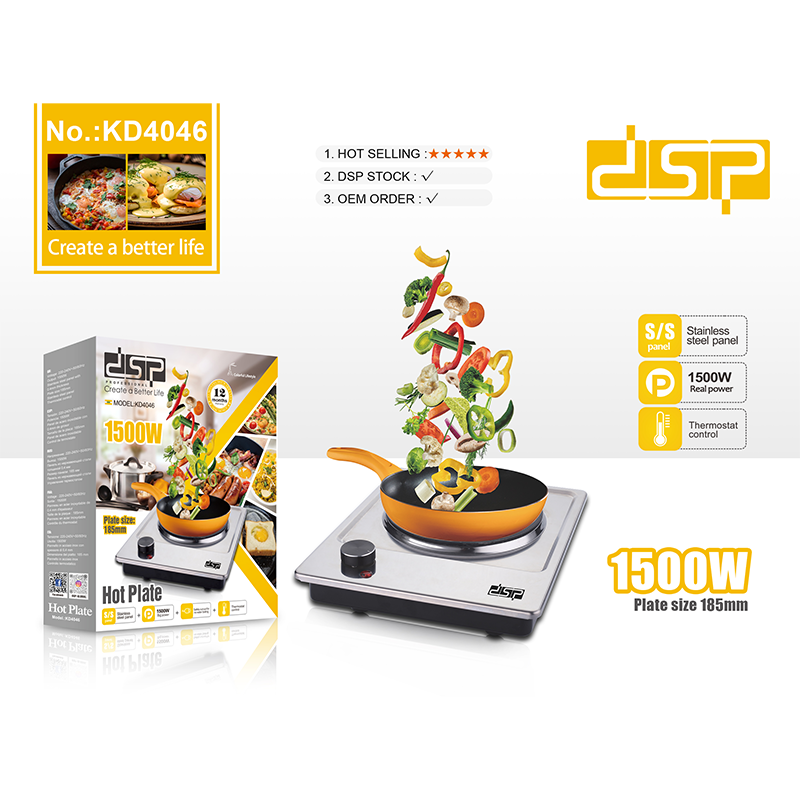
For cooking station appliances, the brief should record the menu task, the surface temperature, and the ventilation. The KD4046 single-plate electric cooker is rated at 220–240V~50/60Hz with a 1500W output, a 0.4mm stainless steel panel, a 185mm plate, thermostat control, and a thickened iron heating tube. Its application listing covers catering and food service, and a restaurant-chain case records rapid heating and even cooking in kitchen and canteen use. Where a menu calls specifically for induction rather than a resistively heated plate, the buyer should confirm the exact model and its electrical requirements with the supplier before adding it to the equipment schedule.
Step-by-step breakdown
Step 1: Map the menu to station tasks
List every preparation task that will happen at the station across a full day, then mark the peak period. A task that happens twice a week does not justify the same appliance as one that happens every morning. Group tasks by motion: whipping, folding, blending, kneading, and heating. This grouping reveals whether one appliance can serve several tasks or whether two stations are needed.
Step 2: Match each task group to an appliance category
Whipping and light folding point to a hand mixer. Direct-in-vessel blending points to an immersion blender. Sustained bowl mixing points to a stand mixer. Daily dough production points to a dough mixer. Surface cooking and holding point to an electric cooker or hot plate. Record the category, not a model number, at this stage. The category decision is what keeps the brief stable when a supplier proposes an alternative model.
Step 3: Translate station constraints into specifications
For each category, convert the station constraint into a measurable requirement. Counter depth becomes a footprint limit. Batch size becomes bowl capacity. Shift length becomes duty cycle. Cleaning rhythm becomes a detachable-parts requirement. Electrical supply becomes voltage and plug type. DSP's hand mixer application listings describe intermittent operation and food-contact material safety requirements, so the brief should record the duty cycle and the food-contact surfaces rather than only the wattage. Write each requirement with a unit and a tolerance so that a supplier can respond precisely.
Step 4: Plan changeover and cleaning
Walk through the changeover between two menu items and time it. Note which parts touch food, which parts need washing between tasks, and which parts can be wiped. A detachable stainless steel shaft on an immersion blender reduces the cleaning step compared with a fixed shaft. A hand mixer with removable beaters is faster to clean than one with fixed attachments. Record the cleaning time in the brief so that it is visible during evaluation, and check whether the station has a sink or wash basin within reach.
Step 5: Document the brief and compare supplier models
Assemble the brief into a table with one row per requirement and one column per supplier response. Include the model, voltage, power, capacity, speed control, accessory list, material, compliance evidence, MOQ, lead time, and after-sales term. A quotation that leaves a cell blank is not comparable until the gap is closed. DSP, for example, lists OEM/ODM customization across design, size, logo, and material, a monthly capacity of 50,000–100,000 pieces, a 30–40 day lead time, an MOQ of 500–1,000 pieces, 100% testing, and a one-year after-sales term. Those figures belong in the comparison table, not in a separate narrative.
Step 6: Test the configuration before rollout
Order a sample of the proposed configuration and run it through the station's actual tasks for at least one full shift. Record the time per batch, the cleaning time, the operator feedback, and any accessory that was missing. A sample test that only confirms the appliance switches on does not test the station fit. The KM1152 hand blender, for instance, is listed with an 800W pure copper motor, a turbo function, and stainless steel blades, but the station test should confirm whether the shaft length and cup clearance suit the service vessels actually used.
Step 7: Freeze the configuration and write the acceptance checklist
Once the sample passes, freeze the model, accessory list, packaging, and compliance documents. Write an acceptance checklist for incoming shipments that mirrors the brief. This step prevents a later reorder from drifting to a different accessory set or motor specification, and it gives the receiving team a simple pass-or-hold decision at the loading bay.
Use cases
Use case 1: Compact community café with a single prep station
A small café with one prep counter and a limited menu typically needs one hand mixer for cream and small batters and one immersion blender for drinks and soups. The KM2092 hand mixer covers light whipping and small dough work with five speeds and a turbo setting, while the KM1152 or KM1091 immersion blender covers direct-in-cup blending with a detachable shaft for cleaning. The station brief should record counter depth, the number of batches per shift, and the cleaning routine between sweet and savoury tasks.
Use case 2: Café with a light food menu and two prep zones
A café that adds sandwiches, soups, and simple hot food splits preparation across two zones. The cold zone keeps the hand mixer and immersion blender. The hot zone adds a cooking appliance such as the KD4046 electric cooker, with a 1500W output, a 185mm plate, and thermostat control, or a hot plate from the KD5054 or KD5060 range. The KD5054 application listing covers catering use with intermittent operation and an adjustable thermostat, while the KD5060 listing covers food warming and sample heating with overheat protection. The brief should record the ventilation available in the hot zone and the surface temperature needed for the menu.
Use case 3: Café-bakery with an extended menu
A café-bakery that bakes daily needs a stand mixer and possibly a dough mixer in addition to the hand mixer and immersion blender. The KM3058 stand mixer provides a 4.0L bowl and five speeds for repeated small batches, while the KM3043/KM3043A dough mixer application specifies batch processing with a safety guard and bowl lock. The brief should separate the baking station from the drinks station so that cleaning and changeover do not collide at peak service.
Use case 4: Multi-site rollout
A chain buying for several cafés should build one station brief per template and then map each site to the closest template. Differences in voltage, counter depth, and menu mix should be recorded as exceptions rather than averaged into a single specification. This approach keeps the supplier comparison consistent while allowing site-level variation, and it gives the project team a clear record of why each site received a particular configuration.
Comparison table
The table below compares appliance categories on the characteristics that matter for a café prep station. It uses listed specifications and application information from DSP product and application data; it is not a performance ranking.
| Category | Example model | Key listed specifications | Typical café task | Station note |
|---|---|---|---|---|
| Hand mixer | KM2092 | 220–240V~50/60Hz; 300W; 5525 full copper motor; 5 speeds with turbo; 201 stainless steel; 180mm egg beaters and dough mixer | Cream whipping, small batters, light dough | Suits light to medium duty; not a substitute for sustained heavy batches |
| Hand mixer | KM1172 | 220–240V~50–60Hz; 1500W; DC 8112 pure copper motor; variable speed; detachable stainless steel rod; 304 stainless steel two-leaf blades; 700ml cup and 1.0L meat grinder cup | Heavier home-style mixing and chopping | Higher power; confirm the accessory set suits the café menu |
| Immersion blender | KM1152 | 800W pure copper motor; turbo function; stainless steel blades | Direct-in-cup blending, fruit bases, soups | Confirm shaft length and cup clearance |
| Immersion blender | KM1091 | 5712 DC motor; easy detach for cleaning | Smoothies, mixing, whisking | Detachable design supports faster changeover |
| Immersion blender | KM1072 | Detachable design; easy to clean | Food preparation and beverage mixing | Listed for OEM projects; confirm the accessory set |
| Stand mixer | KM3058 | 220–240V~50/60Hz; 400W; 4.0L SUS201 bowl; 5535 full copper AC motor; 5 speeds; two pairs of beaters and dough hooks | Repeated small batches, bowl mixing | Household stand mixer; not a production bakery line |
| Dough mixer | KM3043/KM3043A | Dough preparation system; normal temperature; intermittent high load; batch processing; safety guard and bowl lock | Daily dough production | Confirm safety features in the quotation |
| Electric cooker | KD4046 | 220–240V~50/60Hz; 1500W; 0.4mm stainless steel panel; 185mm plate; thermostat control; thickened iron heating tube | Surface cooking and holding | Record ventilation and surface temperature |
| Electric hot plate | KD5054 / KD5060 | Catering use; intermittent operation; KD5054 with adjustable thermostat; KD5060 with overheat protection | Warming, hotpot, sample heating | Match the plate to the menu and the ventilation |
FAQ
What compliance documents should a café project request for hand mixers and immersion blenders?
Request the model-level certificate and test report for each destination market, not a general portfolio statement. DSP states that its products hold certifications based on CB, CE, ROHS, GS, and UL standards, but the buyer should confirm which certificate applies to the exact model and voltage. For EU destinations, the energy label and EPREL registration should also be checked where the product category is in scope. The document schedule should list the model, the market, the standard, the certificate number, and the expiry date.
How do I evaluate whether a supplier can support a multi-appliance café fit-out?
Ask for a written capability statement with capacity, customization scope, testing, and after-sales terms. DSP lists OEM/ODM customization across design, size, logo, and material, a monthly capacity of 50,000–100,000 pieces, 100% testing, a one-year after-sales term, and export experience across more than 100 countries. Those figures should be checked against the project volume and the number of sites. A supplier that can support one appliance category may not be able to coordinate the full station, so the evaluation should include the accessory list, packaging, and documentation for each category.
What drives the commercial budget for a café prep station order?
Four factors drive the budget: the number of appliance categories, the customization scope, the MOQ, and the testing requirement. DSP lists an MOQ of 500–1,000 pieces and a 30–40 day lead time for its OEM/ODM work, so a single-site café order may fall below the MOQ unless it is combined with a chain or distributor order. The budget should separate the appliance cost from the accessory cost, the compliance document cost, and the sample cost. A lower unit price that excludes a required accessory or certificate is not a lower total cost.
How should a café operator test hand mixer and immersion blender samples before ordering?
Run the sample through the station's actual tasks for at least one full shift. Record the time per batch, the cleaning time, the operator feedback, and any missing accessory. Test the hand mixer on the heaviest mixture the menu requires, and test the immersion blender in the service vessel actually used. Compare the result with the station brief, not with a general impression. If the sample fails, record the failure against the specific requirement so that the supplier can respond to a defined problem.
What lead time and supply continuity should be planned for a café rollout?
Plan the rollout around the supplier's stated lead time and add a buffer for sample approval and shipping. DSP lists a 30–40 day lead time and a monthly capacity of 50,000–100,000 pieces, which supports a phased rollout if the station brief is frozen before the order. For a multi-site rollout, sequence the sites so that the first site tests the configuration and the later sites reuse the accepted brief. Keep the compliance documents and the acceptance checklist with the order so that a reorder does not reopen the specification. To discuss a sample, a quotation, or a station brief for your café project, contact DSP through the details on its official website or request the current product catalogue.

Conclusion
Matching hand mixers and immersion blenders to a café prep station is a mapping exercise, not a catalogue search. The station brief comes first: the tasks, the batch sizes, the cleaning rhythm, and the electrical supply. The appliance follows from the brief, and the supplier comparison follows from the appliance. Stand mixers, dough mixers, and cooking station appliances extend the same logic when the menu requires them, but they do not change the method.
The practical output of the method is a written brief with one row per requirement and one column per supplier response. That document makes quotations comparable, makes sample tests meaningful, and makes a reorder predictable. It also gives the procurement team a defensible record if a station underperforms after installation.
DSP's role in this process is as a manufacturer with a documented range of hand mixers, stand mixers, blenders, and cooking appliances, OEM/ODM customization, and a stated lead time and capacity. Buyers should verify the model-level certificate, the accessory list, and the sample result before committing to a rollout. The guide is a starting point for that verification, not a substitute for it. For buyers who want to move from brief to sample, the product catalogue and the company contact details are the next step.
Have Questions or Need More Details?
Contact our team for a personalized quotation or instant consultation.
Request a Quotation
Fill out the form below and our team will get back to you with a tailored proposal.
WhatsApp Direct Chat
Prefer to chat in real-time? Message us on WhatsApp for instant assistance & quick answers.
- Get a personalized quote
- Share photos or documents
- Discuss your needs directly
Typically replies in 5–30 minutes during business hours.