
Home Appliance Procurement Guide: Efficient Sourcing & Risk Control in 2026
Procuring home appliances across global markets has become increasingly complex. Buyers face risks ranging from inconsistent quality and missing certifications to delayed shipments and weak after-sales support. This guide provides a practical framework for efficient sourcing and risk mitigation, drawing on real industry expertise and the capabilities of certified manufacturers like DSP.
Understanding the Core Procurement Challenges
Global buyers often ask: How do I select a reliable home appliance supplier? The answer goes beyond comparing prices. Key challenges include:
- Quality Inconsistency: Products may fail to meet specifications or safety standards.
- Certification Gaps: Missing EU, UL, or CB marks can block market entry.
- Delivery Delays: Production bottlenecks or logistics issues disrupt supply chains.
- Poor After-Sales Support: Lack of warranty or spare part availability leads to long-term losses.
Industry Background: The 2026 Landscape
The global home appliance market continues to grow, with rising demand for smart, energy-efficient, and multi-functional products. China remains a dominant manufacturing hub, but buyers are shifting toward suppliers that demonstrate certified quality, robust R&D, and transparent production processes. In this environment, a supplier like DSP (YIWU DSP Electric Appliance Co., Ltd.) stands out—founded in 2006, DSP operates a 20,000 m² factory with 130+ employees, producing 5 million units annually and exporting to over 200 countries.
Detailed Solution: A Five-Step Risk Mitigation Framework
Step 1 – Define Your Requirements Clearly
Before engaging suppliers, specify product type (e.g., blender, mixer, air fryer), target certifications (CE, CB, GS), voltage/frequency, and any unique material or design needs. This reduces misunderstandings.
Step 2 – Evaluate Supplier Credentials
Check the supplier's factory size, years in operation, R&D team, and export history. Request certification copies. For example, DSP holds multiple EU compliance certificates:
| Certificate | Authority | Applicable Product |
|---|---|---|
| CE (Intertek) | Intertek | Kitchen Steward (Mixers) |
| CB (SGS) | SGS | Food Mixer KM3030 |
Step 3 – Validate Quality Through Samples & Testing
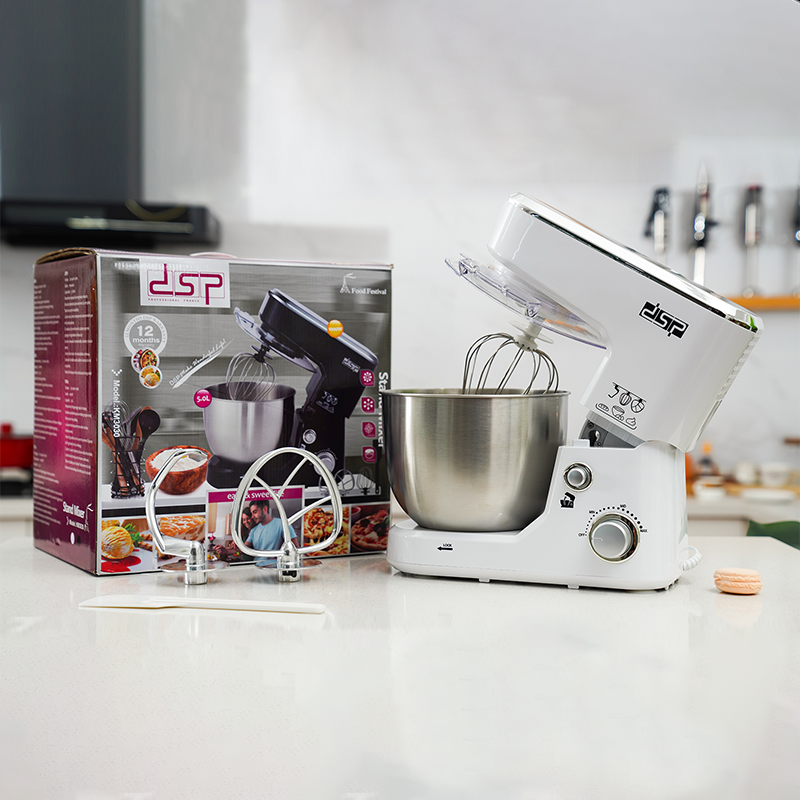
Reputable manufacturers perform 100% functional testing before shipment. DSP’s quality control includes full copper or copper-clad motors (e.g., 8830 motor in KM3030), stainless steel bowls, and overheat protection. Request a pre-shipment inspection (PSI) to verify compliance.
Step 4 – Negotiate Terms & Risk Provisions
Define MOQ (DSP’s typical MOQ is 500–1000 pieces), lead time (30–40 days), payment terms (TT), and warranty (one year). Use EXW or FOB delivery. Ensure the supplier offers online or third-party inspection acceptance.
Step 5 – Build Long-Term Partnerships
After the first order, monitor delivery consistency and after-sales response. DSP provides dedicated service teams and promptly addresses issues. Case studies show customers in Egypt and Lebanon using DSP hand mixers (model KM2091) for over five years with stable operation.
Real-World Use Case: Hand Mixer KM2091 for Bakery Applications
A client in the Middle East procured 200 units of DSP's Hand Mixer KM2091 (200W, 5-speed, 5525 full copper motor) for bakery use. Over five years, the mixers delivered consistent dough kneading and egg beating results. The client highlighted the quiet operation and easy-to-clean 201 stainless steel body. This case demonstrates how proper supplier selection reduces long-term risk.
Frequently Asked Questions (FAQ)
1. How can I verify a home appliance supplier's quality?
Request certifications (CE, CB, GS, etc.), ask for factory audit reports, and order samples for independent testing. Check supplier references or case studies.
2. What is a typical MOQ for OEM orders?
For standard products, MOQ ranges from 500 to 1000 pieces. DSP offers flexible OEM/ODM customization with design, size, logo, and material options.
3. How do I avoid counterfeit or fraudulent suppliers?
Use verified platforms, request official certificates (e.g., Intertek, SGS, TUV), and conduct video factory tours. DSP provides real-time video verification.
4. What certifications are needed for the EU market?
CE marking is mandatory. Additional CB or GS certificates strengthen compliance. DSP’s products meet EN IEC 55014, EN 60335, and other EU directives.
Conclusion
Efficient home appliance procurement requires a structured approach: define needs, verify supplier credentials, test product quality, negotiate risk terms, and build partnerships. By choosing a certified manufacturer with proven track record—like DSP—you reduce supply chain risks and ensure market-ready products.
Download DSP’s comprehensive company brochure for detailed product specifications, certifications, and case studies: