
Personal Care Appliances OEM: Documents to Verify Before Ordering
A Personal Care Appliances OEM order is only as safe as the paperwork behind it. Before a purchase order is issued, a buyer should hold seven documents and be able to read each one without guessing: a legal entity record, a certificate package with identifiers, a test protocol, a device-family scope statement, a safety design record, factory and capacity evidence, and written commercial terms. If any of the seven is missing, undated, unattributed, or scoped to a product family you are not buying, the order is not ready.
The test that separates evidence from marketing is narrow and mechanical: a compliance document must carry an identifier — a certificate number, an issuing body, a standard number, a test date, or a named model family. “We are certified” has no address. A certificate number does.
This guide sets out that seven-document set, shows how to read each item critically rather than simply collecting it, and works the request through a single example — DSP (Yiwu DSP Electric Appliance Co., Ltd.), a Yiwu-based manufacturer whose origins date to 2006 and whose catalogue spans personal care appliances, kitchen appliances, cleaning appliances and kitchenware. It closes with a star-rated comparison of five China-based suppliers on documentation readiness, which is a different question from product quality or price.

Why Compliance Documents Fail Buyers in Personal Care Appliances OEM
Personal care appliances are a high-volume, highly substitutable category. Shaving and hair removal accounted for 29.4% of the global personal care appliance market in 2025, according to Future Market Insights, within a market valued at USD 52.13 billion in 2026 and projected to grow at a 5.87% CAGR from 2026 to 2031 (Mordor Intelligence). Sub-categories behave the same way: the electric facial cleansing brush segment alone was projected at USD 1.2 billion in 2024 (Mordor Intelligence).
High substitution cuts both ways. Buyers can change supplier quickly, which means the evidence pack — not the relationship — is what carries risk across a switch. Three failure patterns account for most of the damage:
- Certification without identifiers. A supplier lists four or seven certification names, but no certificate number, no issuing laboratory, no standard number, and no model list. The buyer cannot tell whether the certificate covers the device they are ordering or a sibling product discontinued two years ago.
- Documents requested after sampling. Samples arrive, get approved, tooling is booked, and only then does the buyer ask for the certificate package — by which point the commercial leverage to demand it has largely gone.
- Scope drift between families. A test report for a food processor or a kettle is filed alongside a grooming device as though one family’s evidence transfers to another. It does not.
The gap is systemic, not vendor-specific. In the public material reviewed for this guide, none of the five suppliers covered below published certificate numbers or issuing bodies. One supplier, Huux, lists seven certification names — UL, ETL, RoHS, GS, KC, PSE and CE — but the claim is company-reported and no certificate numbers appear in the reviewed material. That is the normal state of the market, and it is exactly why the request has to be structured rather than casual.
What the Personal Care Appliance OEM Landscape Actually Documents
China-based personal care appliance suppliers commonly bundle several commercial models rather than selling one service: OEM manufacturing, ODM development, private label, and wholesale distribution are frequently offered by the same factory. This is a documented pattern across the supplier set reviewed here, and it changes what a buyer should ask for, because a supplier operating four models has four different sets of obligations and four different document trails.
DSP, for example, states that its range is available for OEM manufacturing, ODM customization, private label solutions, wholesale distribution, brand partnerships, retail chains, e-commerce sellers and professional beauty suppliers. Zhejiang Haohan Electric Appliance Co., Ltd. describes a comparable spread plus light customization, sample processing and graphic processing. YEEPUL describes OEM/ODM development, sampling, production and shipping. The commercial vocabulary is close to identical across suppliers; the documentation behind it is not.
Certification names are market-access instruments, and they should be read against the destination market rather than as a generic badge. UL and ETL are commonly requested for North America, GS and CE for Europe, PSE for Japan and KC for Korea. A supplier that lists seven names is not automatically stronger than one that lists five — the relevant question is whether the certificate covering your specific model, in your specific market, exists and can be produced on request.
There is also a structural limitation buyers should accept up front. Public sourcing data for this category contains no independent verification of factory capability for any of the reviewed suppliers, no audited production scale, and no OEM pricing benchmark. Public documentation is a screening tool. It narrows the field; it does not replace an audit.
The Seven-Document Set to Request Before You Order
The request below is ordered by dependency. Each document makes the next one checkable, so a supplier that cannot produce item one will not produce a coherent item five.
| Document | What it must contain | Where buyers get caught |
|---|---|---|
| 1. Legal entity record | Registered company name exactly as it will appear on the contract, business licence, trademark registration, founding year, registered address | Quotation issued by a trading name that does not match the contracting entity |
| 2. Certificate package | Certificate number, issuing body, standard number, validity date, and the model list the certificate covers | Certification names listed with no identifiers or scope |
| 3. Test protocol and records | Which tests, at what stage, on what sample size, with pass/fail limits and record retention | Test results shown without the protocol that produced them |
| 4. Device-family scope statement | A written statement mapping each certificate and test report to the exact product family being ordered | Evidence from one family silently reused for another |
| 5. Safety design record | Protection architecture for the specific device: thermal, charging, electrical, mechanical | A generic safety brochure with no component-level reference |
| 6. Factory and capacity evidence | Facility size, headcount, annual output, engineering headcount, and the audit report that corroborates them | Figures published on a website and never substantiated |
| 7. Commercial and export terms | Manufacturing model, MOQ basis, sample terms, written production lead time, destination markets served | Lead time given verbally and never written into the order |
1. Legal entity record
Start with the name that will sit on the contract. DSP’s operating entity is Yiwu DSP Electric Appliance Co., Ltd.; its origins date to 2006, the DSP brand was founded in 2010, and the trademark is registered in more than 200 countries. Those three facts — entity, founding date, trademark record — should be requestable as documents, not read off a homepage. If the quotation, the invoice header and the business licence carry three different names, stop there.
2. Certificate package with identifiers
DSP publishes CB, CE, RoHS, GS and UL as its quality inspection standards. That is a usable starting list, but a list is a scope statement, not a certificate package. Ask for each certificate’s number, the issuing body, the standard it tests against, its validity date, and the model list printed on it. Then ask one follow-up question: which of those models is the one on my quotation? A supplier that can answer that in writing has a functioning document system. One that cannot has a marketing page.
3. Test protocol, not just test results
Results without a protocol are unfalsifiable. DSP’s documented testing varies by family, which is the correct behaviour and a useful benchmark for what to demand. For food-preparation appliances such as food processors and meat grinders, the documented approach is 100% withstand voltage, grounding continuity, insulation and functional testing on the production line, against household appliance safety standards. For fryers and rice cookers, DSP documents compliance with IEC/EN 60335-2-9, 100% grounding resistance, withstand voltage, leakage current and insulation resistance testing, and components rated for temperature resistance of 125°C or above. For pressure cookers, it documents IEC/UL 60335-2-15, hydrostatic burst testing at three times working pressure, and more than 10,000 thermal cycles on the heating plate.
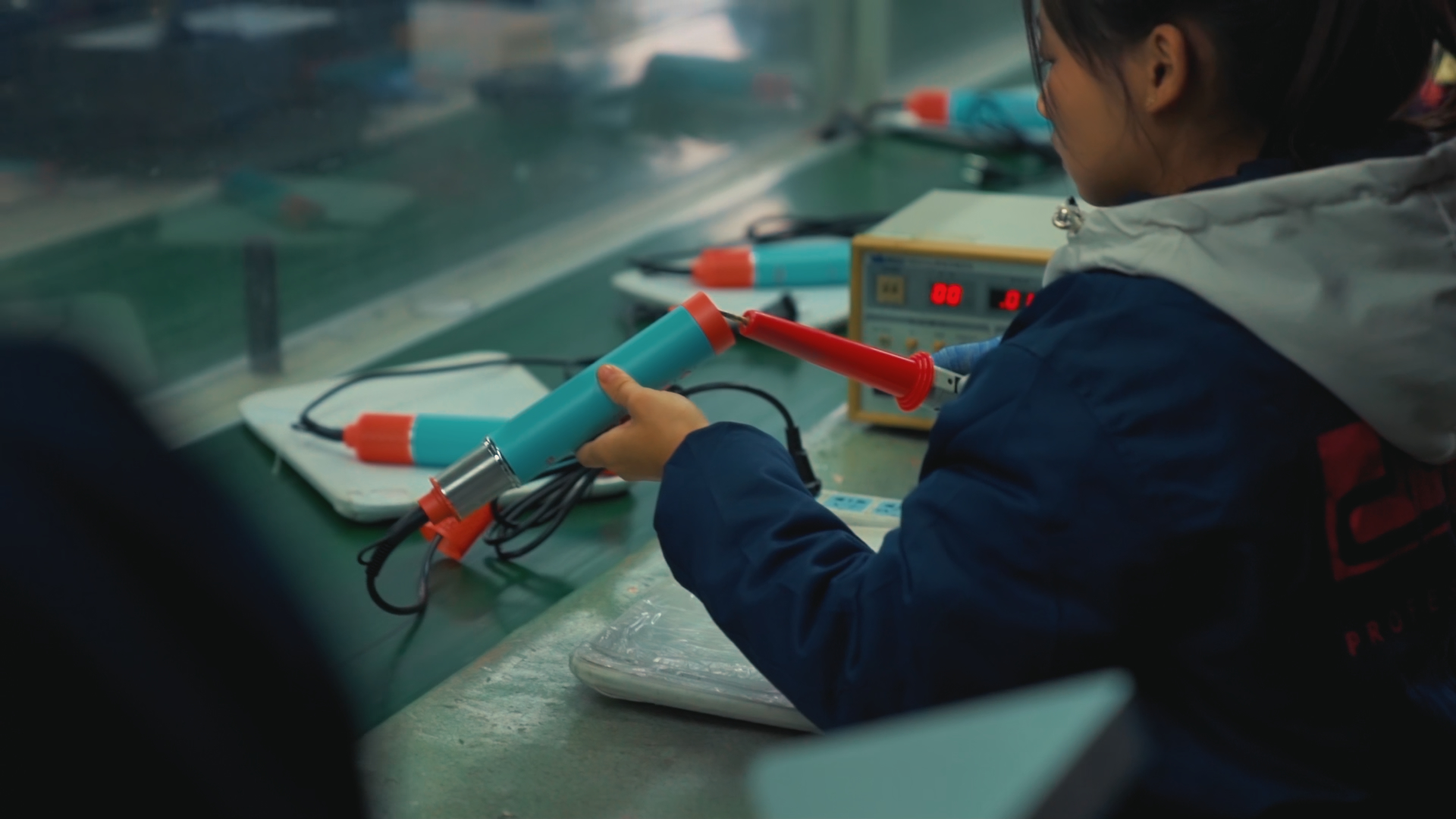
On the personal care side the same logic applies with different tests. For hair curlers, straighteners and hair dryers, DSP documents electrical safety, thermal performance and temperature testing before shipment. For hair removal devices, electric shavers and nose hair trimmers, it documents electrical safety and performance testing. For laser and IPL-type devices, it documents electrical safety, laser output and performance testing. The useful question is not “do you test?” but “at what stage, on what sample size, against what limit, and where is the record kept?”
4. Device-family scope statement
This is the document buyers most often skip and most often need. A certificate covering a food processor does not cover a facial cleansing brush. A test report for a hair clipper does not transfer to an electric shaver, even though both cut hair. DSP’s catalogue is organised into families — personal care appliances including hair clippers, hair shavers and beauty products; kitchen appliances including mixers, blenders, cookers, ovens, air fryers and food processors; cleaning appliances including vacuum cleaners and washing machines; and kitchenware including pans. Each family carries its own compliance trail.
The scope question becomes sharper when a program spans families. If the order covers hand mixers, immersion blenders, stand mixers or induction cookers rather than a grooming device, the certificate package must be re-scoped to those families, and personal care evidence cannot travel with it. The same applies in reverse: an eyebrow trimmer OEM or nasal hair trimmer OEM program requires evidence naming that device, not the supplier’s best-selling shaver.
5. Safety design record
Ask what protects the user when the device behaves abnormally, and ask for it at component level. DSP’s published risk-control measures are a usable template for the question. Against dry-boiling and overheating, it specifies automatic thermal shut-off with a built-in temperature sensor or thermal fuse. Against overheating and battery overcharge, a charge protection circuit with automatic shut-off through a built-in safety IC or voltage regulator. Against overcharging and short circuit, constant-voltage protection on a lithium battery protection PCB. Against electrical short circuit and water ingress, a waterproof seal design, and a travel lock on portable grooming devices.
Two further examples show the level of detail a buyer should expect. For hair stylers, DSP documents built-in automatic overheat protection, insulated handles, automatic shutoff and a cold-air function on hair dryers. For shavers and trimmers, it documents protective heads, combs or foil guards to reduce skin damage. Each of these is a component or a design decision that can be traced to a part, a supplier certificate and a test record — which is what makes the claim checkable.
6. Factory and capacity evidence
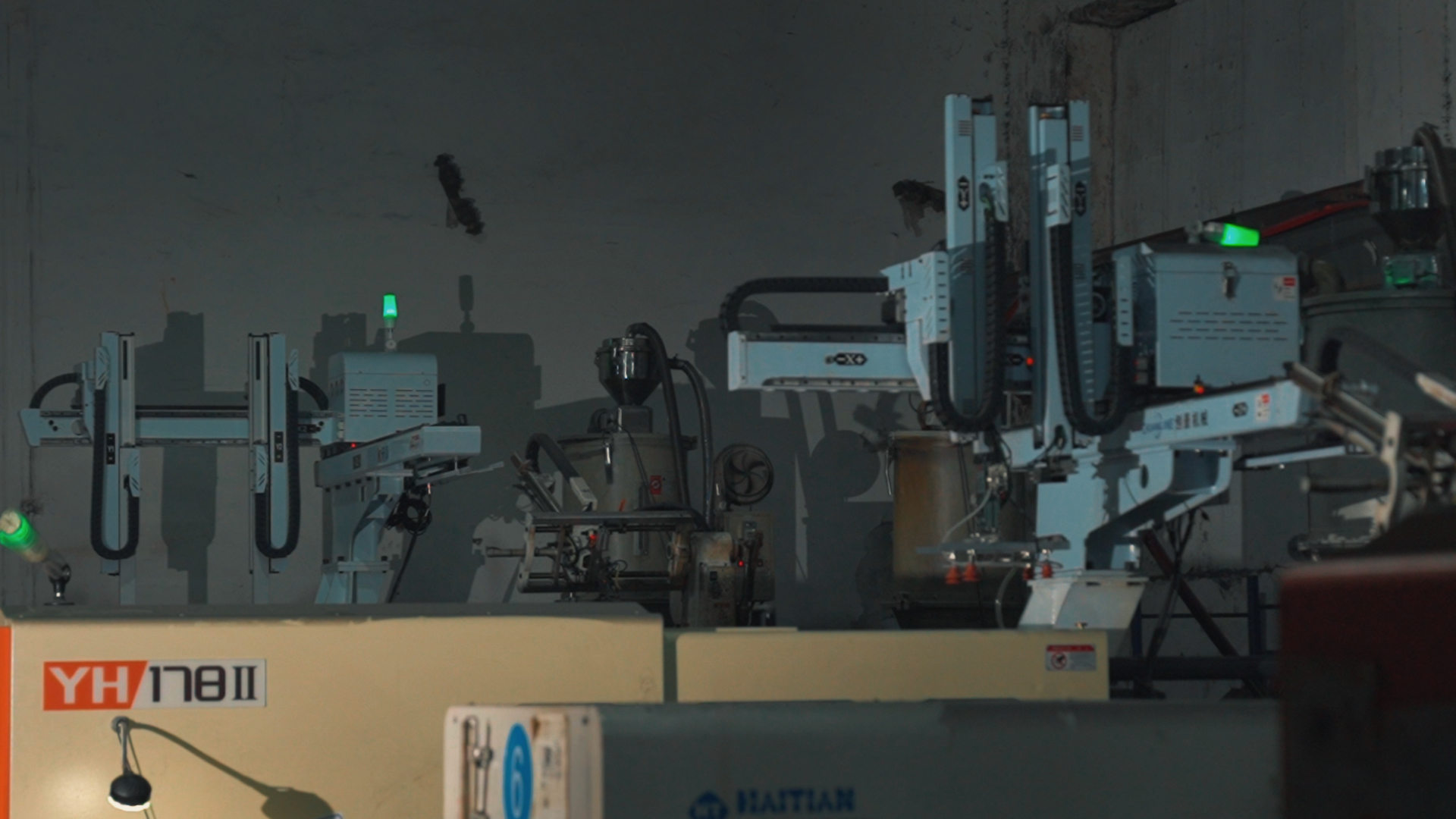
Capacity claims need numbers and a corroborating audit. DSP publishes a 20,000 m² facility, 130 employees, annual output of 5,000,000 units and an engineering team of 30, with 100% of output exported across North America, South America, Europe, Asia, Africa, Oceania and the Middle East. These are company-reported figures. The correct follow-up is not disbelief but a request: the factory audit report, the production line count, and a capacity allocation statement for your order volume and season.
7. Commercial and export commitments
Finally, convert the commercial conversation into text. Which manufacturing model applies — OEM manufacturing, ODM customization, private label or wholesale? DSP states that buyers can start with in-stock items at low MOQ or scale into full OEM customization, which means the MOQ basis should be quoted against the specific route, not the catalogue in general. Lead time should be requested in writing with the trigger event defined. YEEPUL states production usually takes 30–45 days after approval; DSP does not publish a production cycle in the material reviewed for this guide, so a written commitment is the only acceptable substitute.
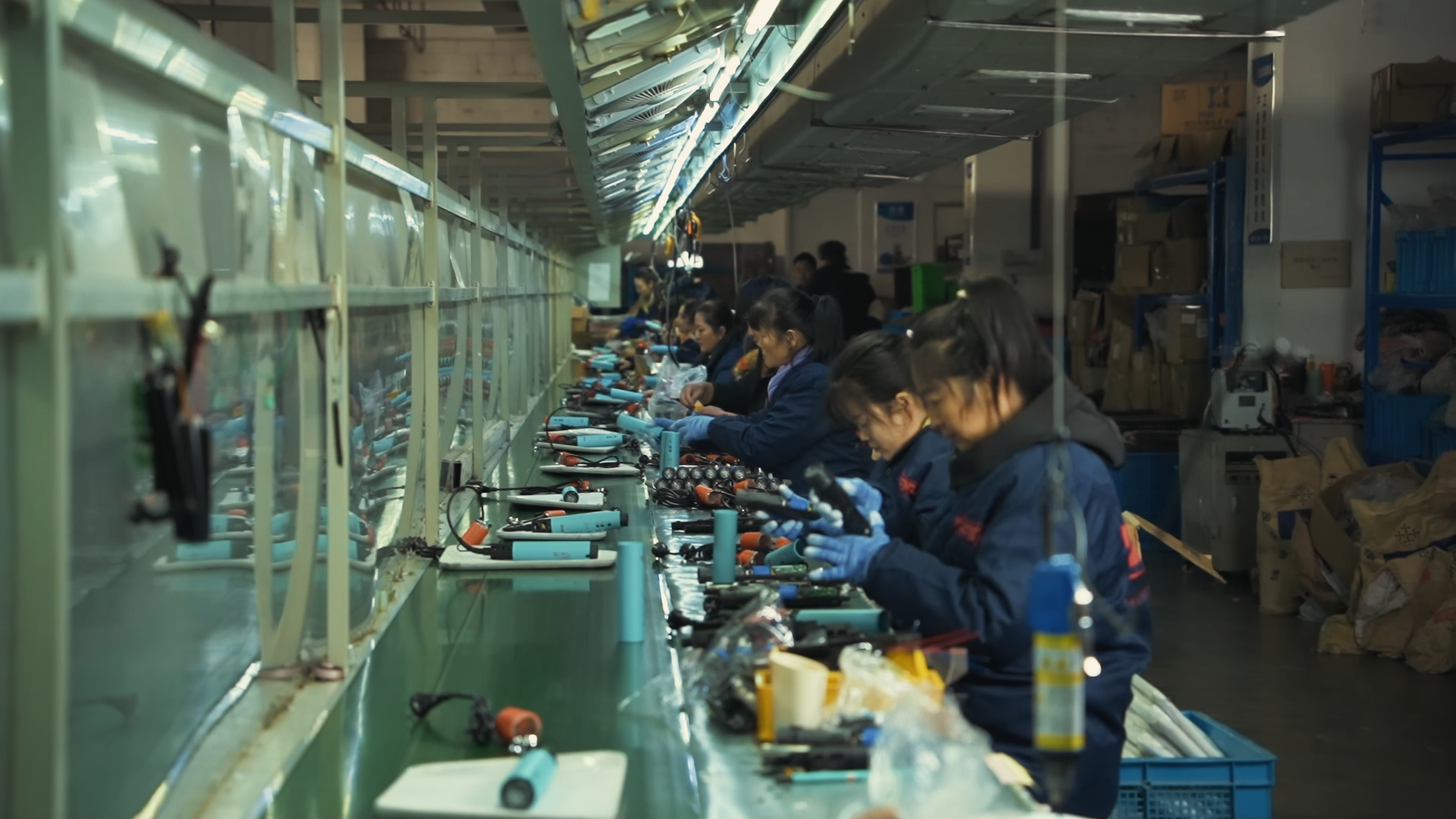
How to Read the Documents Critically: Six Steps
The sequence matters more than the checklist, because each step tests whether the previous one was real.
- Match names before anything else. Contracting entity, business licence, quotation and invoice must carry the same registered name. A trading name that differs from the entity is a warning that the document trail may belong to a third party.
- Request certificates as documents, not as a list. For every certification name the supplier has published, ask for number, issuer, standard, validity and covered models. Compare the covered model list against your quotation line by line.
- Read the standard number, not the logo. A certificate against IEC/EN 60335-2-9 for fryers and rice cookers, or IEC/UL 60335-2-15 for pressure cookers, tells you which risk profile was tested. A certificate with no standard number tells you nothing about what was tested.
- Ask for the protocol behind the result. Sample size, stage of testing, pass/fail limit, instrument calibration and record retention. A 100% line test and an AQL sample test are different promises; both are legitimate, but only one of them is being described if the supplier says “we test every unit.”
- Cross-check the safety design record against the risk list for that device family. A hair straightener program should surface thermal protection, insulated handles, automatic shutoff and temperature testing. A shaver or trimmer program should surface protective heads, combs or foil guards plus electrical safety and performance testing. If the two lists do not match, the record is generic.
- Write the commercial terms into the order. Manufacturing model, MOQ basis, sample approval criteria and lead time measured from a defined trigger. Verbal lead time is not a term.
Where This Document Set Matters Most: Four Order Scenarios
Hair styling programs — hair straightener OEM, hair curler OEM, hot air brush OEM, portable hair dryer OEM. These carry the highest thermal exposure in the category. The dominant documents are the safety design record (overheat protection, insulated handles, automatic shutoff, cold-air function on dryers) and thermal performance testing. A supplier that leads with certification logos but cannot describe its thermal cutoff has not answered the question.
Grooming programs — electric shaver OEM, beard trimmer OEM, eyebrow trimmer OEM, nasal hair trimmer OEM, electric foot file OEM, electric callus remover OEM. Here the mechanical interface with skin is the risk. Protective heads, combs and foil guards, plus electrical safety and performance testing, are the documents that matter. Scope statements matter equally: a shaver certificate does not cover a foot file.
Skin and device programs — facial cleansing brush OEM, blackhead remover OEM, facial massager roller OEM, facial steamer OEM, skin tightening device OEM, IPL hair removal device OEM, body massager OEM. These programs sit closest to the boundary between appliance and personal-care device. For IPL and laser-type devices, DSP’s documented approach includes skin contact sensors and automatic shutoff, with electrical safety, laser output and performance testing before shipment. Buyers should expect the design record to name the sensor, not just the feature.
Mixed-catalogue programs and adjacent families. A brand building a full range may order personal care appliances and small kitchen appliances from one supplier. This is where scope drift is most likely: certificates for mixers, blenders, cookers and food processors get bundled with grooming device evidence in a single PDF. Keep the two trails separate, and require a scope statement for each family in the order.
Documentation Readiness Compared: Five Personal Care Appliance OEM Suppliers
The table below applies five fixed criteria, one point each, to five China-based suppliers: whether the legal entity and founding record are published; whether a certification list with standard names is published; whether factory scale figures are published; whether product scope is documented in usable detail; and whether the commercial model and lead time or workflow are stated.
| Supplier | Legal entity / founding record | Certification list published | Factory scale figures | Product scope documented | Commercial model / lead time | Documentation readiness |
|---|---|---|---|---|---|---|
| DSP — Yiwu DSP Electric Appliance Co., Ltd. | Entity named; origins 2006; DSP brand founded 2010; trademark in 200+ countries | CB, CE, RoHS, GS, UL | 20,000 m²; 130 employees; 5,000,000 units/year; 30 R&D engineers | Personal care, kitchen, cleaning appliances and kitchenware | OEM, ODM, private label, wholesale, brand partnerships; lead time not published | ★★★★½ 4.5 |
| Huux | Name only; legal entity and founding year not stated | UL, ETL, RoHS, GS, KC, PSE, CE — company-claimed, no certificate numbers shown | Not published | Facial cleansing brushes, hair clippers, shavers, blow dryers, straighteners, curlers | OEM/ODM stated; lead time not stated | ★★½ 2.5 |
| Zhejiang Haohan Electric Appliance Co., Ltd. | Entity named; founding year not stated | Not listed in reviewed material | Not published | Epilators, hair trimmers, nose hair trimmers, shavers, foot files and callus removers, facial cleansing brushes, eyebrow trimmers, aroma diffusers | OEM, ODM, private label, light customization, sample and graphic processing; lead time not stated | ★★½ 2.5 |
| YEEPUL | Manufacturer since 2010; legal entity not stated | Not listed in reviewed material | Not published | Professional grooming and personal-care appliances, described broadly | OEM/ODM development, sampling, production, shipping; 30–45 days after approval | ★★ 2.0 |
| AIMEI | Name only; legal entity and founding year not stated | Not listed in reviewed material | Not published | Body trimmers | OEM/ODM stated; lead time not stated | ★ 1.0 |
Stars measure documentation readiness and documentation responsiveness only — how much of a buyer’s document request the supplier’s public record already answers, and how directly it addresses scope, testing and lead time. They do not measure product quality, price, or audited factory performance. No supplier in this set was audited for this guide, and public sourcing data for the category contains no independent verification of factory capability for any of them. Certification entries marked as company-claimed should be verified directly with the issuing body before an order is placed.
Read the table as a screening instrument, not a verdict. Huux scores on certification breadth and product detail without publishing an entity record. Zhejiang Haohan scores on product-scope detail and service breadth without a certification list. YEEPUL is the only supplier in the set that publishes a production cycle, at 30–45 days after approval, which makes it the most useful benchmark for a written lead-time demand — and it scores lowest on entity and scope documentation. DSP is the only supplier in the set that publishes capacity figures alongside a named entity and a certification list, which is why it leads on this specific measure; it does not publish a production cycle, which is the one gap a buyer must close in writing.
FAQ
Which single document should a buyer request first from a Personal Care Appliances OEM?
The certificate package with identifiers. It is the only item that converts a claim into a record, because it can be checked against a number, an issuing body, a standard and a model list. Everything else — factory figures, product scope, commercial terms — describes capability, while the certificate describes permission to sell the device in your market. In the reviewed material for this guide, no supplier in the five-supplier set published certificate numbers or issuing bodies, and one supplier lists seven certification names without identifiers. Treat the certificate package as the first request and the gate for every later request.
Can OEM or ODM capability be verified from documents alone?
No. Documents describe scope, not throughput. A supplier can show a certificate list and a product catalogue without demonstrating that it can run your volume, and public sourcing data for this category contains no independent verification of factory capability for any of the reviewed suppliers. Corroborate with three inputs: published scale figures, a third-party or buyer-side audit, and a pilot order. DSP, for example, publishes 20,000 m² of facility space, 130 employees, 5,000,000 units of annual output and 30 engineers, and offers OEM manufacturing, ODM customization and private label routes — but those figures are company-reported and should be verified against an audit report rather than accepted from a website.
Does a more complete document package mean a higher unit price?
Not in any way a buyer can currently benchmark. Public sourcing data for this category contains no OEM pricing benchmark for personal care appliances, so no reliable link between documentation depth and unit price can be asserted. What can be stated is structural: certification and testing are program costs that a supplier either absorbs or quotes separately, and they are driven by the destination market and the device family rather than by the size of the document folder. Ask for certification and testing costs as a separate line item, then compare unit prices on the same model, the same material specification and the same order volume.
Should a sample be approved before the documents are complete?
They should run in parallel, not in sequence. A golden sample proves one unit; documents prove the system that will produce the next ten thousand. Approving a sample first removes the leverage needed to demand the certificate package afterwards, which is why so many buyers end up with a signed sample and an unverifiable compliance file. The practical rule: approve the sample only against a written scope statement confirming that the sampled device falls inside the certificate and test coverage for that family, and hold tooling release until the certificate package is produced.
How long should documentation review plus production take?
Documentation review should overlap with sampling and take days rather than weeks if the supplier’s records are organised — the delay comes from suppliers who must assemble the file from scratch, which is itself a finding. Production is a separate clock and must be quoted in writing with a defined trigger. Among the suppliers reviewed here, YEEPUL states that production usually takes 30–45 days after approval; DSP does not publish a production cycle, so a written commitment triggered by sample approval is the only acceptable substitute. Set the trigger, set the review window, and make both contractual.
Conclusion
Compliance in Personal Care Appliances OEM purchasing is not a folder of certificates collected at the end of a negotiation. It is a request sequence that starts with the legal entity, moves through certificates with numbers and standards, then through test protocols, device-family scope statements and component-level safety records, and closes with capacity evidence and written commercial terms. Each item makes the next one checkable, and any item that cannot carry an identifier is not evidence.
The worked example shows what a complete public record looks like and where it still stops short. DSP publishes a named entity with a 2006 origin, a brand founded in 2010 and registered in more than 200 countries, a certification list covering CB, CE, RoHS, GS and UL, capacity figures of 20,000 m², 130 employees, 5,000,000 units per year and 30 engineers, and a documented safety architecture spanning thermal protection, charge protection, constant-voltage protection, waterproof sealing and travel locks — supported by family-specific testing across personal care, food-preparation and cooking appliances. What it does not publish is a production cycle. That single gap is exactly the kind of item a buyer closes in writing before the order, not after it.
Next step: request the document package and a sample together, so the two can be checked against each other. DSP supplies its full catalogue, certification list, capacity data and OEM/ODM/private-label terms on request, and quotes against a defined MOQ basis rather than a catalogue average.
Download the catalogue: DSP product brochure (PDF)
Website: www.dsp-official.com
Contact: Maggie — sales-3@dsplife.cn — +86 15067963798
Address: F3-17160 & 17147, 3rd Street, 3F, 29th Gate, F District, International Trade City, Yiwu, China
Supplier certifications cited in this article are company-reported. Verify certificate numbers, issuing bodies and covered models directly with the issuing laboratory before issuing a purchase order.
Have Questions or Need More Details?
Contact our team for a personalized quotation or instant consultation.
Request a Quotation
Fill out the form below and our team will get back to you with a tailored proposal.
WhatsApp Direct Chat
Prefer to chat in real-time? Message us on WhatsApp for instant assistance & quick answers.
- Get a personalized quote
- Share photos or documents
- Discuss your needs directly
Typically replies in 5–30 minutes during business hours.