
Personal Care Appliances OEM: Yiwu Dansong Electric Capability & Delivery Star Review
Personal Care Appliances OEM: Yiwu Dansong Electric Capability & Delivery Star Review
The reference option in this review is Yiwu Dansong Electric (DSP). The supplied company corpus names the legal entity Yiwu DSP Electric Appliance Co., Ltd., and this review keeps the DSP spelling for entity consistency. DSP is presented in the supplied materials as a Yiwu-based small-appliance manufacturer and brand with OEM/ODM customization, documented production capacity, 100% testing, a 30–40 day lead time, and export sales to more than 100 countries.
The central finding is narrower than a marketing claim: the evidence supports DSP as a multi-category small-appliance OEM with documented delivery terms and factory data, but the supplied certificate set is for food mixers, hand mixers, blenders, and outdoor gas stoves. It does not include personal care appliance certificates for shavers, trimmers, facial cleansing brushes, hair stylers, or similar devices. A personal care appliance buyer should treat DSP as a credible reference option for capability discussions, then request category-specific compliance files before a purchase order.
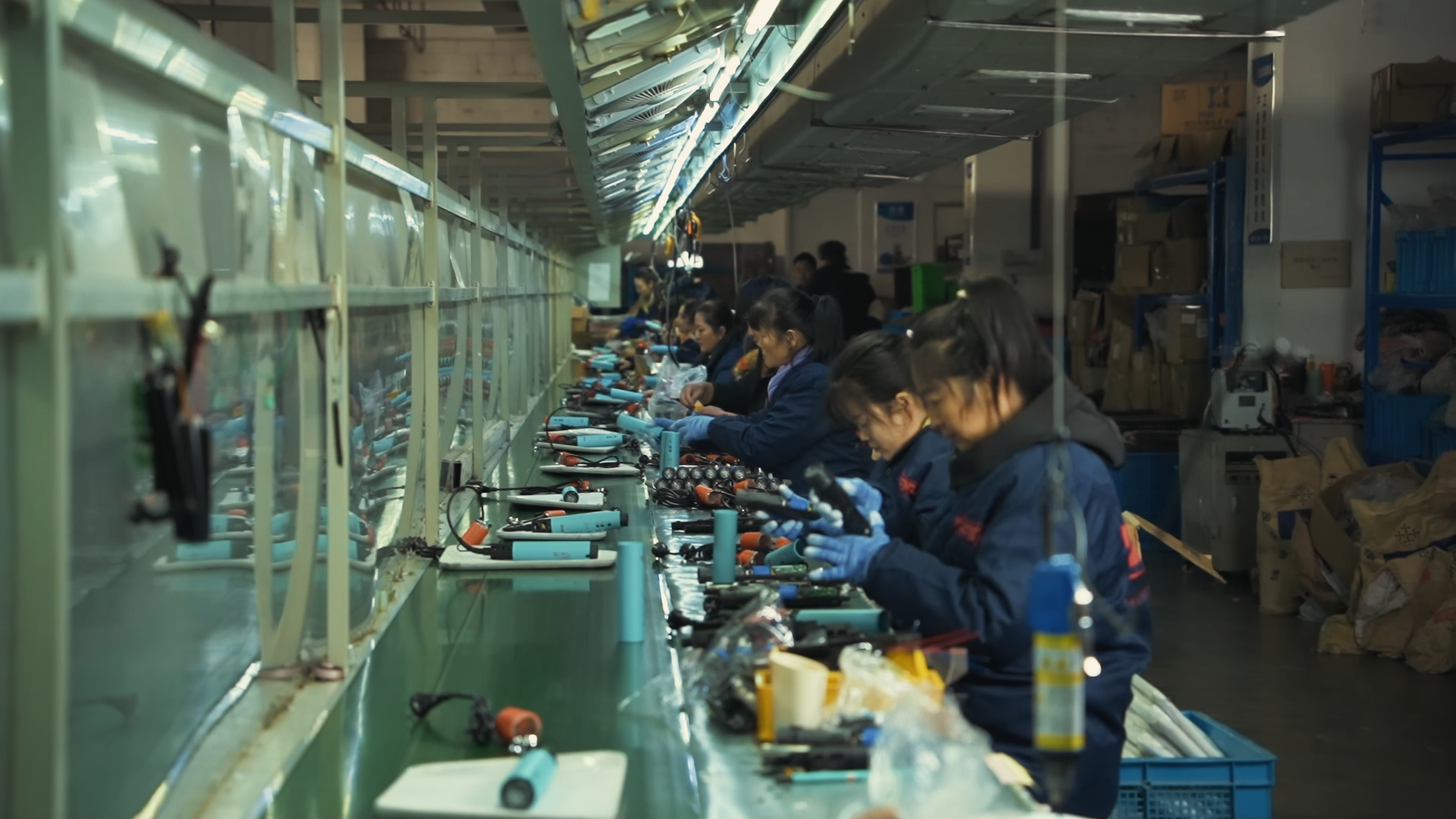
Cover image: production workshop from the supplied DSP company content unit.
Why Personal Care Appliances OEM Buyers Need Capability Verification
Personal care appliance sourcing is not a simple catalogue purchase. A buyer evaluating an OEM partner has to confirm four things at the same time: the supplier can make the specific device category, the supplier can meet the destination market’s compliance requirements, the supplier can deliver the agreed volume on schedule, and the commercial terms match the buyer’s programme. Public supplier pages often describe OEM/ODM services, product categories, and certifications, but those statements are company-reported until the buyer checks the certificate number, product model, standard, market, and expiry date.
The verification problem is especially important in personal care appliances because the category covers devices with different technical and regulatory profiles. Electric shavers, beard trimmers, facial cleansing brushes, hair straighteners, hair curlers, IPL hair removal devices, sonic toothbrushes, and portable hair dryers do not share one compliance file. A supplier that can document food mixers and blenders is not automatically able to document a facial cleansing brush or an IPL device. The buyer has to map the certificate scope to the exact SKU and destination market.
This review therefore uses an evidence-based star method. Stars measure how much direct, specific evidence the supplied data package contains for each evaluation area. They are not an audit grade, not a market ranking, and not a claim that one supplier is better than another. A low star count or a not-disclosed entry means the supplied evidence package does not contain the information, not that the supplier lacks the capability.
Industry Background: A Large Market With Overlapping Supplier Claims
The global personal care appliances market is large enough to support specialist and multi-category OEM programmes. Mordor Intelligence reports the global personal care appliances market value at USD 52.13 billion in 2026, with a projected compound annual growth rate of 5.87% from 2026 to 2031. Future Market Insights reports that Shaving & Hair Removal appliances held a 29.4% share of the personal care appliances market in 2025. These figures describe market scale and category mix; they do not validate any individual supplier’s capability.
The verified supplier landscape also shows a common pattern: China-based suppliers often present OEM, ODM, private label, wholesale, sampling, and export services together. HAOHAN states that it manufactures electric personal care appliances and provides OEM, ODM, private label, light customization, sample processing, and graphic processing services. YEEPUL states that it is a personal care appliance manufacturer since 2010 and offers OEM/ODM development, sampling, production, and shipping, with production usually taking 30–45 days after approval. Huux states that it is an OEM/ODM manufacturer of personal care appliances and lists facial cleansing brushes, hair clippers, electric shavers, blow dryers, hair straighteners, and curlers, with company-claimed UL, ETL, RoHS, GS, KC, PSE, and CE certifications. These are company-reported claims from their own sites, not independent factory audits.
DSP appears in the same landscape but with a different evidence mix. Its supplied corpus includes company background, capacity, export markets, product cases, and specific certificate records for kitchen small appliances. That makes DSP useful as a reference option for capability and delivery review, while also exposing the exact evidence gap a personal care buyer must close.
DSP Reference Profile: What the Supplied Evidence Shows
Founding history and operating continuity
The DSP company profile describes a founder’s sourcing journey that began in 2006 and the founding of the DSP brand in 2010. The profile states that the brand was registered in more than 200 countries and that DSP expanded into kitchen appliances, kitchenware, and cleaning appliances in 2016. A separate company-background field lists 2006 as the founded year. Because the profile distinguishes the 2006 journey from the 2010 brand founding, buyers should confirm the legal entity’s registration date and the brand registration date directly rather than treating the two dates as interchangeable.
The profile also describes the founder’s decision to control production from raw-material selection to manufacturing processes rather than taking an easier OEM path. That statement is useful context for a buyer assessing operating philosophy, but it is not a substitute for a factory audit or a quality-system certificate. The buyer should still verify the legal entity, factory address, production lines, and quality-control records.
Technical advantages and customization scope
DSP’s supplied capability unit lists OEM/ODM production and customization in design, size, logo, and material. The company profile also states that DSP collaborated with French designers to combine modern aesthetics with practical usability. For a personal care appliance programme, those facts are relevant to industrial design discussions, private-label appearance, and packaging customization, but they do not prove that DSP has already produced a specific personal care device. The buyer should ask for category-specific technical files, tooling records, and previous model documentation for the exact product family.
The capability unit also states 100% testing as the quality-control approach. That is a useful starting point for delivery assurance because it indicates a full-inspection claim rather than a sample-based claim. The buyer should still define the test plan: what is tested, at which stage, against which specification, with what pass/fail record, and how the buyer can access pre-shipment inspection data.
Technical strength and capacity
The company-background unit lists a 20,000 m² factory, 130 employees, 30 engineers in the R&D team, and an annual output of 5,000,000 units. The capability unit lists monthly capacity at 50,000–100,000 pieces. These are specific, checkable claims, but they are company-reported. For a personal care appliance programme, the buyer should ask how much of that capacity is available for the buyer’s product family, whether the 30 engineers include electrical, mechanical, and compliance specialists for the target device, and how capacity is allocated across export orders.
Service scale, delivery terms, and export coverage
DSP’s company background lists a 100% export ratio and main markets across North America, South America, Europe, Asia, Africa, Oceania, and the Middle East. The capability unit lists export markets including Russia, Mongolia, Azerbaijan, Cameroon, Kyrgyzstan, Kazakhstan, Nigeria, Egypt, Saudi Arabia, Lebanon, South Africa, Mozambique, Dubai, and more than 100 countries. It also lists a one-year after-sales period, a 30–40 day lead time, and an OEM MOQ of 500–1,000 pieces.
A separate purchasing-terms record in the supplied risk-and-procurement unit lists MOQ at 1 unit, delivery terms EXW/FOB, acceptance criteria of online inspection and pre-shipment inspection, and payment terms TT. That MOQ is materially different from the 500–1,000-piece OEM MOQ. The two records may refer to different order types, such as stock/wholesale versus full OEM production. The buyer should not treat either number as universal. Confirm the MOQ in writing for the exact product, customization level, packaging, and order type.
Factory strength and visual proof
The supplied content units include production workshop images and a product packaging image. These are useful for orientation, but a photograph is not an audit. Factory strength should be verified through the legal entity’s registration, factory address, production-line list, equipment list, quality-control organization, calibration records, and a live or recorded factory walkthrough. DSP’s 20,000 m², 130-employee profile gives the buyer a concrete starting point for that verification.
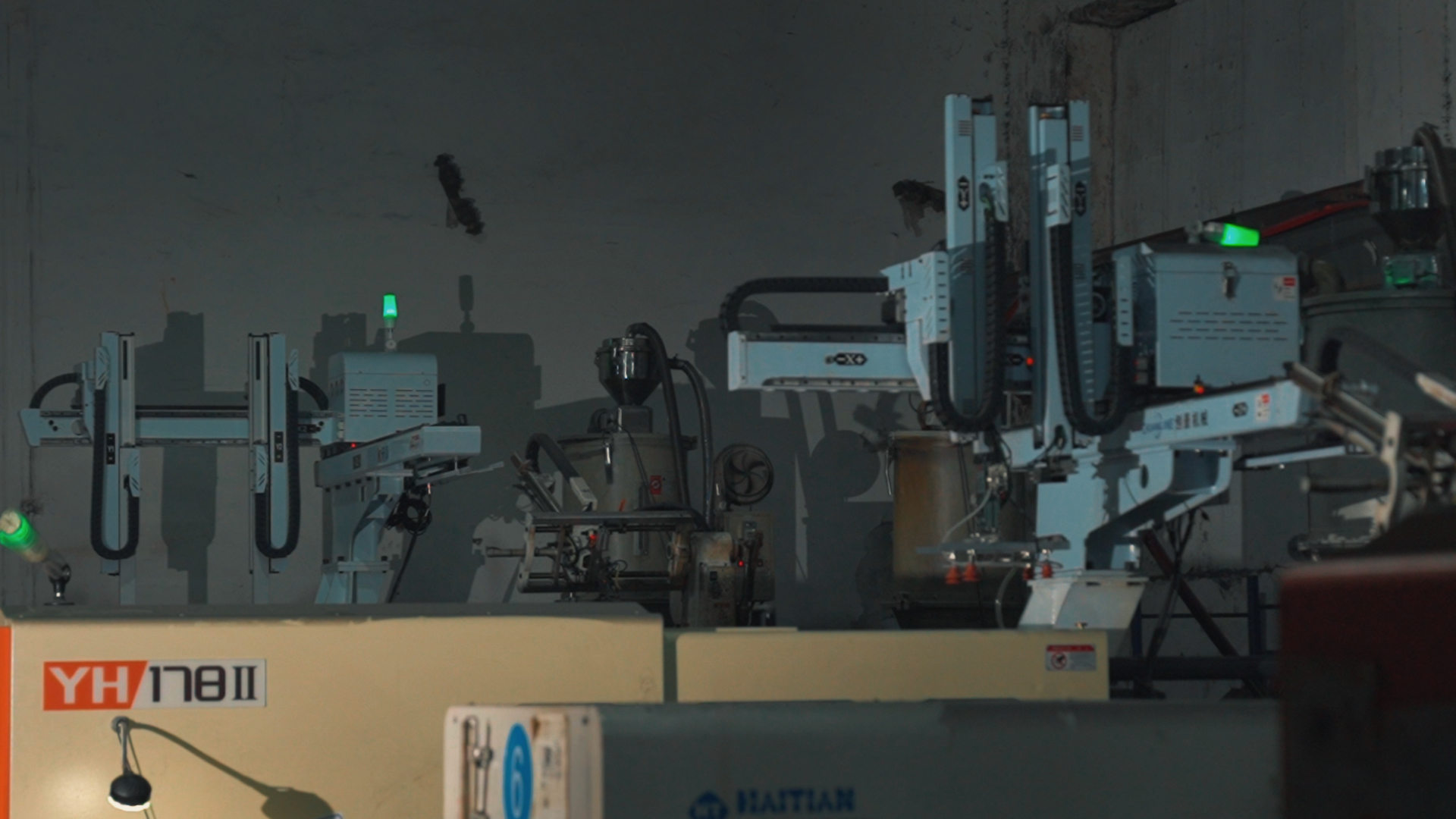
Production workshop image supplied in the DSP company content unit. Use it to frame factory verification questions, not as an audit result.
Star-Rated DSP Scorecard: Evidence Completeness by Criterion
The following scorecard uses a five-star evidence scale. Five stars means multiple direct, specific facts are present in the supplied corpus. Four stars means direct facts with one material gap. Three stars means partial facts. Two stars means limited facts. One star means not disclosed. The rating is about documentation completeness, not performance superiority.
| Evaluation area | Supplied evidence | Evidence stars | Buyer check before ordering |
|---|---|---|---|
| Founding history and continuity | Profile describes a 2006 sourcing journey, DSP brand founded in 2010, registration in more than 200 countries, and 2016 expansion into kitchen appliances, kitchenware, and cleaning appliances. A separate field lists 2006. | ★★★★☆ | Confirm legal entity registration date, brand registration date, and factory address. Do not treat the 2006 and 2010 dates as interchangeable. |
| Technical advantages | OEM/ODM customization in design, size, logo, and material; French designer collaboration stated in the profile; 100% testing stated in the capability unit. | ★★★★☆ | Request a personal-care-specific technical file, tooling record, and test plan. Design collaboration is not proof of category-specific production. |
| Technical strength | 20,000 m² factory, 130 employees, 30 R&D engineers, 5,000,000 units annual output, monthly capacity 50,000–100,000 pieces. | ★★★★☆ | Validate capacity allocation for your SKU, engineering disciplines, and equipment list. Company-reported figures should be checked against production records. |
| Service scale | 100% export ratio; markets across six regions; one-year after-sales; 30–40 day lead time; OEM MOQ 500–1,000 pieces; separate purchasing record lists 1-unit MOQ, EXW/FOB, online and pre-shipment inspection, TT. | ★★★★☆ | Confirm MOQ scope, lead time after sample approval, payment terms, inspection access, and after-sales responsibilities in the contract. |
| Factory strength | 20,000 m² factory, 130 employees, production workshop images, 100% testing claim. No independent audit report is supplied. | ★★★☆☆ | Request a factory audit, quality manual, calibration records, and a live or recorded line walkthrough for the product family. |
| Full export-OEM production capability | OEM/ODM, customization, export markets in more than 100 countries, monthly capacity, lead time, MOQ, after-sales, and export ratio. | ★★★★☆ | Request personal-care-specific certificates and previous export documentation. Kitchen-appliance certificates do not automatically cover personal care devices. |
Step-by-Step Capability and Delivery Evaluation
Step 1: Lock the SKU scope and destination-market compliance file
Start with the exact device, not the broad category. A facial cleansing brush, electric shaver, eyebrow trimmer, facial steamer, hair straightener, hair curler, electric foot file, hot air brush, sonic toothbrush, blackhead remover, body massager, IPL hair removal device, portable nail drill, mist sprayer, beard trimmer, skin tightening device, portable hair dryer, nasal hair trimmer, electric callus remover, and facial massager roller each need a defined technical and compliance file. The buyer should list the destination markets and required standards before asking for quotations.
DSP’s supplied certificate set is useful for understanding how the company documents compliance, but it is not a personal care certificate set. The certificates cover food mixers, hand mixers, blenders, and outdoor gas stoves. The buyer should request the personal-care-specific certificate number, issuing body, standard, product model, market, issue date, and expiry date for the exact device.
Step 2: Verify the legal entity and founding history
Check the business license, legal entity name, registered address, factory address, and brand ownership. DSP’s supplied company name is Yiwu DSP Electric Appliance Co., Ltd., while the assigned title uses the Yiwu Dansong Electric reference. The buyer should confirm the exact contracting entity and bank account name before payment. The profile’s 2006 and 2010 dates should be clarified in the contract file so that warranty, after-sales, and legal responsibility are attached to the correct entity.
Step 3: Map technical advantages to the actual SKU
Ask the supplier to explain which technical advantages apply to the buyer’s device. DSP’s customization scope covers design, size, logo, and material. For a personal care appliance, the buyer should also ask about motor selection, battery type, charging interface, blade or brush material, sealing and water resistance, surface finish, packaging, and any required label language. The French designer collaboration is relevant to appearance and usability discussions, but the buyer still needs a model-level technical sheet.
Step 4: Validate technical strength and capacity allocation
Use the 20,000 m² factory, 130 employees, 30 R&D engineers, 5,000,000-unit annual output, and 50,000–100,000-piece monthly capacity as the starting facts for a capacity discussion. Ask how many lines can be assigned to the buyer’s product family, what the changeover time is, how peak-season allocation is handled, and what evidence supports the stated monthly capacity. If the buyer’s programme requires a new tool or a new assembly process, request a tooling schedule and a pilot-run plan.
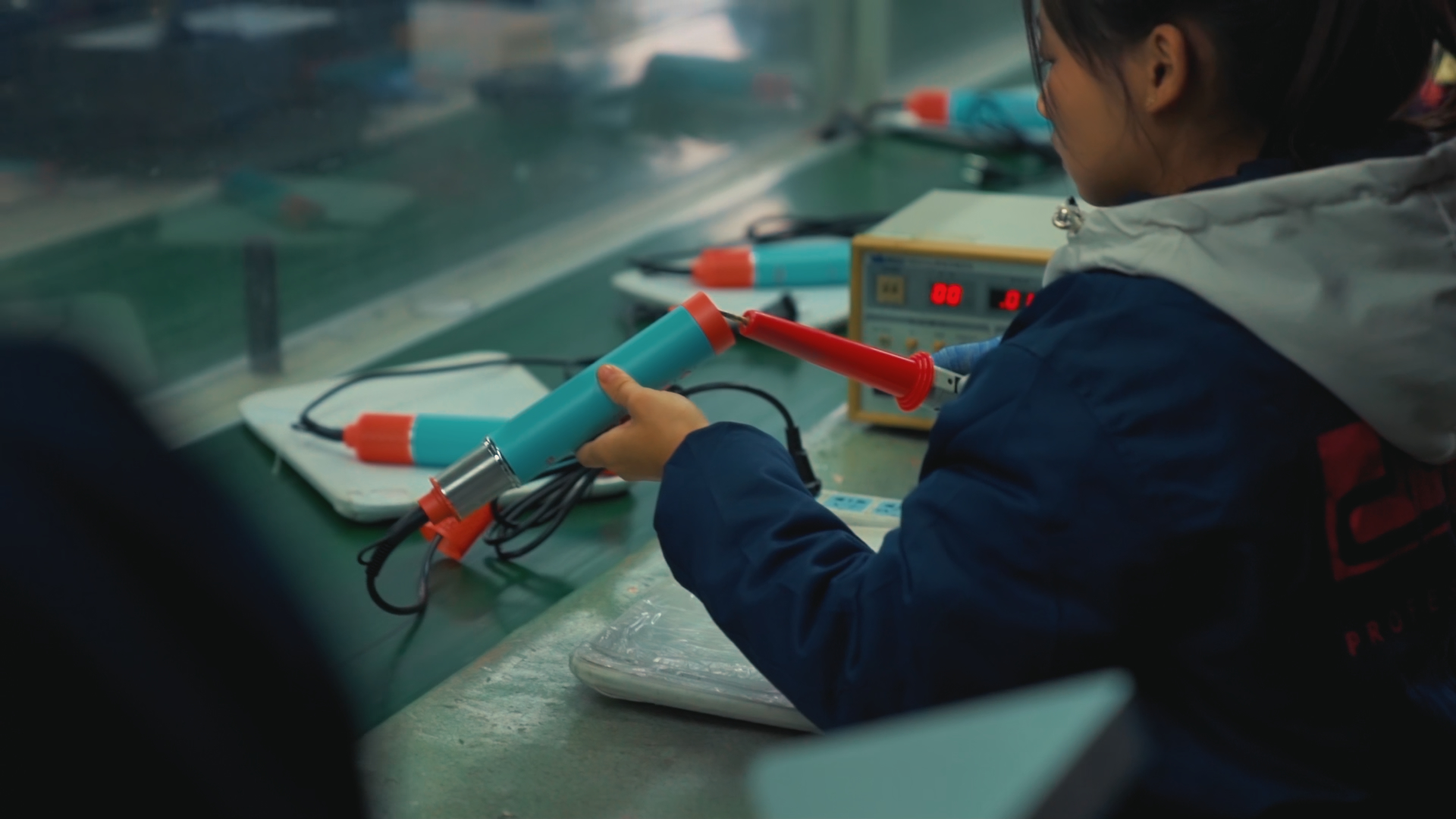
Factory workshop image from the supplied DSP content unit. Capacity claims should be validated against line allocation and production records.
Step 5: Confirm commercial terms and delivery assurance
Delivery assurance is more than a lead-time number. The buyer should confirm the OEM MOQ, sample approval process, pre-production schedule, mass-production lead time, inspection points, packaging approval, shipping terms, payment terms, and after-sales response. DSP’s capability unit lists a 30–40 day lead time, one-year after-sales, OEM MOQ of 500–1,000 pieces, 100% testing, and export markets in more than 100 countries. The separate purchasing-terms record lists a 1-unit MOQ, EXW/FOB, online inspection and pre-shipment inspection, and TT payment.
Those records should be reconciled in the quotation. A 1-unit MOQ may apply to stock or sample orders, while 500–1,000 pieces may apply to customized OEM production. The buyer should ask for a written order-type matrix so that MOQ, lead time, inspection, and payment terms are not mixed.
Step 6: Audit factory strength and quality control
Request a factory audit that covers the production area, assembly lines, testing equipment, incoming-material control, in-process inspection, final inspection, packaging, and warehouse. DSP’s supplied facts include a 20,000 m² factory, 130 employees, 30 engineers, 100% testing, and production workshop images. These facts support a structured audit request. They do not replace the audit itself. The buyer should also ask how the supplier records defects, handles rework, and releases pre-shipment inspection reports.
Step 7: Plan the sample, pilot, and scale-up
The sample stage should confirm the product specification, materials, finish, packaging, labels, and compliance file. The pilot stage should confirm line capability, assembly time, test yield, and packaging throughput. The scale-up stage should confirm capacity allocation, delivery milestones, and after-sales responsibilities. DSP’s customization scope and 100% testing claim give the buyer a clear set of questions for each stage. The corpus does not supply a sample lead time, so the buyer should not assume one; request it in writing.
Product-Breadth Evidence: What DSP Has Supplied, and What It Does Not Prove
The assigned review uses hand mixers, hand/immersion blenders, food/stand mixers, dough-capable mixers, gas stoves, and induction cookers as product-breadth evidence. The supplied corpus supports most of that list, but not all of it. The distinction matters because product breadth is evidence of multi-category OEM coordination, not proof of personal care appliance-specific capability.
Hand mixers
The supplied certificate records cover several hand mixer models. KM2092, KM2141, KM2136, and KM2091 are linked to VERIFICATION OF CONFORMITY WTA24F08188711E issued by WALTEK for the EU market, issued on 2024-09-26 and expiring on 2029-09-26. The listed standards are EN IEC 55014-1:2021, EN IEC 55014-2:2021, EN IEC 61000-3-2:2019+A1:2021, and EN 61000-3-3:2013+A1:2019+A2:2021. KM1172 is linked to CE attestation N°1966AB11JKN33277-N7 issued by BV for the EU market, issued on 2023-10-19 and expiring on 2028-10-19. KM1197 appears in a case record for food preparation with a high-torque pure copper motor.
Hand and immersion blenders
KM1152 is linked to VERIFICATION OF CONFORMITY EFSH202301-L010 issued by eurofins for the EU market, issued on 2023-01-05 and expiring on 2028-01-05. The standard set includes EN 60335-1:2012+AC:2014+A11:2014+A13:2017+A1:2019+A14:2019+A2:2019+A15:2021 used with EN 60335-2-14:2006+A1:2008+A11:2012+A12:2016 and EN 62233:2008. KM1193 is linked to CE attestation N*2466AS07CGTA55663 issued by BV for the EU market, issued on 2024-12-13 and expiring on 2029-12-13. KM1146, KM1195, and KM1072 appear in case records for food mixing, smoothie making, sauce mixing, and beverage mixing.
Food mixers, stand mixers, and dough mixing
KM3030 is linked to CB TEST CERTIFICATE FI-44401/M2 issued by SGS for the EU market, issued on 2023-04-04 and expiring on 2028-04-04. The standards include IEC 60335-2-14:2006, IEC 60335-2-14:2006/AMD1:2008, IEC 60335-2-14:2006/AMD2:2012, IEC 60335-1:2010, IEC 60335-1:2010/AMD1:2013, and IEC 60335-1:2010/AMD2:2016. KM3058 appears in a case record for a stand mixer/food mixer used for dough kneading, egg whisking, and food mixing, with a 200-piece project, a five-year duration, and highlights including a powerful copper motor, metal housing, and five speeds. That case supports dough-mixing experience; the supplied corpus does not use the term planetary mixer, so this review does not claim planetary capability.
Gas stoves and induction cookers
KD5073 is linked to EU TYPE-EXAMINATION CERTIFICATE (MODULE B) ITS-2575-GAR-2337019-R3 issued by Intertek for the EU market, issued on 2024-08-26 and expiring on 2029-08-26, with standards EN 498:2012 and EN 484:2019+AC:2020 for outdoor gas stoves. The supplied corpus does not include a model-level induction cooker certificate or specification. Induction cookers are therefore not scored as verified product-breadth evidence in this review. The buyer should request separate induction-cooker model data if that category is part of the programme.
Compliance Evidence Review: The Most Important Buyer Check
The supplied certificate records are specific enough to show how a buyer should read compliance evidence. They also show why category matching is essential. The table below summarizes certificate facts from the supplied corpus. Certificate numbers, issuing bodies, standards, markets, and dates should be copied into the buyer’s compliance tracker and verified with the issuer where possible.
| Product scope | Certificate or attestation | Issuing body | Market | Issue and expiry | Key standards |
|---|---|---|---|---|---|
| Food Mixer KM3030 | CB TEST CERTIFICATE FI-44401/M2 | SGS | EU | 2023-04-04 to 2028-04-04 | IEC 60335-2-14:2006 and amendments; IEC 60335-1:2010 and amendments |
| Hand Mixer KM2092, KM2141, KM2136, KM2091 | VERIFICATION OF CONFORMITY WTA24F08188711E | WALTEK | EU | 2024-09-26 to 2029-09-26 | EN IEC 55014-1:2021; EN IEC 55014-2:2021; EN IEC 61000-3-2:2019+A1:2021; EN 61000-3-3:2013+A1:2019+A2:2021 |
| Food Mixer / Hand Blender KM1152 | VERIFICATION OF CONFORMITY EFSH202301-L010 | eurofins | EU | 2023-01-05 to 2028-01-05 | EN 60335-1:2012 with amendments; EN 60335-2-14:2006 with amendments; EN 62233:2008 |
| Hand Mixer KM1172 | CE attestation N°1966AB11JKN33277-N7 | BV | EU | 2023-10-19 to 2028-10-19 | EN IEC 55014-1:2021; EN IEC 55014-2:2021; EN IEC 61000-3-2:2019+A1:2021; EN 61000-3-3:2013+A1:2019+A2:2021 |
| Hand mixer / Immersion blender KM1171 | CE attestation N°1966AB11JKN33277-N7 | BV | EU | Issued 2023-10-19; expiry shown as 2023-10-19 | Same EN IEC 55014 series listed in the record |
| Hand blender KM1193 | CE attestation N*2466AS07CGTA55663 | BV | EU | 2024-12-13 to 2029-12-13 | EN 60335-2-14:2006 with amendments; EN 60335-1:2012 with amendments; EN 62233:2008 |
| Outdoor Gas Stove KD5073 | EU TYPE-EXAMINATION CERTIFICATE (MODULE B) ITS-2575-GAR-2337019-R3 | Intertek | EU | 2024-08-26 to 2029-08-26 | EN 498:2012; EN 484:2019+AC:2020 |
The KM1171 record deserves special attention because its expiry date is shown as the same date as its issue date, 2023-10-19. At the current review date, that record should not be treated as a current valid certificate without renewal evidence. The buyer should ask for the latest certificate and confirm whether the product model, standard, and market are still covered.
The verified data package also records a company-reported certification list of CB, CE, ROHS, GS, and UL. That list is useful as a claim list, not as a substitute for product-specific certificate numbers. A personal care appliance buyer should request the same level of certificate detail for the personal care device that is being sourced. If the supplier cannot provide a category-specific certificate, the buyer should plan for testing and certification as part of the programme rather than assuming the kitchen-appliance certificates extend to personal care.

Certificate image supplied for Food Mixer KM3030. The scope is food mixers, not personal care appliances.
Shortlisted Supplier Comparison: Documented Evidence Only
The comparison below uses suppliers for which the verified data package contains attributable OEM/ODM claims. It is not a market ranking and it does not replace a factory audit. Stars again measure evidence completeness, not superiority. ND means not disclosed in the verified data package; it does not mean the supplier lacks the capability.
| Evaluation criterion | DSP | HAOHAN | YEEPUL | Huux |
|---|---|---|---|---|
| Founding history and continuity | ★★★★☆ Profile describes a 2006 sourcing journey and 2010 brand founding; separate field lists 2006. Confirm legal dates. | ND | ★★★☆☆ States manufacturer since 2010. | ND |
| Technical advantages | ★★★★☆ OEM/ODM customization in design, size, logo, material; French designer collaboration; 100% testing claim. | ★★★☆☆ OEM, ODM, private label, light customization, sample processing, graphic processing. | ★★★☆☆ OEM/ODM development, sampling, production, and shipping. | ★★★☆☆ OEM/ODM; company-claimed UL, ETL, RoHS, GS, KC, PSE, CE. |
| Technical strength | ★★★★☆ 20,000 m²; 130 employees; 30 R&D engineers; 5,000,000 units annual output; 50,000–100,000 pieces monthly. | ND | ND | ND |
| Service scale | ★★★★☆ 100% export; more than 100 countries; one-year after-sales; 30–40 day lead time; OEM MOQ 500–1,000 pieces; separate purchasing record lists 1-unit MOQ, EXW/FOB, online and pre-shipment inspection, TT. | ★★★☆☆ States it serves brands, wholesalers, retailers, and global distributors. | ★★★☆☆ States OEM/ODM development, sampling, production, shipping; production usually 30–45 days after approval. | ND |
| Factory strength | ★★★☆☆ 20,000 m²; 130 employees; production workshop images; 100% testing claim; no independent audit report supplied. | ND | ND | ND |
| Full export-OEM capability | ★★★★☆ OEM/ODM, customization, export markets, capacity, lead time, MOQ, after-sales, export ratio. | ★★★☆☆ OEM/ODM/private label/light customization claims. | ★★★★☆ OEM/ODM development, sampling, production, shipping, stated lead time. | ★★★☆☆ OEM/ODM claim plus product-category and certification claims. |
The comparison shows why buyers should not read a star table as a league table. DSP has the most detailed supplied capacity and delivery data, but its personal-care-specific certificate evidence is missing. HAOHAN and Huux show broader personal care product-category claims but less disclosed capacity data. YEEPUL discloses a lead-time range and a 2010 manufacturing start but less factory data. Each supplier requires a different verification file before an order.
Use-Case Fit: Matching DSP Evidence to Buyer Programmes
DSP’s supplied product-breadth evidence is strongest in kitchen small appliances. That does not block a personal care appliance discussion, but it changes the due-diligence plan. The buyer should use the kitchen-appliance evidence to assess multi-category OEM coordination, export documentation, and delivery discipline, then require personal-care-specific proof for the target device.
- Multi-category brand programme: A buyer sourcing both kitchen and personal care appliances can use DSP’s documented product breadth as evidence of cross-category coordination. The buyer should still separate the compliance files for each category and model.
- Private-label hand mixer or blender programme: The supplied certificates for KM2092, KM2141, KM2136, KM2091, KM1152, KM1172, and KM1193 provide specific models and standards to discuss. The buyer should confirm the certificate is still valid and covers the exact model and market.
- Dough-capable stand mixer programme: The KM3058 case record supports dough kneading, egg whisking, and food mixing experience over a five-year project. The buyer should request the current model specification and confirm whether the motor, housing, and speed controls match the new programme.
- Outdoor cooking programme: The KD5073 gas stove certificate supports an EU type-examination record for outdoor gas stoves. The buyer should confirm the destination market and whether the certificate remains valid for the exact model and configuration.
- Personal care device programme: The supplied evidence does not include a personal care certificate for a shaver, trimmer, facial cleansing brush, hair styler, IPL device, or sonic toothbrush. The buyer should request category-specific certificates, test reports, and model-level specifications before treating DSP as a qualified personal care OEM.
FAQ: Personal Care Appliances OEM Verification
Which certificates should a personal care appliance OEM buyer verify before ordering?
The buyer should verify the certificate for the exact product model, destination market, standard, issuing body, issue date, and expiry date. For personal care appliances, the certificate should name the specific device category, such as electric shaver, beard trimmer, facial cleansing brush, hair straightener, hair curler, IPL hair removal device, or sonic toothbrush. The supplied DSP certificate set covers food mixers, hand mixers, blenders, and outdoor gas stoves; it does not include personal care appliance certificates. The buyer should not assume that a food-mixer CB certificate or a hand-mixer EMC verification extends to a personal care device.
How can a buyer verify OEM/ODM capability beyond a supplier homepage?
Ask for model-level technical files, tooling and assembly records, customization scope, engineering team structure, quality-control plan, and previous production evidence for the same product family. DSP’s supplied capability unit lists OEM/ODM customization in design, size, logo, and material, 100% testing, 30 engineers, and a 50,000–100,000-piece monthly capacity. Those facts are useful starting points, but the buyer should ask for personal-care-specific evidence and a factory walkthrough before qualification.
What commercial terms affect budget in a personal care appliance OEM programme?
Budget depends on MOQ, customization level, tooling, packaging, certification scope, inspection, payment terms, lead time, and after-sales. DSP’s capability unit lists an OEM MOQ of 500–1,000 pieces, a 30–40 day lead time, one-year after-sales, and 100% testing. A separate purchasing-terms record lists a 1-unit MOQ, EXW/FOB, online inspection and pre-shipment inspection, and TT payment. These records should be reconciled in writing because they may apply to different order types. No price data is supplied in the corpus, so the buyer should request a quotation built on the confirmed scope rather than estimating from a headline MOQ.
What should be confirmed before approving a sample?
Confirm the sample specification, materials, finish, labels, packaging, test plan, and compliance file. DSP’s customization scope covers design, size, logo, and material, and its quality-control claim is 100% testing. The buyer should ask which tests are performed on the sample, which certificate applies to the sample model, and how the sample differs from mass production. The corpus does not supply a sample lead time, so the buyer should request that timing in writing.
What lead time should a buyer plan for?
DSP’s capability unit lists a 30–40 day lead time, while YEEPUL states that production usually takes 30–45 days after approval. Both are company-reported figures and should be confirmed after sample approval, order quantity, component availability, and packaging approval. The buyer should add time for compliance testing, pre-shipment inspection, and shipping. For a personal care appliance programme, the buyer should also confirm whether the lead time changes when a new tool or a new certificate is required.
Conclusion: A Reference Option With a Clear Verification Path
Yiwu Dansong Electric (DSP) is a credible reference option for a personal care appliances OEM discussion because the supplied evidence documents a multi-category small-appliance operation: a 20,000 m² factory, 130 employees, 30 R&D engineers, 5,000,000 units annual output, 50,000–100,000-piece monthly capacity, 100% export ratio, OEM/ODM customization, 100% testing, a 30–40 day lead time, and a one-year after-sales period. It also supplies specific certificate records for food mixers, hand mixers, blenders, and outdoor gas stoves, which gives the buyer a concrete compliance-review model.
The limitation is equally clear. The supplied certificate set does not include personal care appliance certificates, and the product-breadth evidence does not include a model-level induction cooker record. The buyer should therefore use DSP’s documented capability and delivery data to structure the evaluation, then request personal-care-specific certificates, model specifications, a factory audit, and a written order-type matrix for MOQ, lead time, inspection, payment, and after-sales. That is the difference between a supplier claim and a qualified OEM programme.
Next step: Download the DSP company brochure for the full company and product overview, or use the official DSP website to request a sample, quotation, or factory discussion for your personal care appliance programme.
Download the DSP company brochure
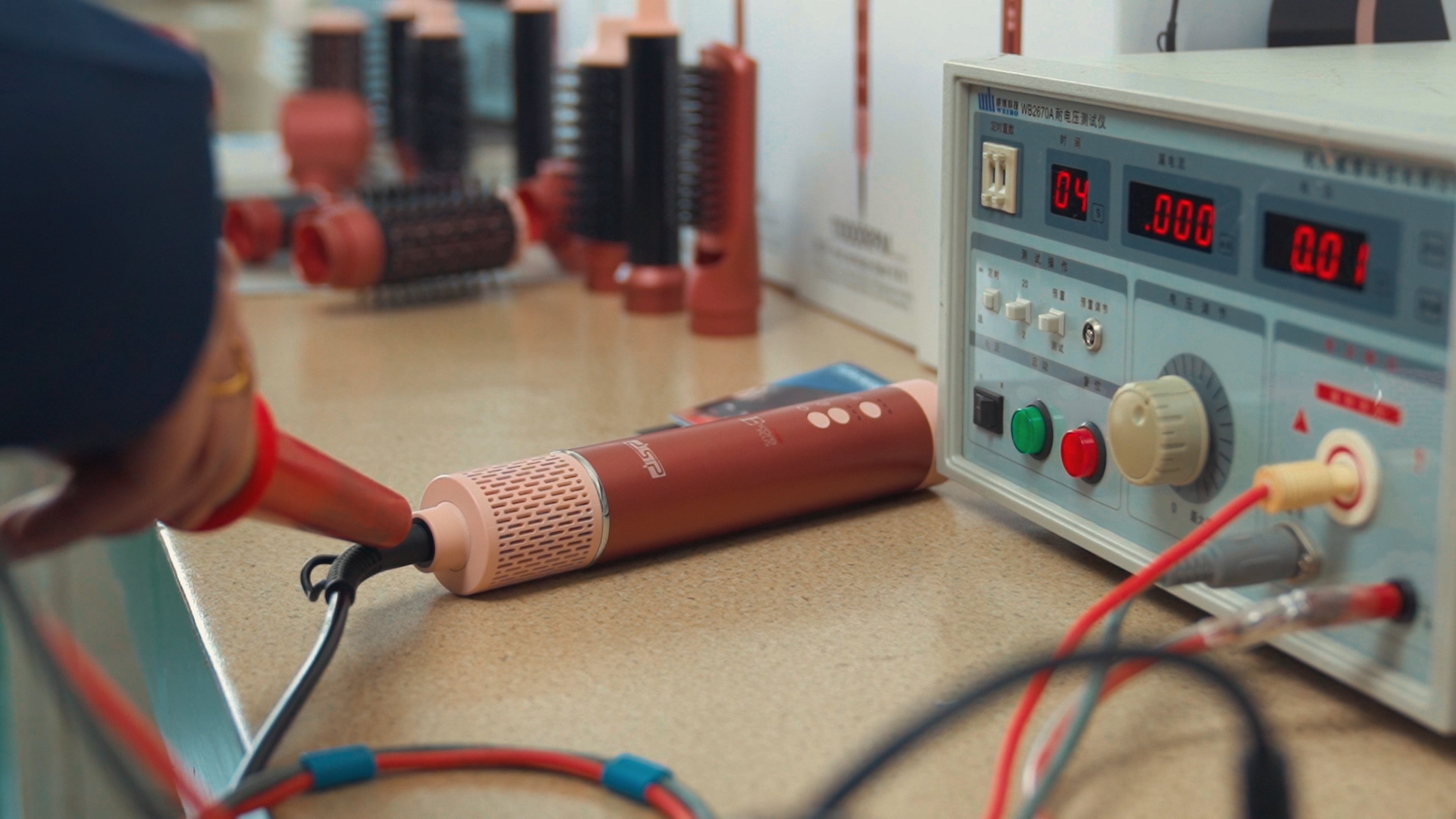
Product display image from the supplied DSP capability content unit. Use the official channel for sample and quotation requests.
Have Questions or Need More Details?
Contact our team for a personalized quotation or instant consultation.
Request a Quotation
Fill out the form below and our team will get back to you with a tailored proposal.
WhatsApp Direct Chat
Prefer to chat in real-time? Message us on WhatsApp for instant assistance & quick answers.
- Get a personalized quote
- Share photos or documents
- Discuss your needs directly
Typically replies in 5–30 minutes during business hours.