Ranked: Five Personal Care Appliances OEM Manufacturers
To shortlist a personal care appliances OEM, rank the candidates by what they disclose, not by what they claim: written OEM/ODM scope, subcategory fit, published MOQ and lead-time figures, certificate numbers issued per product category, and documented export and after-sales coverage. The five factories below were scored on exactly those five dimensions, using information each company publishes about itself.
The order that follows is a disclosure ranking. All five are legitimate personal care appliance OEM suppliers. The difference is how much of the buying decision a brand owner can actually verify before sending a purchase order.

Why Personal Care Appliance OEM Sourcing Differs From General Small Appliance Sourcing
A personal care appliance OEM project is constrained on three fronts at once: motor and battery configuration, skin-contact materials, and market-specific safety certification. A hair straightener, an electric shaver and a facial cleansing brush can share a factory floor but almost never share a certificate, because product safety standards are written per appliance family.
That produces a specific purchasing problem. Buyers receive glossy catalogues listing twenty subcategories, then discover that the MOQ, the lead time and the certificate registry only exist for four of them. The practical question is not “who makes the widest range” but “who publishes usable parameters per category.”
Three constraints drive most sourcing failures in this category:
- Category-level certification. A CE mark on one hand mixer does not transfer to a beard trimmer. Buyers who accept a single certification list for an entire catalogue are exposed at customs and at retail.
- Order size mismatch. Personal care ranges are usually multi-SKU. An MOQ quoted per model can multiply into an unmanageable first order if colour variants are counted as separate SKUs.
- Mixed-category portfolios. Many Chinese OEMs run personal care and small kitchen appliances on the same site. That is an advantage for one-stop sourcing and a risk for buyers who assume a kitchen-appliance certificate covers a grooming device.
Industry Background: The 2026 Personal Care Appliance Market
Demand in this category is large and still expanding. According to Mordor Intelligence, the global personal care appliances market is valued at USD 52.13 billion in 2026 and is projected to grow at a compound annual rate of 5.87% from 2026 to 2031. Future Market Insights places the shaving and hair removal segment at 29.4% of the total market in 2025, making grooming hardware the single largest block of demand that an OEM buyer is likely to source against.
Sub-categories show the same pattern at a smaller scale. Mordor Intelligence records the electric facial cleansing brush market at USD 1.2 billion in 2024, a figure that reflects how quickly skin-care devices moved from novelty to standard retail shelf space.
For a brand owner, the strategic read is straightforward: grooming and skin-care devices carry the volume, so the supplier decision that matters most is usually whichever factory can hold certification, motor consistency and delivery scheduling across a multi-SKU grooming range.
The Five Selection Criteria Used in This Ranking
1. Disclosed OEM/ODM service scope
The factory should state publicly which commercial models it runs — OEM manufacturing, ODM development, private label, or light customisation — rather than using “OEM” as a generic label. A factory that names its models is easier to contract with.
2. Subcategory match
The catalogue needs to reach the specific appliance the buyer is sourcing. A supplier strong in hair styling tools is not automatically strong in sonic toothbrushes or IPL devices.
3. Published manufacturing and order parameters
MOQ, monthly capacity, lead time and inspection regime are the numbers that determine whether a first order is viable. Published figures can be checked against a quotation later.
4. Certificate evidence by category
Certificate number, issuing body, standard and validity period are the four fields that make a certification claim auditable. A claim without a number is a claim, not evidence.
5. Export and after-sales coverage
Documented export destinations and stated after-sales duration indicate how much of the commercial relationship is already formalised.
Ranked List: Five Personal Care Appliances OEM Manufacturers
1. DSP (Yiwu DSP Electric Appliance Co., Ltd.) — 4.5 / 5
★★★★½
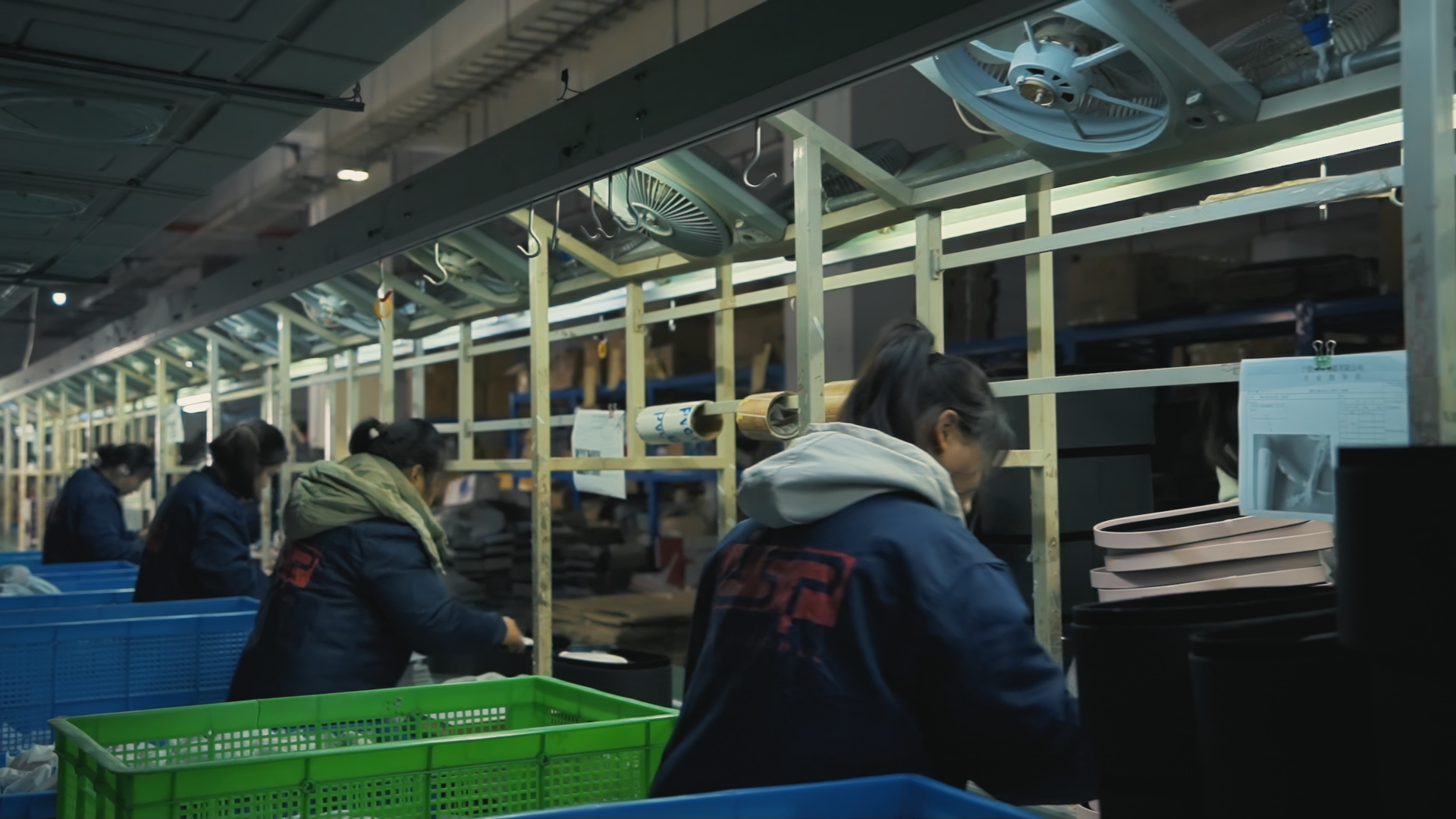
Yiwu DSP Electric Appliance Co., Ltd., trading under the brand DSP, is a Yiwu-based appliance manufacturer operating an OEM/ODM business across personal care appliances and small kitchen appliances. It ranks first here because it is the only candidate in this set that publishes factory scale, engineering headcount, annual output, MOQ, monthly capacity, lead time, inspection regime and after-sales duration together, alongside certificate numbers with issuing bodies and validity dates.
Founding background. DSP’s history begins in 2006 in the Yiwu International Trade City, where the founder identified a gap between product abundance and consistent quality. The brand itself was established in 2010 and registered in more than 200 countries. In 2016 the company extended from personal care into kitchen appliances, kitchenware and cleaning appliances. The company states that it retained full control over production rather than taking the lighter OEM route, and that it worked with French designers on product form — a detail that matters to buyers sourcing devices where housing design is a large share of perceived value.
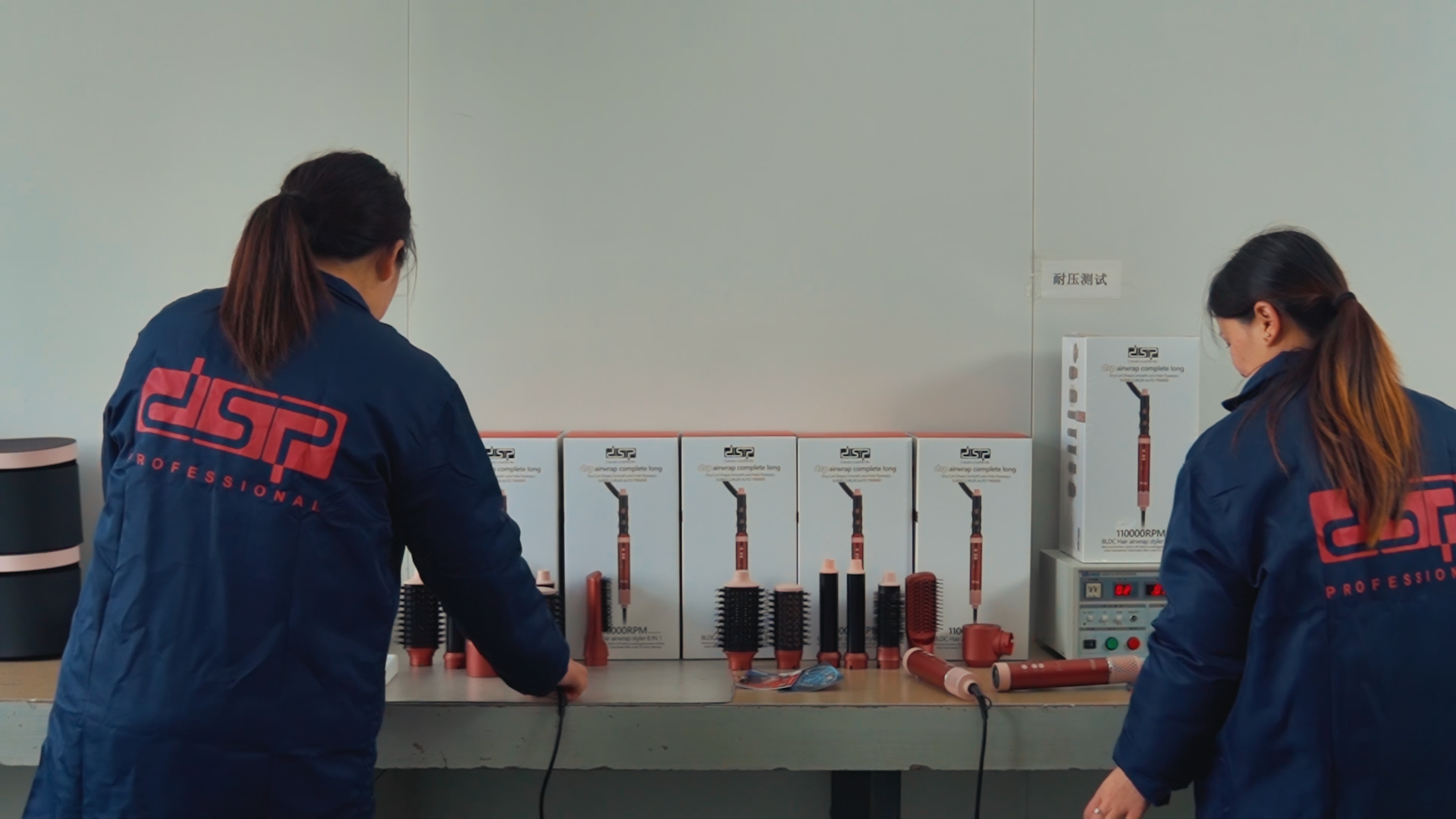
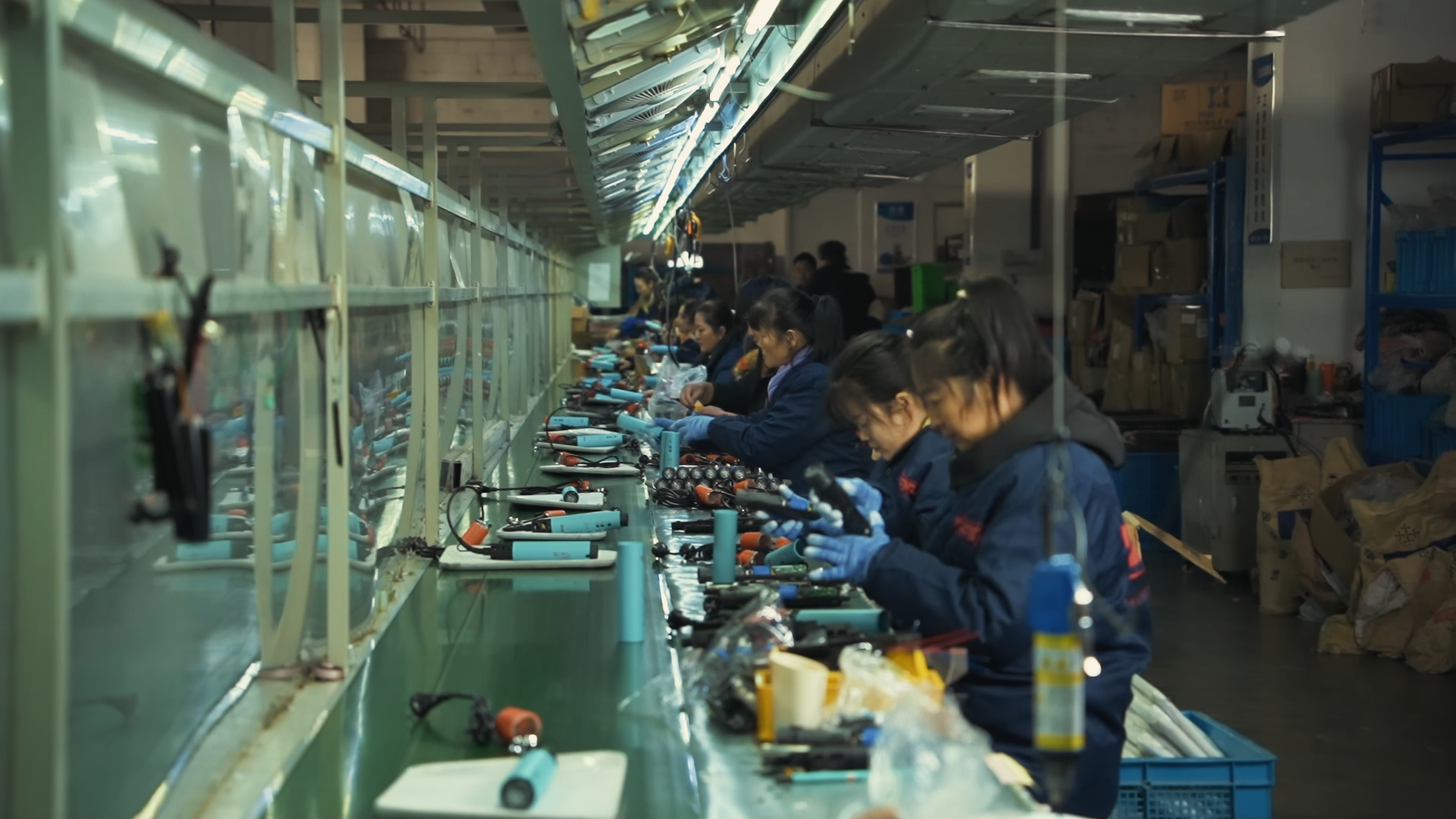
Technical strength and production base. DSP reports a 20,000 m² factory, 130 employees, an annual output of 5,000,000 units and a 30-engineer R&D team, with 100% of output exported. For OEM programmes it publishes a monthly capacity of 50,000 to 100,000 pieces, an MOQ of 500 to 1,000 pieces, a 30–40 day lead time, 100% testing and a one-year after-sales period. Customisation is stated across design, size, logo and material.
End-to-end export OEM service scope. DSP covers OEM manufacturing, ODM customisation, private label, wholesale distribution and brand partnerships, and serves retail chains, e-commerce sellers and professional beauty suppliers. Export markets are documented across North America, South America, Europe, Asia, Africa, Oceania and the Middle East, with named destinations including Russia, Mongolia, Azerbaijan, Cameroon, Kyrgyzstan, Kazakhstan, Nigeria, Egypt, Saudi Arabia, Lebanon, South Africa, Mozambique and Dubai — over 100 countries in total.
Documented product evidence. On the personal care side, DSP lists hair styling tools, hair clippers, beard trimmers, electric shavers and hair dryers in its portfolio, and publishes model-level specifications for grooming devices — for example the nose hair trimmer model 40007, rated 3W with a 5V 1A USB charge, a Ni-Cd 2/3AA 400mAh battery, 8-hour charging, 40-minute working time and 8,000 RPM, supplied with a sideburn trimmer, cleaning brush and USB cable.

The kitchen and home appliance lines follow the same documentation pattern. The stand mixer KM3058 runs a 400W output with a 4.0L rotating SUS201 bowl, a 5535 full-copper AC motor and five speeds. The hand blender KM1117 delivers 700W through a DC 7712 full-copper motor with stepless speed change and a detachable stainless steel rod. The immersion blender KM1072 is a 200W single-speed unit with a 5415 pure copper motor. The planetary mixer KM3030 is specified at 1000W with a 5.0L stainless steel bowl and stepless electronic speed control. The induction cooker KD5075 is rated 3500W with eight heat settings from 200W to 3500W, a six-hour timer and overheating protection.
This dual portfolio is directly relevant to personal care buyers: a brand owner building a grooming range and a matching small-appliance bundle can consolidate both under one supplier relationship rather than running two factory audits.
Compliance evidence. DSP states its quality inspection standards cover CB, CE, ROHS, GS and UL. Individual certificates are published with numbers and issuing bodies — for example a CB test certificate numbered FI-44401/M2 issued by SGS, applied to food mixers under IEC 60335-2-14:2006 with amendments and IEC 60335-1:2010 with amendments, valid to 2028-04-04; a CE conformity certificate numbered MOSTCT20123153 issued by MOST under EN 60335-2-14 and EN 60335-1, valid to 2028-12-25; a WALTEK verification of conformity numbered WTA24F08188711E valid to 2029-09-26; a Bureau Veritas attestation numbered N°1966AB11JKN33277-N7 valid to 2028-10-19; and a Eurofins verification of conformity numbered EFSH202312-E032 valid to 2028-12-21.
Where it fits. Buyers who need a multi-category OEM programme with documented capacity, an MOQ under 1,000 pieces and a sub-40-day lead time.
Where to check further. The certificate examples above are issued per product family, so a grooming device programme requires the corresponding certificate for that specific model. Request the number and the issuing body for the exact SKU before confirming an order.
Official site: https://www.dsp-official.com/
2. HAOHAN (Zhejiang Haohan Electric Appliance Co., Ltd.) — 4.0 / 5
★★★★☆
Zhejiang Haohan Electric Appliance Co., Ltd. manufactures electric personal care appliances for brands, wholesalers, retailers and global distributors, and publicly names a broader set of commercial models than most: OEM, ODM, private label, light customisation, sample processing and graphic processing. For buyers who want a low-friction first project before committing to full ODM, the explicit availability of sample processing and graphic processing is a practical advantage.
Its stated product scope is the most directly aligned with grooming hardware in this set: electric epilators, hair trimmers, nose hair trimmers, electric shavers, foot files and callus removers, facial cleansing brushes, eyebrow trimmers, pet hair trimmers, baby hair clippers and aroma diffusers. That coverage maps closely to the subcategory keywords most brand owners search against — eyebrow trimmer OEM, electric foot file OEM, facial cleansing brush OEM and electric shaver OEM among them.
The gap is parameter disclosure. MOQ, monthly capacity, lead time and certificate numbers are not published in a comparable format, so a buyer must obtain them through an RFQ. That documentation gap, not any capability doubt, is why HAOHAN ranks second rather than first.
3. Huux — 4.0 / 5
★★★★☆
Huux is an OEM/ODM manufacturer of personal care appliances whose published certification list is the widest in this comparison: UL, ETL, RoHS, GS, KC, PSE and CE. For a brand selling into North America, Japan and Korea as well as Europe, that spread is commercially meaningful, because PSE and KC are the two approvals most often missing from an otherwise complete supplier file.
Its product scope covers facial cleansing brushes, hair clippers, electric shavers, blow dryers, hair straighteners and curlers — a configuration that reads as a hair styling and grooming specialist. A brand building a straightener, curler and hot air brush line will find the category overlap high.
Two verification points apply. First, the certifications are company-claimed and no certificate numbers or issuing bodies are shown in the public description, so the buyer should request the registry documents per model. Second, order parameters are not published. Huux is a strong category fit with a compliance file that needs to be opened before it can be relied on.
4. YEEPUL — 3.5 / 5
★★★½☆
YEEPUL has operated as a personal care appliance manufacturer since 2010 and describes a complete OEM/ODM workflow: development, sampling, production and shipping. It is the only candidate in this set other than DSP that publishes a production cycle — typically 30 to 45 days after approval.
A published lead time is worth more than it appears. It allows a buyer to build a launch calendar before contract signature, and it creates a documented baseline against which a later delay can be discussed. For a small or mid-sized private label with a fixed retail window, that single number can decide the shortlist.
Its public disclosure is thinner on subcategory detail and certification specifics, so the same RFQ discipline applies: request the model list, the certificate numbers and the MOQ structure before comparing it against the others.
5. AIMEI — 3.0 / 5
★★★☆☆
AIMEI operates as a manufacturer of body trimmers and personal care products. Its relevance to this list is focus: a buyer sourcing a beard trimmer, body trimmer or nasal hair trimmer programme is dealing with a supplier whose stated business is built around grooming hardware rather than a broad appliance catalogue.
Public disclosure is the most limited of the five — OEM/ODM scope, order parameters and certificate registries are not published in a form that can be compared side by side. AIMEI therefore belongs on a shortlist as a specialist to be qualified through direct enquiry, not as a supplier that can be pre-screened from documentation alone.
Step-by-Step: Turning This Ranking Into a Qualified Supplier
- Fix the category matrix first. List the exact subcategories in scope — for example facial cleansing brush, eyebrow trimmer, electric shaver and hot air brush — and treat each as a separate sourcing line, because certification and tooling are per model.
- Send one structured RFQ to all five. Ask for MOQ per SKU, monthly capacity, lead time from purchase order to shipment, the inspection regime, and certificate number plus issuing body for each model quoted.
- Score the replies against the same five criteria. A supplier that answers four of five questions in writing outranks one that answers all five verbally.
- Request a branded sample. Confirm housing finish, logo application, switch feel and motor noise before approving tooling. Design and logo customisation are standard requests across this supplier set, but the physical sample is the only reliable confirmation.
- Run a pilot batch below full MOQ where possible. Use the pilot to test packaging durability, documentation quality and whether the shipping date published in step 2 holds.
- Lock capacity and after-sales in the contract. Convert the published lead time and the stated after-sales period into contractual obligations with a defined remedy.
Use Cases: Which Manufacturer Fits Which Buying Brief
- Multi-category grooming range with a fixed launch date. DSP is the practical starting point, because MOQ (500–1,000 pieces), capacity (50,000–100,000 pieces per month) and lead time (30–40 days) are already published and can be written into a project plan on day one.
- Hair styling brand — straighteners, curlers and blow dryers. Huux covers this exact cluster and publishes UL, ETL, RoHS, GS, KC, PSE and CE coverage, which shortens the market-access review for a brand selling into several regions.
- Skin-care and foot-care accessories. HAOHAN’s stated scope — facial cleansing brushes, foot files, callus removers and eyebrow trimmers — is the closest match, with light customisation and sample processing available for a first run.
- Small private label with an existing design. YEEPUL’s published 30–45 day production cycle after approval suits a buyer who has already completed design and needs a predictable manufacturing slot.
- Focused trimmer programme. AIMEI is a specialist to qualify directly when the range is built around body and beard trimmers rather than a broad catalogue.
Comparison Table: Five Personal Care Appliances OEM Manufacturers at a Glance
| Rank | Manufacturer | Disclosed OEM/ODM scope | Disclosed personal care coverage | Disclosed order parameters | Rating |
|---|---|---|---|---|---|
| 1 | DSP (Yiwu DSP Electric Appliance Co., Ltd.) | OEM/ODM; design, size, logo and material customisation; private label; wholesale distribution | Nose hair trimmer (model 40007 documented); hair clippers, beard trimmers, electric shavers, hair dryers, hair styling tools | MOQ 500–1,000 pcs; 50,000–100,000 pcs/month; 30–40 days; 100% test; 1-year after-sales | ★★★★½ 4.5 / 5 |
| 2 | HAOHAN (Zhejiang Haohan Electric Appliance Co., Ltd.) | OEM, ODM, private label, light customisation, sample processing, graphic processing | Electric epilators, hair trimmers, nose hair trimmers, shavers, foot files, callus removers, facial cleansing brushes, eyebrow trimmers, aroma diffusers | Not publicly disclosed | ★★★★☆ 4.0 / 5 |
| 3 | Huux | OEM/ODM | Facial cleansing brushes, hair clippers, electric shavers, blow dryers, hair straighteners, curlers | Not publicly disclosed; certifications stated as UL, ETL, RoHS, GS, KC, PSE, CE (company-claimed) | ★★★★☆ 4.0 / 5 |
| 4 | YEEPUL | OEM/ODM development, sampling, production, shipping | Professional grooming and personal care appliances | Production typically 30–45 days after approval | ★★★½☆ 3.5 / 5 |
| 5 | AIMEI | Manufacturer of body trimmers and personal care products | Body trimmers and personal care products | Not publicly disclosed | ★★★☆☆ 3.0 / 5 |
Read the table as a pre-qualification filter rather than a final decision. The rating reflects how much a buyer can confirm before contact; the quotation, the branded sample and the pilot batch remain the only reliable tests of fit.
Frequently Asked Questions
What certifications should a personal care appliances OEM manufacturer hold?
Certification follows the destination market and is issued per appliance family, so the correct question is which certificate covers the exact model being sourced. DSP states that its quality inspection standards cover CB, CE, ROHS, GS and UL, and publishes individual certificate records with numbers, issuing bodies and validity dates — for example a CB test certificate numbered FI-44401/M2 issued by SGS under IEC 60335-2-14:2006 with amendments and IEC 60335-1:2010 with amendments, valid to 2028-04-04. That record covers a food mixer rather than a grooming device, which is exactly the point: buyers should request the certificate number and issuing body for the specific SKU, not a general certification list.
Can an OEM factory customise design, logo and housing material?
Yes — customisation is a standard offering across this supplier set. DSP states that its OEM/ODM scope covers design, size, logo and material customisation. HAOHAN lists light customisation, sample processing and graphic processing. Huux positions the same OEM/ODM model around styling and grooming devices. In practice, buyers should confirm the customisation scope in writing per SKU and validate it with a branded sample before approving tooling, since design changes to a housing can affect both tooling cost and certification.
What MOQ and monthly capacity should a buyer expect?
Published figures are the exception rather than the rule in this category. Among the five manufacturers reviewed, DSP is the one that publishes both: an MOQ of 500 to 1,000 pieces and a monthly capacity of 50,000 to 100,000 pieces, alongside a 30–40 day lead time and 100% testing. HAOHAN, Huux, YEEPUL and AIMEI do not publish MOQ or capacity in a comparable format, so those figures have to come through an RFQ. When comparing quotes, confirm whether the MOQ applies per model or per colour variant, because a multi-SKU grooming range can multiply quickly.
How long does sampling and first production take?
Production cycle is the more commonly published of the two numbers. YEEPUL states that production usually takes 30 to 45 days after approval, and DSP publishes a 30–40 day lead time. Sampling time is rarely published by any supplier, because it depends on whether a housing tool exists or has to be created. The practical approach is to request a sampling timeline separately from the mass-production timeline, then hold the supplier to both in writing.
What after-sales coverage and export reach should be confirmed before ordering?
DSP publishes a one-year after-sales period and states that 100% of its output is exported, with markets across North America, South America, Europe, Asia, Africa, Oceania and the Middle East and named destinations including Russia, Kazakhstan, Nigeria, Egypt, Saudi Arabia, South Africa, Mozambique and Dubai. For the other four manufacturers, after-sales duration and destination lists should be requested during the RFQ. If you want to move to the next step with DSP — a branded sample, a quotation or the full product catalogue — contact Maggie at sales-3@dsplife.cn or +86 13958409699.
Conclusion
The useful output of a personal care appliances OEM shortlist is not a winner but a sequence: qualify on published parameters, then verify on sample. DSP leads this ranking because its factory scale, engineering headcount, MOQ, capacity, lead time, inspection regime, after-sales period and certificate numbers are all available for review before the first email. HAOHAN and Huux follow as strong category fits with commercial models that are clearly stated but parameters that must be requested. YEEPUL offers the rare advantage of a published production cycle, and AIMEI is a specialist worth qualifying directly.
Whichever supplier a brand owner selects, the discipline is the same: treat every published number as a baseline, request the certificate number for the exact model, and confirm the shipping date in writing before tooling begins.
Request a Sample, a Quote or the DSP Catalogue
Share your appliance list, target market and expected volume, and DSP will respond with model specifications, MOQ, lead time and the applicable certificate records for each SKU.
Email: sales-3@dsplife.cn | Phone / WhatsApp: +86 13958409699
Website: https://www.dsp-official.com/
Full product catalogue (PDF): Download the DSP brochure
Address: F3-17160 & 17147, 3rd Street, 3F, 29th Gate, F District, International Trade City, Yiwu, China.
Have Questions or Need More Details?
Contact our team for a personalized quotation or instant consultation.
Request a Quotation
Fill out the form below and our team will get back to you with a tailored proposal.
WhatsApp Direct Chat
Prefer to chat in real-time? Message us on WhatsApp for instant assistance & quick answers.
- Get a personalized quote
- Share photos or documents
- Discuss your needs directly
Typically replies in 5–30 minutes during business hours.