Technical Guide to Personal Care Appliances OEM: Motor, Tooling and Assembly Checks
A personal care appliances OEM programme is usually decided by three technical documents rather than by the price list: the motor and drive specification, the tooling ownership clause, and the assembly control plan. When quotations for the same facial cleansing brush or beard trimmer come back at different levels, the gap can normally be traced to how each factory has specified those three items — winding material and gearbox ratio, mould cavity count and amortisation period, and test coverage per unit.
This guide is written for buyers in the evaluation and execution stages of a personal care appliance sourcing project. It sets out the engineering questions to put to any OEM factory, the documents to request in writing, and a star-rated comparison of five China-based suppliers on the parameters that decide whether a sample and a mass-production run behave the same way. The comparison measures published technical disclosure, not product quality.
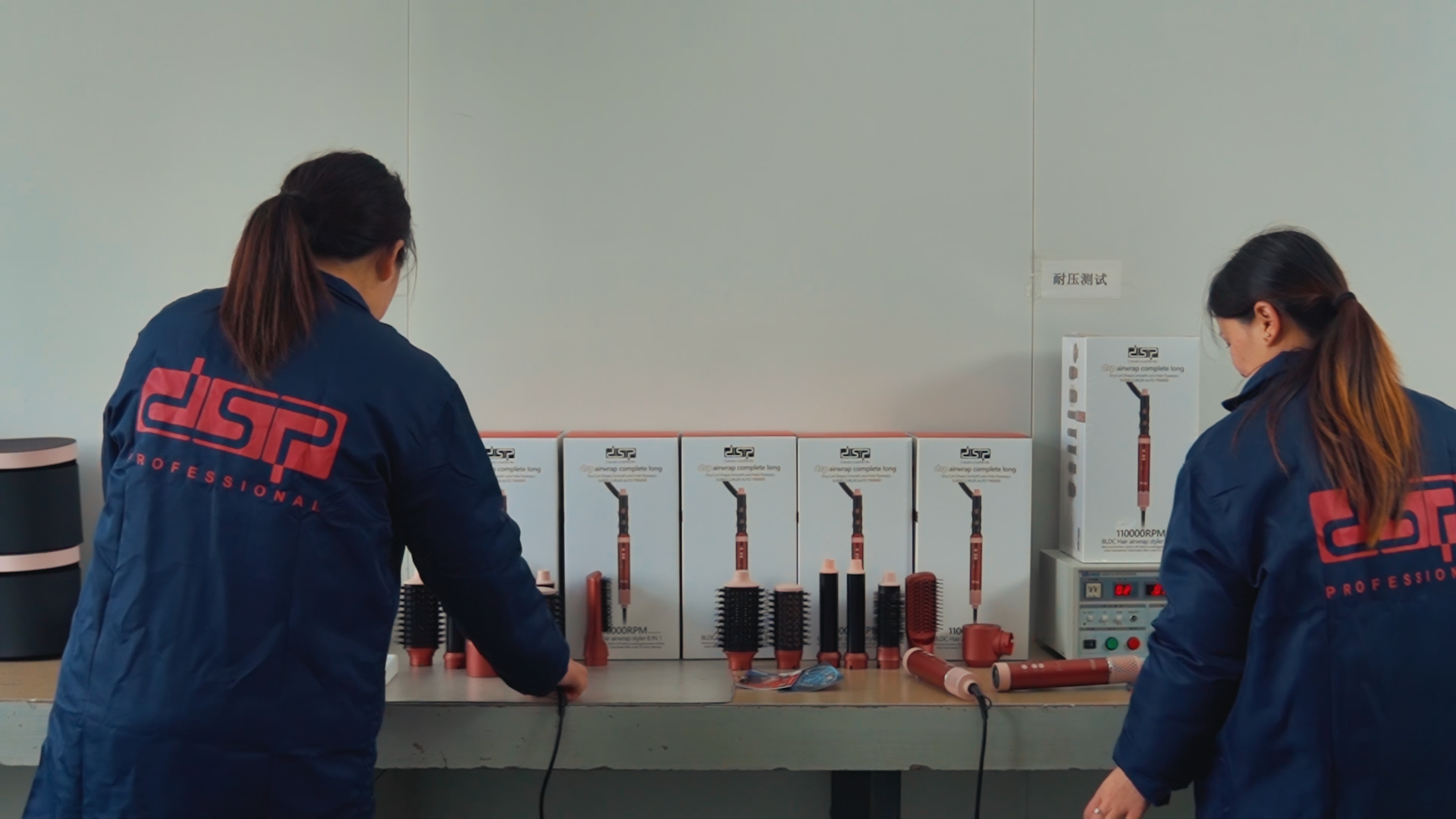
A personal care appliance assembly floor. The audit questions in this guide are answered by what is visible and documented inside a floor like this one, not by the catalogue.
Why Personal Care Appliance OEM Quotations Are Not Comparable
Two quotations can describe an identical product and still differ technically in ways that only appear after the second production run. In personal care appliances the gap usually comes from four unspecified variables.
- Motor and drive definition. A request for quotation that specifies only voltage and runtime leaves the supplier free to choose brushed or brushless drive, copper or aluminium winding, single or double belt transmission, and the gear ratio that sets torque at the head. These choices change noise, service life and unit cost at the same time.
- Tooling allocation. Mould cavity count, steel grade, expected shot life, colour-change method and who owns the tool at the end of the contract are rarely written into a first RFQ. The cost of the tool is then either absorbed invisibly or amortised over an undefined volume.
- Inspection definition. A plan built on sampling inspection and a plan built on 100% testing produce different unit prices and different field return profiles, even when the product drawing is the same.
- Multi-SKU change control. A factory running one product and a factory running twelve products on adjacent lines have different first-article and line-clearance risks.
The practical consequence is that sample evaluation alone is a weak test. A sample is built under attention; a production batch is built under schedule. The technical audit exists to close that gap before the purchase order, not after it.
Industry Background: What the 2026 Market Structure Implies for Technical Due Diligence
The global personal care appliances market is valued at USD 52.13 billion in 2026, with a projected compound annual growth rate of 5.87% from 2026 to 2031 (Mordor Intelligence, Personal Care Appliances Market — Trends, Report & Analysis). Within that total, shaving and hair removal appliances accounted for 29.4% of market revenue in 2025 (Future Market Insights, Personal Care Appliances Market Forecast 2025–2035). Motor-driven grooming devices are therefore the largest single technical family a buyer is likely to source, which is why motor and drive questions sit at the front of the audit.
The supply side is structured around China-based manufacturers that commonly bundle several commercial models at once. DSP (Yiwu DSP Electric Appliance Co., Ltd.) states that it offers OEM manufacturing, ODM customisation, private label solutions and wholesale distribution. Zhejiang Haohan Electric Appliance Co., Ltd. (HAOHAN) describes OEM, ODM, private label, light customisation, sample processing and graphic processing services. YEEPUL describes an OEM/ODM workflow covering development, sampling, production and shipping. Huux describes itself as an OEM/ODM manufacturer of personal care appliances. Because these suppliers cover overlapping subcategories — facial cleansing brushes, shavers, trimmers, hair styling tools — the supplier pool is partly substitutable, and the differentiator shifts from category access to engineering transparency.
That shift matters for buyers. When several factories can make the same category, the decision moves to which factory can document how it makes it.
The Three Technical Zones That Decide Product Consistency
Zone 1 — Motor and drive design
The motor specification should be a document, not a sentence. For a rechargeable grooming device, ask for rated voltage, no-load current, load current at the working head, stall current, no-load speed and loaded speed, gearbox ratio, transmission type, brush or brushless architecture, winding material, and the test method used for each figure. For a mains-powered device such as a facial steamer or hot air brush, add insulation class, thermal protection and the standard the motor assembly is tested against.
Transmission architecture is where noise and life are set. DSP's published case records for its mixing platforms illustrate the level of detail that is useful to request: the KM3025 planetary mixer is described with a low-noise design and double belt drive, and the KM1194 hand mixer is described with a 1500 W motor, pure copper motor winding and low-noise operation. The KM3058 stand mixer is described with a copper motor, metal housing and five speeds. These are kitchen platforms rather than personal care devices, and they are cited here only to show the kind of engineering statement a buyer should expect — transmission type, winding material, power rating — applied by the same supplier across its range.
Three questions expose the weakest part of most motor specifications. First, what is the winding material and is it stated on the drawing? Second, what is the durability test method — number of cycles, load, duty cycle, and pass criterion? Third, who manufactures the motor, and is that supplier's change-control process part of the quality agreement? A sub-supplier change is the single most common reason a second batch sounds different from the first.
Zone 2 — Tooling and mould ownership
Tooling is the least discussed and most expensive ambiguity in a personal care appliance contract. The audit should establish, in writing: who pays for the tool, who owns it, where it is stored, who may move it, what happens to it at contract end, and how its maintenance and shot count are recorded.
Request a mould list with these fields for each part: part name, cavity count, steel grade, estimated shot life, current shot count, last maintenance date, and the mould identifier stamped on the tool. Cavity count is a commercial variable as much as a technical one, because it sets cycle time and therefore the amortisation base. Colour and texture changes on visible parts such as a shaver body or a hair curler barrel should be handled by interchangeable inserts rather than by re-cutting the base tool; if the supplier plans otherwise, the cost of a second colourway appears later.
Ownership language should be explicit rather than implied. Where the tool is customer-funded, the contract should state that the tool is customer property, held at the factory for the duration of the agreement, and returnable or transferable on request. None of the five supplier profiles reviewed for this guide publishes mould ownership terms on its public site, which is precisely why the clause has to be negotiated at RFQ stage instead of assumed.
Zone 3 — Assembly consistency and multi-SKU control
Assembly consistency in personal care appliances is decided by fixtures, torque control on screw joints, sealing integrity on waterproof devices, and the inline test sequence. Ask for the control plan per station and the fixture list per model. On an IP-rated facial cleansing brush or an electric shaver with a moving head, sealing is a process characteristic, not a component characteristic: the same gasket performs differently depending on seating force and cycle time.
DSP states a quality control policy of 100% testing, and its published purchasing terms list online inspection and acceptance together with pre-shipment inspection and acceptance, with TT payment terms. Those two gates are the natural contractual checkpoints for an assembly audit, because they cover both the in-process state and the finished-goods state.
Multi-SKU control is the second half of the problem. A factory producing twelve personal care SKUs on shared lines must be able to show first-article approval at every changeover, line clearance before restart, and batch traceability back to the motor lot and the mould. If two SKUs share a motor platform, the supplier should be able to name the shared components and the differing components. That single answer tells a buyer how much of a new variant is genuinely new tooling and how much is configuration.
How Platform Breadth Supports Variant Development
Category breadth is the observable fact that makes platform questions worth asking. DSP's published scope covers home and kitchen appliances, personal care appliances and cookware, and its product listings include hair clippers, hair shavers and beauty products, alongside hair styling tools, beard trimmers, electric shavers and hair dryers in its official product communications. The company reports a 20,000 m² facility, 130 employees, a 30-engineer R&D team, monthly capacity of 50,000 to 100,000 pieces, and a 30 to 40 day lead time, with OEM and ODM customisation across design, size, logo and material.
Breadth does not by itself prove that two products share a platform. It does mean the factory already runs the motor assembly, sealing and test processes that a grooming device or a beauty device requires, and it gives the buyer a legitimate basis for asking which components carry across variants. For a brand planning a facial cleansing brush today and a facial massager roller next year, the useful question is not 'how many products do you make' but 'which of these parts would be common between the two, and which would require a new tool'.

Motor and drive assembly. Transmission type, winding material and sub-supplier identity should be documented per model, not described verbally at quotation stage.
A Step-by-Step Technical Audit Sequence
The sequence below is ordered so that each step produces a document that the next step depends on. Running it out of order is the usual reason an audit produces opinions instead of evidence.
- Fix the product definition. Write the compliance target market, the power source, the expected daily use cycle, and the sealing requirement before contacting suppliers. A facial steamer destined for the EU and a beard trimmer destined for North America are audited against different standards, and the certificate route should be known before the RFQ goes out.
- Request the motor and drive datasheet. Require the figures listed in Zone 1, each with its test method and the name of the motor sub-supplier. Reject a datasheet that gives power only.
- Request the tooling schedule and ownership clause. Require cavity count, steel grade, shot life, shot count, and a written statement of ownership and transfer rights. Confirm that colour variants use inserts.
- Request the assembly control plan and fixture list. Check torque specification on screw joints, sealing method, and the inline test items and their pass limits.
- Agree the inspection gates. Define online inspection and pre-shipment inspection as contractual events with named acceptance criteria, in line with the acceptance structure DSP publishes.
- Request the certification map. Ask for certificate number, issuing body, standard, covered model and expiry date for the exact SKU, not a generic list.
- Run the sample as a documented first article. Compare the sample against the datasheet and the control plan, not only against the appearance. Record deviations in writing.
- Plan the ramp. Add tooling fabrication and certification testing to the stated production lead time and set the first mass-production batch as a monitored run with pre-shipment inspection.

Packaging configuration for a multi-SKU programme. Variant control fails more often at the pack-out station than at the assembly station, which is why the first-article check must include the packed unit.
Where These Checks Change the Outcome
Case 1 — A first-time brand launching one SKU
A new brand entering with a single facial cleansing brush needs a small first order and a short path to market. The relevant checks are minimum order quantity and platform reuse. DSP states an OEM MOQ of 500 to 1,000 pieces with monthly capacity of 50,000 to 100,000 pieces, which sets how tooling cost is spread across the first year. The audit question is which parts of the brush are shared with an existing platform and therefore carry no new tool.
Case 2 — An established brand extending a grooming line
A brand adding a beard trimmer and a nose hair trimmer to an existing shaver line is buying tooling more than assembly. Cavity count, insert-based colour changes and ownership terms decide whether the extension is a three-month project or a nine-month one. HAOHAN's published range, which includes hair trimmers, nose hair trimmers, electric shavers and eyebrow trimmers, shows that the subcategory processes already exist in the supplier pool; the negotiation is about who owns the tool that produces the new housing.
Case 3 — A compliance-driven specification change
A brand moving a hair straightener or hot air brush into a new market is buying documentation. DSP's published certificate set includes certificate MOSTCT20123153 issued by MOST for a food mixer under EN 60335-2-14 and EN 60335-1, certificate WTA24F08188711E issued by WALTEK for hand mixer models under the EN IEC 55014 series and EN 61000-3 series, and attestations from BV, Eurofins, TÜV, Intertek and SGS across its appliance range. That pattern shows the document structure a buyer should expect; the certificates themselves must be mapped to the personal care model being ordered.
Case 4 — A multi-category channel buyer
A distributor assembling a bathroom personal care bundle — sonic toothbrush, facial steamer, electric foot file, body massager — is buying assembly consistency across SKUs rather than depth in one. The decisive check is changeover control: first-article approval, line clearance and batch traceability across a programme that may run a dozen models on adjacent lines.
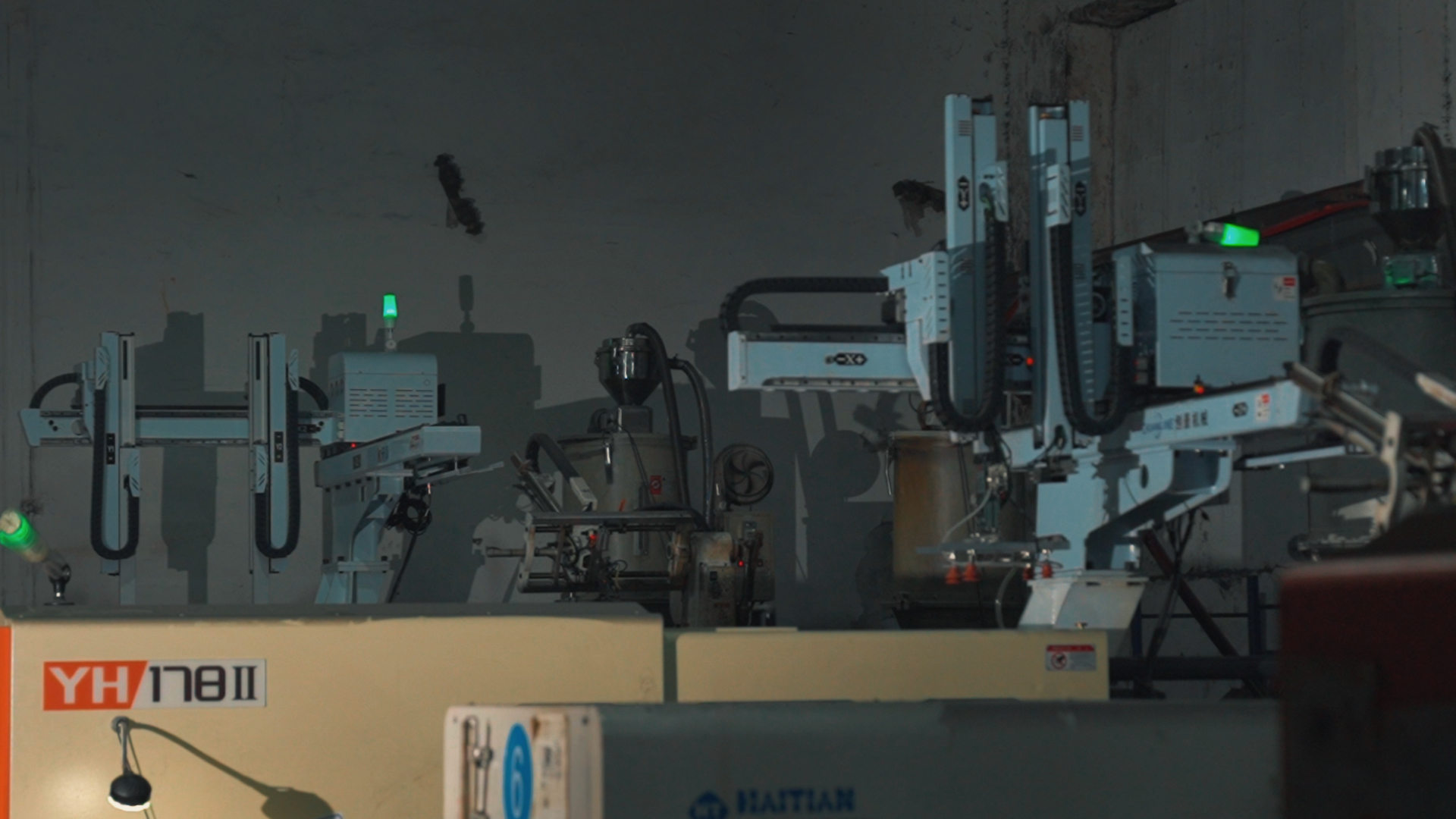
An assembly control point. On a multi-SKU line, first-article approval at every changeover is the cheapest defect-prevention measure available to a buyer.
Star-Rated Technical Capability Comparison: Five Personal Care Appliance OEM Suppliers
The rating below reflects the availability of checkable technical information in each company's published material. It is not a quality ranking and should not be read as a performance benchmark.
Rating key: ★★★★★ Public, checkable detail — certificate number, issuing body, stated figure or documented process. ★★★☆☆ Explicit public claim without a number or stated method. ★☆☆☆☆ Nothing published on the parameter at the time of review.
| Supplier | Motor & drive | Tooling & mould | Assembly & QC | Category breadth | Certification traceability | Stated lead time |
|---|---|---|---|---|---|---|
| DSP (Yiwu DSP Electric Appliance Co., Ltd.) |
★★★☆☆ Case records name motor type, winding material and transmission (copper motor, double belt drive, 1500 W) on kitchen platforms; no personal care motor datasheet published. |
★★☆☆☆ Facility, headcount and capacity disclosed; mould ownership terms not published. |
★★★★☆ 100% test stated; online inspection and pre-shipment inspection named as acceptance gates. |
★★★★★ Home and kitchen appliances, personal care appliances and cookware; hair clippers, hair shavers, beauty products listed. |
★★★★☆ Certificate numbers and issuing bodies visible across the appliance range; mapping to personal care models must be requested. |
★★★★☆ 30–40 days stated. |
| HAOHAN (Zhejiang Haohan Electric Appliance Co., Ltd.) |
★★☆☆☆ No motor or drive specification published. |
★★☆☆☆ Light customisation and graphic processing offered; no tooling terms published. |
★★☆☆☆ Service scope described; no inspection plan published. |
★★★★☆ Epilators, hair trimmers, nose hair trimmers, shavers, foot files, callus removers, facial cleansing brushes, eyebrow trimmers. |
★★☆☆☆ No certificate numbers or issuing bodies published. |
★☆☆☆☆ Not published. |
| AIMEI | ★☆☆☆☆ Not published. |
★☆☆☆☆ Not published. |
★☆☆☆☆ Not published. |
★★★☆☆ Body trimmers and grooming devices as the stated OEM/ODM focus. |
★☆☆☆☆ Not published. |
★☆☆☆☆ Not published. |
| YEEPUL | ★★☆☆☆ No motor specification published. |
★★☆☆☆ No tooling terms published. |
★★★☆☆ Development, sampling, production and shipping workflow described; inspection criteria not published. |
★★★☆☆ Professional grooming and personal care appliances; full subcategory list not published. |
★★☆☆☆ No certificate numbers or issuing bodies published. |
★★★★☆ 30–45 days after approval stated. |
| Huux | ★★☆☆☆ No motor specification published. |
★★☆☆☆ No tooling terms published. |
★★☆☆☆ OEM/ODM scope described; no inspection plan published. |
★★★★☆ Facial cleansing brushes, hair clippers, electric shavers, blow dryers, hair straighteners, curlers. |
★★★★☆ UL, ETL, RoHS, GS, KC, PSE and CE claimed; certificate numbers not published. |
★★☆☆☆ No fixed figure published. |
Lead times are the figures each supplier publishes and are not audited averages; they differ by product mix, order complexity and approval process. A ★☆☆☆☆ entry means the parameter was not found in the supplier's public material at review, not that the capability is absent. Buyers should request the missing documents directly during the RFQ.
How to read the table in a real selection. A supplier with high breadth and low motor disclosure is a candidate for categories where the drive is simple. A supplier with high disclosure and narrow breadth is a candidate for a single technical SKU. The combination that matters for a personal care programme is motor disclosure plus inspection-gate definition, because those two determine whether the second batch matches the first.
Frequently Asked Questions
Which certification documents should a personal care appliances OEM provide before a purchase order?
For the EU, a mains-connected or charger-based personal care appliance is normally assessed against EN 60335-1 plus the relevant part 2 standard, with EMC covered by the EN IEC 55014 series and the EN 61000-3 series; for North America, UL or ETL listing is the usual route. DSP's published certificate set shows the documentation pattern for its mixer and blender models — for example certificate MOSTCT20123153 issued by MOST under EN 60335-2-14 and EN 60335-1, certificate WTA24F08188711E issued by WALTEK under the EN IEC 55014 series and EN 61000-3 series, and attestations from BV, Eurofins, TÜV, Intertek and SGS. Huux states UL, ETL, RoHS, GS, KC, PSE and CE coverage. In every case the buyer should request the certificate number, issuing body, standard, covered model and expiry date mapped to the exact SKU, rather than a general capability list.
Can one OEM factory deliver both motor-driven grooming devices and heating-type beauty appliances?
Yes, provided the factory runs separate assembly and test arrangements for each process family. Category breadth is the first evidence to check. DSP's published scope covers home and kitchen appliances, personal care appliances and cookware, with listings that include hair clippers, hair shavers and beauty products, alongside hair styling tools, beard trimmers, electric shavers and hair dryers in its official product communications. HAOHAN lists electric epilators, hair trimmers, nose hair trimmers, electric shavers, foot files and callus removers, facial cleansing brushes, eyebrow trimmers and aroma diffusers. Breadth indicates that the motor, battery and sealing processes already exist on site; it does not confirm capability for a specific device. Confirm by requesting the test equipment list and the line assignment for the SKU being ordered.
What drives the unit price in a personal care appliance OEM quotation?
Four cost blocks dominate. The motor and drive block varies with brushed versus brushless architecture, copper versus aluminium winding, and gearbox complexity. The tooling block varies with cavity count and the volume over which the tool is amortised. The assembly and test block varies with 100% testing versus sampling. The certification block varies with the number of markets covered. DSP states an OEM MOQ of 500 to 1,000 pieces, monthly capacity of 50,000 to 100,000 pieces and a 30 to 40 day lead time; the MOQ is what sets the tooling amortisation base. A lower quotation built on sampling inspection is not the same product as a higher quotation built on per-unit testing, even when the drawing is identical.
How should a buyer validate samples before committing to mass production?
Treat the sample as a documented first article rather than a visual check, and validate it in three stages: first-article comparison against the motor datasheet and control plan, a monitored pilot run, and pre-shipment inspection. The documents to hold at each stage are the motor data sheet with test methods, the mould list with ownership terms, and the station-level control plan. DSP states a quality control policy of 100% testing and lists online inspection and acceptance together with pre-shipment inspection and acceptance in its purchasing terms, with TT payment; those two gates can be written into the contract as named acceptance events so that the pilot run and the shipment are judged by the same criteria.
What lead time should be planned for a personal care appliance OEM order?
Production lead time is only one component. DSP states 30 to 40 days, and YEEPUL states that production usually takes 30 to 45 days after approval. To those figures a buyer must add tooling fabrication for any new housing, certification testing for each target market, and international shipping. Running certification in parallel with tooling is the main available compression. Buyers who want a documented starting point before the RFQ can download the DSP product and capability brochure at the DSP brochure page, and send the target SKU list together with the required certification markets to sales-3@dsplife.cn for a technical response.
Conclusion
Personal care appliance sourcing fails quietly. The product looks correct at sample stage, the first shipment passes, and the problem appears in the third batch as a noise change, a sealing leak or a colour mismatch that the contract never covered. The three technical zones in this guide — motor and drive specification, tooling ownership, and assembly control across multiple SKUs — exist to move those questions from the post-mortem to the RFQ.
The comparison of five suppliers shows how uneven published disclosure currently is. DSP publishes facility scale, R&D headcount, monthly capacity, lead time, a 100% test policy, named inspection gates and certificate numbers with issuing bodies, which gives a buyer a documented baseline to audit against; HAOHAN and Huux publish strong subcategory breadth; YEEPUL publishes a clear workflow and production cycle; AIMEI publishes its grooming focus. None of them publishes mould ownership terms on a public page, and that single gap is the strongest argument for putting the tooling clause into the first commercial document rather than the last.

A multi-category appliance range. Breadth is useful to a buyer only when the supplier can name which components are shared between variants and which require new tooling.
Next Step: Technical RFQ
DSP (Yiwu DSP Electric Appliance Co., Ltd.) works with importers, distributors, brand owners and channel partners on OEM and ODM personal care and home appliance programmes, with a 30-engineer R&D team, monthly capacity of 50,000 to 100,000 pieces and a stated lead time of 30 to 40 days.
Download the product and capability brochure: DSP brochure (PDF)
Send your SKU list, target markets and certification requirements to sales-3@dsplife.cn or WhatsApp +86 13958409699.
Company site: www.dsp-official.com
Have Questions or Need More Details?
Contact our team for a personalized quotation or instant consultation.
Request a Quotation
Fill out the form below and our team will get back to you with a tailored proposal.
WhatsApp Direct Chat
Prefer to chat in real-time? Message us on WhatsApp for instant assistance & quick answers.
- Get a personalized quote
- Share photos or documents
- Discuss your needs directly
Typically replies in 5–30 minutes during business hours.