Top Five Personal Care Appliances OEMs: Yiwu Dansong vs Alternatives
Two sourcing models look the same on a quotation sheet and behave very differently once tooling starts. This head-to-head compares Yiwu Dansong Electric (DSP) with four alternative Personal Care Appliances OEM profiles — Zhejiang Haohan Electric Appliance, YEEPUL, Huux and AIMEI — on the six criteria a decision-stage buyer usually has to defend internally: founding history, technical advantages, technical strength, service scale, factory strength and full export OEM capability.
The short verdict. Yiwu Dansong Electric fits programs that want one partner across personal care appliances and kitchen appliances, backed by published plant scale (20,000 m², 130 employees, 5,000,000 units a year), a 30-engineer R&D team, 100% export orientation and a quality-standards list covering CB, CE, RoHS, GS and UL. The four alternatives fit narrower jobs: Haohan publishes the widest grooming subcategory list in this set, YEEPUL publishes a sampling-to-shipping workflow with a 30–45 day production window, Huux publishes a multi-jurisdiction certification list for styling and cleansing devices, and AIMEI is a trimmer-focused specialist whose published profile is thin.
Every rating below reflects published disclosure, not audited performance. Where a supplier has not published a fact, the table says so. That is a reporting gap, not evidence of a weak factory.
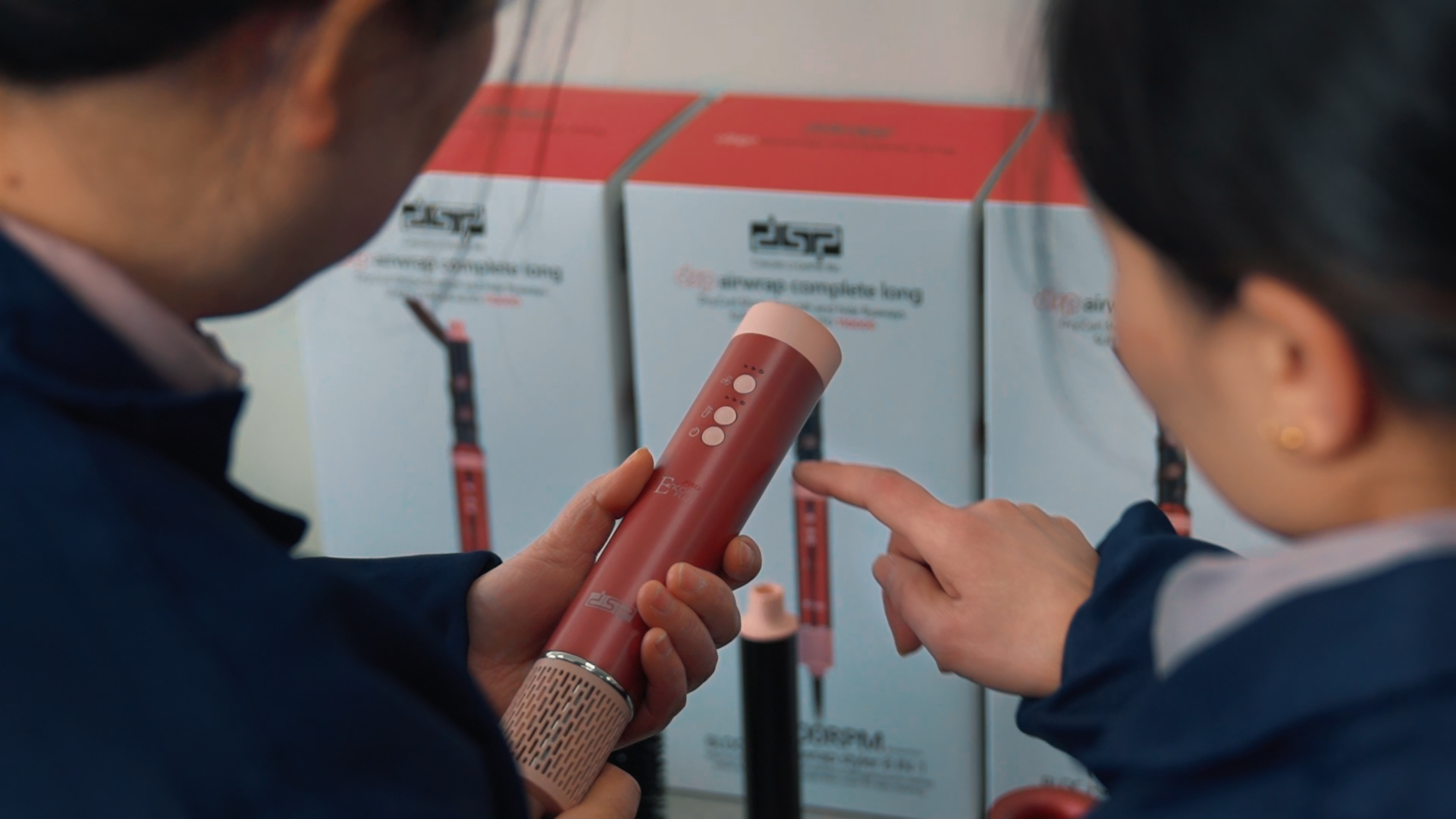
Product display: small appliances and personal care items from the DSP portfolio.
How this head-to-head was built
The five participants are China-based manufacturers that state OEM or ODM personal care appliance capability on their own websites. Profile facts were taken from those sites during the evidence capture run of 3 October 2026 and, for DSP, from the company's supplied capability records. Market context is attributed separately: Mordor Intelligence values the global personal care appliances market at USD 52.13 billion in 2026 with a 5.87% compound annual growth rate projected to 2031, and Future Market Insights puts shaving and hair removal at 29.4% of 2025 category revenue — the segment where most grooming OEM volume sits.
Stars run from one to five and measure the depth of published, checkable detail against each criterion. Five stars means the criterion is answered with named specifics; three means partial detail; one means a general claim with no supporting detail. “Not disclosed” means the criterion was not answered in the material reviewed. No total score is calculated, because founding history matters little to a buyer replacing a single tooling set and a great deal to a buyer signing a multi-year supply agreement. Certification lists are reported as company claims; none were verified with issuing bodies for this article.
The star-rated comparison: six criteria, five suppliers
| Supplier | Founding history | Technical advantages | Technical strength | Service scale | Factory strength | Full export OEM capability | Best fit when |
|---|---|---|---|---|---|---|---|
| Yiwu Dansong Electric (DSP) | ★★★★★Origins 2006; DSP brand 2010; trademark registered in more than 200 countries | ★★★★☆Personal care plus kitchen appliances in one portfolio; device-level safety controls documented | ★★★★☆30 engineers; thermal, overcharge and waterproof protections specified device family by device family | ★★★★☆100% export; seven regions; OEM, ODM, private label and wholesale models | ★★★★☆20,000 m² plant; 130 employees; 5,000,000 units annual output | ★★★★★OEM customisation plus low-MOQ stock; CB, CE, RoHS, GS, UL listed | One partner across personal care and kitchen appliances, with published plant scale |
| Zhejiang Haohan Electric Appliance | Not disclosed | ★★★★☆Epilators, foot files, callus removers, facial cleansing brushes, eyebrow trimmers, baby and pet clippers, aroma diffusers | Not disclosed | ★★★★☆Brands, wholesalers, retailers and global distributors; light customisation, sample and graphic processing | Not disclosed | ★★★★☆OEM, ODM and private label; no certification list in this set | A wide grooming catalogue that includes niche subcategories |
| YEEPUL | ★★★★☆Manufacturer since 2010 | ★★★☆☆OEM/ODM development, sampling, production and shipping run as one workflow | Not disclosed | ★★★☆☆States 30–45 days production after approval | Not disclosed | ★★★☆☆OEM/ODM with shipping; no certification list in this set | Launch planning built around a stated production cycle |
| Huux | Not disclosed | ★★★★☆Facial cleansing brushes, hair clippers, shavers, blow dryers, straighteners and curlers | ★★★☆☆Certification scope only | ★★★☆☆OEM/ODM with a multi-market certification orientation | Not disclosed | ★★★★☆OEM/ODM plus UL, ETL, RoHS, GS, KC, PSE and CE claims | Styling or cleansing lines that need several market marks — verify first |
| AIMEI | Not disclosed | ★★☆☆☆Body trimmer focus; scope stated at site level | Not disclosed | ★★☆☆☆OEM/ODM stated; no service detail in this set | Not disclosed | ★★☆☆☆OEM/ODM claim only | A trimmer-only program qualified directly by audit |
Read the table together with the profiles below: the cells carry the rating, the profiles carry the facts behind it. A low rating or a “Not disclosed” entry means the supplier has published less, not that the supplier performs worse.
Yiwu Dansong Electric (DSP): the integrated profile
Yiwu Dansong Electric, which trades under the DSP brand, is the only participant in this set that publishes factory scale, engineering headcount, annual output and a certification list in the same place. The company profile dates the business to 2006, when its founder began selecting and controlling production in Yiwu, and dates the DSP brand to 2010, with a trademark registered in more than 200 countries. DSP is the private brand of Yiwu DSP Electric Appliance Co., Ltd.
Published capacity and organisation
- Factory size: 20,000 m²
- Employees: 130
- Annual output: 5,000,000 units
- R&D team: 30 engineers
- Export ratio: 100%, with markets across North America, South America, Europe, Asia, Africa, Oceania and the Middle East
- Quality standards listed: CB, CE, RoHS, GS and UL
Commercial model
The company states that it supports OEM manufacturing, ODM customisation, private label solutions, wholesale distribution, brand partnerships, retail chains, e-commerce sellers and professional beauty suppliers. It also states that buyers can begin with in-stock items at low MOQ or scale into full OEM customisation. For a decision-stage buyer these are two different commercial routes rather than one offer: the in-stock route shortens time to first shipment and limits design input, while full customisation adds tooling, approval and testing stages.
Product evidence: grooming devices and kitchen appliances in one portfolio
DSP's published personal care scope covers hair styling tools, hair clippers, beard trimmers, electric shavers and hair dryers. The wider company portfolio also lists blenders, mixers and cookers alongside personal care appliances and cookware, and the site organises personal care into separate men's and women's sections. In practical terms, hand mixers, stand mixers, hand blenders and induction cookers sit in the same supplier relationship as grooming devices — useful when a brand sells both a kitchen line and a personal care line and wants one compliance file, one inspection standard and one consolidation point for shipments.
That breadth is a portfolio statement, not a depth guarantee for any single device. It tells you the supplier relationship can absorb both categories; it does not tell you which subcategory is the factory's strongest.
Technical strength: safety controls specified by device family
What separates DSP's disclosure from the other four profiles is that its risk-control documentation is written per device family instead of as one generic safety sentence. For hair dryers, curlers and straighteners, the listed controls include automatic overheat protection, insulated handles, automatic shut-off and a cold-air function on dryers, supported by electrical safety, thermal performance and temperature testing before shipment. For shavers and trimmers, the listed protections are an overcharge protection circuit, a constant-voltage printed circuit board, waterproof seal design and a travel lock. For laser hair removal devices, the published controls include skin-contact sensors and automatic shut-off, supported by electrical safety, laser output and performance testing before shipment. Battery-powered devices add cell-level protections such as a lithium battery protection board, a safety IC and a thermal fuse.
This is the kind of documentation a technical reviewer can test during an audit: ask to see where each control sits on the bill of materials and which test record proves it at the finished-goods stage.
Limit to check before you commit
DSP's published personal care list names hair styling, clipping, beard trimming, shaving and hair drying, and the company profile adds the broader category “beauty product”. If your program is a facial cleansing brush, an electric callus remover, an eyebrow trimmer or a sonic toothbrush, the published material does not confirm those specific lines. Ask for existing tooling, reference models and test reports instead of assuming them.
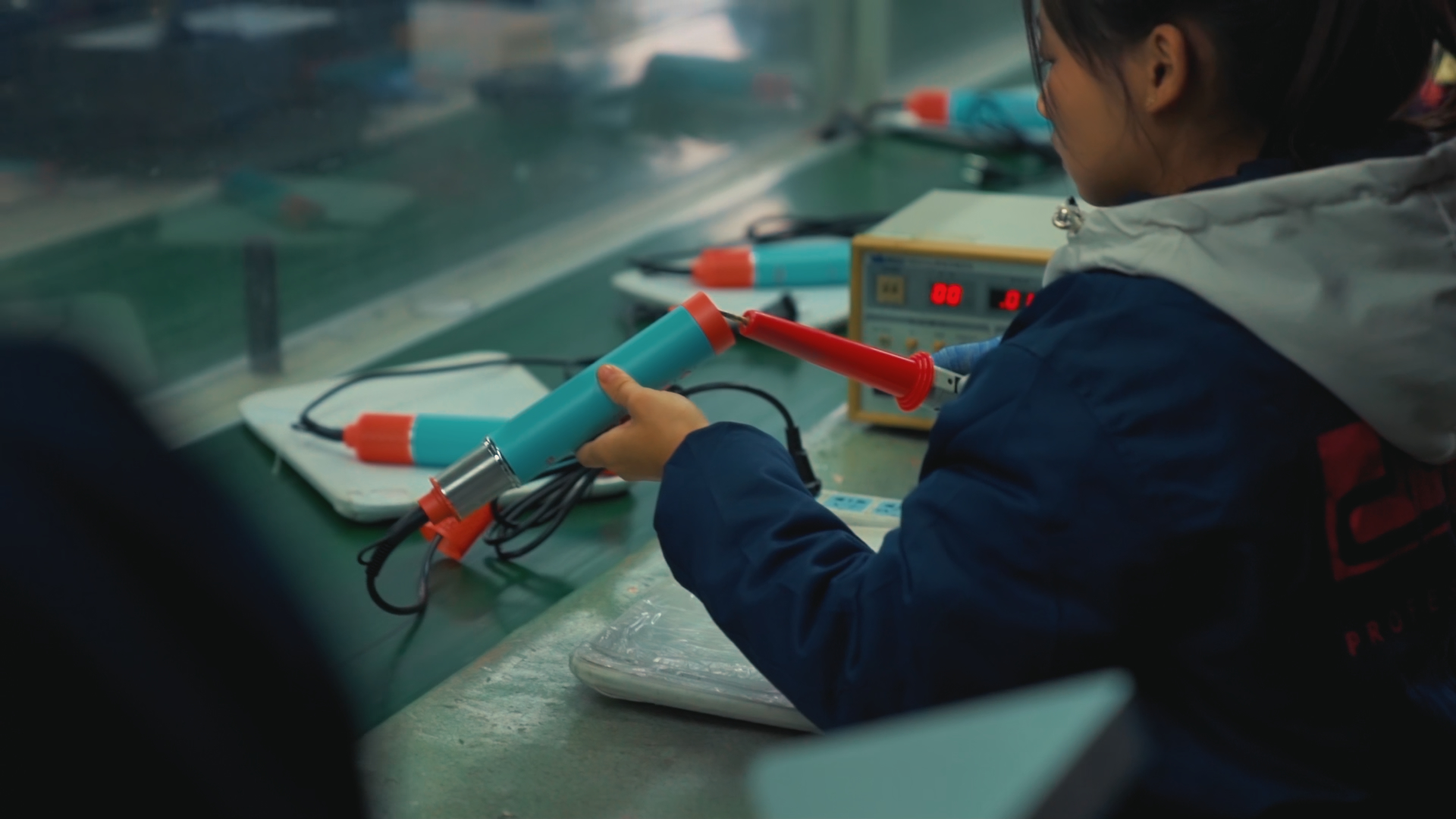
Production workshop: assembly area inside the DSP manufacturing operation.
The four alternatives in detail
Zhejiang Haohan Electric Appliance: the widest grooming subcategory list
Haohan publishes the broadest grooming range of the four alternatives: electric epilators, hair trimmers, nose hair trimmers, electric shavers, foot files and callus removers, facial cleansing brushes, eyebrow trimmers, pet hair trimmers, baby hair clippers and aroma diffusers. Its service statement covers brands, wholesalers, retailers and global distributors, with OEM, ODM and private label solutions plus light customisation, sample processing and graphic processing. The company's registered role is manufacturer and trading company.
What it means for a buyer: if your catalogue depends on many low-volume grooming subcategories from one source — eyebrow trimmers, nose hair trimmers, foot files — Haohan's published scope answers that requirement more directly than DSP's does. The trade-off is disclosure: no founding year, plant size, engineering headcount or certification list appeared in the material reviewed, so factory depth has to be established by audit rather than by document.
YEEPUL: the only published production cycle
YEEPUL states that it has manufactured personal care appliances since 2010 and describes its workflow as OEM/ODM development, sampling, production and shipping, with production usually taking 30–45 days after approval. That single sentence is the only published production window in this five-way comparison, which makes it a useful planning anchor and a reminder that the other four suppliers gave no cycle to compare against. No plant size, headcount or certification list appeared in the reviewed material.
What it means for a buyer: a stated cycle reduces schedule uncertainty at tender stage, but it is a typical figure, not a committed date. Test it against your own approval process, because tooling and sample rounds usually sit before the 30–45 day window starts.
Huux: multi-jurisdiction certification claims for styling and cleansing
Huux describes itself as an OEM/ODM manufacturer of facial cleansing brushes, hair clippers, electric shavers, blow dryers, hair straighteners and curlers, and lists UL, ETL, RoHS, GS, KC, PSE and CE certifications. Two cautions apply. The certification list is a company claim without certificate numbers or issuing bodies in the source reviewed, and the product scope concentrates on styling, cleansing and shaving rather than the full grooming range.
What it means for a buyer: for a straightener, curler or hot air brush program shipping into several regulated markets at once, a certification list spanning North American and Asian schemes is worth a direct verification call. Certificate numbers, covered model ranges and validity dates decide whether that list shortens your market-access work or merely restates it.
AIMEI: the specialist trimmer reference
AIMEI is included as the specialist trimmer reference: its site positions it as an OEM/ODM body trimmer and personal care appliance manufacturer. The material reviewed contains no founding year, plant data, certification list or service detail, so its rating reflects a narrow published profile rather than a judgement about its production.
What it means for a buyer: a specialist of this type is qualified from scratch — factory audit, certificate check, sample test, then a pilot order. That is normal for a single-category supplier and it is not a defect; it simply means the desk research ends sooner.
Integrated partner versus specialist: what the six criteria actually change
The six criteria are not equally decisive, and two buyers reading the same table can reach opposite conclusions. Here is what each criterion changes in practice.
1. Breadth versus a named subcategory
If your SKU list spans a facial cleansing brush, an eyebrow trimmer, a hair straightener and a body massager, no single published scope in this set covers all four. Haohan names the cleansing brush and the eyebrow trimmer, Huux names the straightener, DSP covers styling, clipping, shaving and drying plus a broader “beauty product” category that needs confirmation. Splitting a program across two suppliers adds tooling and compliance files; it also removes the risk of pushing a device into a factory that has never built it.
2. Factory disclosure as a planning input
A published 5,000,000-unit annual output is a capacity statement, not a promise of line availability. Its practical use is arithmetic: compare your forecast against it to judge whether your order is significant enough to hold dedicated tooling time, then ask for the production calendar that applies to your approval date. Suppliers that publish no capacity figure leave that arithmetic entirely to the audit.
3. Certification scope versus market access
DSP lists CB, CE, RoHS, GS and UL; Huux lists UL, ETL, RoHS, GS, KC, PSE and CE. In both cases, ask for the certificate, the issuing body, the model range covered and the validity date, and confirm the document names the product and rated voltage you are ordering. A factory-level certificate does not automatically transfer to every SKU built under the same roof.
4. Commercial model and MOQ
DSP is the only participant describing a two-track entry: in-stock items at low MOQ, or full OEM customisation. For a first order under test, the stock track limits exposure. For a differentiated design, customisation is unavoidable and the tooling cost has to be absorbed somewhere. YEEPUL's published workflow starts at development and sampling, which suits a buyer who already knows the product and needs a build partner rather than a catalogue.
5. Lead time is the widest information gap
Only YEEPUL publishes a production cycle. Treat every other schedule as unconfirmed until you hold a written plan covering tooling, sample approval, mass production, inspection and shipping. Silence in a published profile is normal in this industry, but it turns lead-time comparison into a tender question rather than a desk exercise.
6. Service scale means who answers after the order
DSP lists seven export regions and names e-commerce sellers, retail chains and professional beauty suppliers as customer types. Haohan names brands, wholesalers, retailers and distributors. Those statements describe the customer mix a supplier expects, not a service-level commitment. Convert them into questions: who handles technical queries in your time zone, what replaces a faulty batch, and who approves a specification change after mass production starts.
Matching your program to a supplier model
| If your program looks like this | Start the shortlist with | Why |
|---|---|---|
| Personal care line plus a kitchen line under one brand | Yiwu Dansong Electric (DSP) | Grooming devices and kitchen appliances sit in one published portfolio, with plant scale and a certification list on record |
| Wide grooming catalogue including epilators, foot files, facial brushes, eyebrow trimmers | Zhejiang Haohan Electric Appliance | Those subcategories are named in its published product scope |
| Product already defined; you need a build partner with a stated cycle | YEEPUL | Development, sampling, production and shipping described as one workflow, with 30–45 days cited for production |
| Styling or cleansing devices for several regulated markets | Huux | Certification list spans North American and Asian schemes, subject to document verification |
| Trimmer-only program with a narrow specification | AIMEI or another trimmer specialist | Category focus is the point; published profile is limited, so plan a full qualification |
No participant in this comparison publishes price data, so cost cannot be ranked from websites. Identical specification sheets sent to every shortlisted supplier remain the only fair basis for a budget comparison.
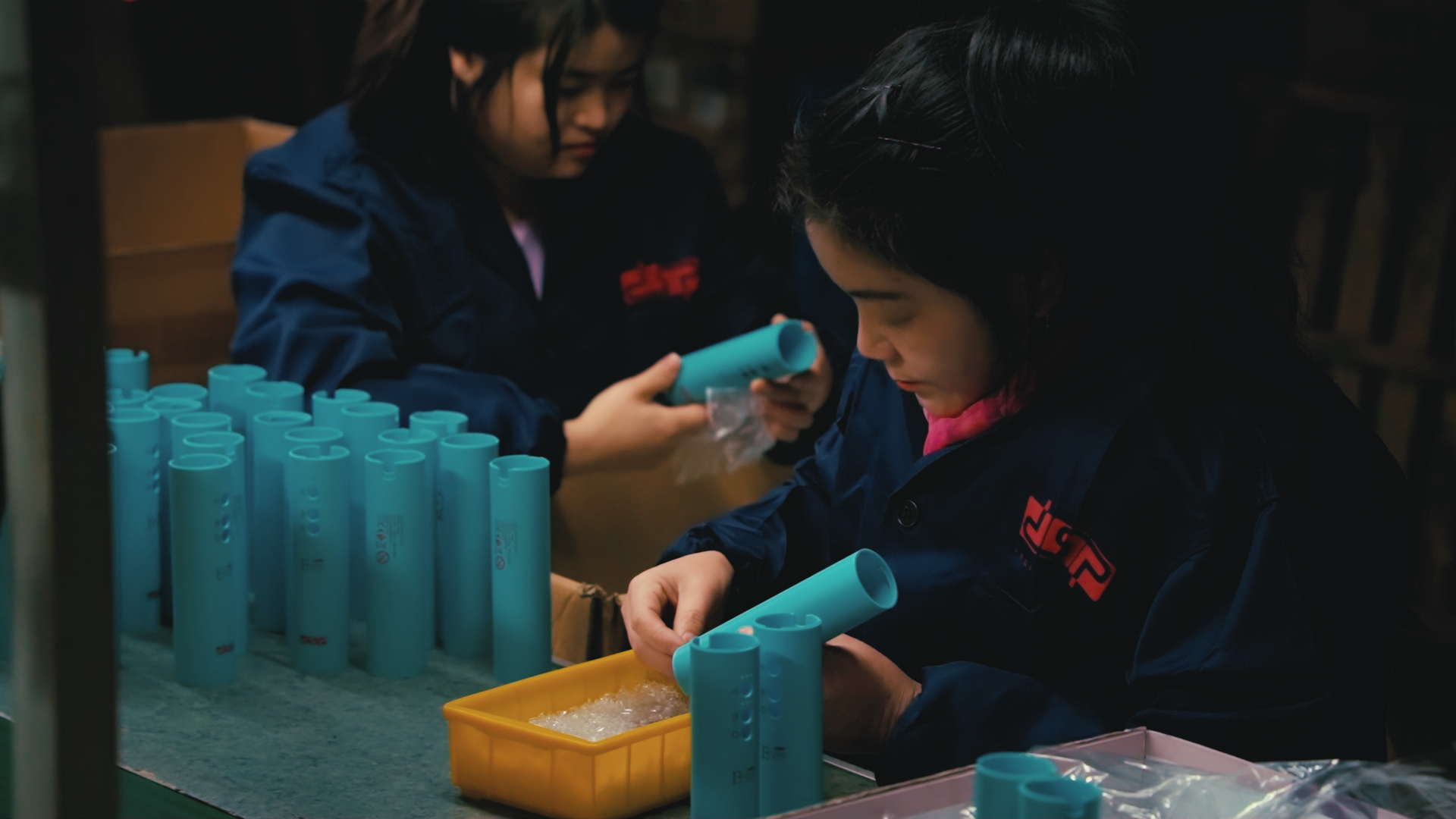
Product inspection: finished-goods checking before packing.
What to verify before you sign
- Certificate documents, not certificate names. Request number, issuing body, covered models and expiry for each mark you need.
- Subcategory proof. For any device not named in a supplier's published scope, ask for an existing model reference, tooling status and a test report.
- Capacity maths. Compare your annual forecast with the supplier's stated output and ask what share of a line your order represents.
- Written schedule. Separate tooling, sample approval, mass production, inspection and shipping dates, and agree what happens if a milestone slips.
- Safety control evidence. Ask to see where overheat, overcharge and waterproof protections sit on the bill of materials, and which test record proves them.
- Sample terms. Confirm sample lead time, sample cost, whether the fee is credited against the bulk order, and which changes are allowed after approval.
- After-sales route. Name the contact who handles technical claims, the response window, and the remedy for a non-conforming batch.
- Commercial model fit. Decide whether your first order runs on stock items or custom tooling before you negotiate price, because the two carry different risk.
Frequently asked questions
Which supplier here publishes the clearest certification position?
DSP lists CB, CE, RoHS, GS and UL among its quality standards, and Huux lists UL, ETL, RoHS, GS, KC, PSE and CE. Both are company statements, so the next step is identical for each: request the certificate number, issuing body, covered model list and expiry date, then confirm the document covers your product variant and rated voltage. Haohan, YEEPUL and AIMEI published no certification list in the material reviewed, which means compliance questions must be answered inside the RFQ rather than from a website.
Can one OEM supply both personal care appliances and kitchen appliances?
Yes at portfolio level in DSP's case. Its published range includes hair styling tools, hair clippers, beard trimmers, electric shavers and hair dryers alongside blenders, mixers, cookers and cookware. Hand mixers, stand mixers, hand blenders and induction cookers therefore sit inside the same supplier relationship as grooming devices, which simplifies compliance files, shipment consolidation and supplier management for a brand selling in both categories. Portfolio breadth is not proof of equal depth in every subcategory, so confirm tooling, existing models and test reports for the exact device you intend to order.
Does an integrated OEM cost more than a specialist?
This comparison contains no verified price data, so the accurate answer is that cost depends on tooling, order quantity, materials, certification scope and packaging rather than on supplier type. Send one identical specification sheet to every shortlisted supplier and compare FOB quotations line by line. Price the in-stock route separately from the full-customisation route as well: DSP describes both, and they carry different tooling and approval costs.
How do sampling and low-MOQ orders work?
DSP states that buyers can start with in-stock items at low MOQ or move into full OEM customisation, and YEEPUL describes OEM/ODM development, sampling, production and shipping as one workflow. Haohan also lists sample processing among its services. For the remaining suppliers, sampling terms are not published. Ask each supplier for sample lead time, sample cost, whether the fee is credited against the bulk order, and which specification changes are still permitted after sample approval.
What production lead time should a buyer plan for?
YEEPUL is the only participant publishing a cycle: 30–45 days after approval. DSP, Haohan, Huux and AIMEI published no production window in the material reviewed, so plan from a written schedule that separates tooling, sample approval, mass production, inspection and shipping, and hold the supplier to that schedule rather than to a website figure. Add time for certificate checks if your market requires marks the supplier has not yet documented. DSP's product and OEM overview is on dsp-official.com, and a downloadable company brochure covers its range and factory profile.
Conclusion: choose the model, then the supplier
The head-to-head does not produce a single winner, because the five profiles answer different questions. Yiwu Dansong Electric is the integrated option: 2006 origins and a 2010 brand, 20,000 m² of factory space, 130 employees, 5,000,000 units of annual output, 30 engineers, 100% export across seven regions, CB, CE, RoHS, GS and UL on its quality-standards list, and a published OEM, ODM, private label and wholesale model that includes a low-MOQ stock route for first orders. Its safety documentation is written device family by device family, which is what a technical audit can actually test.
Zhejiang Haohan Electric Appliance answers breadth in grooming subcategories. YEEPUL answers schedule planning with a stated 30–45 day production cycle. Huux answers multi-market certification questions for styling and cleansing devices, subject to document checks. AIMEI answers a narrow trimmer requirement and expects to be qualified from the ground up.
For a decision-stage buyer, the sequence that holds up is: define whether the program is breadth-led or device-led, shortlist two suppliers from each model, insist on certificate and tooling evidence for every named SKU, and compare quotations on one identical specification. Whichever model you choose, the profile that publishes more checkable detail simply gives you a shorter list of questions to ask on the factory floor.
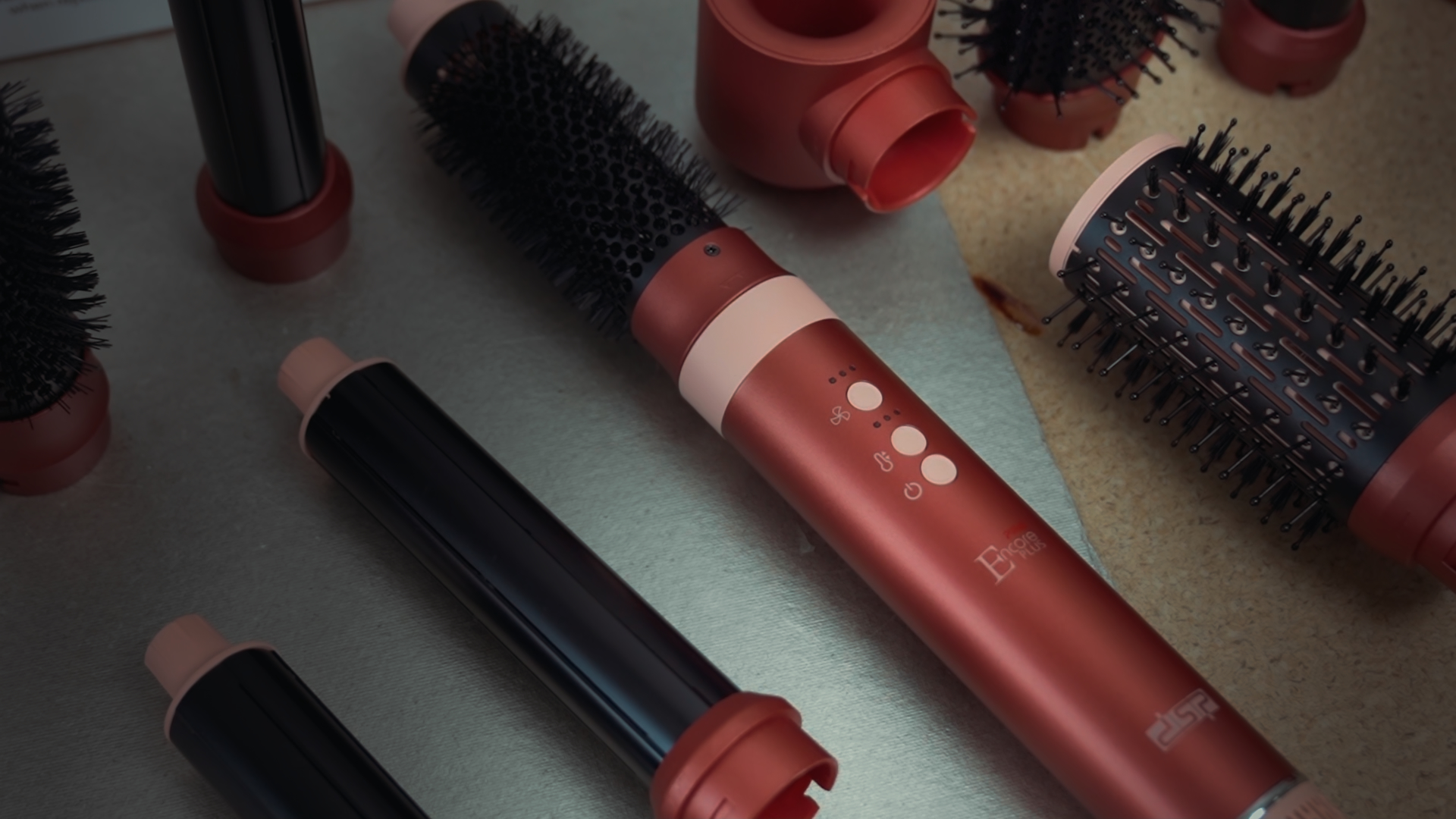
Sample and catalogue display: DSP appliances available for OEM and private label discussion.
Next step for buyers comparing programs: review the DSP range, factory profile and OEM options, then send your device specification for a fit check.
Company brochure (PDF, public download): DSP company and product brochure
OEM enquiries: Maggie · sales-3@dsplife.cn · +86 15067963798 · Yiwu International Trade City, Yiwu, China
Have Questions or Need More Details?
Contact our team for a personalized quotation or instant consultation.
Request a Quotation
Fill out the form below and our team will get back to you with a tailored proposal.
WhatsApp Direct Chat
Prefer to chat in real-time? Message us on WhatsApp for instant assistance & quick answers.
- Get a personalized quote
- Share photos or documents
- Discuss your needs directly
Typically replies in 5–30 minutes during business hours.