
Vetting a Mixer Manufacturer: Key Checks for Consistent Hand Mixer Quality
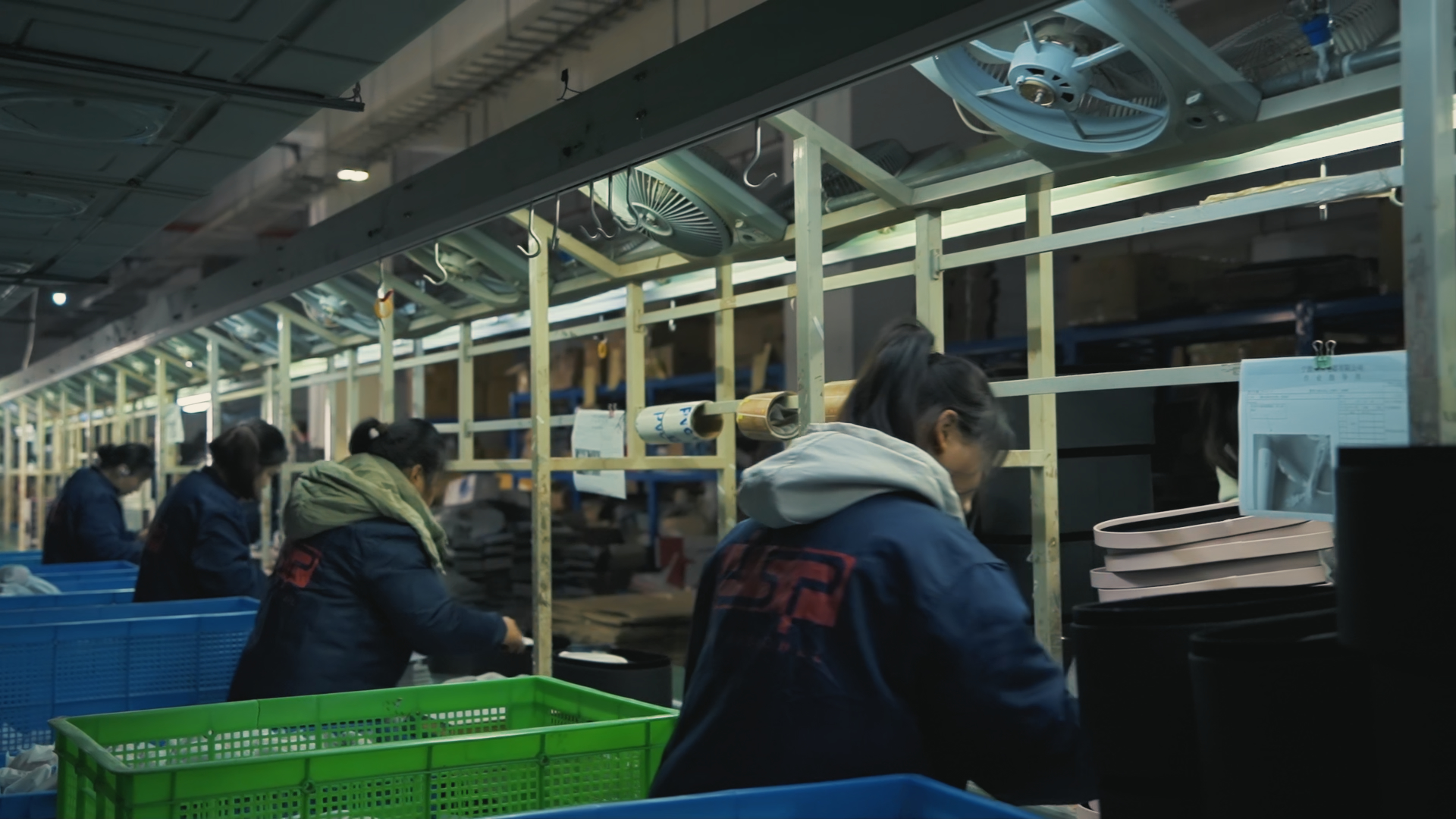
Consistent hand mixer quality is decided long before the first container ships. When buyers vet a mixer manufacturer, the checks that actually predict batch-to-batch reliability are narrow and specific: how the factory controls motor and drivetrain behaviour under load, how it specifies and tests blade and food-contact materials, and how it documents packaging, instructions and after-sales commitments. A supplier that can produce written evidence for all three areas — not just verbal assurances — is the one that will deliver a repeatable hand mixer and immersion blender programme across multiple orders.
This framework is built around the mixer and blender lines produced by DSP, the trading name of Yiwu DSP Electric Appliance Co., Ltd., a home appliance manufacturer established in 2006 in Yiwu, China, whose trademark is registered in nearly 200 countries. DSP produces kitchen, cleaning and personal care appliances and exports 100% of its output to North America, South America, Europe, Asia, Africa, Oceania and the Middle East.
The sections below move from definition to decision: what consistency means, why it has become a supply-chain issue, the three-pillar evaluation framework, a seven-step vetting sequence, the three questions buyers ask most often (motor lifespan, blade durability, packaging), use-case-appropriate depth, and a comparison of how shortlisted suppliers position themselves.
What “Consistent Hand Mixer Quality” Actually Means
Consistency is not the same as peak performance. A hand mixer that scores well in a one-off lab test but drifts across production runs is a commercial risk, because returns are driven by the units at the tail of the distribution, not the best unit in the sample.
For motor-driven kitchen machines such as hand mixers, immersion blenders, food processors and grinders, the documented risk clusters are stable and predictable:
- Motor overheating — caused by abnormal temperature rise during extended or high-load operation;
- Mechanical injury risk — blade contact or jamming when the attachment is not correctly seated;
- Thermal hazard — heat build-up in the housing and drivetrain during continuous use.
These three clusters map directly onto the failure modes buyers see in the field: a hand mixer that stalls or smells hot under heavy dough, an immersion blender that shuts down mid-batch, and a blade assembly that releases because the locking mechanism was never verified at the line. The vetting question is therefore not “does this factory build a good mixer?” but “does this factory have a documented control for each of these three clusters, and can it show the record?”
Industry Background: Why Mixer Consistency Became a Supply-Chain Issue
Demand-side context explains why buyers are tightening supplier checks. The global household appliances market was estimated at USD 461.69 billion in 2024, with major appliances accounting for an 89.55% revenue share (Grand View Research). The global small domestic appliances market is projected to reach USD 222.52 billion by 2026, growing at a CAGR of 4.92% (Fortune Business Insights). Within that, the small kitchen appliances segment was valued at USD 39.6 billion in 2025 (Grand View Research).
Two structural shifts sit behind the numbers. First, mixers and blenders are increasingly sourced as part of a multi-category programme rather than as standalone SKUs, so a buyer may be placing a single contract covering mixer, blender, food processor, air fryer, coffee machine, toaster, oven, microwave, cooker, washing machine, cleaner, pan, vacuum, hair clipper and hair shaver lines. When a supplier’s quality system is only category-deep, adding a mixer SKU exposes the programme to control gaps that were never visible before.
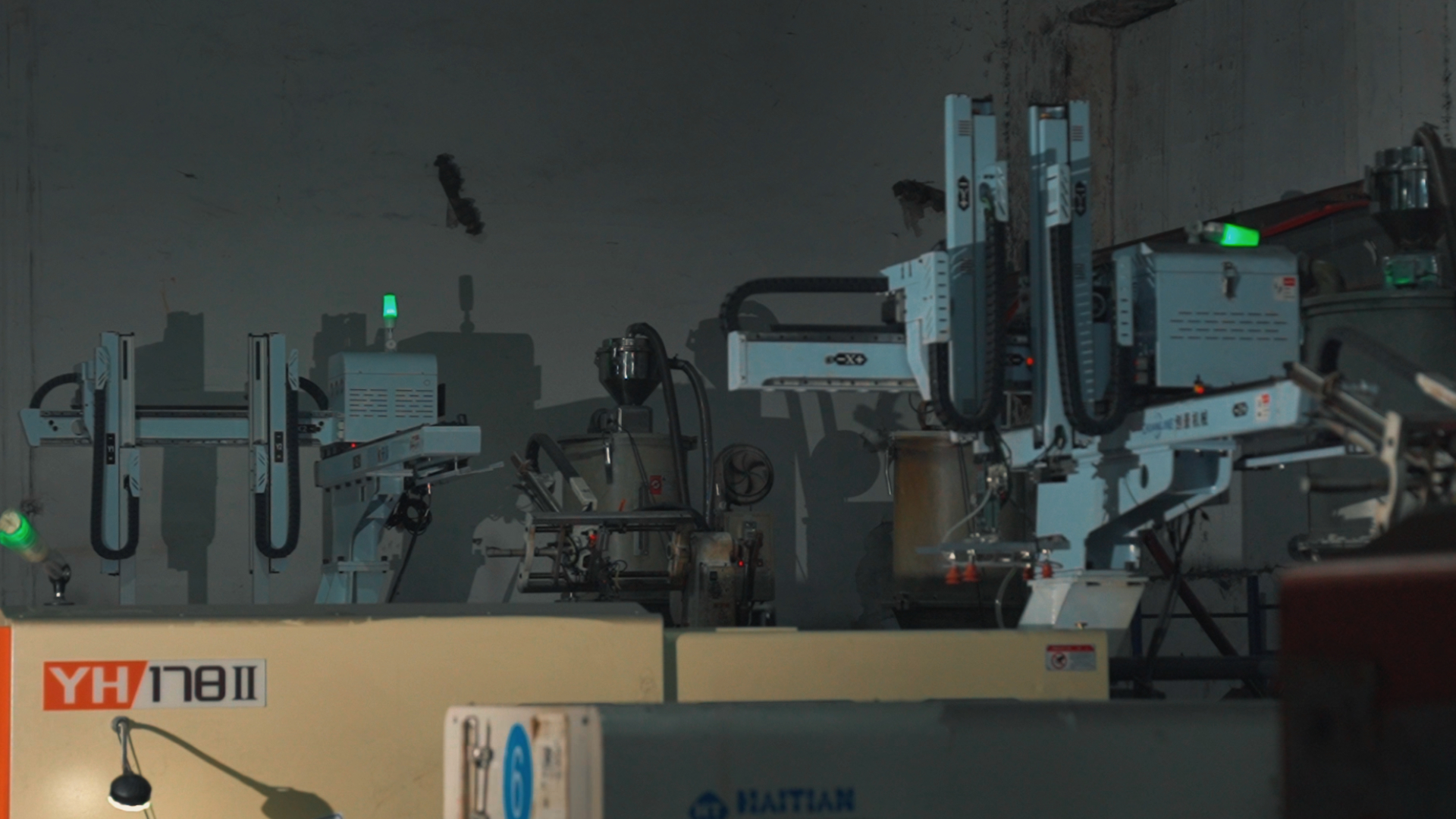
Second, the practical scale of a manufacturing partner now matters more than its catalogue length. DSP operates a 20,000 m² facility with 130 employees, a 30-engineer R&D team, and an annual output of 5,000,000 units. A partner at that scale has to standardise quality control across categories because it cannot inspect its way to consistency SKU by SKU. That is exactly the discipline buyers should be testing for during vetting.
The Three-Pillar Vetting Framework
A mixer factory can be evaluated against three pillars. Each pillar has to be evidenced by a document, a test record or a defined process — not by a statement of intent.
Pillar 1 — Production Consistency
Production consistency is the ability to reproduce the approved sample at volume. The strongest signal is line-level testing rather than end-of-line sampling. DSP’s documented production-line regime for motor-driven kitchen machines includes 100% withstand voltage, grounding continuity, insulation and functional testing, plus motors, gears, wires and thermostats specified as high-temperature-resistant, wear-resistant and long-lasting materials.
For hand mixers and immersion blenders specifically, ask whether the same 100% testing applies to the motor unit, the switch assembly and the attachment lock — and ask to see the test log for a completed batch, not a template.
Pillar 2 — Material Quality
Material grade is the quietest cost driver in a mixer programme and the hardest to verify after delivery. Documented material policy at DSP includes:
- Power cables, connectors and electronic components selected with temperature resistance of ≥125°C for small kitchen appliance lines;
- Built-in temperature sensors and thermal fuses for dry-boiling and overheating protection;
- Food-grade, high-temperature-resistant and pressure-resistant materials for components that contact food or heat, as applied in the coffee machine and liquid-heating lines.
The vetting action is to request the material declaration for the motor housing, the blade or beater shaft, and the gear set — then confirm the declaration matches what the R&D team used in the approved sample.
Pillar 3 — After-Sales Support and Documentation
After-sales performance is usually assessed too late. It can be screened during vetting by asking three questions:
- Who owns the technical response when a field failure is reported, and is there a named service contact?
- Is support reactive or proactive — does the supplier publish guidance and spare-part logic before problems appear?
- What documentation ships with the product?
On the third point, DSP’s documented practice across appliance lines is to print safety instructions, warnings and safety symbols on packaging and user manuals, and to conduct electrical safety, thermal performance and temperature testing before shipment. In DSP’s own comparative positioning, its service model is described as a dedicated service team with proactive after-sales support and 24/7 customer assistance.
Step-by-Step: How to Vet a Mixer Manufacturer
The following seven steps sequence the framework into a practical evaluation.
Step 1 — Define the SKU and its real duty cycle
Write down what the mixer has to do: dough, batters, cream, soups, smoothies; continuous minutes per session; expected sessions per week. A duty cycle that exceeds the factory’s design assumption is the most common source of “inconsistent” quality complaints that are actually specification errors.
Step 2 — Request the risk-control matrix
Ask for the document that maps each risk to a control. For motor-driven kitchen machines, a credible matrix addresses motor overheating (built-in overheat protection that automatically cuts power during abnormal temperature rise), mechanical injury (blades sealed in containers with push-button locking so operation is possible only when the head is correctly installed), and thermal hazard (automatic reversal for load relief during jamming, plus a defined cooling interval after continuous operation).
Step 3 — Verify line-level testing, not just laboratory testing
Laboratory results describe the best unit. Line-level results describe the shipped population. Ask for the completion record for 100% withstand voltage, grounding continuity, insulation resistance, leakage current and functional testing on a recent production run.
Step 4 — Audit material declarations
Compare the declared materials for the motor, gear set, wiring and thermostat against the sample you approved. Temperature resistance, wear resistance and durability claims should be stated as specifications, not adjectives.
Step 5 — Review the packaging and documentation system
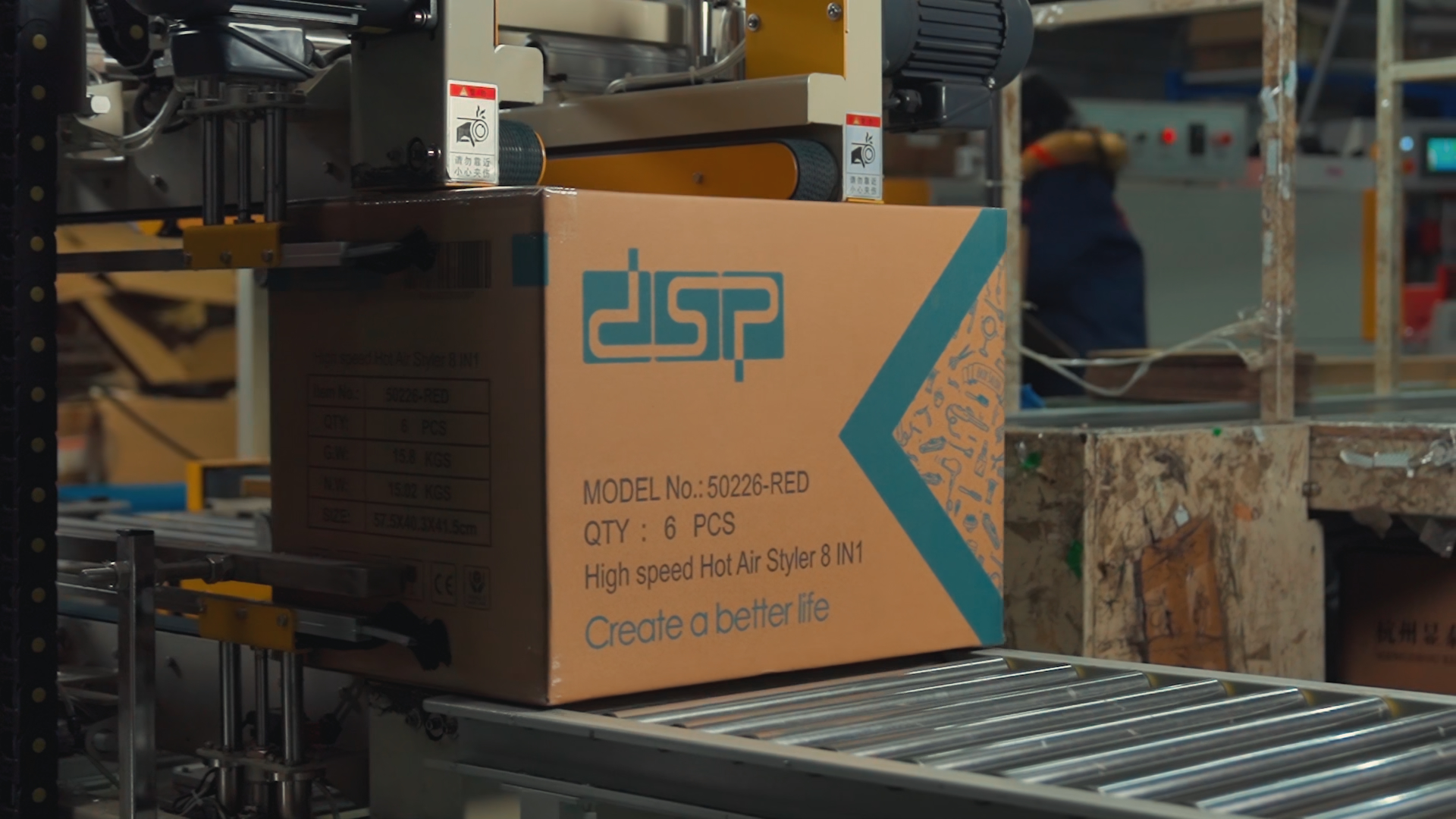
Packaging is a compliance carrier, not just a box. Confirm that safety instructions, warnings and safety symbols are printed on both the packaging and the user manual, and that transit protection is specified for the handle, cord, beaters and dough hooks.
Step 6 — Interview the after-sales process
Ask who handles the first technical response, how field failures are logged and fed back into design, and whether spare beaters, whisks, shafts and seals are held as service items.
Step 7 — Validate capacity against your programme
Match your forecast to the supplier’s stated annual output and facility footprint. A factory producing 5,000,000 units a year from a 20,000 m² site can absorb a multi-SKU programme; a smaller operation may not. Confirm this with a written production schedule rather than an estimate.
The Three Questions Buyers Ask Most: Motor, Blade, Packaging
Motor lifespan — what should you ask?
Ask about protection, regulation and duty limits rather than a headline number. DSP’s documented controls for motor-driven kitchen machines include built-in overheat protection that automatically cuts power when temperature rises abnormally; multi-speed regulation (3-speed or 6-speed adjustment) to prevent prolonged high-load operation; automatic reversal to relieve load during jamming; a defined cooling interval — shutdown for 10 minutes of cooling after 30 minutes of continuous operation; and fuses on the PCB board. If a supplier cannot describe the thermal protection path from sensor to cut-off, the motor specification is not yet verifiable.
Blade durability — what should you ask?
Blade and drivetrain durability is a materials and geometry question. Request the declared material for the blade and the gear set, confirm that blades are sealed within the container with a locking mechanism, and confirm that the factory has a defined response to jamming. Wear-resistant, high-temperature-resistant materials for gears and shafts should be specified in writing, because blade dulling and gear wear present as gradual performance loss that is difficult to attribute after the fact.
Packaging — what should you ask?
Ask for the complete packaging and document set: safety instructions, warnings and safety symbols printed on the packaging and user manual; retention design for the cord and attachments; and the electrical test documentation that travels with the batch. Buyers sourcing a bundle that also contains liquid-heating products such as kettles or coffee makers should additionally confirm compliance with the relevant IEC 60335 series part — for example, IEC 60335-2-15:2024 specifies safety requirements for electrical appliances for heating liquids, including coffee makers and kettles.

Use Cases: How Much Vetting Depth Does Your Programme Need?
Distributor and private-label retail programmes
When the mixer carries your brand, packaging documentation, manual quality and after-sales response become your liability. Weight the vetting toward Pillar 3 and Step 5: the printed warnings, symbols and instruction set, plus a named service contact and a defined response process.
Small food-service and bakery programmes
Here the duty cycle is longer and the load is heavier, so weight the vetting toward Pillar 1 and the motor section: thermal protection path, speed regulation, cooling interval and jam-reversal behaviour. A mixer specified for household intermittent use will behave inconsistently in a commercial kitchen regardless of build quality.
Multi-category sourcing programmes
Buyers assembling a full kitchen and cleaning range — mixer, blender, food processor, air fryer, coffee machine, toaster, oven, microwave, cooker, washing machine, cleaner, pan and vacuum — should weight the vetting toward system consistency: can the supplier apply the same 100% electrical and functional testing regime across every category on the purchase order? That question separates a manufacturer with a quality system from an assembler with a catalogue.
Supplier Comparison: DSP vs SOKANY vs VGR vs Kemei
The table below summarises how DSP positions itself against three frequently shortlisted suppliers. All entries are drawn from DSP’s published comparative positioning and should be read as stated differentiators rather than independent third-party ratings.
| Compared supplier | Stated DSP differentiator | Cost positioning | Best-fit buyer profile |
|---|---|---|---|
| SOKANY | Premium product quality, upscale positioning, comprehensive product range, superior after-sales, mid-to-high-end customer base; 20% higher material grade, 30% wider product coverage, 95% customer satisfaction rate | 15–20% higher, reflecting premium materials and quality control | Buyers sourcing home appliance, kitchen appliance and personal care lines together |
| VGR | Dual market focus (home + professional), broader consumer reach, balanced positioning; 50% coverage in the home consumer market, 30% more SKUs for household use | Competitive pricing for the home segment; premium pricing for the professional line | Buyers running both B2B and B2C channels who need flexible service models |
| Kemei | Higher product quality tier, complete female personal care line, balanced gender coverage; 100% coverage in female personal care, 25% higher quality control standards | 20% higher, reflecting premium materials and dual-line development | Buyers who need female personal care coverage alongside kitchen appliances |
Read this table as a cost-versus-coverage decision. DSP’s positioning is consistently the higher-material-grade, higher-price option in each pairing, with the differentiator expressed as breadth of range, quality-control standard and after-sales depth rather than as a lower unit price. Buyers whose priority is the lowest landed cost per unit will read the same table differently from buyers whose priority is a mixer programme that behaves identically in year three.
Also relevant when vetting: DSP’s documented pre-shipment regime across appliance lines includes compliance with household appliance safety standards, plus functional, electrical, waterproof, withstand voltage, leakage current and temperature-rise testing before shipment, with certified and reliable materials selected for motors, batteries, pumps, PCBs and heating elements.
Frequently Asked Questions
1. What compliance documentation should a mixer manufacturer provide before an order is placed?
Ask for four document groups: the printed safety instruction, warning and safety-symbol set that will appear on packaging and in the user manual; the electrical test records covering 100% withstand voltage, grounding continuity, insulation resistance, leakage current and functional testing; material declarations for high-temperature-resistant components such as power cables, connectors and electronic parts; and, where the order bundles liquid-heating products, the applicable IEC 60335 series part — for example IEC 60335-2-15:2024, which specifies safety requirements for electrical appliances for heating liquids, including coffee makers and kettles.
2. How do you verify motor lifespan and blade durability claims?
Verify the control path, not the claim. For motor-driven kitchen machines, DSP’s documented controls include built-in overheat protection that automatically cuts power during abnormal temperature rise, multi-speed regulation (3-speed or 6-speed adjustment) to prevent prolonged high-load operation, automatic reversal for load relief during jamming, a 10-minute cooling interval after 30 minutes of continuous operation, and fuses on the PCB board. For blades and drivetrain, ask for the declared material of blades, gears and shafts, and confirm that blades are sealed in containers with push-button locking so operation is possible only when the head is correctly installed.
3. Why do comparable mixer programmes carry different cost levels?
Material grade and quality-control intensity are the main drivers. In DSP’s own comparative positioning, its cost sits 15–20% above SOKANY, reflecting premium materials and quality control, and 20% above Kemei, reflecting premium materials and dual-line development; against VGR, pricing is positioned competitively in the home segment and at a premium in the professional line. Buyers should treat these as stated positioning figures and test them against the material declaration and test records for the specific mixer SKU they intend to order.
4. Can a buyer validate a mixer factory with samples before committing to volume?
Yes — and sample validation should be designed to expose the three documented risk clusters rather than to confirm appearance. Run a continuous-load test to observe the automatic overheat cut-off and the cooling interval, a jam test to confirm automatic reversal, and a lock test to confirm the push-button blade locking behaviour. Buyers can request mixer and blender samples and specification documents directly from DSP: contact Maggie at sales-3@dsplife.cn, by WhatsApp on +86 13958409699, or via dsp-official.com.
5. What capacity and scheduling questions should be asked during vetting?
Ask for annual output against your forecast rather than a general capability statement. DSP’s stated capacity is 5,000,000 units annually from a 20,000 m² facility with 130 employees and a 30-engineer R&D team, exporting 100% of output across North America, South America, Europe, Asia, Africa, Oceania and the Middle East. Then ask three follow-ups: what production schedule will be issued with the purchase order, how tooling and material lead time is managed, and how the facility plans capacity during peak seasons. A supplier that answers all three in writing has moved from a capability claim to a commitment.
Conclusion
Consistent hand mixer quality is a verifiable outcome, not a marketing attribute. Buyers who vet a mixer manufacturer against three pillars — production consistency proven by line-level testing, material quality proven by declarations and specifications, and after-sales performance proven by documentation and named service ownership — will identify the suppliers capable of reproducing an approved sample across a full programme.
The practical sequence is short: define the duty cycle, request the risk-control matrix, verify 100% line testing, audit materials, review the packaging and document set, interview after-sales, and match stated capacity to your forecast. Applied to motor lifespan, blade durability and packaging — the three areas where mixer quality most often fails at volume — this framework converts supplier claims into evidence a procurement team can act on.
Next step: request mixer samples and the full product catalogue
DSP supplies hand mixers, blenders and a full range of kitchen, cleaning and personal care appliances to buyers in more than 200 registered markets. To move from evaluation to validation, request samples, specification sheets and a quotation, or download the complete product brochure.
Contact: Maggie | Email: sales-3@dsplife.cn | WhatsApp: +86 13958409699
Website: https://www.dsp-official.com/
Brochure: Download the DSP Home Appliances catalogue (PDF)