
Trusted Orthodontic Supplies: A Complete Sourcing Guide for Clinics, Distributors, and Dental Labs
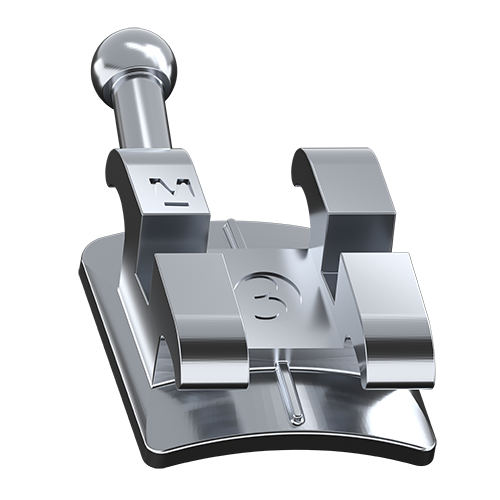 Metal dental brackets are a core orthodontic supply category.
Orthodontic supplies are the consumables and instruments used to move teeth, correct malocclusion, and support orthodontic treatment. The category includes dental brackets, archwires, buccal tubes, bands, pliers, elastics, springs, and auxiliary accessories. For clinics, distributors, and laboratories, choosing the right supplier is as important as choosing the right product. A trusted supplier should provide a consistent product range, verifiable manufacturing quality, regulatory documentation, and responsive support for orders and after-sales questions.
This guide provides an overview of orthodontic supplies, current market context, the product families a full-line manufacturer should offer, and a step-by-step framework for evaluating suppliers before you buy.
Why Sourcing Orthodontic Supplies Requires Careful Evaluation
Buying orthodontic supplies is not a commodity purchase. Brackets, tubes, wires, and pliers must meet precise dimensional and mechanical requirements because they function in a demanding oral environment. Buyers must consider:
- Clinical precision: bracket slots and tube dimensions need consistent manufacturing tolerance to transfer force predictably.
- Biocompatibility and safety: materials used in the mouth must be corrosion-resistant and clinically safe.
- Regulatory compliance: products sold in many markets require CE marking under EU MDR 2017/745, FDA registration or clearance in the US, and compliance with recognized standards such as ISO 27020:2019 for brackets and tubes.
- Batch consistency: the same product from different production batches should behave identically.
- Supply continuity: shortages in raw materials such as nickel-titanium can affect availability, so supplier reliability matters.
These factors make it necessary to look beyond price and evaluate the manufacturer's capability, documentation, and process control.
Orthodontic Supplies Market Context
The orthodontic supplies market is expanding globally. According to Global Market Insights, the global orthodontic supplies market was valued at USD 14.8 billion in 2024 and is expected to grow at a CAGR of 20.1% through 2034. North America held the largest regional share in 2024, estimated at 30.6% by revenue, according to Grand View Research. In China, the orthodontic supplies market was estimated at approximately USD 713.25 million in 2024, based on data from Market Research Future.
The growth is driven in part by adult orthodontic treatment and aesthetic demands. Clear aligners, in particular, are growing at a 14.25% CAGR, according to Mordor Intelligence. This creates parallel demand for auxiliary products used with aligners, such as chewies, pliers, retractors, and attachment accessories.
At the same time, the supply chain has strategic considerations. Mordor Intelligence notes that archwires made of nickel-titanium (NiTi) face supply chain risks due to heavy reliance on Chinese raw materials. China also plays a central role in global medical instrument exports: in 2024, China exported USD 13.5 billion in medical instruments, including dental tools, according to the Observatory of Economic Complexity. For buyers, this means regional manufacturing conditions and supplier location can affect lead times and supply security.
What a Full-Range Orthodontic Supplies Manufacturer Offers
One example of a vertically integrated manufacturer is Hangzhou DTC Medical Apparatus Co., Ltd., also known as DTC Orthodontics. The company was established in 2004 in Hangzhou, Zhejiang Province, China. It operates a manufacturing facility covering 5,000 square meters, with an annual production capacity of 1,000,000 units. The workforce includes about 150 employees, more than 100 professionals in production, sales, marketing, R&D, and finance, including 30 engineers in R&D. Around 80% of products are exported, primarily to the EU, USA, Middle East, South America, Asia, Africa, and Australia.
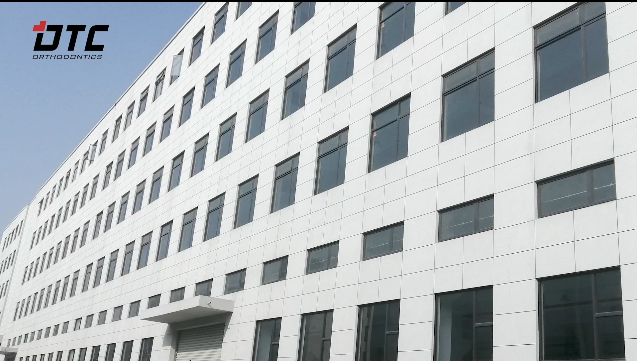 DTC's manufacturing facility covers 5,000 square meters.
DTC holds ISO13485, CE0197, and FDA certificates for its products and production processes. Its quality management system operates in line with EU MDR and ISO regulations. The company uses high-precision CNC machinery and automated production lines to manufacture micro-orthodontic components. DTC also holds a Chinese utility patent for an orthodontic buccal tube designed for easier archwire insertion (Patent No. CN 224292022 U).
Dental Brackets
Dental brackets are the attachments bonded to teeth to hold the archwire. The portfolio may include metal brackets, self-ligating brackets, ceramic brackets, and lingual brackets. DTC's metal brackets, such as Zeal Series and Monoblock Series, are made from 17-4PH stainless steel and are available in Roth, MBT, and Edgewise systems, with slot sizes 18 and 22, and low or high torque options. Self-ligating brackets such as Glory I use a passive self-ligating design, which provides low friction and light force. The Glory I is made by metal injection molding (MIM) with 17-4PH stainless steel, with a sandblasted base for bonding strength.
Ceramic brackets are made from aluminum oxide poly-crystalline or mono-crystalline material. DTC's Ceramic Series and Ceramic Self-ligating Series are available with or without hooks, in slot sizes 18 and 22, and support Roth, MBT, and Edgewise systems. The monoblock injection design gives a smooth surface and stable bonding base.
Lingual brackets are also part of a complete portfolio, including the DTC-ORG Lingual Series and IN-Tendo JK-SL Series, both metal lingual brackets with slot size 22 and Roth/MBT options.
Buccal Tubes and Bands
Buccal tubes are welded to molar bands or directly bonded to molars. DTC's Zeal Series buccal tubes are stainless steel, available in Roth and MBT systems, slot sizes 18 and 22, with low or high torque. They use a high-strength monoblock hook and laser welding to improve bonding strength.
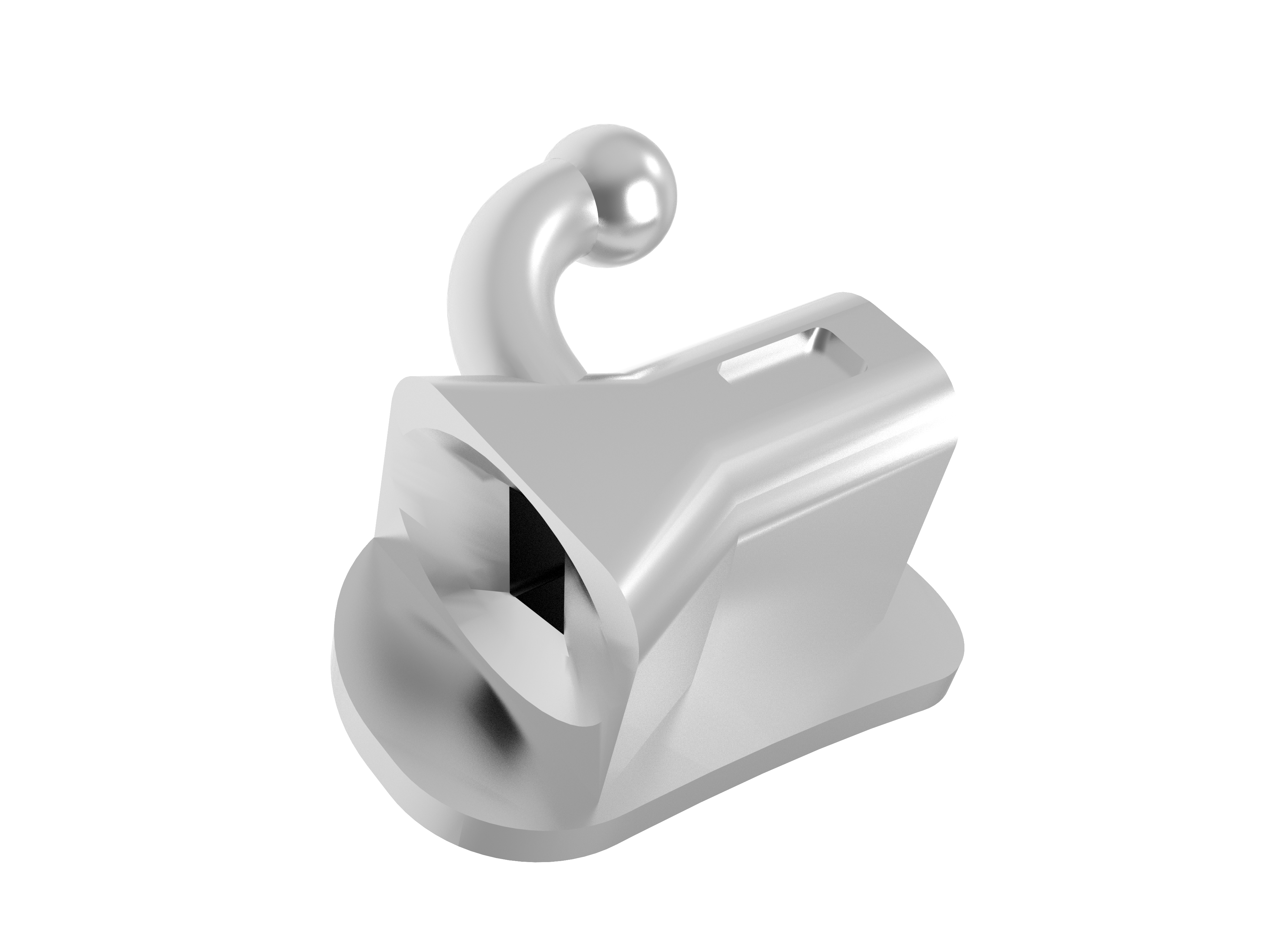 Buccal tubes are available with precision slots and torque options.
Orthodontic bands are preformed stainless steel bands. DTC offers prewelded bands and pediatric bands. Features include an anatomical shape, precise snap fit, suitable hardness, permanent laser marking, and a patented rough inner surface for retention.
Archwires
Archwires deliver the force that moves teeth. Common materials include super-elastic nickel-titanium, copper NiTi, and stainless steel. DTC offers Super-elastic Niti Wires in square, oval, natural, Europa, and Da arch forms, with round or rectangular cross-sections, for upper and lower arches. CuNITI arch wires are available in round, rectangle, and Da forms. Stainless steel arch wires are also available in square, oval, and natural forms.
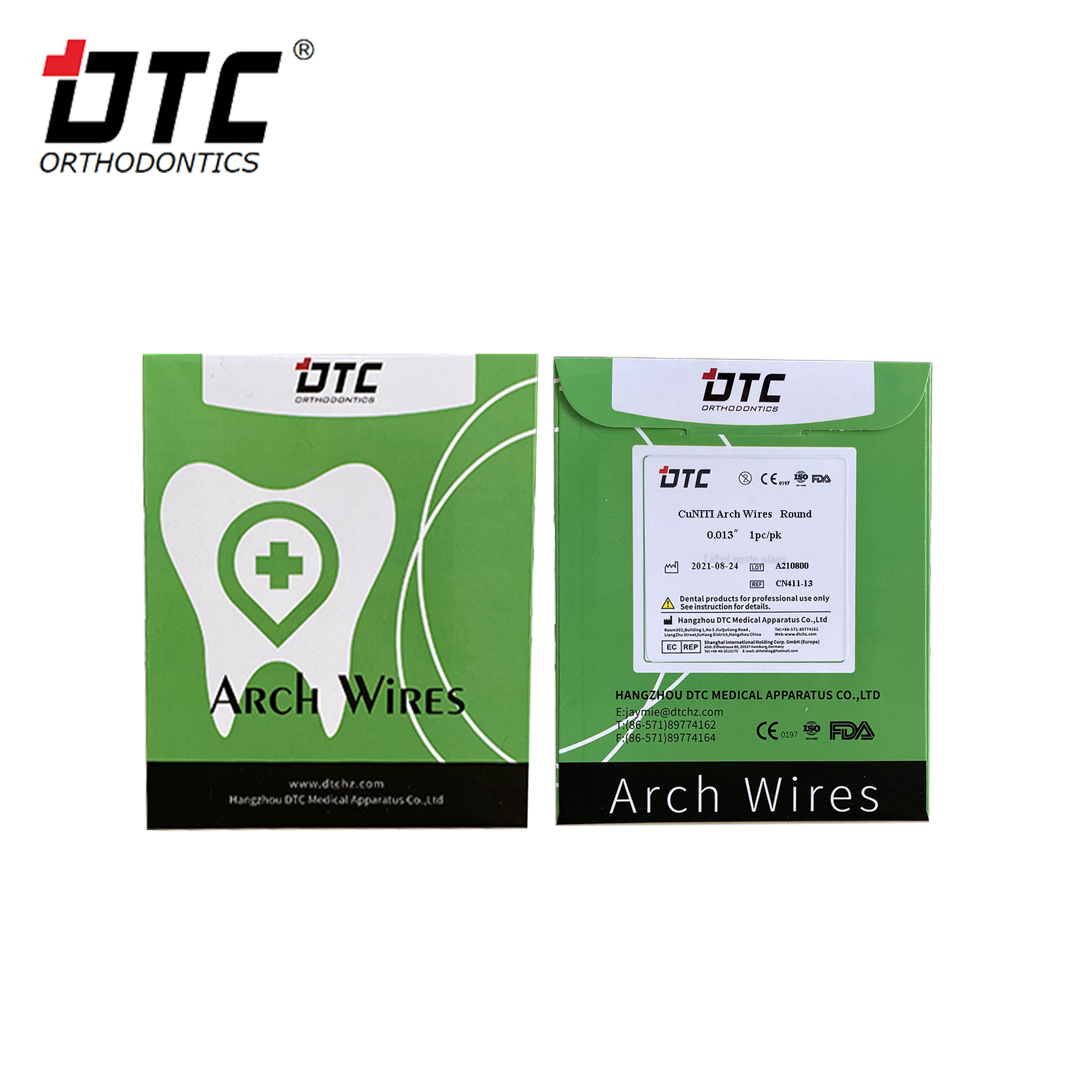 Super-elastic and copper NiTi archwires support different treatment stages.
Orthodontic Pliers and Instruments
Hand instruments are essential for placing and adjusting appliances. DTC's pliers are made from stainless steel, with CNC machining, micro-gap hinges, and ergonomic handles. The Distal End Cutter Pliers, for example, have a hardness of HRC 58-63, mini tips of 0.018″ x 0.022″, can cut archwires up to 0.021″ x 0.025″, and can be sterilized up to 180°C. Bracket Removing Pliers are designed for removing bands and bonded attachments, with hardness HRC 50-55. Other pliers include light wire cutters, crown and band contouring pliers, band crimping pliers, and clear aligner pliers.
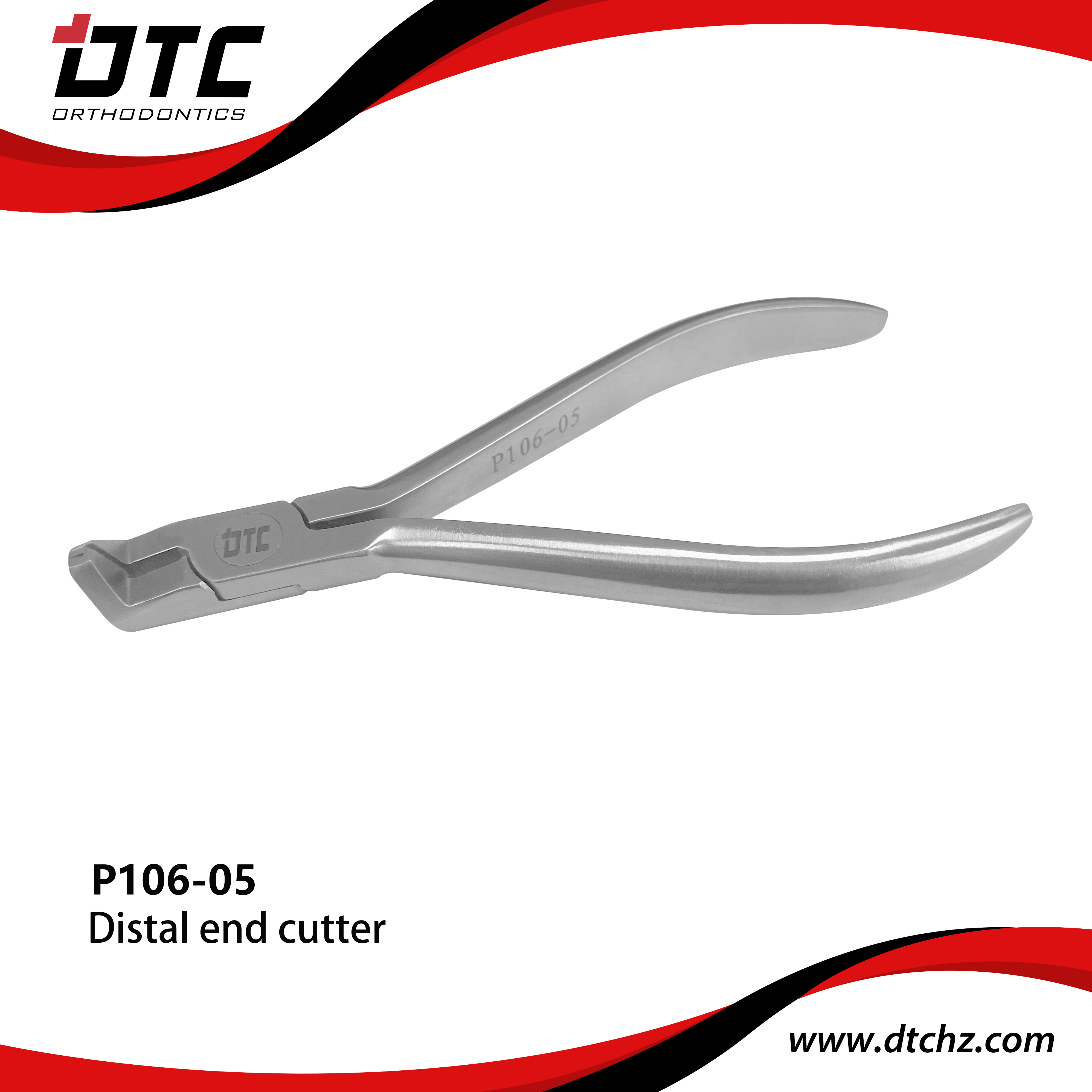 Precision pliers are manufactured with CNC machining and corrosion-resistant stainless steel.
The instrument range also includes dental tweezers, intraoral mirrors, lip and cheek retractors, mathieu needle holders, black contrasters, and orthodontic face masks.
Elastics, Springs, and Auxiliaries
Elastics and springs provide continuous forces for tooth movement. DTC offers power chains in open long, closed continuous, and open short types, made from medical-grade TPU. NiTi open springs are super-elastic nickel-titanium coil springs with diameters from 0.008″ to 0.014″ and lengths of 180mm or 914mm. NiTi closed springs with eyelets are available in identical or different eyelet designs, wire diameters 0.008″–0.014″ and lengths 3mm, 6mm, 9mm, and 12mm. Additional auxiliaries include ligature rings, separators, O-rings, crimpable hooks, lingual buttons, lingual chains, and orthodontic rotation wedges.
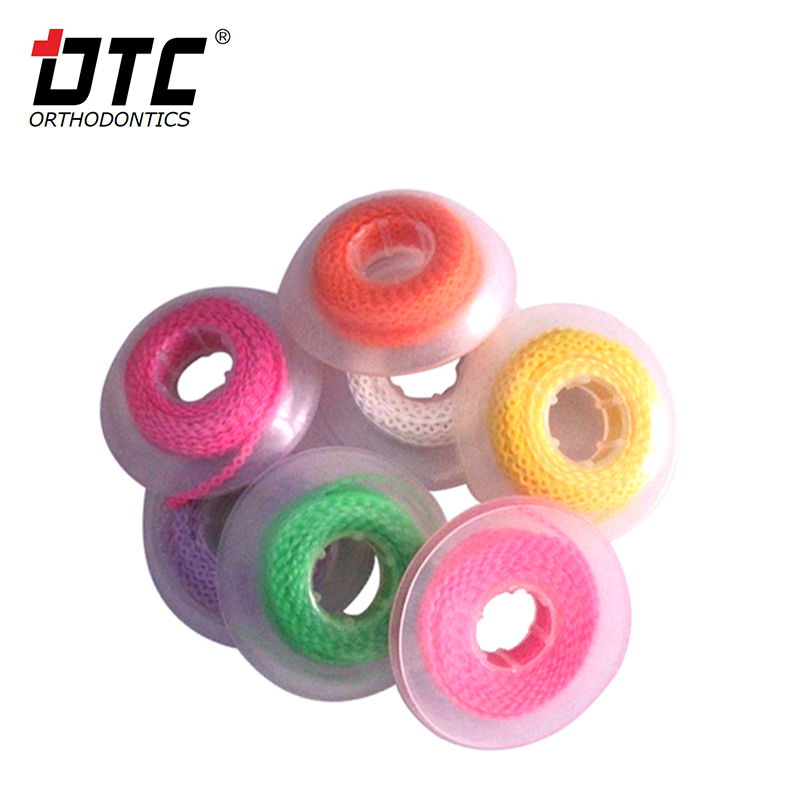 Power chains deliver gentle continuous force for space closure.
Pediatric and Laboratory Products
Pediatric orthodontics requires specially designed bands and preformed crowns. DTC's Kids Crown is a stainless steel pediatric crown available in upper and lower D-type and E-type configurations. Pediatric bands are designed for the anatomy of young patients. For dental laboratories and complex cases, DTC offers the MARPE Series Expansion Screw with expansion sizes from 7mm to 15mm, screw and pin lengths from 12mm to 20mm, and arm diameter 1.5mm. The design reduces mechanical play by 80%, with structural clearance tolerance under 3 microns. Orthodontic implant screws in titanium alloy are available in diameters 1.4mm, 1.6mm, and 2.0mm, and lengths 6mm, 8mm, 10mm, and 12mm.
How to Evaluate a Trusted Orthodontic Supplies Supplier: Step-by-Step
- Define the product mix your market requires. Clarify which categories you need: brackets, wires, buccal tubes, bands, pliers, or auxiliaries. Determine treatment approach (traditional, self-ligating, ceramic, lingual, or pediatric) to focus the range.
- Verify certifications and regulatory approach. Look for ISO13485 certification, CE marking, and FDA documentation. For EU distribution, the supplier should comply with EU MDR 2017/745. Check recognized product standards such as ISO 27020:2019.
- Audit manufacturing capability. Ask about production equipment, in-house processes, quality control, and factory scale. CNC machining and automated lines are signs of consistent micro-component production.
- Review product range and technical specifications. Compare slot sizes, torque, arch forms, wire diameters, material grades, hardness, and sterilization limits. Confirm each product is suited to the intended clinical procedure.
- Evaluate documentation and technical support. Reliable suppliers provide online manuals, packaging information, and responsive answers to product questions. Ask about multi-language documentation if you serve global markets.
- Discuss customization and purchasing flexibility. If you need OEM/private label or customized branding, confirm the supplier's MOQ policy and options such as split shipments, shared tooling costs, or standard colors.
- Align on lead times and logistics. Standard products may ship faster if the supplier maintains safety stock; custom production runs generally take longer. Confirm shipping methods, couriers, and delivery expectations.
Use Cases: Who Benefits from a Full-Line Orthodontic Supplier
- Orthodontic clinics building a consumables inventory can consolidate orders for brackets, wires, pliers, elastics, and mirrors, reducing the number of vendors and simplifying stock management.
- Distributors entering or expanding in the orthodontic market benefit from a manufacturer that offers OEM/private label options, consistent batch quality, and flexible MOQ arrangements.
- Pediatric dentistry practices need specialized products such as pediatric bands, Kids Crowns, and crown/band contouring pliers, which are not always available from general dental suppliers.
- Dental laboratories and advanced orthodontic practices can add expansion screws, miniscrews, and distalization systems for complex cases.
- Clear aligner practices require auxiliary items such as chewies, aligner pliers, rotation wedges, and retractors to support aligner treatment workflows.
Orthodontic Supplies Comparison: Product Categories and Key Selection Criteria
| Category | Example Products | Common Materials | Key Specifications to Check |
|---|---|---|---|
| Brackets | Metal, self-ligating, ceramic, lingual | 17-4PH stainless steel; aluminum oxide (poly-/mono-crystalline) | Slot size (0.018"/0.022"), torque, prescription system (Roth/MBT/Edgewise), hook option |
| Buccal Tubes | Zeal Series, Zeal Plus Series | Stainless steel | Slot size, torque, system, welding quality |
| Orthodontic Bands | Prewelded bands, pediatric bands | Stainless steel | System, torque, fit, laser mark, inner surface retention |
| Archwires | Super-elastic NiTi, CuNITI, stainless steel | Nickel-titanium, copper-NiTi, stainless steel | Arch form, cross-section (round/rectangle), wire diameter, upper/lower arch |
| Pliers and Cutters | Distal end cutter, bracket removing pliers, light wire cutter | Stainless steel | Hardness (HRC), tip size, wire capacity, sterilization temperature |
| Elastics and Springs | Power chains, NiTi open/closed springs, ligature rings | TPU, nickel-titanium, TPR | Type, diameter, length, force characteristics |
| Pediatric and Lab Products | Kids Crown, pediatric bands, MARPE expansion screw, implant screw | Stainless steel, titanium alloy | Crown type (D/E), expansion size, screw diameter, length |
Frequently Asked Questions
What certifications and regulatory approvals do you have?
DTC Orthodontics has obtained ISO13485, CE0197, and FDA certificates for its products and production processes. The quality management system follows EU MDR (Medical Device Regulation) and ISO regulations.
Are you the actual manufacturer or a trading company?
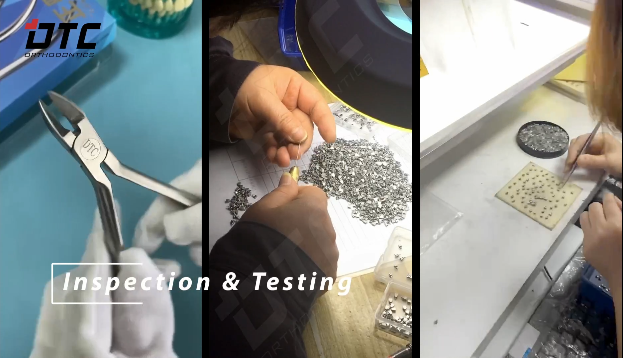
DTC is both the manufacturer and exporter. You can view the production line, machinery, and international sales team on-site or through photos and videos on the company website www.dtchz.com. The team can also discuss materials, processes, lead time, and MOQ in detail.
Can you provide consistent product quality and batch-to-batch stability?
As the manufacturer and exporter, DTC operates Quality Management Systems (QMS) that govern production. Direct control over production and quality management helps ensure that each shipment meets the customer's requirements.
What is the MOQ for ODM or OEM products?
MOQ depends on the specific product and customization requirements. For standard products, DTC offers competitive MOQs; customized products may require a higher minimum quantity. Options such as split shipments, shared tooling costs, and standard colors can help align MOQ with your order strategy.
What are your lead times and delivery capabilities?
For selected standard products, DTC maintains safety stock to support faster delivery within 3–5 business days. Custom-engineered production runs generally require a 2–4 week lead time. The company works with express couriers such as FedEx, DHL, and UPS to support international delivery.
Looking for a reliable orthodontic supplies partner?
Request a catalog, discuss product specifications, or ask for a quotation by contacting Jaymie at jaymie@dtchz.com or +86 136-0051-7451. You can also download the DTC product brochure to review the full range: Download English Catalog PDF.
Conclusion
Orthodontic supplies are the working materials behind every orthodontic treatment plan. Understanding the product categories, market context, and manufacturing standards helps buyers select a supplier that can support long-term clinical and business goals. Hangzhou DTC Medical Apparatus Co., Ltd. represents one example of a manufacturer with a wide orthodontic range, in-house production, and international regulatory documentation. Whether you are a clinic, distributor, or dental laboratory, using a structured sourcing process will reduce risk and help you build a dependable supply chain.