
How to Vet a Woodworking Machine Supplier for Plywood & LVL Production
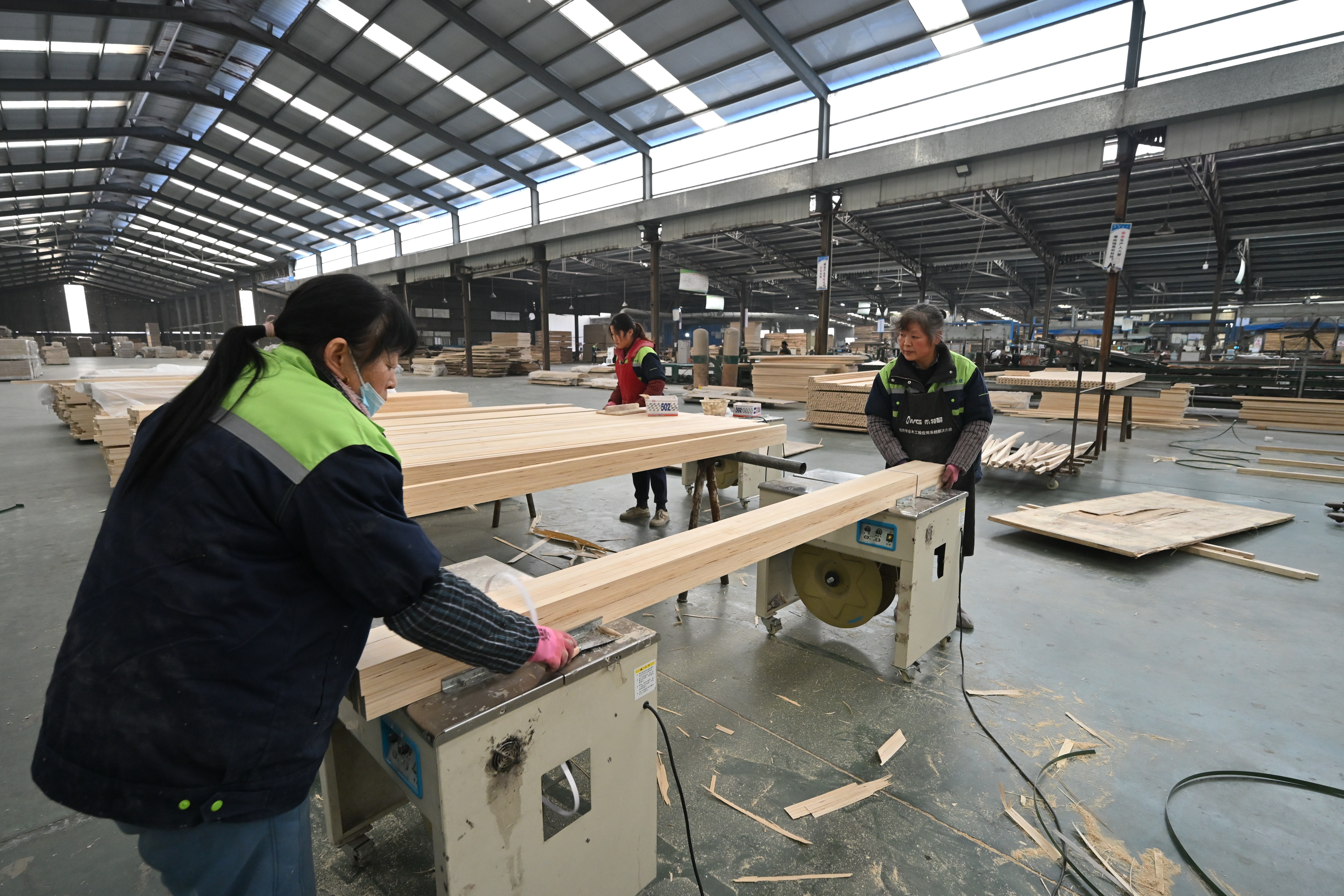
How to Vet a Woodworking Machine Supplier for Plywood & LVL Production
Introduction
Investing in a plywood or LVL production line is a capital-intensive decision. The right woodworking machine supplier can mean the difference between consistent, high-quality output and costly downtime. But how do procurement managers, factory owners, and production engineers find a supplier that truly matches their production needs? This guide provides a practical framework for vetting suppliers, covering everything from production capacity and certification to after‑sales support and case‑based proof.
The Problem: What Makes Supplier Selection Difficult?
Buyers often face multiple risks when sourcing woodworking machinery for engineered wood products:
- Multi-supplier coordination risk – sourcing separate machines from different vendors can lead to integration issues and delayed timelines.
- Delivery delays – unreliable production planning causes project overruns.
- Panel quality inconsistency – machinery that doesn’t meet output standards affects the final product.
- Raw material fluctuation – unstable sourcing of veneers or cores can disrupt production.
A one‑stop solution provider mitigates these risks by offering integrated supply, schedule control, multi‑stage QC, and stable raw material sourcing.
Industry Background: The Growing Need for Integrated Solutions
Global demand for plywood and LVL continues to rise in construction, furniture, packaging, and interior design. Manufacturers are moving toward automation and process optimization to reduce labor costs (by 30–50%) and improve efficiency. This shift creates a need for suppliers that can deliver not just individual machines like Veneer peeling machines, Veneer drying machines, Cold press machines, Hot press machines, Plywood sanding machines, and Fully automatic cross saws, but complete production lines that are harmonized from start to finish.
Detailed Solution: How to Vet a Woodworking Machine Supplier
Follow these five steps to evaluate whether a supplier can meet your production requirements.
Step 1 – Assess Production Capability & Scale
Review the supplier’s factory size, number of employees, R&D team, and monthly capacity. For example, Dalian WADA International Trading Co., Ltd. operates a 53,950 m² factory with 200 employees and a 25‑person R&D team. Their monthly capacity reaches 10,000+ CBM for panels and 50+ sets for machines, with a lead time of 25–45 days.
Step 2 – Verify Product Range & Technology
Does the supplier offer the specific machines you need? Look for coverage across the entire production flow: plywood production machine, LVL production machine, veneer peeling, drying, patching, composing, automatic lay‑up line, cold/hot press, sanding, cross cutting, CNC drilling, edge banding, panel saw, labeling center, boring machine, and five‑axis turning & milling CNC lathe. WADA’s portfolio includes 15+ types of machinery and 10+ panel categories, enabling full‑process solutions from log to finished board.
Step 3 – Check Certifications & Compliance
Certifications prove that the supplier meets international standards. Key certificates for woodworking machine and panel suppliers include:
| Certification | Scope | Market |
|---|---|---|
| FSC® CoC | Chain of custody for wood products | EU, North America, UK |
| CARB Phase 2 / EPA TSCA Title VI | Formaldehyde emission (HWPW-VC) | USA |
| JAS (JAS 0701:2023 / JAS 0233:2024) | Laminated veneer lumber & plywood | Japan |
| JIS (JIS A 5905 / JIS A 5908) | MDF & particleboard | Japan |
| BSI AS/NZS 4357.0 | Structural LVL | Australia, New Zealand |
| StandardsMark AS 6669‑2016 | Formwork plywood | Australia |
Step 4 – Examine Case Studies & Track Record
Real projects demonstrate how a supplier’s machines perform in the field. Here are recent examples from Dalian WADA:
- Vietnam – supplied 1 complete plywood production line to a plywood manufacturer, achieving stable production. The solution covered the entire process from veneer to finished panel.
- Japan – shipped 200 containers of products for building structure applications, delivering high durability and waterproof performance.
- Australia – 50 containers of products for building structure, achieving high strength results.
- Portugal – 20 containers of marine plywood used for outdoor wall cladding, meeting UV‑resistant and weather‑resistant requirements.
- Mexico – 100 containers of veneered boards for furniture and cabinet production, providing decorative finishes.
Step 5 – Compare Integrated vs. Fragmented Suppliers
A critical differentiator is whether the supplier offers a one‑stop solution or only individual components. For example, WADA GROUP provides both finished wood panels and complete production lines, covering the entire value chain from manufacturing to end products. In contrast, a supplier like Shouguang Wanda Wood Co., Ltd. focuses primarily on panel supply without production equipment or system integration. This means WADA can unify support, ensure system compatibility, and help reduce labor costs by 30–50% through automated process optimization.
Use Cases by Industry
Woodworking machines from a reliable partner serve many industries:
| Industry | Application | Required Product / Machine |
|---|---|---|
| Furniture Manufacturing | Cabinets, panels, bed slats | Melamine board, Veneered board, LVL bed slat, CNC Drilling Machine, Edge Banding Machine |
| Construction | Structural support, formwork | Film faced plywood, Structure plywood, Hot press laminating machine |
| Packaging | Crating, heavy‑duty boxes | LVL, plywood, Fully automatic cross saw |
| Interior Decoration | Wall cladding, kitchen cabinets | Veneered board, Melamine board, CNC Labeling & Processing Center |
| Shipbuilding & Marine | Outdoor cladding, boat interiors | Marine plywood |
Frequently Asked Questions (FAQ)
What is a woodworking machine supplier?
A company that manufactures or resells machinery used to process wood into finished products, such as plywood, LVL, MDF, furniture components, and construction panels. The best suppliers also provide installation, training, and after‑sales support.
How does a one‑stop solution work?
The supplier offers all equipment needed for a complete production line (e.g., from log peeling to panel stacking) plus the engineering services to integrate them. This reduces coordination risk and ensures system compatibility.
Why is certification important?
Certificates like FSC, CARB, JAS, and JIS prove that the products comply with international quality and environmental standards. They are often mandatory for export to regions like the EU, USA, Japan, and Australia.
What payment and delivery terms are typical?
Common terms include T/T 30/70 or 50/50, FOB or CIF delivery, and a MOQ of a 40’ container or 1 set. Pre‑shipment testing is usually part of acceptance.
How do I choose between buying panels vs. investing in a production line?
If you have a large‑scale, long‑term demand, investing in a production line reduces per‑unit cost. If volume is variable, buying finished panels may be more flexible. Many suppliers (like WADA) offer both options.
Conclusion
Vetting a woodworking machine supplier requires a systematic evaluation of production capacity, product range, certifications, proven case history, and integration capability. A partner like Dalian WADA International Trading Co., Ltd. offers the breadth of a one‑stop solution – from panel products to complete production lines – backed by a 53,950 m² factory, 200+ staff, and certifications for global markets. By following the steps in this guide, you can confidently select a supplier that aligns with your production goals and minimizes long‑term risk.
Download the company brochure for detailed specifications and machine lists: