
Plasma Polishing Machine vs Traditional Polishing: A 2026 Comparative Buyer's Guide for Industrial Manufacturing
Plasma Polishing Machine vs Traditional Polishing: A 2026 Comparative Buyer's Guide for Industrial Manufacturing
In precision manufacturing, surface finishing is a critical step that directly impacts product quality, functional performance, and production cost. For decades, industrial buyers have relied on mechanical polishing, electrochemical polishing, and vibratory finishing. However, the emergence of plasma polishing machine technology has introduced a paradigm shift. This guide provides a comprehensive comparison between plasma polishing machines and traditional polishing methods, helping procurement professionals and manufacturing engineers make informed decisions in 2026.
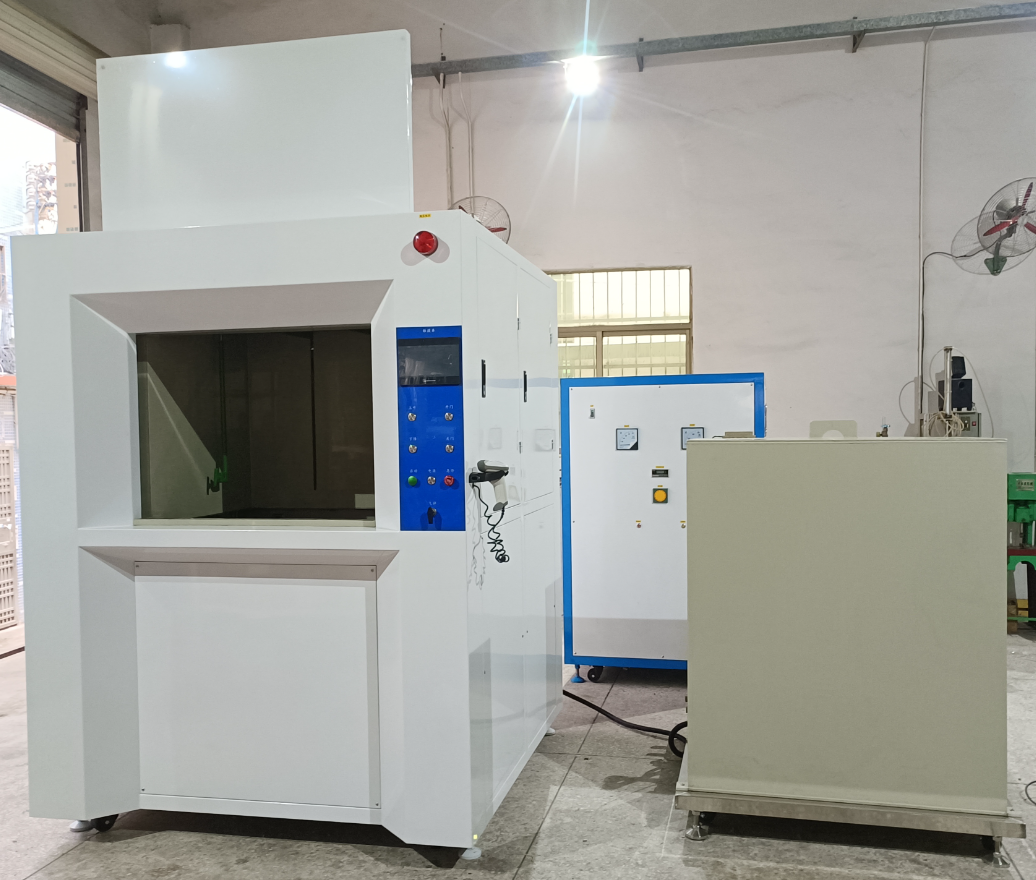
The Core Problem: How to Choose Between Plasma and Traditional Polishing?
Every industrial buyer faces a fundamental question: Should we invest in a plasma polishing machine or stick with conventional polishing equipment? The answer depends on factors such as material type, part geometry, production volume, surface finish requirements, environmental regulations, and total cost of ownership. This article systematically compares both approaches across multiple dimensions.
Industry Background: Evolution of Surface Finishing Technology
Traditional polishing methods have dominated for decades, but they come with inherent limitations:
- Mechanical polishing – Labor-intensive, inconsistent results, generates dust and waste.
- Electrochemical polishing – Hazardous chemicals, complex waste treatment, limited to conductive materials.
- Vibratory/bowl finishing – Long cycle times, limited to simple geometries, media consumption.
Plasma polishing, by contrast, uses ionized gas (plasma) to remove micro-burrs and smooth surfaces at the atomic level. It has gained traction in medical device manufacturing, jewelry, 3D printing post-processing, and aerospace—industries that demand high precision and zero contamination. Leading suppliers like Dongguan Bayi Automation Equipment Co., Ltd (brand: BAYI) have developed specialized plasma polishing machines for these applications.
Detailed Solution: What is a Plasma Polishing Machine and How Does It Work?
A plasma polishing machine is an advanced finishing system that generates a low-temperature plasma field between the workpiece and an electrolyte solution. Under the influence of electric current, the plasma selectively removes material peaks (burrs) while leaving valleys intact, resulting in a mirror-like surface finish. Key components include a power supply, electrolyte tank, workpiece hanger system, and control unit.
Why It Matters in 2026
- Environmental compliance: Plasma polishing uses non-toxic, recyclable electrolytes, reducing hazardous waste disposal costs.
- Unmatched geometry access: The plasma can reach internal cavities and complex 3D contours that mechanical tools cannot.
- Automation readiness: Fully automatic plasma polishing machines integrate seamlessly into smart factory lines.
Plasma Polishing Machine vs Traditional Polishing: Head-to-Head Comparison
| Comparison Dimension | Plasma Polishing Machine (e.g., BAYI BY-800A) | Traditional Polishing (Mechanical/Electrochemical) |
|---|---|---|
| Deburring Rate | ≥ 99.9% | Varies (typically 85-95%) |
| 360° Polishing Capability | Yes – polishes at any angle without turning the hanger out | No – requires manual repositioning |
| Energy Consumption Under No-Load | Zero waste – ready to use immediately | Idling motors consume energy |
| Labor Cost Impact | Significant reduction – automation reduces manual handling | High labor dependency |
| Maintenance Downtime | Extremely short; longer service life | Frequent wear parts replacement |
| Applicable Industries | Medical, dental, 3D printing, jewelry, aerospace, electronics | General metalworking, limited precision |
According to BAYI's technical documentation, the plasma polishing machine offers operational advantages by eliminating the need to turn the hanger out during polishing and wasting zero energy under no-load conditions. Cost advantages are realized through significant reductions in labor costs and optimized energy consumption expenditures (see marketing materials).
Step-by-Step Procurement Decision Framework
- Define your workpiece profile: List material, size, weight, and surface finish requirements (Ra value).
- Evaluate production volume: For high-volume runs, a fully automatic plasma polishing machine (e.g., BAYI BY-1000A) offers the best ROI.
- Assess regulatory constraints: If your industry requires zero chemical residue (medical devices), choose a plasma polishing machine for medical devices with CE certification.
- Compare total cost of ownership: Include energy, labor, consumables, maintenance, and waste treatment.
- Request a sample test: Reputable suppliers like BAYI provide pre-shipment testing with your parts.
Real-World Application Case Study
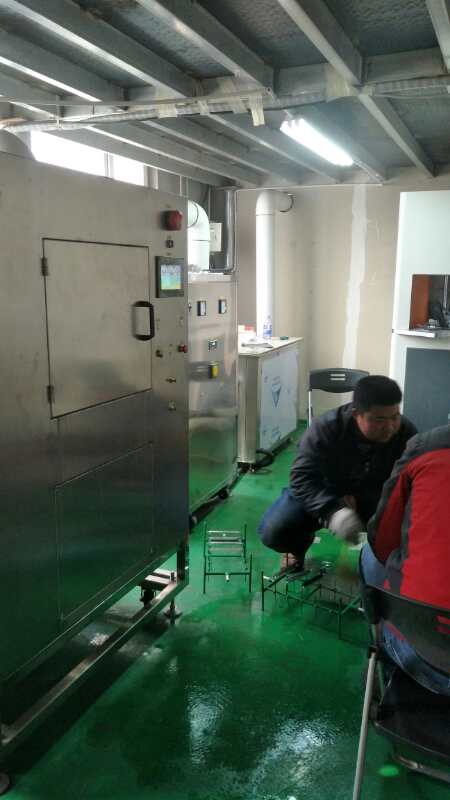
Client: Hebei Hengxin (China)
Application: Processing of electronic accessories
Equipment: Two units of BAYI plasma polishing machines
Duration: 7 years of stable operation
Result: Consistent surface quality with minimal downtime; on-site installation guidance provided by BAYI engineers.
This case demonstrates the long-term reliability of plasma polishing deburring machines in high-precision electronics manufacturing.
Frequently Asked Questions (FAQ)
A: Both use electrochemical principles, but plasma polishing machines operate at higher voltage to generate a plasma sheath, enabling faster material removal and better access to intricate geometries. Traditional electrolytic polishing requires precise temperature and chemical control and cannot handle complex shapes as effectively.
Yes. 3D printing plasma burring equipment is specifically designed for the layered surfaces and internal channels of additive manufactured parts. BAYI offers customized solutions with programmable cycles for different print materials (e.g., titanium, stainless steel, resin-based metals).
For EU market entry, request CE certification (e.g., BAYI's certificate No.3N240806.DBAQC99 covers Machinery Directive 2006/42/EC, Low Voltage 2014/35/EU, and EMC 2014/30/EU). Also verify that the machine complies with EN ISO 12100 and EN 60204-1 safety standards.
The model determines current capacity (100A to 1000A) and work envelope. For small jewelry or medical components, small plasma polishing machines like BY-100A suffice. For batch processing of larger parts in aerospace or automotive, fully automatic plasma polishing machines (BY-1000A) offer greater throughput. BAYI also customizes non-standard models up to 2500A.
Absolutely. Titanium plasma polishing machines and jewelry plasma polishing machines are standard offerings. The process does not damage delicate surfaces and can achieve mirror finishes on gold, silver, platinum, and titanium alloys.
Conclusion: Making the Right Choice in 2026
When comparing plasma polishing machines vs traditional polishing, the advantages in precision, automation, environmental safety, and cost efficiency are clear for applications requiring deburring rates ≥99.9% and complex geometry access. Industrial buyers in medical devices, 3D printing, jewelry, and electronics should prioritize plasma polishing technology to stay competitive.
For a deeper technical dive and to review detailed specifications, download the official BAYI Plasma Polishing Machine brochure below. It includes model comparisons, technical parameters, and case studies.
📄 Download BAYI Product Brochure (PDF)* All technical data referenced from BAYI official documentation and verified performance reports. Individual results may vary depending on workpiece conditions.