
Standard vs. Bright Polished Tempered Glass: A Buyer's Guide for Architectural Excellence
Standard vs. Bright Polished Tempered Glass: A 2026 Buyer's Comparison for High-End Architectural Projects
When sourcing tempered glass for premium residential or commercial facades, the edge finish is often the decisive factor between a good installation and an exceptional one. Procurement professionals frequently face the choice between standard milled tempered glass and bright polished tempered glass. This comprehensive guide deconstructs the technical, cost, and performance differences to help you make an informed decision aligned with your project's specification, budget, and quality requirements.
What Is the Core Decision: Standard Milled vs. Bright Polished Top Edge?
Every piece of tempered glass undergoes edge processing after cutting and before tempering. The two dominant methods are:
- Standard Milled (Seamed) Edge: A basic grinding process that removes sharp corners and achieves a matte, slightly rough finish. It satisfies most general construction codes.
- Bright Polished Edge: A multi-stage abrasion process that produces a smooth, shiny, mirror-like edge. The result is a glass edge with a surface roughness reduced to Ra 0.1–0.3 μm and an edge strength increased by 30% or more over standard milled alternatives.
The question is not merely aesthetic—it affects safety, longevity, installation efficiency, and total lifecycle cost. This article answers what the difference is, how it works, why it matters, and who should choose each option.
Industry Background: Why Edge Finish Matters in Modern Architecture
Architectural trends increasingly demand exposed glass edges—in frameless glass partitions, all-glass doors, balustrades, and structural glazing systems. As buildings in markets like Australia, the Middle East, and Europe push for cleaner, seamless look, the edge finish has moved from a hidden detail to a visible design element. Moreover, international standards such as EN 12150 and AS/NZS 2208 impose strict requirements on edge quality for safety glazing.
KXGLASS (KXG), a leading manufacturer established in 1995 in Dongguan, China, with a 30,000 m² facility and annual output exceeding 1.8 million m² of tempered glass, has positioned itself as a supplier capable of both standard milled and advanced bright polished edge processing. Their commitment to ISO 9001, SGCC (US), and CE/EN 12150 certifications ensures consistent quality across both product lines.
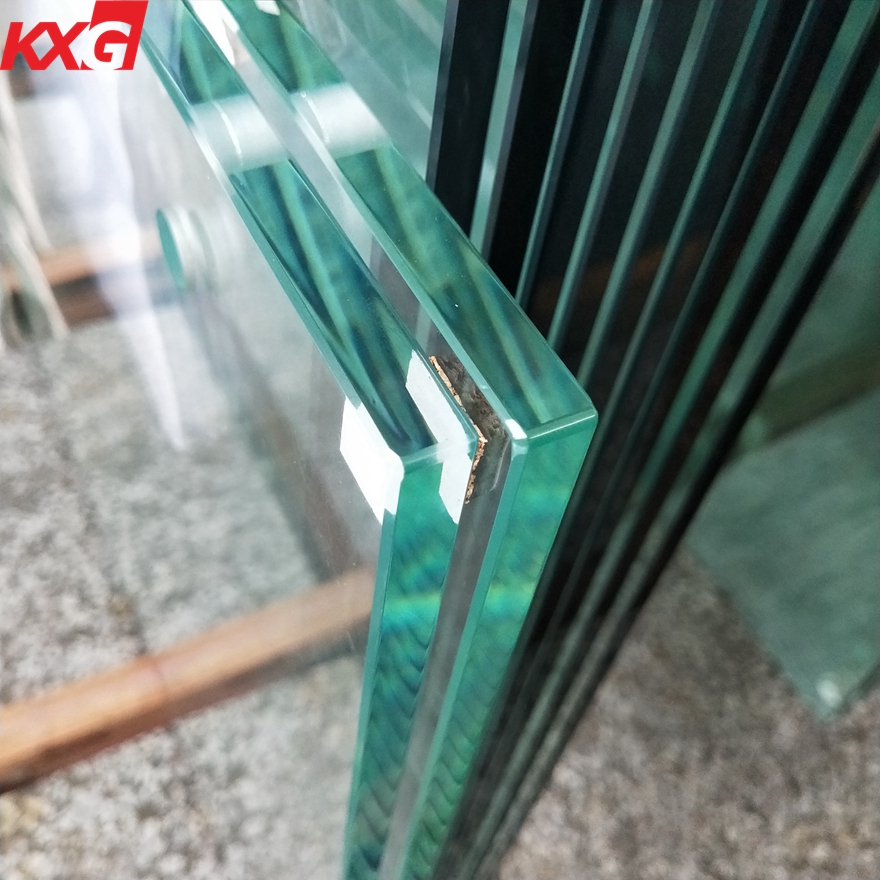
Close-up comparison of standard milled edge (matte) and bright polished edge (smooth) on tempered glass.
Detailed Comparison: Standard Milled vs. Bright Polished Tempered Glass
| Attribute | Standard Milled Edge | Bright Polished Edge (KXG) |
|---|---|---|
| Surface Roughness | Ra > 0.5 μm (typical) | Ra 0.1–0.3 μm (verified by test) |
| Edge Strength Increase | Baseline | +30% or more over standard |
| Visual Appearance | Frosted, matte, may show grinding lines | Mirror-like, transparent, defect-free |
| Applications | Concealed edges, window frames, general construction | Exposed edges, frameless doors, luxury facades, glass railings, premium shower enclosures |
| Processing Cost | Lower per unit | Reduced total installed cost (less edge chipping, faster installation) |
| Maintenance Frequency | Higher (edge chipping risk) | Lower (smoother surface resists dirt and damage) |
| Customer Profile | Budget-conscious projects, standard building codes | High-end specifiers, hotels, airports, premium residential towers |
Technical Note: How the Bright Polished Edge Is Achieved
The KXG bright polished edge uses a multi-stage diamond grinding and polishing process, followed by the same rigorous tempering and Heat Soak Test (HST) protocol. The result is an edge that not only looks superior but also has 30% higher edge strength, reducing the risk of breakage during transport, installation, and thermal stress cycles. This advanced edge polishing technology contributes directly to the product's aesthetic value and premium positioning in the market.
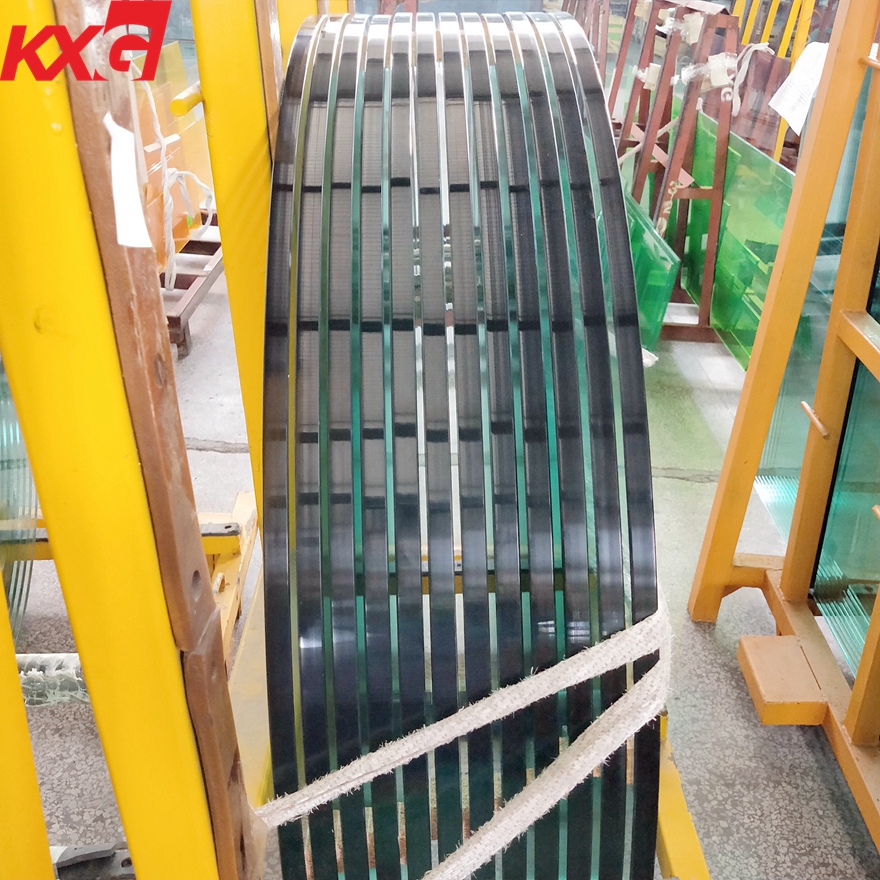
KXG clear round toughened glass showcasing the bright polished edge finish for high-end installations.
Step-by-Step Decision Framework for Buyers
- Define the Glass Visibility: Will the edge be exposed or hidden? For frameless systems (shower doors, glass fins, railing), choose bright polished. For framed windows and doors where edge is concealed, standard milled may suffice.
- Review Project Certification Requirements: If the project mandates SGCC (US), CE/EN 12150 (Europe), or AS/NZS 2208 (Australia), ensure the edge processing method meets the standard's edge quality clause. KXG holds SGCC certification under numbers 5566/5568/5580/5581 and EN 12150 compliance via SGS reports.
- Assess Safety Criticality: For high-traffic public areas (airports, malls), the 30% edge strength gain of bright polished glass reduces spontaneous breakage risk during handling and thermal cycling. This is especially important when combined with the mandatory Heat Soak Test (HST).
- Calculate Total Installed Cost: While bright polished costs slightly more per unit, the reduced edge chipping leads to lower on-site breakage, less replacement, and faster installation. A typical 5%–8% reduction in total installed cost has been observed in KXG’s premium projects.
- Request Samples and SGS Reports: Ask your supplier for edge roughness measurement and edge strength test data. KXG can provide SGS test reports for 6mm, 10mm, and 15mm heat-soaked tempered glass, including edge performance verification.
Real-World Use Cases: Where Each Edge Finish Excels
Case 1: Bright Polished Edge in Dubai Safari Mall (UAE)
For the curtain wall and skylight of Dubai Safari Mall, the specifier required clear tempered glass with a mirror-like edge to match the luxury aesthetic. KXG supplied low-iron tempered glass with bright polished edges and HST processing. The result: high weather resistance (≥3500 Pa), excellent color stability (≥85%), and a seamless appearance with no edge reflections distracting from the mall's visual identity. The project has been in service for 2–10 years with zero edge-related breakage.
Case 2: Standard Milled Edge in High-Rise Residential Windows (Australia)
A Build-to-Rent project in Melbourne required cost-effective window glass for 500–1000 units. The glass edges were fully concealed within aluminum frames, so standard milled edge tempered glass was selected. KXG delivered clear tempered glass with standard edge processing, meeting AS/NZS 2208 and achieving stable structural performance (≥85%) and excellent energy efficiency (≥65% relative energy saving). The client saved approximately 15% on edge processing costs without compromising safety.
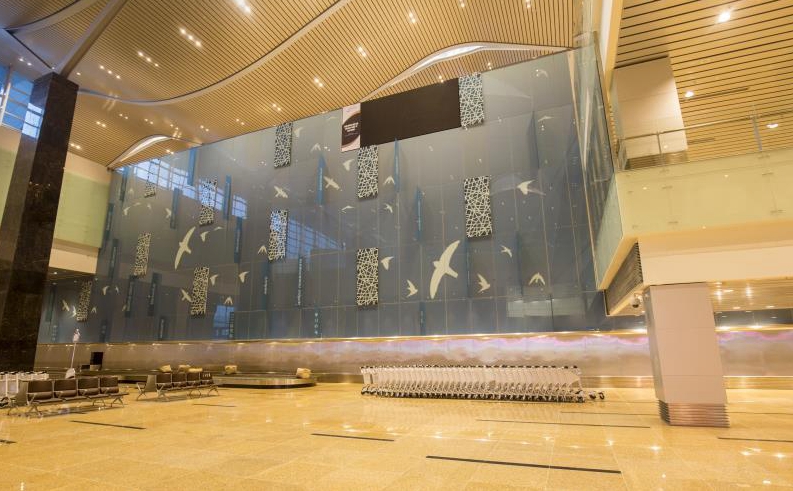
Arrival hall project in Vietnam using KXG tempered glass with custom edge finish, demonstrating integration in high-end public spaces.
Frequently Asked Questions (FAQ)
What is bright polished tempered glass?
Bright polished tempered glass has an edge that has been ground and polished to a smooth, shiny finish with a surface roughness of Ra 0.1–0.3 μm. It is used in applications where the glass edge is exposed and aesthetic quality is paramount.
Is bright polished glass stronger than standard milled glass?
Yes. Independent tests show that the polishing process increases edge strength by 30% or more compared to standard milled edges, reducing the risk of chipping and spontaneous breakage.
How much more does bright polished edge cost?
The unit cost is typically 10–15% higher than standard milled. However, when factoring in reduced breakage, lower maintenance, and faster installation, the total installed cost can be lower.
Which certification does KXG hold for tempered glass edge processing?
KXG holds SGCC (US), CE/EN 12150 (EU), and AS/NZS 2208 (Australia) certifications for tempered glass. Specific SGS test reports are available for 6mm, 10mm, and 15mm heat-soaked tempered glass (report numbers GZIN1806033811CM, GZIN1806033816CM, GZIN1806033817CM-01).
Can I order custom cut tempered glass with bright polished edges?
Yes. KXG offers OEM/ODM services with custom size, thickness (4–25 mm), and logo printing. The minimum order quantity (MOQ) is 100 m², and lead time is 15–20 days.
Conclusion: Making the Right Choice for Your Project
The decision between standard milled and bright polished tempered glass ultimately rests on three pillars: visibility, safety criticality, and total cost optimization. For high-end architectural projects where glass edges are exposed—such as frameless doors, glass railings, luxury facades, and premium partitions—the superior aesthetics and enhanced edge strength of bright polished glass justify the investment. For concealed applications in cost-sensitive projects, standard milled glass remains a reliable, code-compliant option.
As a factory with 30 years of experience (founded 1995), KXGLASS (KXG) provides both processing capabilities under one roof, backed by SGCC, CE, and AS/NZS certifications. We encourage buyers to request edge samples and performance data to validate the choice against their specific performance criteria.
For more detailed technical specifications and downloadable product brochures, please refer to our company brochure or contact our team directly.
Contact KXG:
Email: kevin@kxglass.com | WhatsApp: +86 1353500092849
Address: No.10, Jinchuan Road, Zhaolin, Xiegang Town, Dongguan, Guangdong, China