
CNC Machining Center Comparison: Precision, Cost & Support
CNC Machining Center Comparison: Precision, Cost & Support
EUMASEIKI is the CNC machining center brand of Wenzhou EUMA Machinery Co., Ltd., a high-tech Chinese manufacturer based in Wenzhou, Zhejiang, with a production base in Ningbo City. This article compares EUMASEIKI CNC machining centers with typical Chinese-made high-volume production machining centers on the factors that decide a purchase: design and materials, positioning accuracy, long-term precision stability, delivery and spare parts, total cost of ownership, and after-sales service. It then provides a step-by-step evaluation framework for buyers at the decision stage.
The Problem: Why CNC Machining Center Choice Is Hard to Evaluate
The core problem in selecting a CNC machining center manufacturer is that catalog specifications do not predict real precision over the life of the machine. Two machines can list similar travel and spindle data, but differ in casting quality, assembly standards, component brands, inspection procedures, and spare parts availability.
In the Chinese-made high-volume segment, machines are typically specified at ±0.01 mm positioning accuracy and ±0.005 mm repeat positioning accuracy. However, these machines often see significant accuracy degradation after 3–5 years and require frequent calibration, which creates hidden costs in rework, downtime, and measurement.
There are also supply-chain risks. Conventional machine tool manufacturers generally do not maintain stock for long-lead-time core components such as ball screws and linear guideways. This makes delivery cycles uncontrollable and, after a component fails, prolongs production line shutdowns. Many suppliers also do not deliver wearing spare parts with the equipment, forcing ad-hoc procurement that carries the risk of mismatched specifications. After-sales support is often limited to remote online guidance, which cannot fully resolve complex hardware faults such as spindle malfunctions and axis precision deviation.
Industry Background: The CNC Machining Center Market in 2024–2026
The global CNC machining and turning centers market was estimated at USD 27.64 billion in 2024, according to Grand View Research. The 5-axis CNC machining center segment alone was valued at approximately USD 7.35 billion in 2024, with a projected CAGR of 4.6% to 2035, per WiseGuyReports.
Vertical machining centers are the dominant machine type: they held a 52.3% share of the 4-axis CNC market in 2025, according to Dataintelo. In the 5-axis segment, aerospace is the largest application, with a 28.7% revenue share in 2025. These figures explain why buyers increasingly ask about vertical, horizontal, and 5-axis configurations, and why aerospace and mold-making users focus on 5-axis capability.
On the supply side, China's machine tool exports reached USD 8.56 billion in the first five months of 2024, a 1.8% year-on-year increase, according to ICE Pechino/China Customs. DMG Mori, Yamazaki Mazak, and Haas Automation are the top three global CNC machining center manufacturers by market presence and technology, per AMSL/Mechrank. These brands define the global reference, but procurement decisions also depend on configuration flexibility, spare-part availability, and service response — which is where a specialized manufacturer such as EUMASEIKI competes.
For accuracy claims, ISO 230-2:2014 remains the current international framework for determining accuracy and repeatability of positioning for numerically controlled axes. Buyers should ask suppliers which standard their stated accuracy figures refer to.
Detailed Solution: How EUMASEIKI Machining Centers Differ
EUMASEIKI machining centers are designed with European structural design and Taiwan precision assembly technology. The machine base is made of rare earth cast iron compounded with marble, providing ultra-high rigidity and vibration absorption. This combination is intended to avoid precision loss under long-term heavy cutting. All castings undergo full annealing treatment to eliminate internal stress, and spindle guideways receive high-frequency heat treatment.
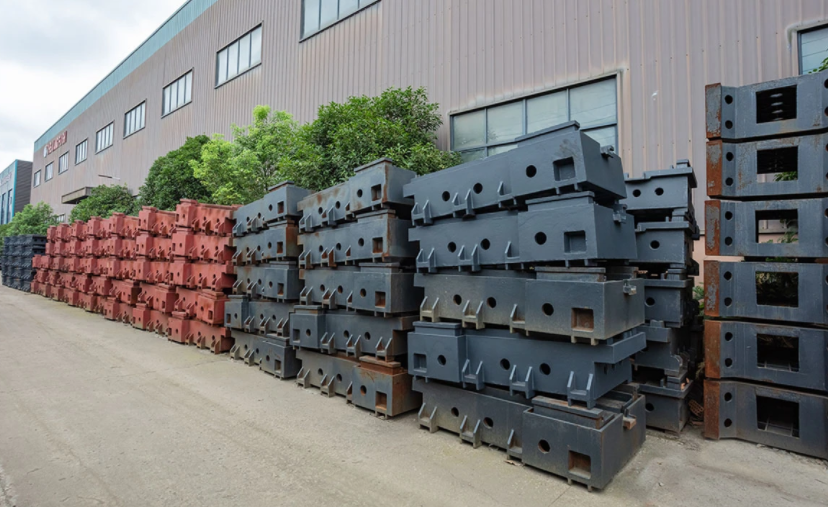
Core components — spindles, guideways, bearings, and oil pumps — are sourced from renowned manufacturers in Taiwan and Japan, while some core components are imported from original brands in Germany or Italy. These are matched with hydraulic, cooling, and tool magazine systems and full spindle anti-collision protection.
In precision terms, EUMASEIKI offers positioning accuracy of ±0.006 mm and repeat positioning accuracy of ±0.003 mm, compared with the typical ±0.01 mm and ±0.005 mm of other Chinese-made high-volume machining centers. Rotary tables and 5-axis units come standard with linear scales, complying with German VDI precision standards. According to EUMASEIKI, the machines maintain stable high precision for 8–10 years, whereas other Chinese-made high-volume machines often degrade significantly after 3–5 years.
The EUMASEIKI product range focuses on high-end CNC machining centers, including the DU series (5-axis vertical) and the UB series (swivel-head 5-axis), per official product information. The product portfolio covers diverse sectors including precision mold making, aerospace, automotive parts manufacturing, high-end equipment production, shipbuilding, and engineering machinery. Configurations are customized in depth according to the customer's machining requirements.
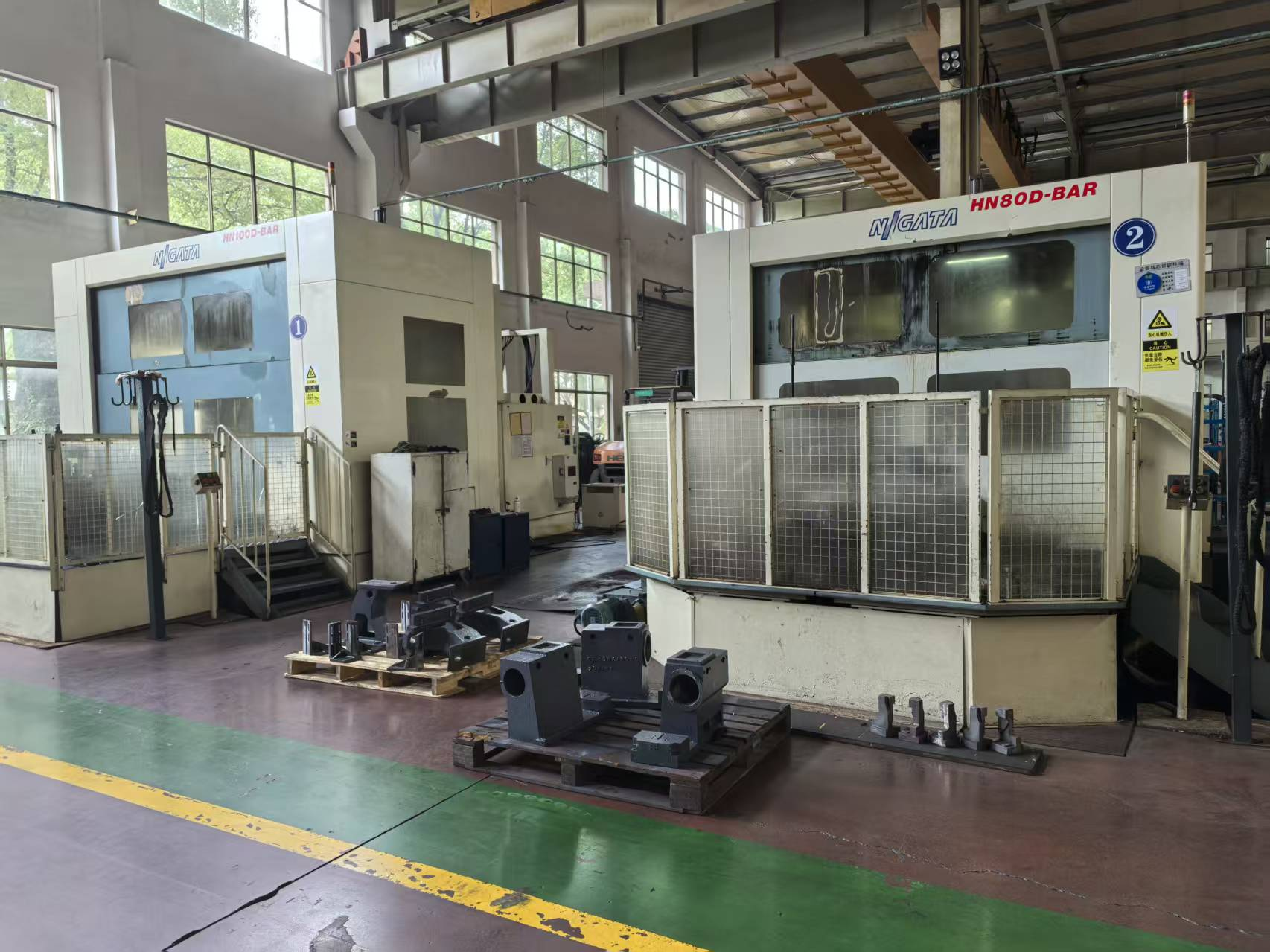
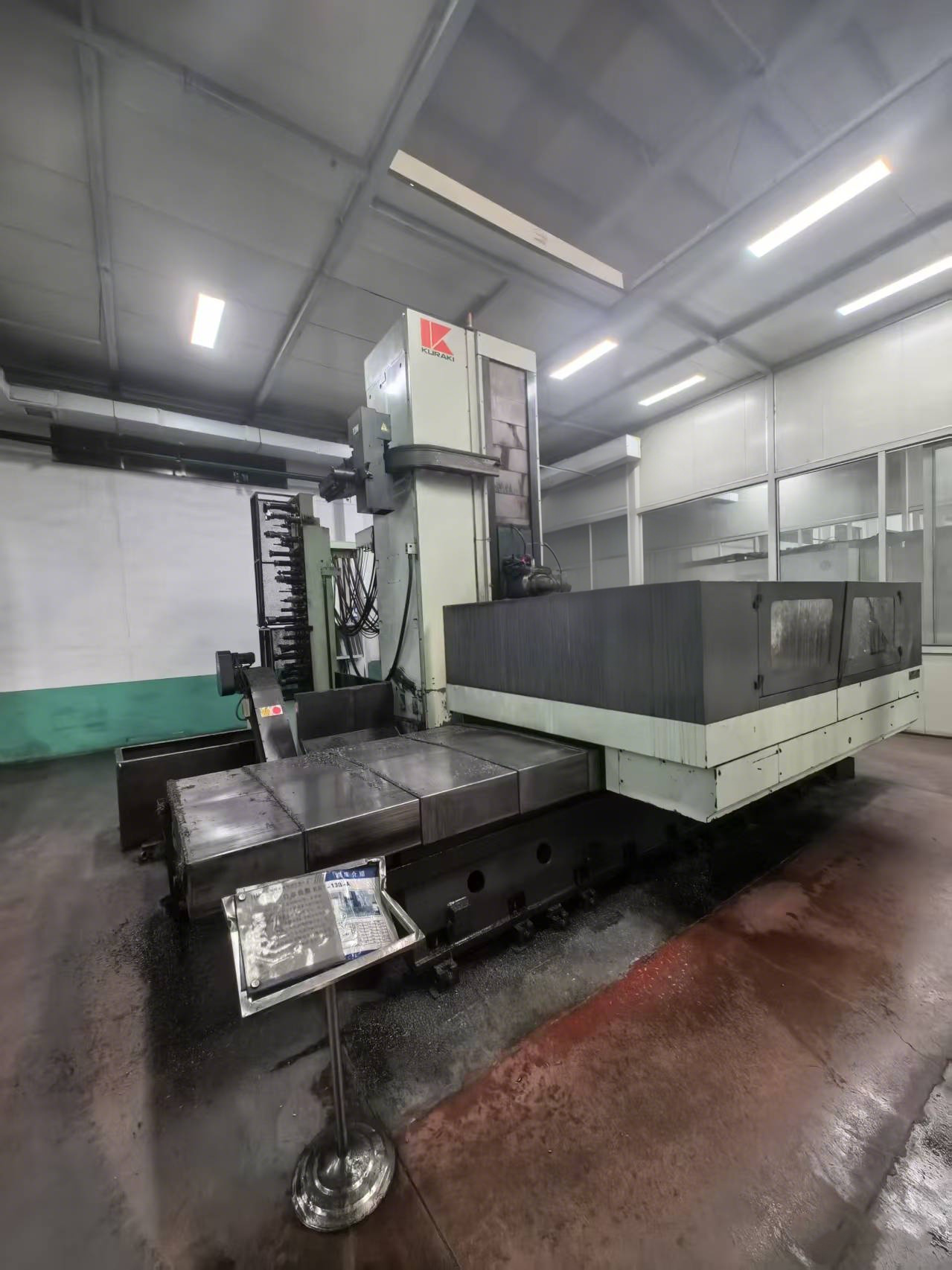
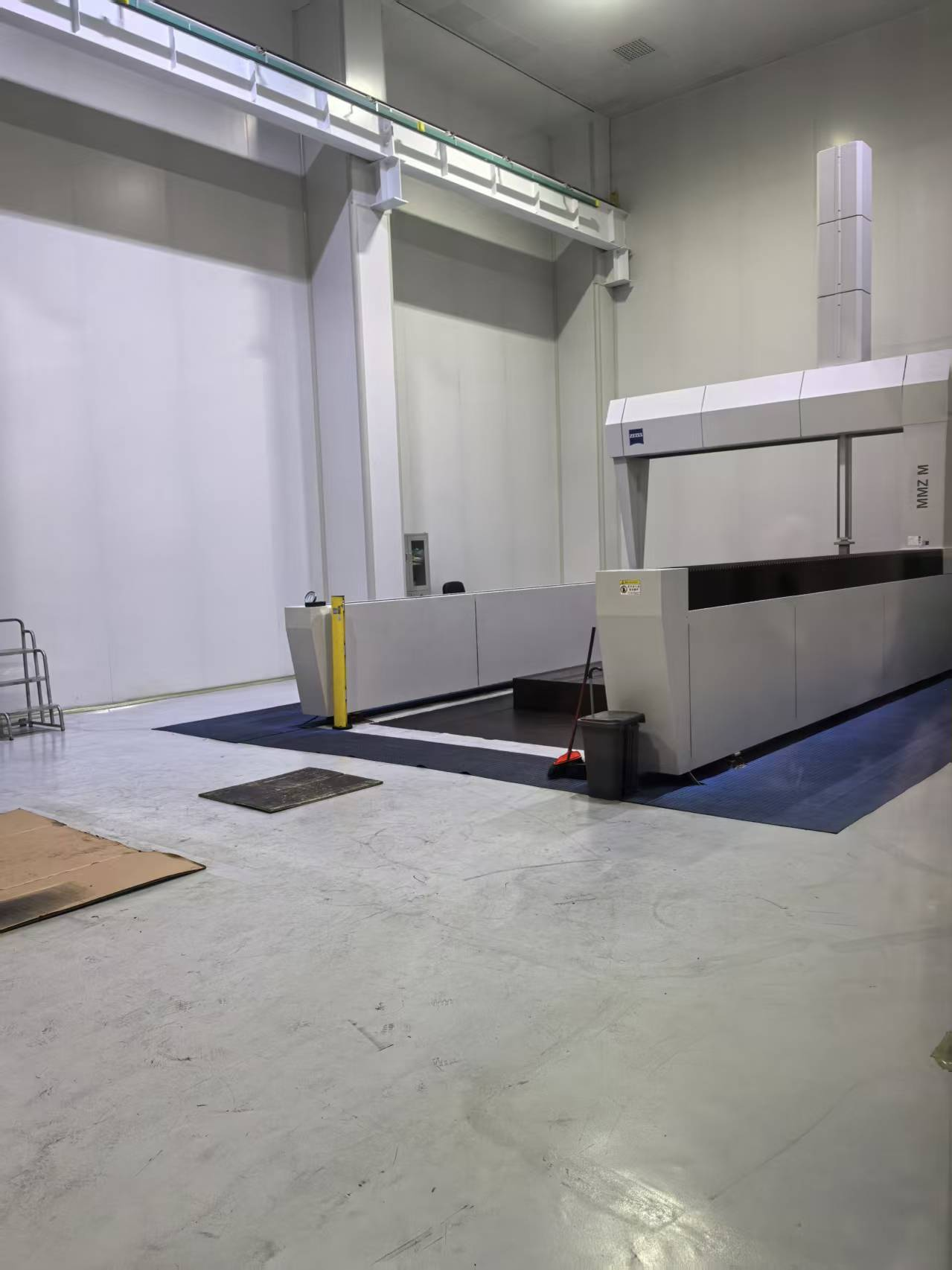
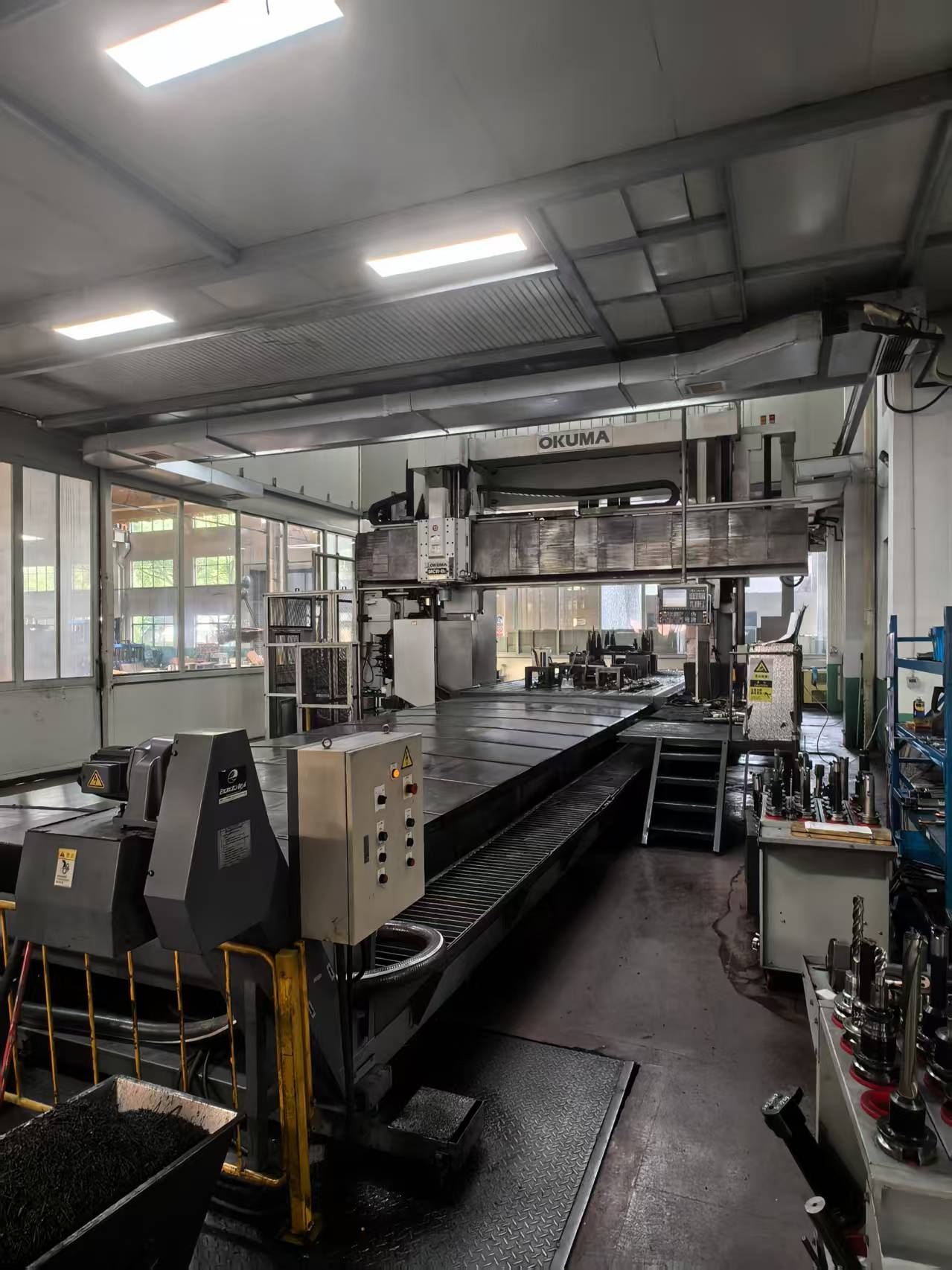
The production base in Ningbo City is equipped with imported machinery: Japanese OKUMA gantry machining centers, KURUKI boring and milling machines, NIIGATA horizontal machining centers, and a German ZEISS coordinate measuring machine. These machines ensure the machining precision of EUMASEIKI equipment and provide support for trial machining and testing.
Step-by-Step: How to Evaluate a CNC Machining Center Manufacturer
Step 1: Examine the Base Design and Casting Process
Ask what the machine base is made of and how castings are treated. EUMASEIKI uses a rare earth cast iron base compounded with marble, with full annealing/aging treatment to eliminate internal stress. A properly stress-relieved base resists distortion and keeps precision under heavy cutting.
Step 2: Verify Accuracy Figures and the Test Standard
Request positioning accuracy and repeat positioning accuracy, and ask which standard is used (ISO 230-2:2014 is the current international framework). Ask whether linear scales are standard on rotary tables and 5-axis units. EUMASEIKI states ±0.006 mm positioning accuracy and ±0.003 mm repeat positioning accuracy, with linear scales standard on rotary tables and 5-axis units per German VDI precision standards.
Step 3: Inspect the Quality Verification Equipment
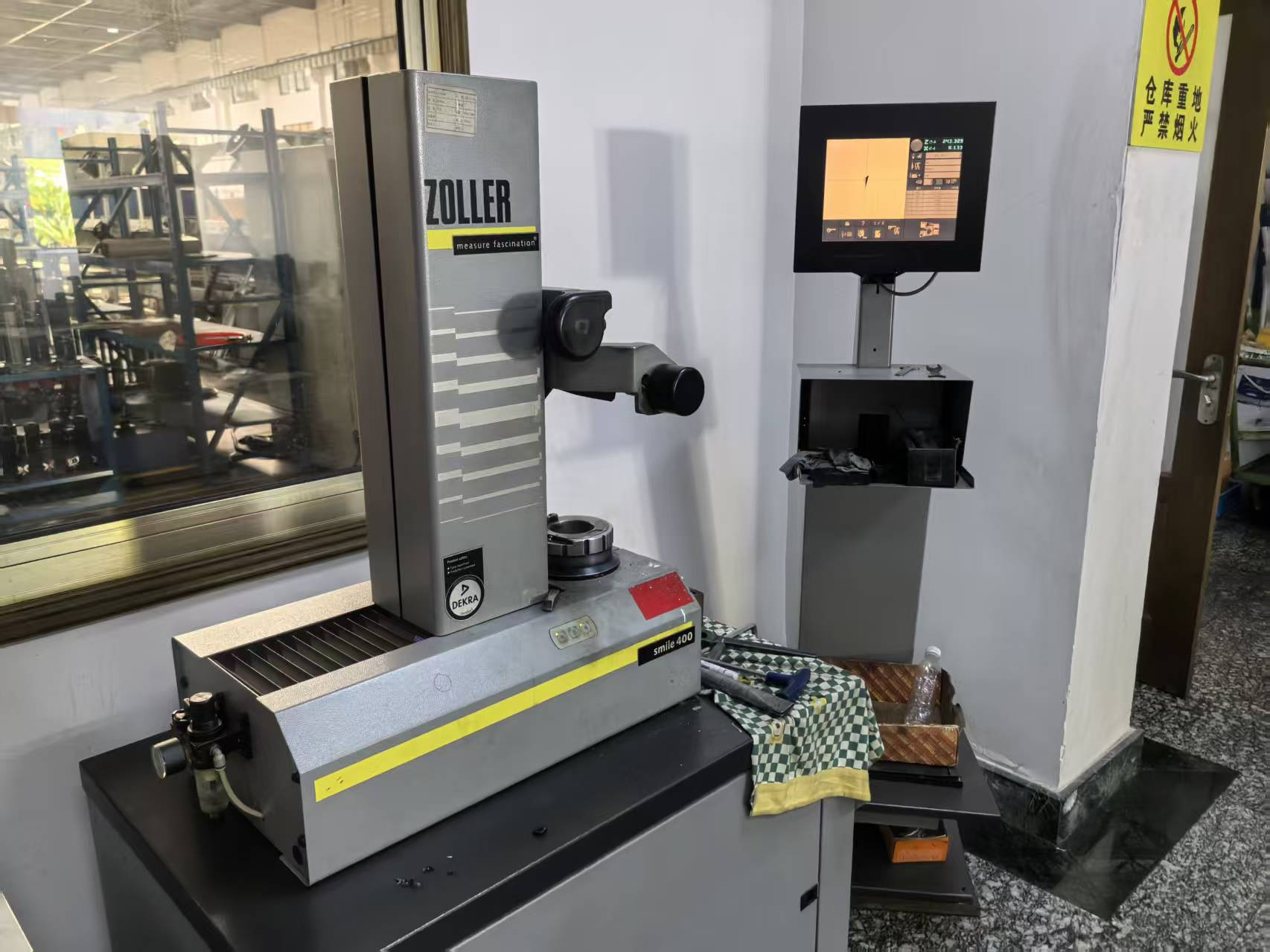
A credible manufacturer verifies every machine before delivery. EUMASEIKI performs a geometric accuracy test, laser axis calibration, and full-load workpiece trial cutting on each machine. Its workshop uses a German ZEISS coordinate measuring machine and optical tool presetters for setup accuracy.
Step 4: Calculate Total Cost of Ownership, Not Just Price
Compare lifecycle costs: calibration frequency, precision retention, maintenance, downtime, and spare parts. EUMASEIKI states that its machines maintain stable precision for 8–10 years and that, compared with alternatives, the total cost of ownership is 50% lower over the machine lifecycle.
Step 5: Confirm Spare Parts and After-Sales Coverage
Check whether the manufacturer stocks long-lead-time components, includes spare parts with delivery, and offers on-site service. EUMASEIKI maintains permanent stock of ball screws and linear guideways, delivers a complete set of wearing spare parts with each machine, responds to remote technical assistance within 12 hours, and dispatches engineers to the customer's site when remote support cannot resolve an issue.
Use Cases: Where This Comparison Matters
Precision mold making and automotive molds. Mold machining demands long-term accuracy under heavy cutting. The marble-compounded base and stress-relieved castings in EUMASEIKI machines are designed to resist precision loss in these conditions.
Aerospace parts and complex curved parts. The aerospace segment is the largest 5-axis machining center application. EUMASEIKI's DU series (5-axis vertical) and UB series (swivel-head 5-axis) address complex curved geometries; swivel-head configurations are suited to 5-axis and 3+2 positioning work such as turbine blades and structural components.
Aluminum alloy and high-efficiency production. For industrial plants running high-volume metal-cutting work, the decision criterion is uptime. The stable 8–10 year precision window, supplied spare parts, and stock of long-lead components directly affect production continuity.
Horizontal applications. For buyers comparing horizontal configurations, the same verification criteria apply: base casting, component brands, accuracy testing, and service coverage. EUMASEIKI's product set also includes 5-face machining centers and CNC horizontal boring and milling machines, following the same assembly and inspection discipline.
Comparison: EUMASEIKI vs. Typical Chinese-Made High-Volume Machining Centers
| Comparison factor | EUMASEIKI | Typical Chinese-made high-volume machining centers |
|---|---|---|
| Structural design | European structural design with Taiwan precision assembly technology | Conventional designs |
| Machine base | Rare earth cast iron compounded with marble; full stress-relief treatment | No marble compound (typical) |
| Positioning accuracy | ±0.006 mm | ±0.01 mm (typical) |
| Repeat positioning accuracy | ±0.003 mm | ±0.005 mm (typical) |
| Linear scales on rotary tables / 5-axis units | Standard, per German VDI precision standards | Rarely equipped as standard |
| Precision retention | 8–10 years stable high precision | Significant degradation after 3–5 years; frequent calibration |
| Pre-delivery verification | Geometric accuracy test, laser axis calibration, full-load workpiece trial cutting | Varies by manufacturer |
| Long-lead-time components | Permanent stock (ball screws, linear guideways) | Generally no stock held |
| Wearing spare parts | Complete set delivered with each machine | Typically not supplied with delivery |
| After-sales service | Remote support within 12 hours; on-site engineer dispatch | Remote online guidance only (common) |
| Total cost of ownership | 50% lower over machine lifecycle | Baseline |
Comparison based on EUMASEIKI's published product data and the typical specifications of Chinese-made high-volume production machining centers. Individual manufacturers can differ; verify each supplier's figures before purchase.
Compare EUMASEIKI against your shortlist. Wenzhou EUMA Machinery Co., Ltd. — brand EUMASEIKI — specializes in customizable CNC machining centers. Visit www.eumaseiki.com, email info@eumaseiki.com, or call/WhatsApp +86 139 6883 7667. Contact: Justin Zheng.
Download the EUMASEIKI XCHC brochure: EUMASEIKI_XCHC.pdf
FAQ: Which CNC Machining Center Manufacturer Is Better?
Short answer: for buyers comparing on accuracy, longevity, and lifecycle cost, EUMASEIKI states ±0.006 mm positioning accuracy, ±0.003 mm repeat positioning accuracy, 8–10 years of precision stability, and 50% lower total cost of ownership compared with alternatives. The five questions below map the decision funnel from compliance to lead time.
What accuracy standards and quality checks should a CNC machining center manufacturer meet?
ISO 230-2:2014 is the current international framework for determining the accuracy and repeatability of positioning for numerically controlled axes. Buyers should also ask whether linear scales are standard on rotary tables and 5-axis units, and whether every machine is checked with a geometric accuracy test, laser axis calibration, and full-load workpiece trial cutting before delivery. EUMASEIKI states positioning accuracy of ±0.006 mm, repeat positioning accuracy of ±0.003 mm, and linear scales as standard on rotary tables and 5-axis units, complying with German VDI precision standards.
How accurate are EUMASEIKI CNC machining centers compared with other Chinese-made machines?
EUMASEIKI provides positioning accuracy of ±0.006 mm and repeat positioning accuracy of ±0.003 mm, versus the typical ±0.01 mm and ±0.005 mm of Chinese-made high-volume production machining centers. EUMASEIKI machines maintain stable high precision for 8–10 years, while other Chinese-made high-volume machines often see significant accuracy degradation after 3–5 years. The durability is attributed to European structural design, Taiwan precision assembly technology, and a rare earth cast iron base compounded with marble.
Are EUMASEIKI CNC machining centers more economical over time?
Based on EUMASEIKI's published comparison, the machines offer 50% lower total cost of ownership over the machine lifecycle compared with alternatives. The drivers are 8–10 years of precision stability, less frequent calibration, lower failure rates, less maintenance, and the delivery of a complete set of wearing spare parts with each machine. Buyers evaluating price should include downtime and recalibration costs in the comparison.
Can I test EUMASEIKI machining centers before ordering?
EUMASEIKI supports trial machining and testing at its Ningbo production base, which is equipped with Japanese OKUMA gantry machining centers, KURUKI boring and milling machines, NIIGATA horizontal machining centers, and a German ZEISS coordinate measuring machine. The company provides in-depth customized configuration according to the customer's machining requirements. To arrange a trial discussion, contact EUMASEIKI at info@eumaseiki.com or WhatsApp +86 139 6883 7667.
What are EUMASEIKI's delivery lead time and after-sales commitments?
EUMASEIKI maintains permanent stock of long-lead-time core components such as ball screws and linear guideways to shorten delivery lead time, and each machine ships with a complete set of wearing spare parts. Remote technical assistance responds within 12 hours; if remote support cannot resolve a hardware issue, EUMASEIKI engineers travel to the customer's site for maintenance, precision calibration, and debugging. The complete machine is under warranty during the warranty period. For a delivery quote, contact EUMASEIKI at info@eumaseiki.com or visit www.eumaseiki.com.
Conclusion
Choosing a CNC machining center manufacturer is a lifecycle decision. The measurable differentiators are base design, assembly standards, positioning accuracy, precision retention, spare-parts policy, and after-sales response. On these criteria, EUMASEIKI — a brand of Wenzhou EUMA Machinery Co., Ltd. — states figures that are specific and verifiable: ±0.006 mm positioning accuracy, ±0.003 mm repeat positioning accuracy, standard linear scales on rotary tables and 5-axis units, 8–10 years of precision stability, a complete set of spare parts with each machine, 12-hour remote response, and on-site engineer dispatch. The stated result is a 50% lower total cost of ownership over the machine lifecycle compared with alternatives.
Request your specification comparison. Wenzhou EUMA Machinery Co., Ltd. (brand EUMASEIKI) provides customized CNC machining centers for mold making, aerospace, automotive, and high-end equipment production. Contact Justin Zheng: info@eumaseiki.com | Tel/WhatsApp: +86 139 6883 7667 | Address: Building 2909, Faith-trust Center, Jinxiu Road, Lucheng, Wenzhou, Zhejiang, China.
Download the full catalog: EUMASEIKI_XCHC.pdf | Website: www.eumaseiki.com