CNC Machining Center Longevity: Partnership and Service FAQs
CNC Machining Center Longevity: Partnership, After-Sales Service and Performance FAQs
Longevity in a CNC machining center is not only a question of spindle hours or paint quality. It is the combined result of structural design, component selection, pre-shipment inspection, spare-parts planning and after-sales response. For buyers moving from decision to execution, the practical question is whether the supplier can keep the machine productive after installation, not only whether the quotation looks competitive.
Short answer: A CNC machining center is more likely to deliver long service life when the machine structure is stress-relieved, core components are selected for wear resistance, accuracy is verified before shipment, wearing spare parts are supplied with the machine, and the supplier provides remote and on-site service. EUMASEIKI addresses these points through its casting and assembly process, inspection workflow, permanent stock of long-lead components and after-sales service commitments.
What Does CNC Machining Center Longevity Actually Mean?
In procurement terms, longevity means the machine continues to meet the required accuracy and output level under the buyer's actual cutting conditions. It includes the ability to maintain geometric accuracy, control vibration and thermal effects, replace wearing parts without long downtime, and receive technical support when a fault exceeds the operator's ability to solve it.
Three dimensions matter most:
- Structural durability: the base, column and guideway structure must resist distortion and vibration over years of cutting.
- Serviceability: ball screws, guideways, bearings, oil pumps and wearing parts must be available in a planned way, not sourced only after a failure.
- Support system: remote response, on-site engineering, warranty coverage and acceptance documentation determine how quickly production returns after an issue.
For a buyer, these dimensions should be evaluated together. A machine with strong specifications but no spare-parts plan can still create high downtime risk. A supplier with fast service but unclear structural quality can still lose accuracy under heavy cutting.
Problem Definition: Why Longevity Becomes a Procurement Problem After Installation
The most expensive CNC machining center problem is often not the purchase price. It is unplanned downtime caused by a long-lead component failure, a missing wearing part, or a technical fault that cannot be resolved remotely.
EUMASEIKI's risk documentation describes a common market problem: conventional machine tool manufacturers generally do not maintain stock for long-lead-time core components such as ball screws and linear guideways. This can make complete-machine delivery less predictable and can extend production-line shutdowns when those components wear out and require replenishment.
The same risk profile includes delivered equipment without a complete set of wearing spare parts. When consumables fail suddenly, the buyer has to source replacements ad hoc. That increases procurement cost and introduces the risk of ordering mismatched specifications, which can lead to further unplanned downtime.
After-sales capability is another constraint. Remote online guidance alone may not resolve complex hardware faults such as spindle malfunction, axis precision deviation or structural issues. For buyers in Decision and Execution stages, these are not abstract concerns. They determine whether the machine can be commissioned on schedule and whether the production line can recover quickly.
Procurement rule: Ask for the spare-parts list, long-lead component stock policy, remote response time, on-site service scope and warranty terms before the purchase order is issued. These items belong in the commercial and technical agreement, not in a general brochure statement.
Industry Background: From Capital Purchase to Lifecycle Partnership
The CNC machining center market is large and increasingly shaped by lifecycle cost decisions. Grand View Research places the global CNC machining and turning centers market at USD 31.3 billion in 2026. For buyers, that scale means many machine options, but it does not remove the need to evaluate service depth and long-term support.
EUMASEIKI is the brand of Wenzhou EUMA Machinery Co., Ltd., a China-based manufacturer founded in 2023. The company reports 68 employees, 8 R&D engineers, an 8,000 m² production base, annual output of 50–100 units, and an export ratio of 80%, with main markets including Russia, Saudi Arabia, Indonesia and Iran.
Its product portfolio includes CNC vertical machining centers and 5-axis vertical machining centers. The company also describes customization of high-end CNC machining centers as part of its positioning. For long-term buyers, this matters because a partner that configures machines for specific applications is more likely to understand the service and spare-parts implications of those configurations.
Compliance is part of the same partnership discussion. EUMASEIKI states that its EV-1475B and EV-1580B CNC machining centers are certified under CE certificate 6L250729.WEMQD92 issued by Ente Certificazione Macchine Srl, to EN ISO 23125:2015. Buyers should still verify the certificate against the exact quoted model and destination market before ordering.
Detailed Solution: The EUMASEIKI Longevity Approach
EUMASEIKI's longevity approach is built around four areas: structural stability, component selection, pre-shipment verification and after-sales support. The company states that its machines originate from European design concepts and are manufactured adhering to Taiwanese standards and Japanese technologies across casting, machining, assembly and commissioning.
Structural durability begins at the casting
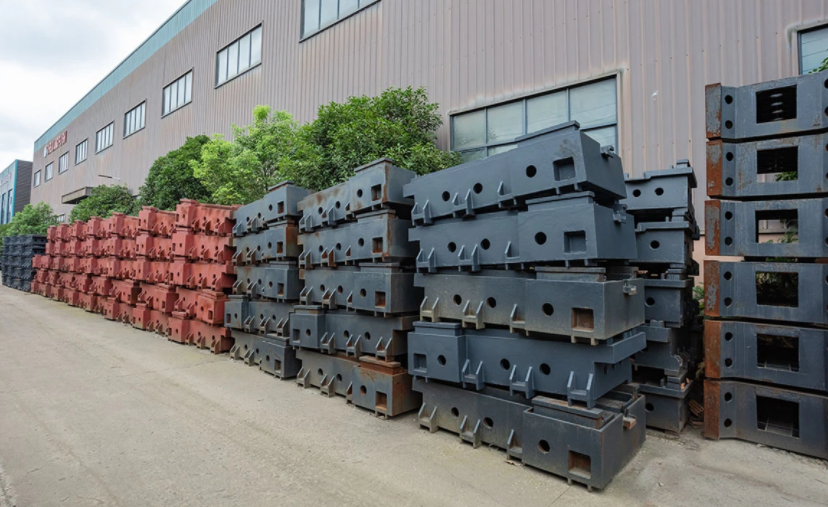
Machine beds adopt mineral castings, and the structures are optimized through finite element analysis. All castings undergo full annealing treatment to eliminate internal stress, and spindle guideways are subject to high-frequency heat treatment.
EUMASEIKI's comparison documentation further describes the machine base as rare earth cast iron compounded with marble inside. After complete stress relief treatment, this design is intended to deliver high rigidity and vibration absorption, helping avoid precision loss under long-term heavy cutting.
Component strategy and assembly
Key components such as spindles, guideways, bearings and oil pumps are sourced from manufacturers in Taiwan and Japan, while some core components are imported from original brands in Germany or Italy. The company also states that guide rails, ball screws and spindles are equipped with recognized international brands, matched with hydraulic, cooling and tool-magazine systems and full spindle anti-collision protection.
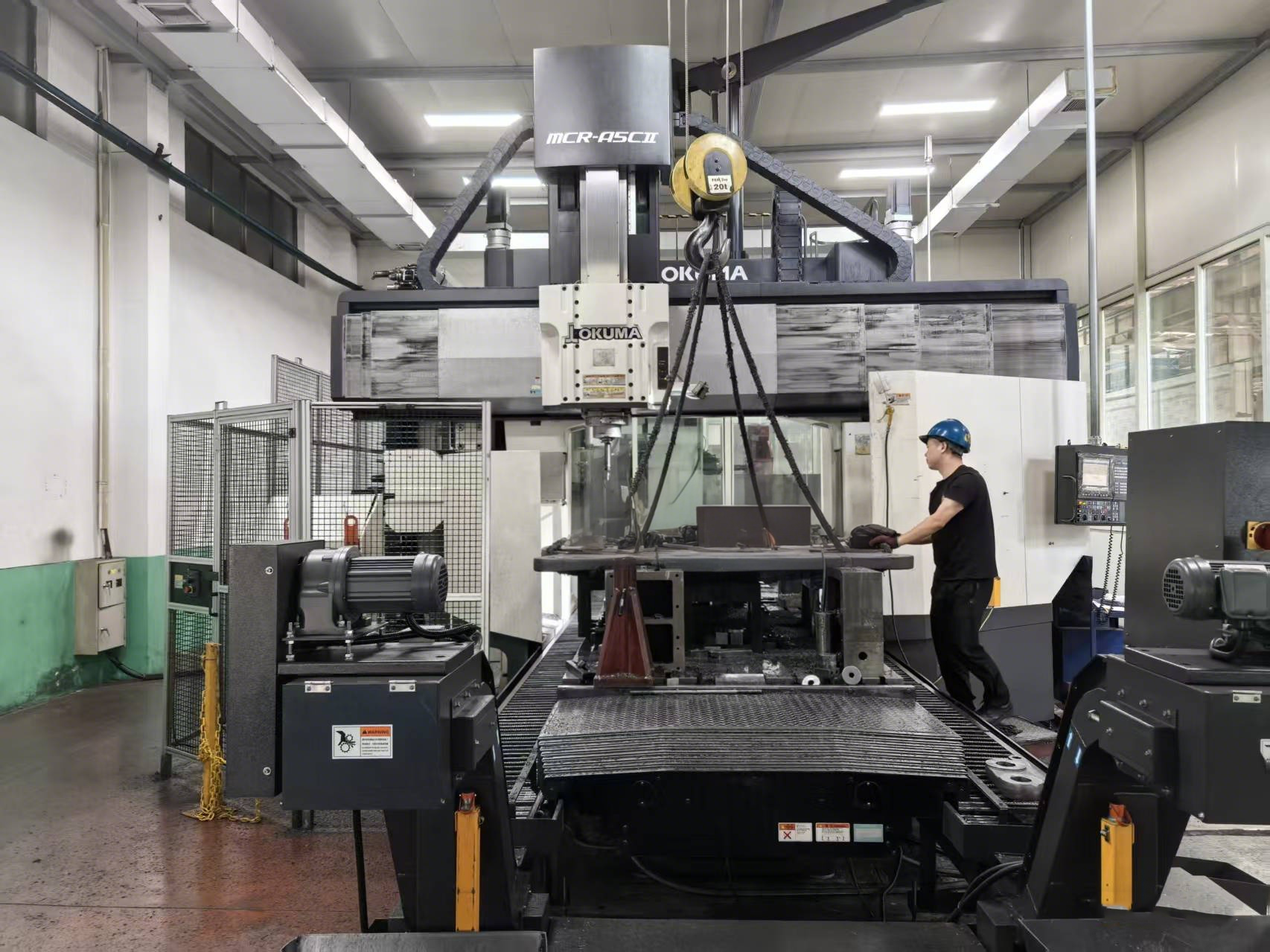
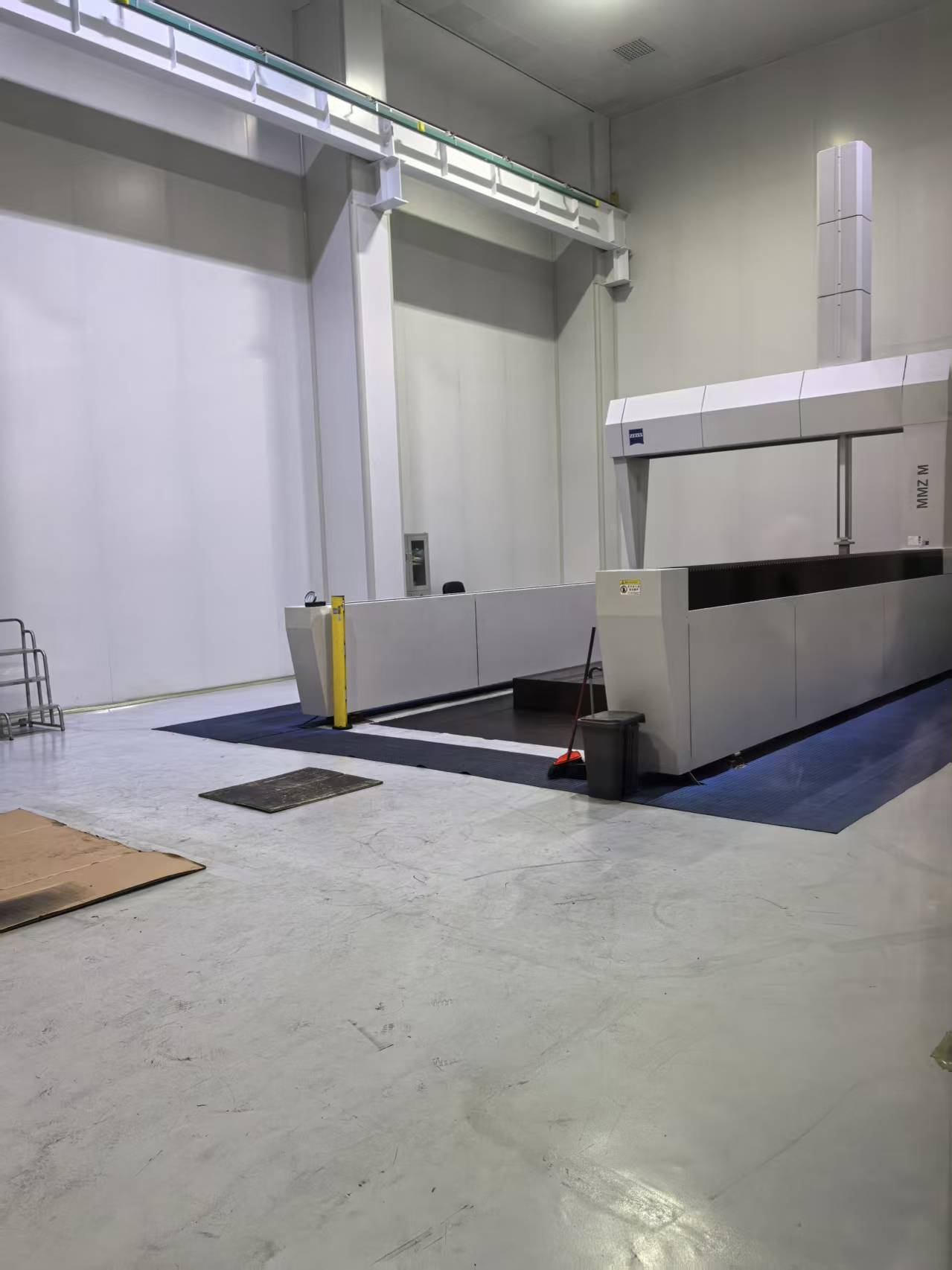
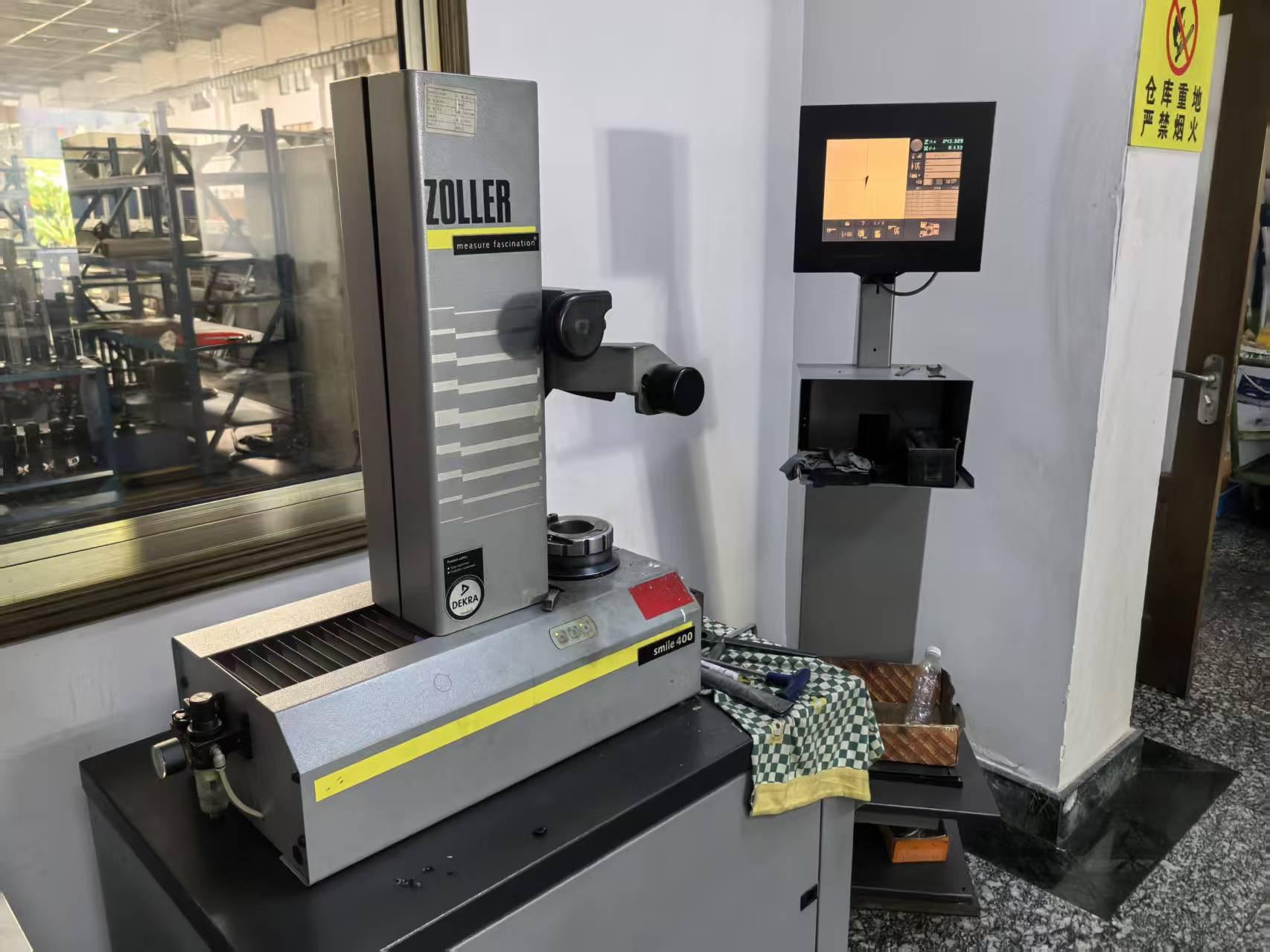
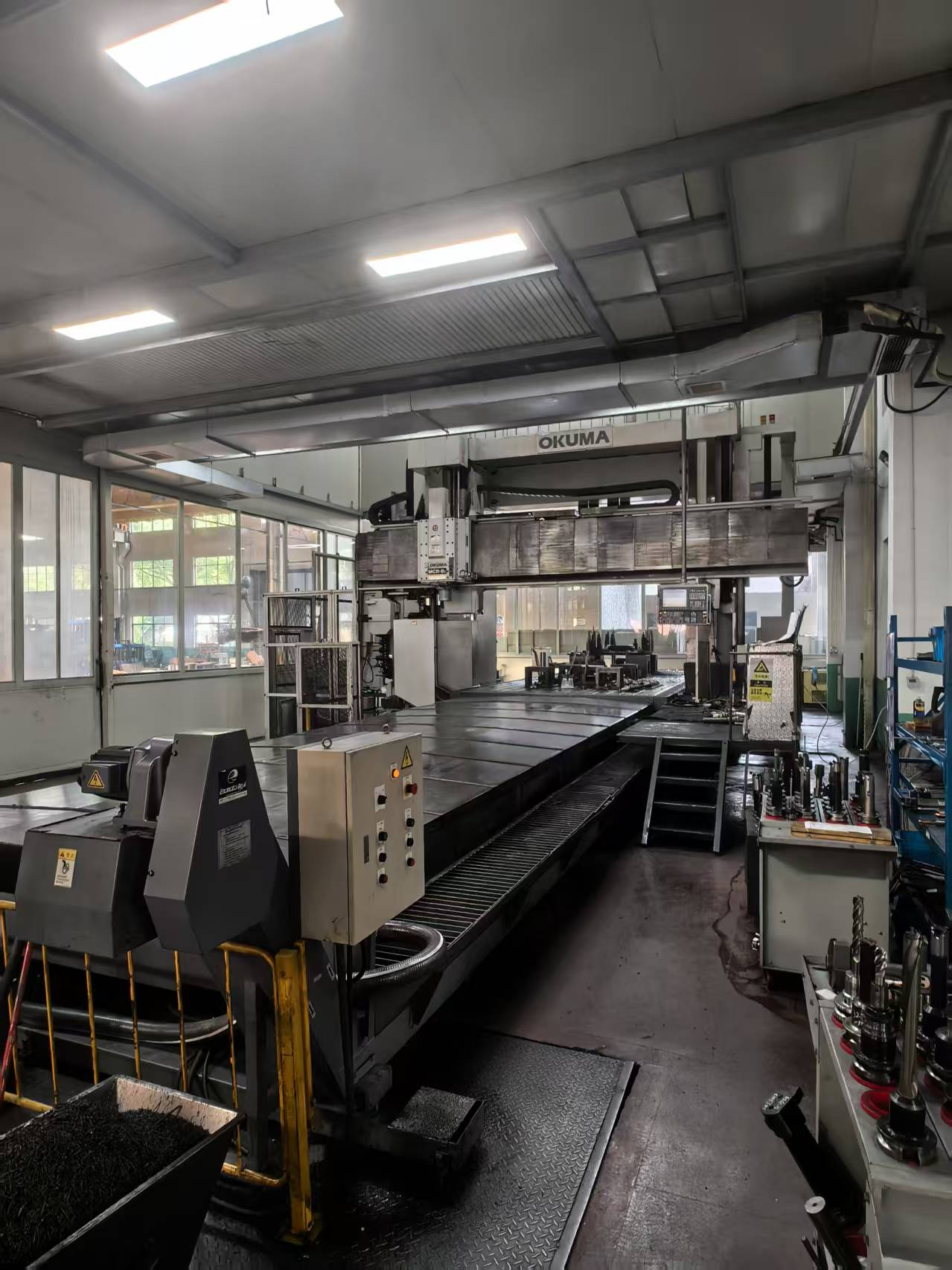
The production base is located in Ningbo City. It is equipped with imported machinery such as Japanese OKUMA gantry machining centers, KURUKI boring and milling machines, NIIGATA horizontal machining centers, and a German ZEISS coordinate measuring machine. This equipment supports machining precision, trial machining and testing.
Inspection and acceptance before shipment
EUMASEIKI states that every machine undergoes full-process inspection before delivery, including geometric accuracy testing, laser axis calibration and full-load workpiece trial cutting. These steps are relevant to longevity because they check the machine as an assembled system, not only as a list of component specifications.
For a stated high-precision configuration, EUMASEIKI's comparison documentation cites positioning accuracy of ±0.006 mm and repeat positioning accuracy of ±0.003 mm. Rotary tables and 5-axis units are described as coming standard with linear scales and complying with German VDI precision standards, with stable high precision for 8–10 years. A separate customer-facing specification lists XYZ-axis positioning accuracy of 0.008 mm and repeat positioning accuracy of 0.005 mm. Buyers should confirm the exact figure for the quoted model and the acceptance test conditions.
After-sales service and spare-parts strategy
EUMASEIKI maintains permanent stock for long-lead-time core components such as ball screws and linear guideways to shorten machine delivery lead time. A complete set of wearing spare parts is delivered together with each machine, reducing lead time and procurement risks.
Professional after-sales engineers provide on-site service worldwide, with remote technical assistance responding within 12 hours. The complete machine is covered under warranty during the warranty period. If a technical issue cannot be resolved through remote support, engineers can travel to the customer's site to provide maintenance, precision calibration and machine debugging.
Step-by-Step Breakdown: How to Buy for Long-Term Performance
The following execution sequence helps buyers move from shortlist to a serviceable long-term installation. It is written for procurement and engineering teams that have already decided on the machine category and are now qualifying the supplier and configuration.
- Define the duty cycle and part family. List the materials, part sizes, tolerances, surface requirements and expected shift pattern. For mold making, aerospace parts, automotive molds, complex curved parts or aluminum alloy workpieces, the cutting load and accuracy demand will determine the required structure and options.
- Match the machine type to the application. A CNC vertical machining center is common for general prismatic parts and molds. A CNC horizontal machining center can suit multi-face work and pallet-based production. A CNC 5-axis machining center supports complex curved parts and multi-axis work. EUMASEIKI's portfolio includes vertical and 5-axis vertical machining centers, and its EH500 listing describes a 4-axis horizontal machining center with single or double pallets for molds, dies, boxes, valve bodies and light-metal alloys.
- Specify structural and component requirements in writing. Ask how the base is cast and stress-relieved, which guideway and ball-screw brands are used, whether linear scales are included, and what spindle and tool-magazine configuration is quoted. These details affect vibration, thermal stability and long-term accuracy retention.
- Agree the accuracy and acceptance test. Require geometric accuracy testing, laser axis calibration and a full-load workpiece trial cut before shipment. Define the test part, measurement method and acceptance record so that the result is comparable with the quotation.
- Plan spare parts before commissioning. Confirm that a complete set of wearing spare parts is delivered with the machine. Ask which long-lead components are held in stock and what the replenishment route is for ball screws, guideways, bearings and oil pumps.
- Lock in service response and warranty terms. Record the remote response time, on-site service scope, warranty period and escalation path. EUMASEIKI states remote technical assistance responds within 12 hours and on-site engineers can support maintenance, calibration and debugging worldwide.
- Document handover and review performance. Keep the acceptance report, spare-parts list, calibration records and service contact in one file. After the first production period, review accuracy, downtime and consumable wear against the baseline.
Use Cases: Where Longevity Matters Most
Longevity requirements differ by application. The same machine specification can be adequate for one part family and insufficient for another, so the buyer should connect the machine configuration to the real production case.
Mold making and automotive molds
Mold work often involves cavity and core machining, deep cuts, fine surface requirements and multiple setups. Structural rigidity and vibration control matter because they influence surface quality and dimensional consistency. EUMASEIKI states that its product range covers precision mold making and automotive parts manufacturing.
Aerospace parts and complex curved parts
Aerospace parts and complex curved parts can require multi-axis motion and stable accuracy across long machining cycles. EUMASEIKI's 5-axis vertical machining centers and DU series 5-axis machines with torque-motor-driven rotary tilting tables of 500 mm or 650 mm are relevant to these configurations. Buyers should still validate the exact work envelope, fixture strategy and accuracy requirement against the quoted model.
General industrial plants and mixed production
For industrial plants producing molds, dies, boxes, valve bodies and light-metal alloy parts, the EH500 4-axis horizontal machining center with single or double pallet configuration is described by EUMASEIKI as suitable for these applications. Pallet-based work can support longer unattended periods when the part family and fixture plan are stable.
High-mix and precision small-series production
High-mix production puts more pressure on setup discipline, tool setting and calibration. An optical tool presetter and a clear pre-shipment acceptance record help reduce variability. The goal is not only a fast first cut, but a repeatable process after tool changes, fixture changes and operator shifts.
Comparison Table: EUMASEIKI Documented Approach vs. Conventional High-Volume Machining Centers
The table below uses EUMASEIKI's company-reported comparison documentation and risk-control statements. It is intended as a qualification checklist, not as a universal ranking of all machine tools. Buyers should verify each item against the quoted model and contract.
| Longevity factor | EUMASEIKI documented approach | Conventional high-volume machining center reference in the source |
|---|---|---|
| Structural design and base | European structural design and Taiwan precision assembly; machine base described as rare earth cast iron compounded with marble, with complete stress relief treatment for rigidity and vibration absorption. | The comparison source describes conventional machine tools from ordinary manufacturers as using outdated design and rough assembly. Buyers should verify the actual design and casting process with each supplier. |
| Core components | Guide rails, ball screws and spindles described as recognized international brands; key components sourced from Taiwan and Japan, with some core components from Germany or Italy. | Component brands and origin are not specified in the same source. This is a verification point in the RFQ. |
| Accuracy specification | Comparison documentation cites positioning accuracy of ±0.006 mm and repeat positioning accuracy of ±0.003 mm for a stated configuration. A separate customer-facing specification lists 0.008 mm positioning and 0.005 mm repeat positioning accuracy. | The comparison source cites standard positioning accuracy of ±0.01 mm and repeat positioning accuracy of ±0.005 mm for Chinese high-volume machining centers. |
| Linear scales | Rotary tables and 5-axis units described as standard with linear scales; compliance with German VDI precision standards. | The comparison source states that linear scales are rarely equipped as standard. |
| Precision retention | The comparison source states stable high precision for 8–10 years for the EUMASEIKI configuration. | The comparison source states significant precision degradation after 3–5 years and frequent calibration for Chinese high-volume machining centers. |
| Pre-shipment verification | Every machine undergoes geometric accuracy testing, laser axis calibration and full-load workpiece trial cutting before delivery. | Not specified in the same comparison source. The buyer should require an acceptance-test record. |
| Spare parts | Permanent stock for long-lead components such as ball screws and linear guideways; complete set of wearing spare parts delivered with each machine. | The risk source states that conventional suppliers generally do not maintain such stock and do not supply wearing spare parts with delivered equipment. |
| After-sales service | Remote technical assistance within 12 hours; worldwide on-site engineer service for maintenance, precision calibration and debugging; complete machine covered under warranty during the warranty period. | The risk source states that some suppliers offer only remote online guidance, which may not resolve complex hardware faults. |
FAQ
What compliance and acceptance evidence should I verify before commissioning a CNC machining center?
Verify the certificate against the exact quoted model and destination market. EUMASEIKI states that its EV-1475B and EV-1580B CNC machining centers are certified under CE certificate 6L250729.WEMQD92 issued by Ente Certificazione Macchine Srl, to EN ISO 23125:2015. Also agree the acceptance criteria in writing. EUMASEIKI's purchasing terms list pre-shipment test as the acceptance criterion, so the test part, measurement method and acceptance record should be defined before the order is placed.
How do I choose a CNC vertical machining center partner in China for long-term support?
Evaluate the partner on service depth as well as machine specification. EUMASEIKI is the brand of Wenzhou EUMA Machinery Co., Ltd., a China-based manufacturer founded in 2023 with 68 employees, 8 R&D engineers, an 8,000 m² production base, annual output of 50–100 units and an 80% export ratio. For long-term support, the relevant commitments are permanent stock for long-lead components such as ball screws and linear guideways, a complete set of wearing spare parts delivered with each machine, remote technical assistance within 12 hours, worldwide on-site engineer service, and warranty coverage for the complete machine during the warranty period.
What commercial terms apply to a EUMASEIKI CNC machining center order?
EUMASEIKI's purchasing terms list MOQ of 1 unit, delivery terms EXW, payment terms of 50% advanced and 50% before loading, and acceptance criteria based on pre-shipment test. These terms should be confirmed in the final quotation because configuration, destination and service scope can affect the commercial agreement.
Can a buyer validate performance with a trial cut or sample before shipment?
Yes. EUMASEIKI's inspection workflow includes geometric accuracy testing, laser axis calibration and full-load workpiece trial cutting before delivery. The Ningbo production base is equipped with a German ZEISS coordinate measuring machine, Japanese OKUMA gantry machining centers, KURUKI boring and milling machines and NIIGATA horizontal machining centers to support trial machining and testing. The buyer should define the sample part, fixture, cutting conditions and acceptance record in advance.
What spare parts and lead-time support are included to protect machine lifespan?
EUMASEIKI states that permanent stock is maintained for long-lead-time core components such as ball screws and linear guideways, and that a complete set of wearing spare parts is delivered together with each machine. This reduces lead time and procurement risk. If remote support cannot resolve a technical issue, engineers can travel to the customer's site for maintenance, precision calibration and machine debugging. To review a configuration and service plan, download the EUMASEIKI product catalog or send the part family and accuracy requirement to info@eumaseiki.com.
Next Step: Build the Longevity Plan Before the Purchase Order
For buyers in Decision and Execution stages, the most useful next step is to send a short production brief: part family, material, key tolerances, expected shift pattern and the service response required. EUMASEIKI can then match the configuration, spare-parts list and acceptance test to the application.
Contact: info@eumaseiki.com | Tel / WhatsApp: +86 139 6883 7667 | Website: www.eumaseiki.com
Catalog download: EUMASEIKI_XCHC.pdf
Conclusion
CNC machining center longevity is a system outcome. It depends on a stress-relieved structure, appropriate component selection, verified accuracy before shipment, a practical spare-parts plan and an after-sales route that can escalate from remote support to on-site service. For buyers, the supplier relationship should be judged by what happens after installation as well as by the quotation.
EUMASEIKI's documented approach connects these points: mineral casting and full annealing, finite element optimization, high-frequency heat treatment for spindle guideways, international components, pre-shipment geometric and laser checks, full-load trial cutting, permanent stock for long-lead components, complete wearing spare parts with each machine, 12-hour remote response and worldwide on-site engineer support. Buyers should verify each item against the quoted model, acceptance test and commercial terms before execution.
Have Questions or Need More Details?
Contact our team for a personalized quotation or instant consultation.
Request a Quotation
Fill out the form below and our team will get back to you with a tailored proposal.
WhatsApp Direct Chat
Prefer to chat in real-time? Message us on WhatsApp for instant assistance & quick answers.
- Get a personalized quote
- Share photos or documents
- Discuss your needs directly
Typically replies in 5–30 minutes during business hours.