
Evaluating CNC Machining Center Suppliers in China: A Long-Term Partner Checklist
A CNC machining center is not a one-off purchase. It is a fixed asset that will run on your shop floor for years. The supplier behind it affects delivery schedules, precision retention, spare parts availability, and the cost of unplanned downtime. This guide is written for buyers at the decision and execution stage: how to evaluate a CNC machining center supplier in China based on long-term reliability, not only quoted price.
Problem Definition: What Changes After the CNC Machining Center Is Installed
Many evaluation processes focus on spindle speed, travel, and price. Those factors are necessary but not sufficient. The real risks often appear after installation.
Machine tool suppliers in the conventional high-volume segment often do not maintain stock for long-lead-time core components such as ball screws and linear guideways. Three consequences follow: complete machine delivery becomes unpredictable; when a component fails in production, the replacement lead time is long; and the production line can stay down far longer than planned.
Another common gap is the spare parts policy. When no wearing spare parts are delivered with the machine, the customer is forced to source consumables after a sudden failure. This raises procurement costs and creates the risk of ordering incompatible components. Unplanned downtime is the result.
After-sales support is the third issue. Remote online guidance can handle simple operating questions, but it cannot fully resolve complex hardware faults such as spindle malfunctions, axis precision deviation, or structural problems. Buyers who do not check the supplier's after-sales model before purchase often discover this only after a failure.
Industry Background: The Market Context for CNC Machining Center Procurement
According to Grand View Research, the global CNC machining and turning centers market was estimated at USD 27.64 billion in 2024. Vertical machining centers remain the most common configuration; Dataintelo reports that VMCs held a 52.3% product-type share in the 4-axis CNC market in 2025. The more complex 5-axis segment was valued at approximately USD 7.35 billion in 2024, with a projected CAGR of 4.6% to 2035, according to WiseGuyReports.
China is a central player in this supply chain. China's machine tool exports reached USD 8.56 billion in the first five months of 2024, a 1.8% year-on-year increase, based on China Customs data. Global manufacturers such as DMG Mori, Yamazaki Mazak, and Haas Automation are widely recognized as established names, but for many buyers, a Chinese supplier can provide a practical balance of price and capability, provided the supplier is selected with the right criteria.
The relevant international accuracy framework is ISO 230-2:2014, the current standard for determining positioning accuracy and repeatability of numerically controlled axes. When a supplier quotes accuracy, the buyer should be able to connect that quote to a measurable test method.
Detailed Solution: What to Ask Before Treating a CNC Machining Center Supplier as a Long-Term Partner
1. Machine Structure and Long-Term Precision
Wenzhou EUMA Machinery Co., Ltd., operating the brand EUMASEIKI, is a high-tech enterprise that integrates industry and trade and focuses exclusively on customization of CNC machining centers. The company states that its machines originate from European design concepts and are manufactured to Taiwanese assembly standards and Japanese technologies across casting, machining, assembly, and commissioning.
The physical structure is a major part of long-term stability. EUMASEIKI machine beds use mineral castings, with structures optimized through finite element analysis. Castings undergo full annealing to eliminate internal stress, and spindle guideways receive high-frequency heat treatment. The practical point is that a machine with proper stress relief is less likely to lose geometric accuracy over years of heavy cutting.
Core components such as spindles, guideways, bearings, and oil pumps are sourced from established manufacturers in Taiwan and Japan. Some core components are imported from original German or Italian brands. The company also provides in-depth customized configuration according to the customer's machining requirements, including hydraulic, cooling, tool magazine, and spindle systems. Component quality and customization directly affect maintenance intervals and failure rates.
2. Manufacturing and Quality Control
EUMASEIKI's production base is in Ningbo City. The workshop uses imported equipment including Japanese OKUMA gantry machining centers, KURUKI boring and milling machines, NIIGATA horizontal machining centers, and a German ZEISS coordinate measuring machine. These machines support both the manufacturing precision of EUMASEIKI equipment and trial machining and testing before delivery.
For the buyer, this matters because the supplier's own production environment is evidence of the tolerances it can handle. A supplier that cannot maintain controlled machining and measurement processes internally is less likely to deliver repeatable machine quality.
3. Representative Product Example: EV-855A Vertical Machining Center
For buyers evaluating a CNC vertical machining center partner, the EV-855A is a representative EUMASEIKI model. It is configured as a vertical machining center with the following key specifications from the current product data:
| Parameter | EV-855A Specification |
|---|---|
| X / Y / Z travel | 810 / 550 / 560 mm |
| Worktable size | 1000 x 550 mm |
| Max load on worktable | 650 kg |
| Spindle taper | ISO 40 |
| Spindle speed | 10,000 / 12,000 rpm |
| Main motor power (S1 / S6 25%) | 11 / 18.5 kW |
| Tool magazine capacity | 24 tools, arm type |
| Tool change time (tool to tool) | 2 sec |
| XYZ-axis positioning accuracy | 0.008 mm |
| XYZ-axis repeat positioning accuracy | 0.005 mm |
| Numerical control system | FANUC OIMFPLUS |
| Machine weight | 5,200 kg |
The EV-855A provides a concrete reference point for a buyer evaluating vertical machining center capability. It also shows why supplier documentation should include model-specific datasheets, not only marketing claims.
4. Delivery Reliability and Spare Parts
Long-term production planning depends on predictable delivery. EUMASEIKI maintains permanent stock for long-lead-time core components such as ball screws and linear guideways. This shortens machine delivery lead time and reduces the risk of production launch delays.
A complete set of wearing spare parts is delivered with each machine. For the buyer, this reduces ad-hoc procurement, lowers the chance of ordering wrong specifications, and shortens downtime when consumable parts fail.
5. After-Sales Service Model
EUMASEIKI's service response is structured for execution-stage buyers. Remote technical assistance responds within 12 hours. If a technical problem cannot be resolved remotely, professional after-sales engineers travel to the customer's site for maintenance, precision calibration, and machine debugging. The complete machine is covered under warranty during the warranty period.
This is a different model from suppliers that offer only online troubleshooting. A buyer should verify the territory coverage, response time, and whether on-site service is a genuine commitment or a separate high-cost negotiation.
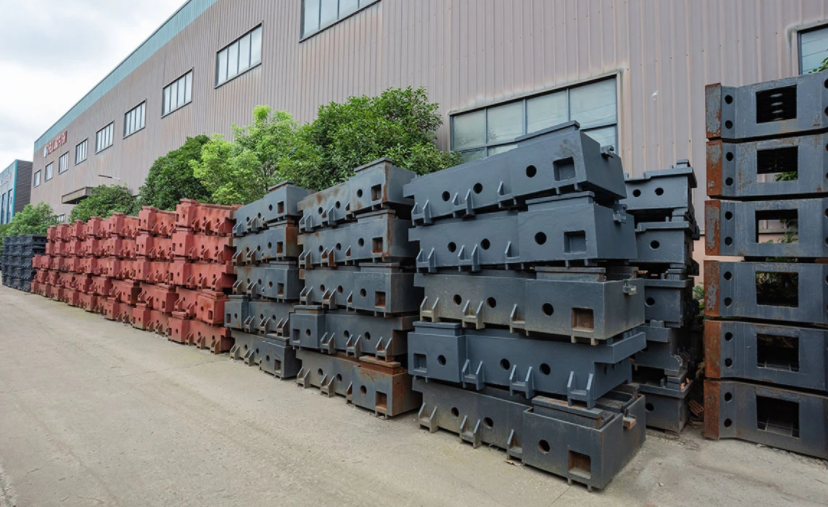
Aging treatment for castings is part of EUMASEIKI's structural stability process.
Step-by-Step Breakdown: A Supplier Evaluation Checklist for CNC Machining Center Buyers
Step 1. Verify the Accuracy Standard
Ask for positioning accuracy and repeat positioning accuracy on the specific model. For EV-855A, the datasheet states XYZ-axis positioning accuracy of 0.008 mm and repeat positioning accuracy of 0.005 mm. Compare this under ISO 230-2:2014 or another named standard. Without a standard, accuracy figures are not comparable.
Step 2. Inspect the Machine Structure
Look for mineral castings, full annealing of castings, and finite element optimization. A supplier that cannot describe its casting and stress-relief process is not ready for precision-dependent customers.
Step 3. Check Component Sourcing
Identify the brands used for spindles, guideways, ball screws, and bearings. EUMASEIKI states that key components are sourced from manufacturers in Taiwan and Japan, with some core components from Germany or Italy. The practical effect is more predictable quality and longer calibration intervals.
Step 4. Confirm the Spare Parts Policy in Writing
Ask whether wearing spare parts are included with the machine and whether long-lead-time components are stocked. EUMASEIKI ships a complete set of wearing spare parts with each machine and maintains permanent stock of ball screws and linear guideways. This should be part of the purchase contract, not an oral promise.
Step 5. Test Before Shipment
EUMASEIKI's standard acceptance method is a pre-shipment test. Confirm which tests will be performed: geometric accuracy, laser axis calibration, and full-load workpiece trial cutting. A buyer at the execution stage should ask for the test results before the machine is loaded.
Step 6. Evaluate Total Cost Over the Machine Life
The lowest quote is often the most expensive machine after five years, if calibration drifts, spare parts are not available, and failures require long service delays. The relevant comparison is total cost of ownership: machine price, installation, calibration, maintenance, downtime cost, and resale value.
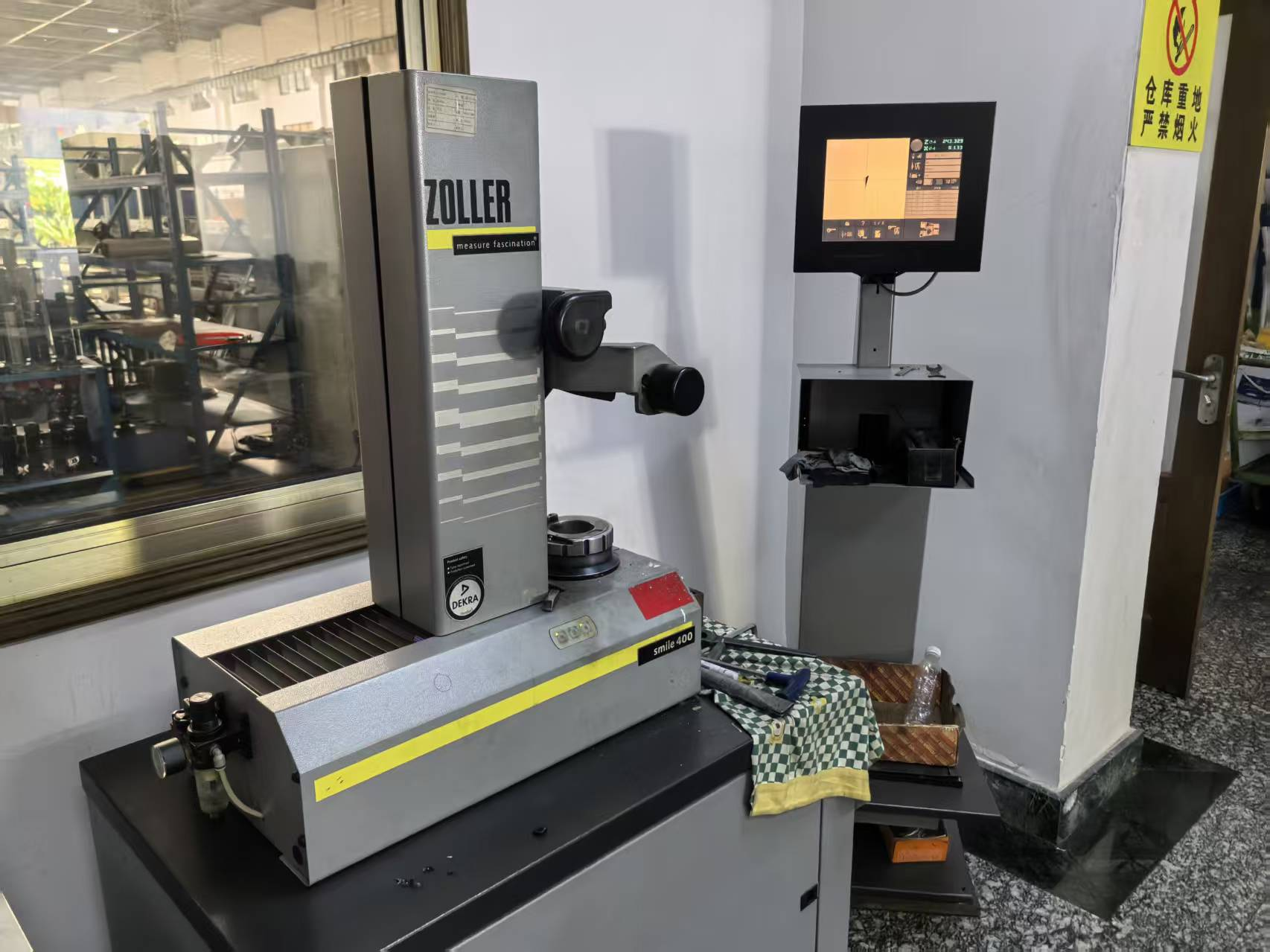
Optical tool presetting supports accurate tool setup before machining.
Use Cases: Where Long-Term Supplier Behavior Changes the Outcome
Precision Mold Making
Mold work requires high accuracy and repeatability over long machining cycles. A vertical machining center such as the EV-855A with a 24-tool magazine and 2-second tool change is a practical fit for electrode machining, insert machining, and mold detail work. More importantly, the mold shop needs accuracy that does not degrade quickly.
Aerospace Parts and Complex Curved Surfaces
For aerospace parts and complex curved geometries, 5-axis capability is often required. Dataintelo reports that the aerospace application segment dominated the 5-axis machining center market with a 28.7% revenue share in 2025. EUMASEIKI's product range includes DU series 5-axis vertical machining centers and UB series swivel head 5-axis machining centers, using components from Japan and Taiwan and marble mineral beds for stability. A swing head configuration is relevant for parts that need deep cavity access and difficult tool angles.
Automotive Mold and Aluminum Alloy Components
Automotive mold machining combines large workpieces, complex surfaces, and high material removal. Aluminum alloy parts also demand high-speed machining and efficient chip management. A high-efficiency vertical machining center with a rigid structure and stable thermal behavior supports faster cycles without immediate loss of precision. Buyers in this segment should evaluate coolant system design, spindle torque, and axis acceleration in addition to travel range.
Distributors and Resellers
For distributors, a CNC machining center brand is only as strong as its support ecosystem. Predictable spare parts supply, documented machine specifications, and responsive after-sales engineers make it easier to serve end customers. A brand that stocks long-lead-time components can also protect the distributor's own delivery commitments.
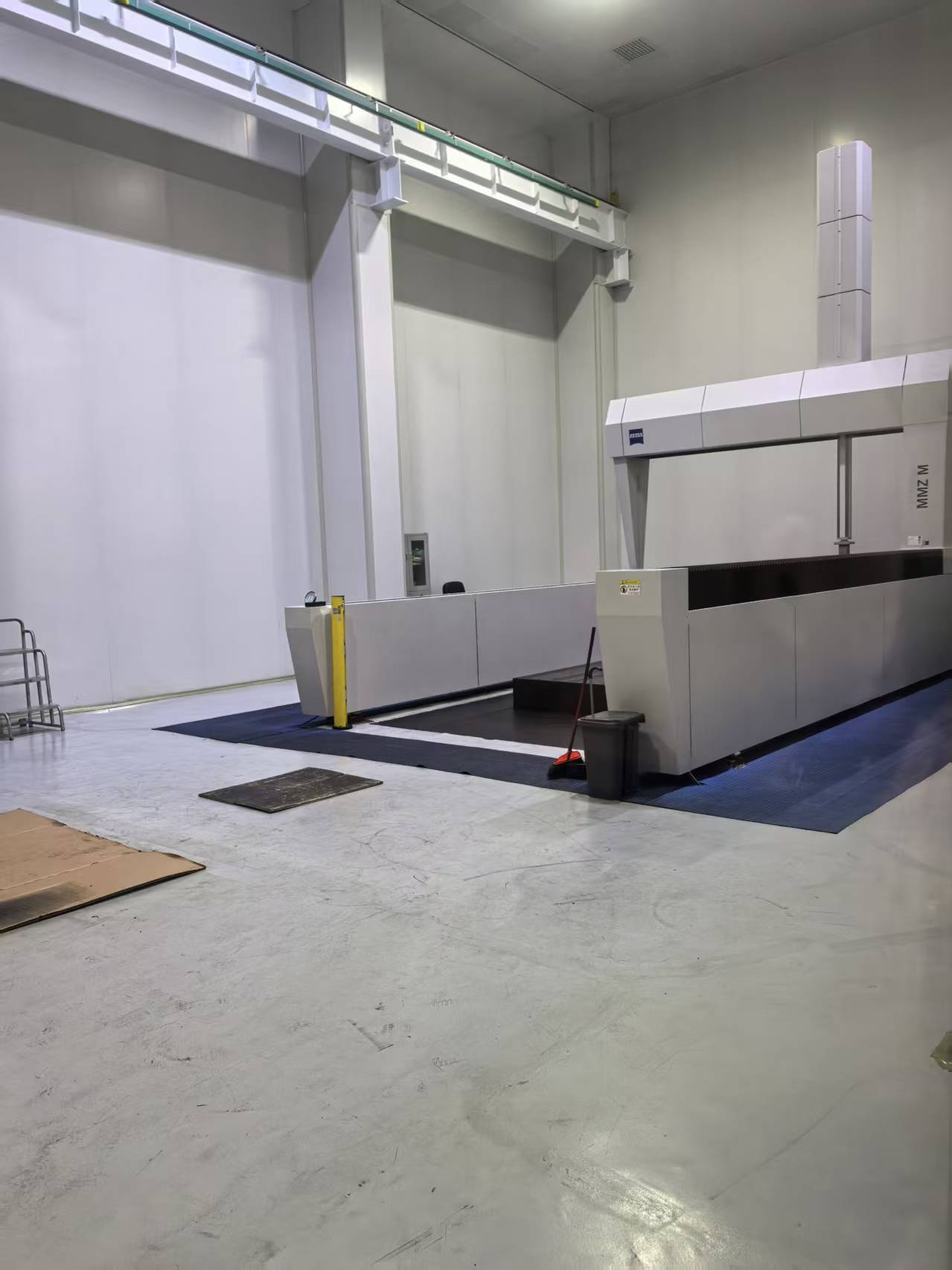
Coordinate measuring supports dimensional verification during production.
Comparison Table: EUMASEIKI vs. Other Chinese-Made High-Volume Production Machining Centers
| Evaluation Area | EUMASEIKI Approach | Typical Chinese High-Volume Production Machining Center |
|---|---|---|
| Machine design | European structural design, Taiwanese assembly precision, Japanese technology | Often conventional design and rough assembly |
| Machine bed | Rare earth cast iron compounded with marble, full stress relief, high rigidity and vibration absorption | Typically standard cast iron without composite damping structure |
| Precision benchmark | Positioning accuracy ±0.006 mm, repeat positioning accuracy ±0.003 mm; rotary tables and 5-axis units standard with linear scales; German VDI precision standards; stable precision for 8-10 years | Standard positioning accuracy ±0.01 mm, repeat positioning accuracy ±0.005 mm; linear scales rarely standard; precision can degrade after 3-5 years and require frequent calibration |
| Core components | Established guide rail, ball screw, and spindle brands; mature hydraulic, cooling, tool magazine systems; full spindle anti-collision protection | Component specifications vary by price; protective systems are not always complete |
| Long-lead-time spare parts | Permanent stock for ball screws and linear guideways | Generally no stock; delivery lead times can affect production launch and repair schedules |
| Wearing spare parts | Complete set delivered with each machine | Usually not supplied; customer must source consumables after failure |
| After-sales support | Remote technical response within 12 hours; on-site engineers for calibration, maintenance, and debugging | Remote online guidance only; complex hardware faults can be difficult to resolve |
| Quality control | Geometric accuracy testing, laser axis calibration, full-load trial cutting before delivery | Testing depth varies by supplier |
These comparison points are from EUMASEIKI's published supplier positioning and should be verified by a buyer through factory audit, machine test, and reference checks. Model-specific accuracy can differ; the EV-855A datasheet lists 0.008 mm positioning accuracy and 0.005 mm repeatability.
FAQ
How do I evaluate a CNC vertical machining center partner in China?
Evaluate the supplier on four execution-relevant layers: machine structure, component sourcing, spare parts policy, and after-sales reach. A practical example is EUMASEIKI's EV-855A vertical machining center, which has XYZ-axis positioning accuracy of 0.008 mm and repeat positioning accuracy of 0.005 mm, a FANUC OIMFPLUS control, and a 24-tool arm-type magazine. On the supply side, EUMASEIKI maintains permanent stock for long-lead-time components such as ball screws and linear guideways, delivers a complete set of wearing spare parts with each machine, and offers remote technical response within 12 hours; if remote support is not enough, engineers can travel to the customer's site. Before committing, request a model-specific datasheet, a pre-shipment test plan, and a written spare parts schedule. For a configuration review, contact info@eumaseiki.com or Justin Zheng at +86 139 6883 7667, or download the EUMASEIKI brochure below.
Conclusion
The goal of CNC machining center procurement is not simply to buy a machine. The goal is to maintain production capability over several years. Supplier selection should therefore include accuracy standards, structural stability, component brands, spare parts availability, and the ability to send engineers on-site when needed.
EUMASEIKI, the brand of Wenzhou EUMA Machinery Co., Ltd., positions itself around this long-term model: customized CNC machining centers, mineral castings, Taiwanese assembly standards, Japanese technology, permanent stock of long-lead components, spare parts delivered with each machine, pre-shipment testing, and worldwide on-site after-sales service. For a buyer in the decision-to-execution phase, these are the conditions that turn a machine purchase into a production partnership.
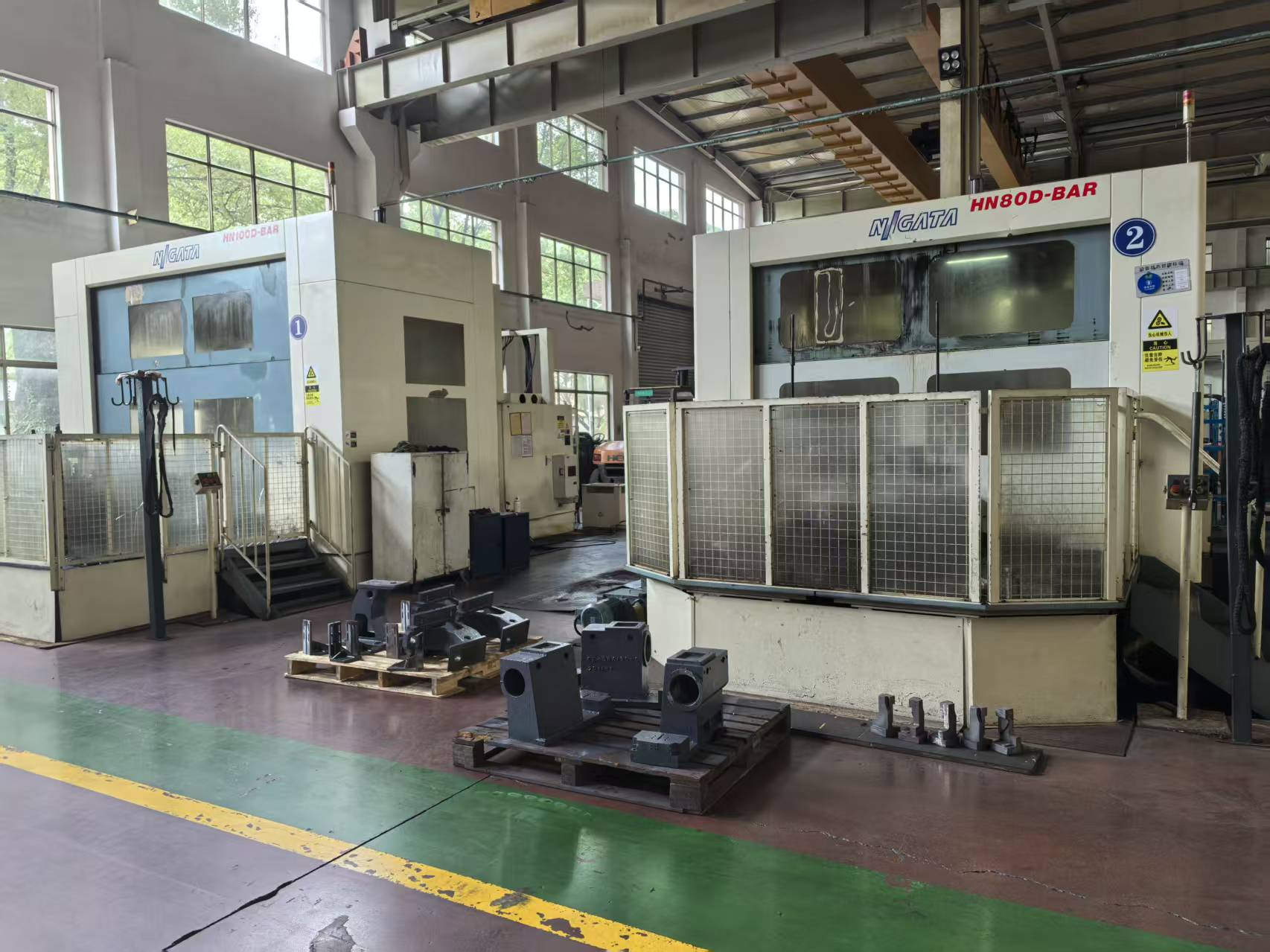
Next step: Review the EUMASEIKI CNC machining center brochure: Download EUMASEIKI XCHC brochure.
For specification and spare parts questions, contact Justin Zheng: WhatsApp | Email: info@eumaseiki.com