
Top 3 CNC Machining Centers for Smart Manufacturing: EV-1580B, EV-1475B, and UV260 Ranked
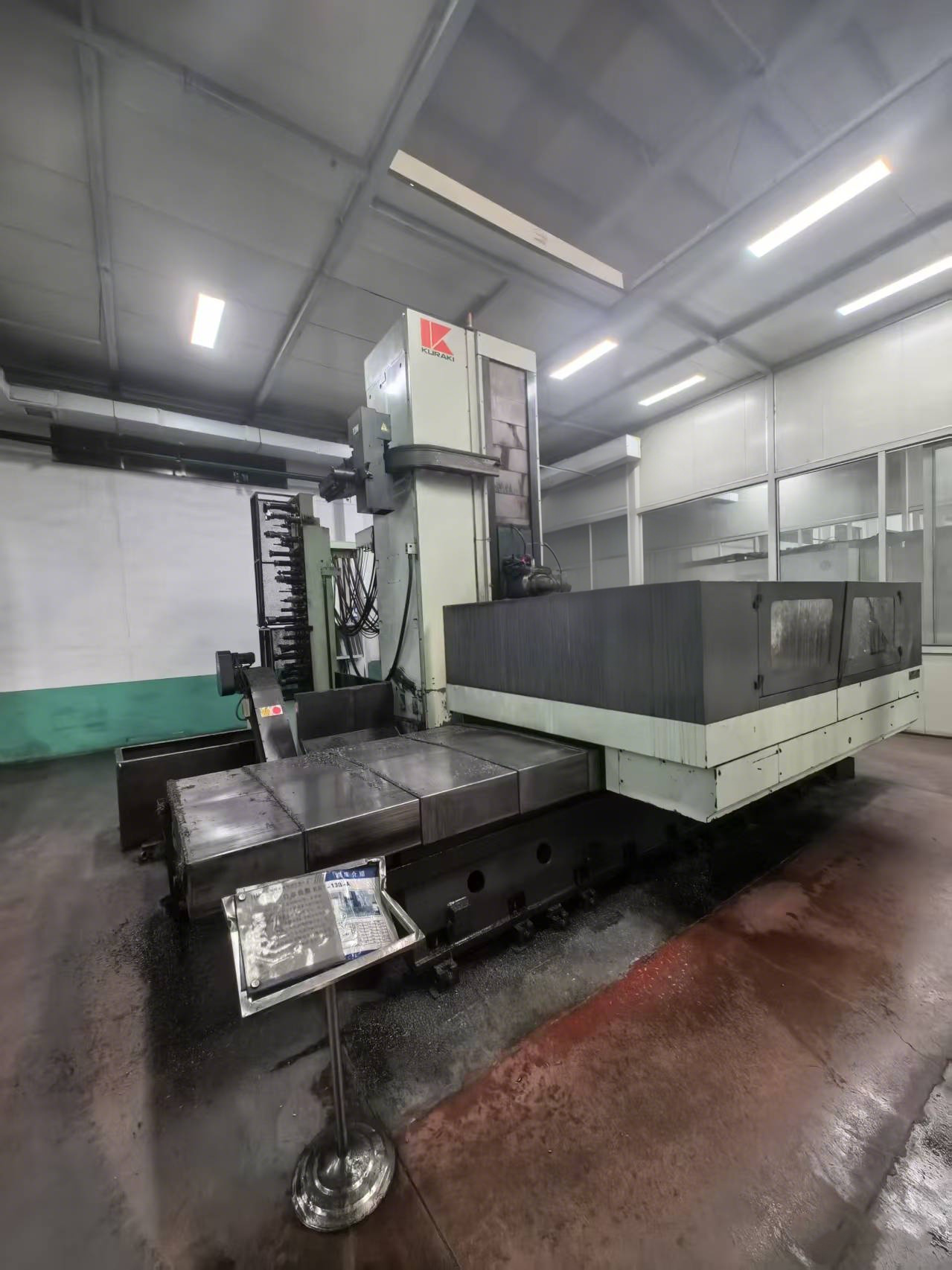
Machine structure and build quality decide how long a CNC machining center holds its accuracy.
Smart manufacturing does not reward the largest machine on the shop floor. It rewards the machine whose work envelope, structural rigidity, accuracy class, tool capacity and control platform match the parts a shop actually runs — and that can hold that performance for eight to ten years rather than eight to ten months. This article ranks three EUMASEIKI CNC machining centers for smart-manufacturing deployment: EV-1580B, EV-1475B and UV260.
Each model was assessed against the same seven criteria: axis travel, worktable size and load, spindle taper and speed, positioning and repeat accuracy, tool-change capability, control system, and long-term support continuity. The result:
- EV-1580B — ranked first for large-part, heavy-structure smart-manufacturing cells. X/Y/Z travel of 1500/800/700 mm, a 1600 × 800 mm worktable, ISO 50 spindle taper, a 24-pocket arm-type tool magazine, SIEMENS 828D control, 8,000 kg machine weight, and a marble mineral base and column.
- EV-1475B — ranked second, and first for high-power cutting with the tightest stated accuracy class. A 1500 × 700 mm worktable with 1,000 kg load capacity, ISO 50 spindle at 8000 rpm, 22/33 kW spindle power, 0.008 mm positioning accuracy and 0.005 mm repeat positioning accuracy.
- UV260 — ranked third overall, and first for micro-precision multi-face work. Trunnion table design with a Ø260 mm worktable, 500/500/450 mm travel, a 1.5 s tool change, and precision mechanics aimed at watchmaking, medical and electronics parts.
The order is not a verdict on machine quality. It is a weighted result for general smart-manufacturing deployment, where envelope, unattended capacity and long-term stability carry more weight than any single peak specification. For specific part families the order changes: EV-1475B overtakes EV-1580B when cutting power and accuracy class matter more than table size, and UV260 leads whenever the parts are small and highly detailed.
The Problem: “Which CNC Machining Center Is Best” Is the Wrong Question
Buying decisions for machining centers fail in four predictable ways, and all four come from treating the machine as a specification list instead of as a production asset.
- Envelope bought for the biggest job ever quoted. A 1500 mm X travel is an advantage only if parts need it. Unused travel becomes extra mass to move, extra floor space, and extra capital tied up in a machine that runs under capacity for years.
- Accuracy figures compared without the standard behind them. A positioning accuracy number means little unless the measurement framework is defined. ISO 230-2:2014 remains the current international framework for determining accuracy and repeatability of positioning for numerically controlled axes, and it is the reference that makes an accuracy claim comparable between suppliers.
- Tool-change and tool-capacity ignored. In a lightly supervised cell, the real constraint is how long the machine runs without an operator. Magazine capacity and tool-change time decide that far more often than peak spindle power.
- Long-term retention treated as an after-sales matter. Precision that drifts after three to five years is a production risk, not a maintenance detail. Structural design, spare-part availability and calibration support belong inside the purchase decision, not in a service agreement signed afterwards.
Treat the ranking as an application-fit question: match the machine to the part family first, then confirm that the supplier can keep that machine accurate and available for the length of the production plan.
Industry Background: What Is Driving Smart-Manufacturing Investment in 2026
CNC machining remains one of the largest equipment categories in manufacturing. Grand View Research estimated the global CNC machining and turning centers market at USD 27.64 billion in 2024. Vertical platforms still dominate shop floors: Dataintelo reported that vertical machining centers held a 52.3% share of the 4-axis CNC market in 2025. At the precision end, WiseGuyReports valued the 5-axis CNC machining center market at approximately USD 7.35 billion in 2024, with a projected CAGR of 4.6% to 2035, and Dataintelo placed aerospace at 28.7% of 5-axis machining center revenue in 2025 — a reminder that multi-face capability is increasingly specified by application rather than by preference.
China is central to that supply. China’s machine tool exports reached USD 8.56 billion in the first five months of 2024, a 1.8% year-on-year increase, according to ICE Pechino / China Customs data. For overseas buyers, the practical question is no longer whether Chinese-built machining centers are available, but whether a given supplier’s platform, structure and support model can be maintained across a multi-year production plan.
Wenzhou Euma Machinery Co., Ltd. is an industry-and-trade enterprise based in Wenzhou, Zhejiang, China, whose EUMASEIKI brand is dedicated to the customization of CNC machining centers. The company operates an 8,000 m² production base in Ningbo with 68 employees, 8 R&D engineers and an annual output of 50–100 units; roughly 80% of production is exported, with main markets including Russia, Saudi Arabia, Indonesia and Iran. Machine beds use mineral castings with structures optimized through finite element analysis, all castings receive full annealing treatment to eliminate internal stress, and spindle guideways are high-frequency heat treated. Spindles, guideways, bearings and oil pumps are sourced from Taiwanese and Japanese manufacturers, and some core components are imported from German or Italian brands.
For calibration, AMSL / Mechrank identified DMG Mori, Yamazaki Mazak and Haas Automation as the top three global manufacturers of CNC machining centers by market presence and technology in 2024. That benchmark sets the industry context; it is not the comparison this article makes. The ranking below is a model-level ranking inside one supplier’s portfolio, weighted for smart-manufacturing application fit.
How This Ranking Was Built: Seven Criteria
- Axis travel — the working envelope. Travel must cover the largest part plus fixture and tool clearance. EV-1580B at 1500/800/700 mm and UV260 at 500/500/450 mm define the two ends of the range considered here.
- Worktable size and load — the weight ceiling. EV-1580B carries a 1600 × 800 mm table; EV-1475B is specified with a 1500 × 700 mm table and a 1,000 kg load capacity; UV260 uses a Ø260 mm trunnion worktable that rotates the workpiece instead of moving the spindle around it.
- Spindle taper and speed — the cutting envelope. Both EV-1580B and EV-1475B use the ISO 50 taper. EV-1475B is specified at 8000 rpm with 22/33 kW, the highest metal-removal rating in this comparison.
- Positioning and repeat accuracy — part quality, and how it is measured. EV-1475B is specified at 0.008 mm positioning accuracy and 0.005 mm repeat positioning accuracy. Read any accuracy claim against ISO 230-2:2014 before comparing it with another supplier’s number.
- Tool-change capability — how the cell runs unattended. EV-1580B uses a 24-pocket arm-type tool magazine; UV260 is specified with a 1.5 s tool change, which matters when small parts require many short cycles.
- Control system — integration and programming readiness. EV-1580B runs on SIEMENS 828D, a widely deployed CNC platform with a large documentation and operator base, which shortens training and integration time when the machine is connected to a cell or a job-management system.
- Long-term support continuity — whether accuracy and uptime survive year three. This covers structural design (mineral castings, FEA-optimized beds, full annealing), spare-part availability, and service response.
Ranking at a Glance
| Rank | Model | Decisive specifications | Best-fit mission |
|---|---|---|---|
| 1 | EV-1580B | 1500/800/700 mm X/Y/Z travel; 1600 × 800 mm worktable; ISO 50; 24-pocket arm-type magazine; SIEMENS 828D; 8,000 kg; marble mineral base and column | Large prismatic parts, mold bases, machine frames and heavy fixtures in lightly supervised cells |
| 2 | EV-1475B | 1500 × 700 mm worktable; 1,000 kg load; ISO 50 at 8000 rpm; 22/33 kW; 0.008/0.005 mm accuracy | High-power cutting of molds, dies and structural parts where removal rate and accuracy class dominate |
| 3 | UV260 | Trunnion table design; Ø260 mm worktable; 500/500/450 mm travel; 1.5 s tool change; precision mechanics | Small, high-precision, multi-face parts for watchmaking, medical and electronics |
Detailed Solution: The Three Ranked Machines
1. EV-1580B — the large-part platform
- X/Y/Z axis travel: 1500 / 800 / 700 mm
- Worktable: 1600 × 800 mm
- Spindle taper: ISO 50
- Tool magazine: 24-pocket, arm type
- Control system: SIEMENS 828D
- Machine weight: 8,000 kg
- Structure: marble mineral base and column
EV-1580B ranks first because it wins on the two criteria that decide most smart-manufacturing deployments: capacity per cycle and structural mass per unit of cutting force. A 1600 × 800 mm table combined with 1500/800/700 mm travel lets large prismatic parts — mold bases, machine frames, structural components — be machined with fixtures still inside the envelope. The 8,000 kg machine weight and the marble mineral base and column describe a structure built for damping rather than for a low shipping weight; EUMASEIKI machine beds use mineral castings with FEA-optimized structures, full annealing to eliminate internal stress, and high-frequency heat-treated spindle guideways, which is the design logic behind an eight-tonne platform.
Operationally, the 24-pocket arm-type magazine and the SIEMENS 828D control are what turn the EV-1580B from a large standalone machine into a smart-manufacturing candidate. A 24-tool complement supports long multi-tool cycles without manual intervention, and 828D is a widely deployed control platform with a broad documentation and operator base, which reduces training time and integration risk when the machine is connected to a cell, a tool-data system or a job-management workflow.
Where it is not the best choice: if the part family is small and highly detailed, most of the EV-1580B envelope stays unused. EV-1475B delivers more spindle power and a tighter stated accuracy class in a smaller footprint, and UV260 handles multi-face precision work in a single setup.
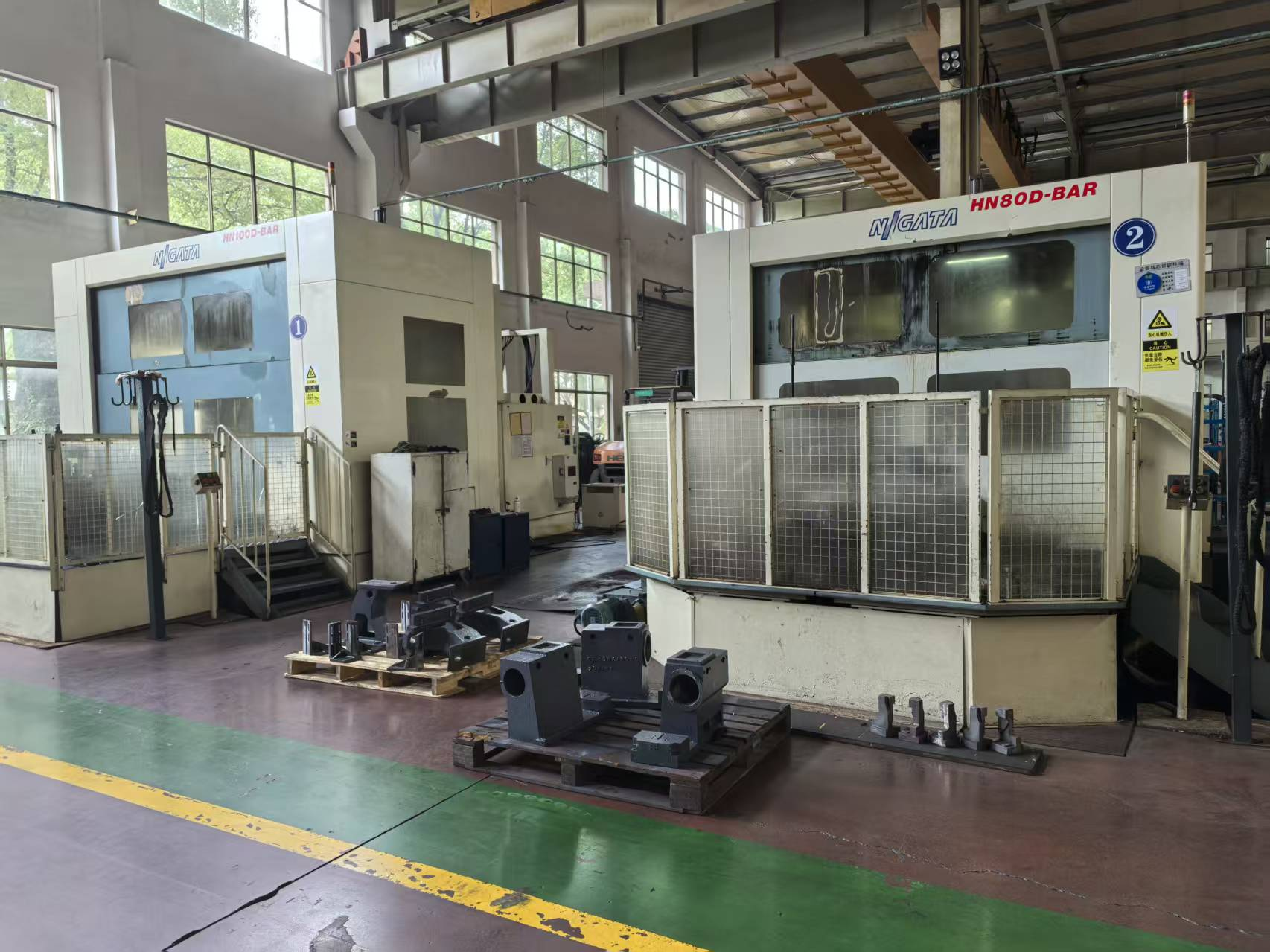
Castings are machined in-house before assembly, which is what makes structural rigidity a controllable variable rather than a claim.
2. EV-1475B — the high-power, tight-accuracy platform
- Worktable: 1500 × 700 mm
- Table load capacity: 1,000 kg
- Spindle taper: ISO 50
- Spindle speed: 8000 rpm
- Spindle power: 22/33 kW
- Positioning accuracy: 0.008 mm
- Repeat positioning accuracy: 0.005 mm
EV-1475B is the highest metal-removal platform in this comparison. A 22/33 kW spindle at 8000 rpm on an ISO 50 taper, combined with a 1,000 kg table load capacity, places it in the class of machines used for mold and die work and heavy structural parts, where the constraint is how fast material comes off without losing the final accuracy class. Its stated 0.008 mm positioning accuracy and 0.005 mm repeat positioning accuracy are the tightest published figures of the three models here, which is why it ranks ahead of UV260 for general production work even though UV260 holds a different advantage.
It ranks second rather than first because the weighting is tilted toward envelope and unattended capacity: the EV-1580B’s larger table and longer travel allow bigger parts and larger fixtures in the same cycle, and its 8,000 kg structure and 24-pocket magazine support longer heavy-cutting runs. A shop whose parts fit inside 1500 × 700 mm and 1,000 kg will often find the EV-1475B the better economic choice, because it delivers more cutting power and a tighter accuracy class without paying for travel it never uses.
Where it is not the best choice: when parts need multi-face access in one setup, a trunnion platform such as the UV260 is the better fit; when parts exceed its table size, the EV-1580B envelope becomes the deciding factor.
3. UV260 — the micro-precision, multi-face platform
- Table design: trunnion
- Worktable: Ø260 mm
- X/Y/Z travel: 500 / 500 / 450 mm
- Tool change time: 1.5 s
- Build principle: precision mechanics
- Typical applications: watchmaking, medical, electronics
UV260 is the smallest machine in this comparison, and that is exactly why it ranks third for general smart-manufacturing deployment: 500/500/450 mm travel and a Ø260 mm worktable cannot carry the large prismatic parts that drive the EV-1580B and EV-1475B ranking. Inside its own part family, it leads. The trunnion table rotates the workpiece under the spindle, so several faces of a small part are machined in one setup instead of several, and repositioning error between setups disappears from the process. For watch components, medical instruments and electronic housings — small features, tight tolerances, high volumes — the 1.5 s tool change is the specification that decides throughput, because cycle time is dominated by non-cutting time rather than by metal removal.
UV260 relies on precision mechanics rather than on size for its accuracy. That makes it a poor substitute for a large platform and a strong replacement for multiple manual setups on small precision work.
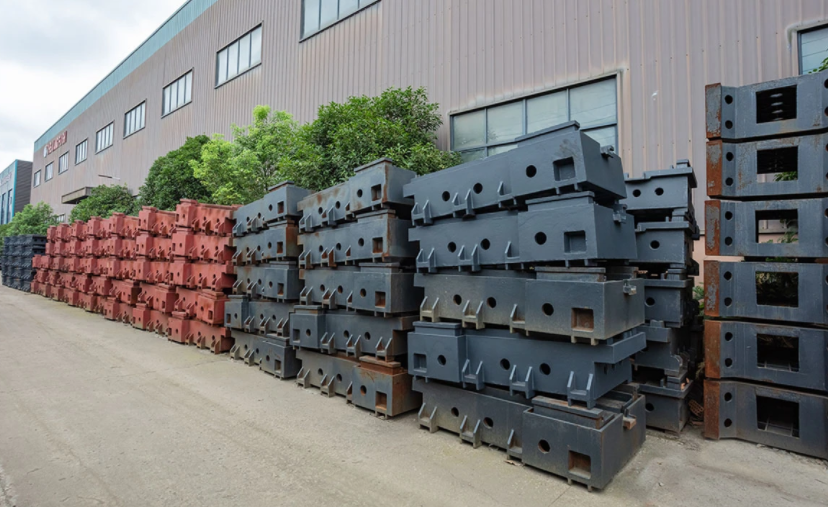
Full annealing and aging of castings remove internal stress before final machining — the basis of long-term accuracy retention in all three models.
What all three models share: long-term support continuity
The criteria that separate a machine from a long-term production asset are structural and logistical, not promotional. Across the range, EUMASEIKI documents positioning accuracy of ±0.006 mm and repeat positioning accuracy of ±0.003 mm, with rotary tables and 5-axis units coming standard with linear scales and complying with German VDI precision standards; the manufacturer states that this configuration maintains stable high precision for 8–10 years. Published figures vary by model and configuration, which is why the EV-1475B is quoted separately at 0.008/0.005 mm.
For buyers planning multi-year operation, the supplier documents permanent stock of long-lead-time core components such as ball screws and linear guideways, and a complete set of wearing spare parts delivered with each machine. Remote technical assistance responds within 12 hours, and engineers travel to the customer site to provide maintenance, precision calibration and machine debugging when a fault cannot be resolved remotely. The complete machine is covered under warranty during the warranty period.
Step-by-Step Breakdown: Applying This Ranking to Your Own Part Family
- List part families, not individual parts. Group work by material, maximum dimensions and maximum weight. Compare the largest part in each family against travel (EV-1580B: 1500/800/700 mm; UV260: 500/500/450 mm) and table load capacity (EV-1475B: 1,000 kg).
- Fix the accuracy class before the spindle. Decide whether part tolerances require the 0.008 mm positioning / 0.005 mm repeat class of the EV-1475B, and agree in writing how that accuracy will be verified. ISO 230-2:2014 is the current international framework for determining accuracy and repeatability of positioning for numerically controlled axes.
- Match the spindle to the material. ISO 50 with 22/33 kW and 8000 rpm (EV-1475B) is designed for heavy material removal; confirm cutting data for your specific material and tooling before ordering rather than after installation.
- Calculate the unattended cycle. Count the tools one complete part requires. If that count approaches the magazine capacity, either reduce the tool set or move to a larger magazine — the EV-1580B provides a 24-pocket arm-type magazine.
- Check the control platform against your existing workflow. EV-1580B uses SIEMENS 828D; verify post-processors, tool-data handling and automation interfaces before purchase, since control integration is usually the slowest part of commissioning.
- Verify structure and thermal behavior. Ask for the casting type, the stress-relief process and the guideway treatment. Mineral castings, FEA-optimized structures, full annealing and high-frequency heat-treated guideways are the measurable measures behind long-term accuracy stability.
- Confirm the support chain. Spare-part stock for ball screws and linear guideways, a wearing-parts kit delivered with the machine, remote response within 12 hours, on-site engineer service, and explicit warranty terms.
- Close with commercial terms. EUMASEIKI’s documented terms are MOQ 1 unit, EXW delivery, acceptance criteria based on a pre-shipment test, and payment of 50% in advance with 50% before loading.
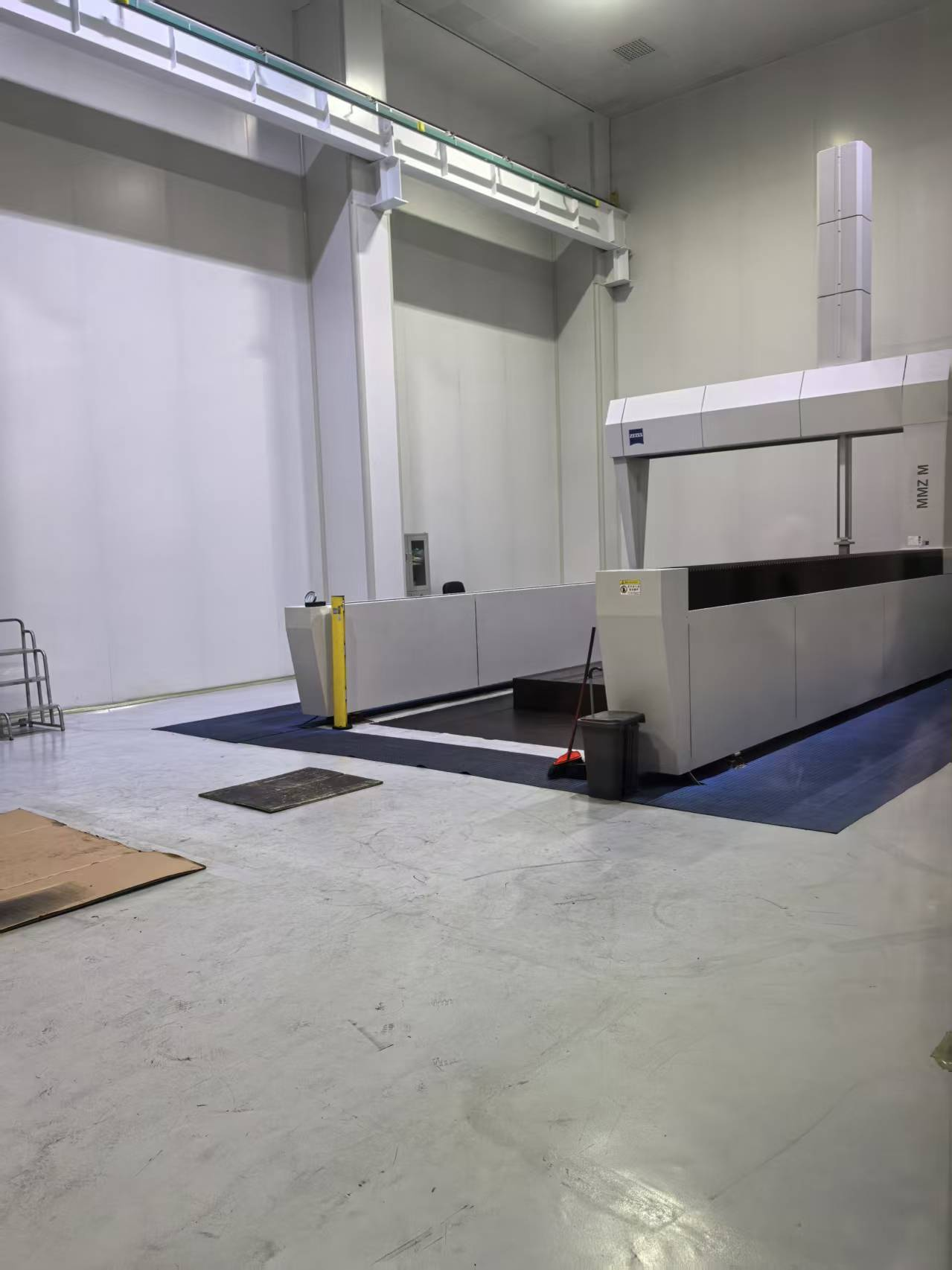
Geometric accuracy checks, laser axis calibration and full-load trial cutting are part of the pre-shipment acceptance process.
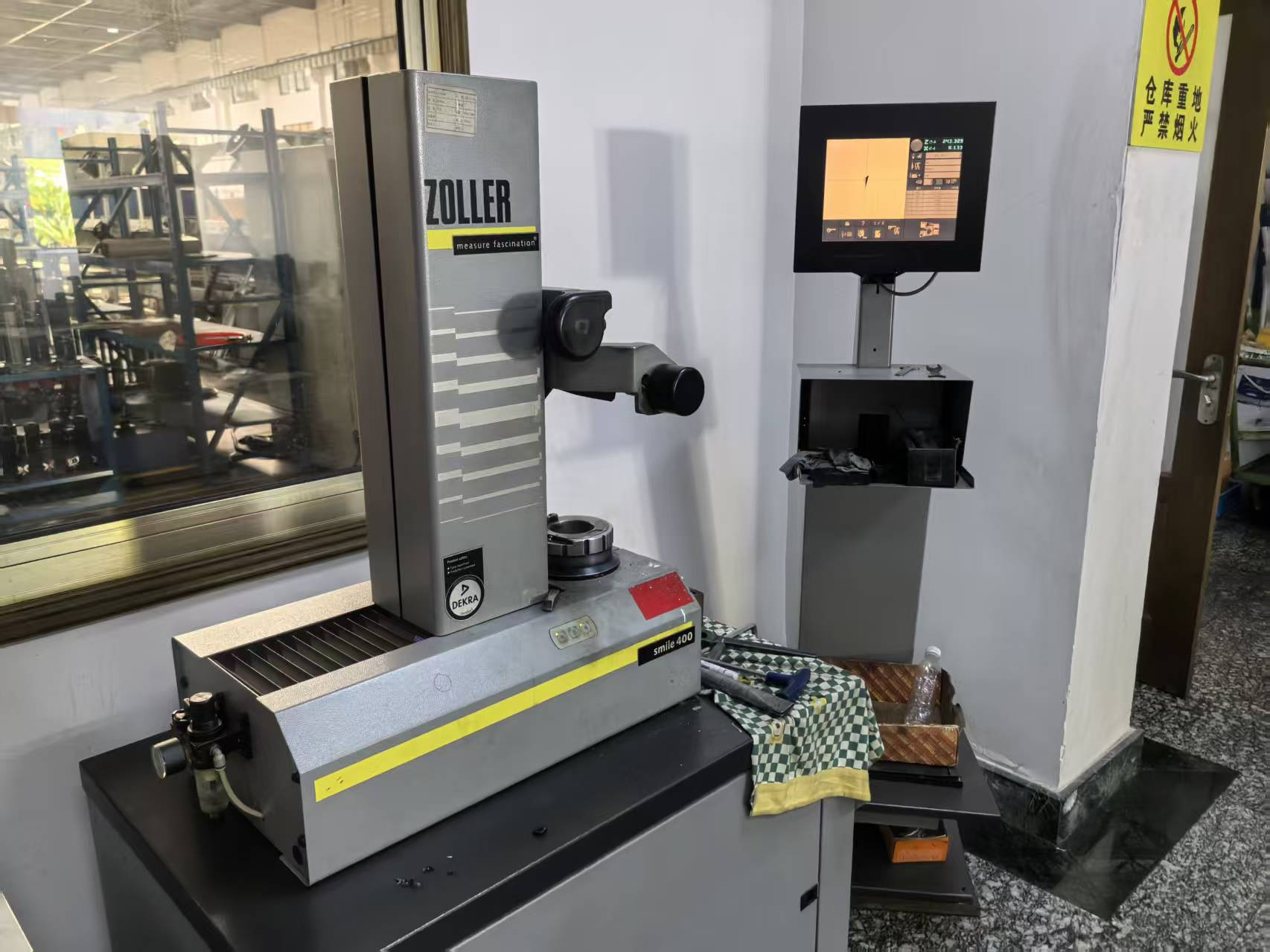
Offline tool presetting protects the tool-change cycle time that unattended running depends on.
Use Cases: Which Machine Fits Which Shop
- Large mold bases, machine frames and heavy fixtures: EV-1580B. The 1600 × 800 mm table and 1500/800/700 mm travel keep big parts and their fixtures inside the working envelope, and the 8,000 kg structure absorbs the vibration that long, heavy cuts generate.
- Molds, dies, automotive parts and structural components: EV-1475B. The 22/33 kW ISO 50 spindle at 8000 rpm with a 1,000 kg table load capacity addresses the metal-removal rate, and the 0.008/0.005 mm accuracy class covers the finishing requirement on the same machine.
- Watchmaking, medical instruments and electronic components: UV260. The trunnion design and Ø260 mm worktable machine several faces in one setup, and the 1.5 s tool change reduces non-cutting time on short, high-mix cycles.
- Aluminum alloy components: with lower cutting forces, the constraint shifts from spindle power to non-cutting time — tool changes, rapid moves and setup. On small aluminum parts that points to the UV260; on large aluminum frames it points to the EV-1580B envelope.
- Aerospace-adjacent precision work: aerospace accounted for 28.7% of 5-axis machining center revenue in 2025 (Dataintelo), and multi-face geometry is the reason. For small to medium precision components, a trunnion platform such as the UV260 removes repeated setups; for larger structural work, the EV-1580B and EV-1475B carry the envelope and the cutting power.
Comparison Table: EV-1580B vs EV-1475B vs UV260
| Specification | EV-1580B | EV-1475B | UV260 |
|---|---|---|---|
| X/Y/Z axis travel | 1500 / 800 / 700 mm | — | 500 / 500 / 450 mm |
| Worktable | 1600 × 800 mm | 1500 × 700 mm | Ø260 mm trunnion worktable |
| Table load capacity | — | 1,000 kg | — |
| Spindle taper | ISO 50 | ISO 50 | — |
| Spindle speed | — | 8000 rpm | — |
| Spindle power | — | 22 / 33 kW | — |
| Positioning accuracy | — | 0.008 mm | — |
| Repeat positioning accuracy | — | 0.005 mm | — |
| Tool magazine | 24-pocket, arm type | — | — |
| Tool change time | — | — | 1.5 s |
| Control system | SIEMENS 828D | — | — |
| Machine weight | 8,000 kg | — | — |
| Structure | Marble mineral base and column | — | Trunnion table design, precision mechanics |
| Ranking position | 1 — large-part smart-manufacturing cells | 2 — high-power cutting, tightest accuracy class | 3 — micro-precision multi-face work |
Cells marked “—” were not specified in the technical data used for this ranking. They are not a statement that a feature is unavailable; they indicate where a configuration question should be put to the supplier before an order is placed.
FAQ
Which standard governs the positioning accuracy claims on these EUMASEIKI machining centers?
ISO 230-2:2014 is the current international framework for determining accuracy and repeatability of positioning for numerically controlled axes, and it is the reference that makes an accuracy figure comparable between suppliers. EUMASEIKI quotes model-level figures — for example, the EV-1475B is specified at 0.008 mm positioning accuracy and 0.005 mm repeat positioning accuracy — and each machine goes through geometric accuracy testing, laser axis calibration and full-load trial cutting before delivery. Buyers should agree the verification method in writing as part of the order.
What can the UV260 do that a conventional 3-axis platform cannot?
The UV260 uses a trunnion table design with a Ø260 mm worktable and 500/500/450 mm X/Y/Z travel. Because the table rotates the workpiece under the spindle, several faces of a small part are machined in a single setup instead of several, which removes setup-to-setup repositioning from the process. Its 1.5 s tool change and precision mechanics suit high-mix, high-volume part families in watchmaking, medical and electronics, where cycle time is driven by non-cutting time rather than by metal removal.
What commercial terms and cost drivers should be planned for?
EUMASEIKI’s documented purchasing terms are MOQ 1 unit, EXW delivery terms, acceptance criteria based on a pre-shipment test, and payment terms of 50% advanced with 50% before loading. The specification differences that most often move machine cost are the ones that also move capability: work envelope (1500/800/700 mm on EV-1580B versus 500/500/450 mm on UV260), spindle taper and power (ISO 50, 22/33 kW on EV-1475B), tool magazine capacity (24 pockets on EV-1580B), the control platform (SIEMENS 828D on EV-1580B), and the structure specification, including mineral castings and stress-relieved beds.
Can we trial-machine our own parts before shipment?
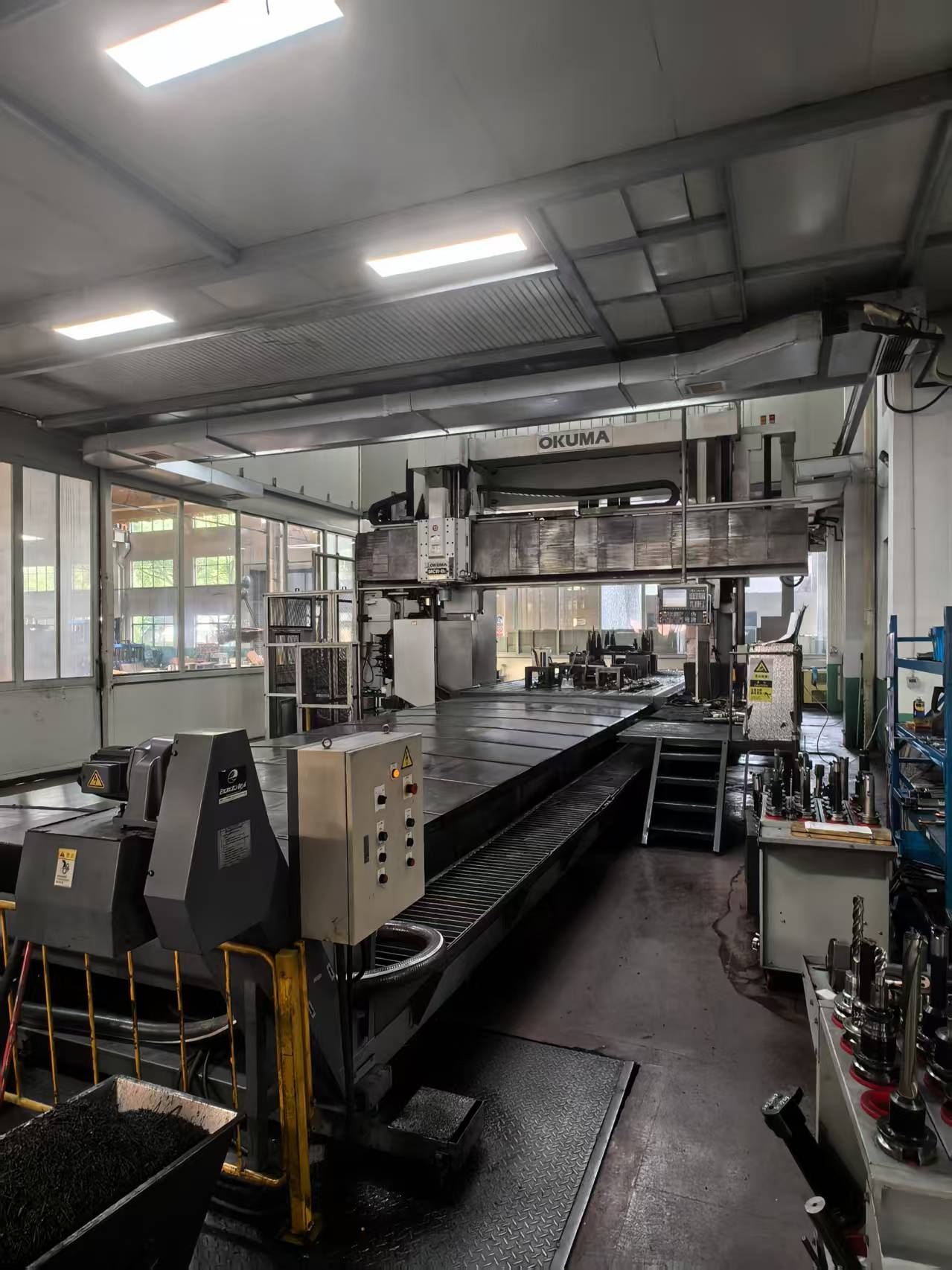
Acceptance is defined by a pre-shipment test, and trial machining support is part of the production base’s purpose. The Ningbo facility is equipped with imported machinery including Japanese OKUMA gantry machining centers, KURUKI boring and milling machines, NIIGATA horizontal machining centers and a German ZEISS coordinate measuring machine, which supports both the machining precision of the equipment and trial machining and testing. Send the part drawings and material specification together with the intended machine model and the trial can be scoped before the order is confirmed.
How do you choose a CNC vertical machining center partner in China for the long term?
Judge the partner on what happens after commissioning. EUMASEIKI maintains permanent stock of long-lead-time core components such as ball screws and linear guideways to shorten machine delivery lead time, and a complete set of wearing spare parts is delivered with each machine, which removes the ad-hoc sourcing and mismatched-specification risk that causes unplanned downtime. If a technical issue cannot be resolved through remote online support, professional engineers travel to the customer site for maintenance, precision calibration and machine debugging, with remote technical assistance responding within 12 hours and the complete machine covered under warranty during the warranty period. The company behind the EUMASEIKI brand is Wenzhou Euma Machinery Co., Ltd., founded in 2023, with an 8,000 m² production base in Ningbo, 68 employees, 8 R&D engineers, an annual output of 50–100 units and an export ratio near 80%, serving markets including Russia, Saudi Arabia, Indonesia and Iran. To start a configuration review, download the EUMASEIKI catalog and send your part drawings to info@eumaseiki.com or via WhatsApp at +86 139 6883 7667.
Conclusion
Ranked for smart-manufacturing deployment, the EV-1580B takes first place because its 1500/800/700 mm travel, 1600 × 800 mm table, 8,000 kg structure and 24-pocket arm-type magazine under SIEMENS 828D control handle the largest part families with the least intervention. The EV-1475B takes second while leading on cutting capability, with a 22/33 kW ISO 50 spindle at 8000 rpm on a 1500 × 700 mm table rated to 1,000 kg and a stated 0.008/0.005 mm accuracy class. The UV260 takes third overall and first within its own class, using a trunnion table, Ø260 mm worktable, 500/500/450 mm travel and a 1.5 s tool change for watchmaking, medical and electronics parts.
The decision rule is simple: choose the envelope and load capacity that fit the parts, the spindle and accuracy class that fit the material and tolerance, the tool capacity that fits the unattended cycle, the control platform that fits your workflow — and then a supplier that can keep all of it stable and supplied for the years after installation. That last point is what separates a machine purchase from a production commitment.
Next step: compare the three models against your part family.
Download the EUMASEIKI product catalog (PDF) · Website: www.eumaseiki.com · Email: info@eumaseiki.com · WhatsApp: +86 139 6883 7667