
What Is a CNC Trunnion Table Machining Center? A Detailed Explanation
Short answer: A CNC trunnion table machining center is a machining center in which the workpiece is carried on a trunnion — a rigid frame that supports a rotary table between two uprights and tilts it, usually on an A axis — combined with a second rotary axis that turns the whole assembly. Instead of unclamping and re-fixturing the part once per face, the machine re-orients the part and presents four, five or more faces to the spindle without breaking the setup.
Trunnion table machines are used where a part has machined features on several sides, where the tolerance relationship between those faces matters, and where the batch is too small to justify a dedicated fixture for every face. EUMASEIKI, the CNC machining center brand of Wenzhou Euma Machinery Co., Ltd., builds this configuration as the UV260 — a trunnion table machining center with a Ø260 mm rotary table and a 1.5-second tool-to-tool change time.
This explanation walks through the category from first principles: what the trunnion table is, why it exists, how it changes setup economics, what the UV260's published parameters mean on the shop floor, and how a first-time buyer should specify and qualify one. It is written for procurement engineers, mold shop owners and production managers evaluating a versatile multi-sided machining center rather than a single-face machine.
Problem Definition: Why Multi-Face Work Still Costs Setup Time
Most CNC vertical machining centers are three-axis machines. The worktable moves in X and Y, the spindle moves in Z, and the workpiece meets the tool from one direction. That is efficient when a part has one dominant machined face. It becomes expensive when the part has features on four, five or six faces.
The usual workarounds all carry a cost that does not appear in the machine's price tag:
- Multiple setups. Every re-clamping creates a new datum. Positional error between setups adds directly to the tolerance stack, and the operator has to re-zero the part each time.
- Angle plates and dedicated fixtures. They work, but they are part-specific, take time to design and build, and consume table space and operator attention on every cycle.
- Simultaneous 5-axis machining. Capable of far more than multi-face positioning, but also more expensive to buy, program and operate — frequently more capability than the part requires.
- Queuing between operations. The hidden cost is not only spindle time. A part that must visit three setups waits between them, which lengthens order-to-shipment time and inflates work-in-progress inventory.
The trunnion table answers one narrow but expensive question: how can several faces of a small or medium part be machined accurately and repeatably without unclamping it, and without paying for simultaneous contouring the job does not need? That is a capability question. It is about what the machine can position, hold and repeat — not about a single headline number.
Industry Background: Where Trunnion Table Machines Sit in the Market
The category is easier to place once the surrounding market is clear. The global CNC machining and turning centers market was estimated at USD 27.64 billion in 2024 (Grand View Research). Inside it, the 5-axis CNC machining center segment was valued at approximately USD 7.35 billion in 2024, with a projected CAGR of 4.6% through 2035 (WiseGuyReports).
The installed base remains dominated by vertical configurations: vertical machining centers held a 52.3% product-type share of the 4-axis CNC market in 2025 (Dataintelo). That matters in practice, because most shops step up to multi-sided work from a vertical machining center, not from a horizontal one.
Demand is application-led. Aerospace was the largest application segment for 5-axis machining centers in 2025, at 28.7% of revenue (Dataintelo) — an application where multi-face access, thin-wall stability and datum continuity all matter at the same time. On the supply side, China's machine tool exports reached USD 8.56 billion in the first five months of 2024, a 1.8% year-on-year increase (China Customs, reported by ICE Pechino), reflecting a broad pool of export-ready machine builders serving the EU and Southeast Asian markets.
Market size estimates differ between research houses depending on whether turning centers are counted, so any single figure should be read as directional rather than precise. The direction itself is consistent: multi-axis and multi-face capability is growing faster than the general machine tool market, and trunnion table machines sit inside that growth as a positioning-focused — not contouring-focused — option.
Detailed Solution: How a Trunnion Table Machining Center Works
The anatomy of a trunnion table
In a trunnion table machining center, the rotary table is not simply bolted to the machine bed. It is carried between two upright supports — the trunnion arms — which hold the tilt axis. The table therefore rotates about the A axis while being supported at both ends, and the entire assembly sits on a base that provides the second rotary axis. The result is a cradle: the workpiece can be tilted and indexed so that a different face is presented to the spindle for each operation.
Three consequences follow from that layout.
- Faces per setup. A part with mounting faces, bores and pockets on four or five sides can be machined in one clamping. Datum continuity is preserved because the part never leaves the fixture.
- Stiffness. Supporting the table between two uprights, rather than cantilevering it from one end as a simple 4th-axis rotary table does, changes the load path. That matters for interrupted cuts and for parts that must hold tolerance across several faces.
- Positioning, not simultaneous contouring. A trunnion table is normally applied as a positioning configuration: index a face, machine it, index the next. For parts with discrete machined faces, that is faster to program and easier to verify than simultaneous 5-axis tool paths.
Accuracy in this class of machine is described using the same international framework applied to any numerically controlled axis. ISO 230-2:2014 remains the current international standard for determining accuracy and repeatability of positioning for NC axes (ISO). When a supplier quotes positioning or repeatability figures, this is the reference that makes those numbers comparable from one machine to the next.
What the UV260's published parameters mean in practice
The UV260's published parameters are few, but each one carries operational meaning.
| UV260 parameter | Published value | What it means for a buyer |
|---|---|---|
| Rotary table diameter | Ø260 mm | Defines the practical part envelope and the class of work: compact, high-value parts such as mold inserts, small housings, brackets and precision components, rather than large structural castings. Workpiece weight and swing clearance should be confirmed against the model datasheet. |
| Tool-to-tool change time | 1.5 s | Multi-face work uses more tools per cycle than single-face work, because each face may need its own drill, tap, reamer or end mill. Tool-to-tool time compounds across those tools and feeds directly into non-cut time. |
| Configuration | Trunnion table machining center | Positions the machine as a multi-sided, single-setup solution rather than a single-face machine. |
Because table diameter constrains both the part and the load, the first engineering check is always geometry: measure the largest face diagonal and the total workpiece weight, then compare them with the datasheet. The UV260 is aimed at precision small-series production, where the part is small but the tolerance and the number of machined faces are both demanding.
How EUMASEIKI builds and supports the machine
EUMASEIKI is the brand of Wenzhou Euma Machinery Co., Ltd., a high-tech enterprise integrating industry and trade that focuses on the customization of CNC machining centers. The company was founded in 2023, operates from Ningbo City, runs an 8,000 m² production base with 68 employees, and reports an export ratio of 80%, with main markets in Russia, Saudi Arabia, Indonesia and Iran. Its R&D team consists of 8 engineers.
Several build details are relevant when evaluating a trunnion table machine:
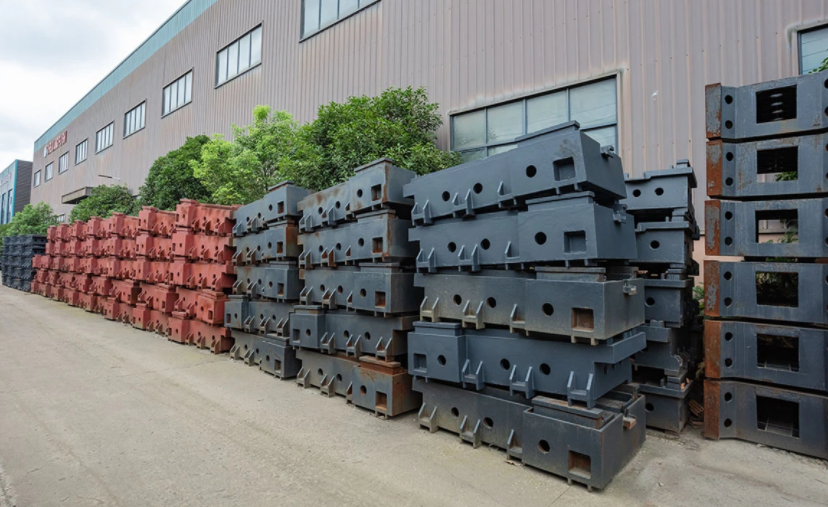
- Machine beds use mineral castings, with structures optimized through finite element analysis — relevant to the thermal and dynamic stability a trunnion relies on when the table is tilted.
- All castings undergo full annealing treatment to eliminate internal stress, and spindle guideways are subject to high-frequency heat treatment.
- Key components — spindles, guideways, bearings and oil pumps — are sourced from renowned manufacturers in Taiwan and Japan, with some core components imported from original brands in Germany or Italy.
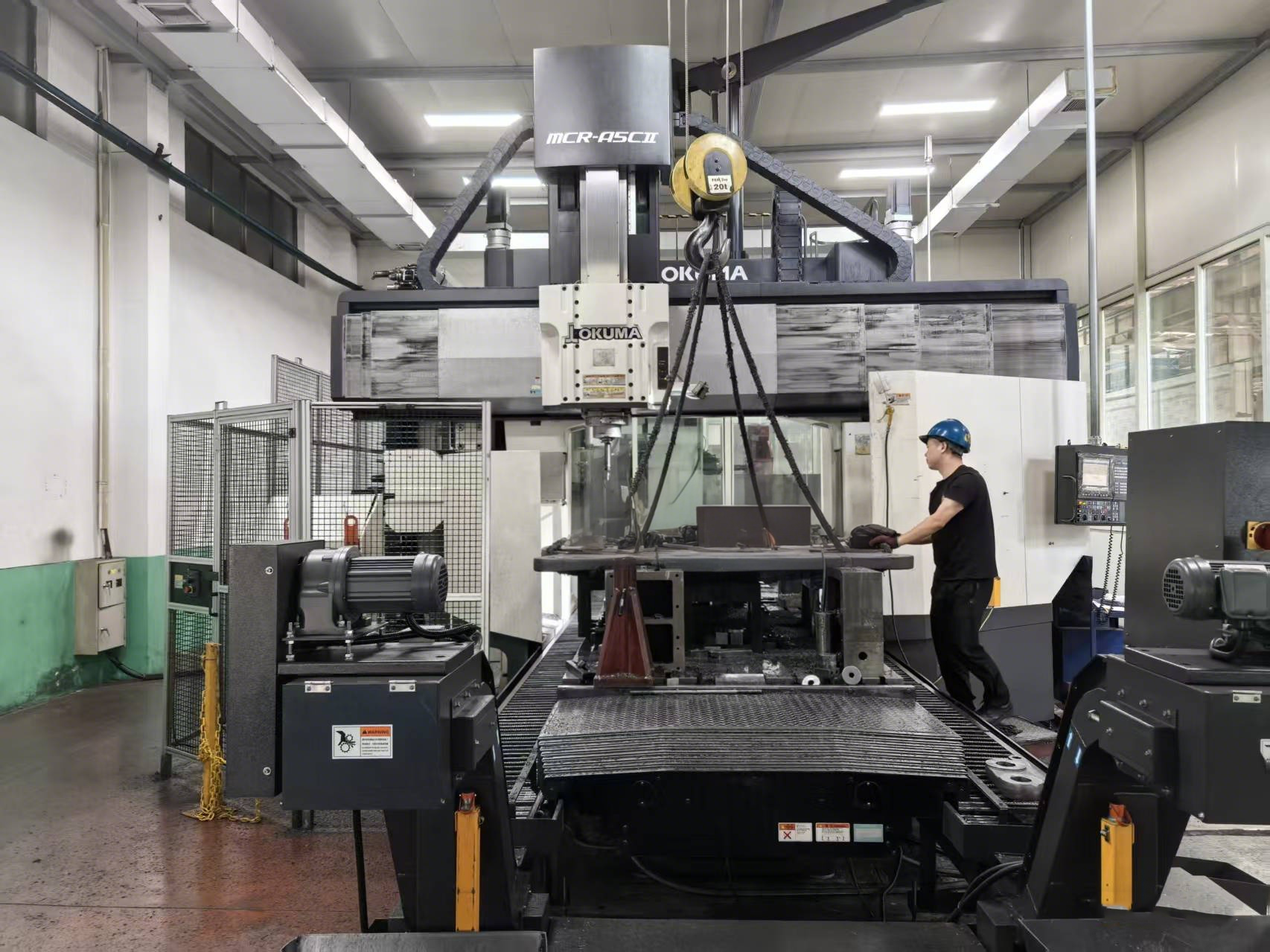
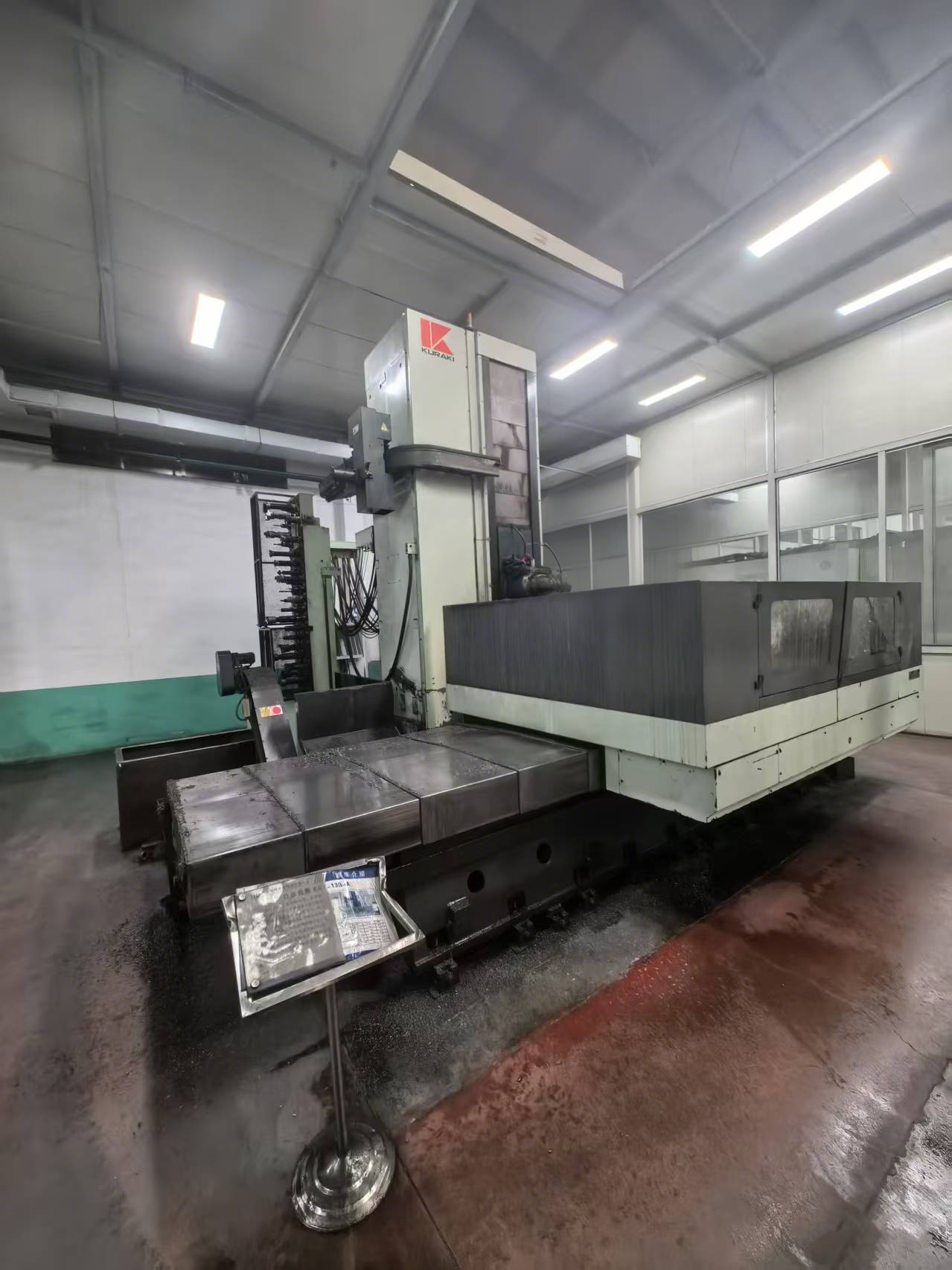
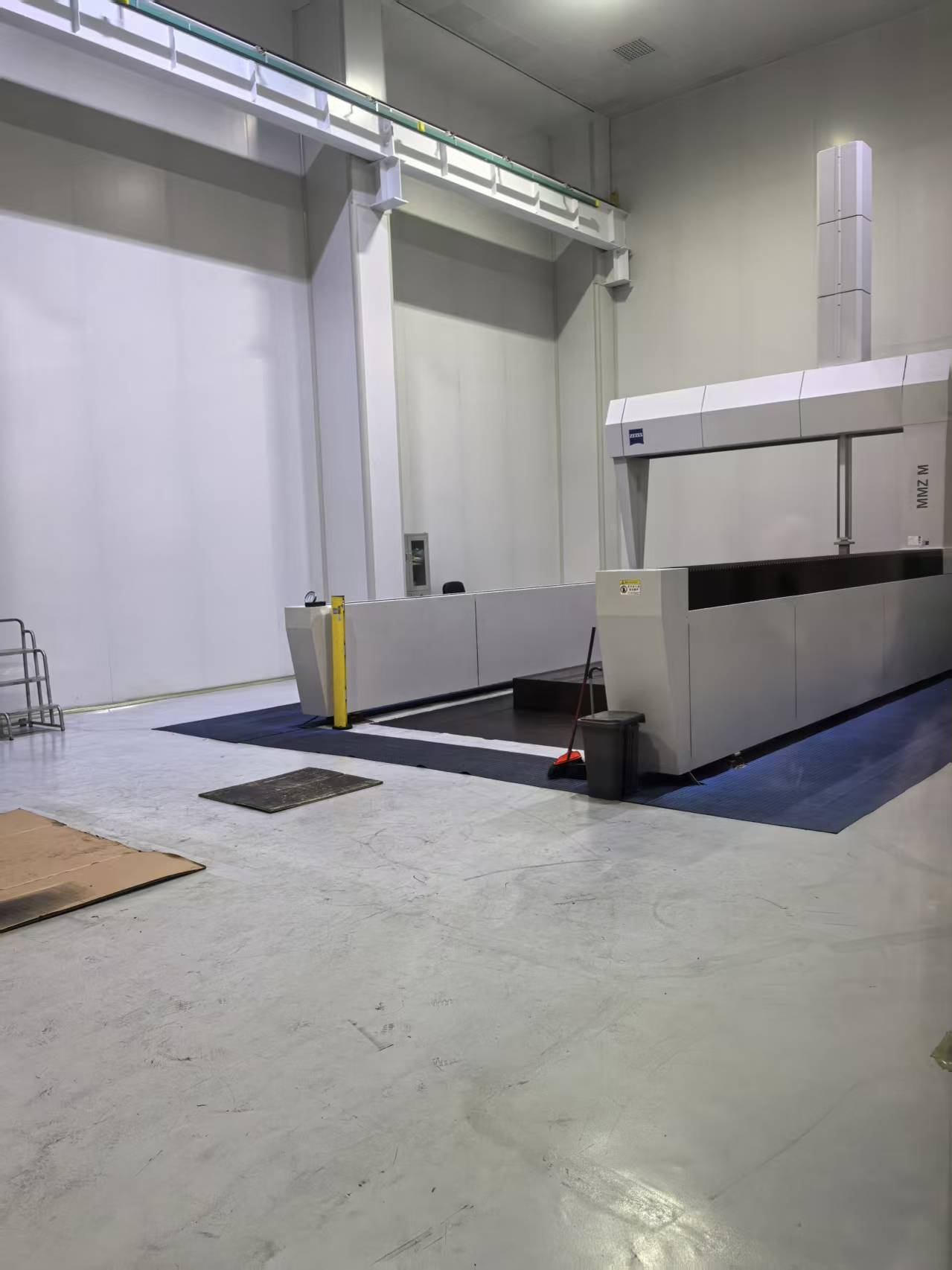
- The Ningbo production base runs imported equipment, including Japanese OKUMA gantry machining centers, KURUKI boring and milling machines, NIIGATA horizontal machining centers, and a German ZEISS coordinate measuring machine. That equipment supports both the machining precision of the machines built and trial machining and testing of finished units.
Quality control is stated as 100% testing, with a pre-shipment test as the acceptance criterion. On the commercial side, EUMASEIKI operates an OEM production model: customization covers voltage, logo, spindle, tool magazine, travel stroke, cooling system, chip conveyor and control system. Minimum order quantity is 1 unit, delivery terms are EXW, and payment terms are 50% in advance with 50% before loading.
Compliance note: certification paperwork is model-specific and should be verified against the exact machine being ordered. EUMASEIKI holds CE certification issued by Ente Certificazione Macchine Srl (ECM, Italy) under certificate 6L250729.WEMQD92, issued 29 July 2025 and valid to 28 July 2030, assessed against EN ISO 23125:2015. It also holds EAC certification under TR CU 010/2011 and TR CU 020/2011, certificate ЭАЭС N RU Д-CN.PA06.B.89520/25, issued 8 August 2025 and valid to 7 August 2030. Each certificate names a defined model scope — the published CE scope covers EV-series models together with the DU, DX and UB series, and the EAC scope covers the EV-series models listed on the certificate — so buyers should confirm in writing that the exact model is within scope for the destination market before ordering.
Step-by-Step Breakdown: How to Specify a Trunnion Table Machining Center
Specifying a trunnion table machining center for the first time follows a predictable sequence. Each step removes a category of risk.
- Map the faces of the part. List every machined face, the operations required on each, and the tolerance relationships between them. The number of faces and the tightest inter-face tolerance determine whether a trunnion is the right answer at all.
- Check the geometry against the table. For the UV260, the Ø260 mm rotary table defines the working envelope. Confirm the part's largest dimension, swing clearance when tilted, and total workpiece weight before going further.
- Estimate the tool count per cycle. Count the tools required across all faces. Multi-face jobs generally need more tools than single-face jobs, which is why tool-to-tool time — 1.5 s on the UV260 — belongs in the cycle-time model rather than in the brochure.
- Confirm the accuracy framework. Ask how positioning accuracy and repeatability are stated, and whether measurement follows ISO 230-2:2014. This makes quotations from different suppliers comparable.
- Verify compliance for the destination market. Match the certificate scope to the exact model and the market where the machine will be installed. Model-level verification prevents documentation problems at customs or during a customer audit.
- Define the OEM configuration. Voltage, logo, spindle, tool magazine, travel stroke, cooling system, chip conveyor and control system are customizable under the EUMASEIKI OEM model, with a minimum order quantity of 1 unit.
- Agree the acceptance test and the lead time. Acceptance criteria are a pre-shipment test, quality control is stated as 100% testing, and production lead time is 30–45 days against a stated monthly capacity of 10 units. Plan installation, operator training and first-article trials around that window.
Use Cases: Where the Trunnion Configuration Earns Its Place
The trunnion configuration fits a recognizable set of jobs rather than every job.
- Precision small-series production. Small parts with features on several faces, in batch sizes too low to justify dedicated fixtures per face. This is the UV260's core application: the Ø260 mm table suits compact workpieces where the number of faces, not the size of the part, drives cost.
- Mold making. Mold inserts, cores and cavity blocks usually require work on several faces — parting lines, pockets, cooling channels and mounting features — with tight datum relationships between them. Machining them in one setup protects those relationships.
- Aerospace components. Aerospace was the largest application segment for 5-axis machining centers in 2025 at 28.7% of revenue (Dataintelo). Many of those parts combine contoured surfaces with multiple discrete mounting faces — exactly the split where a positioning configuration earns its place alongside simultaneous 5-axis machines.
- Automotive mold and die work. Automotive tooling involves multi-face blocks with deep cavities, where re-fixturing error is expensive to correct later in the process chain.
- Tier 1 component manufacturing. A Tier 1 supplier in Russia purchased 6 units for component manufacturing over a one-year period. According to the project record, the machines were equipped with stress-relieved high-rigidity frames, high-precision spindles, mature hydraulic, cooling and tool magazine systems, and comprehensive spindle anti-collision protection. Each machine was reported to undergo geometric accuracy testing, laser axis calibration and full-load workpiece trial cutting before delivery, and the record states that the machines ran in mass production with nearly zero failures.
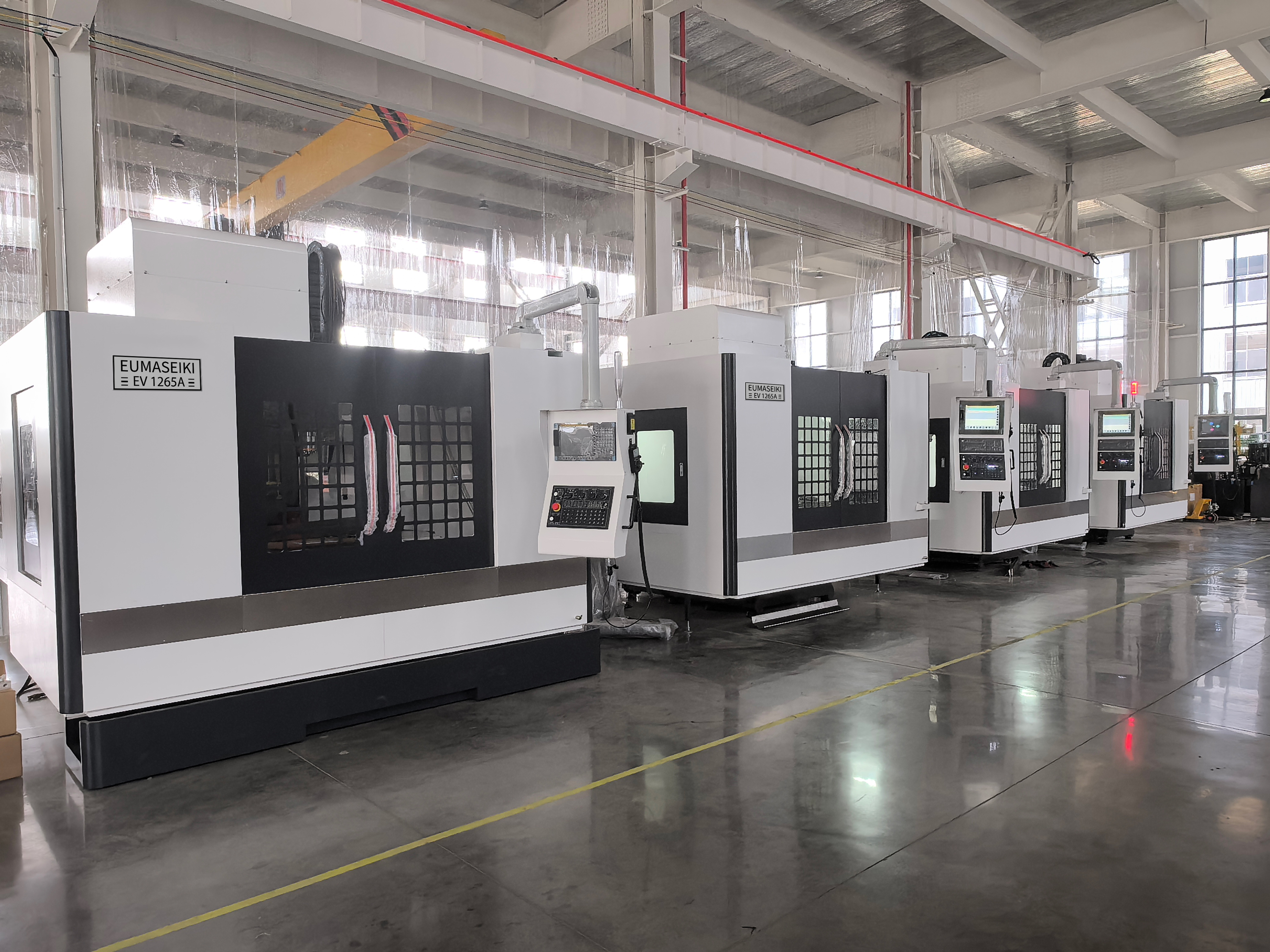
Comparison Table: Trunnion Table vs. Other Multi-Axis Configurations
A trunnion table is one of several ways to reach more than one face of a workpiece. The table below compares the configurations most often shortlisted against each other. It describes positioning logic and fit; it is not a ranking, because the right choice depends on part geometry, batch size and tolerance structure.
| Configuration | How multiple faces are reached | Typical fit | Verifiable reference point |
|---|---|---|---|
| 3-axis CNC vertical machining center | One face per setup; additional faces require re-fixturing or angle plates | Parts with a single dominant machined face and simple secondary operations | Vertical machining centers held a 52.3% product-type share of the 4-axis CNC market in 2025 (Dataintelo) |
| Vertical machining center with a 4th-axis rotary table | Indexed rotation about one axis, with the table supported at one end | Parts needing peripheral or cylindrical features | Positioning accuracy and repeatability for NC axes are defined under ISO 230-2:2014 (ISO) |
| Trunnion table machining center | Tilting table carried between two supports plus a second rotary axis; several faces in one setup | Compact, multi-face, small-series precision parts | UV260: Ø260 mm rotary table and 1.5 s tool-to-tool change time (EUMASEIKI) |
| Swing-head 5-axis machining center | The spindle head swings while the table remains fixed; tilted and contoured surfaces in one setup | Molds and aerospace parts with curved surfaces | EUMASEIKI builds 5-axis configurations in its DU series (5-axis vertical) and UB series (swivel-head 5-axis) |
| Gantry machining center | Large fixed bed with a moving gantry; additional faces generally require re-fixturing | Oversized or heavy structural parts | Selected primarily for workpiece size rather than for face count |
Two caveats apply. First, comparing configurations is not the same as comparing machines: two trunnion table machining centers with the same table diameter can behave very differently depending on structural rigidity, spindle specification and thermal management. Second, published parameters only mean something when they are measured the same way — which is why ISO 230-2:2014 remains the practical reference point for positioning accuracy and repeatability claims.
FAQ: Trunnion Table Machining Center Questions Buyers Ask
Is the UV260 trunnion table machining center certified for the EU and EAEU markets?
EUMASEIKI holds CE certification issued by Ente Certificazione Macchine Srl (ECM, Italy) under certificate 6L250729.WEMQD92, issued 29 July 2025 and valid to 28 July 2030, assessed against EN ISO 23125:2015 for the EU market. It also holds EAC certification under TR CU 010/2011 and TR CU 020/2011, certificate ЭАЭС N RU Д-CN.PA06.B.89520/25, issued 8 August 2025 and valid to 7 August 2030, for the EAEU market. Both certificates name a specific model scope, and scope is not automatically extended to every model a supplier builds. Before ordering, ask the supplier to confirm in writing that the exact model is listed within the certificate scope for the country of installation.
Can a trunnion table machining center be customized for OEM requirements?
Yes. EUMASEIKI operates an OEM production model in which the machine is built to the buyer's configuration. Customization covers voltage, logo, spindle, tool magazine, travel stroke, cooling system, chip conveyor and control system. The minimum order quantity is 1 unit, and the export markets served under this model include the EU and Southeast Asia. Buyers preparing an OEM specification should define the part family, the tooling strategy and the control system preference before requesting a quotation, because those three items drive most of the configuration decisions.
What are the purchasing terms for an OEM trunnion table machining center?
The stated purchasing terms are: minimum order quantity of 1 unit; delivery terms EXW; payment terms of 50% in advance and 50% before loading; and acceptance criteria based on a pre-shipment test. Because delivery is EXW, freight, insurance, import duties and destination-market compliance costs sit with the buyer and should be budgeted separately from the machine price.
How is quality verified before shipment?
EUMASEIKI states that it performs 100% testing as part of its quality control process, and the stated acceptance criterion is a pre-shipment test. In a documented project for a Tier 1 supplier in Russia covering 6 units over one year, each machine was reported to undergo geometric accuracy testing, laser axis calibration and full-load workpiece trial cutting before delivery; the project record also states that the machines ran in mass production with nearly zero failures. Buyers can use that structure as a template: ask for the test sequence, the instruments used, and the trial-cutting conditions in writing before the machine ships.
What is the production lead time and monthly capacity?
Production lead time is 30–45 days, against a stated monthly capacity of 10 units. With a minimum order quantity of 1 unit, that window applies from order confirmation, and it should be planned together with shipment, installation and operator training. To move to the next step, you can request a quotation or a sample machining trial for your own part geometry, review the full machine range in the EUMASEIKI product catalogue, or contact the team directly through eumaseiki.com.
Conclusion: Is a Trunnion Table Machining Center the Right Next Machine?
A trunnion table machining center is not a different species of machine tool. It is a workholding and positioning decision — a tilting table carried between two supports, combined with a second rotary axis — that converts several setups into one. The payoff is measured in datum continuity, fixture cost, work-in-progress and non-cut time. The trade-off is equally clear: it is a positioning solution, not a simultaneous contouring solution, so parts dominated by free-form curved surfaces belong on a different configuration.
For buyers new to the category, the qualification path is short. Confirm that the part fits the table, count the tools required per cycle, verify how accuracy is measured, confirm that the certificate scope names the exact model for the destination market, and agree the acceptance test and lead time in writing. The UV260 — Ø260 mm rotary table, 1.5-second tool-to-tool change, OEM customization from a minimum of one unit, and a 30–45 day lead time — provides a concrete reference point against which other trunnion table machining centers can be compared.
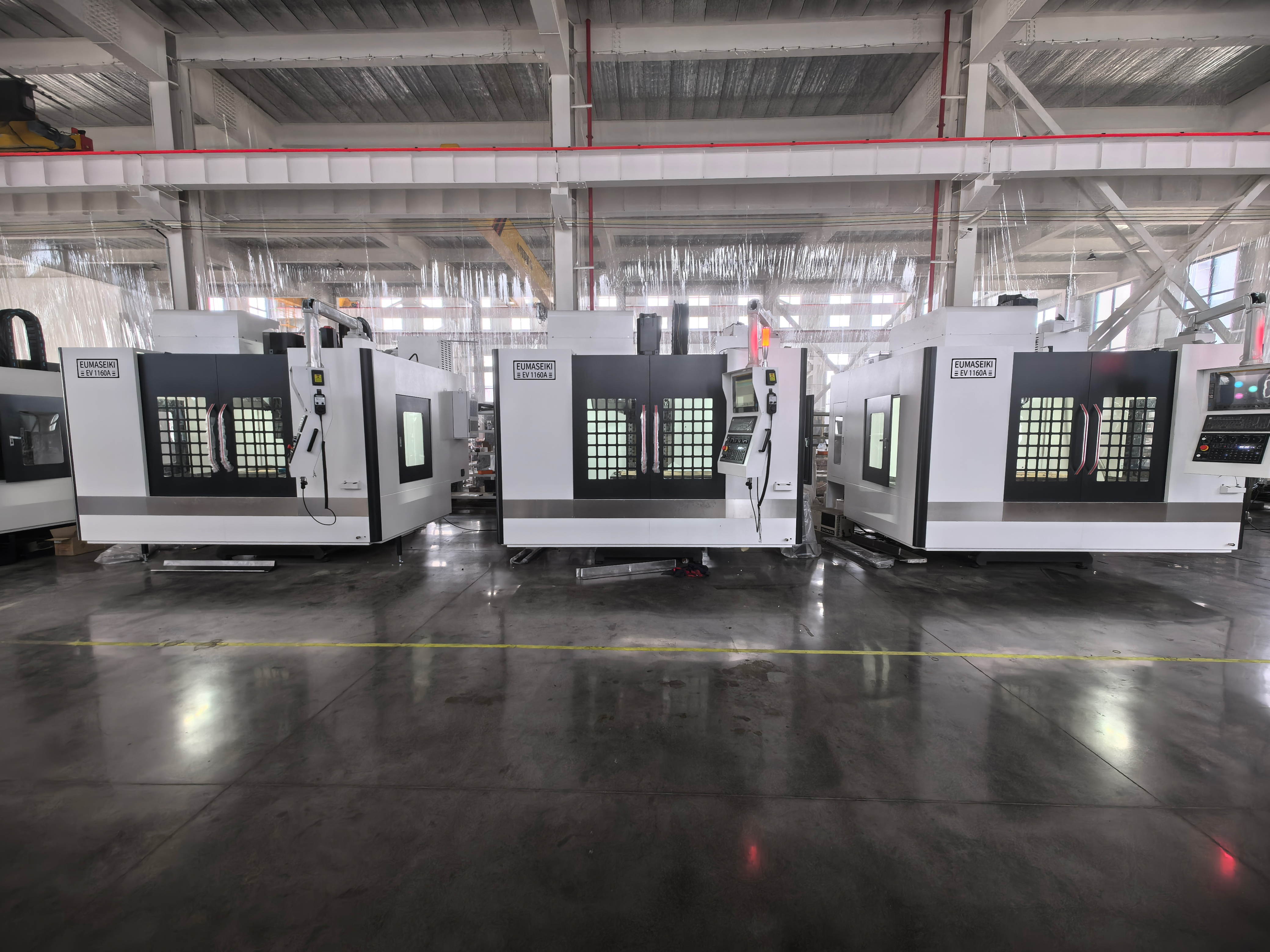
Next step: sample trial, quotation or catalogue
If you are evaluating your first trunnion table machining center, send us the part drawing and the face count. EUMASEIKI can review the geometry, propose an OEM configuration, and quote against a 30–45 day lead time with a minimum order quantity of 1 unit.
Email: info@eumaseiki.com | Tel / WhatsApp: +86 139 6883 7667 | Website: www.eumaseiki.com | Catalogue: Download the EUMASEIKI catalogue (PDF)
Wenzhou Euma Machinery Co., Ltd. — Building 2909, Faith-trust Center, Jinxiu Road, Lucheng, Wenzhou, Zhejiang, China.
Have Questions or Need More Details?
Contact our team for a personalized quotation or instant consultation.
Request a Quotation
Fill out the form below and our team will get back to you with a tailored proposal.
WhatsApp Direct Chat
Prefer to chat in real-time? Message us on WhatsApp for instant assistance & quick answers.
- Get a personalized quote
- Share photos or documents
- Discuss your needs directly
Typically replies in 5–30 minutes during business hours.