Cantilever Climbing Formwork vs. Hydraulic Auto Climbing Formwork: A Buyer's Comparison Guide
Choosing a climbing formwork system is one of the earliest decisions that locks in your crane strategy, your floor cycle, your safety envelope and your labor profile for the rest of a vertical concrete project. This guide compares Cantilever Climbing Formwork and Hydraulic Auto Climbing Formwork — both manufactured by FWK Lianggong Formwork (Yancheng Lianggong Formwork Co., Ltd.) — across the decision factors that actually change a procurement outcome: climbing mechanism, crane dependency, cycle speed, platform loading, safety and protection, and adaptation to changing floor plans.
Problem Definition: The Question Behind the Question
The stated question is "which climbing formwork system is better?" That framing almost always produces the wrong answer, because neither system is universally superior. Both Cantilever Climbing Formwork and Hydraulic Auto Climbing Formwork are self-supporting systems that transfer their loads into embedded anchor points rather than into ground-based shoring. Both are built from steel. Both are engineered for repeated, floor-by-floor vertical concrete work.
The decision-relevant question is narrower:
Given our crane availability, our core and shear wall geometry, our floor cycle target, our site safety regime and our labor cost, which climbing system produces the lowest realized cost per square meter of vertical concrete — without creating a schedule or compliance risk we cannot absorb?
Three constraints usually decide the outcome before technical preference enters the conversation:
- Crane availability and crane conflict. Cantilever Climbing Formwork is a suspended external formwork system lifted by tower cranes. Hydraulic Auto Climbing Formwork climbs on its own hydraulics and is not dependent on a tower crane. On projects where the tower crane is the bottleneck resource, this single difference can outweigh most other considerations.
- Geometry that changes or geometry that repeats. Continuous, straight high-rise core walls and shear walls favour a self-climbing hydraulic system. High and steep dam faces, sloped and curved surfaces, and retaining structures have traditionally used cantilever climbing formwork because it can be adjusted to fit slope and curvature.
- Safety and access. Both systems require working platforms, but the amount of integrated protection — multi-level platforms, fully enclosed working platforms, hanging platforms — differs between them.
Industry Background: Why Climbing Systems Are Being Re-Evaluated
Climbing formwork sits inside the engineered formwork segment, which held the largest product share of the global formwork market at 38.5% in 2025 (Dataintelo). The overall global formwork market reached USD 7.91 billion in 2025 and is projected to grow to USD 12.66 billion by 2034 (Dataintelo). Asia Pacific dominated the concrete formwork market with a revenue share of approximately 54.7% in 2025 (Fortune Business Insights).
At the supplier level, PERI Group and Doka Group are the dominant global market leaders, holding a combined market share of approximately 22% (Dataintelo). That concentration matters to buyers because it means the remaining market is served by a long tail of regional and specialist manufacturers — which makes structured supplier and system comparison, rather than brand recall, the practical way to reach a decision.
Two standards frameworks shape the compliance side of the decision. In the United States, safety requirements for concrete and masonry work, including formwork design and erection, are governed by ANSI/ASSP A10.9-2013 (R2018). In Europe, performance requirements and general design for falsework (shoring) are specified under EN 12812:2008. Climbing formwork is a specialized case, but buyers should expect the supplier to produce a traceable documentation trail for structural steel fabrication and welding alongside the product specification.
Detailed Solution: What Each System Actually Is
Cantilever Climbing Formwork (FWK-CB 240)
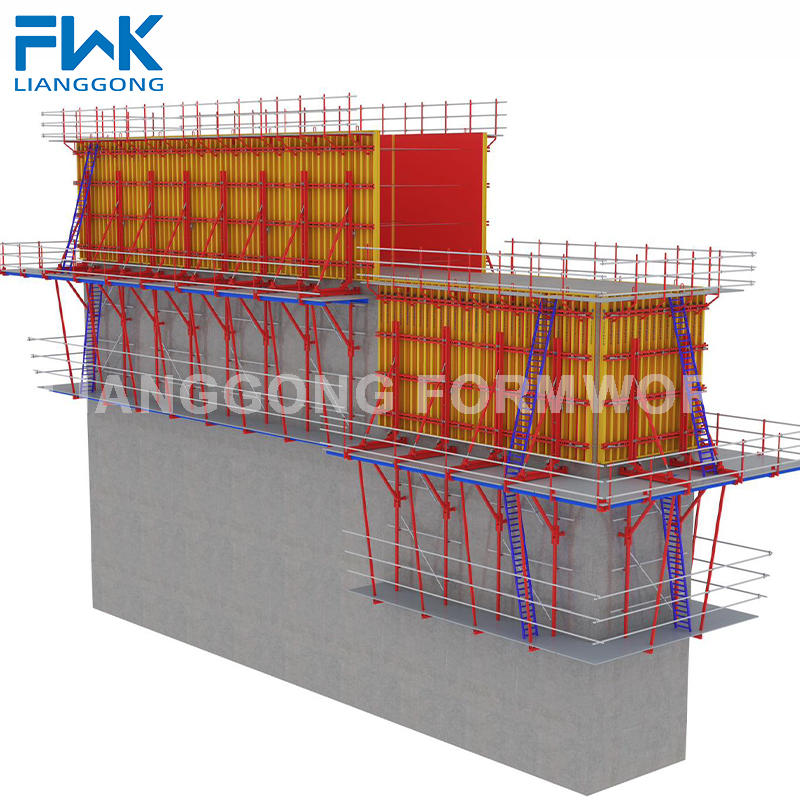
FWK-CB 240 is a steel cantilever climbing formwork system. It is a suspended external formwork system lifted by tower cranes. Its core components are the anchor system, the formwork panel, the bracket — which includes tripod, main waler and diagonal brace — the suspended platform, and the retrusive device.
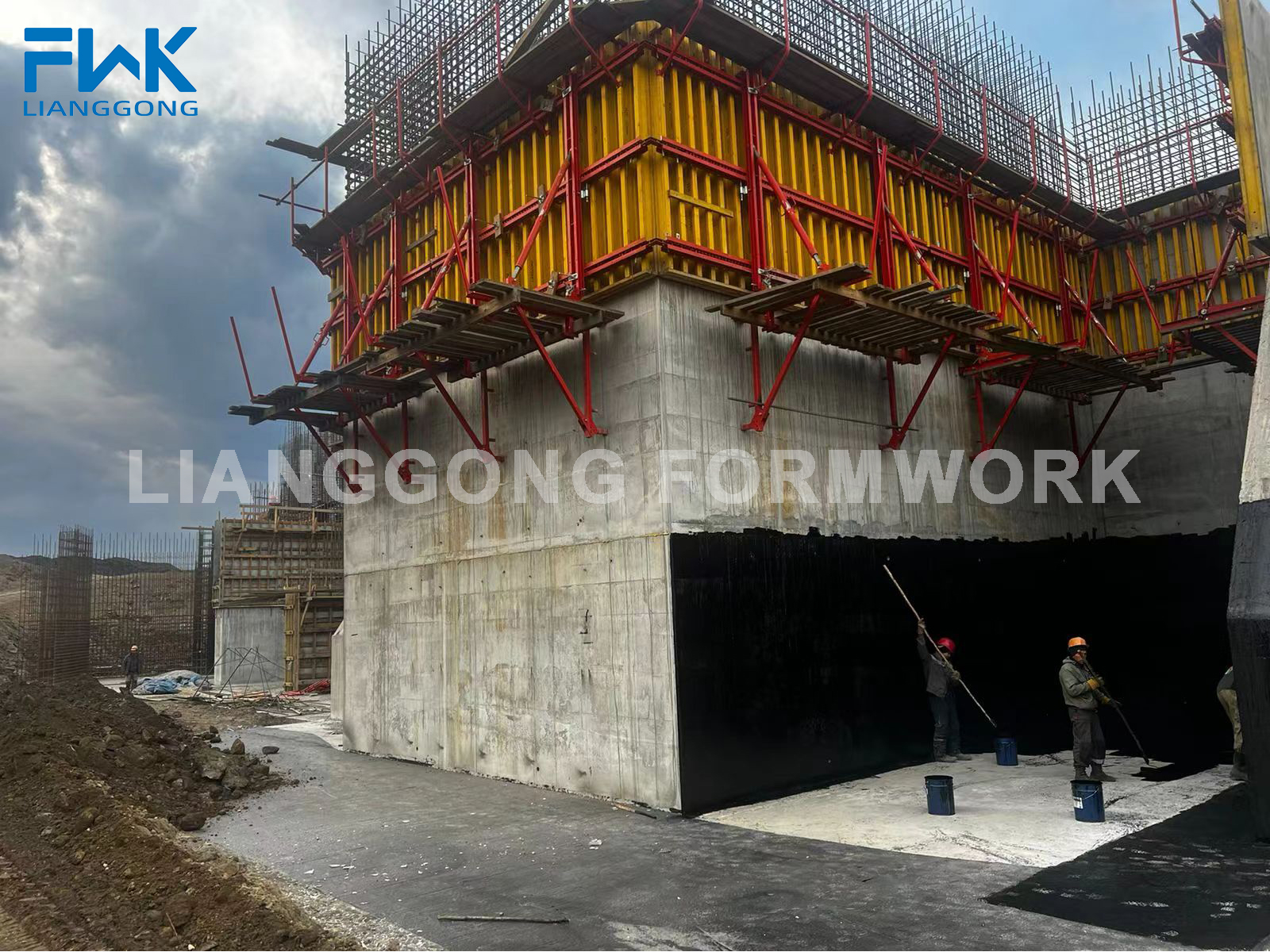
Its working principle is that embedded parts bear all loads of the formwork, the frame body and the construction activity, so no additional scaffolding is required beneath the system. The climbing cycle follows a repeating sequence: retract the formwork → lift the formwork integrally → close the formwork for pouring. That cycle allows layered and continuous construction of high-altitude concrete.
- Bracket height: 10–15 meters
- Operating width: 900 mm
- Material: Steel
- Load path: embedded anchors, self-supporting, no bottom supporting brackets
- Operation mode: manual on-site disassembly and turnover reuse
- Matched equipment: adjustable diagonal brace, anchor system, ring-lock scaffolding system
- Reuse profile: the formwork and anchor system feature high reusability, and the ring-lock scaffolding system is hot-dip galvanized
Historically, the system has been applied where a structure is high and steep, where surfaces slope or curve, and where the formwork must be adjusted to follow the shape of the concrete. It is described as self-supporting without bottom supporting brackets, with high structural rigidity, stable operation and good concrete surface quality — properties that make it suitable for hydraulic dam projects and heavy retaining structures as well as vertical building elements.
Hydraulic Auto Climbing Formwork (FWK-ACB 120)
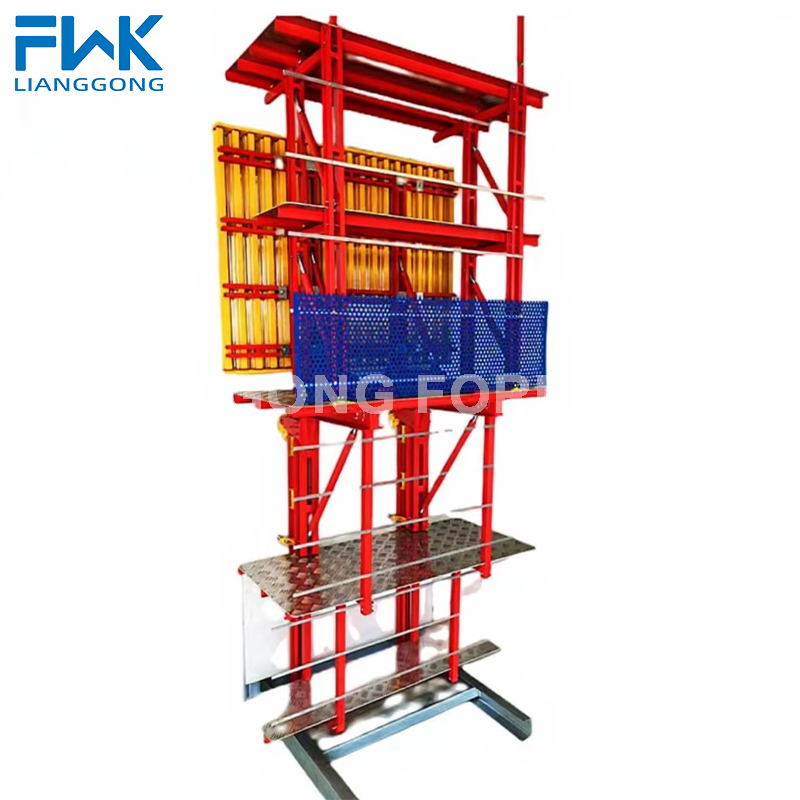
FWK-ACB 120 is a steel hydraulic auto climbing formwork system with an electronically controlled hydraulic lifting system. It climbs using hydraulic cylinder force, achieving alternating climbing between the rails and the frame. The practical consequence is that the system is not dependent on a tower crane to move upward.
- Material: Steel
- Lifting: electronically controlled hydraulic lifting system
- Cylinder stroke: 300 mm
- Rate thrust: 100 kN & 120 kN
- Double cylinder synchronization error: ≤20 mm
- Hydraulic pump station flow: n × 2 L/min, where n is the number of seats
- Platform loads, diagonal brace type: top platform ≤0.75 kN/m²; other platforms ≤1 kN/m²
- Platform loads, truss type: top platform ≤4 kN/m²; other platforms <1 kN/m²
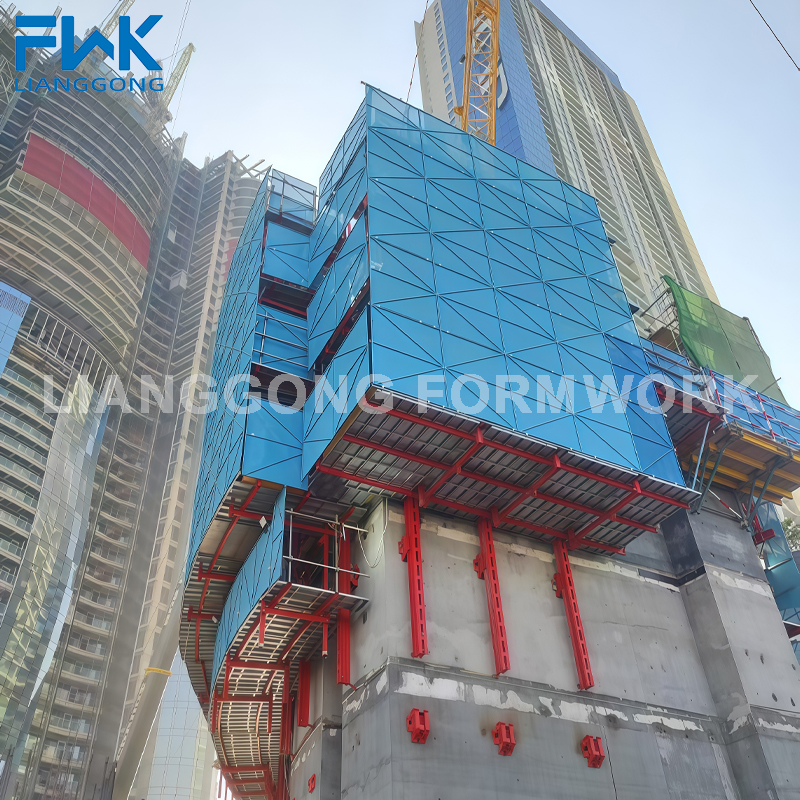
The system remains wall-attached during climbing, so it does not need to be dismantled and reinstalled at ground level. It carries integrated multi-level working platforms, including a fully enclosed working platform and a hanging platform for embedment removal and concrete cleaning. Typical matched equipment includes the hydraulic lifting system, guide rail, operating platform, anchor system, formwork system, bracket system and maintenance system.
Why the Two Systems Are Not Interchangeable
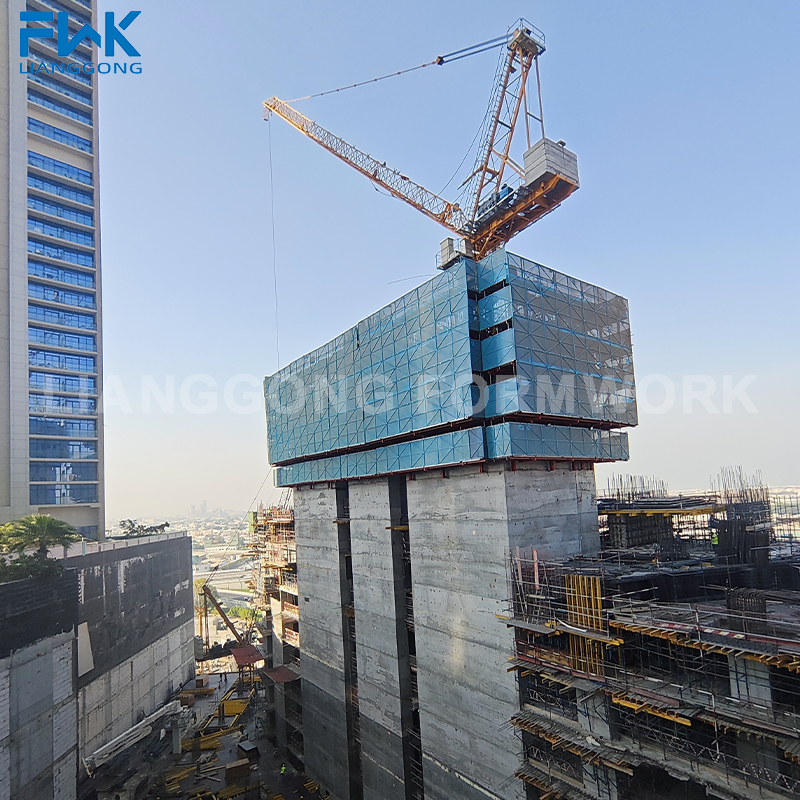
The mechanical difference is simple: one is lifted, the other lifts itself. Everything downstream follows from that. A crane-lifted cantilever system converts tower crane time into vertical progress, so its cycle speed is coupled to crane availability and to the crane sharing plan on a busy site. A hydraulic auto climbing system converts hydraulic thrust into vertical progress, so its cycle speed is coupled to hydraulic performance, anchor setting and platform discipline instead.
Step-by-Step Breakdown: A Seven-Step Selection Sequence
Step 1 — Map the vertical geometry
Identify which vertical elements the climbing system must serve: core walls, shear walls, special-shaped columns and piers, dam faces, retaining walls or coal bunker walls. If the profile is continuous and repetitive, a hydraulic self-climbing system is naturally efficient. If the profile slopes, curves or must be adjusted to fit the structure's surface, account for how much adaptation each system requires.
Step 2 — Audit crane availability and crane conflict
Establish how many lifts per floor the tower crane can realistically dedicate to formwork, and what else competes for those lifts. Cantilever Climbing Formwork requires tower crane lifting. Hydraulic Auto Climbing Formwork climbs via hydraulic cylinders with zero tower crane dependency, and hydraulic climbing reduces crane usage on site.
Step 3 — Set the floor cycle target
Translate the programme into a required cycle time per level. On the Trinidad and Tobago hospital project using FWK-ACB 120, the system completed each structural level within a shortened cycle time and accelerated the overall construction schedule. Against that benchmark, check whether a crane-dependent lift cycle can still hit the target on your site.
Step 4 — Define the safety and access envelope
Decide how much integrated protection the project requires. Hydraulic Auto Climbing Formwork provides integrated multi-level working platforms and eliminates the need for additional scaffolding, which improves overall site safety management. Cantilever systems use a suspended platform together with matched equipment such as adjustable diagonal braces, anchor systems and ring-lock scaffolding.
Step 5 — Check platform loading against real site usage
Compare the designed platform loads with what crews will actually place on the platforms. FWK-ACB 120 specifies top platform ≤0.75 kN/m² and other platforms ≤1 kN/m² for the diagonal brace type, and top platform ≤4 kN/m² and other platforms <1 kN/m² for the truss type. If the planned use exceeds these values, review the configuration rather than assuming a larger margin.
Step 6 — Confirm compliance and fabrication documentation
Verify certification scope, not just certificate existence. The applicable Quality Management System certification (certificate number 03425Q50028R4M, issued by BEIJING HANGXIE CERTIFICATION CENTER CO., LTD., conforming to GB/T 19001-2016/ISO 9001:2015) covers hydraulic auto-climbing formwork and cantilevered climbing formwork for building construction. Welding is certified to EN ISO 3834-2:2021 under certificate number 23/1014-3834 issued by SGS Italia S.p.A., and factory production control holds certificate 1381-CPR-889 issued by SGS Italia S.p.A., compliant with EN 1090-1:2009+A1:2011 and EN 1090-2:2018+A1:2024.
Step 7 — Validate commercial and support terms
Confirm mode of production (OEM/ODM available), customization scope (Logo, Size), minimum order quantity, lead time, quality control regime and after-sales model before the technical preference is fixed.
Field Validation: What the Two Systems Look Like in Service
Hydraulic Auto Climbing Formwork — Dubai Safa 2 High-end Apartment Project. The system was used for high-rise building core walls, shear walls, and some special-shaped columns and piers. The site combines extreme summer heat, frequent sandstorms and the tight schedules typical of super high-rise projects, alongside a strong emphasis on reducing reliance on tower cranes. The project also requires a mirror-like concrete finish, and higher local labour costs push the site toward efficient quick-stripping systems. Matched equipment includes imported birch plywood or high-quality film-faced plywood panels, climbing cones and high-strength screw rods, and a fully enclosed working platform plus hanging platform, which the local safety regime treats as mandatory.
Hydraulic Auto Climbing Formwork — Hospital Project, Trinidad and Tobago. FWK-ACB 120 was applied to the reinforced concrete core structures and vertical shear walls of the hospital. The integrated hydraulic lifting mechanism allowed the entire formwork assembly to climb steadily without reliance on tower cranes or external lifting equipment. Because the system remained wall-attached and did not require dismantling or reinstallation at ground level, site space was optimized and material damage minimized. Synchronized or independent climbing of brackets and rails supported smooth and stable operation, and high construction accuracy allowed structural deviations to be corrected floor by floor against strict engineering tolerances.
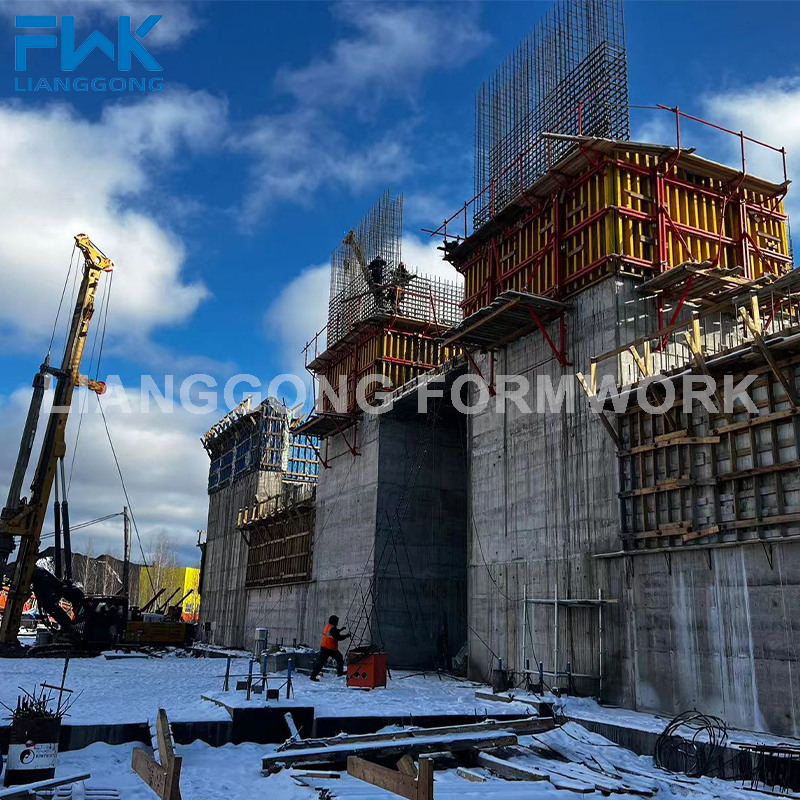
Cantilever Climbing Formwork — Retaining Wall Project, Russia. The system was used for coal bunker wall construction under severe cold, difficult logistics and an extremely short effective outdoor construction period. The lifting cycle — retract the formwork, lift the formwork integrally, close the formwork for pouring — delivered layered and continuous high-altitude concrete work. Matched equipment included push-pull props, and the specification called for high-strength film-faced plywood, low-temperature-resistant treatment and anti-corrosion treatment.
Cantilever Climbing Formwork — Kalimantan Dam Project, Indonesia. Cantilever formwork is described as key equipment for high and steep dam construction: self-supporting without bottom supporting brackets, adjustable to fit the slope and curved surface of the dam, with high structural rigidity, stable operation and good concrete surface quality. Operation mode was manual on-site disassembly and turnover reuse, with matched equipment covering adjustable diagonal braces, the anchor system and a hot-dip galvanized ring-lock scaffolding system. The specification emphasized high reusability for both the formwork and the anchor system.
Comparison Table: Decision Factors Side by Side
| Decision Factor | Cantilever Climbing Formwork (FWK-CB 240) | Hydraulic Auto Climbing Formwork (FWK-ACB 120) |
|---|---|---|
| Material | Steel | Steel |
| Climbing mechanism | Tower-crane lifted; retract formwork → lift formwork integrally → close formwork for pouring | Electronically controlled hydraulic lifting; alternating climbing between rails and frame |
| Crane dependency | Requires tower crane lifting | Zero tower crane dependency |
| Load path | Embedded parts bear all loads; no additional scaffolding required | Wall-attached; no dismantling or reinstallation at ground level |
| Key dimensions / hydraulic figures | Bracket height 10–15 m; operating width 900 mm | Cylinder stroke 300 mm; rate thrust 100 kN & 120 kN; double cylinder synchronization error ≤20 mm; pump station flow n × 2 L/min |
| Platform loading | — | Diagonal brace type: top ≤0.75 kN/m², others ≤1 kN/m². Truss type: top ≤4 kN/m², others <1 kN/m² |
| Working platforms | Suspended platform; matched with ring-lock scaffolding system | Integrated multi-level working platforms; fully enclosed working platform and hanging platform |
| Adaptation to sloping or curved surfaces | Can be adjusted to fit slope and curved surface (dam application) | Adapts to complex core structures, special-shaped columns and piers |
| Typical vertical applications | High and steep dam faces; retaining walls; coal bunker walls; layered high-altitude concrete | High-rise core walls and shear walls; special-shaped columns and piers |
| Operation mode | Manual on-site disassembly and turnover reuse | Automated hydraulic climb cycle; wall-attached throughout |
| Matched equipment | Adjustable diagonal brace, anchor system, ring-lock scaffolding system, push-pull prop | Hydraulic lifting system, guide rail, operating platform, anchor system, formwork system, bracket system, maintenance system |
| Documented project conditions | Severe cold with difficult logistics (Russia); remote tropical dam site (Indonesia) | Extreme heat, sandstorms and tight super high-rise schedules (Dubai); high temperature, rainy, humid and coastal conditions (Trinidad and Tobago) |
The table deliberately avoids declaring a winner. On a project where the tower crane is fully committed elsewhere, the hydraulic system's zero crane dependency is decisive. On a sloping dam face or a heavy retaining structure, the cantilever system's ability to be adjusted to the surface geometry is decisive. On a straight, repetitive residential core with fast cycles, the hydraulic system's self-climbing cycle and reduced labour intensity tend to win.
FAQ
Do both systems sit under the same quality and compliance certification scope?
Yes — within the same manufacturer's system. The Quality Management System certification held for this product range, certificate number 03425Q50028R4M issued by BEIJING HANGXIE CERTIFICATION CENTER CO., LTD., conforms to GB/T 19001-2016/ISO 9001:2015 and covers hydraulic auto-climbing formwork and cantilevered climbing formwork for building construction. The company also holds ISO 14001:2015 environmental management certification (certificate 0342026E0058R101) and ISO 45001:2018 occupational health and safety management certification (certificate 0342026S0061R101), both issued by BEIJING HANGXIE CERTIFICATION CENTER CO., LTD. Steel fabrication documentation is supported by EN ISO 3834-2:2021 welding certification, certificate 23/1014-3834 issued by SGS Italia S.p.A., and by a Certificate of Conformity of the Factory Production Control, certificate 1381-CPR-889 issued by SGS Italia S.p.A., compliant with EN 1090-1:2009+A1:2011 and EN 1090-2:2018+A1:2024. Buyers should check that the certificate scope names the specific product family they are purchasing, not just the company.
Which system removes tower crane dependency, and what capability does that unlock?
Hydraulic Auto Climbing Formwork FWK-ACB 120 removes tower crane dependency. It climbs using hydraulic cylinders with an electronically controlled lifting system, achieving alternating climbing between the rails and the frame. Rate thrust is 100 kN & 120 kN, cylinder stroke is 300 mm, and double cylinder synchronization error is ≤20 mm. In practice, the whole assembly climbs without external lifting equipment, remains wall-attached without dismantling or reinstallation at ground level, and carries integrated multi-level working platforms. On the Trinidad and Tobago hospital project this configuration removed the need for tower cranes for climbing, reduced crane usage on site, optimized site space, minimized material damage, and allowed structural deviations to be corrected floor by floor. Cantilever Climbing Formwork FWK-CB 240, by contrast, is a suspended external formwork system lifted by tower cranes, with a bracket height of 10–15 meters and an operating width of 900 mm.
What actually drives the commercial difference between the two systems?
The commercial difference is driven by resource consumption rather than by a published price. For Cantilever Climbing Formwork, the main cost drivers are tower crane time for every lift cycle, manual on-site disassembly and turnover labor, and the plywood and treatment specification — including high-strength film-faced plywood, low-temperature-resistant treatment and anti-corrosion treatment where the climate demands it. For Hydraulic Auto Climbing Formwork, the main cost drivers are the hydraulic lifting system, guide rails, anchor system and multi-level platform scope, balanced against reduced crane usage, reduced labor intensity and the elimination of additional scaffolding. On the Trench Box side of the same manufacturer's range, a documented municipal project in Malaysia recorded a construction period shortened by 20% — evidence that system choice, not only unit price, moves project-level cost. Buyers should therefore compare total resource consumption per level, not the equipment line item alone.
How can we validate a climbing formwork configuration before committing to a full order?
Validation runs through specification review, customization definition and production control. FWK Lianggong Formwork supports OEM/ODM production with customization covering Logo and Size, applies 100% test quality control, and provides on-site support and remote guidance after delivery. For projects with unusual geometry — dam slopes, curved surfaces, special-shaped columns and piers, or core walls that change plan — the configuration should be reviewed against the actual vertical geometry before production, because adaptation to slope and curvature is exactly where the two systems diverge most. The company's technical department works alongside the sales department to match the system to project needs, and products are available either off-the-shelf or customized.
What are the lead time and minimum order quantity?
The standard lead time is 30–35 days, with a minimum order quantity of one container. Monthly production capacity is 1000 tons. Because climbing formwork configurations are project-specific — bracket heights of 10–15 meters for FWK-CB 240, hydraulic cylinder and platform configurations for FWK-ACB 120 — the practical next step is to confirm your vertical geometry and platform loading requirements first, then request a quotation and a download of the full product catalogue so the specification, certification scope and delivery schedule can be reviewed together.
Conclusion: A Recommendation Framework, Not a Verdict
Neither Cantilever Climbing Formwork nor Hydraulic Auto Climbing Formwork is universally superior. They solve the same problem — carrying vertical concrete upward floor by floor on embedded anchors — through two different mechanisms, and each mechanism rewards a different project profile.
- Choose Hydraulic Auto Climbing Formwork (FWK-ACB 120) when: the tower crane is a bottleneck; core walls and shear walls are continuous and repetitive; the cycle target is aggressive; integrated multi-level platforms reduce the need for additional scaffolding; and the site demands high-precision, floor-by-floor alignment correction.
- Choose Cantilever Climbing Formwork (FWK-CB 240) when: the structure is high and steep; surfaces slope or curve and the formwork must be adjusted to fit them; the project is a heavy retaining or dam-type structure; and a tower crane lift plan is already in place and available for formwork.
For teams that need both — for example, a project with a repetitive residential core and a complex lower structure — the two systems can be specified together within one supply relationship, which is how the manufacturer's product range is structured.
Send Us Your Vertical Geometry — We Will Recommend the Right Climbing System
Share your core and shear wall layout, platform loading requirements and cycle target. Our technical team will compare FWK-CB 240 and FWK-ACB 120 against your project and return a configuration recommendation, OEM/ODM options, and a quotation.
Email: sales01@lianggongform.com | WhatsApp: +86 18201051212 | Website: www.lianggongformwork.com
FWK Lianggong Formwork is the brand of Yancheng Lianggong Formwork Co., Ltd., founded in 2010 in Jianhu County, Yancheng City, Jiangsu Province, China. The company operates a 12,870 m² facility with 230 employees, a 45-person R&D team, an annual output of 12,000 tons, and a 70% export ratio serving North America, South America, the Middle East, Europe and Africa.
Have Questions or Need More Details?
Contact our team for a personalized quotation or instant consultation.
Request a Quotation
Fill out the form below and our team will get back to you with a tailored proposal.
WhatsApp Direct Chat
Prefer to chat in real-time? Message us on WhatsApp for instant assistance & quick answers.
- Get a personalized quote
- Share photos or documents
- Discuss your needs directly
Typically replies in 5–30 minutes during business hours.