
FWK H20 Timber Beam Formwork vs. B-FORM (Steel Frame Formwork): A 2026 Comparative Decision Guide
FWK H20 Timber Beam Formwork vs. B-FORM (Steel Frame Formwork): A 2026 Comparative Decision Guide
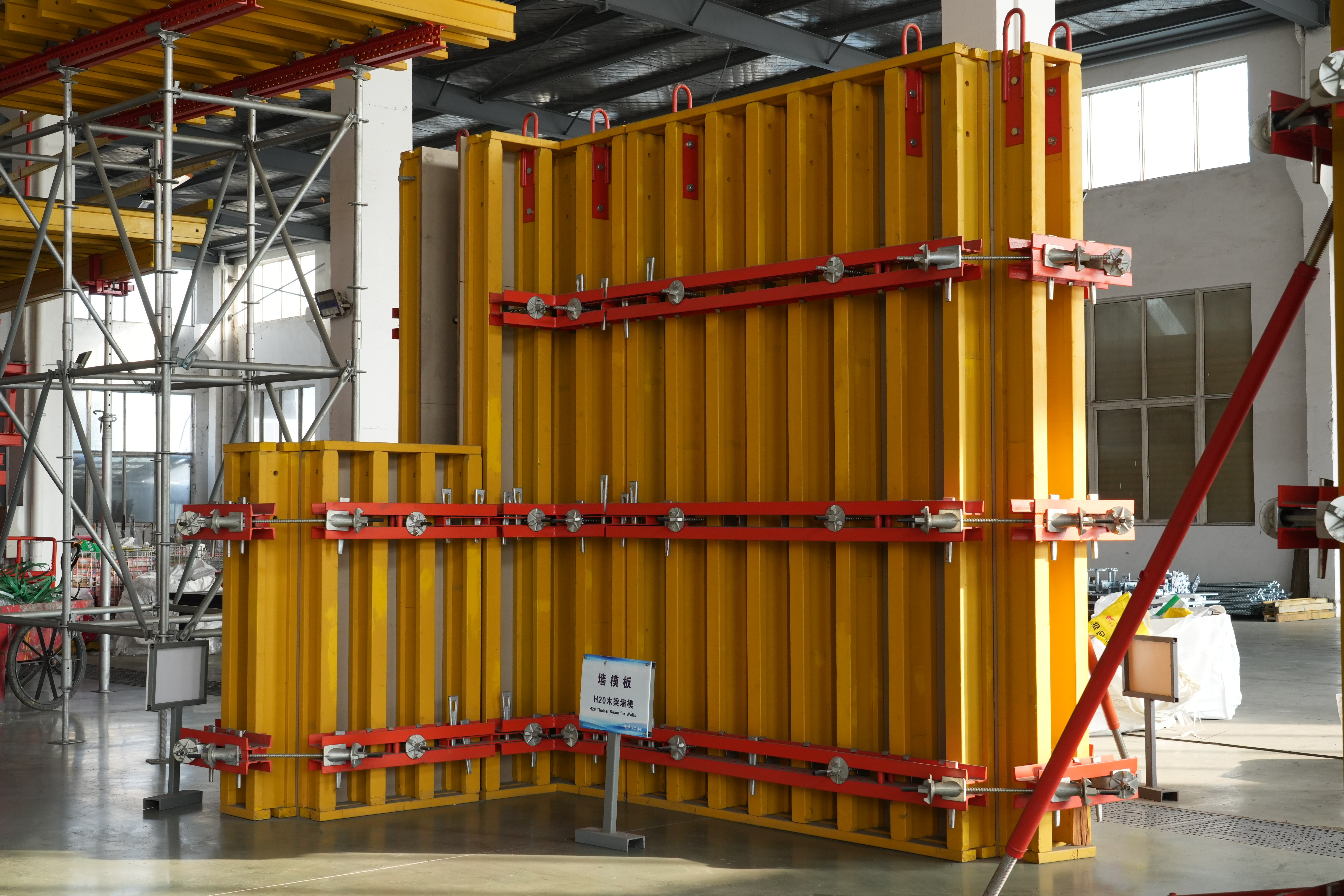
Selecting the right formwork system directly impacts project speed, concrete quality, and total construction cost. FWK Lianggong Formwork (Yancheng Lianggong Formwork Co., Ltd.) offers two widely adopted engineered systems: the FWK H20 Timber Beam Formwork and the FWK B-FORM (Steel Frame Formwork). This guide provides a fact-based comparison to support procurement decisions for industrial buyers in 2026.
Problem Definition
Construction projects face a fundamental tension between formwork performance and lifecycle cost. Conventional timber beam formwork often suffers from low turnover rates, poor dimensional stability, and high cumulative replacement expenses. Similarly, basic steel frame formwork can be heavy, less durable, and prone to panel deformation. Buyers need a clear understanding of how engineered alternatives perform across key criteria to avoid costly misprocurement.
Industry Background
The global formwork market reached USD 7.91 billion in 2025 and is projected to grow to USD 12.66 billion by 2034 (Dataintelo). Engineered formwork (modular and reusable systems) held the largest product share at 38.5% of the total market in 2025 (Dataintelo). Asia Pacific dominated with a revenue share of approximately 54.7% (Fortune Business Insights). Within this landscape, FWK Lianggong Formwork—established in 2010, operating a 12,870 m² factory with 230 employees and an annual output of 12,000 tons—manufactures a full range of formwork including H20 timber beam, steel frame, aluminum, climbing, and B-FORM systems. The company exports to North America, South America, Middle East, Europe, and Africa.
Detailed Solution: FWK H20 Timber Beam Formwork vs. Conventional H20 Timber Beam Formwork
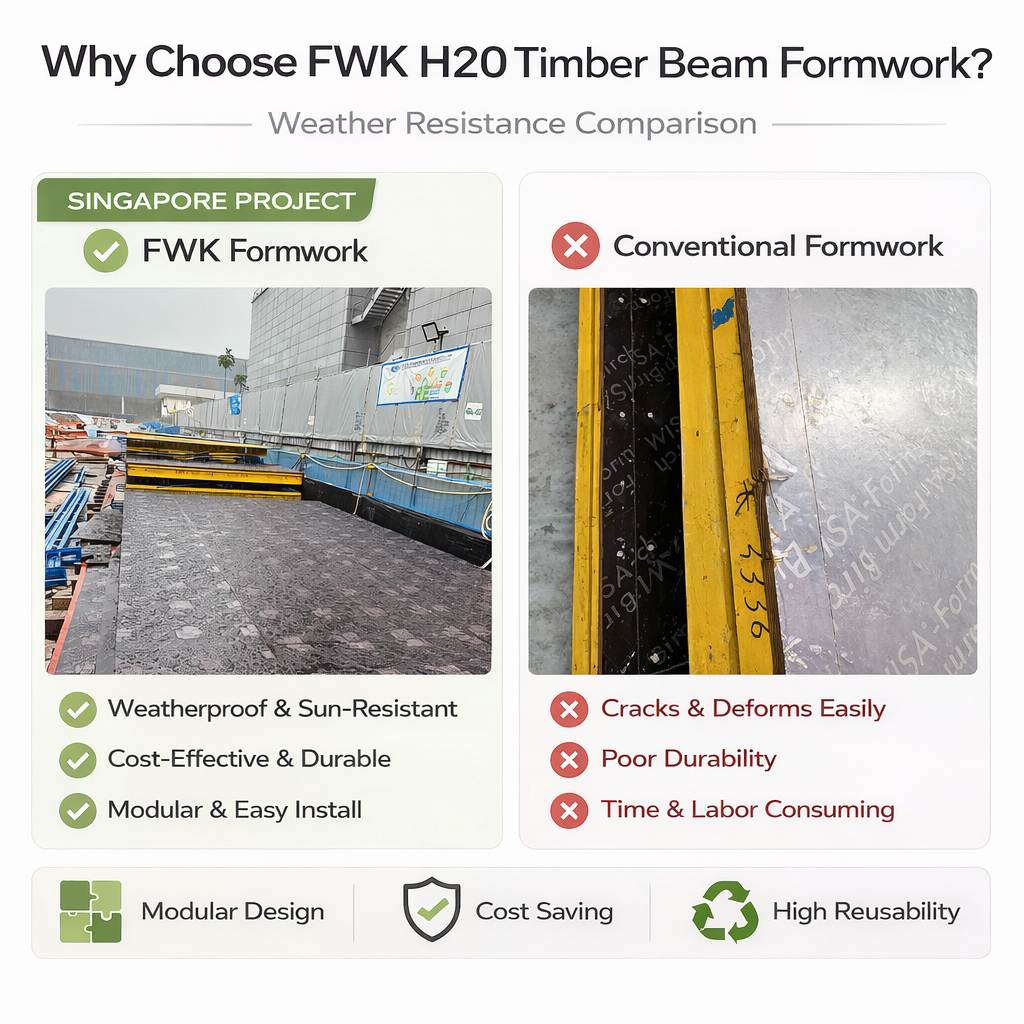
FWK H20 Timber Beam Formwork is designed for projects requiring high adaptability to complex geometries. Compared to conventional H20 timber beam formwork, FWK's product features lightweight material with strong adaptability, high water absorption (conducive to curing), standard dimensions, high density, and wear and high temperature resistance. The double-sided usable surface yields a turnover rate of approximately 26–40 times, versus 5–8 times for conventional beams which are single-sided only. The high flexural strength meets fair-faced concrete requirements.
Detailed Solution: FWK B-FORM (Steel Frame Formwork) vs. Conventional B-FORM
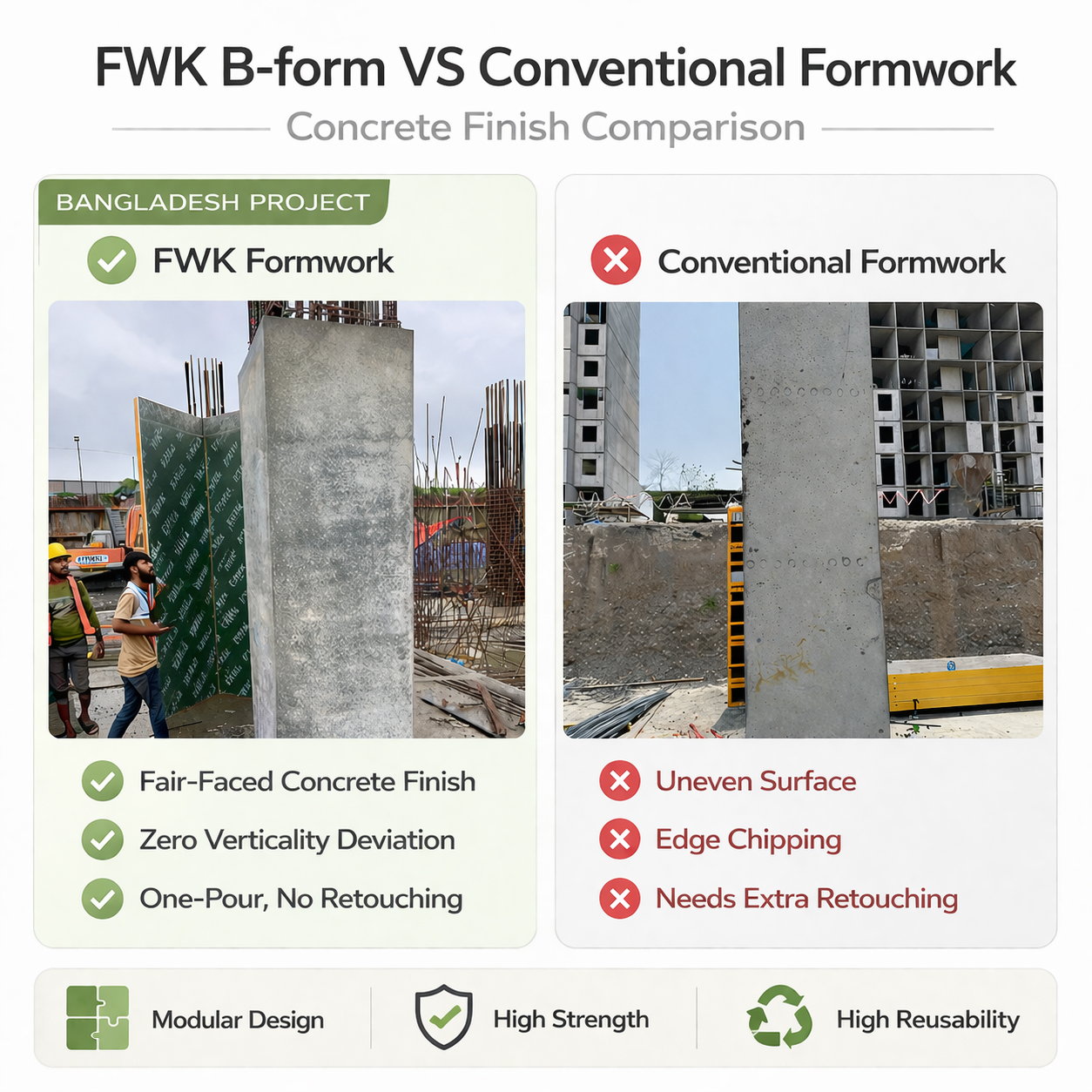
FWK B-FORM is an integrated steel frame panel system combining a high-strength steel frame with a laminated board. Compared to conventional B-FORM (which uses plywood + simple steel frame with lower load capacity), FWK B-FORM offers rapid installation, single-operator capability, and a high load-bearing capacity. The panel can be used 20–40 times and the steel frame 100+ times, significantly outlasting conventional counterparts (panel 15–30 times, steel frame 50+ times). Annual maintenance cost is less than 5% of system value, compared to over 15% for conventional B-FORM. Formwork installation speed reaches 20–25 m² per person per day versus 12–15 m² for conventional systems.
Step-by-Step Breakdown: How to Choose Between FWK H20 Timber Beam and B-FORM
- Assess Project Geometry: For irregular shapes, variable cross-sections, and medium-scale projects, FWK H20 Timber Beam Formwork allows quick manual cutting and on-site fabrication of custom shapes. For high-rise residential, core walls, shear walls, and columns requiring consistent finish and speed, FWK B-FORM is preferred.
- Compare Turnover Requirements: If the project requires 25+ reuse cycles, both systems exceed conventional options. B-FORM offers longer steel frame life (100+ uses), suitable for long-term fleet management.
- Evaluate Installation Speed: B-FORM achieves 20–25 m²/person/day, about 60% faster than conventional B-FORM, reducing labor costs.
- Analyze Total Cost of Ownership: While FWK systems have higher initial investment, the dual service life and lower maintenance costs deliver lower cumulative cost over multiple projects versus conventional alternatives.
- Consider Maintenance and Risk Control: FWK B-FORM requires only release agent application; steel frame stacking height limited to 18 frames per stack. FWK H20 beams need dry storage and fire prevention but resist blistering at 35°C outdoor temperature.
Use Cases
- FWK H20 Timber Beam Formwork: Special-shaped component construction, medium-scale engineering, large-area horizontal structures, residential building construction, projects needing on-site custom cutting.
- FWK B-FORM (Steel Frame Formwork): High-rise and super high-rise buildings, core walls, shear walls, columns, variable cross-section walls with strict requirements for concrete appearance, verticality, and flatness.
Comparison Table: FWK Engineered Systems vs. Conventional Alternatives
H20 Timber Beam Formwork Comparison
| Parameter | FWK H20 Timber Beam | Conventional H20 Timber Beam |
|---|---|---|
| Material Properties | Lightweight, strong adaptability, high water absorption (conducive to curing), standard dimensions, high density, wear and high temperature resistant | Poor plasticity, low water absorption, non-standard dimensions, non-multilayer board, inferior film coating, poor wear and high temperature resistance |
| Turnover Rate | ~26–40 times (double-sided) | 5–8 times (single-sided only) |
| Flexural Strength | High, meets fair-faced concrete requirements | Slightly lower, prone to delamination under high temperature |
| Temperature & Moisture Resistance | Resists direct sunlight at 35°C; no blistering after rain evaporation; only release agent needed | Deforms at 35°C; blisters after rain; peels after three uses |
| Cost Profile | Dual service life with single purchase, high reusability | Low initial cost but short service life; total cumulative cost far exceeds FWK |
Steel Frame (B-FORM) Formwork Comparison
| Parameter | FWK B-FORM | Conventional B-FORM |
|---|---|---|
| Construction | High-strength steel frame + laminated board | Plywood + simple steel frame |
| Weight & Load | Single-operator capable, high load-bearing capacity | Heavy, relatively lower load-bearing capacity |
| Panel Life | 20–40 uses (depending on model) | 15–30 uses |
| Steel Frame Life | 100+ uses | 50+ uses |
| Installation Speed | 20–25 m²/person/day | 12–15 m²/person/day |
| Annual Maintenance Cost | <5% of system value | >15% of system value |
| Modularity | Modular, pre-assembled, positioned as a complete unit; no repeated adjustments | Loose assembly, piece-by-piece, on-site matching, repeated adjustments |
| Long-term Cost | Higher first investment but suitable for long-term reuse across multiple projects | Lower upfront cost but cumulative replacement leads to lower economic efficiency |
Quality Assurance and Risk Control
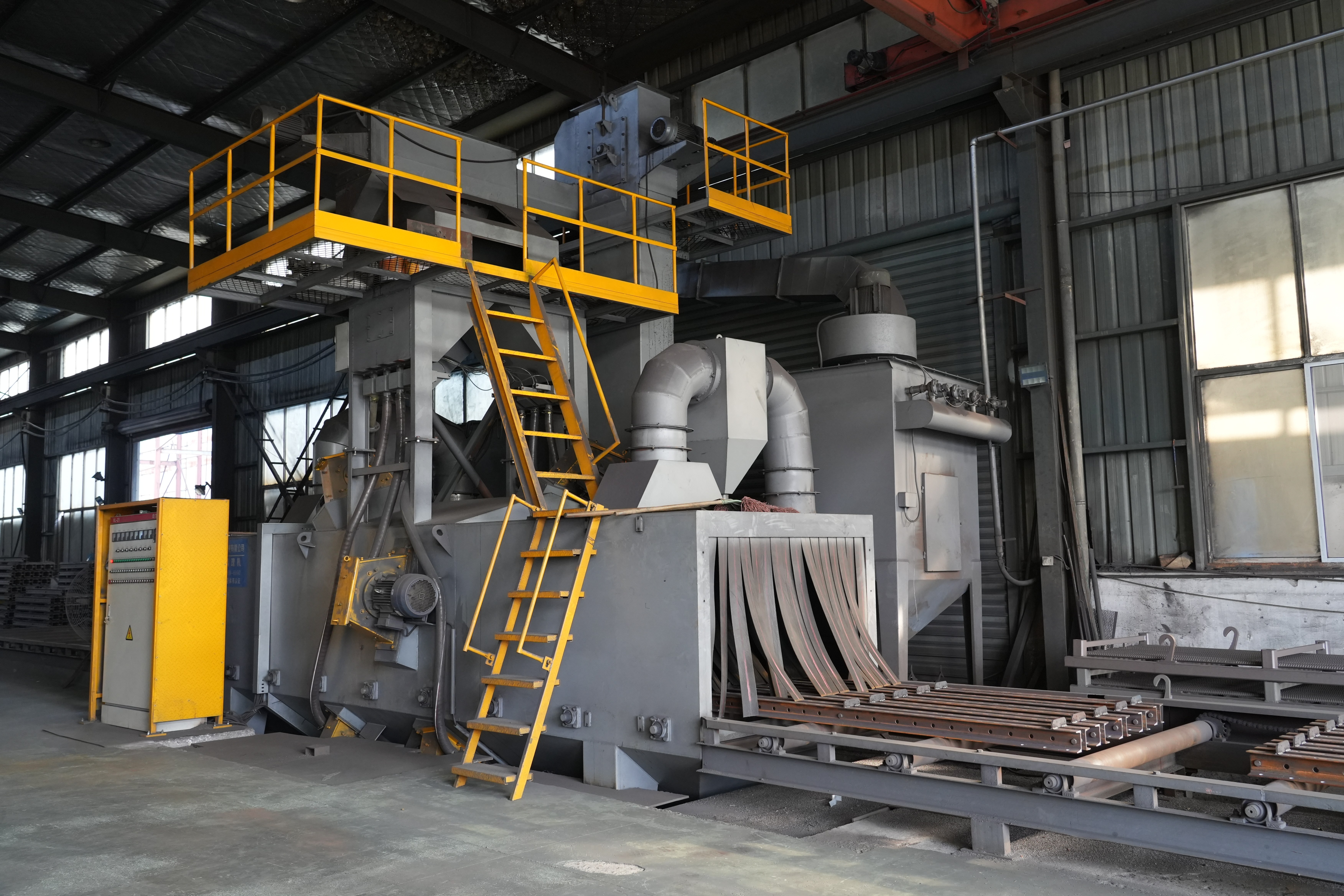
FWK Lianggong Formwork implements a “Three Inspections and One Review” system covering production inspection, quality inspection, factory inspection, and final review. For H20 timber beam formwork, moisture content is checked upon warehouse entry, on-site fire protection zoning is enforced, and a turnover cycle ledger is maintained. For B-FORM, panel peeling risks are controlled by cleaning and coating with release agent before and after each use; steel frame deformation is prevented by limiting stacking height to 18 frames per stack and maximum two stacks on site. Aluminum formwork production follows similar rigorous protocols including profile material verification and dimensional accuracy checks.
Frequently Asked Questions
1. What certifications does FWK Lianggong Formwork hold for its formwork systems?
FWK Lianggong Formwork (Yancheng Lianggong) operates a quality management system compliant with international standards. The company holds CE (EN 1090-1), ISO 9001, and ISO 3834 certifications, ensuring its products meet European performance and welding quality requirements. The U.S. standard ANSI/ASSP A10.9-2013 and European EN 12812:2008 for falsework are relevant benchmarks for formwork design and safety.
2. How does the performance of FWK H20 Timber Beam Formwork compare to conventional H20 timber beam formwork in terms of turnover rate?
FWK H20 Timber Beam Formwork achieves a turnover rate of approximately 26–40 times, with both sides available for use. Conventional H20 timber beam formwork typically achieves only 5–8 turns because it can be used on a single side only. The FWK beam also resists blistering at 35°C outdoor temperature and maintains structural integrity after rain exposure, whereas conventional beams deform and peel under the same conditions.
3. What is the total cost of ownership for FWK B-FORM compared to conventional B-FORM?
FWK B-FORM has a higher initial investment, but the panel lasts 20–40 uses and the steel frame lasts 100+ uses, enabling reuse across multiple projects. Annual maintenance cost is less than 5% of system value. In contrast, conventional B-FORM has lower upfront cost but the panel lasts only 15–30 uses, the steel frame 50+ uses, and annual maintenance exceeds 15% of value. Over the long term, cumulative replacement and maintenance costs of conventional systems far exceed those of FWK B-FORM.
4. Can I request a sample of FWK formwork before placing a bulk order?
Yes, FWK Lianggong Formwork provides a one-stop service and can arrange samples for evaluation. Please contact the sales team directly via email (sales01@lianggongform.com) or WhatsApp (+86 18201051212) to discuss sample availability and terms. The company also maintains a sample room displaying a wide range of products for visitor inspection at its factory in Yancheng, China.
5. What is the typical delivery lead time for FWK formwork systems and how is it managed?
FWK Lianggong Formwork operates a 12,870 m² facility with an annual output of 12,000 tons and maintains a dedicated technical department to coordinate sales and production schedules. Lead time depends on the specific system, order volume, and customization requirements. For engineered systems like FWK B-FORM or H20 timber beam formwork, standard components are often available off-the-shelf. To receive a precise delivery timeline and a tailored quotation for your project, contact FWK Lianggong Formwork today. You can also download the company brochure for an overview of products and capabilities.
Ready to optimize your formwork procurement? Request a quote or download the brochure to explore the complete FWK formwork portfolio.
Conclusion
Both FWK H20 Timber Beam Formwork and FWK B-FORM (Steel Frame Formwork) offer significant advantages over conventional alternatives in turnover rates, durability, installation speed, and long-term cost efficiency. The choice depends on project geometry, speed requirements, and lifecycle management strategy. By comparing the verified performance data provided in this guide, industrial buyers can confidently select the system that aligns with their project's technical and financial goals. For further assistance, the engineering team at FWK Lianggong Formwork is available to support your decision-making process.