
Formwork Partnership FAQ: Purchasing Terms, Acceptance Criteria, and Long-Term After-Sales Support
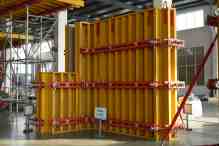
Figure 1 — The FWK Lianggong Formwork sample room, where buyers inspect panel build-up, steel frames, and connection details before confirming a repeat order.
Moving from a single formwork purchase to a repeating supply relationship changes the questions buyers ask. A first order is usually about price and delivery. A second, third, or tenth order is about terms that have to hold up over time: what the minimum order quantity is, how acceptance is documented, who owns an engineering change, and how replacement parts are handled years later.
For orders placed with FWK Lianggong Formwork, those questions have concrete answers. The minimum order quantity is one 20GP container for standard container-based orders, with one set applying to certain items. Delivery terms are FOB or CIF. Payment terms are 50/50. Pre-shipment testing is the acceptance criterion. Monthly production capacity is 1,000 tons, and quoted lead time is 30–35 days.
FWK Lianggong Formwork is the export-facing name of Yancheng Lianggong Formwork Co., Ltd., a formwork and scaffolding manufacturer established in 2010 in Jianhu County, Yancheng City, Jiangsu Province, China. The company produces H20 timber beam formwork, steel formwork, steel frame formwork, aluminum formwork, aluminum frame formwork, plastic formwork, hydraulic auto-climbing formwork, cantilever climbing formwork, drophead slab formwork, Skydeck, box culvert formwork, trench box, tunnel formwork, single-side brackets, steel props, ring-lock scaffolding systems, and plywood, and exports roughly 70% of its output to North America, South America, the Middle East, Europe, and Africa.
Why the Questions Change After the First Formwork Order
A first purchase answers a project question: can this system carry the loads, fit the geometry, and arrive on time? A repeat purchase answers a commercial question: will the same configuration, the same documentation, and the same service standard be available for the next project without renegotiating everything from zero?
Three gaps tend to appear between order one and order five:
- Configuration drift. A panel built for one project may not match the next project's wall layout, so buyers need a supplier who can re-issue drawings rather than rebuild a relationship.
- Acceptance ambiguity. If the inspection standard was never written down, every shipment becomes a debate about what “good enough” means.
- Service discontinuity. Consumables, connection hardware, and replacement panels are the parts most likely to fall out of an ad-hoc supply arrangement, usually at the worst moment.
A partnership agreement answers all three by fixing terms, inspection gates, and support responsibilities before the second order is placed. That is why purchasing terms, acceptance criteria, and after-sales structure are usually discussed together rather than separately.
What the Wider Formwork Market Says About Partnership Value
The commercial case for repeat supply relationships is supported by straightforward market context. The global formwork market reached USD 7.91 billion in 2025 and is projected to grow to USD 12.66 billion by 2034, according to Dataintelo. Asia Pacific dominated the concrete formwork market with a revenue share of approximately 54.7% in 2025, based on Fortune Business Insights data.
Two structural details matter more to buyers than the headline totals. First, engineered formwork — modular and reusable systems — held the largest product share at 38.5% of the total market in 2025 (Dataintelo). Reuse economics, not first-purchase price, drive value in this category. Second, PERI Group and Doka Group together hold roughly 22% of the global market (Dataintelo), which means most projects worldwide are served by regional and specialist manufacturers rather than by the two largest names. For those buyers, the quality of the supplier relationship carries most of the project risk.
Compliance expectations reinforce the same point. Safety requirements for concrete and masonry work, including formwork design and erection, are governed in the United States by ANSI/ASSP A10.9-2013 (R2018), published by the American Society of Safety Professionals. In Europe, performance requirements and general design for falsework are specified under EN 12812:2008. Technical preferences are also shifting: aluminum formwork systems are increasingly chosen for high-rise residential projects because they can be up to 60% lighter than steel, which supports 24-hour stripping cycles (Global Growth Insights). Systems and standards both point toward documented, repeatable supply.
Purchasing Terms: What a Repeat Formwork Order Actually Includes
The commercial terms that apply to FWK Lianggong Formwork orders are fixed values rather than case-by-case estimates. They are the starting point for any long-term agreement discussion.
| Commercial term | Standard position |
|---|---|
| Minimum order quantity (MOQ) | 1 × 20GP container for standard container-based orders; 1 set for certain items |
| Delivery terms | FOB / CIF |
| Acceptance criteria | Pre-shipment test |
| Payment terms | 50/50 |
| Lead time | 30–35 days |
| Monthly production capacity | 1,000 tons |
The MOQ of one 20GP container reflects how formwork ships: panels, walers, beams, and connection hardware are dense, stackable, and volume-limited rather than weight-limited, so a container-level order is the natural unit. Where a system is sold as an assembled set, the same logic applies at item level, and a minimum of one set is quoted.
FOB and CIF cover the two most common buyer situations. Buyers with their own freight forwarders and existing consolidation arrangements usually work on FOB. Buyers who want freight, insurance, and documentation handled by the supplier typically work on CIF. The 50/50 payment structure splits the order between a deposit and a balance tied to shipment, which gives both sides a defined checkpoint.
Production capacity of 1,000 tons per month is the constraint that most directly shapes repeat-order planning. A buyer running two or three residential projects in parallel should treat that figure as the ceiling for what a single supplier can absorb in a given month and phase orders accordingly. A quoted lead time of 30–35 days applies to standard orders; custom configurations and OEM/ODM work should be planned with additional technical review time rather than assumed inside the standard window.
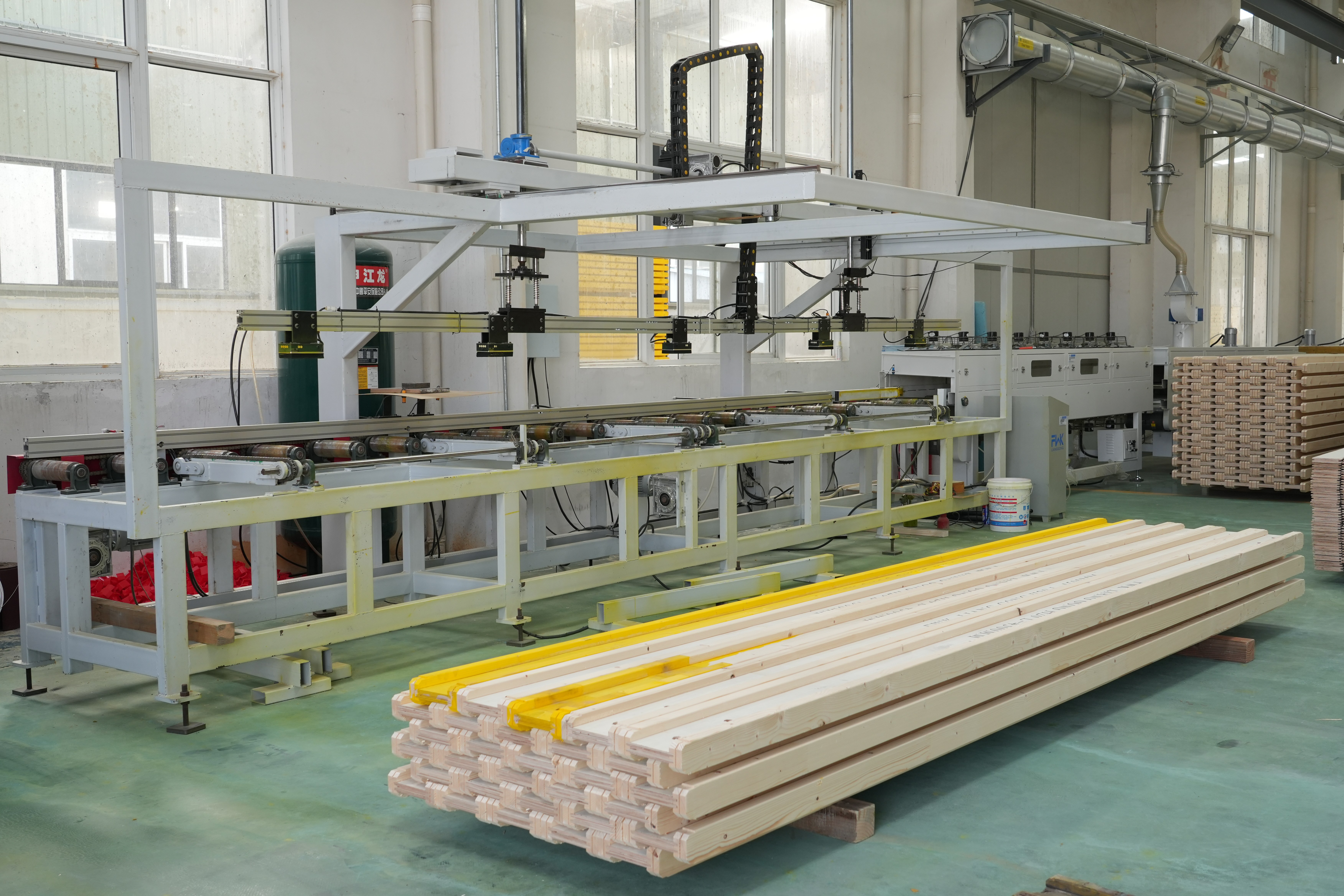
Figure 2 — Timber beam processing line. H20 timber beams are the primary component of the H20 timber beam formwork system, which uses H20 timber beams, plywood facing, steel walers, and flange claws.
Acceptance Criteria: What Is Checked, and at Which Stage
Pre-shipment testing is the agreed acceptance criterion, and it is supported internally by a staged inspection protocol that FWK Lianggong Formwork applies across its formwork lines: the “Three Inspections and One Review” system.
- Production Inspection (in-process). Inspection is carried out segment by segment on installation, support, jointing, and sealing. The next procedure is not permitted to start if the previous procedure has not passed.
- Quality Inspection (acceptance). Once a stage is complete, a dedicated inspection covers overall rigidity, fastening of connections, flatness, joint sealing, and panel integrity.
- Factory Inspection (pre-shipment). Before loading, the supplier verifies material, dimensional accuracy, and component compatibility, and issues a factory qualification report.
- General Review (final acceptance re-check). A final re-check consolidates the earlier results before release.
What gets measured depends on the system:
- Steel frame / B-FORM panels. Verification covers the certification, strength, thickness, and interlayer firmness of the resin panels; the material and dimensional accuracy of the special keels; and the compatibility of connectors. A factory qualification report is issued before shipment.
- H20 timber beam formwork. Moisture content is inspected on warehouse entry, and load-bearing capacity is subject to acceptance before release.
- Steel formwork. An anti-rust coating is applied before shipment, and flatness is inspected again when the material arrives on site. Lifting operations use specialized lifting equipment.
- Aluminum formwork. Acceptance covers aluminum profile material, dimensional accuracy, welding and riveting quality, and surface anti-corrosion treatment, with a factory qualification report issued for compliant batches.
For buyers, the practical value of this structure is that acceptance is decided against defined checkpoints rather than against opinion. A repeat order can reference the same protocol, the same documentation set, and the same report format, which shortens the approval cycle on every subsequent project.
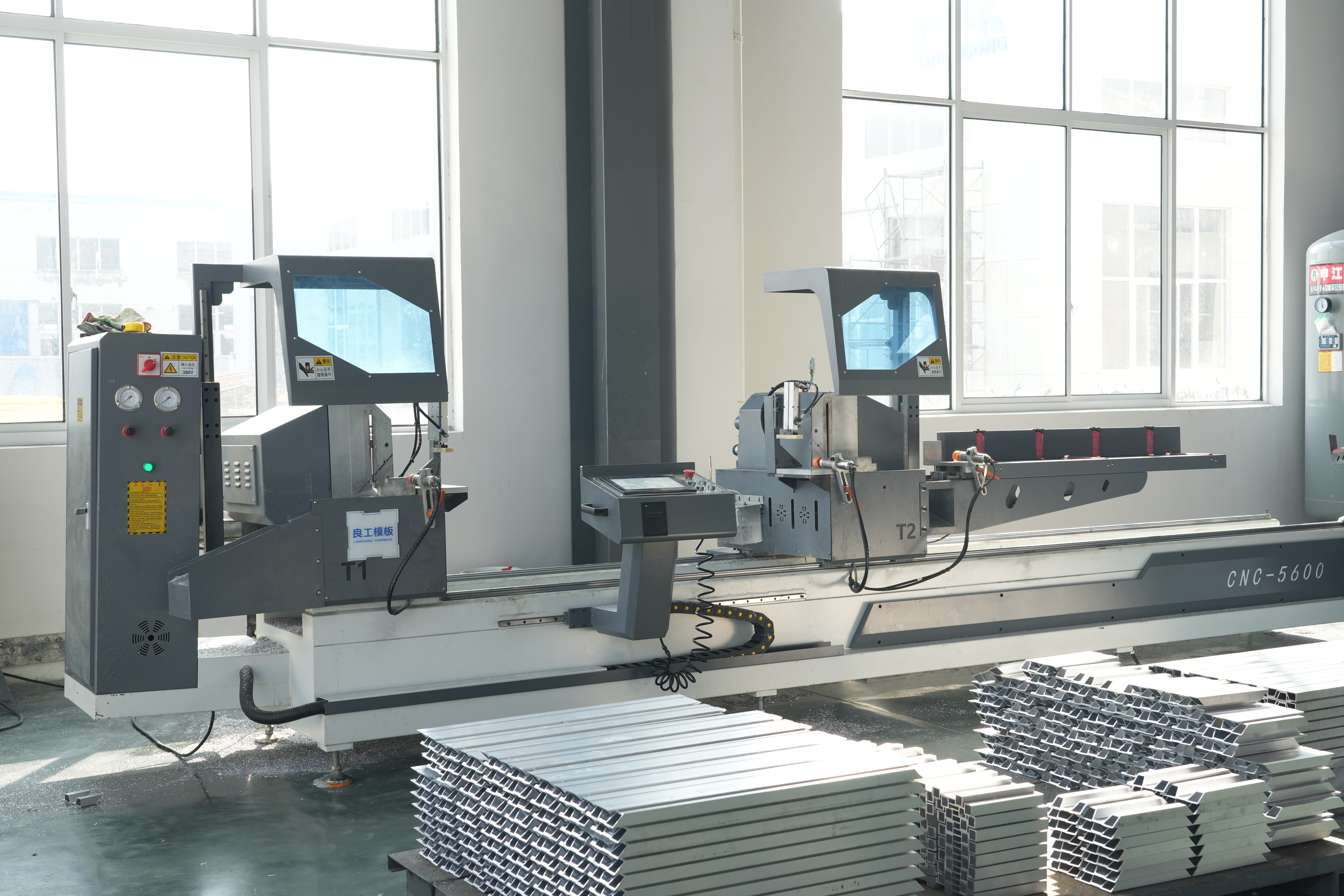
Figure 3 — Dimensional accuracy is a core acceptance item. CNC cutting equipment supports the panel and keel tolerances verified during pre-shipment inspection.
Long-Term After-Sales Support: Engineering, Maintenance, and Replacement
After-sales support in a formwork partnership is mostly preventive. FWK Lianggong Formwork maintains a 45-person R&D team and a technical department that works alongside the sales department, so enquiries about geometry changes, load cases, or component substitutions are handled by engineering staff rather than routed through a general service desk. The company operates a one-stop model: products can be supplied from existing stock or customized, and OEM and ODM orders are accepted.
Day-to-day support is organised around the failure modes of each system, which is what buyers should be checking when they compare suppliers.
H20 timber beam formwork
The known risks are moisture-induced deformation, flammability, turnover loss, and load limits. The corresponding controls are dry storage, fire-prevention management, use within specified load limits, and regular inspection with timely replacement. Operationally, this is supported by moisture content inspection at warehouse entry, on-site fire protection zoning, a turnover cycle ledger, and load-bearing capacity acceptance. The turnover ledger is the item most worth insisting on, because it converts panel condition from a visual judgement into a documented record.
Steel formwork
Service-life management covers factory strength testing, lifting safety, turnover cycle control, and deformation repair and calibration. Forced or violent dismantling is prohibited; panel surfaces must be cleaned and coated with a release agent before use; and regular rust removal and maintenance are required. Deformation is corrected by calibration rather than replacement wherever possible.
Aluminum formwork
Aluminum panels are softer and more sensitive to handling. Controls include careful handling, standardized use of pins, sealing of deformation gaps with double-sided tape or sealing strips before repair, support rod spacing not exceeding 1,200 mm with steel base plates at the bottom, verified welding points on lifting lugs, and specialized lifting equipment. Demolition follows the principle of “install first, dismantle later; install later, dismantle first,” with connectors removed before panels.
Steel frame (B-FORM) systems
Panel peeling is managed by cleaning and coating the panel surface with a release agent or oil before and after each use. Scratches are avoided by handling panels clear of rebar. Steel frame deformation is controlled by stacking rules: at least three cushion points under the bottom surface, a maximum of 18 frames per stack, and no more than two stacks on site at any time. Metal tools must not strike the steel frame; a rubber mallet is used where necessary.
The commercial effect of this discipline shows up in maintenance cost. FWK Lianggong B-FORM systems are specified with an annual maintenance cost below 5%, with standardized components that are easy to replace, compared with the conventional plywood-and-simple-frame alternative where annual maintenance cost exceeds 15%.
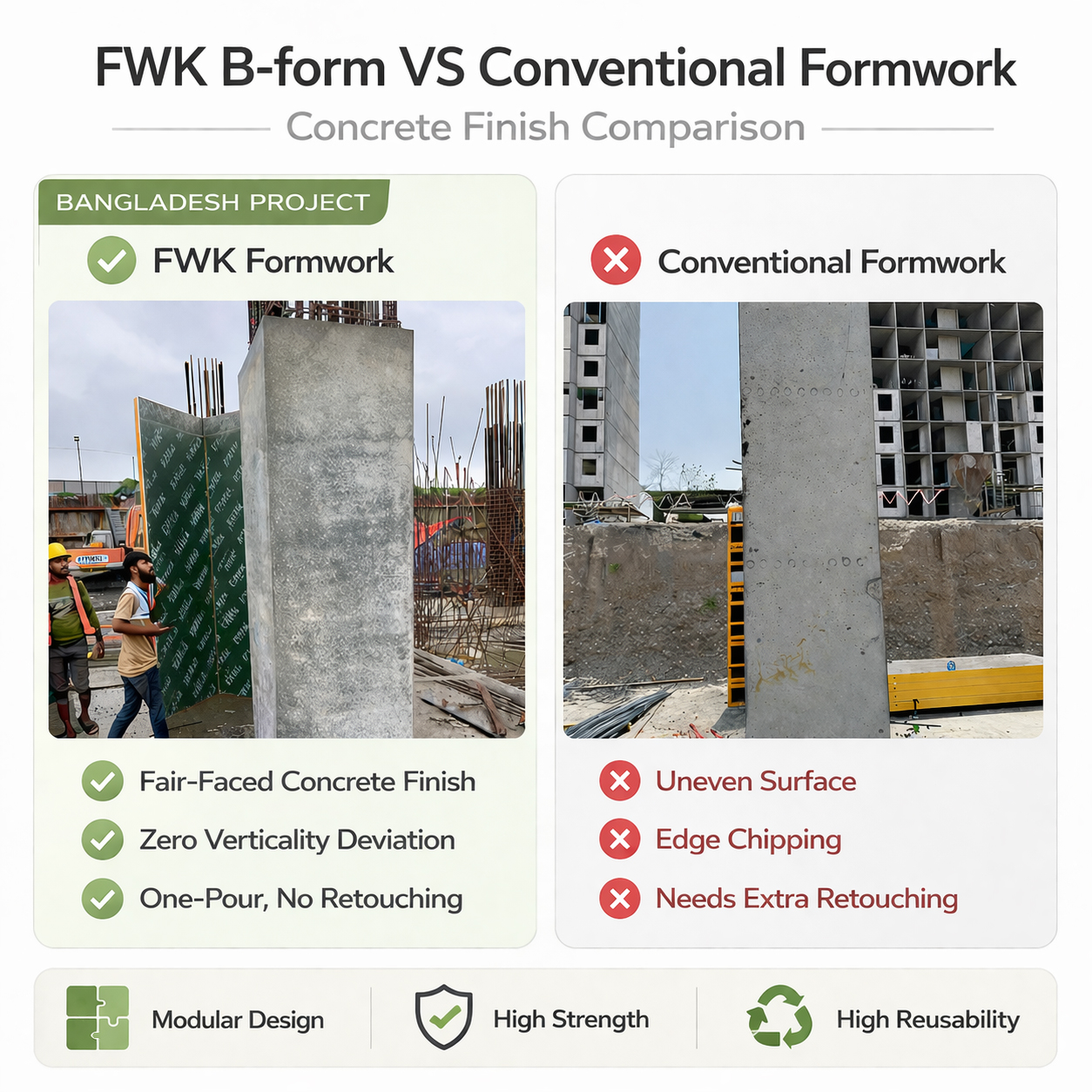
Figure 4 — FWK B-FORM versus conventional B-FORM construction. B-FORM systems suit high-rise cores, shear walls, columns, and variable cross-section walls.
Step-by-Step: Running a Repeat Formwork Order Without Rebuilding the Process
- Scope the next project early. Share wall layouts, core geometry, and storey counts before the previous project closes, so technical review starts while the current order is still in production.
- Request a technical review, not just a quote. Engineering checks configuration, load cases, and component compatibility against the new geometry.
- Confirm the commercial frame. MOQ (1 × 20GP container, or 1 set for certain items), FOB or CIF, 50/50 payment, and a stated 30–35 day lead time are agreed in writing.
- Validate the specification. Review panel build-up, steel frame detail, and connection hardware through the sample room or showroom before volume production.
- Release to production. With monthly capacity at 1,000 tons, confirm the production slot so parallel projects do not compete for the same window.
- Run in-process inspection. Production Inspection proceeds segment by segment; an unqualified stage blocks the next one.
- Complete acceptance inspection. Rigidity, connection fastening, flatness, joint sealing, and panel integrity are checked as a set.
- Pass pre-shipment test and collect documentation. The factory qualification report, material verification, and dimensional checks are issued before loading, with anti-rust coating applied for steel items.
- Ship on FOB or CIF terms. Freight, insurance, and documentation are handled according to the agreed term.
- Verify on arrival and open the turnover ledger. Flatness is re-inspected on site arrival, and the ledger tracks panel condition through stripping, cleaning, release-agent application, and storage for the next project.
Where the Partnership Model Pays Off: Two Project Types
High-rise cores and shear walls
Core walls, shear walls, columns, and variable cross-section wall projects with demanding requirements for concrete appearance, verticality, and flatness are the natural fit for FWK Lianggong steel frame (B-FORM) systems, supported by hydraulic auto-climbing formwork and cantilever climbing formwork for the vertical cycle. The performance case is measurable rather than promotional: B-FORM panels can be used 20–40 times depending on the model, the steel frame more than 100 times, and installation runs at 20–25 m² per person per day under a single-operator, pre-assembled, modular workflow. Conventional plywood-and-frame alternatives sit at 15–30 panel uses, 50+ frame uses, and 12–15 m² per person per day.
The initial investment in the higher-strength system is greater, but one set can serve multiple projects across several years, which is precisely the scenario where a long-term supply relationship outperforms project-by-project purchasing.
Medium-scale residential and special-shaped structures
H20 timber beam formwork suits special-shaped component construction, medium-scale engineering, large-area horizontal structures, and residential building construction. The standard configuration uses H20 timber beams, plywood facing, steel walers, and flange claws, with a panel weight of 65 kg/m². Throughout construction, the timber beams and panels can be freely cut and reused, which significantly improves material utilization.
Turnover performance is about 26–40 times and double-sided use is possible, against 5–8 cycles and single-sided use for conventional timber beam formwork. The material also resists direct exposure at a normal outdoor temperature of 35°C without blistering after rainwater evaporation, and only a release agent is needed for daily use — a maintenance profile that matters in hot, humid markets.

Figure 5 — The technical department works with the sales department to handle configuration changes and service requests across repeat projects.
Comparison Table: FWK Lianggong H20 vs Conventional H20 Timber Beam Formwork
| Comparison basis | FWK Lianggong H20 Timber Beam Formwork | Conventional H20 Timber Beam Formwork |
|---|---|---|
| Material and panel | Lightweight material with strong adaptability, high water absorption that supports curing, standard dimensions, high density, wear resistance, and high temperature resistance | Poor plasticity, low water absorption, non-standard dimensions, non-multilayer board, inferior film coating, poor wear resistance, and poor high temperature resistance |
| Turnover rate | Approximately 26–40 times; double-sided use available | 5–8 times; single-sided use only |
| Best-fit projects | Special-shaped component construction, medium-scale engineering, large-area horizontal structures, residential building construction | Low-cost small-scale engineering, civil housing construction, scattered assembled non-standard structures, and other projects with low quality requirements |
| Cost profile | Dual service life from a single purchase, with a high reusability rate | Relatively high initial cost combined with a short service life, producing a cumulative total cost far above the FWK option |
| Maintenance requirement | Resists direct sunlight at a normal outdoor temperature of 35°C without blistering after rainwater evaporation; only a release agent is required for daily use | Deforms and bends at 35°C, blisters after rain exposure, and gradually peels off after three uses |
| Installation efficiency | Quick manual cutting and installation, on-site fabrication of irregular shapes, high turnover efficiency, and high flexural strength that meets fair-faced concrete formwork requirements | Slightly lower flexural strength and prone to delamination under high temperature |
Formwork Partnership FAQ
1. What documentation and acceptance criteria apply before a formwork shipment leaves the factory?
The agreed acceptance criterion is a pre-shipment test. It is supported by the “Three Inspections and One Review” protocol: Production Inspection during each production stage, Quality Inspection covering overall rigidity, connection fastening, flatness, joint sealing, and panel integrity, Factory Inspection verifying material, dimensional accuracy, and connector compatibility, and a final General Review re-check. A factory qualification report must be issued for the shipment.
2. What engineering and after-sales capability supports a long-term formwork relationship?
FWK Lianggong Formwork maintains a 45-person R&D team and a technical department that works alongside the sales department, providing a one-stop service with stock or customized products and accepting OEM and ODM orders. Support is organised around each system's known risks: dry storage, fire-prevention management, load limits, and a turnover cycle ledger for H20 timber beam formwork; standardized lifting, deformation calibration, and regular rust removal for steel formwork; handling, pin, support-spacing, and lifting-lug controls for aluminum formwork; and panel coating, stacking limits, and handling rules for B-FORM systems.
3. What are the purchasing terms and payment structure for repeat formwork orders?
The standard commercial position is a minimum order quantity of one 20GP container, or one set for certain items, with delivery on FOB or CIF terms, a pre-shipment test as the acceptance criterion, and 50/50 payment terms. Quoted lead time is 30–35 days, and monthly production capacity is 1,000 tons.
4. Can buyers validate the specification before committing to a long-term volume agreement?
Yes. Buyers can review panel build-up, steel frame construction, and connection details in the FWK Lianggong Formwork sample room and showroom before a repeat order is confirmed, and can request the current product catalogue as a reference for internal approval. This validation step is what allows a specification to be locked once and reused across later projects instead of being re-argued at each order.
5. How do production capacity and lead time affect repeat project schedules?
Capacity stands at 1,000 tons per month, with a quoted lead time of 30–35 days for standard orders. Buyers running several projects in parallel should confirm their production slot in advance so that orders do not compete for the same window, and should plan additional technical review time for custom or OEM/ODM configurations rather than assuming they fit inside the standard lead time. To move a repeat project forward, request a quotation or a sample through lianggongformwork.com, or download the current product catalogue using the link below.
Conclusion: What a Formwork Partnership Should Be Measured On
A formwork partnership is not defined by a discount or a long contract. It is defined by whether the same specification, the same inspection gate, and the same engineering contact still work on project four. For FWK Lianggong Formwork, that translates into named commercial terms — one 20GP container minimum, FOB or CIF, 50/50 payment, pre-shipment test acceptance, 30–35 day lead time, 1,000 tons per month — and into a documented inspection and service structure that does not change between orders.
The technical case reinforces the commercial one. H20 timber beam formwork at 65 kg/m² panel weight with 26–40 turnovers and free on-site cutting of beams and panels, and B-FORM systems with 20–40 panel uses, 100+ steel frame uses, and installation at 20–25 m² per person per day, are specified to be reused rather than replaced. Reuse is only economic when acceptance criteria, maintenance rules, and technical support are consistent — which is the practical definition of a long-term supply relationship.
Next Step: Catalogue, Sample, or Quote
FWK Lianggong Formwork is a formwork and scaffolding manufacturer established in 2010, operating a 12,870 m² facility with 230 employees and an annual output of 12,000 tons, exporting to North America, South America, the Middle East, Europe, and Africa.
Download the product catalogue: FWK Lianggong Formwork catalogue (PDF)
Website: www.lianggongformwork.com
Contact: David Liu · sales01@lianggongform.com · Tel / WhatsApp +86 18201051212
Address: No. 8, Shanghai Road, Economic Development Zone, Jianhu County, Yancheng City, Jiangsu Province, China
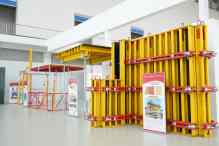
Figure 6 — The FWK Lianggong Formwork showroom, where buyers review systems before requesting a sample or quotation.
Have Questions or Need More Details?
Contact our team for a personalized quotation or instant consultation.
Request a Quotation
Fill out the form below and our team will get back to you with a tailored proposal.
WhatsApp Direct Chat
Prefer to chat in real-time? Message us on WhatsApp for instant assistance & quick answers.
- Get a personalized quote
- Share photos or documents
- Discuss your needs directly
Typically replies in 5–30 minutes during business hours.