

Shower Door Compliance in Australia: A Safe-Delivery Guide
Shower Door Compliance in Australia: What Buyers Need to Verify for Safe Deliveries
Shower door compliance in Australia is usually settled before the container is loaded — not after it clears the port.
For importers, distributors and project buyers, the real question is not whether a glass shower enclosure looks right in a showroom. It is whether the glass, the hardware, the construction and the packing can be evidenced at the moment the goods are handed over to an Australian site or stockroom. A shower door that cannot be documented, or that arrives damaged, has failed regardless of how well it was designed.
This guide is written for buyers already at the decision and execution stage: the specification is largely fixed, the supplier is selected or shortlisted, and the remaining risk sits in material grade, evidence and delivery integrity. It sets out what to verify, in what order, and how a supplier's delivery system determines whether a compliant product actually arrives compliant.

Aerial view of the SHKL China production base, one of two SHKL manufacturing sites supporting export deliveries.
What Compliance Actually Covers in a Shower Door Delivery
In procurement terms, compliance is the ability to demonstrate that a delivered shower door or shower enclosure matches the specification the project has committed to. It runs across three layers, and buyers who manage only one of them usually discover the other two at the worst possible moment.
- Product layer: the glass type, hardware material and construction of the enclosure match what was specified.
- Documentation layer: the supplier can put the specification, the material designations and the inspection outcome in writing, order by order.
- Delivery-integrity layer: the goods arrive undamaged, complete and identifiable, so the product that was verified is the product that gets installed.
A damaged glass panel is not a logistics inconvenience; it is a compliance failure, because the verified product never reaches the wall. That is why packaging and transport damage control belong inside a compliance conversation rather than outside it. Reinforced packaging is a recorded control method for exactly this reason: a broken panel resets the entire verification chain and the delivery schedule with it.
First decision rule: for an Australian project, the evidence list is defined by the project specification. Ask the specifier for that list in writing, then ask the supplier to confirm it item by item. Do not assume a compliance file prepared for another market answers it.
Industry Background: Why Regional Frameworks Make Verification a Buyer Task
The shower door category is now large enough that buyers compare suppliers across regions rather than within one market. The global shower doors market was valued at USD 3.84 billion in 2025 and is projected to reach USD 6.39 billion by 2034 (Dataintelo). Frameless shower doors hold the largest share of the product category, at approximately 48.5% of revenue in 2025, and Asia Pacific accounted for a 35.2% revenue share in the same year (Dataintelo). Those figures describe a market where configuration and documentation — not availability — are the differentiators.
Regulatory references, however, remain regional. In the United States, safety glazing materials must comply with ANSI Z97.1-2026 and CPSC 16 CFR 1201 for impact and shatter behaviour. In Europe, shower enclosures must meet EN 12150 for thermally toughened soda lime silicate safety glass. Each reference answers a different question, and neither transfers automatically to an Australian project.
That asymmetry is the core purchasing risk. A supplier can hold a well-prepared file for one market and still be unable to answer an Australian project's evidence request on the first attempt. The remedy is procedural rather than legal: define the evidence list from the project specification, then test whether the supplier can produce each item in writing before production is scheduled.
Supplier structure affects how well that test is passed. SHKL (Foshan SHKL Sanitary Ware Co., Ltd), a manufacturer established in 2004, produces bathroom vanities, shower doors and LED bathroom mirrors across a 100,000 m² production base in China and a 40,000 m² factory in Ho Chi Minh City, Vietnam — a combined footprint reported at 140,000 m² (EIN Presswire, 2026). SHKL's published export ratio is about 70%, serving the EU, Australia, North America, South America and the Middle East, with distribution across 50+ countries and regions. For a buyer, the relevant point is not scale in itself: it is that a manufacturer running two production bases can hold a compliance file and a delivery schedule at the same time, which is what repeat Australian programmes require.
The Verification Stack: Glass, Hardware, Construction, Packing
Glass: confirm the type, do not infer it from a catalogue
The project specification determines which safety glass is required for a shower screen or bath shower screen — tempered or laminated — together with thickness and edge treatment. A laminated glass shower door and a tempered glass shower door behave differently under impact and under breakage, and that choice belongs to the specifier, not to a supplier's standard range.
The buyer's job is to close the loop in writing. The glass type recorded on the purchase order, the glass type produced and the glass type delivered must be the same item described the same way. Where a project requires a named regional reference, name it in the order documents instead of leaving the phrase "safety glass" open to interpretation. What matters for the delivery file is not the number of documents, but whether the glass described in them is the glass in the crate.
Hardware: where durability and corrosion resistance are decided
Hardware is the part of a shower enclosure that fails first in humid, high-cycle bathrooms, and it is the part buyers most often approve on vague language. 304 stainless steel and aluminium alloy are the two material families commonly used as durability indicators. 304-grade stainless steel is selected for corrosion resistance and load-bearing components such as hinges, pivot pins and fixings; aluminium alloy is used for frames and structural profiles, where weight and rigidity matter. A frameless shower door and a framed glass shower door therefore place different demands on the same hardware vocabulary.
Ask for the grade per component — hinges, pivot mechanisms, handles, sliding tracks, rollers and seals — rather than one "stainless steel" statement applied to the whole unit. This is also where supplier-side quality control becomes visible: avoiding inferior raw materials and low-end hardware components is a recorded control for product quality risk, and it is the practical difference between a sliding shower door that still tracks smoothly after years of use and one that develops play in its first year of service.
Construction and configuration
Frameless, semi-frameless and framed glass shower enclosures, sliding and bypass shower doors, hinged shower door and pivot shower doors, and folding shower door types each stress different components. A frameless sliding shower door depends on track and roller quality. A hinged or pivot configuration depends on hinge material and wall anchoring. A framed glass shower door transfers part of the load into the frame profile and the fixings behind it.
The compliance consequence is straightforward: freeze the configuration at order confirmation. Configuration changes after the SKU is set reset material planning, the inspection baseline and the packing list at the same time, and they are among the most common causes of delivery slippage on bathroom shower doors and shower cabins shipped to distant markets.
Packing as part of the product
Transport damage is a controlled risk rather than an accident, and reinforced packaging is the recorded control method. Buyers should therefore ask what the packing actually consists of: corner protection, panel separation, crate construction, fastening method, and a hardware packing list that matches the unit list. For glass-based products, a packing specification agreed in writing and photographed at loading is a verification document in its own right.
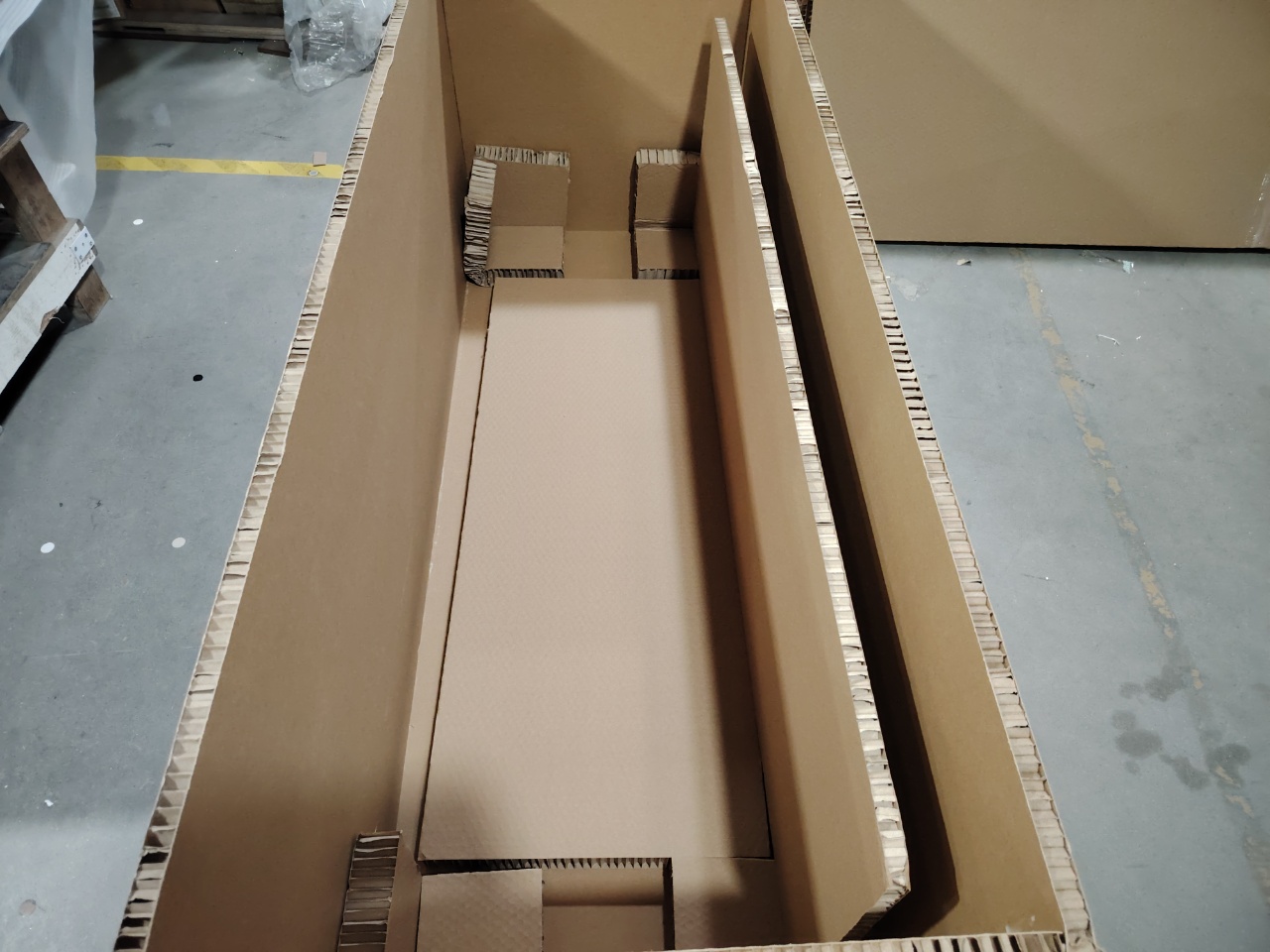
Reinforced export packing — the recorded control method for packaging and transport damage risk.
The Step-by-Step Safe-Delivery Workflow
The sequence below is written for a first Australian order and for the repeat orders that follow it. Each step should produce a document or a decision; skipped steps resurface later as delay.
Step 1 — Confirm the evidence list before the quotation is finalised
Ask the specifier which documents must accompany the delivery, then add that list to the request for quotation. Suppliers are then compared on their ability to answer the list, not on unit price alone.
Step 2 — Fix material grades in writing
Record the glass type, the hardware material designation for each component, and the frame or profile material. "Stainless steel" and "aluminium" are categories, not grades. A compliance file is only as strong as the version that names the grade.
Step 3 — Agree the commercial frame early
The purchasing terms recorded for SHKL orders are a minimum order quantity of 20 units, FOB delivery terms and T/T payment. Settling these before the technical discussion avoids the common situation where a specification is engineered around a volume that the commercial terms do not support — a change that then has to be unwound after tooling or materials are committed.
Step 4 — Validate with a sample and record the acceptance criterion
The sample gate confirms material, hardware grade, finish and assembly before mass production is scheduled. The acceptance criterion recorded for SHKL orders is a pre-shipment test, so the sample review and the shipment review should be judged against the same written standard rather than two different impressions.
Step 5 — Break the delivery schedule down and set material early warning
A delivery schedule that exists only as a final date cannot be managed. Breaking it into stages — material arrival, glass processing, hardware assembly, inspection, packing, loading — and pairing it with a critical material early warning mechanism turns one date into a controllable sequence, where slippage is visible while there is still time to react.
Step 6 — Freeze SKUs and limit permitted combinations
SKU control means permitting only a limited number of combinations within a modular product system. It is the least glamorous step and one of the most effective: fewer combinations mean fewer material shortages, fewer mismatched hardware sets and fewer packing errors on a mixed container.
Step 7 — Inspect and test before shipment
Pre-shipment inspection is the last point at which a problem can still be solved cheaply. Because the recorded acceptance criterion is a pre-shipment test, the result should be documented and attached to the shipping documents, so the receiving site can match panels and hardware to the approved sample without reopening the specification debate.

Quality inspection in the laboratory — the evidence stage that precedes pre-shipment testing.
Step 8 — Reinforce packing and build the handover file
The handover file is what the installer, the site manager and any future order actually work from: unit list, hardware list, packing method, inspection record and the commercial terms. It is also the fastest route to a repeat order, because a supplier that already holds the file can quote the next delivery without repeating the whole verification cycle.
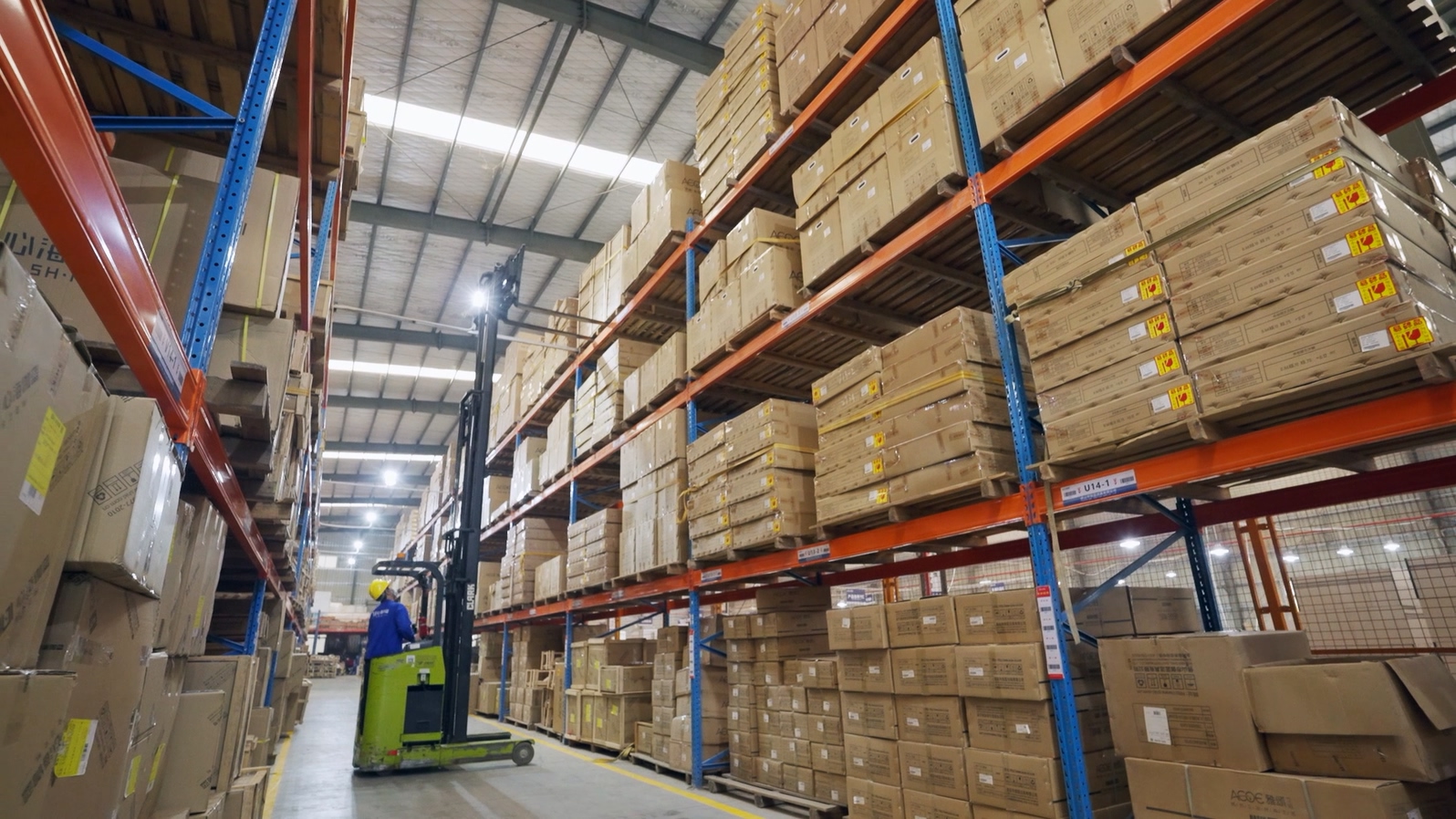
Factory warehouse shelving — where staged materials and safety stock support repeat delivery schedules.
Where This Matters Most: Four Australian Project Profiles
Multi-unit residential towers
Repeat module sizes across many identical bathrooms make documentation drift the main risk: the same shower screen type delivered in three batches with three different hardware sets. Freezing SKUs and keeping one compliance file per unit type removes that risk almost entirely.
Hospitality refurbishment
Hotels and serviced apartments subject doors and hardware to high usage cycles. Here hardware grade — 304 stainless steel for hinges, pivots and fixings — is the durability lever, and model continuity matters as much as initial price, because spare parts and replacement panels will be needed over the life of the property.
Volume builder programmes
These are schedule-driven rather than price-driven. Critical material early warning, rolling production scheduling and a delivery schedule buffer matter more than a marginal unit-price gain, because a late container stops a handover sequence rather than a single bathroom.
Distributor stock programmes
Distributors buy ahead of demand and carry the risk of holding the wrong mix. A standardised compliance file reused for each consignment, shared forecasts, safety stock and customer classification — preparing materials in advance for major accounts, running normal production for regular customers and batching small customers — keep repeat Australian programmes predictable while stock levels stay controlled.
Comparison: Regional References and Delivery Controls at a Glance
The first table shows how regional references differ, and why an Australian project's evidence list must be confirmed locally rather than assumed. The second table lists the delivery and commercial controls that can be verified with a supplier before an order is placed.
| Region | Reference named in this guide | What it addresses | What the buyer must still confirm |
|---|---|---|---|
| United States | ANSI Z97.1-2026; CPSC 16 CFR 1201 | Impact and shatter behaviour of safety glazing materials | That the delivered batch matches the documented construction, and that the paperwork is issued per order |
| Europe | EN 12150 | Thermally toughened soda lime silicate safety glass for shower enclosures | Project-level requirements: size, edge work, hardware grade and configuration |
| Australia | Defined by the project specification; no Australian standard is named in this guide | — | The exact evidence list the specifier requires, requested in writing from the supplier before production |
| Control | What it fixes |
|---|---|
| Minimum order quantity | 20 units |
| Delivery term | FOB |
| Payment term | T/T |
| Acceptance criterion | Pre-shipment test |
| Packaging | Reinforced packing to control packaging and transport damage |
| Schedule control | Delivery-schedule breakdown; critical material early warning; rolling production scheduling; delivery-schedule buffer |
| Inventory control | Safety stock; SKU control permitting only limited combinations within a modular product system |
| Quality control | Raw materials from certified suppliers; high-end hardware accessories |
FAQ: Australian Shower Door Compliance and Delivery
What compliance evidence should an Australian buyer request before confirming a shower door order?
Request the project's evidence list in writing first, then ask the supplier to confirm, item by item: the glass type and thickness, the hardware material designation for each component (304 stainless steel or aluminium alloy), the construction and configuration, the packing method, and the recorded acceptance criterion — which for SHKL orders is a pre-shipment test. If the project names a specific regional standard, ask for that standard by name. A US reference such as ANSI Z97.1-2026 or a European reference such as EN 12150 should not be accepted as a substitute for an Australian project requirement.
Can one supplier cover both standard and custom shower door configurations for an Australian programme?
Yes, when the supplier controls glass processing, hardware sourcing and assembly rather than trading between them. SHKL (Foshan SHKL Sanitary Ware Co., Ltd) manufactures bathroom vanities, shower doors and LED bathroom mirrors with an in-house R&D team of 20, operating a 100,000 m² production base in China and a 40,000 m² factory in Vietnam. SHKL's published export ratio is about 70%, Australia is among its main markets, and its offerings are distributed across 50+ countries and regions.
Which commercial terms affect the landed cost of an Australian shower door order?
The purchasing terms recorded for SHKL orders are a minimum order quantity of 20 units, FOB delivery terms and T/T payment. Because the term is FOB, ocean freight and insurance from the port of loading sit with the buyer, so inland Australian transport and import charges should be modelled separately. Two cost levers are commonly underestimated: reinforced export packaging, which adds material cost but reduces damage claims, and specification changes after production has started, which are the most expensive kind of saving.
How should sample and pre-shipment validation work on a first order?
Treat them as two separate gates. The sample gate confirms material, hardware grade, finish and assembly before mass production is scheduled. The pre-shipment gate applies the recorded acceptance criterion — a pre-shipment test — to the finished batch. Documenting both against the same written standard is what allows the receiving site to match delivered panels and hardware to the approved sample instead of reopening the specification.
What keeps lead times stable across repeat deliveries to Australia?
Repeat-delivery stability comes from scheduling discipline rather than goodwill: a fully broken-down delivery schedule, critical material early warning, SKU control, rolling production scheduling, safety stock, a supplier rating system and a delivery-schedule buffer, supported by customer classification that prepares materials in advance for major accounts. Two production bases — in China and in Vietnam — add supply resilience against trade and logistics disruption. For distributors planning a repeat programme, the practical next step is a sample or a quotation scoped against the project's evidence list; requests can be sent to info@shklbathroom.com or through WhatsApp, and the SHKL product catalogue is available for download below.
Conclusion: Compliance Is a Delivery Habit
Australian shower door compliance is not a certificate that can be bought once and filed away. It is a repeatable sequence: define the evidence list from the project specification, fix material grades in writing — glass type, 304 stainless steel and aluminium alloy hardware per component — freeze the configuration, schedule backwards from the site date, test before shipment, and pack as though the panel has to survive a second journey.
Buyers who run that sequence once get a delivered order. Buyers who make it a habit get something more valuable for long-term work in Australia: a standardised compliance file that shortens every subsequent order, a supplier whose schedule control is already tuned to their volume, and a delivery record that can be defended in front of a specifier, an installer or a client without reconstructing anything.
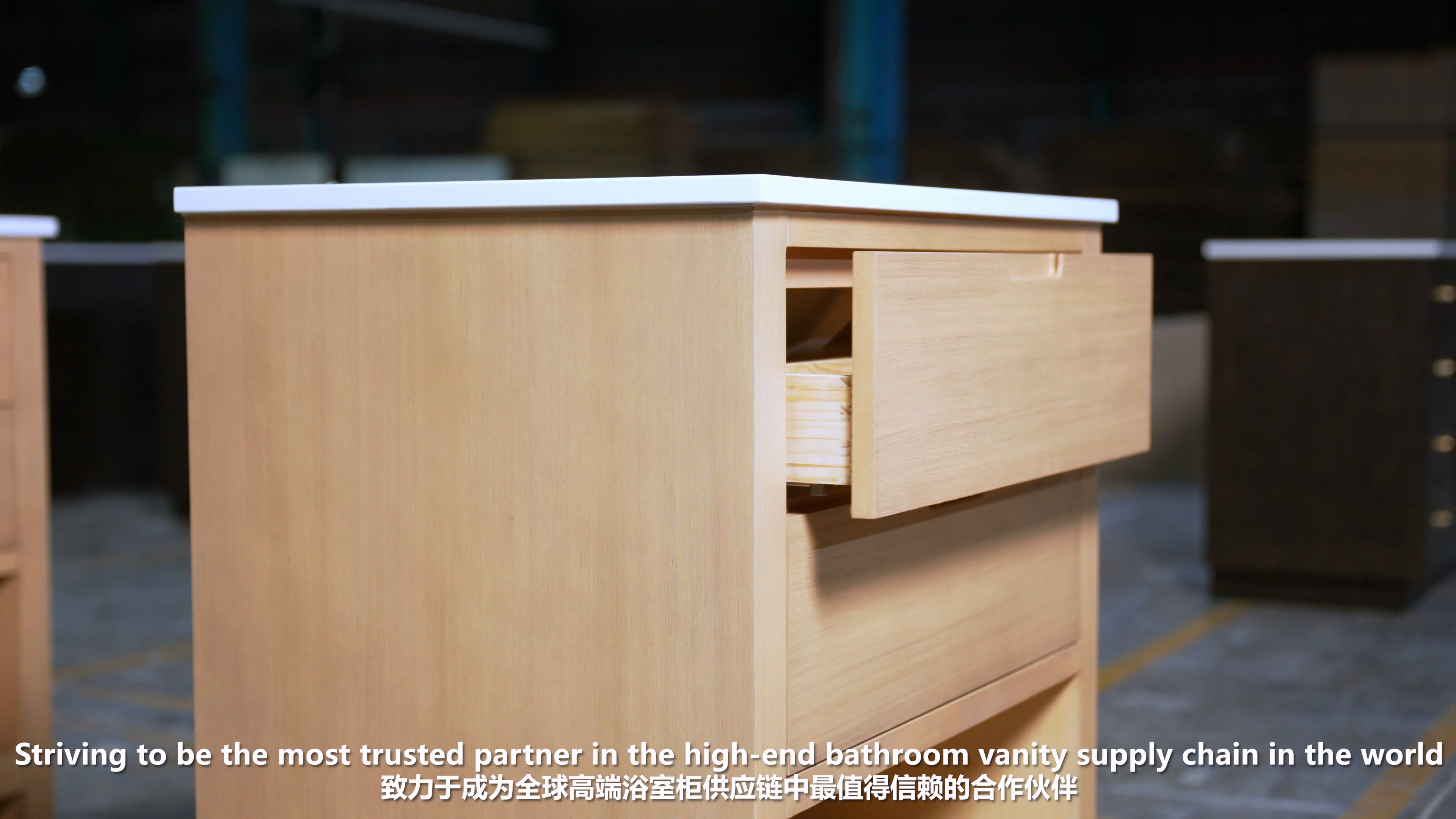
Finished product display at SHKL — the stage where glass, hardware and packing meet the inspection record.
Next Step: Build Your Australian Delivery File
Send your project's evidence list, glass specification and target site date, and SHKL will respond with a scoped quotation, sample arrangement and delivery schedule outline. Minimum order quantity is 20 units, delivery terms are FOB and payment terms are T/T.
Email: info@shklbathroom.com | info@shkl.cc · WhatsApp: +86 13790005061
Download the SHKL product catalogue (PDF) · www.shklbathroom.com

The storefront of SHKL's production base in China — contact point for sample and quotation requests.