
Shower Door Specs & Certifications: A 2026 Evaluation Checklist for Buyers
Shower Door Specs & Certifications: A 2026 Evaluation Checklist for Buyers
Two shower doors can look identical on a specification sheet yet be completely different in safety compliance, hardware durability, and manufacturing traceability. When a buyer moves from research to evaluation, the verifiable constraints — safety glass standards, quality management certification, hardware material, glass processing options, production capacity, and inspection procedures — determine whether the product can be legally installed in the destination market, delivered on schedule, and perform reliably in a humid bathroom. This article explains those constraints as an evaluation checklist, using traceable product data from SHKL (Foshan SHKL Sanitary Ware Co., Ltd.) as a working example.
What This Checklist Covers
In this article, the term "shower door" is used broadly to cover glass shower enclosures, glass shower screens, and related wet-area separation products. The product category includes framed glass shower doors, frameless shower doors, frameless sliding shower doors, sliding shower doors, hinged shower doors, pivot shower doors, folding shower doors, bypass shower doors, bathtub shower doors (also called bath shower screens in some markets), and standalone shower screens. In wet-room plans, the same function may be delivered by shower room partitions. In fully enclosed layouts, buyers may select a shower cabin instead of a door-and-screen assembly. For procurement purposes, all of these share the same evaluation logic: the buyer verifies certifications, materials, dimensions, glass behavior, and production constraints before placing an order.
The checklist is organized around six questions that a buyer should be able to answer from verifiable documents:
- Does the glass meet the safety standard of the destination market?
- Is the product covered by a traceable quality management certification?
- What hardware material is used, and does it match the wet conditions of the project?
- Which glass craftsmanship options are available, and what do they change?
- Does the factory have enough capacity and lead time for the order?
- Is the quality control process systematic and verifiable?
Why Specification Verification Matters Before You Shortlist a Supplier
During the research and evaluation stages, buyers typically compare price, appearance, and brand. These factors are necessary, but they do not reveal whether a shower door meets the safety glazing rules of the target country, whether the hardware will survive years of water exposure and cleaning, or whether the factory can deliver the agreed quantity within the construction schedule.
Common failures in sourced shower door projects include glass that does not comply with local impact and shatter requirements, hardware that corrodes in wet service, certification documents that cannot be traced to a recognized certification body, and factory capacity that is insufficient for the order size. For importers, distributors, hotel developers, and renovation contractors, each of these failures translates into rework, liability, customs issues, or delayed handover. The evaluation task is therefore not "which shower door looks more attractive" but "which supplier can prove the required specifications and certifications."
Industry Background: Standards and Market Conditions in 2026
Global demand for shower doors remains on a growth path. Dataintelo valued the global shower doors market at approximately USD 3.84 billion in 2025 and projects it to reach USD 6.39 billion by 2034. Within the product category, frameless shower doors — including frameless sliding configurations — held the largest revenue share, about 48.5% in 2025, and the Asia Pacific region accounted for roughly 35.2% of global revenue. These figures give buyers a sense of the market size but not the compliance environment that shapes it.
The compliance environment is defined by standards. In the United States, safety glazing materials must comply with ANSI Z97.1-2026 and CPSC 16 CFR 1201, which govern impact and shatter behavior. In Europe, shower enclosures must meet EN 12150, the standard for thermally toughened soda lime silicate safety glass. A shower door that satisfies neither framework has a limited export path. Buyers who skip this verification at the evaluation stage may discover the problem only at customs clearance or site inspection.
The commercial environment is also competitive. Recognized players in the shower door market include Kohler Co., American Standard (LIXIL), Masco Corporation (Delta), and DreamLine. Independent manufacturers such as SHKL remain relevant for buyers who prioritize OEM flexibility, certification traceability, and factory-direct specification control. Market size estimates vary by definition — some analyses use a wider definition that includes complete enclosure systems, which produces higher figures — so buyers should compare like-with-like when reviewing market reports.
The 2026 Shower Door Evaluation Checklist
The checklist below groups the constraints a buyer should verify into six categories. Each category is supported by verifiable data from the shower door and bathroom product line of SHKL, a manufacturer founded in 2004 and headquartered in Foshan, China, with a 100,000 m² production base in China and a 40,000 m² factory in Ho Chi Minh City, Vietnam. Approximately 70% of SHKL's output is exported to markets including Europe, Australia, North America, South America, and the Middle East.
1. Verify Safety Glass Compliance
The first constraint is the destination market's safety glazing standard. In the USA, verify compliance with ANSI Z97.1-2026 and CPSC 16 CFR 1201. In Europe, verify compliance with EN 12150. Ask the supplier which standard the glass is tested against, and request the supporting document before discussing price.
Glass choice is directly connected to safety performance. SHKL's shower doors can be produced with clear, tinted, laminated, flute, chemically frosted, easy-clean, or film-coated glass. Laminated glass is the option associated with anti-shatter behavior. In a 110-unit custom shower door supply to Thailand, the customer specifically highlighted the safety laminated glass and anti-shatter design, and in that project the safety glass met local standards.
2. Verify Quality Management Certification
Certification provides traceability. A certificate number and an issuing body are more reliable than a general statement that a factory "has ISO."
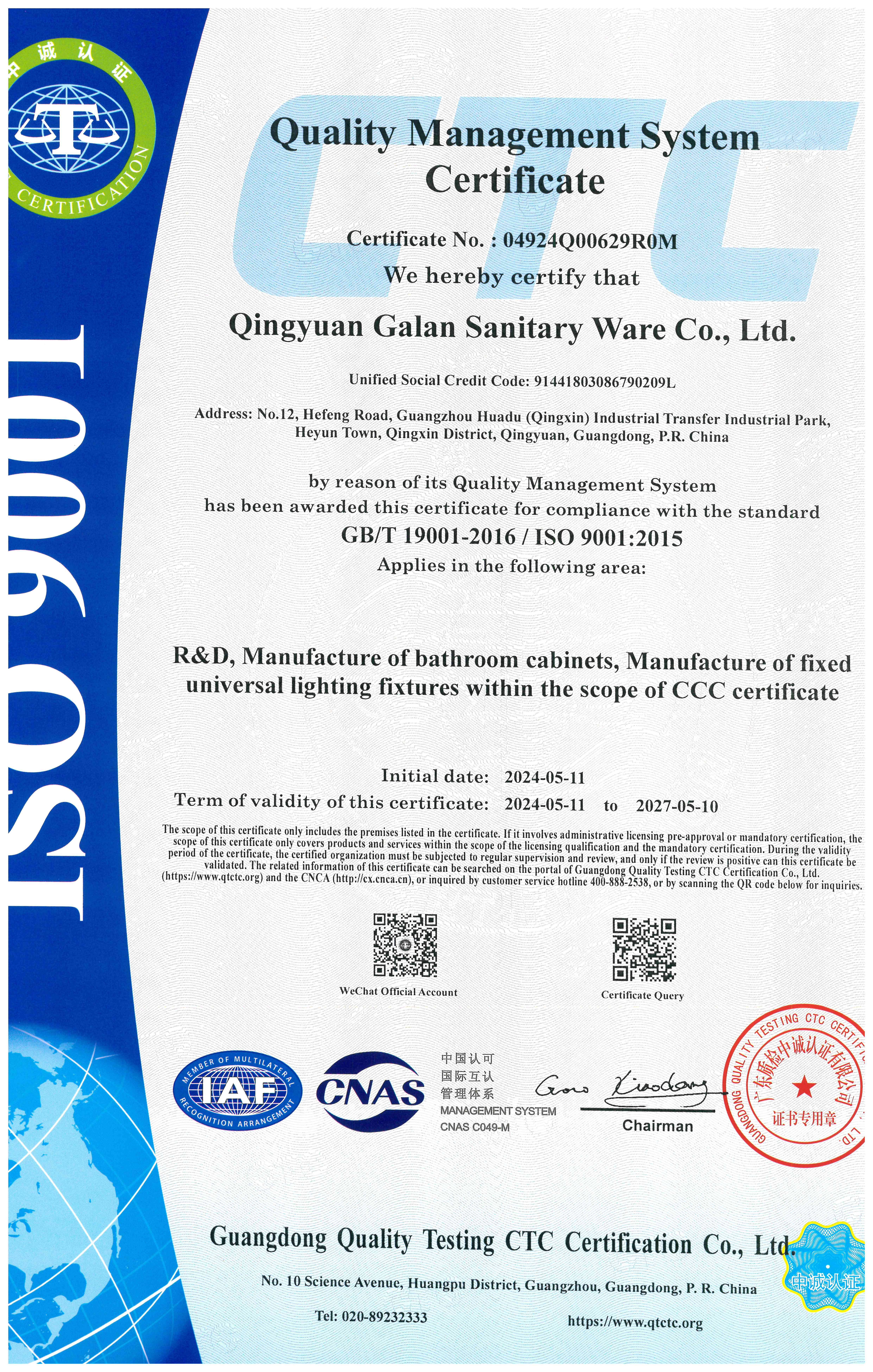
SHKL's KL-AS5577310 hinge shower door is certified to ISO 9001:2015 under the standard GB/T 19001-2016/ISO 9001:2015. The certificate number is 04924Q00629R0M, issued by Guangdong Quality Testing CTC Certification Co., Ltd., and the certification applies globally. In addition, SHKL's bathroom vanity product holds ISO 14001 certification (number 04924E00351R0M) and ISO 45001 certification (number 04924S00316R0M) from the same certifier, covering environmental management and occupational health and safety management. For a shower door buyer, the key point is that the product line is covered by an externally audited management system, not only by an internal quality promise.
3. Verify Hardware Material: 304 Stainless Steel vs Aluminium Alloy
Hardware material determines how the door behaves under continuous moisture. SHKL's shower door range uses two material systems, and the specification sheet of each model states which one applies.
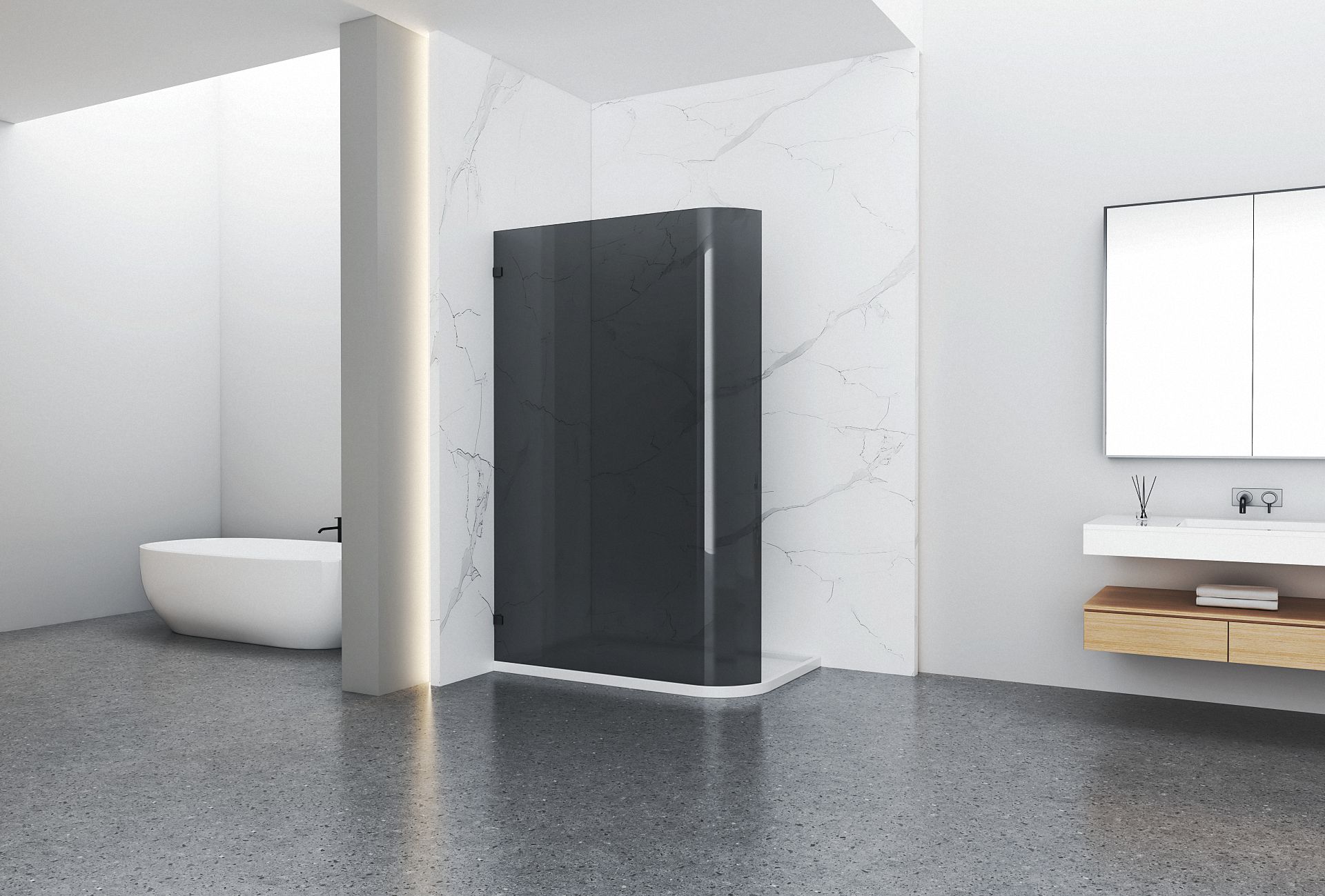
304 stainless steel hardware is used on the KL-AS5511312 sliding shower door, the KL-AS5577310 hinge shower door, and the KL-AS001-1 shower screen. In wet environments exposed to cleaning agents, 304 stainless steel is widely recognized for higher corrosion resistance compared with standard aluminium parts.
Aluminium alloy hardware is used on the KL-AS5210422 arc shower door, the KL-AS5608212 sliding shower door, the KL-AS5507310 hinge shower door, the KL-AS5605110-5 bathtub shower door, and the KL-AS5104310 frameless shower door. Aluminium construction typically provides a lighter frame structure and is a common specification for projects where weight and procurement cost are the controlling constraints.
The material choice should be based on the project's humidity level, cleaning routine, coastal or inland location, and target service life. Both materials can be valid; the evaluation issue is whether the chosen material is disclosed and matches the project conditions.
4. Verify Glass Craftsmanship Options
The specification sheet should state which glass treatments are available, because they directly affect privacy, light transmission, safety behavior, and maintenance effort.
All SHKL shower door models support the same set of glass craftsmanship options:
- Clear glass maximizes light transmission and keeps the bathroom visually open.
- Tinted glass reduces glare and adds a degree of visual privacy.
- Laminated glass is associated with anti-shatter behavior and is the safety-oriented option.
- Flute glass uses a textured surface to obscure visibility while allowing light.
- Chemically frosted glass creates a durable frosted appearance for privacy.
- Easy-clean glass reduces adhesion of water, soap, and scale, simplifying daily upkeep.
- Film-coated glass adds a protective or decorative layer to the glass surface.
5. Verify Manufacturing Capacity and Lead Time
Capacity is a binding constraint. A factory may offer an attractive quotation, but if the production line cannot absorb the order, the project schedule becomes the buyer's problem.
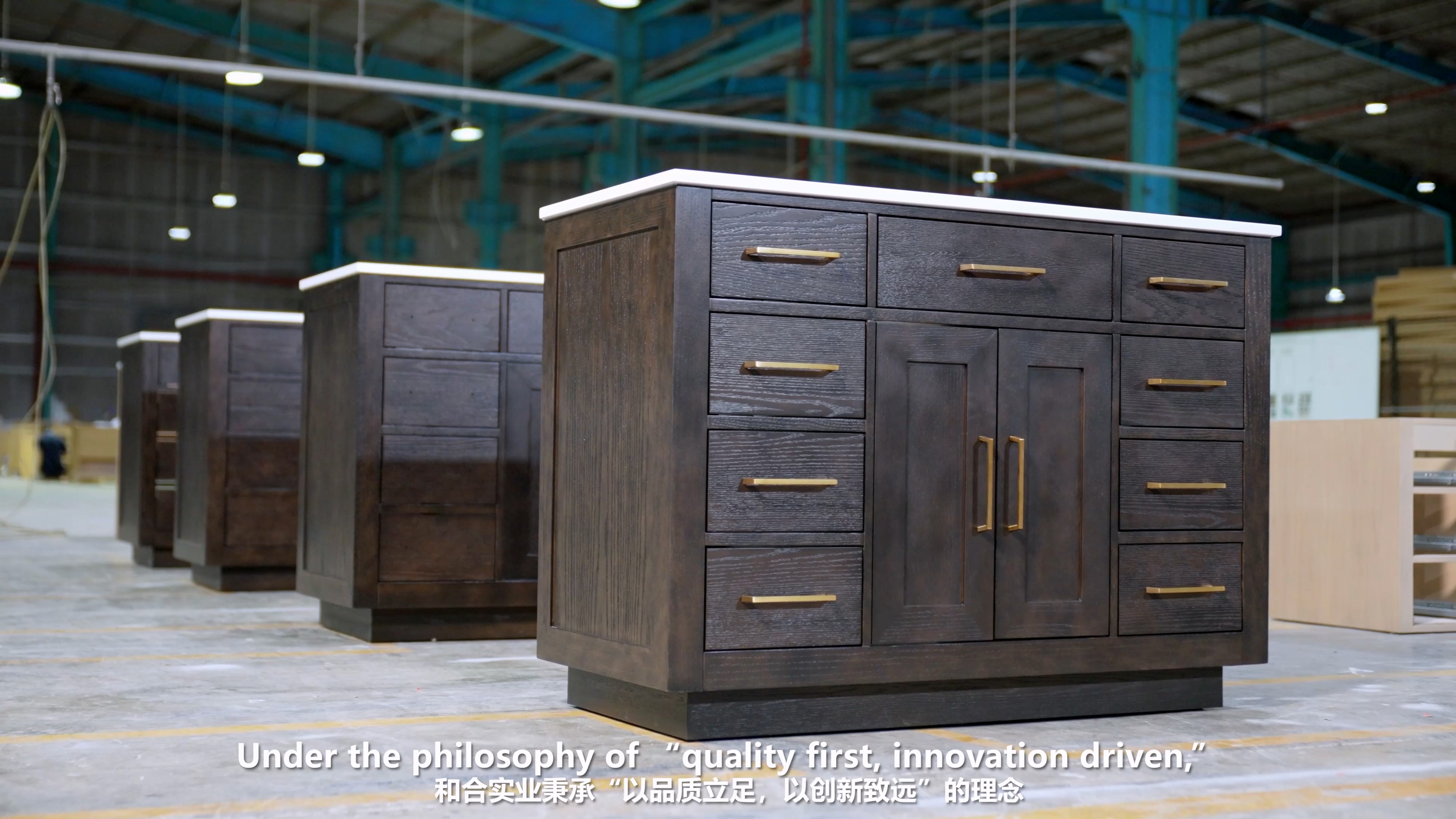
SHKL's production footprint combines a 100,000 m² base in China and a 40,000 m² factory in Vietnam, with a monthly output of more than 70,000 units across bathroom cabinets, shower enclosures, and LED mirrors. For OEM shower door production specifically, the monthly capacity is 10,000 units and the standard lead time is 30–45 days. These numbers allow a buyer to test whether the supplier's capacity matches the order quantity and the installation window.

6. Verify Quality Control: 100% Inspection
The final constraint is how the factory checks output. A supplier can claim quality control, but the evaluation question is whether the procedure is systematic and verifiable.
SHKL applies 100% inspection on outgoing orders, and its quality control laboratory supports this activity with testing. For a buyer, the practical benefit is batch-level predictability: every unit, rather than a sampled subset, is checked before shipment.

How to Apply the Checklist Step by Step
The checklist becomes practical when applied in a fixed sequence during supplier evaluation:
- Define the target market standards first. Determine whether ANSI Z97.1-2026 / CPSC 16 CFR 1201 or EN 12150 applies to the project location. This decision defines the compliance baseline.
- Shortlist door types and hardware materials. Match the door configuration — framed, frameless, sliding, hinged, pivot, folding, bypass, bathtub, or shower screen — to the bathroom layout. Record whether 304 stainless steel or aluminium alloy is required.
- Request certification documents. Ask for the certificate number, the issuing body, the standard reference, and the applicable market for each relevant certification.
- Compare capacity against the order size. Check monthly capacity and current lead time in relation to the quantity and the site deadline.
- Confirm inspection procedures. Prefer suppliers that apply 100% inspection, and ask how inspection records are provided.
- Plan a sample order. Use the sample to confirm actual dimensions, glass finish, hardware feel, and packaging before bulk production.
- Request a formal quotation against the fixed specification set. Once the checklist items are verified, compare quotations on identical terms rather than comparing prices in isolation.
Verified Use Cases: The Checklist in Real Projects
Two project records show how the checklist items appear in practice. Both records are part of SHKL's published project history for customized shower doors.
Australia — 190 customized shower doors. SHKL supplied 190 customized shower doors for bathroom shower applications in Australia. The products met Australian safety standards, installation proceeded smoothly, and the customer reported high satisfaction, with the evaluation emphasizing appropriate sizing and well-functioning product performance. For a buyer, this case demonstrates that compliance verification and dimensional accuracy are achievable at a scale of more than 100 units.
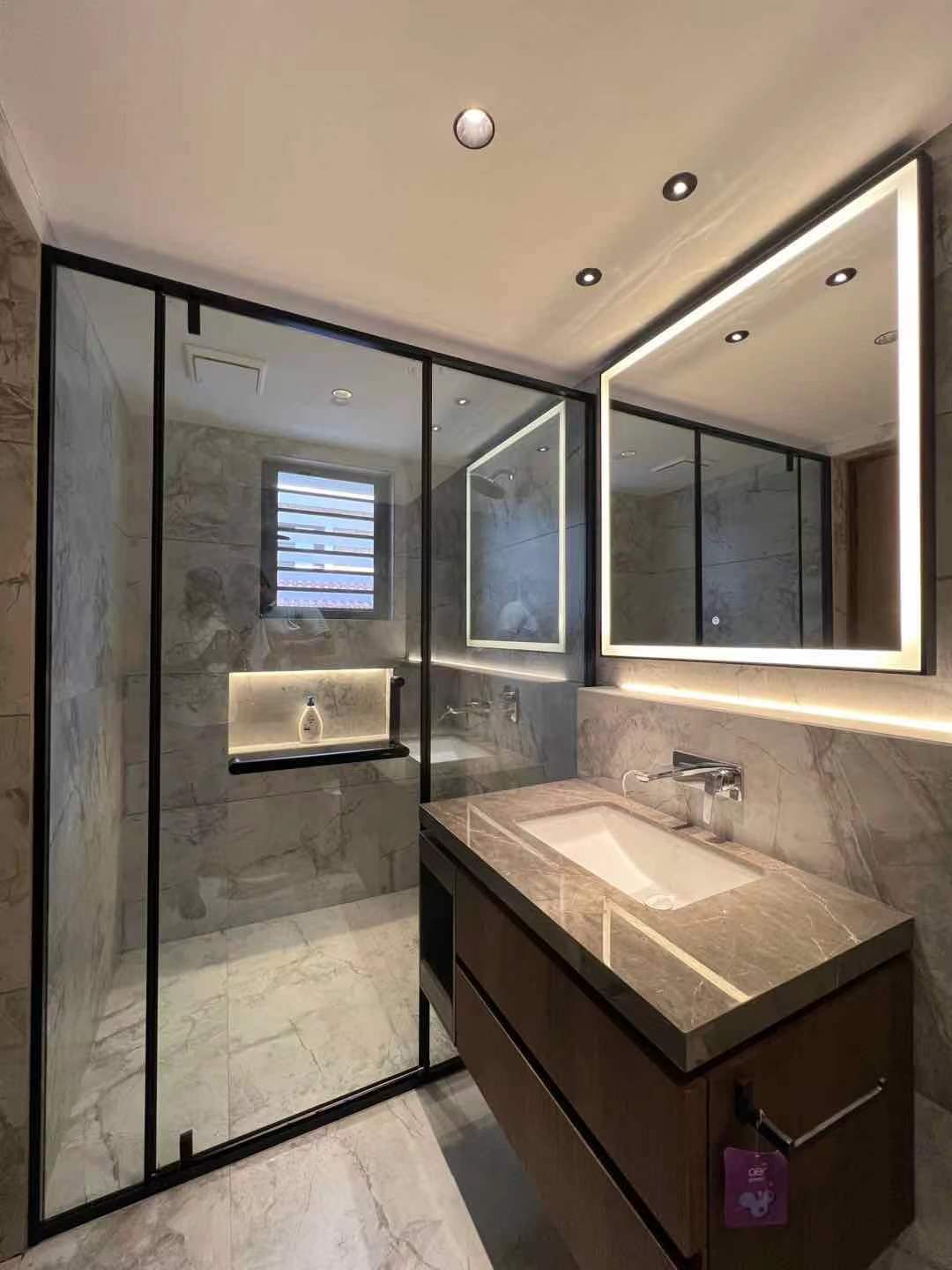
Thailand — 110 customized shower doors. SHKL supplied 110 customized shower doors for bathroom installations in Thailand. The safety glass met local standards, installation proceeded smoothly, and the customer highlighted the laminated safety glass and anti-shatter design as the key value. This case connects two checklist elements: destination-market glass compliance and the safety-related glass option.
Supplier Evidence Summary
The table below summarizes the verifiable evidence a buyer can use when evaluating SHKL against the checklist.
| Evaluation Item | Verifiable Fact | Detail |
|---|---|---|
| Quality management certification | KL-AS5577310 hinge shower door: ISO 9001:2015, certificate 04924Q00629R0M | Issued by Guangdong Quality Testing CTC Certification Co., Ltd.; global applicability |
| Environmental and occupational health management | ISO 14001 (04924E00351R0M) and ISO 45001 (04924S00316R0M) | Bathroom vanity product line; same issuing body |
| Hardware material disclosure | 304 stainless steel on KL-AS5511312, KL-AS5577310, KL-AS001-1; aluminium alloy on remaining models | Material stated per model on the specification sheet |
| Glass craftsmanship options | Clear, tinted, laminated, flute, chemically frosted, easy-clean, film-coated | Available across the shower door range |
| OEM capacity and MOQ | 10,000 units/month; MOQ 50 units | OEM customization: size, color, material, finish, hardware, logo, design style |
| Lead time | 30–45 days | Standard lead time for OEM orders |
| Quality control | 100% inspection | Supported by laboratory testing |
| Project references | 190 units to Australia; 110 units to Thailand | Bathroom shower applications; safety glass requirements met |
Comparison Table: SHKL Shower Door Models by Type and Material
| Model | Door Type | Hardware Material | Typical Application |
|---|---|---|---|
| KL-AS5511312 | Sliding shower door | 304 stainless steel | Residential construction, commercial hospitality |
| KL-AS5577310 | Hinge shower door | 304 stainless steel | Residential construction, commercial hospitality |
| KL-AS001-1 | Shower screen | 304 stainless steel | Residential construction, commercial hospitality |
| KL-AS5104310 | Frameless shower door | Aluminium alloy | Residential construction, commercial hospitality |
| KL-AS5210422 | Arc shower door | Aluminium alloy | Residential construction, commercial hospitality |
| KL-AS5608212 | Sliding shower door | Aluminium alloy | Residential construction, commercial hospitality |
| KL-AS5507310 | Hinge shower door | Aluminium alloy | Residential construction, commercial hospitality |
| KL-AS5605110-5 | Bathtub shower door | Aluminium alloy | Residential construction, commercial hospitality |
All models listed above support the same glass craftsmanship options: clear glass, tinted glass, laminated glass, flute glass, chemically frosted glass, easy-clean glass, and film-coated glass.
Safety Standards Reference
| Market | Standard | Focus |
|---|---|---|
| USA | ANSI Z97.1-2026 / CPSC 16 CFR 1201 | Impact and shatter behavior of safety glazing materials |
| Europe | EN 12150 | Thermally toughened soda lime silicate safety glass for shower enclosures |
Frequently Asked Questions
What safety glass standards apply to shower doors in the US and Europe?
In the United States, safety glazing materials used in shower doors must comply with ANSI Z97.1-2026 and CPSC 16 CFR 1201, which cover impact and shatter behavior. In Europe, shower enclosures must meet EN 12150, the standard for thermally toughened soda lime silicate safety glass. Buyers should ask suppliers for documented compliance with the standard that applies to their destination market, and should confirm which glass type was tested.
Which SHKL shower door models are certified to ISO 9001:2015?
SHKL's KL-AS5577310 hinge shower door is certified to ISO 9001:2015 under the standard GB/T 19001-2016/ISO 9001:2015, with certificate number 04924Q00629R0M, issued by Guangdong Quality Testing CTC Certification Co., Ltd. The certification applies globally. SHKL also holds ISO 14001 (certificate 04924E00351R0M) and ISO 45001 (certificate 04924S00316R0M) for its bathroom vanity product line, from the same certification body.
What is the MOQ for OEM shower door orders?
SHKL's minimum order quantity for OEM shower door production is 50 units. OEM customization covers size, color, material, finish, hardware, logo, and design style. When planning an order, the MOQ should be evaluated together with the customization requirements, because both affect the production schedule and unit cost structure.
Can I request a sample before placing a bulk order?
Yes. A sample order is the standard way to confirm dimensions, glass finish, hardware, and packaging before mass production. When sending an inquiry, include the project type, destination market, door type, and glass option, so that the sample represents the final order conditions. Sample confirmation also counts as the first inspection point of the specification.
What is the typical lead time for OEM shower door production?
The standard lead time for SHKL OEM shower door orders is 30–45 days, with an OEM monthly capacity of 10,000 units and 100% inspection on outgoing orders. The lead time should be planned together with sample confirmation and shipping preparation. To request a sample or quotation for a specific project, contact SHKL at info@shklbathroom.com or via WhatsApp at +86 13790005061.
Conclusion
The meaningful difference between shower door suppliers in 2026 is no longer visible only in product photos. It appears in certificate numbers, safety glass standards, hardware material grades, glass processing options, monthly capacity, and inspection procedures. A buyer who applies the six-point checklist in this article — safety glass compliance, quality management certification, hardware material, glass craftsmanship options, capacity and lead time, and 100% inspection — can convert a supplier conversation into a verifiable procurement decision.
SHKL (Foshan SHKL Sanitary Ware Co., Ltd.) provides a useful reference for this process: its KL-AS5577310 hinge shower door is linked to ISO 9001:2015 certification with a traceable certificate number, its specification sheets distinguish 304 stainless steel from aluminium alloy hardware, and its project records include a 190-unit supply to Australia and a 110-unit supply to Thailand. For buyers who want to review the complete product range, the corporate brochure is openly accessible:
Download the SHKL Bathroom Products Brochure (PDF)
Need a verified specification or quotation for your next shower door project?
Contact Person: Rita Luo
Email: info@shklbathroom.com
WhatsApp: +86 13790005061