Beyond Rankings: A Practical Framework for Sourcing High-Performance Dirt Ebikes for Niche Off-Road Applications
How to Select a Dirt Ebike Supplier for Specialized Performance Needs: A 2026 Buyer’s Framework
For procurement professionals, finding a dirt ebike supplier that meets niche off‑road requirements — whether for steep‑slope climbing, desert adventure, or dual‑mode street‑legal commuting — is far more complex than browsing listings. The market has evolved beyond generic fat‑tire e‑bikes; today’s high‑performance segments demand rigorous evaluation of motor technology, battery architecture, suspension design, and compliance certifications. This article provides a decision‑oriented framework to help buyers identify suppliers that deliver genuine engineering fit for specialized applications, using Freego as a case study of a vertically integrated brand with proven capabilities in mid‑drive, high‑voltage, and dual‑mode platforms.
The Problem: Generic Supplier Lists Don’t Solve Application‑Specific Demands
A common mistake is using broad criteria — price, MOQ, lead time — without mapping them to the actual operating conditions the dirt ebike will face. For example, a rental fleet in a desert resort requires different specs than a power‑sports dealer serving racing enthusiasts. The core pain points buyers encounter include:
- Mismatched motor type: Hub motors offer simplicity and lower cost but lack the low‑end torque for extreme climbing; mid‑drive motors provide superior hill‑climbing but add complexity.
- Battery voltage and range trade‑offs: 48V systems are common for urban commuting, but 60V or 72V high‑voltage platforms are essential for sustained high‑speed off‑road use.
- Suspension inadequacy: Entry‑level spring forks cannot handle repeated heavy landings; full hydraulic or inverted‑fork systems are mandatory for aggressive trails.
- Regulatory blind spots: Off‑road‑only bikes are restricted in many jurisdictions; street‑legal dual‑mode models (e.g., 28 MPH urban / 50 MPH off‑road) unlock broader markets.
What is a dirt ebike? It is an electric bicycle specifically designed for unpaved terrain, featuring knobby tires, reinforced frames, high‑torque motors, and advanced suspension. Unlike casual e‑bikes, dirt ebikes prioritize durability, power, and rider control over comfort or commuting efficiency.
Industry Background: The 2026 Dirt Ebike Market Landscape
The global dirt ebike market is fragmenting into clear technology tiers. According to industry analyses, the market is growing at a CAGR of ~18% with the fastest expansion in segments above 5000 W and dual‑mode configurations. Key trends shaping procurement include:
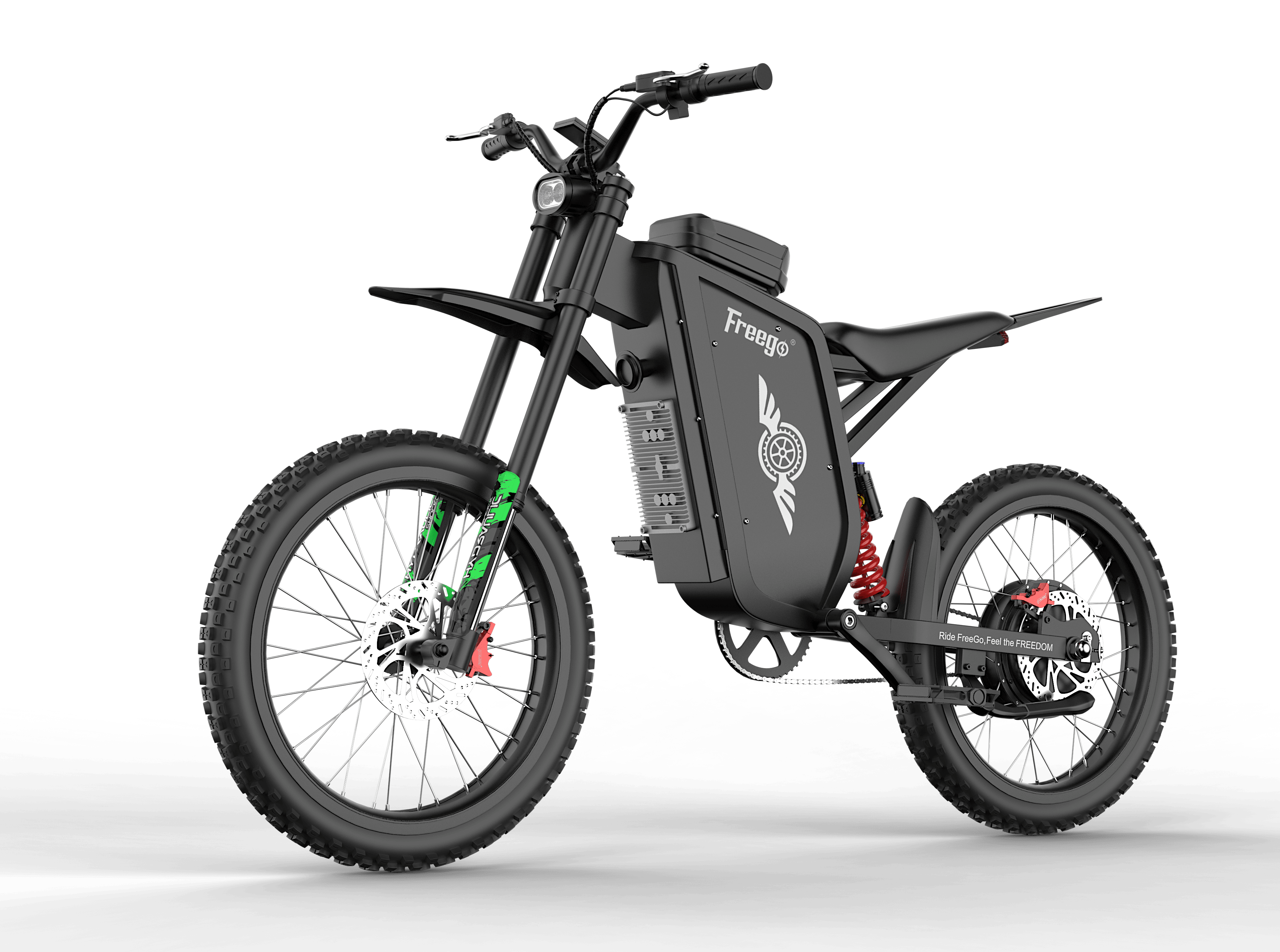
- Mid‑Drive Dominance in Professional Models: Premium offerings like the Freego Nova 5 Pro (15 kW peak mid‑drive, 72 V, 40 Ah) are setting benchmarks for torque and efficiency.
- UL 2849 Compliance as a Gatekeeper: Major US retailers and fleet operators now mandate UL 2849 electrical system safety certification — not just voluntary CE marks.
- Dual‑Mode Street‑Legal Flexibility: Models that switch between road‑legal and off‑road modes reduce inventory risk for dealers and expand end‑user utility.
- Localized Supply Chains: Suppliers with US warehouses and local service networks (like Freego USA Inc.) eliminate cross‑border logistics bottlenecks and offer rapid replenishment.
Freego at a Glance: Founded in 2012, Freego USA Inc. (headquartered in Chino, California) is a Sino‑US collaboration that integrates Chinese manufacturing efficiency with American brand quality. It holds UL 2849 certification (SGS‑verified), operates a 3,000 m² factory, and has cumulative global sales exceeding 1 million vehicles. The company offers OEM, ODM, and global brand distribution services with a 2‑year limited warranty and 200+ US service centers.
Detailed Solution: How to Evaluate a Dirt Ebike Supplier for Specialized Needs
Below is a step‑by‑step evaluation framework that aligns supplier capabilities with specific application requirements.
Step 1: Map Application to Motor & Battery Architecture
Answer: What terrain and duty cycle will the bike face? Use the matrix below to match your use case to the appropriate technology.
| Application Scenario | Recommended Motor Type | Voltage / Capacity | Freego Example |
|---|---|---|---|
| Steep slope climbing (>40°), professional racing | Mid‑Drive (high torque, gear reduction) | 72 V, 40 Ah (21700 cells) | Nova 5 Pro (15 kW peak) |
| Desert adventure / sand dunes / high‑speed trail | High‑power Hub Motor (sustained speed) | 60 V–72 V, 30–50 Ah | X3 (8 kW hub, 72 V, 110 mi range) |
| Mixed urban + off‑road (commute + weekend trail) | Dual‑mode Hub Motor with speed limiting | 60 V, 30 Ah | X2 Pro (6 kW, 28/50 MPH) |
| Rental fleet (durability, swappable battery) | Hub Motor (low maintenance) or mid‑drive | 48 V–60 V, 25 Ah+ | Nova 4 (6 kW mid‑drive, 60 V) |
| Teens / lightweight off‑road | Compact mid‑drive or hub | 48 V, 21 Ah | Nova 5 MINI (2.5 kW mid‑drive) |
How does a mid‑drive dirt ebike work? The motor is mounted at the bottom bracket and drives the chain directly, leveraging the bike’s gears. This provides superior torque multiplication for climbing steep slopes (>40% grade). Hub motors, by contrast, are integrated into the wheel and deliver smoother acceleration on flat terrain but struggle with low‑speed torque.
Step 2: Validate Safety & Compliance Certifications
Why is UL 2849 certification important? It is the de facto electrical safety standard for e‑bikes in North America. Non‑compliant bikes face shipment holds, retailer rejection, and liability risks. Freego’s certificates (SGS report SGSNA/24/SZ/00059 and FCC conformity HK2210194593E) provide verifiable proof of compliance.
- FCC Part 15 Subpart B: Ensures electromagnetic interference is within limits for US sale.
- IP65 / IPX6 waterproofing: Critical for outdoor rental and wet‑trail riding.
- Frame fatigue testing: Guarantees structural integrity under repeated abuse.
Step 3: Assess Suspension & Braking for Extreme Conditions
For full hydraulic suspension dirt ebikes, look for inverted forks (e.g., KKE brand) and rear hydraulic shocks with adjustable preload. 4‑piston hydraulic disc brakes with 203 mm rotors (as on Freego X2 Pro and Nova 5 Pro) provide the stopping power needed for high‑speed descents. Avoid suppliers that use generic spring forks on models marketed as “off‑road”.
Step 4: Evaluate After‑Sales & logistics Infrastructure
Who uses dirt ebikes? They are purchased by power‑sports dealers, rental operators, outdoor adventure parks, and individual enthusiasts. Each requires a different support model:
- Dealers: Need local spare parts, warranty support, and co‑branding options. Freego offers 3–8 business day US warehouse delivery and a 2‑year limited warranty.
- Rental fleets: Require IoT modules, geofencing, and remote diagnostics. Freego provides integrated 4G/GPS and a sharing management SaaS dashboard.
- ODM/OEM clients: Seek customization of frame geometry, motor power, and battery packs. Freego’s 10+ engineers and UL‑verified production lines support full‑scale ODM.
Use Cases: Real‑World Supplier Selection Examples
Case 1: U.S. Power‑Sports Retailer Switching from Sur‑Ron
A dealer chain needed a street‑legal dual‑mode bike to attract “gas‑to‑electric” customers. They compared Freego X2 Pro (MSRP $2,499) vs. Sur‑Ron Light Bee X ($4,500+). The X2 Pro’s 6 kW hub motor, 4‑piston brakes, and UL certification enabled them to offer a 30% dealer margin vs. 20% from the competitor. With local warehouse stock, they received inventory in 5 days instead of 45+ days overseas. Result: 95% of customers accepted the lower‑cost alternative with equivalent performance.
Case 2: Rental Fleet in Dubai Desert
A UAE adventure tourism company needed durable, high‑range dirt ebikes for sand dune tours. They selected Freego X3 (8 kW hub, 72 V, 110 mi range) because of its IP65 waterproof rating, swappable battery (48 V 40/55 Ah dual), and hydraulic inverted fork. The IoT‑ready platform allowed real‑time battery monitoring and geofencing. With Freego’s ODM service, they customized the firmware to limit top speed for tourist safety. Outcome: 98% uptime and 40% lower replacement cost vs. previous gas‑powered quads.
Frequently Asked Questions (FAQ)
A dirt ebike is designed for unpaved terrain with aggressive tires, reinforced frames, higher motor power (typically >3000 W), and advanced suspension. Regular e‑bikes focus on comfort and commuting efficiency.
Mid‑drive excels at climbing steep slopes and technical trails due to its gear‑reduction torque. Hub motors are simpler, cheaper, and better for sustained high‑speed riding on flat or rolling terrain. For mixed use, consider dual‑mode hub motors with adequate torque.
It proves the electrical system meets North American safety standards, reduces liability, and is required by major retailers and fleet operators. Suppliers without this certification may face import blocks.
For sample orders, many suppliers (including Freego) accept 1 unit. For wholesale bulk purchases, MOQ is often 12 units (1 pallet) for standard models, with custom ODM orders starting at 100 units per model.
Yes — dual‑mode models like Freego X2 Pro and X2 feature a speed‑limiting switch that keeps the bike under 28 MPH on public roads and unlocks full power (50 MPH) off‑road. Ensure the supplier provides the necessary documentation for registration.
Conclusion: A Decision Framework That Works
The 2026 dirt ebike market rewards buyers who move beyond generic rankings. By systematically evaluating motor architecture, compliance, suspension, and after‑sales infrastructure, procurement professionals can identify partners like Freego that deliver specialized solutions for desert adventure, steep‑slope climbing, dual‑mode commuting, or rental fleet operations. With UL‑certified products, US warehouse logistics, and a proven track record across 40+ countries, Freego exemplifies the type of supplier that meets both technical and commercial requirements for high‑performance dirt ebikes.
📥 Download Freego’s Product Brochure (PDF) for detailed specifications, certifications, and partnership details.