
FOB or CIF? The Geotextile Buyer's Head-to-Head Decision Guide
Two incoterms, two very different control models. This guide compares FOB and CIF against the constraints that actually shape a geotextile order: a 10,000 m² minimum, a 30% deposit / 70% balance payment structure, mandatory pre-shipment testing, and specification requirements such as high UV resistance and low elongation.
FOB and CIF are not interchangeable shipping labels. For a geotextile purchase they decide who books the vessel, who pays ocean freight and marine insurance, where risk passes from seller to buyer, and — most consequentially — who is holding the cargo at the moment the pre-shipment test report is the only evidence of quality.
The short answer for most buyers ordering at or above a 10,000 m² minimum: choose FOB when you have a freight forwarder and want freight costs itemized separately from the roll price; choose CIF when you do not, and accept a bundled price in exchange for a single point of commercial responsibility. The rest of this guide explains how that answer changes under real project conditions, and where it should not change at all.
Quick verdict: FOB wins on cost transparency and control. CIF wins on administrative simplicity. Neither term changes the seller's obligation to test the geotextile before shipment — that obligation lives in the contract and the specification, not in the incoterm.
The Problem: An Incoterm Chooses Who Owns the Risk Window
Geotextile is a low-value-density, high-volume product. A single container can carry a few thousand square metres of heavy nonwoven, and the freight portion of the landed cost is therefore commercially material rather than incidental. When freight is bundled into a CIF unit price, the buyer loses the ability to see how much of the quoted figure is material and how much is transport.
The second problem is timing. Geotextile quality is confirmed before shipment, not at destination. Under a 30% deposit / 70% balance structure, the balance is typically released against shipping documents — which means the buyer's last practical lever is the pre-shipment test report, issued while the goods are still in the plant or the forwarder's warehouse. Whoever books the vessel also controls how much time exists between "test passed" and "container sealed."
The third problem is asymmetric information at the port of discharge. A geotextile roll that has absorbed moisture, been crushed by poor stowage, or been exposed to UV during transhipment looks almost identical to a sound roll on arrival. Claims are far easier to pursue when the buyer held the booking, chose the carrier, and can point to a documented loading condition.
Industry Background: Why the Decision Matters More in Chinese Geotextile Supply
China's geotextiles market was valued at USD 1.6 billion in 2025, with a forecast of USD 2.7 billion by 2034 according to IMARC Group research published in 2026. At the same time, China's total textile exports reached USD 141.96 billion in 2024, up 5.7% year on year, per General Administration of Customs statistics. A deep, export-oriented supplier base sits behind those figures, and most of it sells on delivered-port or on-board terms rather than ex-works.
Dalian GeoMax Synthetics Co., Ltd. is one such supplier. Based in Dalian, the international shipping centre of Northeast Asia, the company operates as an export-first Chinese geotextile manufacturer under the brand G-Tex® GE, founded in 2006, with a 12,000 m² plant, 45 employees, 12 engineers, an annual output of 9,500,000 m² and a 95% export ratio. Its products are exported to more than 30 countries and regions, including Australia, Canada, the United States, Germany, Ireland, Singapore, Malaysia, Thailand, Vietnam, India, Chile and South Africa.
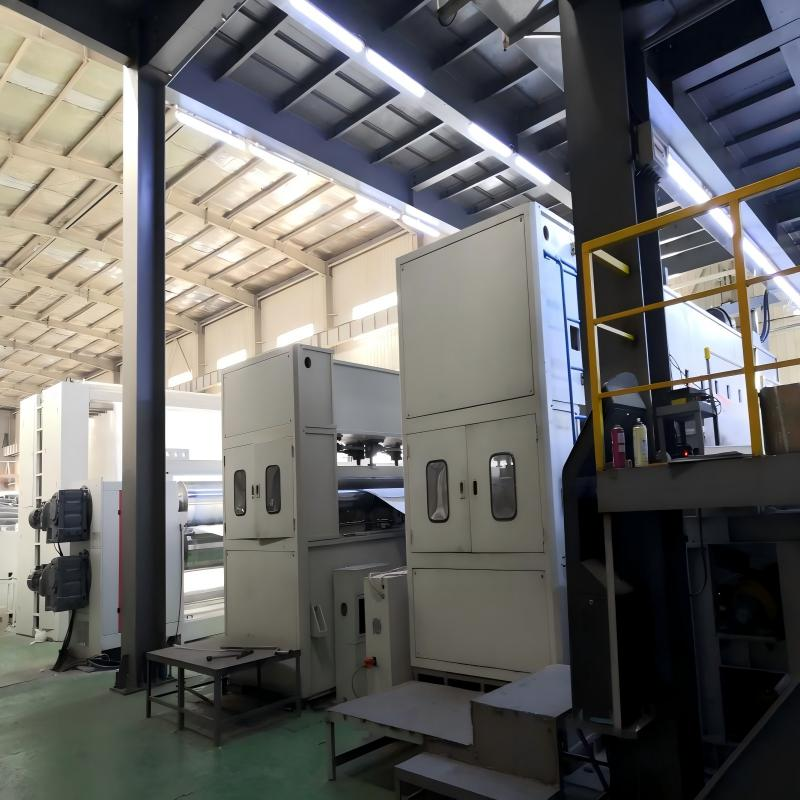
Three operational facts from that profile shape the FOB versus CIF question directly: the company runs two short-fibre needled geotextile lines and one long-fibre needled line; it holds a 10,000 m² minimum order quantity with a monthly capacity of 800,000 m² and a 10–45 day lead time; and it operates a CNAS-accredited laboratory, Dalian I.E.C, accredited to ISO/IEC 17025 under certificate CNAS L8463, whose test reports are mutually recognised by more than 70 developed countries. A buyer negotiating an incoterm with a supplier of this type is negotiating around a real testing gate, not a nominal one.
FOB vs CIF Head-to-Head on Six Decision Dimensions
1. Cost structure and freight visibility
Under FOB, the seller delivers the goods on board the vessel at the named Chinese port and the buyer pays ocean freight and insurance separately through its own forwarder. The roll price and the transport price stay visibly apart, which is what allows a buyer to benchmark a Chinese geotextile plant against another supplier on a like-for-like basis. Under CIF, the seller arranges and pays freight and insurance to the named destination port, and both are absorbed into the quoted unit price. That is simpler to administer and harder to audit.
2. Risk transfer and insurance
This is the most widely misunderstood point in geotextile procurement: under both FOB and CIF, risk passes when the goods are on board at the port of shipment — not when they arrive. CIF adds a payment obligation for freight and insurance, not an extension of the seller's risk period. CIF also obliges the seller to arrange only minimum-cover marine insurance; broader cover for water damage, handling damage or theft is arranged by the buyer or requested at additional cost. Buyers who assume CIF means "the seller carries the risk to my port" are exposed.
3. Control over carrier, routing and loading
FOB gives the buyer direct control over the shipping line, the routing, the transit time and — critically for geotextiles — the container condition and stowage instruction. CIF transfers those choices to the seller, whose commercial interest is a competitive freight rate rather than the buyer's transit preference. For a project where anti-UV geotextile is scheduled against a road or hydraulic works programme, a routing decision made by a third party is a schedule risk.
4. Documentation and destination charges
Under FOB, the buyer's forwarder handles the bill of lading chain, and destination terminal handling and inland haulage sit with the buyer from the outset. Under CIF, the seller provides the bill of lading and insurance certificate, and the buyer still pays destination-side costs. Neither term removes customs clearance, import duty or inland transport from the buyer's account, and neither should be expected to.
5. Interface with mandatory pre-shipment testing
Testing is contractual, not incoterm-dependent. G-Tex® GE operates 100% testing as its stated quality control mode, and its affiliated laboratory holds CNAS accreditation to ISO/IEC 17025 (certificate CNAS L8463, issued 2022-04-20, valid to 2028-04-19). The company's management systems are certified to ISO 9001:2015 (03824Q07540R0S), ISO 14001:2015 (03824E07541R0S) and ISO 45001:2018 (03824E07542R0S), all issued 2024-07-31 and valid to 2027-07-30.
What the incoterm changes is the window. Under FOB, the buyer controls the booking date and can require the container to be held until the test report is approved and the loading condition is documented. Under CIF, the seller books the vessel, so the inspection window must be negotiated into the shipment schedule from the start.
6. Fit with the 10,000 m² minimum, 30/70 payment and specialty grades
The 10,000 m² minimum order quantity means most first orders are container-scale, and a 30% deposit / 70% balance structure means the deposit funds production while the balance follows documents. Under FOB, the balance is normally released against a copy of the bill of lading that the buyer's own forwarder issued — an independent document chain. Under CIF, the same release happens against documents the seller's forwarder produced, which is acceptable but offers one less layer of verification.
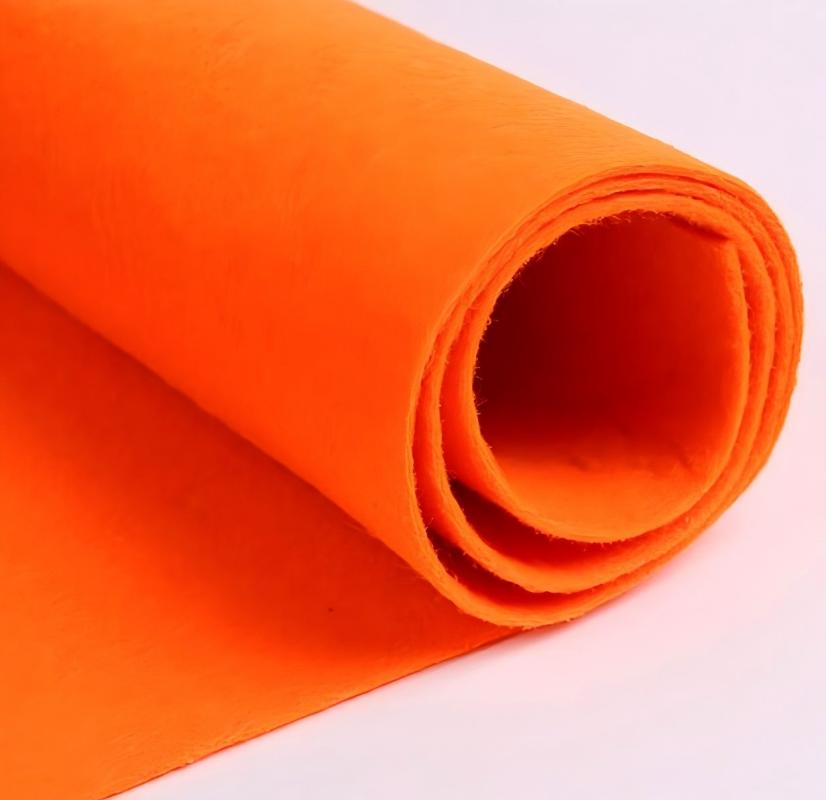
Specialty grades sharpen the argument. Anti-UV geotextile for exposed surfaces, wicking geotextile for side drains, conductive geotextile for leak detection, orange geotextile for visibility and Logo Inkjet coding geotextile for roll identification all involve customised production runs. When a bespoke run is at stake, buyer-controlled booking under FOB reduces the chance that a substitution or a re-marked roll enters the container unnoticed.
Comparison Table: FOB vs CIF for a 10,000 m² Geotextile Order
| Decision dimension | FOB — named Chinese port | CIF — named destination port |
|---|---|---|
| Price presentation | Roll price + inland haulage + export clearance; ocean freight quoted separately by the buyer's forwarder | Single delivered-port price; freight and insurance embedded in the unit price |
| Who books the vessel | Buyer or the buyer's nominated forwarder | Seller or the seller's forwarder |
| Who insures the cargo | Buyer, choosing the cover level | Seller, at minimum cover; extended cover arranged by buyer at extra cost |
| Where risk transfers | When goods are on board at the port of shipment | When goods are on board at the port of shipment (identical) |
| Control over routing and transit time | High — line, route and container condition chosen by the buyer | Limited — determined by the seller's booking |
| Documentation burden | Buyer manages the bill of lading chain; seller supplies invoice, packing list and test documentation | Seller supplies bill of lading and insurance certificate alongside commercial documents |
| Pre-shipment testing window | Buyer aligns the booking with test approval and loading inspection | Inspection window must be negotiated into the seller's shipment schedule |
| Best fit | Repeat buyers, distributors and contractors with a forwarder and a fixed works programme | First orders, buyers without freight contracts, lean procurement teams |
| Main exposure | Freight volatility and demurrage risk if documents are late | Opaque freight margin and weaker visibility of the loading condition |
The table makes the trade-off explicit: CIF buys convenience with visibility; FOB buys visibility with administrative work. Neither is cheaper in principle — the difference is who carries the freight negotiation and how much of the price structure the buyer can see.
Specification Table: What Must Be Fixed Before the Incoterm Is Signed
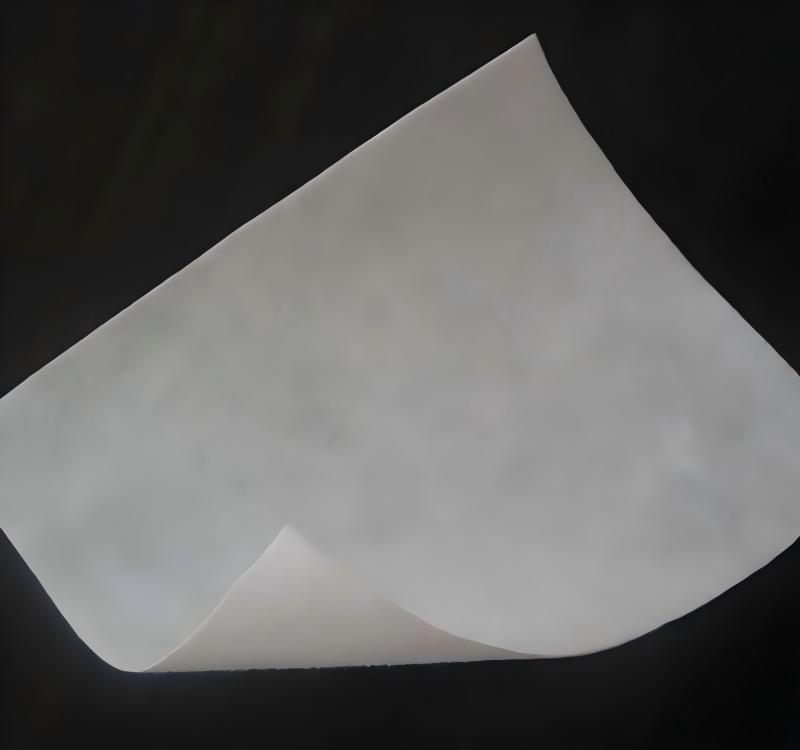
An incoterm cannot rescue an underspecified order. The following ranges are published for the G-Tex® GE PP nonwoven geotextile range (models GLS-V, GE, GLP, PET, PP), and they should be pinned down in the RFQ before FOB or CIF is chosen, because they determine roll weight, container loading and what the pre-shipment report must demonstrate.
| Property | Reference test method | Published range |
|---|---|---|
| Mass per unit area | ASTM D5261 | 140–900 g/m² across the documented product range |
| Tensile strength (wide width) | ASTM D4595 | 7.0–95 kN/m |
| Grab strength | ASTM D4632 | 500–7,500 N |
| Trapezoidal tear | ASTM D4533 | 200–2,500 N |
| CBR burst strength | ASTM D6241 | 1,300–12,500 N |
| Thickness | ASTM D5199 | Measured under 2 kPa confining pressure |
| Roll length | Product documentation | Approximately 300 m down to 45 m depending on mass per unit |
Roll length is not a trivial field. A 140 g/m² roll at roughly 300 m behaves very differently in a container from a 900 g/m² roll at roughly 45 m, and the loading plan — and therefore the freight cost that FOB exposes and CIF conceals — depends on it.
Step-by-Step: A Seven-Step Decision Workflow
Step 1 — Fix the specification and the test plan first. Define mass per unit, tensile, grab strength, tear, CBR burst and thickness against the ASTM methods in the table above. Add the project-specific requirements: high UV resistance and low elongation for exposed road and hydraulic works, or composite compatibility with a geomembrane for environmental containment. The test plan defines what the pre-shipment report must prove.
Step 2 — Size the order against the supplier's constraints. Confirm the quantity against the 10,000 m² minimum order quantity, the 800,000 m² monthly capacity and the 10–45 day lead time. An order below the minimum will be consolidated or declined; an order far above capacity will be scheduled in batches, which changes the shipping plan.
Step 3 — Decide who books the vessel, and why. If you already have a forwarder with a China–destination lane and can obtain a freight quote for the relevant container configuration, FOB is the default. If you cannot, CIF removes a task you are not equipped to perform.
Step 4 — Match the term to the risk you can actually manage. Risk passes on board under both terms. If your insurance programme covers cargo from the Chinese port and your team can file a claim with a carrier you selected, FOB gives you a cleaner evidence trail. If not, CIF with minimum cover is a floor, not a ceiling — consider instructing extended cover through the seller or buying your own.
Step 5 — Anchor the 30% deposit / 70% balance to documents. Tie the balance release to a named document set that includes the pre-shipment test report, the packing list with roll markings, and the transport document. Under FOB this chain is produced by your own forwarder; under CIF, verify the insurance certificate matches the agreed term and destination before releasing.
Step 6 — Schedule testing and loading as one gate. Require the test report before the container is sealed, and photograph or video the loading condition. With 100% testing as the stated quality control mode, the report should be available in time for this gate; with CNAS-accredited testing under ISO/IEC 17025, the report carries international recognition.
Step 7 — Set the after-sales and claims path in writing. Agree who is contacted first, what evidence is required, and what remedy applies. Remote technical support is the standard channel for export geotextile supply; a documented loading condition and a retained sample are what make that conversation productive.
Use Cases: Where the Choice Actually Changes the Outcome
Road construction with high-UV exposure
For highway subgrade and surface paving work, anti-UV geotextile is specified because the material may remain exposed during construction. UV performance is a property of the delivered roll, not of the port of arrival — but transit and storage exposure can erode the margin. A buyer on FOB terms can insist on covered stowage and a defined loading date; a CIF buyer inherits the seller's stowage decision.
Landfill and environmental containment
Landfill capping and lining layers frequently combine geotextile with geomembrane, using heavier grades — the G-Tex® GE reference list includes projects using 150 g/m² through 1,200 g/m² polyester geotextiles across sites such as Darwin Bay Landfill, Hongshan Landfill, Meru Geraldton Landfill and Wylie Bay Landfill. Heavy rolls compress container payload quickly, so the freight component is proportionally larger and the case for a visible FOB freight quote is stronger.
Hydraulic and riverbank protection
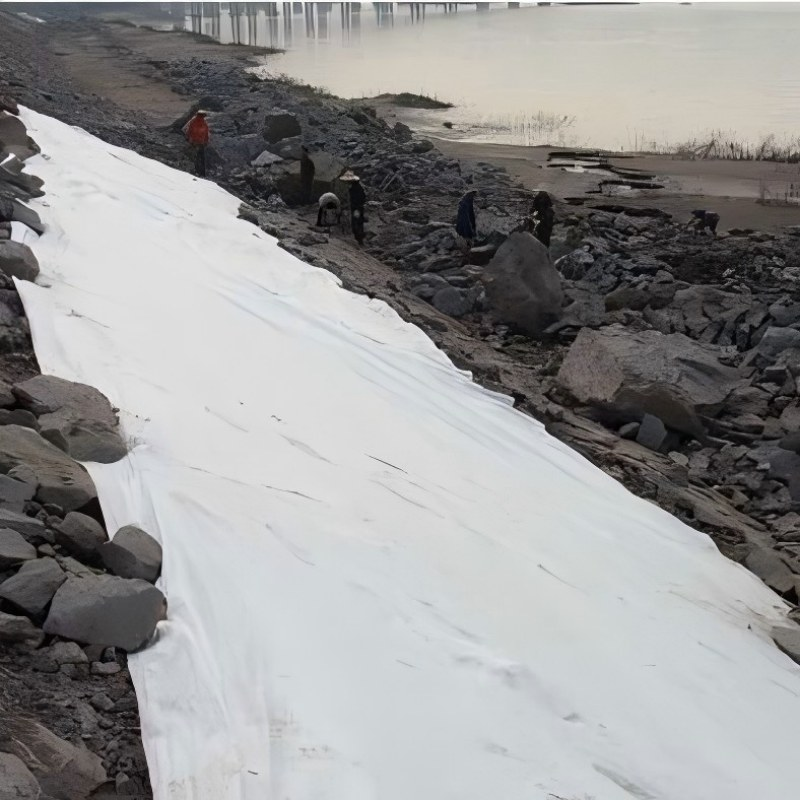
Riverbank and embankment works run on seasonal windows. Transit time is therefore a programme variable, and FOB lets the buyer select a routing that matches the works calendar rather than the seller's freight rate. Low-elongation grades used under load benefit from an inspectable loading condition, because roll deformation during stowage is difficult to attribute after discharge.
Distributors and stockists ordering marked rolls
A distributor reselling PP nonwoven geotextile under its own brand needs roll-level identification. Logo Inkjet coding geotextile, orange geotextile for visibility and marker or indicator geotextile for site handling all turn the shipment into a branded asset — and all make substitution more visible. For repeat stock orders at or above the 10,000 m² minimum, FOB with a nominated forwarder keeps the landed-cost calculation clean across shipments.
Frequently Asked Questions
Does the incoterm change who is responsible for pre-shipment test reports and certification documents?
No. Testing and certification obligations come from the purchase contract and the technical specification, not from the incoterm. Under both FOB and CIF, the buyer should require the test report before the container is sealed. G-Tex® GE operates 100% testing as its stated quality control mode, and its affiliated laboratory Dalian I.E.C holds CNAS accreditation to ISO/IEC 17025 under certificate CNAS L8463 (issued 2022-04-20, valid to 2028-04-19), with reports mutually recognised by more than 70 developed countries. The manufacturer's management systems are certified to ISO 9001:2015 (03824Q07540R0S), ISO 14001:2015 (03824E07541R0S) and ISO 45001:2018 (03824E07542R0S). Write the document set into the contract and the incoterm becomes irrelevant to compliance.
Can a Chinese geotextile manufacturer ship on FOB terms if the buyer nominates its own forwarder?
Yes, and for an export-oriented plant it is routine. G-Tex® GE, operated by Dalian GeoMax Synthetics Co., Ltd., is based in Dalian, the international shipping centre of Northeast Asia, and exports 95% of its output to more than 30 countries and regions including Australia, Canada, the United States, Germany, Singapore, Malaysia, Thailand, Vietnam, India and Chile. Under FOB the seller delivers on board at the named Chinese port and the buyer's forwarder handles the ocean leg. The practical requirement is that the nominated forwarder's booking date fits the 10–45 day production lead time.
Which incoterm makes the landed cost of a geotextile order easier to control?
FOB, when the buyer has access to freight quotations. FOB keeps the roll price and the ocean freight as separate line items, so the material cost can be benchmarked independently of transport. CIF bundles freight and insurance into the unit price, which is simpler to administer but harder to audit and exposes the buyer to whatever freight margin the seller applies. In both cases the same commercial constraints apply: a 10,000 m² minimum order quantity and a 30% deposit / 70% balance payment structure. Neither term changes the price of the geotextile itself — only how much of the total is visible.
How should sampling and pre-shipment approval work under each term?
Sample approval comes before production, not before shipment, regardless of the incoterm. Fix the specification numerically — mass per unit from 140 to 900 g/m², tensile from 7.0 to 95 kN/m, grab strength from 500 to 7,500 N, trapezoidal tear from 200 to 2,500 N and CBR burst from 1,300 to 12,500 N — then retain a production sample as the reference for the pre-shipment report. Under FOB the buyer can align the booking with test approval and photograph the loading condition; under CIF the same steps are possible but must be negotiated into the seller's shipment schedule in advance.
Does choosing FOB or CIF change production lead time?
No. Production lead time for G-Tex® GE geotextiles is 10–45 days depending on specification and quantity, against a monthly capacity of 800,000 m² and a 10,000 m² minimum order quantity. What changes is the downstream sequence: under FOB the buyer's forwarder must secure space and issue the transport document, adding a step the buyer controls; under CIF the seller books and the buyer waits for documents. In both cases, late test reports delay the shipment more than the incoterm does.
Conclusion: Choose FOB for Control, CIF for Simplicity — Then Test Under Both
The head-to-head result is narrower than the debate suggests. FOB and CIF place risk in exactly the same position — on board at the Chinese port — so the real choice is about cost visibility and operational control, not about who carries the goods to your berth. Buyers with a forwarder, a fixed works programme and a container-scale order should default to FOB. Buyers without a freight contract should use CIF and then compensate by tightening the specification, the test gate and the document set.
What does not change under either term is the sequence that protects the purchase: specify to ASTM methods, order at or above 10,000 m², fund production with the 30% deposit, approve the pre-shipment report before the container is sealed, and release the 70% balance against documents you have actually read. A verified Chinese geotextile plant with an accredited laboratory behind it makes that sequence work; an incoterm alone does not.
Next Step: Request a Quotation or a Sample Under Your Preferred Term
Tell us the application, the required mass per unit and strength values, and your destination port. We will quote on either FOB or CIF so you can compare the two directly, and we will confirm the pre-shipment test scope before the order is placed.
G-Tex® GE — Dalian GeoMax Synthetics Co., Ltd.
Website: www.geotranstechnology.com
Email: Dothan@geo-textile.com | Tel / WhatsApp: +86 186-9865-5505
Address: NO.8888-1 SOUTHEASTERN INDUSTRIAL ZONE, YOUJIA, GANJINGZI DISTRICT, DALIAN, CHINA
Download the company and laboratory profile: I.E.C. Profile (PDF)
Have Questions or Need More Details?
Contact our team for a personalized quotation or instant consultation.
Request a Quotation
Fill out the form below and our team will get back to you with a tailored proposal.
WhatsApp Direct Chat
Prefer to chat in real-time? Message us on WhatsApp for instant assistance & quick answers.
- Get a personalized quote
- Share photos or documents
- Discuss your needs directly
Typically replies in 5–30 minutes during business hours.