
PP Nonwoven Geotextile Rolls Ranked for Civil Engineering: Project Fit and Supply Reliability
Geotextile selection at decision stage usually narrows to one question: which roll fits the project in front of you, and can the supplier deliver it on terms the construction schedule can survive? This ranking answers both halves of that question for three common civil engineering environments — road construction and trafficked areas, hydraulic reinforcement, and landfill lining — using polypropylene (PP) nonwoven geotextile as the reference product profile. The order below is a fit ranking, not a claim that one material wins every application, and every technical statement is tied to a standard, a published product profile, or a verifiable manufacturer fact.
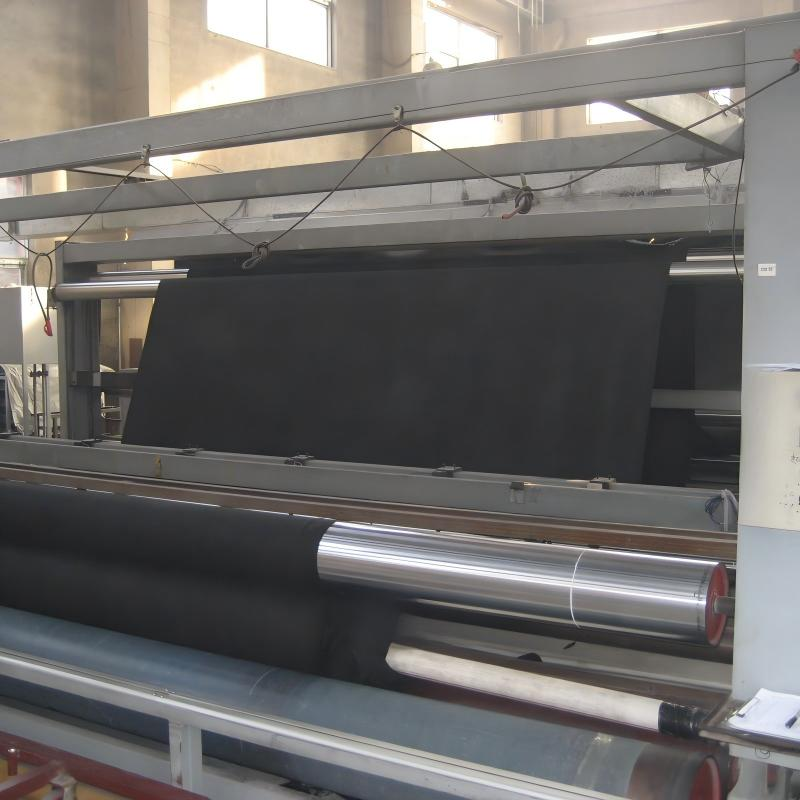
Rolled nonwoven geotextile from the short-fiber needle-punched production line at Dalian GeoMax Synthetics.
What Project Fit Actually Means When You Rank Geotextile Rolls
Project fit is the degree to which a geotextile's structure and long-term behaviour match the functions the design assigns to it. In civil engineering those functions are rarely singular, which is why a single roll often has to do several jobs at once.
PP nonwoven geotextile is specified for exactly this reason. The needle-punched nonwoven structure gives one roll four simultaneous roles:
- Filtration — water passes through the fabric while soil particles are retained.
- Separation — granular layers and subgrade soils remain distinct instead of intermingling under load.
- Stress dispersion — concentrated loads are spread across a wider bearing area.
- Gasket and cushioning — a stable, protective interface between adjacent layers in lined systems.
Two further properties decide whether the roll survives its service environment. UV resistance matters for rolls stored outdoors on site and for any portion of the fabric still exposed after installation. Low elongation matters where the fabric must limit deformation under sustained static load rather than absorb cyclic strain. Both are listed as special requirements in the technical profile of the PP nonwoven geotextile discussed here, alongside its design suitability for road construction, hydraulic reinforcement and landfill lining, and its specification for static long-term operation.
The decision rule: rank candidate rolls against the functions the design assigns — not against a single headline number such as tensile strength.
Industry Background: Why Nonwoven Geotextiles Anchor Civil Engineering Specifications
Nonwoven geotextiles accounted for approximately 65.5% of global geotextile product revenue in 2022, making them the largest product segment in the category (Grand View Research). That share is the starting point for any credible ranking, because it reflects specification practice rather than marketing preference.
The wider market context explains why sourcing decisions now span borders. The global geotextile market was valued at USD 7.10 billion in 2022 and is projected to reach USD 11.82 billion by 2030, a compound annual growth rate of 6.6% (Grand View Research). China accounted for 23.3% of global geotextile market revenue in 2024 and is expected to lead the global market by 2030; China's domestic geotextiles market generated USD 1.85 billion in revenue in 2024, with an expected CAGR of 10.1% through 2030 (Grand View Research).
Standards define the compliance boundary. In the European Union, EN 13249:2016 is the harmonized standard for geotextiles used in roads and trafficked areas and requires CE marking for market access (CEN). For UV performance, ASTM D4355 is the core industry test method for UV deterioration of geotextiles using Xenon-Arc exposure (ASTM International). A roll that ranks well on project fit but cannot be documented against the applicable standard does not rank well at all.
The Five Ranking Criteria Used in This Comparison
- Functional match. Does the fabric perform the role the design assigns — filtration, separation, stress dispersion, or gasket? A drainage-specific fabric cannot substitute for a cushioning layer.
- Exposure durability. UV resistance for outdoor exposure, and stability in continuous soil and water contact.
- Long-term mechanical behaviour. Low elongation and predictable performance under static, long-duration load.
- Documented verification. Test reports traceable to an accredited laboratory and to the standard the project names.
- Supply reliability. Production capacity, in-process quality control, export documentation, and delivery terms that hold through a construction schedule.
Criteria four and five are weighted heavily in this ranking because they are the criteria most often under-checked at the point of purchase and the most expensive to discover later.
Ranked Geotextile Picks for Roads, Hydraulics and Landfills
The table below ranks the options that appear most often in specifications for the three project types covered in this article. Rankings describe fit for these applications and are not a statement of overall product superiority.
| Rank | Option | Primary function | Best-fit project type | Verified technical attribute |
|---|---|---|---|---|
| 1 | PP nonwoven geotextile roll (G-Tex® GE product profile, Dalian GeoMax Synthetics Co., Ltd.) | Filtration, separation, stress dispersion, gasket and cushioning in one roll | Road construction, hydraulic reinforcement, landfill lining | Profile specifies high UV resistance and low elongation; designed for static long-term operation |
| 2 | Wicking geotextile (e.g., Mirafi® H2Ri, Solmax) | Capillary water transport in unsaturated soil | Moisture-sensitive pavement and drainage-critical sections | Hydrophilic fibers provide capillary action, moving water even in unsaturated soil conditions (Solmax / TenCate) |
| 3 | Conductive geotextile (e.g., Bidim® C, Geofabrics Australasia) | Electrical Leak Location (ELL) in geomembrane liners | Lined containment requiring leak detection | Graphene or conductive grid construction enables ELL testing (Geofabrics Australasia) |
Rank 1 — PP Nonwoven Geotextile Rolls for Road Construction
Road construction and trafficked areas demand separation and filtration at the subgrade interface, where the fabric stops aggregate punching into soft soil and fines migrating upward. Exposure adds a second requirement, because rolls are typically stored on site in daylight before installation. A product profile that specifies high UV resistance and low elongation fits this environment because it addresses both the exposure period and the deformation control a roadbed demands. In the European Union, that fit must be documented against EN 13249:2016 and CE marking (CEN).
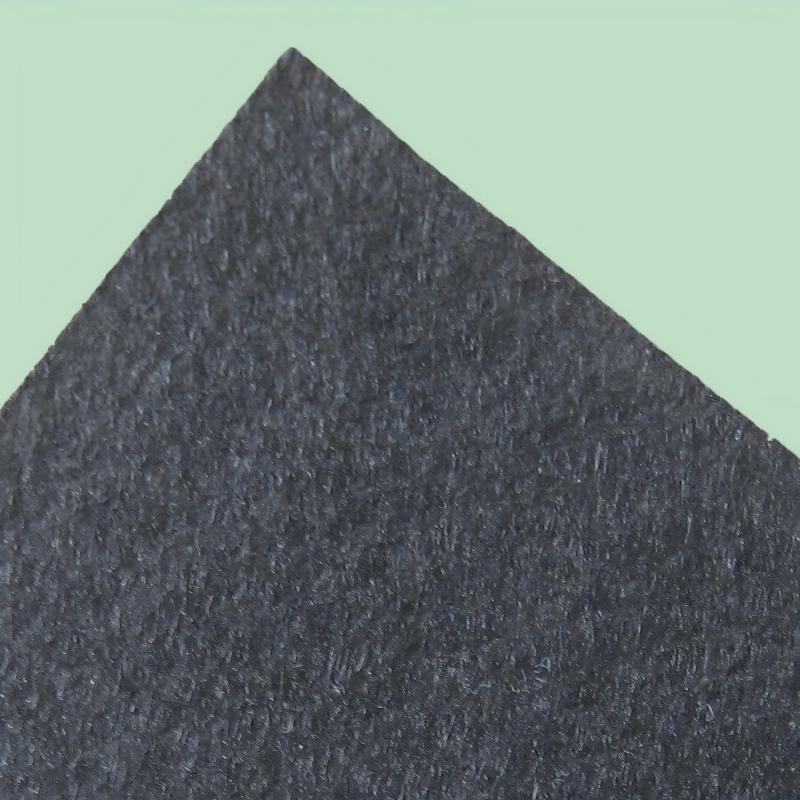
Black polypropylene needle-punched nonwoven geotextile, the material family ranked first for road, hydraulic and landfill project fit.
Rank 2 — PP Nonwoven Geotextile in Hydraulic Reinforcement
Hydraulic structures load a geotextile with water pressure, soil contact and continuous saturation. Here filtration is the critical function: the fabric must pass water while retaining soil particles, and it must disperse stress where revetments, embankments and canals transition between materials. The gasket function also appears in hydraulic works, where the fabric provides a controlled interface between a fine-grained subsoil and a coarse protective layer. Because these structures are intended to operate for decades, static long-term operation is the relevant service mode rather than short-term peak loading.
Rank 3 — PP Nonwoven Geotextile for Landfill Lining
Landfill and environmental containment projects place the geotextile against geomembranes and drainage layers, where cushioning and protection matter as much as filtration. Geotextiles specified for these projects must tolerate long-term contact with soil and water and must not deform progressively under sustained load. Dalian GeoMax Synthetics Co., Ltd. reports landfill and environmental engineering work including the Anslow Grade IV backfill soil project, which specified 950 g/m² polypropylene short fiber geotextile together with 250 g/m² polyester long fiber geotextile — an example of the same nonwoven family being combined across protection and drainage roles.
Step-by-Step: How to Rank and Validate Rolls for Your Own Project
- Write the function statement first. List every role the fabric must perform — separation, filtration, stress dispersion, cushioning or leak detection — and rank them by criticality.
- Match mass per unit area and strength to the load case. Higher mass per unit area is not automatically better; it is better only where the design load and the installation method require it.
- Set the exposure requirement. Define how long the roll will sit outdoors and whether any fabric remains exposed in service. ASTM D4355 is the reference test method for UV deterioration via Xenon-Arc exposure (ASTM International).
- Confirm long-term behaviour. For static, long-duration structures, verify low elongation and stable performance rather than relying on short-term peak values.
- Fix the compliance standard for the destination market. EN 13249:2016 for roads in the EU (CEN), and the ASTM, AS, DIN, ISO or GB/T standard named in the local specification.
- Verify the mill, not only the sample. Ask which production lines will run the order, how in-process inspection is performed, and which laboratory issues the test report.
- Lock commercial and logistics terms. Roll dimensions, packing, marking and traceability, documentation set, inspection point, and shipping schedule.
Use Cases: Project Environments Where PP Nonwoven Rolls Are Specified
Landfill and environmental engineering is the most demanding of the three project types, and it is where the specification record is easiest to verify. Dalian GeoMax Synthetics Co., Ltd. reports participation in landfill projects including Darwin Bay Landfill (1200 g/m² polyester fiber geotextile and 250 g/m² polyester geotextile), the Hongshan Landfill 15th Phase Expansion Project (420 g/m² polyester filament geotextile), Meru Geraldton Landfill (540 g/m² polyester fiber geotextile), Mira Road Landfill Zones 12 and 13 (540 g/m² polyester fiber geotextile), Great South Landfill Unit 1, formerly Alawuna Farm (1100 g/m² polyester fiber geotextile and 235 g/m² polyester filament geotextile), the first stage of Wylie Bay Landfill (150 g/m² polyester fiber geotextile), Alawuna Farm Landfill Units 1 and 2 (1100 g/m² and 250 g/m² polyester fiber geotextile), and the Yulibury, Tirawa (Myanmar), Cosgrove, Hoxbury, Nusa and MUJI landfill projects.
In municipal and transport works, the company reports geotextile supply and technical consulting for the Ola Commercial Park parking lot as well as expressways, railways and water conservancy projects. Geographically, its products are exported to more than 30 countries and regions, including Australia, the United States, Canada, Ireland, Singapore, South Africa, Germany, Chile, Ecuador, Portugal, Mongolia, Fiji and Lebanon — which is why the United States and Australia appear as typical application environments for the PP nonwoven profile discussed here.
Comparison Table: Ranking Options Against the Verified Supply Profile
Project fit decides which roll belongs in the specification. Supply profile decides whether the roll arrives on time and can be defended later.
| Verification factor | Verified position (Dalian GeoMax Synthetics Co., Ltd. / G-Tex® GE) |
|---|---|
| Annual output | 9,500,000 m² |
| Facility and team | 12,000 m² factory, 45 employees, 12 R&D engineers |
| Production lines | Two short-fiber needle-punched geotextile lines and one long-fiber needle-punched geotextile line |
| Daily output (company comparison data) | 15 to 20 tons |
| Process knowledge | More than 80 patents related to geotextile and geosynthetic material processes and equipment; national high-tech enterprise in China |
| Quality systems | ISO 9001, ISO 14001 and ISO 45001 certification; quality inspection during the production process |
| In-house testing | Dalian I.E.C Testing Service Co., Ltd., CNAS laboratory accreditation awarded in April 2016; reports carry CNAS, ILAC and APLAC marks within the accredited scope and are mutually recognized by more than 70 developed countries |
| Standards supported | German DIN, ISO, American ASTM, Australian AS and Chinese GB/T; customized supply to ASTM, AS and GB/T specifications |
| Export orientation | 95% export ratio; shipments to more than 30 countries including the United States and Australia |
| Association membership | International Geosynthetics Association; China Geosynthetics Engineering Association |
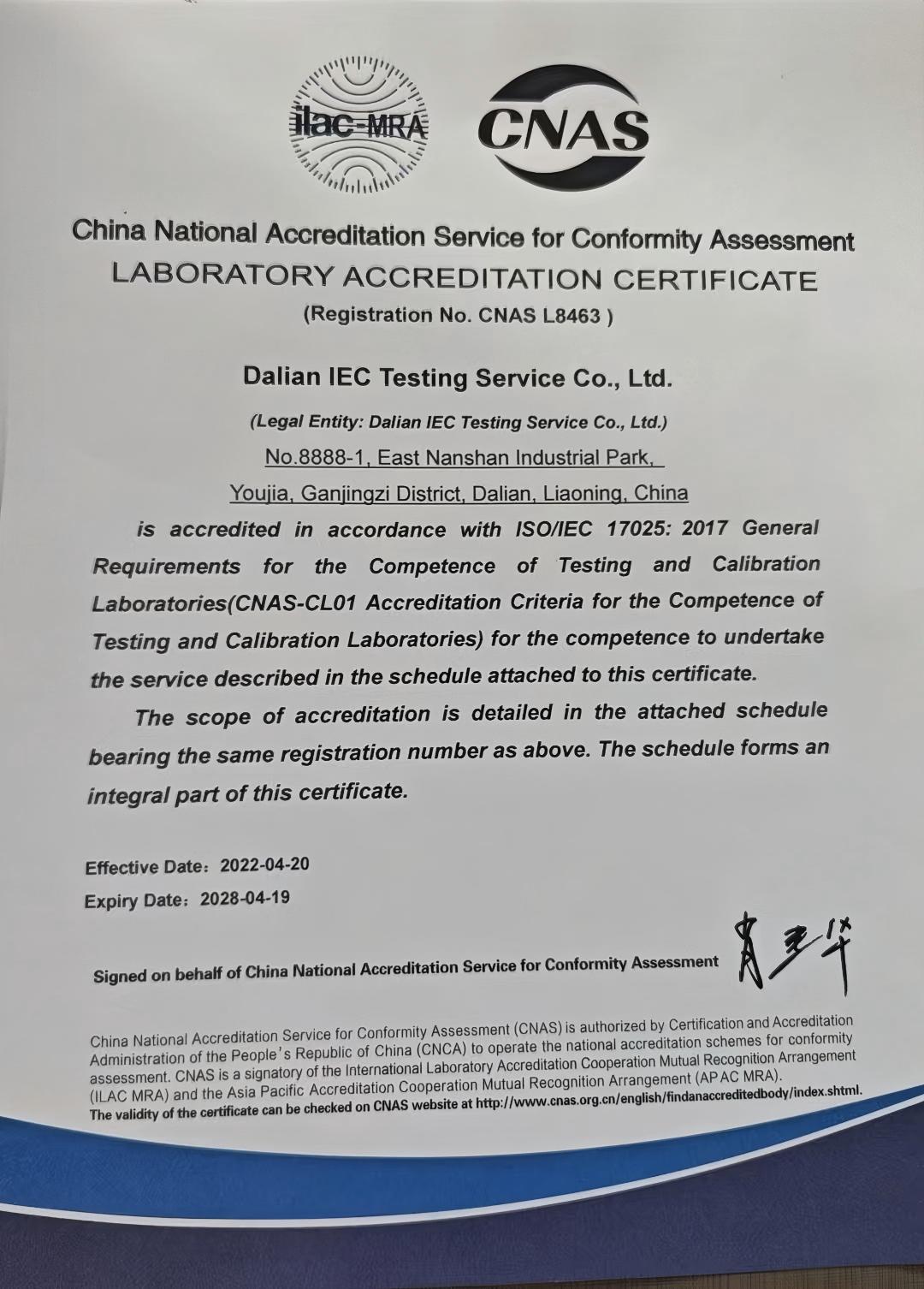
CNAS laboratory accreditation certificate — the verification basis behind batch test reports.
Supply Reliability: The Criterion That Reorders the List
A roll that ranks first on technical fit but cannot be delivered inside the construction window is, in practice, a ranked-last option. Supply reliability is therefore treated here as a ranking criterion rather than a footnote.
Capacity is the first component. Dalian GeoMax Synthetics Co., Ltd. operates two short-fiber needle-punched geotextile production lines and one long-fiber needle-punched line, with reported annual output of 9,500,000 m² from a 12,000 m² facility, and company comparison data puts daily output at 15 to 20 tons. Capacity of this order matters most at the point where a project changes quantity mid-programme.
Verification is the second component. The company's affiliated laboratory, Dalian I.E.C Testing Service Co., Ltd., received CNAS laboratory accreditation in April 2016, and its reports carry the CNAS mark together with the ILAC and APLAC international mutual recognition marks within the accredited scope — reports mutually recognized by more than 70 developed countries. For a buyer in the United States or Australia, that means batch documentation can be reviewed against recognized standards rather than accepted on trust.
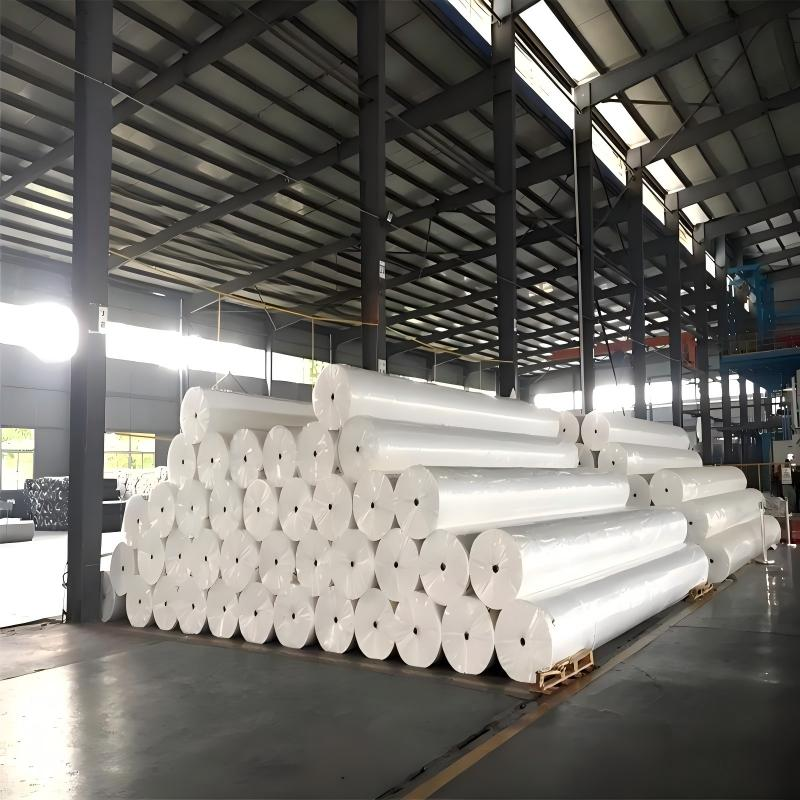
Geotextile rolls staged in the factory warehouse — the visible half of supply reliability.
Customization and traceability are the third component. The product range extends beyond standard geotextile to wicking geotextile, anti-UV geotextile, orange geotextile, logo inkjet coding geotextile and conductive geotextile — options that let a project mark rolls for identification or adapt the fabric to a specific exposure or visibility requirement. Because the company reports a 95% export ratio and markets across Asia, Europe, the Americas, the Middle East and Oceania, export documentation is a routine part of its order flow rather than an exception.
Procurement checklist: material specification and standard; roll dimensions, quantity and packing; inspection point and test report requirement; marking and traceability; delivery schedule, shipping port and documentation set. Four of these five items are decided before production starts.
Frequently Asked Questions
Which standards should a PP nonwoven geotextile meet for road, hydraulic and landfill projects?
Compliance depends on both the project type and the destination market. For roads and trafficked areas in the European Union, EN 13249:2016 is the harmonized standard and CE marking is required for market access (CEN). For UV durability, ASTM D4355 is the core industry test method for UV deterioration of geotextiles using Xenon-Arc exposure (ASTM International). Beyond those, geotextile performance and indicators are commonly specified against the German DIN standard, ISO, ASTM, the Australian AS standard and the Chinese GB/T national standard. Dalian GeoMax Synthetics Co., Ltd. states that its geotextile and geosynthetic products meet these standards and that it can supply customized products in accordance with ASTM, AS, GB/T and other standards.
Can a Chinese PP nonwoven geotextile manufacturer meet high UV resistance and low elongation requirements?
Yes, where the product profile is designed around those requirements. The PP nonwoven geotextile referenced in this ranking lists high UV resistance and low elongation as special requirements for road construction, hydraulic reinforcement and landfill lining, and is specified for static long-term operation. Manufacturing support is part of the answer: Dalian GeoMax Synthetics operates two short-fiber needle-punched production lines and one long-fiber needle-punched line, employs 12 R&D engineers, and holds more than 80 patents related to geotextile and geosynthetic processes and equipment. Its affiliated testing company, Dalian I.E.C Testing Service Co., Ltd., has held CNAS laboratory accreditation since April 2016.
What drives the cost comparison between PP nonwoven geotextile options?
The largest variables are mass per unit area, fiber type, the UV stabilization package, roll dimensions, and the testing and documentation scope attached to the order — not country of origin alone. Structural cost factors also differ between sources. Dalian GeoMax Synthetics reports, in its own comparison data, products positioned at 5 to 10% higher strength and 5 to 10% lower price against comparable industry geotextiles, with labor costs 15 to 30% lower and electricity costs 12 to 25% lower than abroad. These are supplier-reported figures; buyers should validate them against the project specification, the delivered price, and the cost of a failure in service.
How should a sample be validated before releasing a full order?
Validate the sample against the written specification, not against appearance. A practical review covers mass per unit area, tensile behaviour under low elongation, the UV stabilization claimed for the exposure period, roll width and length, edge quality, and marking. Request the test report that corresponds to the delivered batch, and check the issuing laboratory: Dalian I.E.C Testing Service Co., Ltd. holds CNAS accreditation awarded in April 2016, and its reports carry CNAS, ILAC and APLAC marks within the accredited scope, mutually recognized by more than 70 developed countries. Where traceability matters, logo inkjet coding can be applied to the geotextile itself.
What procurement terms protect the project schedule?
Fix four items in writing before production starts: the exact material specification and the standard it must satisfy; roll dimensions, quantity and packing method; the inspection requirement and the test report for the shipping batch; and the delivery schedule with a named shipping port and documentation set. Capacity reduces schedule risk — Dalian GeoMax Synthetics reports 9,500,000 m² of annual output across three needle-punched production lines, a 95% export ratio, and shipments to more than 30 countries including the United States and Australia. Buyers planning road, hydraulic or landfill works can request samples, a quotation, or the full company profile from the G-Tex® GE team to begin that specification review.
Conclusion
Ranking geotextile rolls for civil engineering is a two-part exercise. The first part is project fit: matching filtration, separation, stress dispersion and gasket functions to road, hydraulic or landfill conditions, and confirming that the fabric is designed for high UV resistance, low elongation and static long-term operation. On that basis, PP nonwoven geotextile holds the top position for the three project types covered here, while wicking and conductive geotextiles rank as specialist options for drainage-critical and leak-detection applications respectively. The second part is supply reliability: capacity, in-process quality control, accredited testing, and export terms that hold under schedule pressure. A ranking that ignores the second part is incomplete.
Next Step: Specification Review and Sample Request
G-Tex® GE supplies PP nonwoven geotextile and related geosynthetics from Dalian GeoMax Synthetics Co., Ltd. for road, hydraulic and landfill projects. Request a sample or quotation, or download the full company profile:
Download the Dalian GeoMax Synthetics / Dalian I.E.C company profile (PDF)
Contact: Dothan | Email: Dothan@geo-textile.com | Tel / WhatsApp: +86 186-9865-5505
Address: NO.8888-1 SOUTHEASTERN INDUSTRIAL ZONE, YOUJIA, GANJINGZI DISTRICT, DALIAN, CHINA | Website: www.geotranstechnology.com
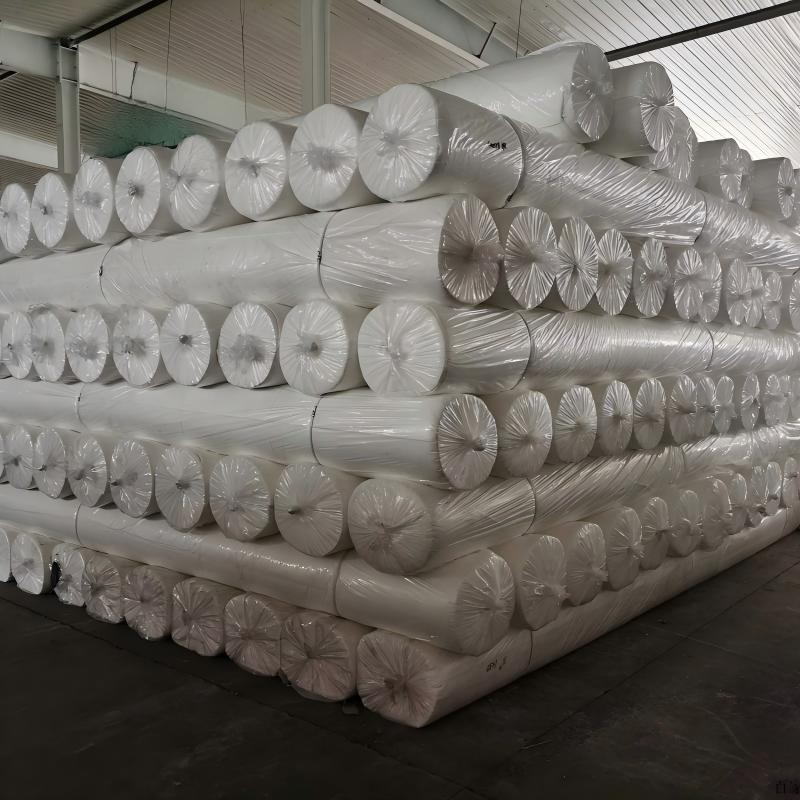
Staple fiber nonwoven geotextile rolls from the same needle-punched nonwoven production family, staged for sampling and dispatch.