
The 10,000 m² Test: How Order Terms Reveal Geotextile Supplier Capability
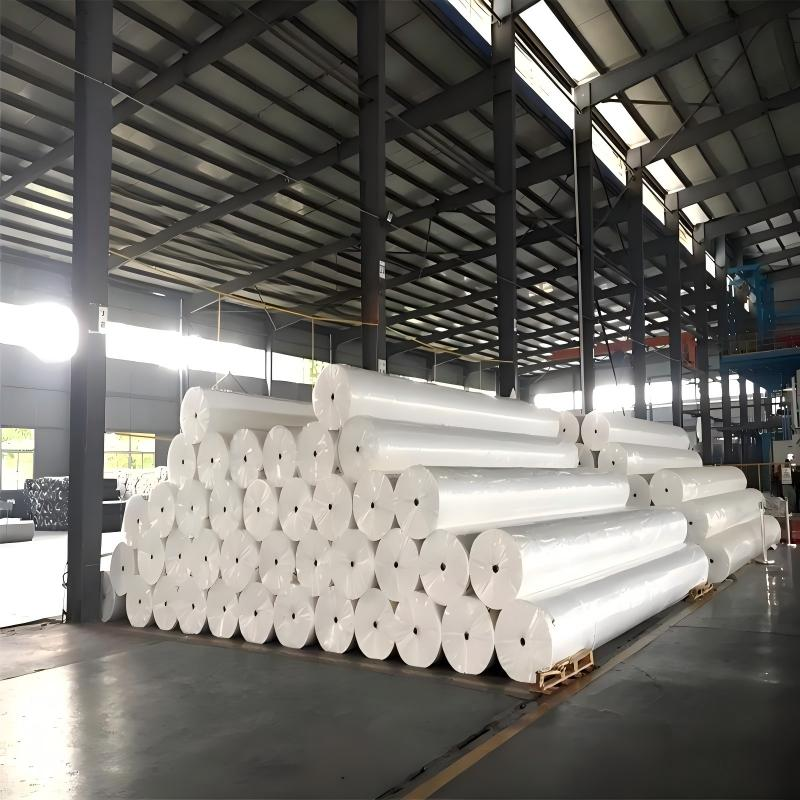
A geotextile quotation is a short document, and the line every procurement team reads first — price per square meter — is usually the least informative one on the page. The terms beneath it do more work. A minimum order quantity, a delivery basis, a payment split and an acceptance test each describe something concrete about the supplier's plant, working capital, freight control and quality system. Read together, they answer a question that price cannot: can this supplier produce my order, inspect it, and deliver it on a schedule I can build a project around?
This guide is written for buyers in the Decision and Execution stages — procurement managers and engineers who already know they need a PP nonwoven geotextile or a customized geotextile fabric for a road, hydraulic or environmental project, and who now have to convert a quotation into a purchase order they can defend to a project owner, an insurer and an internal audit.
The four terms, decoded: a 10,000 m² MOQ is a statement about batch economics relative to monthly capacity; FOB or CIF identifies who controls freight and where risk transfers; a 30% deposit with a 70% balance before shipment defines the supplier's working-capital requirement and the buyer's inspection window; and mandatory pre-shipment testing on every order turns "quality" from a promise into a document that must exist before the balance is paid. Each term can be checked against a number, a named standard or a certificate — which is what makes them usable as evidence rather than as reassurance.
Problem definition: why identical quotations produce different project outcomes
The problem is seldom hidden information. It is that quotations get compared on the visible variable while the terms that govern delivery assurance sit in the fine print, unexamined until something goes wrong. Three failure patterns repeat across cross-border geotextile sourcing, and each has an early-warning signal inside the quotation itself.
Capacity failure. An order is accepted at a competitive price, then scheduled against capacity that does not exist in the promised window. The buyer usually discovers this when the vessel booking has to be moved. The warning signal is a minimum order quantity that bears no calculable relationship to the supplier's stated monthly output, or a capacity figure the supplier cannot break down by production line.
Term failure. FOB and CIF are treated as interchangeable price labels. They are not. One transfers freight control and insurance responsibility to the buyer at the port of loading; the other keeps that responsibility with the supplier until the destination port. Selecting the wrong basis for a project with a fixed installation date creates cost exposure that no unit-price discount recovers.
Evidence failure. The quotation says quality is guaranteed, and the payment schedule says 70% before shipment. If the acceptance criterion is verbal, the buyer's remaining leverage disappears at the moment the balance is transferred. This is the most expensive failure mode, because it is discovered after the money has moved.
All three can be detected before a deposit is paid, because all three are encoded in four order terms that can be verified rather than trusted.
Industry background: a standard-driven market where order terms carry the risk
Geotextile demand is expanding, and the geography of that expansion concentrates sourcing decisions in Asia. Grand View Research values the global geotextile market at USD 7.10 billion in 2022, projected to reach USD 11.82 billion by 2030 at a CAGR of 6.6%. The same source reports that China accounted for 23.3% of global geotextiles market revenue in 2024 and is expected to lead the global market by 2030, while China's domestic geotextiles market generated USD 1.85 billion in 2024 with an expected CAGR of 10.1% through 2030.
Methodology matters when these numbers are used to justify a sourcing decision. Mordor Intelligence estimates the same global market at USD 4.74 billion, and the gap between the two figures is largely definitional — standalone geotextiles versus total geosynthetics. The same ambiguity appears in supplier capacity claims, which is why a buyer should always ask what unit a number is built on before comparing it with another.
Product mix reinforces the point. Nonwoven geotextiles held the largest global product share in 2022, at approximately 65.5% of total revenue, which explains why most cross-border enquiries involve PP nonwoven geotextile, geotextile fabrics and their customized variants — wicking geotextile, anti-UV geotextile, orange geotextile, logo inkjet coding geotextile and conductive geotextile.
Standards set the acceptance bar. EN 13249:2016 is the harmonized European standard for geotextiles used in roads and trafficked areas and requires CE marking for EU market access. ASTM D4355 is the core industry standard for testing the UV deterioration of geotextiles through Xenon-Arc exposure. Functional products also have to be declared precisely: wicking geotextiles such as Mirafi® H2Ri use hydrophilic fibers to provide capillary action that transports water even in unsaturated soil conditions, and conductive geotextiles such as Bidim® C use conductive grids to enable Electrical Leak Location (ELL) in geomembrane liners.
The practical consequence is straightforward. In a market where the technical requirement is defined by published standards and the commercial relationship is defined by order terms, the order terms are where the standard is actually enforced. A specification sheet describes intent. An order term describes what will be measured, by whom, and before which payment.
Detailed solution: decoding the four order terms
Dalian GeoMax Synthetics Co., Ltd. is a Chinese geotextile and geosynthetics manufacturer based in Dalian, the international shipping center of Northeast Asia, exporting under the brand G-Tex® GE. Its products are exported to the Americas, Oceania, Africa, the Middle East and Southeast Asia, covering more than 30 countries and regions, and it publishes a defined set of order terms: MOQ 10,000 m², delivery terms FOB or CIF, acceptance criteria based on a pre-shipment test, and payment terms of 30/70. Those four terms are used below as a worked example of how to read any supplier's order sheet.
1. The 10,000 m² MOQ is a capacity ratio, not a barrier
A minimum order quantity only becomes meaningful when it is divided by production capacity. On its own, 10,000 m² says nothing; expressed as a share of monthly output, it becomes a scheduling statement.
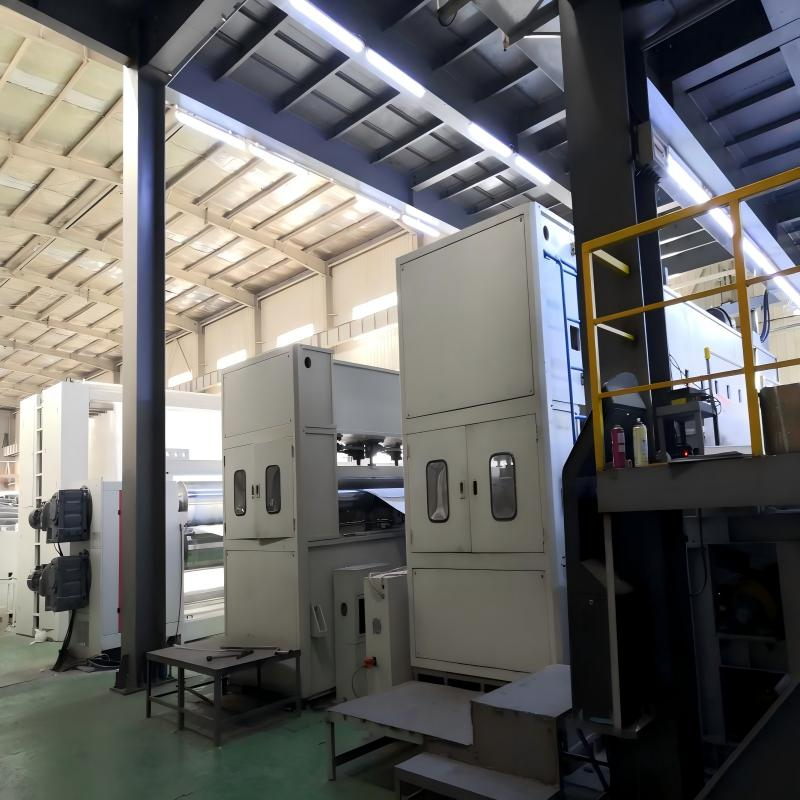
The verified figures behind this term are a monthly production capacity of 800,000 m² and an annual output of 9,500,000 m², produced on two short-fiber needled geotextile lines and one long-fiber needled geotextile line inside a 12,000 m² factory. A 10,000 m² order therefore equals roughly 1.25% of one month's stated capacity. The monthly and annual figures are also internally consistent: 800,000 m² multiplied by twelve gives 9,600,000 m², within the reported 9,500,000 m² annual output — a cross-check any buyer can perform on any supplier in under a minute.
What this ratio means in practice is that a 10,000 m² order can generally be inserted into the schedule without displacing larger contract volumes. That is the delivery-assurance signal. An MOQ that is large relative to stated capacity produces the opposite risk: the order will be produced only when the line has free time, and the lead time will slip whenever a larger customer arrives.
Buyer verification: ask for the capacity figure broken down by production line, and ask which line the 10,000 m² will run on. A supplier that can answer both is describing a real schedule. The same comparison notes from this manufacturer record a daily output of 15 to 20 tons, and cite labor costs 15–30% lower and electricity costs 12–25% lower than abroad as part of the cost structure behind FOB pricing.
2. FOB or CIF: where freight control and risk transfer actually sit
Delivery terms are quoted as FOB or CIF, which means the buyer chooses who carries the freight leg rather than accepting a default.
Under FOB, the buyer nominates the forwarder and controls freight and insurance from the port of loading onward; the supplier's responsibility ends when the goods are loaded. Under CIF, the supplier arranges carriage and insurance to the destination port, and the freight cost is embedded in the unit price. Neither is inherently cheaper — they simply place control and risk in different hands, and the correct choice depends on whether the buyer already has a freight contract and whether the project's insurance policy is written at origin or at destination. Because Dalian is described as the international shipping center of Northeast Asia and the manufacturer exports 95% of its output, an FOB arrangement from Dalian is operationally straightforward.
Three checks convert this term from a label into information. First, is a named port of loading written into the quotation, or is the incoterm stated without a port? Second, who books the freight and who holds the insurance certificate? Third, which document set is handed over, and when — bill of lading, packing list, certificate of origin, and the pre-shipment test report that the next term depends on.
3. 30% deposit and 70% before shipment: the payment schedule is an inspection schedule
The payment split is 30% deposit with the 70% balance payable before shipment. This is a working-capital model, and it is also the buyer's only hard leverage point in the transaction.
The 30% deposit funds raw-material purchasing and production start; the 70% balance is released before the goods leave. Read from the supplier's side, the schedule avoids financing a buyer's order. Read from the buyer's side, it means the entire quality and quantity verification must be completed while the balance is still unpaid. A 30/70 schedule is safe only when it is paired with an enforceable acceptance criterion — which is exactly why the fourth term matters more than the other three.
For budget planning, the practical implication is that the incoterm and the payment term must be evaluated together. A CIF price that bundles freight and insurance may look simpler, but under FOB the buyer retains the ability to route cargo through an existing forwarder contract and to claim directly on its own policy. The cost difference between the two is a logistics calculation, not a quality signal — but the payment term is a risk signal, and it should be written into the purchase order with the exact trigger event for the balance.
4. Pre-shipment testing on every order: the term that makes the other three enforceable
The acceptance criterion is a pre-shipment test. Combined with 100% test quality control and quality inspection during the production process, this term is what turns the other three into a verifiable commercial structure.
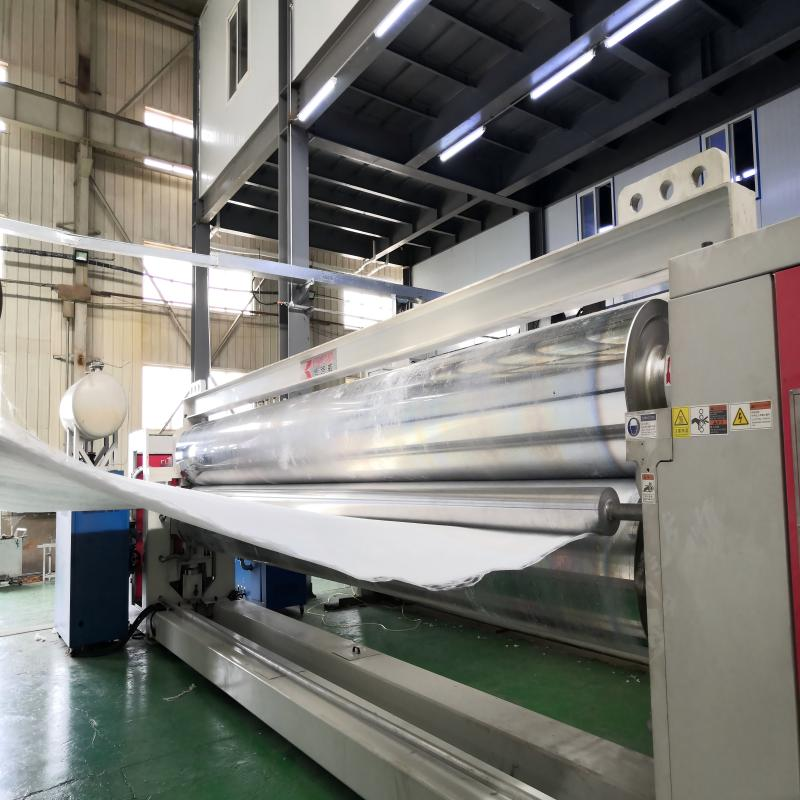
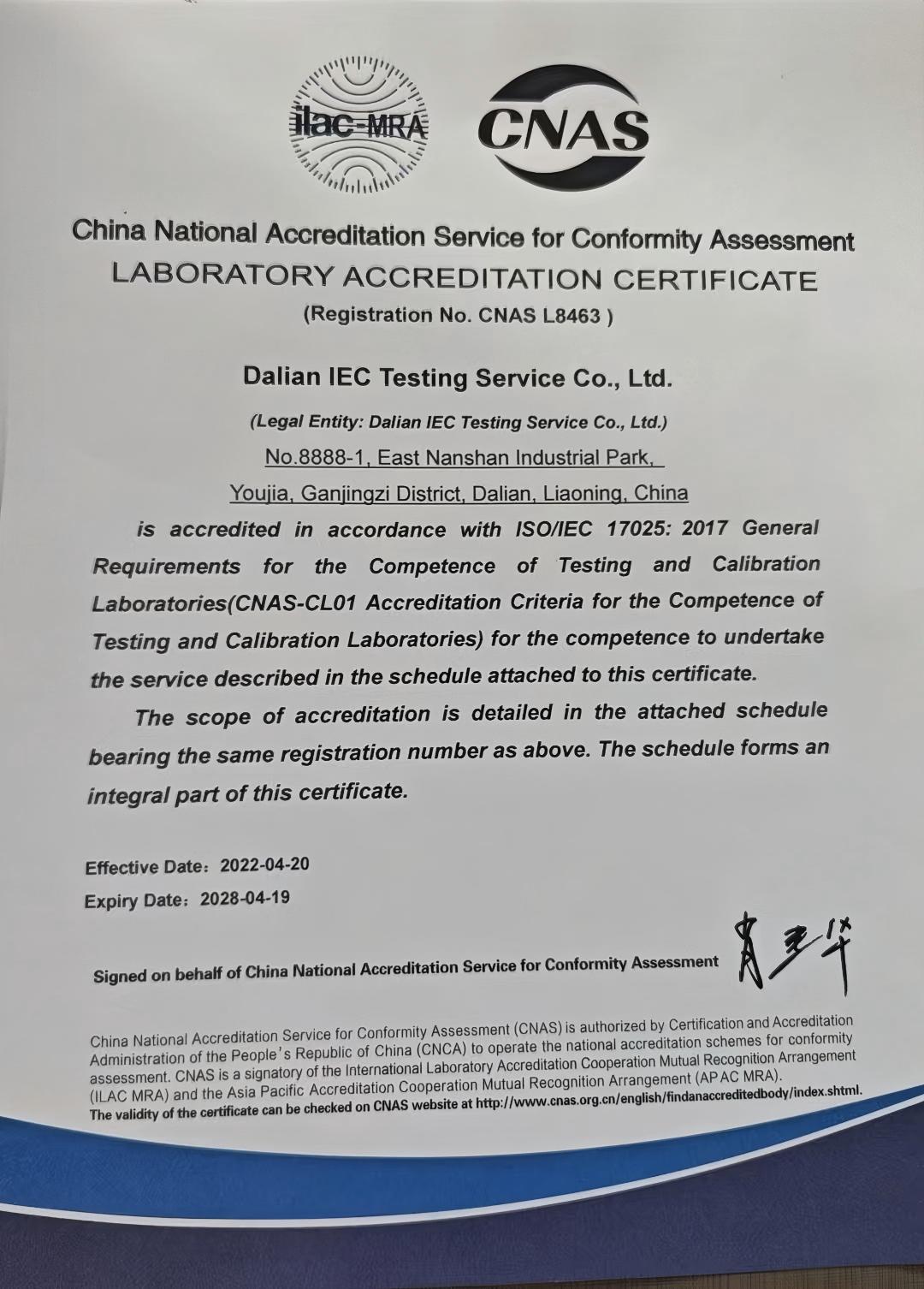
The testing capability behind the term is a second company: Dalian I.E.C Testing Service Co., Ltd., established in 2012 by the same group to test and evaluate geotextiles and geosynthetics. In April 2016 it was awarded CNAS laboratory accreditation by the China National Accreditation Service for Conformity Assessment, which allows its public test reports to carry the CNAS national laboratory mark together with the ILAC and APLAC international mutual recognition marks. Those reports are mutually recognized by more than 70 developed countries. Supporting this, the manufacturing operation holds ISO 9001 quality management, ISO 14001 environmental management and ISO 45001 occupational health and safety certification, and has obtained over 80 patents related to geotextile and geosynthetic processes and equipment as a national high-tech enterprise in China.
The clause only works if it is written precisely. "Test report required" is not an acceptance criterion. A usable clause names the property, the standard and the timing — for example a UV deterioration test under ASTM D4355 for a US-bound order, the applicable Australian AS standard for an Australian project, or EN 13249:2016 where EU road work is involved. Where a customized product is supplied in wicking, anti-UV, orange, logo inkjet coding, conductive or other geotextile fabric constructions, the pre-shipment test must be written against the customized specification rather than the generic product, because the customized construction is precisely what the buyer cannot verify by eye.
Properties that cannot be judged visually require the most explicit clauses. Wicking performance depends on capillary action through hydrophilic fibers. Conductive performance exists to enable electrical leak location in a geomembrane liner. Neither can be confirmed by inspecting a roll, and both must therefore be named in the acceptance test rather than assumed from the specification sheet.
Step-by-step breakdown: a six-step order-term verification workflow
The workflow below converts the four terms into a decision sequence that can be completed before a deposit is transferred.
Step 1 — Build the term sheet before the RFQ
List four lines on the request for quotation: MOQ, delivery terms, payment terms and acceptance criteria. Suppliers answer what they are asked. If the RFQ does not ask for an acceptance criterion, the quotation will not contain one.
Step 2 — Convert the MOQ into a capacity ratio
Divide the MOQ by the stated monthly capacity. Here, 10,000 m² against 800,000 m² monthly capacity gives approximately 1.25%. Then cross-check monthly against annual: 800,000 m² × 12 = 9,600,000 m², against a reported annual output of 9,500,000 m². Consistent numbers indicate a capacity claim built on actual line data.
Step 3 — Decide the incoterm against your own logistics and insurance capability
Choose FOB if you hold a forwarder contract and want control from the port of loading; choose CIF if you want the freight and insurance bundled into one price. Require a named port in either case, and confirm who issues the insurance certificate.
Step 4 — Sequence the payment against evidence, not against the calendar
Write the order as: 30% deposit → production with quality inspection during the manufacturing process and 100% test quality control → pre-shipment test report issued → buyer review → 70% balance → shipment. The balance trigger should be the accepted report, not a fixed number of days after deposit.
Step 5 — Name the standard in the acceptance criteria
Replace "test report" with a property and a standard: ASTM D4355 for UV deterioration, the applicable AS standard for Australian projects, ASTM or GB/T for tensile and elongation properties. State the testing entity and require the report before the balance date.
Step 6 — Fix the schedule and the support terms in writing
Typical production lead time for geotextile orders runs from 10 to 45 days, so the purchase order should record three dates rather than a range: deposit receipt, pre-shipment test report, and loading. Add the after-sales arrangement — remote support for after-sales service — so that the commercial relationship does not end at the bill of lading.
Applied to a real order, those six steps produce a single-page document that a project owner, an insurer and an internal auditor can all read the same way.
Use cases: matching order terms to road, hydraulic and environmental applications
The order profile referenced in this guide — product 1488 — covers road, hydraulic and environmental applications in the United States and Australia, with three performance requirements driving the term sheet: high UV resistance, low elongation, and static long-term performance. Each requirement has to appear somewhere in the four order terms, or it will not be enforced.
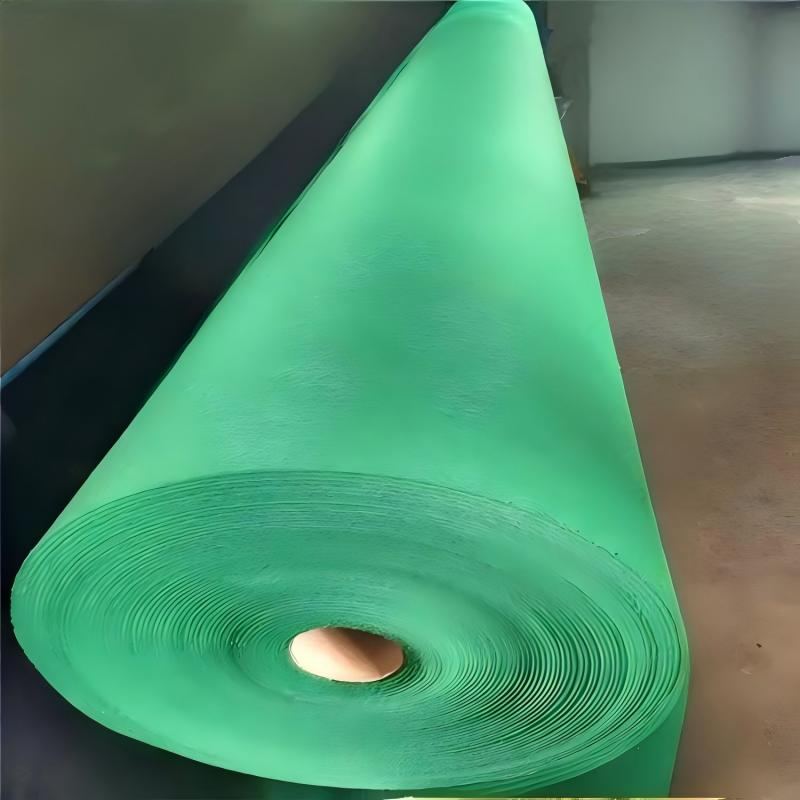
Road and trafficked-area projects (United States)
UV exposure is the dominant risk on road work staged in open conditions, which makes the UV clause the most valuable line in the order. ASTM D4355 is the core industry standard for testing UV deterioration through Xenon-Arc exposure, so a US-bound order should reference it by name in the pre-shipment test rather than accept a generic durability statement. Low elongation, meanwhile, is a property that varies batch to batch and cannot survive a verbal assurance: it belongs in the per-order test, backed by 100% test quality control during production.
Hydraulic and water conservancy projects
Hydraulic work places the emphasis on consistent fabric properties across the full roll quantity, because a single under-performing batch can affect filtration and separation behaviour across a large installed area. Here the 10,000 m² MOQ and the 10–45 day lead time interact directly with construction sequencing: a buyer who schedules installation before confirming the production slot is exposed to the capacity failure described earlier. Dividing the MOQ by monthly capacity — 10,000 m² against 800,000 m² — is the fastest available way to judge whether the schedule has room.
Environmental and landfill projects (Australia)
Environmental projects demand static long-term performance, which is a statement about material consistency rather than a single measurement. That is where the testing structure behind the acceptance criterion becomes the deciding factor: a report carrying CNAS accreditation together with the ILAC and APLAC mutual recognition marks, from a laboratory established for this purpose, is materially different from an internal inspection note. The manufacturer's project record includes environmental work such as Darwin Bay Landfill, which used 1,200 g/m² polyester fiber geotextile together with 250 g/m² polyester geotextile; backfill works at Anslow Grade IV, which used 950 g/m² polypropylene short fiber geotextile and 250 g/m² polyester long fiber geotextile; Meru Geraldton Landfill at 540 g/m² polyester fiber geotextile; Mira Road Landfill Zones 12 and 13 at 540 g/m² polyester fiber geotextile; and the Hongshan Landfill fifteenth phase expansion at 420 g/m² polyester filament geotextile. Municipal work includes the parking area of the Ola Commercial Park.
The pattern across all three application types is the same: the technical requirement is fixed by the project, and the order terms are the only place where that requirement is converted into an obligation with a date and a document attached.
Order-term decision table
The table below summarises what each term signals, what evidence to request, and what should trigger a follow-up question.
| Order term | Capability signal it reveals | Evidence to request | Warning sign |
|---|---|---|---|
| MOQ: 10,000 m² | Batch economics relative to production capacity | Capacity broken down by production line; monthly versus annual output consistency | Capacity figure that cannot be split by line |
| Delivery terms: FOB or CIF | Freight control and the point at which risk transfers | Named port of loading; who books freight and insurance; document set and timing | Incoterm quoted as a price label with no named port |
| Payment terms: 30% deposit / 70% before shipment | Working-capital model and the buyer's inspection window | Written sequence: deposit → in-process QC → pre-shipment test → balance | Balance requested before any test evidence exists |
| Acceptance criteria: pre-shipment test | Whether quality is documentable order by order | Named standard, testing entity, report timing, accredited status | "Test report available" with no standard or timing named |
The second table maps the application requirements of the profile to the exact place each one must appear in the order documentation.
| Application requirement | Where it must appear in the order terms |
|---|---|
| High UV resistance (US road projects) | Pre-shipment test naming a UV deterioration standard such as ASTM D4355 |
| Low elongation | Per-order pre-shipment test of elongation properties, supported by 100% test quality control during production |
| Static long-term performance (Australian environmental projects) | In-process QC/QA inspection records plus a report from a CNAS-accredited laboratory |
| Delivery to US and Australian project sites | FOB or CIF with a named port, plus a fixed production date inside the 10–45 day lead-time range |
| Customized constructions (wicking, anti-UV, orange, logo inkjet coding, conductive) | Pre-shipment test written against the customized specification, not the generic product |
Frequently asked questions
What acceptance criteria should a geotextile purchase order specify?
The order terms recorded for this supply model define acceptance as a pre-shipment test: MOQ 10,000 m², delivery terms FOB/CIF, acceptance criteria pre-shipment test, and payment terms 30/70. The manufacturer also applies 100% test quality control and inspects quality during the production process. Because its testing arm, Dalian I.E.C Testing Service Co., Ltd., holds CNAS laboratory accreditation awarded in April 2016, reports can carry the CNAS mark together with the ILAC and APLAC international mutual recognition marks and are mutually recognized by more than 70 developed countries. A purchase order should therefore name the standard — for example ASTM D4355 for UV deterioration, EN 13249:2016 for EU road work, or the applicable Australian AS standard — instead of stating that a test report is required.
What does a 10,000 m² minimum order quantity reveal about a supplier's production capability?
It reveals batch economics relative to capacity. A 10,000 m² order equals roughly 1.25% of the stated 800,000 m² monthly production capacity, and the stated annual output of 9,500,000 m² is consistent with that monthly figure. The capacity comes from two short-fiber needled geotextile lines and one long-fiber needled geotextile line in a 12,000 m² factory, with daily output recorded at 15 to 20 tons in the manufacturer's own comparison notes. A low MOQ-to-capacity ratio means a 10,000 m² order can generally be slotted into the schedule without displacing larger contract volumes — which is the delivery-assurance signal a buyer should be looking for.
How do FOB or CIF delivery terms and a 30/70 payment split affect budget and risk?
Delivery terms are quoted as FOB or CIF, so the buyer chooses who controls the freight leg. Under FOB the buyer nominates the forwarder and controls freight and insurance from the port of loading; under CIF the supplier arranges carriage and insurance to the destination port. Payment terms are a 30% deposit with a 70% balance before shipment, which funds raw-material purchasing at the start of production and leaves the buyer's remaining leverage at the balance payment. Because Dalian is described as the international shipping center of Northeast Asia and the manufacturer exports 95% of its output to markets in the Americas, Oceania, Africa, the Middle East and Southeast Asia, FOB from Dalian is operationally straightforward. The budget consequence is that the incoterm must be priced against the buyer's own insurance and customs capability, not treated as a label on a proforma invoice.
Can a buyer validate quality before releasing the 70% balance?
In this model, validation runs through pre-shipment testing rather than through a separate sampling tier, because the minimum order quantity is 10,000 m² and every order carries a pre-shipment test as its acceptance criterion. The sequence is: 30% deposit, production with quality inspection during the manufacturing process and 100% test quality control, pre-shipment test report, then the 70% balance, then shipment. If the test result does not match the specification sheet, the balance has not yet been paid — that is the entire purpose of pairing a 30/70 schedule with a mandatory test.
What lead time and after-sales terms should be written into the geotextile purchase order?
Typical production lead time for geotextile orders is 10 to 45 days, and the manufacturer provides remote support for after-sales service. Because the lead time is a range rather than a fixed figure, the purchase order should record three specific dates: deposit receipt, pre-shipment test report, and loading. Buyers can request the current lead-time slot and a pre-shipment test plan by contacting the export team at Dothan@geo-textile.com, or by downloading the G-Tex® GE capability brochure before the payment schedule is agreed.
Conclusion: the terms are the audit
Price per square meter tells a buyer what an order costs. The four order terms tell a buyer whether the order can be produced, inspected and delivered as promised. A 10,000 m² minimum order quantity becomes useful once it is divided by monthly capacity — roughly 1.25% of 800,000 m² — and cross-checked against annual output. FOB or CIF identifies who controls freight and where risk transfers, and it should always come with a named port. A 30% deposit with a 70% balance before shipment defines the cash structure, and it only works when the balance is triggered by an accepted pre-shipment test rather than by a date.
For procurement teams buying PP nonwoven geotextile, wicking or anti-UV geotextile, conductive geotextile or other geotextile fabrics from a China geotextile plant, the useful habit is to treat every quotation as a four-line capability audit. The terms are checkable before any money moves, and a supplier that can answer all four with numbers, standards and documents is describing its operation rather than its intentions.
- MOQ divided by monthly capacity, with monthly and annual figures cross-checked
- Named port of loading, freight booking responsibility and insurance certificate identified
- Balance payment triggered by an accepted pre-shipment test report, not by elapsed time
- Acceptance test written against a named standard and the customized specification
- Three fixed dates recorded: deposit receipt, test report, loading
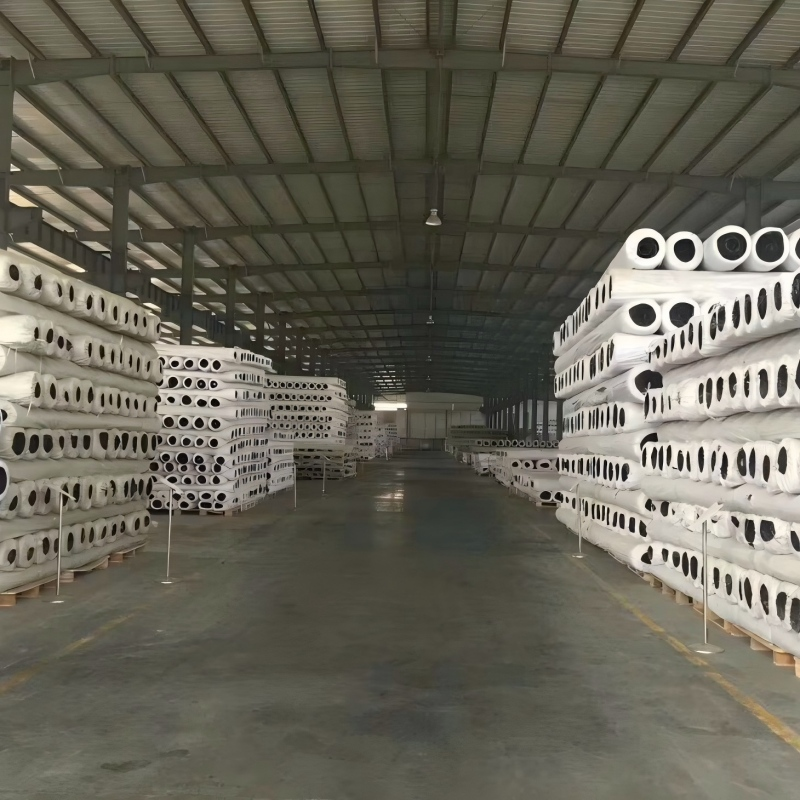
Next step: put the four terms on the table
Share your project requirements — application, tonnage or square-meter volume, destination port and target installation date — and receive a quotation that states MOQ, delivery terms, payment terms and acceptance criteria as separate line items, with the pre-shipment test standard named for your market.
Contact: Dothan — Dothan@geo-textile.com | Tel / WhatsApp: +86 186-9865-5505
Website: www.geotranstechnology.com
Brochure: G-Tex® GE geotextile capability profile (PDF)
WhatsApp: Start an enquiry
Dalian GeoMax Synthetics Co., Ltd., NO.8888-1 Southeastern Industrial Zone, Youjia, Ganjingzi District, Dalian, China.
Have Questions or Need More Details?
Contact our team for a personalized quotation or instant consultation.
Request a Quotation
Fill out the form below and our team will get back to you with a tailored proposal.
WhatsApp Direct Chat
Prefer to chat in real-time? Message us on WhatsApp for instant assistance & quick answers.
- Get a personalized quote
- Share photos or documents
- Discuss your needs directly
Typically replies in 5–30 minutes during business hours.