
What a Geotextile Specification Sheet Should Prove Before You Order from a Chinese Manufacturer
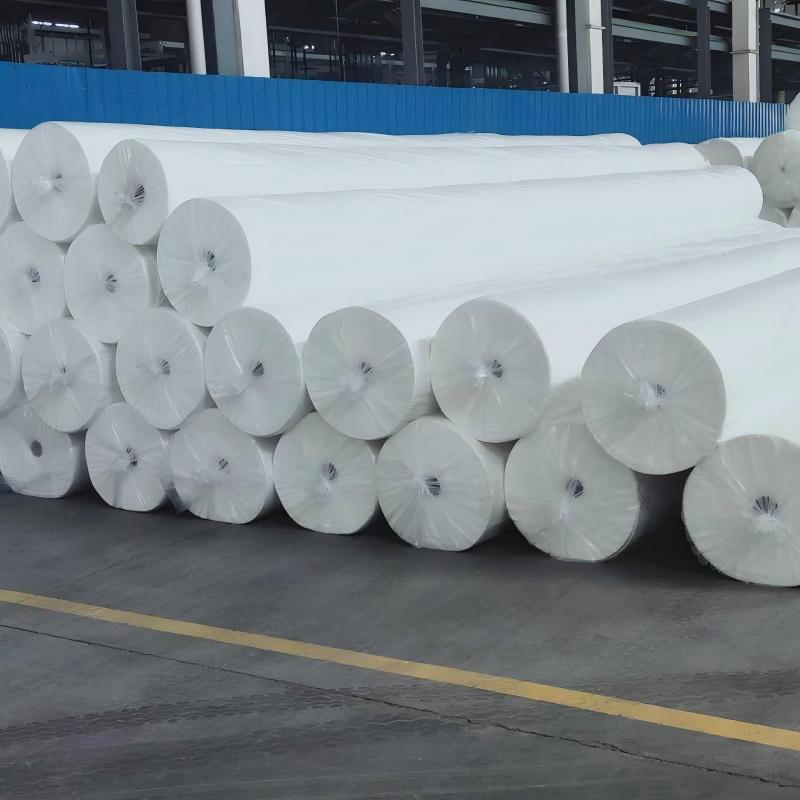
Before placing a geotextile order with a factory in China, treat the specification sheet as a starting point, not as proof. The real question is whether the Chinese geotextile manufacturer can document the parameters, certifications, and testing capability behind every number.
This article is written for procurement engineers, contractors, and distributors in the Research and Evaluation stage. It provides a verification framework for geotextile certifications, technical parameters, and plant capabilities. It uses Dalian GeoMax Synthetics Co., Ltd. (brand: G-Tex® GE) as a documented example of an export-focused Chinese geotextile manufacturer.
Problem Definition: Why Datasheets Are Not Enough
Procurement teams commonly receive datasheets with wide width tensile strength, grab strength, trapezoidal tear, CBR burst strength, and mass per unit area. The challenge is that these figures can come from different test standards, different sample preparations, or laboratories that are not accredited.
In infrastructure applications such as roads, landfill lining, and river embankment reinforcement, a geotextile with unverified parameters can cause filtration problems, stress concentration, or reduced service life. Buyers therefore need a repeatable process for checking what a China geotextile plant actually controls in production.
The verification should cover four areas: certifications, accredited testing capacity, product parameters, and the ability to deliver customized products without changing quality control procedures.
Industry Background: The Scale of the Geotextile Market
According to Grand View Research, the global geotextile market was valued at USD 7.10 billion in 2022 and is projected to reach USD 11.82 billion by 2030, growing at a CAGR of 6.6%. The same research firm estimates that China accounted for 23.3% of global geotextile market revenue in 2024, with China’s domestic market generating USD 1.85 billion in revenue that year and an expected CAGR of 10.1% through 2030.
Nonwoven geotextiles held the largest product share globally in 2022, at approximately 65.5% of total revenue. This makes nonwoven PP and PET geotextiles the most relevant category for buyers sourcing from Chinese suppliers.
International standards also shape procurement decisions. EN 13249:2016 is the harmonized European standard for geotextiles used in roads and trafficked areas and requires CE marking for access to the EU market. ASTM D4355 is commonly used to test UV deterioration of geotextiles via Xenon-Arc exposure. A Chinese geotextile plant that consistently meets these international references is easier to evaluate than one that only provides local test reports.
Market data source: Grand View Research. Standards references: CEN, ASTM International.
Detailed Solution: What a Chinese Geotextile Manufacturer Should Document
Dalian GeoMax Synthetics Co., Ltd. is a Chinese geotextile manufacturer located in Dalian, the international shipping center of Northeast Asia. The company was founded in 2006 and operates a 12,000m² factory with 45 employees. Its stated annual output is 9,500,000m², and approximately 95% of production is exported to more than 30 countries and regions, including Australia, Canada, the United States, Ireland, Singapore, South Africa, Qatar, Germany, Chile, and Fiji.
The company’s brand is G-Tex® GE. It is a member of the International Geosynthetics Association and the China Geosynthetics Engineering Association. It reports more than 80 patents related to geotextile and geosynthetic material processes and equipment, and it holds Chinese national high-tech enterprise qualification.
The product range includes PP nonwoven geotextile, wicking geotextile, anti-UV geotextile, orange geotextile, logo inkjet coding geotextile, conductive geotextile, and other geotextile fabrics. The model range includes GLS-V, GE, GLP, PET, and PP. The factory also produces mini rolls, geotextile membranes, drainage geonets, drainage geocomposites, geocells, geomembrane liners, HDPE geomembrane, and PET materials.
The company follows an integrated route of production, sales, and research. Its in-house laboratory, Dalian I.E.C Testing Service Co., Ltd., was established in 2012 and was awarded CNAS accreditation in April 2016. This structure gives buyers a single supplier that can combine manufacturing with applied materials testing.
Product Parameters to Verify
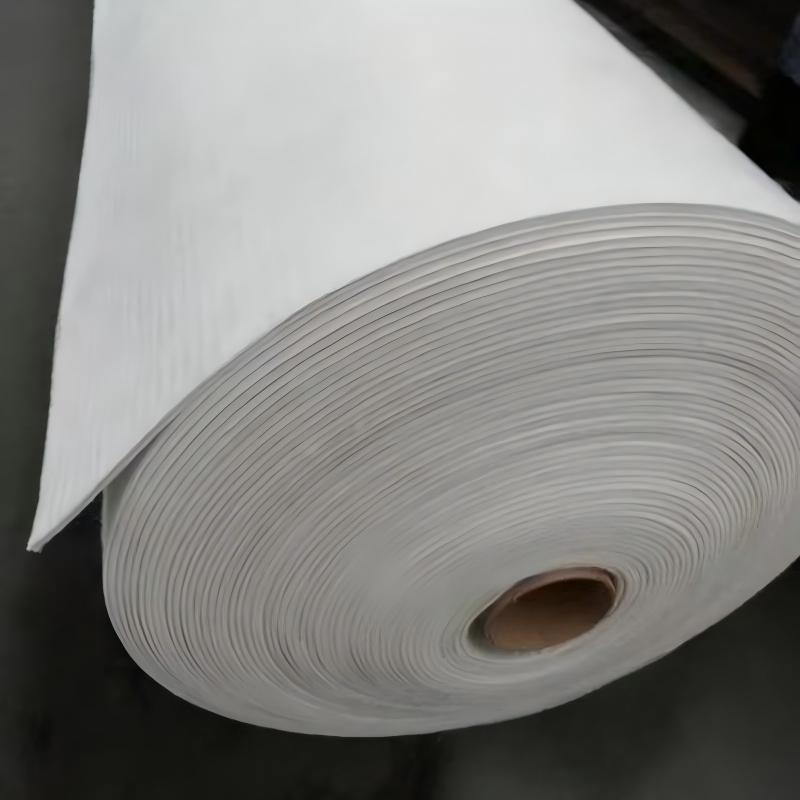
For nonwoven geotextiles, the key mechanical properties are tensile strength, grab strength, trapezoidal tear, and CBR burst strength. The G-Tex® GE nonwoven range lists the following ranges:
| Parameter | Listed Range |
|---|---|
| Wide Width Tensile | 7.0–95 kN/m |
| Grab Strength | 500–7,500 N |
| Trapezoidal Tear | 200–2,500 N |
| CBR Burst Strength | 1,300–12,500 N |
These values matter only when they are tied to a recognized test method. The company states that its geotextiles and geosynthetic products can meet the requirements of the German DIN standard, the international ISO standard, the American ASTM standard, the Australian AS standard, and the Chinese GB/T national standard. Buyers should ask for the specific standard applied to each parameter in the datasheet.
Certification and Compliance Profile
Certification documents are a necessary part of supplier verification. The table below summarizes certificates held by Dalian GeoMax Synthetics.
| Certificate | Reference / Number | Scope |
|---|---|---|
| ISO 9001:2015 | 03824Q07540R0S | R&D, design and manufacture of geotextiles |
| ISO 14001:2015 | 03824E07541R0S | Environmental management in geotextile R&D, design and manufacture |
| ISO 45001:2018 | 03824E07542R0S | Occupational health and safety management in geotextile R&D, design and manufacture |
| CNAS Laboratory Accreditation | CNAS L8463 | Mechanical and physical testing for geosynthetics under ISO/IEC 17025 |
| High-tech Enterprise Certificate | GR202221201470 | National high-tech enterprise qualification for geosynthetics R&D and manufacturing |
The CNAS accreditation is particularly important. In April 2016, the company’s testing laboratory, Dalian I.E.C Testing Service Co., Ltd., received the CNAS laboratory accreditation certificate. This qualification allows the laboratory to issue test reports that can carry the CNAS mark, the ILAC mark, and the APLAC mark within the recognized scope. These reports are mutually recognized in more than 70 developed countries.
Step-by-Step Breakdown: How to Verify a Chinese Geotextile Supplier
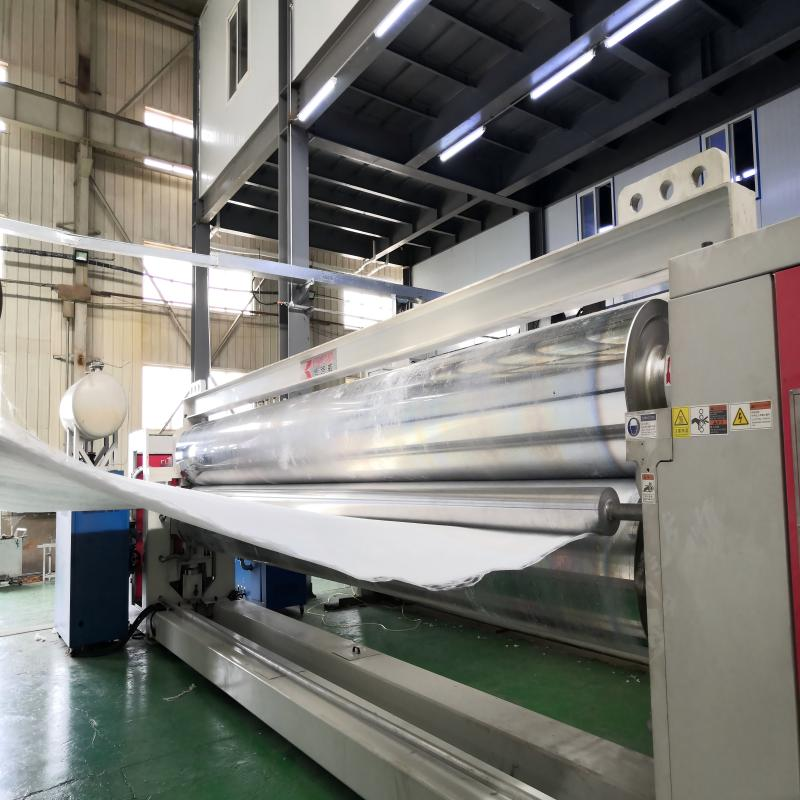
Buyers can use the following sequence to evaluate a Chinese geotextile plant before committing to an order.
- Check management system certifications. ISO 9001, ISO 14001, and ISO 45001 certificates indicate that the factory operates quality, environmental, and occupational safety systems. Verify the certificate numbers with the issuing body.
- Confirm accredited laboratory test capability. A CNAS-accredited laboratory under ISO/IEC 17025 gives test reports more weight in international projects. Ask whether the plant has its own accredited lab or relies only on third-party laboratories.
- Map technical parameters to the project specification. Compare the product’s wide width tensile, grab strength, trapezoidal tear, and CBR burst strength against the values required by your design and by the applicable standard, such as ASTM, AS, EN, or GB/T.
- Assess production capacity and lead time. For example, Dalian GeoMax Synthetics reports a monthly capacity of 800,000m², an annual output of 9,500,000m², and a lead time of 10 to 45 days. This information helps buyers plan deliveries for large infrastructure projects.
- Ask about customization and secondary processing. Projects often require orange geotextile for visibility, wicking geotextile for drainage, anti-UV geotextile for exposed surfaces, conductive geotextile for leak detection, and logo inkjet coding for traceability. Confirm which of these are available and how they affect QC.
- Review export evidence and reference projects. An export-oriented manufacturer should be able to name countries and project types served. Dalian GeoMax Synthetics has participated in landfill and environmental projects including Darwin Bay Landfill, Meru Geraldton Landfill, Mira Road Landfill, Great South Landfill, and Cosgrove Landfill.
Use Cases: Where Verification Matters Most
Road construction. Nonwoven geotextiles provide filtration, separation, and stress dispersion on highway subgrades. Polyester filament needle-punched geotextiles are often specified for this application. The special requirement is high UV resistance and low elongation when the layer remains exposed for a period before covering.
Landfill lining. Landfill projects use heavyweight geotextiles to protect geomembrane liners against puncture and to provide a stable interface. The G-Tex® GE portfolio includes polyester filament needle-punched geotextiles for landfill laying. Documented project examples include 1200 g/m² polyester fiber geotextile at Darwin Bay Landfill and 1100 g/m² polyester fiber geotextile at Great South Landfill.
River embankment and hydraulic works. For riverbank protection, filtration and gasket functions are the main requirements. Wicking geotextile can also help manage water movement in saturated conditions. In the broader market, wicking geotextile technology uses hydrophilic fibers to provide capillary action, and conductive geotextile technology enables electrical leak location in liner systems.
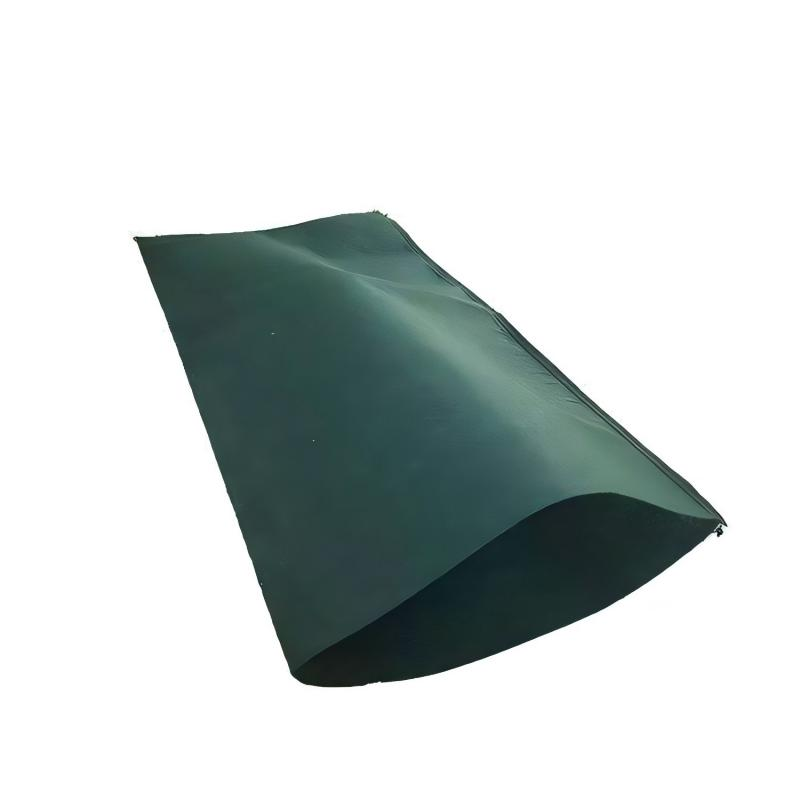
Customized procurement. Buyers can specify colored geotextile, including orange, red, and gray options. The factory can spray-coat the customer’s company logo, product name, specifications, and other information on the geotextile surface via logo inkjet coding. In addition, the company offers reprocessing capabilities such as mini rolls, geobags, tubular bags, fabric sheets, and geosynthetic containers in different sizes.
Comparison Table: Specifications and Certification Checkpoints
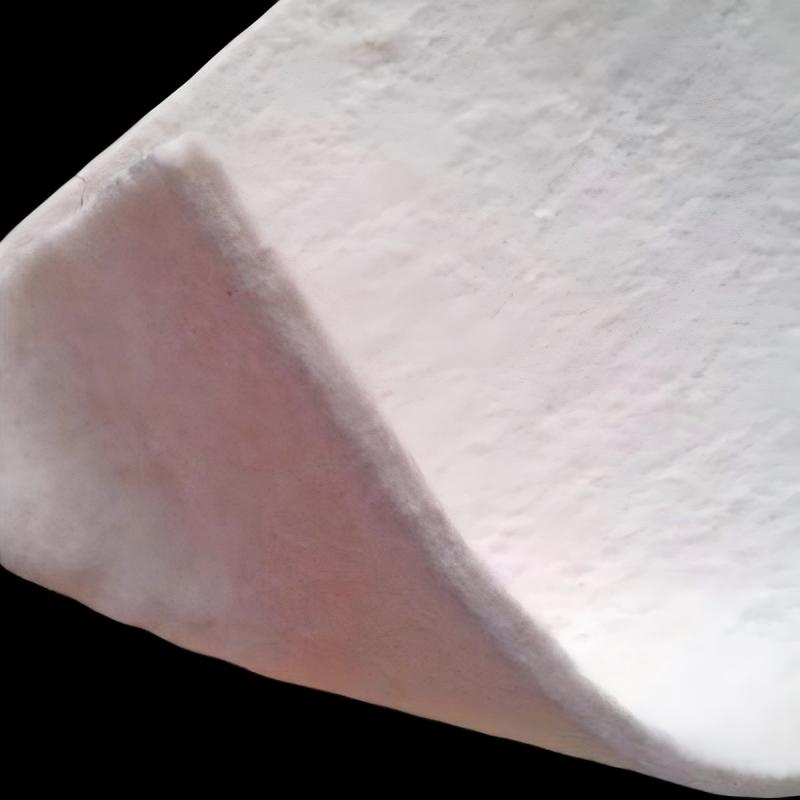
The following table summarizes the nonwoven geotextile specification ranges provided by G-Tex® GE and the certification checkpoints buyers can use when comparing Chinese geotextile suppliers.
| Verification Item | Example from G-Tex® GE / Dalian GeoMax Synthetics |
|---|---|
| Product category | PP nonwoven geotextile, wicking geotextile, anti-UV geotextile, orange geotextile, logo inkjet coding geotextile, conductive geotextile, geotextile fabrics, mini rolls |
| Material options | PET / PP |
| Wide width tensile | 7.0–95 kN/m |
| Grab strength | 500–7,500 N |
| Trapezoidal tear | 200–2,500 N |
| CBR burst strength | 1,300–12,500 N |
| Quality system | ISO 9001:2015, ISO 14001:2015, ISO 45001:2018 |
| Laboratory accreditation | CNAS L8463 (ISO/IEC 17025) |
| Technology qualification | High-tech Enterprise Certificate GR202221201470; over 80 patents |
This table is not a ranking. It is a checklist for comparing the evidence a supplier provides.
FAQ
1. What certifications should a Chinese geotextile manufacturer hold?
A reliable Chinese geotextile manufacturer should be able to show management system certifications, product testing accreditation, and export-related compliance. For example, Dalian GeoMax Synthetics holds ISO 9001:2015 for quality management, ISO 14001:2015 for environmental management, ISO 45001:2018 for occupational health and safety, and CNAS L8463 for ISO/IEC 17025 laboratory testing. The company is also a national high-tech enterprise in China with certificate GR202221201470. These certificates provide a verifiable baseline for supply chain audits.
2. What geotextile parameters should buyers verify before ordering?
Buyers should verify the parameters against the project’s international standard, not just the datasheet. Typical nonwoven geotextile ranges from G-Tex® GE are wide width tensile 7.0–95 kN/m, grab strength 500–7,500 N, trapezoidal tear 200–2,500 N, and CBR burst strength 1,300–12,500 N. The buyer should confirm the test method used for each value because the same material can produce different results under different protocols.
3. How can buyers control geotextile costs without sacrificing quality?
Cost control starts with matching the geotextile specification to the actual design function. Standard materials such as PP nonwoven geotextile in common weights are generally more cost-efficient than highly customized products. Buyers can also optimize logistics by ordering mini rolls or standard roll widths. For project-specific needs, a direct request for quotation from an export-oriented plant such as Dalian GeoMax Synthetics helps avoid overspecification.
4. Can buyers request customized geotextile production before bulk orders?
Yes, within agreed commercial terms. G-Tex® GE supports ODM solutions for wicking geotextile, anti-UV geotextile, orange geotextile, logo inkjet coding geotextile, and conductive geotextile. The factory also handles secondary processing such as mini rolls, geobags, and fabric sheets. Because the standard production MOQ is 10,000m² and lead time ranges from 10 to 45 days, sample and trial production requests should be aligned with a planned order.
5. What is the typical lead time for a Chinese geotextile order?
Dalian GeoMax Synthetics lists a lead time of 10 to 45 days for geotextile orders, depending on specification, customization, and production schedule. The plant’s monthly capacity is 800,000m² and annual output is 9,500,000m². For custom products such as logo inkjet coding or conductive geotextile, buyers should confirm the lead time in writing before order confirmation. To get a specification-matched quote or sample, contact Dothan at Dalian GeoMax Synthetics via Dothan@geo-textile.com or +86 186-9865-5505.
Final Step: Turn Verified Data into an Order
Verification is an iterative process. Start with certificates, then confirm parameters, then ask for samples or a technical datasheet that matches your project standard. A China geotextile plant that responds with documented evidence across all categories is likely to be more reliable than one that relies on unverified sales claims.
Download the company profile and laboratory brochure to review the quality system, CNAS accreditation, and production capabilities:
Download Dalian I.E.C. / GeoMax Company Profile (PDF)
Or contact Dothan: Dothan@geo-textile.com | +86 186-9865-5505 | Dalian GeoMax Synthetics Co., Ltd., NO.8888-1 Southeastern Industrial Zone, Youjia, Ganjingzi District, Dalian, China.
Have Questions or Need More Details?
Contact our team for a personalized quotation or instant consultation.
Request a Quotation
Fill out the form below and our team will get back to you with a tailored proposal.
WhatsApp Direct Chat
Prefer to chat in real-time? Message us on WhatsApp for instant assistance & quick answers.
- Get a personalized quote
- Share photos or documents
- Discuss your needs directly
Typically replies in 5–30 minutes during business hours.