
FOB vs. CIF for Geotextile Orders: Buyer's Comparison Guide
FOB and CIF do not change whether a geotextile roll meets specification. They change who buys the ocean freight, who arranges cargo insurance, and how much of the shipment cost a buyer can see and control. For a decision-stage buyer comparing two quotations on the same nonwoven or specialty geotextile, that split is the entire comparison.
This guide works through the choice against the order terms that actually govern a geotextile purchase from G-Tex® GE: a 10,000 m² minimum order quantity, 30% deposit with 70% balance before shipment, and pre-shipment testing on each order. The framing is a procurement checklist rather than a price shoot-out, because on identical goods the two quotes usually differ by only two cost lines — and those two lines are exactly where the risk sits.
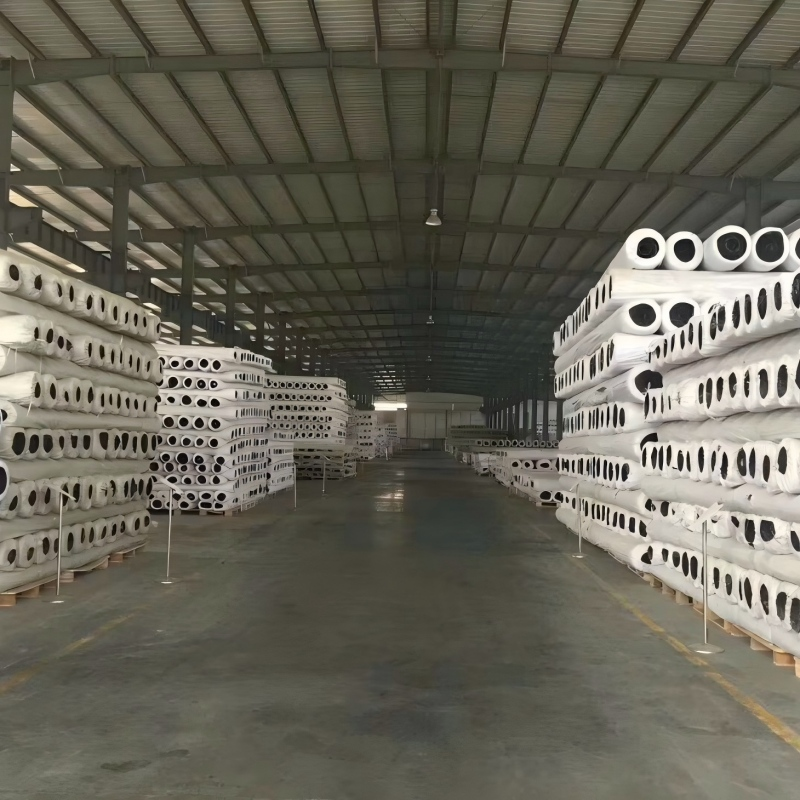
Finished geotextile rolls staged for export — where the FOB/CIF decision is actually made.
Why Two Geotextile Quotes Often Look Incomparable
A quotation is only comparable when the goods, the quantity and the delivery obligation are identical. Geotextile buyers frequently compare an FOB figure from one supplier with a CIF figure from another, or the same supplier's FOB and CIF numbers, and treat the gap as a price difference between suppliers. It is not. The gap contains ocean freight, cargo insurance and the margin the seller applies to arranging both.
Specification drift makes the problem worse. The documented G-Tex® GLP range, for example, lists mass-per-unit options from 140 to 900 g/m², with approximate roll lengths running from about 300 m down to 45 m as mass per unit area increases. Two quotes for "nonwoven geotextile" can therefore describe different roll lengths, different roll diameters and different loading profiles — and freight responds to volume and loading pattern, not to the invoice headline.
Industry Background: Why Chinese Geotextile Supply Is Quoted Both Ways
China is a substantial production base for geotextiles, and export-oriented manufacturers routinely work with freight forwarders, so most can quote either term. IMARC Group valued China's geotextiles market at USD 1.6 billion in 2025 in its commercial research on the sector — a figure that reflects a manufacturing base large enough that origin-side pricing is competitive and freight becomes the swing variable in the delivered cost.
Geography reinforces this. Dalian GeoMax Synthetics Co., Ltd., which sells under the G-Tex® GE brand, is based in Dalian, an international shipping centre for Northeast Asia, and states that 95% of its output is exported, with customers in more than 30 countries and regions across the Americas, Oceania, Africa, the Middle East and Southeast Asia. A supplier operating at that export ratio quotes FOB and CIF as routine alternatives rather than as a favour to individual buyers.
What that means for the buyer is simple: the term should be chosen on procurement logic, not accepted because it happens to be the format the supplier sent first.
What FOB Transfers — and What It Leaves With You
Under FOB, the seller delivers the goods cleared for export and placed on board the vessel at the named port of shipment. From that point the buyer contracts the carriage, pays the ocean freight, arranges cargo insurance, and absorbs the risk of loss or damage.
FOB buys the buyer three things. First, visibility: the freight is a separate line negotiated directly with a forwarder, so its movement is observable. Second, control: the buyer nominates the forwarder, the routing and the sailing date, which matters when a landfill capping programme or a road subgrade package has a fixed site window. Third, a direct commercial relationship with the carrier or forwarder, which simplifies a claim if cargo is damaged in transit.
FOB also imposes obligations. The buyer must have a forwarder in place before the goods are ready, must book in time to align with the pre-shipment test schedule, and carries the exposure if freight rates move between quotation and booking. For a buyer without a logistics desk, those obligations are real work, not paperwork.
What CIF Bundles — and the Risk Point It Does Not Move
Under CIF, the seller pays the cost of the goods, arranges cargo insurance, and pays the freight to the named port of destination. One invoice covers delivery to that port, which is why CIF quotes are easier to budget against.
The most common misconception is that CIF moves the risk to the destination port. It does not. The seller's cost obligation extends further than its risk obligation: risk passes at the same point as under FOB — when the goods are on board at the port of shipment. A buyer who assumes the seller carries the risk until the container is unloaded at the destination port is exposed for the whole ocean leg.
CIF also hides cost. Because freight and insurance are folded into a single unit price, the buyer cannot see the freight rate unless it is itemised. Two further items need written confirmation: the level of insurance cover arranged and the party entitled to claim under it, and whether destination port charges, unloading and inland haulage are inside or outside the quoted price. Cover arranged inside a CIF sale is a commercial arrangement between the parties; it is not automatically equivalent to a project cargo policy.
FOB vs. CIF Side by Side
The table below compares the two terms on the dimensions that change a procurement decision. It describes the mechanics of each term and the checks each one requires; it does not assign a winner, because the right answer depends on the buyer's freight capability and the project's delivery constraints.
| Decision factor | FOB — named port of shipment | CIF — named port of destination |
|---|---|---|
| What the quoted unit price contains | Goods, export packing, inland transport to the port, export clearance, loading on board | The same, plus ocean freight and cargo insurance to the named destination port |
| Who books the vessel | The buyer or the buyer's nominated forwarder | The seller |
| Where risk passes | When the goods are on board at the port of shipment | The same point — the seller's cost obligation runs further, not its risk |
| Freight visibility | A separate, negotiable line | Bundled into the invoice unless itemised on request |
| Insurance | Arranged by the buyer, to the buyer's own cover level | Arranged by the seller; cover level and the party entitled to claim must be confirmed |
| Documentation | Buyer controls the booking and the bill of lading arrangement | Seller is the shipper; the buyer receives the document set |
| Administrative load | Higher — forwarder selection, booking, insurance | Lower — one supplier, one delivered price |
| Best fit | Buyers with freight capability or consolidated volume | Buyers who want a single delivered number and less coordination |
Where the 10,000 m², 30/70 and Pre-Shipment Testing Terms Fit
The trade term sits on top of three order conditions that do not change with it — and each one interacts with the FOB/CIF choice in a specific way.
10,000 m² minimum order quantity
Because the minimum quantity is fixed, the freight element is spread across a known area. That makes the per-square-metre freight contribution calculable as soon as a freight number exists, which is the single most useful calculation in this comparison. It also means loading efficiency matters: heavier grades within a documented 140–900 g/m² range arrive on shorter rolls, so the number of rolls per container changes and the freight per square metre moves with it. Ask both quotes to state the roll configuration.
30% deposit, 70% balance before shipment
The balance falls due before the goods leave, under either term. The Incoterm therefore does not change the timing of the cash outlay; it changes who controls the shipment event that triggers it. Under FOB, the buyer nominates the forwarder and therefore sets the booking date against which the 70% is paid. Under CIF, the seller controls that date, so the contract should state an agreed shipment window rather than leaving it open.
Pre-shipment testing on each order
Testing is a pre-shipment gate, not a benefit of one term over the other. What differs is coordination. Under FOB, the buyer must align the inspection date with a vessel booking it controls. Under CIF, the seller coordinates both, so the buyer should require the test report before releasing the balance. G-Tex® GE's associated laboratory, Dalian I.E.C, was granted CNAS accreditation in April 2016 and its reports carry the ILAC and APLAC international mutual recognition marks, recognised across more than 70 developed countries — which is what makes a pre-shipment report usable in a destination-market compliance file.
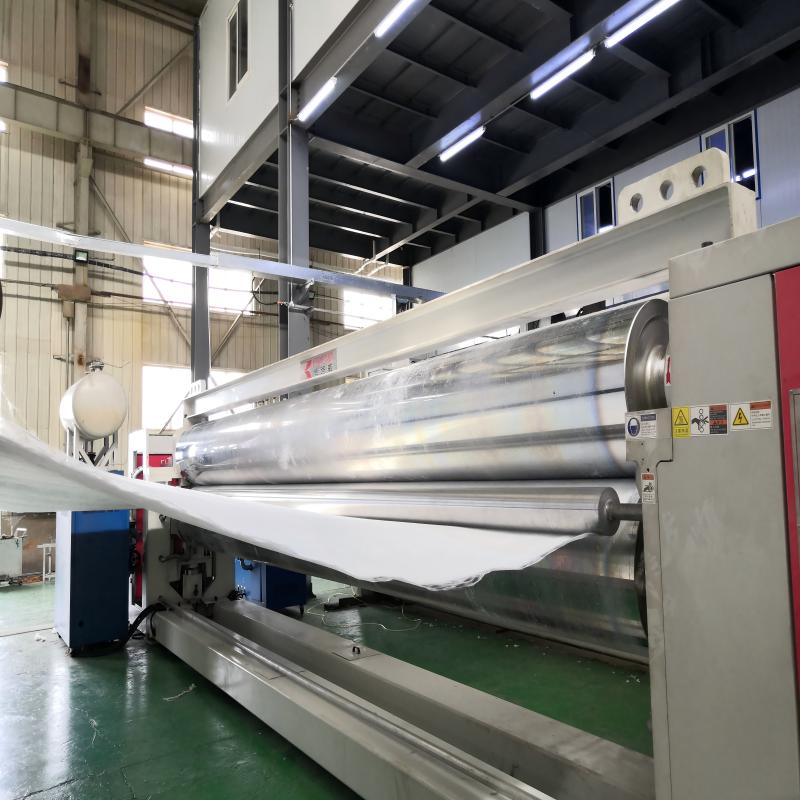
Production control precedes the trade term: the goods are made and tested before FOB or CIF becomes relevant.
A Step-by-Step Procurement Checklist
Work through these steps in order. Each one removes a variable that would otherwise make the FOB/CIF comparison meaningless.
- Fix the specification and the test methods. State mass per unit, roll length, width and the test categories the report must cover. The G-Tex® GLP technical documentation declares ASTM categories for mass per unit (D5261), tensile strength (D4595), grab strength (D4632), trapezoidal tear (D4533), CBR burst (D6241), thickness (D5199) and puncture resistance (D4833) — a usable template for an RFQ test schedule.
- Request both terms on the identical specification and quantity. One RFQ, one specification, two prices. A CIF figure against an FOB figure on different grades tells you nothing.
- Insist on an itemised freight and insurance line in the CIF quote. Without it, the comparison collapses into a single number the buyer cannot audit.
- Name both ports explicitly. FOB requires a named port of shipment; CIF requires a named port of destination. An unnamed port leaves the obligation undefined.
- Confirm the risk-transfer point in writing. Ask the supplier to state where risk passes under the quoted term. The answer should be the same for both terms.
- Agree the document set. Commercial invoice, packing list, bill of lading, pre-shipment test report, and — for CIF — the insurance certificate. Add a certificate of origin only if your destination regime requires one.
- Align the test date with the vessel booking. Under FOB this is the buyer's calendar; under CIF it is the seller's, so build the report into the payment release condition.
- Check destination charges and the duty basis with your broker. Customs valuation rules differ by market; where freight and insurance form part of the customs value, the same goods can produce a different duty outcome under an FOB invoice and a CIF invoice.
- Reconcile the payment schedule against the shipment window. A 30/70 structure needs a dated shipment window to be enforceable.
Building the Landed-Cost Comparison
The comparison only works at landed-cost level. Build it from the same components for both quotes: goods value, origin handling and export clearance, ocean freight, cargo insurance, destination port charges, inland delivery, and duty and taxes.
Everything except freight and insurance is identical for the same goods travelling to the same destination. That produces a clean test. Obtain an independent freight and insurance quotation for the same route and volume, then compare it with the difference between the FOB and CIF prices. If the gap exceeds the independently quoted freight and insurance, the CIF price is carrying margin rather than cost; if the gap is smaller, the supplier's freight buying power is doing genuine work and CIF is the better commercial outcome.
Cost structure at origin explains part of why FOB pricing is competitive in the first place. G-Tex® GE's own comparison data reports labour costs 15–30% lower and electricity costs 12–25% lower than abroad, with daily output of 15–20 tons across its needling lines. That is a statement about production economics, not about freight — which is precisely the point: origin efficiency and freight terms are separate decisions that buyers often merge into one.

Two short-fibre and one long-fibre needling lines sit behind the origin-side price; freight sits in front of it.
Which Term Fits Which Buyer
These are conditional scenarios, not case histories. Match your own situation to the closest one and use the reasoning rather than the label.
- Buyer with an established forwarder and consolidated volume. FOB usually wins. The buyer's freight rate is already negotiated, the booking is under its control, and the insurance sits inside a policy that covers the whole programme rather than a single shipment.
- First import, small procurement team. CIF reduces the number of counterparties from three to one. The premium paid for that convenience is acceptable if the freight line is itemised and the insurance certificate is checked.
- Project with a fixed delivered budget. Landfill capping, dam and coastal works packages often need one delivered number for cost control. CIF delivers that, provided the quote states which destination charges are included and which are not.
- Buyer coordinating against a site window. Where rolls must arrive between two construction phases, FOB gives the buyer the sailing schedule it needs to hold the sequence. Under CIF, that control has to be written into the contract as a dated shipment window.
- Buyer working under a letter of credit. Whether a single CIF invoice value or a split FOB-plus-freight structure suits the credit terms is a question for the issuing bank, not for the supplier. Confirm the document requirements before choosing the term.
What Neither Term Fixes
Three limits are worth stating plainly, because buyers sometimes expect the trade term to solve them.
Neither term is a quality instrument. FOB and CIF allocate cost, risk and documents; they say nothing about mass per unit tolerance, tensile strength or puncture resistance. Those are secured by the specification, the pre-shipment test report and an accredited laboratory — not by the three letters on the invoice.
Neither term changes the 10,000 m² minimum order quantity, the 30/70 payment split or the pre-shipment testing requirement. A buyer who switches from CIF to FOB to reduce cost still faces the same quantity floor and the same payment timing.
And neither term transfers risk to the destination port under CIF, or removes the buyer's booking obligations under FOB. The mechanics are fixed; only the buyer's capability determines which one is less expensive in practice.

The pre-shipment test report — not the Incoterm — is what a compliance file rests on.
FAQ: FOB and CIF on Geotextile Orders
Does FOB or CIF change who handles export clearance and compliance documents?
No. Under both terms the seller clears the goods for export and delivers them on board at the named port of shipment; export clearance is the seller's obligation in each case. What CIF adds is the freight and insurance layer to the destination port. The document set should be agreed explicitly in either case: commercial invoice, packing list, bill of lading, pre-shipment test report, and — under CIF only — the insurance certificate. A certificate of origin is added only where the destination regime requires it.
Can one Chinese geotextile manufacturer quote both FOB and CIF for the same order?
Yes. Export-oriented manufacturers work with freight forwarders as a matter of routine, so both terms are normal outputs of a single RFQ. G-Tex® GE, the brand of Dalian GeoMax Synthetics Co., Ltd., states that 95% of its output is exported and that it serves customers in more than 30 countries and regions, which is the profile of a supplier that quotes both. The practical requirement is that both quotes carry the same specification, the same 10,000 m² minimum quantity and the same named ports — otherwise the two numbers cannot be set against each other.
Is FOB or CIF cheaper for a 10,000 m² geotextile order?
Neither is inherently cheaper. CIF adds ocean freight and insurance to the goods value; FOB leaves both to the buyer. If the buyer's own forwarder rate and insurance cover are lower than the seller's, FOB produces the lower landed cost; if they are not, CIF does. The workable test is to obtain an independent freight and insurance quotation for the same route and volume, then compare it with the price gap between the two quotes. Because the minimum order quantity is fixed, that freight can be converted into a cost per square metre and compared directly.
How does pre-shipment testing work when the order is quoted FOB or CIF?
Testing happens before shipment on each order regardless of the term; the term only changes who coordinates the calendar. Under FOB the buyer nominates the forwarder, so the test date and the vessel booking must be aligned by the buyer. Under CIF the seller coordinates both, so the buyer should make release of the 70% balance conditional on receiving the test report. G-Tex® GE's associated laboratory, Dalian I.E.C, holds CNAS accreditation granted in April 2016, and its reports carry the ILAC and APLAC mutual recognition marks, recognised by more than 70 developed countries.
Which term gives better control over shipment timing?
FOB gives the buyer more control, because the forwarder, the routing and the sailing date are the buyer's nominations. CIF transfers that coordination to the seller, which reduces administrative load but also reduces visibility unless the contract fixes a shipment window. If you would like both structures priced against the same 10,000 m² specification, with the freight and insurance lines itemised so the comparison is auditable, contact Dothan at Dothan@geo-textile.com or on WhatsApp at +86 186-9865-5505.
Conclusion: Choose Control or Choose Simplicity — Then Verify the Number
The FOB-versus-CIF decision reduces to one question: does your organisation want to own the freight relationship, or pay someone else to own it? FOB hands the buyer control of booking, routing and insurance, together with the obligation to use that control well. CIF hands the seller those tasks and folds the cost into a single delivered price that must be itemised before it can be trusted.
On a 10,000 m² order with 30% deposit, 70% balance before shipment and pre-shipment testing on every order, the trade term changes none of those conditions. It changes who books the vessel that the balance is paid against, and who arranges the insurance certificate that sits in the compliance file. Compare the two quotes at landed-cost level, test the price gap against an independent freight quotation, and confirm in writing where risk passes — because under both terms, it passes at the port of shipment, not at the destination.
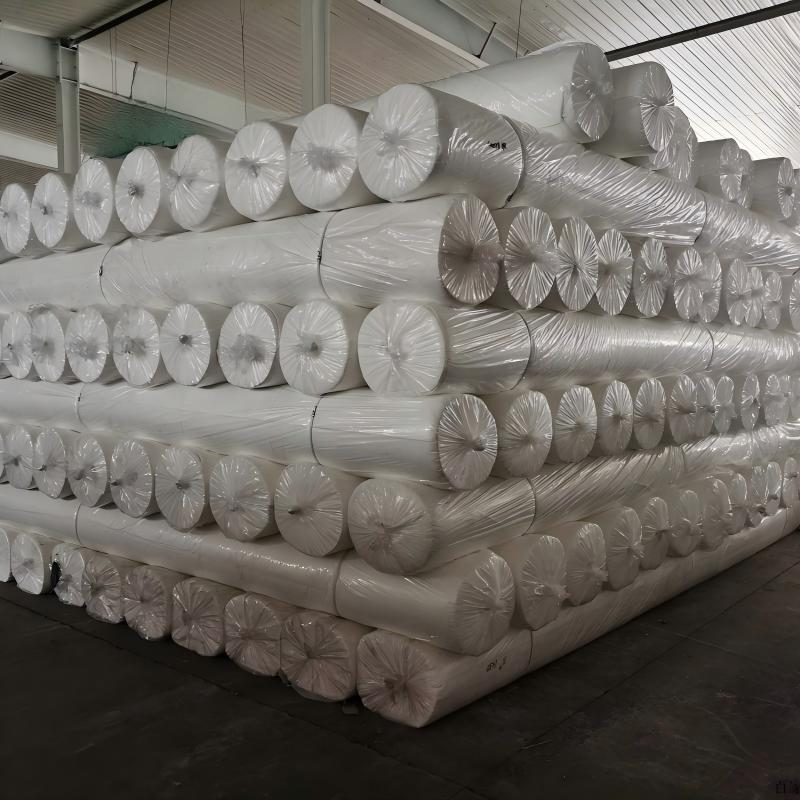
Request both terms on identical roll specifications before committing to either.
For the full product and capability overview of Dalian GeoMax Synthetics Co., Ltd., including the G-Tex® GE range of wicking, anti-UV, orange, conductive, Logo Inkjet coding and PP nonwoven geotextiles, download the company profile brochure.
Have Questions or Need More Details?
Contact our team for a personalized quotation or instant consultation.
Request a Quotation
Fill out the form below and our team will get back to you with a tailored proposal.
WhatsApp Direct Chat
Prefer to chat in real-time? Message us on WhatsApp for instant assistance & quick answers.
- Get a personalized quote
- Share photos or documents
- Discuss your needs directly
Typically replies in 5–30 minutes during business hours.