
How to Choose the Right Commercial Cleaning Robot for Your Business: A Comprehensive Buyer's Guide
Navigating the Commercial Cleaning Robot Market in 2026
The landscape of facility maintenance is undergoing a profound transformation. As labor costs rise and the demand for hygienic, spotless environments intensifies across sectors, commercial cleaning robots have moved from a novelty to a necessity. The global market, projected to exceed $XX billion by 2027, is flooded with options, making the selection process daunting for facility managers, business owners, and procurement specialists. Choosing the wrong model can lead to inefficient cleaning, compatibility issues, and a poor return on investment.
This guide is designed to cut through the noise. We will walk you through a step-by-step framework to identify the perfect commercial floor cleaning robot for your specific operational needs, budget, and environment. With insights drawn from industry trends and technological advancements, this buyer's guide will empower you to make an informed, strategic decision.
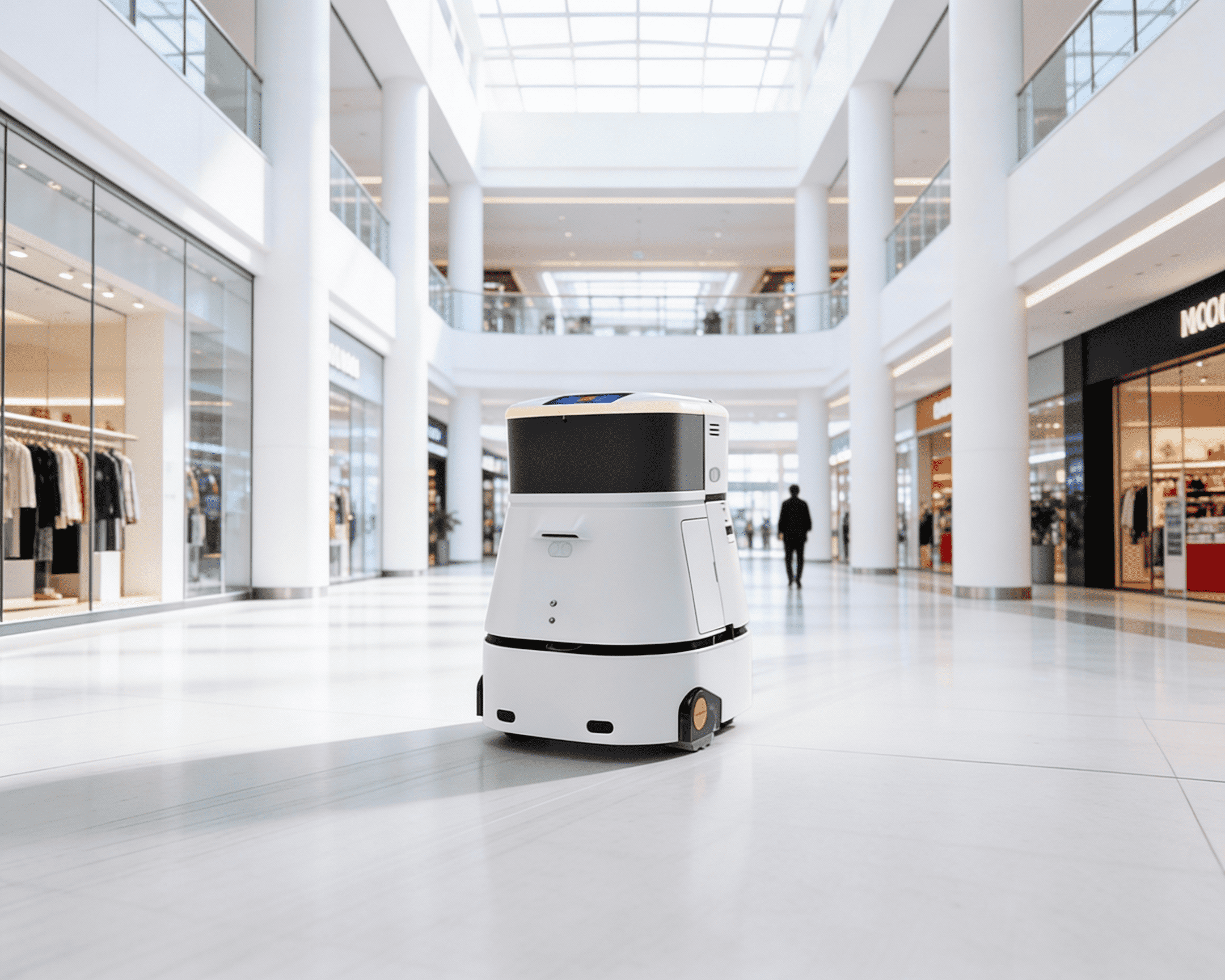
A Geakita commercial cleaning robot efficiently navigating a shopping mall aisle, demonstrating autonomous operation in a high-traffic public space.
Step 1: Conduct a Thorough Site and Task Analysis
Before looking at any product specifications, start with a deep analysis of your own facility. The "one-size-fits-all" approach does not work with robotic cleaners.
- Primary Surface Type & Area: Measure the total square footage. Is it primarily hard floors (concrete, epoxy, tile) or a mix with carpets? A commercial scrubber dryer robot is ideal for sealed hard floors requiring deep cleaning, while a commercial sweeping robot or commercial vacuum cleaning robot might suffice for daily debris removal.
- Operational Environment: This is the most critical filter. The challenges in a warehouse cleaning robot differ vastly from those for a hospital cleaning robot.
- Industrial Settings (Factory/Warehouse): Look for robust industrial cleaning robots built to handle heavy dust, potential oil spills, uneven surfaces, and high durability. Battery life and obstacle avoidance for pallets and machinery are key.
- Healthcare & Hospitality (Hospital/Hotel): Hygiene is paramount. Robots should offer HEPA filtration, quiet operation, and protocols for sanitization. A hotel cleaning robot needs to be discreet and efficient in lobbies and corridors, while a hospital cleaning robot must integrate with strict infection control measures.
- High-Traffic Public Spaces (Airport/Mall/Supermarket): Navigation must be impeccable. Robots need advanced LiDAR and vision systems to safely navigate around people, luggage, and promotional displays. Look for models designed as airport cleaning robots or mall cleaning robots with high efficiency and reliability.
- Specialized Areas: For a restaurant kitchen cleaning robot, grease-resistant components and powerful degreasing functions are essential. An office cleaning robot should operate quietly after hours, while a school cleaning robot needs robust safety features and simple scheduling.
- Cleaning Frequency & Shift Requirements: Do you need 24/7 operation with automatic docking and charging? Determine if the robot can complete the required area within its battery cycle or if multiple units/charges are needed.
Step 2: Define Your Technical & Performance Requirements
With your site analysis complete, translate those needs into technical specifications.
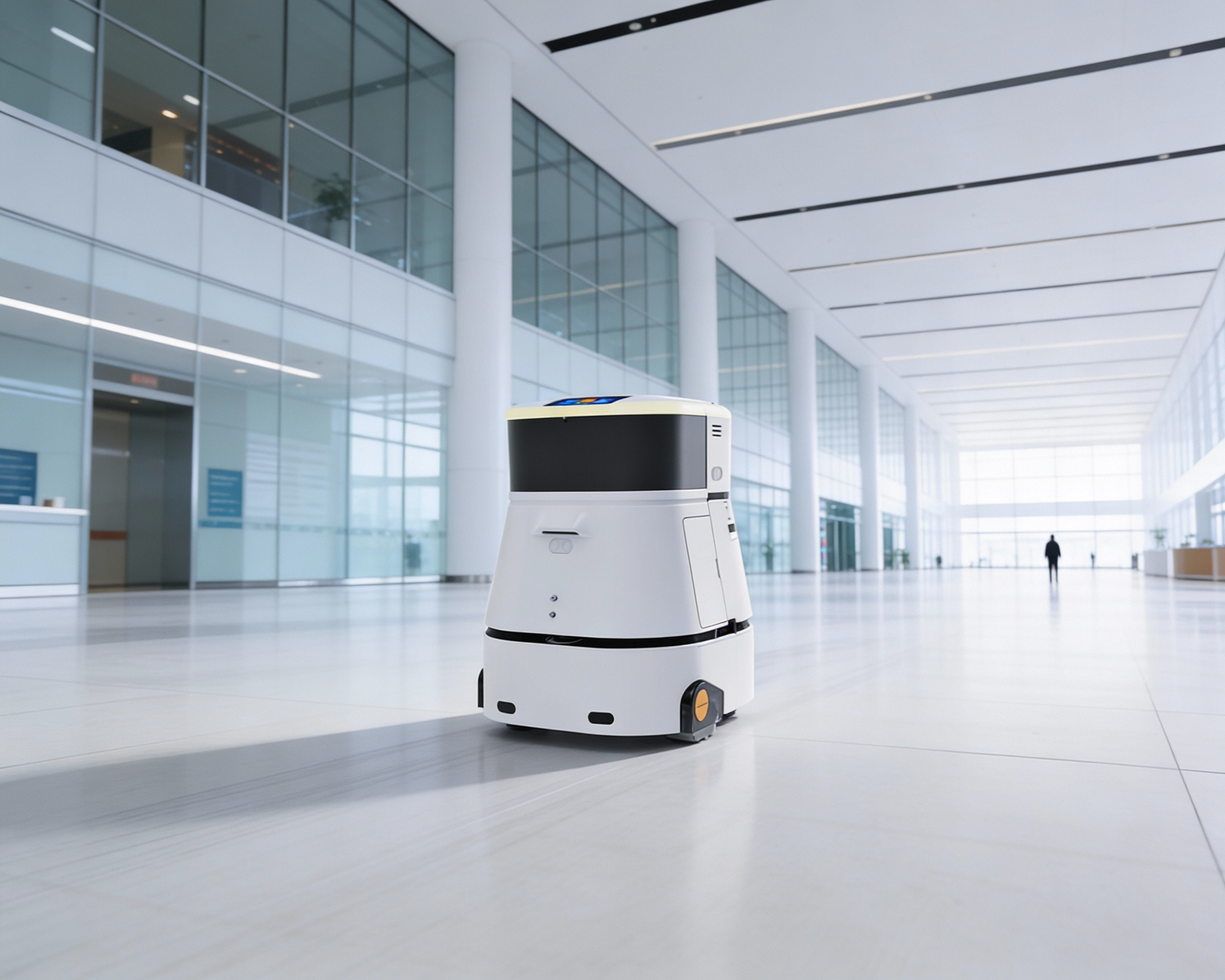
Geakita's industrial-grade cleaning robot autonomously cleaning a expansive warehouse floor, showcasing its ability to handle large, open spaces.
- Navigation & Intelligence: The brain of the operation. SLAM (Simultaneous Localization and Mapping) technology is standard, but the quality varies. For complex layouts with dynamic obstacles (like an airport cleaning robot), ensure it has multi-sensor fusion (LiDAR, cameras, ultrasonic).
- Cleaning Mechanism & Capacity:
- Sweeping/Vacuuming: Brush type, suction power (Pa), dustbin capacity.
- Scrubbing: Brush pressure, water tank capacity (clean & dirty), solution dispensing system, drying efficiency.
- Battery & Runtime: Lithium-ion batteries are standard. Look for models offering 4-8 hours of active cleaning, with fast charging and opportunity charging capabilities. This is crucial for a factory floor cleaning robot that needs to cover vast areas.
- Connectivity & Fleet Management: Can you schedule cleaning, monitor status, and generate reports via a cloud-based platform? For operations with multiple units (e.g., a chain of supermarket cleaning robots), centralized fleet management software is indispensable.
Step 3: Evaluate the Manufacturer's Credentials and Support
The robot is a long-term investment. The manufacturer behind it is as important as the hardware.
- Proven Expertise & Manufacturing Prowess: Investigate the company's background. Geakita (Tiangong Kaiwu), for instance, is not a newcomer to precision engineering. Founded in 2009, it has over 15 years of deep expertise in professional power tool R&D and manufacturing, holding 16 invention patents and 25 utility model patents. This engineering DNA is now applied to intelligent cleaning robotics, ensuring robust mechanical design and reliable performance. Their modern 40,000 m² production base, equipped with automated SMT lines, motor workshops, and a comprehensive testing center built to ISO/IEC 17025 standards, speaks to a commitment to quality control that surpasses many pure-play robotics startups.
- Compliance & Certifications: Ensure the robot meets regional safety and electromagnetic standards. While specific certificates for the robot line are under application, Geakita's established management systems—ISO 9001 (Quality), ISO 14001 (Environmental), and ISO 45001 (Health & Safety)—provide a strong foundational framework for product development and manufacturing integrity. For global exports, compliance with CE, UKCA, and UL standards is critical.
- After-Sales Support & Service Network: What happens after purchase? Reliable technical support, availability of spare parts (brushes, filters, sensors), and clear warranty terms are non-negotiable. A manufacturer with an international presence, like Geakita which is expanding in Europe, Southeast Asia, and the Middle East, is better positioned to offer localized support.
Step 4: Calculate Total Cost of Ownership (TCO) and ROI
Look beyond the initial purchase price. A cheaper robot with high maintenance costs and short lifespan is more expensive in the long run.
- Initial Investment: Purchase price of the robot(s) and any essential accessories or installation fees.
- Operational Costs: Cost of water, detergent, disposal bags, electricity, and recurring consumables (brushes, filters, squeegees).
- Maintenance & Downtime: Scheduled service costs, price and frequency of part replacements, and the potential cost of business interruption if the robot fails.
- Labor Savings & Value Add: This is your ROI. Calculate the hours of manual labor saved per day/week. Factor in the value of consistent cleaning quality, improved hygiene metrics (vital for a hospital cleaning robot), enhanced brand image in customer-facing areas like hotels and malls, and the ability to redeploy human staff to more complex, value-added tasks.

The sleek design of Geakita's commercial cleaning robot complements modern architectural spaces while performing its duties autonomously.
Why Geakita's Commercial Cleaning Robots Are a Strategic Choice
In a crowded market, Geakita brings a unique proposition to the table for businesses seeking reliable, intelligent cleaning automation. Leveraging its heritage in high-performance power tools, Geakita's commercial cleaning robots are engineered for durability and efficiency. Their integrated R&D approach, covering motor design, battery BMS, and structural optimization, results in robots that are not just smart but also mechanically sound.
Whether you need a powerful industrial cleaning robot for a manufacturing plant, a hygienic commercial scrubber dryer robot for a supermarket, or a nimble office cleaning robot, Geakita's developing portfolio is designed to address these specific segmented scenarios. Their commitment to building a global service network ensures partners are supported throughout the robot's lifecycle.
For a detailed consultation on selecting the right model for your warehouse, hotel, airport, or school, contact the Geakita team to discuss your specific requirements and explore how autonomous cleaning can transform your operations.
Contact Geakita Today:
Tel/WhatsApp: +86 135 9954 5996
Email: Flora@gearpioneer.com
Website: gearpioneer.com
Address: 22A, Office Building B, Shenglong Times Square, Longhua District, Shenzhen, China