
A Vertical Sourcing Guide: Matching Specialized Disposable Wooden Cutlery Suppliers to Your Industry Needs
A Vertical Sourcing Guide: Matching Specialized Disposable Wooden Cutlery Suppliers to Your Industry Needs
As global regulations tighten and consumer demand for sustainability intensifies, selecting the right disposable wooden cutlery supplier requires a nuanced understanding of specific industry requirements. This guide outlines a strategic framework for procurement professionals to identify partners capable of meeting specialized demands beyond generic product offerings.
1. Defining Industry-Specific Requirements for Disposable Wooden Cutlery
Different sectors impose unique demands on disposable tableware, moving beyond basic functionality to compliance, durability, and user experience.
Food Service & Hospitality
Restaurants, hotels, and airlines require products that are food-grade safe, odorless, and heat-resistant for both hot and cold foods. Compliance with standards like FDA 21 CFR 178 and LFGB is non-negotiable for direct food contact. For banquet or hotel use, items must be splinter-free to ensure guest safety and a premium feel.
Takeaway & Delivery
Durability is key for takeaway applications. Cutlery must withstand travel without breaking or warping. Suppliers must offer options for individually wrapped pieces to maintain hygiene during transit. The material must be suitable for ambient temperature food contact in various packaging.
Retail & Supermarkets
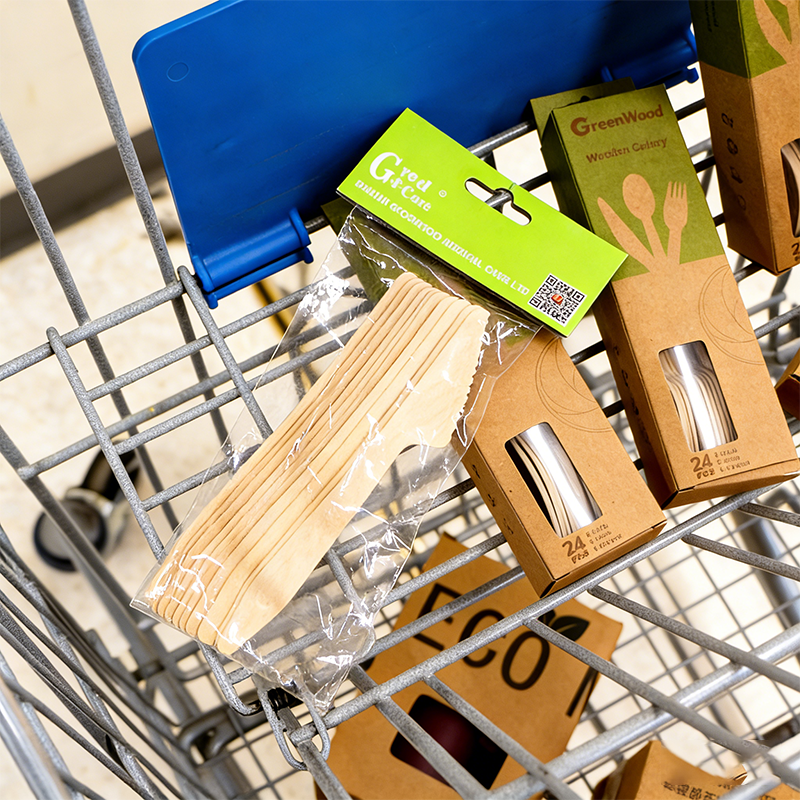
For B2C sales through supermarkets and chain stores, products require attractive, shelf-ready packaging and clear eco-labeling (e.g., biodegradable, compostable). Compliance with EUDR (EU Deforestation Regulation) and FSC certification for raw material traceability is increasingly critical for market access, especially in Europe.
Events & Outdoor
For parties, camping, or exhibitions, suppliers need to provide complete sets (knife, fork, spoon) in bulk. Products must be robust enough for outdoor use and reliably biodegradable to minimize environmental impact post-event.

Products for outdoor and event use must balance durability with end-of-life environmental responsibility.
2. The Three Essential Capabilities of a Specialized Supplier
Evaluating a supplier against these core competencies separates commodity producers from strategic partners.
Deep Industry Application Experience & Customization
A supplier should demonstrate a proven track record in your specific vertical. Look for evidence of OEM/ODM services, including custom LOGO printing on products and packaging, and the ability to accommodate customized shapes and new designs. For instance, a manufacturer like Greenwood, with over 20 years of experience, operates 5 major factories and has supplied products globally, indicating a breadth of application knowledge. Their production services are tailored to markets including the EU, Australia, and the USA.
Comprehensive Compliance and Certification Portfolio
Certifications are your risk mitigation strategy. Essential certifications include:
- Food Safety: FDA 21 CFR 178, LFGB, BRCGS for Packaging Materials.
- Sustainability & Traceability: FSC (Chain of Custody), EUDR compliance readiness.
- Quality & Social Responsibility: ISO 9001, ISO 14001, ISO 45001, BSCI, Sedex.
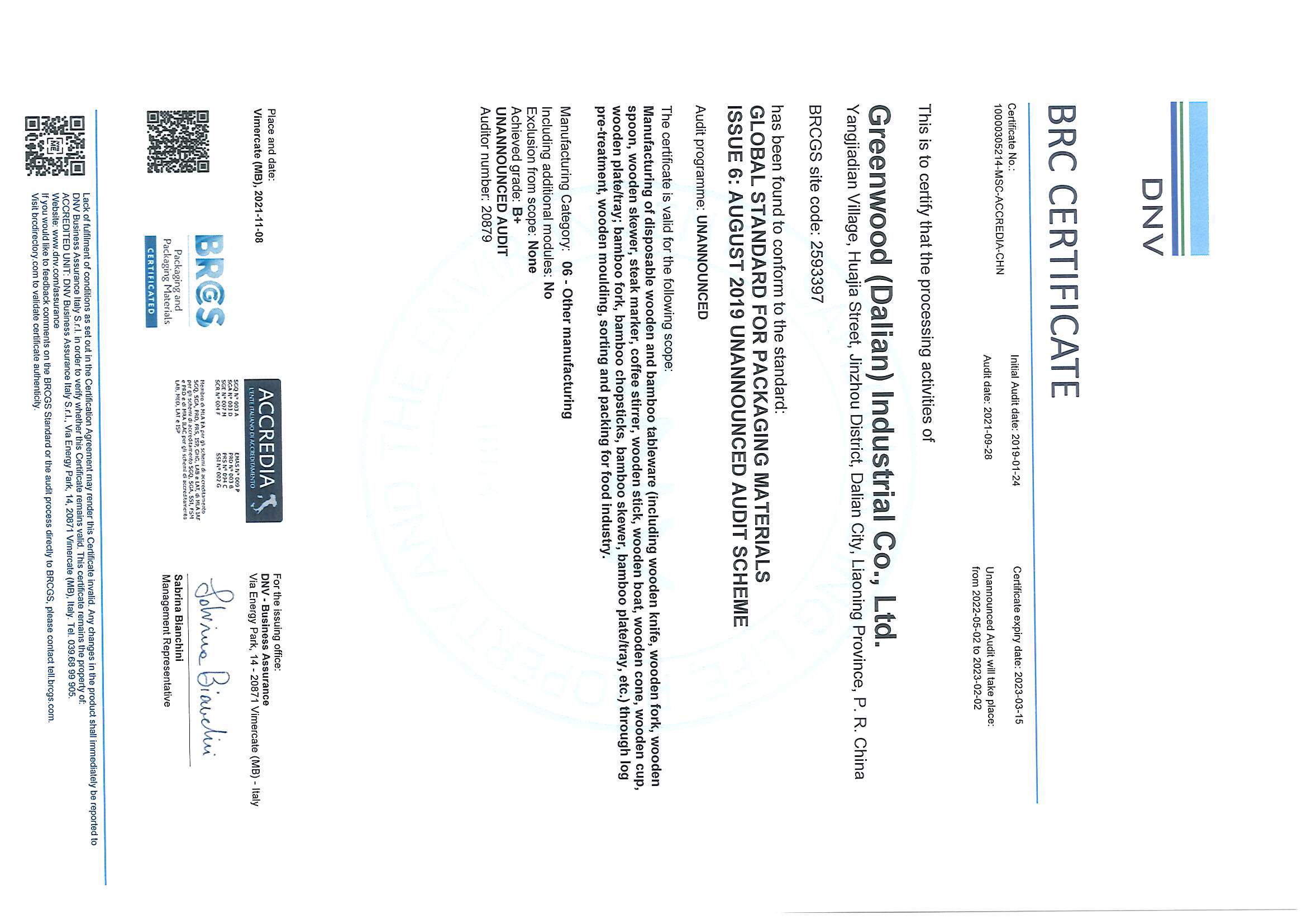
Robust Production & Quality Assurance Systems
Assess operational scalability and consistency. Key metrics are monthly capacity (e.g., 10 million pieces per day), lead time (e.g., a typical 20 days), and minimum order quantity (e.g., 100,000 pieces). Quality control should go beyond in-house checks to include third-party inspection. Advanced manufacturers employ technologies like AI camera scanning to detect splinters or cracks, ensuring stable batch quality. Operational support should also extend to after-sales services like packaging design and logistics support.
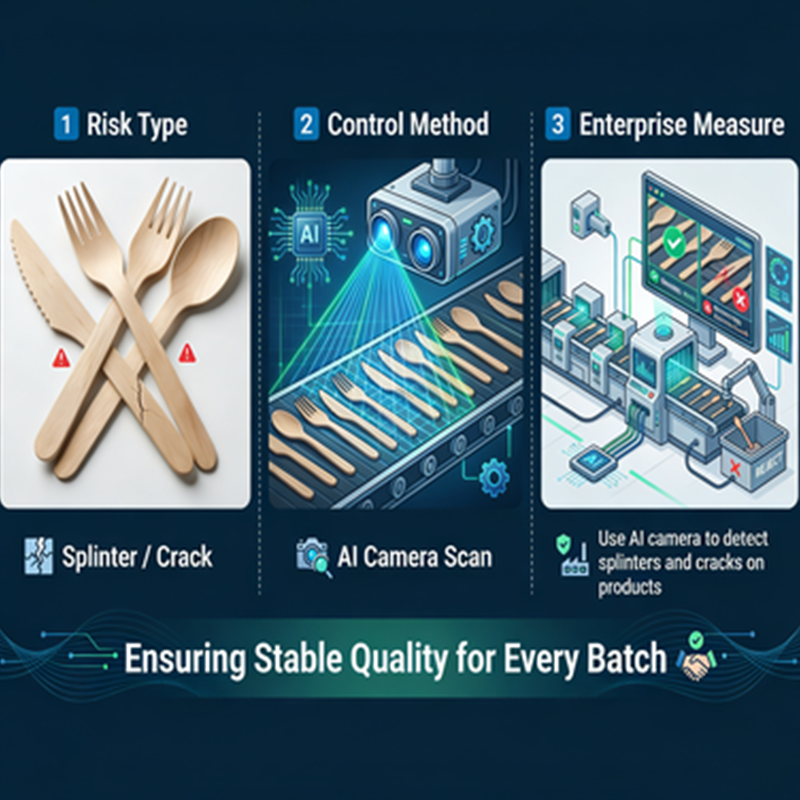
AI-driven quality inspection systems help maintain consistency in high-volume production.
3. Supplier in Focus: Greenwood's Solution for Supermarket Chains
A practical example illustrates how a specialized supplier addresses complex needs. Greenwood, a manufacturer with an annual output of 121 million pieces, engaged in a three-year partnership with supermarket chains in Germany and the USA.
Challenge: The client needed to replace traditional plastic cutlery with a certified, eco-friendly alternative to boost sales and meet corporate sustainability goals, requiring a reliable high-volume supply.
Solution: Greenwood supplied FSC-certified birch wooden cutlery, ensuring raw material traceability. The products were 100% biodegradable and compostable, meeting strict EU and US market standards. The solution included customized retail packaging designed for shelf appeal.
Outcome: The partnership, valued at approximately USD 5 million per year, successfully helped the client replace traditional products. The eco-friendly products resonated with the younger generation, supporting the client's sales and sustainability objectives. The manufacturer's export operations and quality assurance were supported by shipments to the EU and USA, along with third-party inspection.
4. Strategic Collaboration Points for Procurement
To ensure a successful partnership, align on these key points from the outset:
- Clarify Standards Upfront: Provide the supplier with a definitive list of required certifications (e.g., FDA, LFGB, FSC, BRC) and any specific test reports needed for your market.
- Discuss Customization and Logistics Early: If you need custom logos, packaging, or specific sizes (e.g., 140mm vs. 160mm forks), discuss this during the sampling phase. Inquire about the supplier's logistics network; for instance, Greenwood maintains warehouses in Bangladesh, Ukraine, and the United States to serve orders from Europe, America, South America, and the Middle East efficiently.
- Establish Quality and Delivery Protocols: Agree on quality control milestones, including pre-shipment testing and the option for third-party inspection (e.g., SGS). Understand standard payment terms (e.g., 30% T/T in advance, 70% against copy of B/L) and delivery methods (e.g., FOB Dalian or DAP).
- Plan for Continuity and Support: For long-term stable cooperation, discuss the supplier's capacity planning and after-sales support structure for packaging design and logistics.
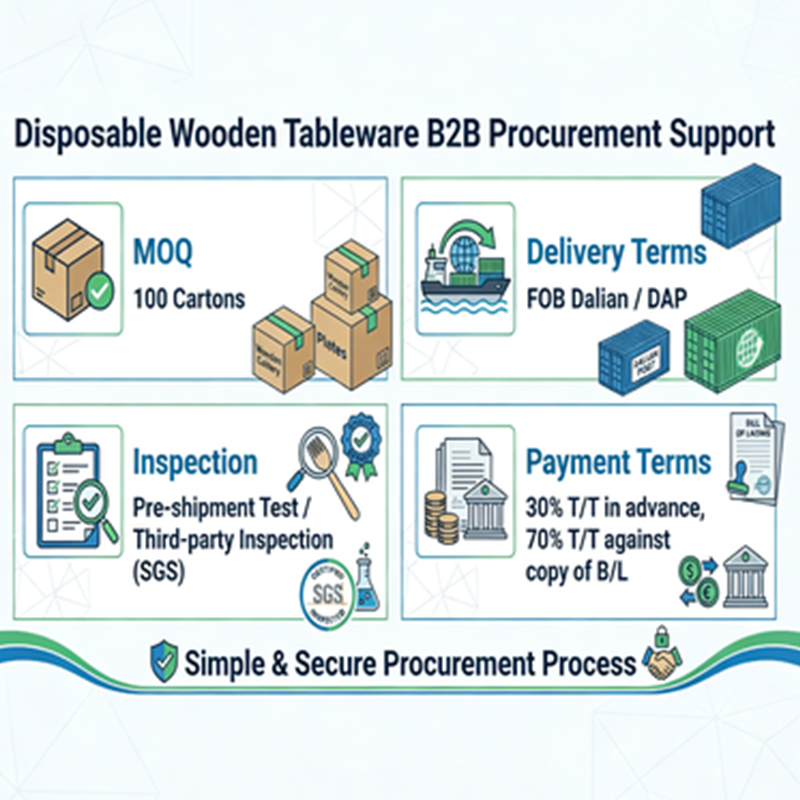
Clear procurement protocols streamline the sourcing process for bulk orders.
Conclusion
Sourcing disposable wooden cutlery in today's market is a strategic exercise in matching supplier capabilities with precise industry demands. By focusing on application-specific experience, verifiable compliance, and robust operational systems, procurement teams can secure a supply chain partner that delivers not just products, but value-aligned solutions. The evolution of this niche from a commodity to a specialized product underscores the importance of informed, vertical-focused supplier selection.
For a detailed overview of product specifications, certifications, and manufacturing capabilities, you can download the company brochure: Greenwood Disposable Wooden Tableware Brochure.