
How to Choose the Right Roll Laminator Supplier for Your Specialized Production Needs
How to Choose the Right Roll Laminator Supplier for Your Specialized Production Needs
In the fast-evolving printing and signage industry, a roll laminator is not just a finishing tool—it is a strategic asset. Whether you are laminating wide-format graphics, heavy-duty industrial sheets, or delicate photo prints, the choice of supplier can make or break your production efficiency. This guide is crafted for procurement professionals seeking suppliers with the technical depth, quality certifications, and global support to meet specialized requirements such as high-speed lamination, rigid substrate mounting, or bubble-free cold lamination.
What Is a Roll Laminator and Why Specialized Suppliers Matter?
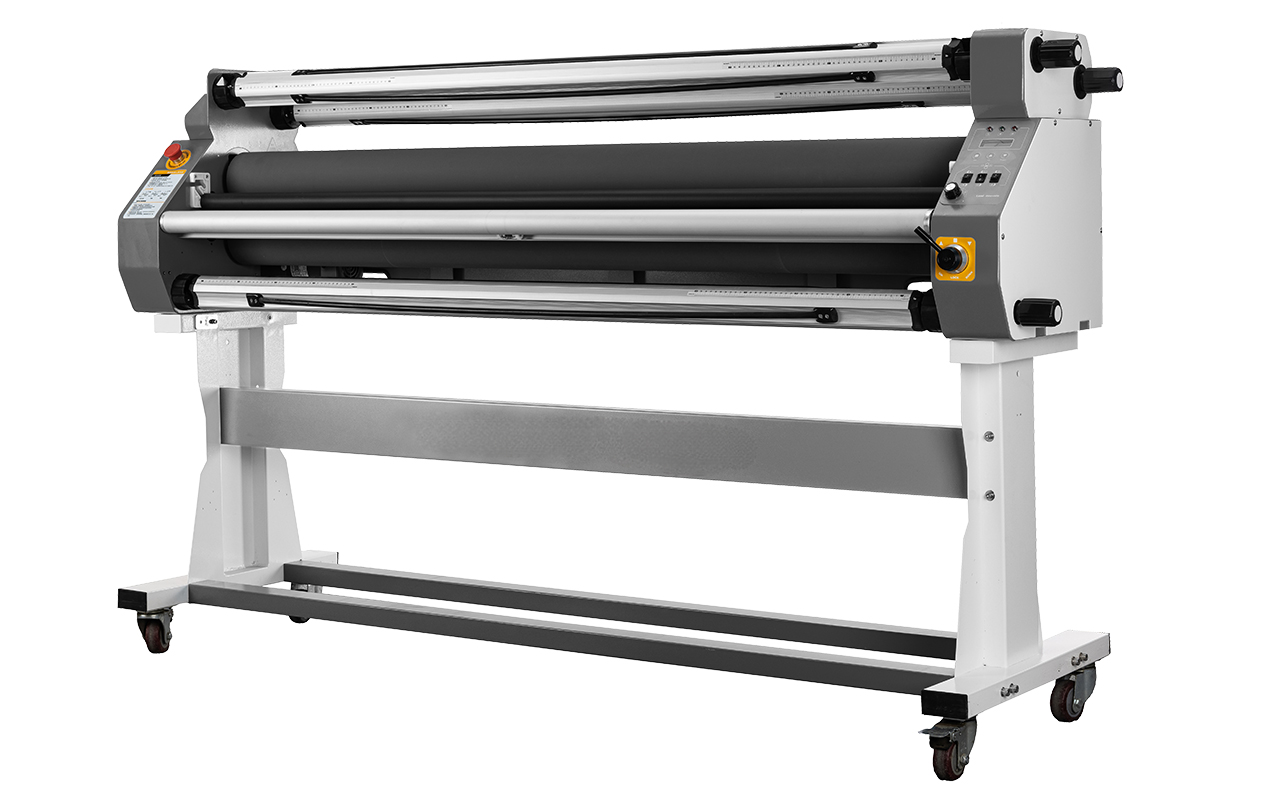
A roll laminator is a finishing machine that applies a protective film (often PVC, vinyl, or polyester) onto printed media using heat and/or pressure. It comes in various configurations: hot cold roll laminators, heat assist laminators, heavy duty roll laminators, double sided roll laminators, and industrial roll laminators. The complexity of modern production—mixing rigid boards with flexible films, high throughput, and zero-defect quality—demands not just any machine, but a supplier who understands your specific workflow.
Core Challenges When Sourcing a Roll Laminator Supplier
Buyers often face these pain points:
- Mismatched specifications: A cold-only machine cannot handle thermal films; a low-speed unit cannot meet 24/7 demands.
- Unreliable build quality: Thin frames or poor rollers lead to bubbles, wrinkles, and frequent downtime.
- Inadequate certifications: Missing CE, RoHS, or ISO 9001 documents can block market entry or cause safety hazards.
- Weak after-sales support: Language barriers, slow spare parts delivery, and lack of remote troubleshooting reduce uptime.
Therefore, selecting a supplier goes beyond comparing prices—it requires evaluating engineering capability, global compliance, and field-proven reliability.
How Does a Roll Laminator Work? A Quick Technical Overview
Most modern roll laminators share a common architecture:
- Material Feeding: The print substrate and laminating film are guided through silicone rollers. High-end models use pneumatic lifting for precise pressure adjustment.
- Heating (if required): Infrared quartz heating elements inside aluminum alloy plates warm the top roller to activate adhesive. Temperatures range from 60°C (heat assist) to 120°C (hot lamination).
- Lamination & Trimming: After bonding, built-in trimming holders with tungsten steel blades cut excess film. Some models (e.g., roll to roll cutting machines) integrate XY cutting for automated finishing.
For example, the MF1700-M1 LITE (a roll to roll laminating machine) operates at 9 m/min with pneumatic up/down and a 1600 W top heating system. In contrast, the MF1700-F2 double sided laminator reaches 20 m/min with dual heating at 120°C and 5200 W power input.
Industry Background: Why Specialization Is Growing
The global roll laminator market is driven by the signage, digital printing, packaging, and interior design sectors. According to industry reports, demand for high-speed automated finishing (50 m/min+), wide-format capability (over 1.6 m), and explosion-proof or cleanroom-grade designs is rising. Buyers now seek suppliers with dedicated R&D—like HENAN MEFU INDUSTRIAL LIMITED—that offer integrated laminating and cutting systems, flatbed applicators for rigid boards, and custom voltage/color options.
Step-by-Step Supplier Selection Framework
Step 1: Define Your Specific Requirements
List your:
- Media type (vinyl, canvas, KT board, DTF film, rigid panels up to 50 mm thick)
- Width (up to 1.83 m or wider)
- Speed target (e.g., 12–50 m/min for high-volume)
- Temperature mode (cold only, heat assist 60°C, or hot 120°C)
- Special needs (explosion-proof, cleanroom, extreme thermal)
Step 2: Evaluate Supplier Technical Capability
Check:
- Product range: Do they offer roll laminators, flatbed laminators, flatbed applicators, and cutters? A one-stop supplier reduces integration risk.
- Key components: Premium silicone rollers (e.g., 130 mm diameter) reduce bubble formation and extend roller life.
- Control systems: Front and rear control panels, smart entry systems, and laser sensors for speed safety are signs of robust design.
For instance, MEFU’s MF1700-A1 PRO large format laminator uses 130 mm silicone rollers, pneumatic lifting, and a smart entry system, meeting 24/7 industrial use.
Step 3: Verify Certifications & Quality Control
Certifications prove compliance and reliability:
| Certification | What It Covers | Example (MEFU) |
|---|---|---|
| CE (EU) | Safety, EMC, machinery directive | Certificate #TST20240302124-1SC for laminator series; #CKEYS250225014 for cutters |
| RoHS (EU) | Hazardous substance restrictions | Certificate #TST20231102836-3RC covering all major laminator models |
| ISO 9001 (Global) | Quality management system | Certificate #16423Q31198R0S, scope: production & sale of laminators |
Additionally, ensure the supplier performs 100% testing before shipment—MEFU’s quality control includes full pre-shipment inspection on every unit.
Step 4: Assess Global Reach & After-Sales Support
Look for:
- Export experience (MEFU exports to 110+ countries, with main markets in EU, USA, Japan, Russia)
- Flexible payment and delivery (FOB, CIF, DDP/DDU, T/T payment)
- Remote support and spare parts availability
Step 5: Request a Trial or Reference Case
Ask for application case studies. Examples:
Case 2: A US digital media expert bought 10 MEFU flatbed applicators for heavy-duty board mounting, achieving a 7% reduction in material waste thanks to the tilted table design and LED-illuminated bed.
Case 3: A Russian digital printing solutions provider has been using over 100 MEFU laminators for 10 years for finishing solutions and board mounting, citing high stability.
Why MEFU Stands Out in the Roll Laminator Market
Founded in 2008, HENAN MEFU INDUSTRIAL LIMITED has grown into a globally recognized finishing equipment specialist. With a 10,000 m² factory, 100 employees, and an R&D team of 10 engineers, the company produces 6,000 units annually. Its core innovations include the world’s first integrated laminating and cutting system, high-speed automatic laminating and cutting machines, and XY roll cutting machines. MEFU holds CE, RoHS, and ISO 9001 certifications and offers flexible customization (size, color, voltage, marking) with a lead time of just 14 days and MOQ of 1 unit.
Common Buyer Concerns & Answers (FAQ)
A: Hot lamination uses heat (up to 120°C) to activate adhesive, providing a stronger bond for permanent outdoor signs. Cold lamination (with heat assist up to 60°C) is used for heat-sensitive media like photo prints or DTF films. MEFU’s hot cold roll laminators (e.g., MF1700-F1) can switch modes via temperature control.
A: Bubbles are caused by uneven pressure or dust. Choose a supplier that uses premium silicone rollers (130 mm diameter) and a pneumatic lifting system that maintains constant pressure. Also, ensure the machine has an anti-static string to reduce dust attraction.
A: Use a flatbed laminator or flatbed applicator with a thickness capacity of 25–50 mm. The MEFU MF1950-B2 flatbed laminator handles up to 25 mm, while the Premium MF-B4 table laminator can laminate boards up to 50 mm thick.
A: At minimum, CE marking (machine safety and EMC) and RoHS compliance. ISO 9001 indicates a robust quality management system. Verify certificate numbers and issuing bodies.
A: Yes, many Chinese manufacturers like MEFU offer OEM customization—size, color, voltage (110V/220V/380V), and laser marking. Typically MOQ is only 1 unit, and lead time is about 14 days.
A: Very important. Look for suppliers providing remote support (video call, online diagnostics), a spare parts inventory, and a service network. MEFU offers remote support and has a global distribution network.
Conclusion: Make a Data-Driven Supplier Decision
Selecting the right roll laminator supplier is a strategic investment. By focusing on technical specifications (speed, width, heating, pneumatic control), certifications (CE, RoHS, ISO 9001), proven case studies, and flexible after-sales service, you can find a partner that meets even the most demanding production environments. Whether you need a heavy duty roll laminator for 24/7 graphic production, a double sided roll laminator for two-sided lamination, or a flatbed vinyl applicator for rigid substrates, evaluate suppliers like MEFU with a track record of global deliveries and continuous innovation.
To help you in your evaluation, 📥 Download the MEFU Product Brochure for complete specifications, certification details, and case studies.