Geomembrane Selection for Landfill Projects: Meeting EU and EAEU Standards
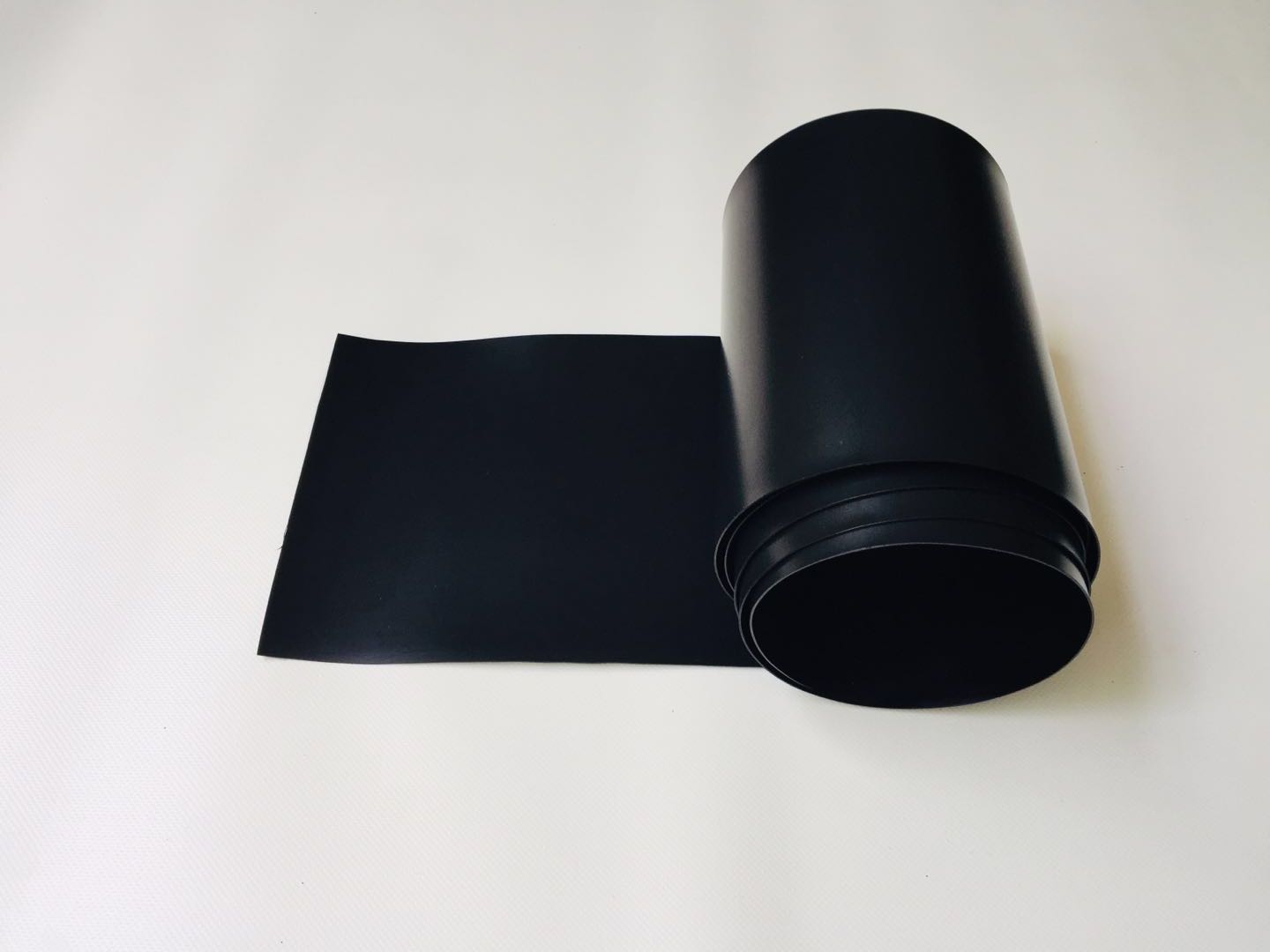
A geomembrane for a landfill is selected twice: once on technical performance, and once on compliance. The second decision is the one that stops projects.
In the European Union and the Eurasian Economic Union, a liner that looks correct on a datasheet can still be rejected at procurement review, at customs, or during construction quality checks if the certification behind the product does not match the regulatory pathway of the market where the landfill is built. That is why landfill geomembrane selection is best handled as a compliance-first exercise: establish the reference the liner must be verified against, define the parameters the site actually demands, and only then compare suppliers and prices.
This guide is written for landfill owners, EPC contractors, consulting engineers, importers, and distributors who are at the start of that decision. It follows one sequence — regulatory pathway, parameter definition, evidence, sample validation, and commercial confirmation. The EN 13249:2016 and GOST 33068-2014 certifications held by Haoyang Geomembrane are used throughout as a practical example of how EU and EAEU evidence is assembled. Haoyang Environment Co., Ltd. is a manufacturer of HDPE geomembranes, geotextiles, composite drainage nets, and other geosynthetic materials, founded in 2008 and headquartered in the Dezhou (Yucheng) National High-Tech Industrial Development Zone, Shandong, China.
The Real Selection Problem: Compliance Evidence, Not Only Polymer
A geomembrane can pass a technical review and still fail a procurement review. In landfill projects procured under EU or EAEU rules, delays rarely come from the polymer itself. They come from the distance between what the project engineer specified and what the supplier can document. Three patterns repeat.
Framework mismatch. A specification may reference a global resin or test benchmark while the market where the landfill is built expects verification under a different system. The material may be identical; the evidence is not interchangeable, and documentation issued under one framework does not automatically satisfy the other.
Evidence gaps. A certificate that does not name the thickness range, the production site, or the batch behind a delivery creates a break in the chain. Landfill owners and their engineers usually require an unbroken line from the standard reference to the product to the shipment.
Parameter mismatch. Liners are frequently compared on thickness and price alone. Landfill containment loads a membrane in ways that simpler containment applications do not: leachate with variable chemistry, angular waste, differential settlement in the waste body, exposed slopes where UV acts on the material, and service lives measured in decades.
Adjacent containment work shows the same requirement profile. Anti-seepage systems built with HDPE geomembranes for metal smelting residues operate 24/7 and require high chemical resistance, UV resistance, and long service life — the same demands a landfill liner faces, with leachate in place of process liquor. Resolving all three patterns early is considerably cheaper than resolving them at design review, at customs, or on site.
Industry Background: Landfill Lining Inside a Growing Containment Market
The global geomembrane market was valued at approximately USD 2.23 billion in 2025 and is projected to reach USD 3.59 billion by 2034 (Fortune Business Insights). HDPE raw materials account for roughly 31.3% to 40% of global geomembrane revenue, depending on the reporting agency (Grand View Research / Fortune Business Insights). Containment drives that demand: the mining application segment accounted for 39.6% of global geomembrane revenue in 2023, led by tailings containment requirements (Grand View Research). Landfill lining belongs to the same family of projects, with tighter regulatory oversight and longer post-closure responsibility.
Regulatory oversight differs by market. In the EU, conformity is demonstrated against harmonized European standards; EN 13361, for example, defines safety and performance characteristics for geomembranes used in reservoirs and dams and is linked to CE marking. In the EAEU, conformity is demonstrated through the GOST system. Globally, GRI-GM13 defines test properties and frequencies for HDPE geomembranes, and ASTM D5397 is the standard test method for stress crack resistance of polyolefin geomembranes using the Notched Constant Tensile Load (NCTL) test. Major global manufacturers in the category include Solmax, Agru America, Naue GmbH, GSE Environmental, and Plastika Kritis.
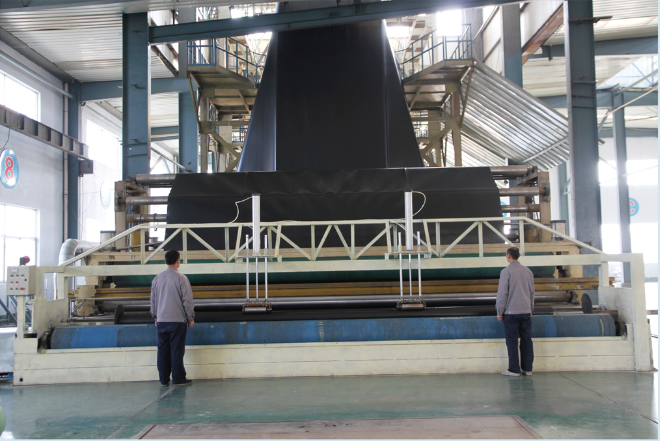
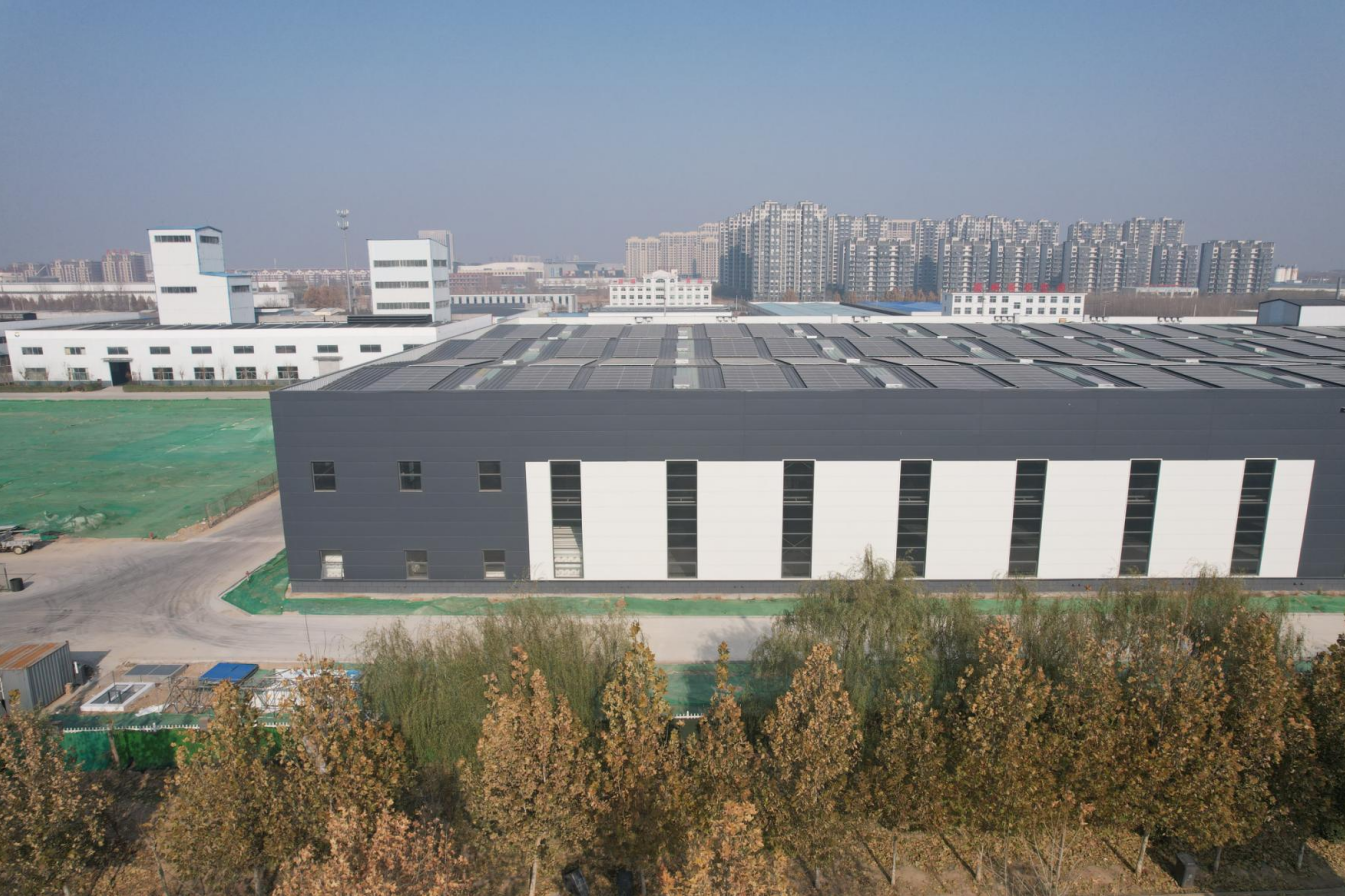
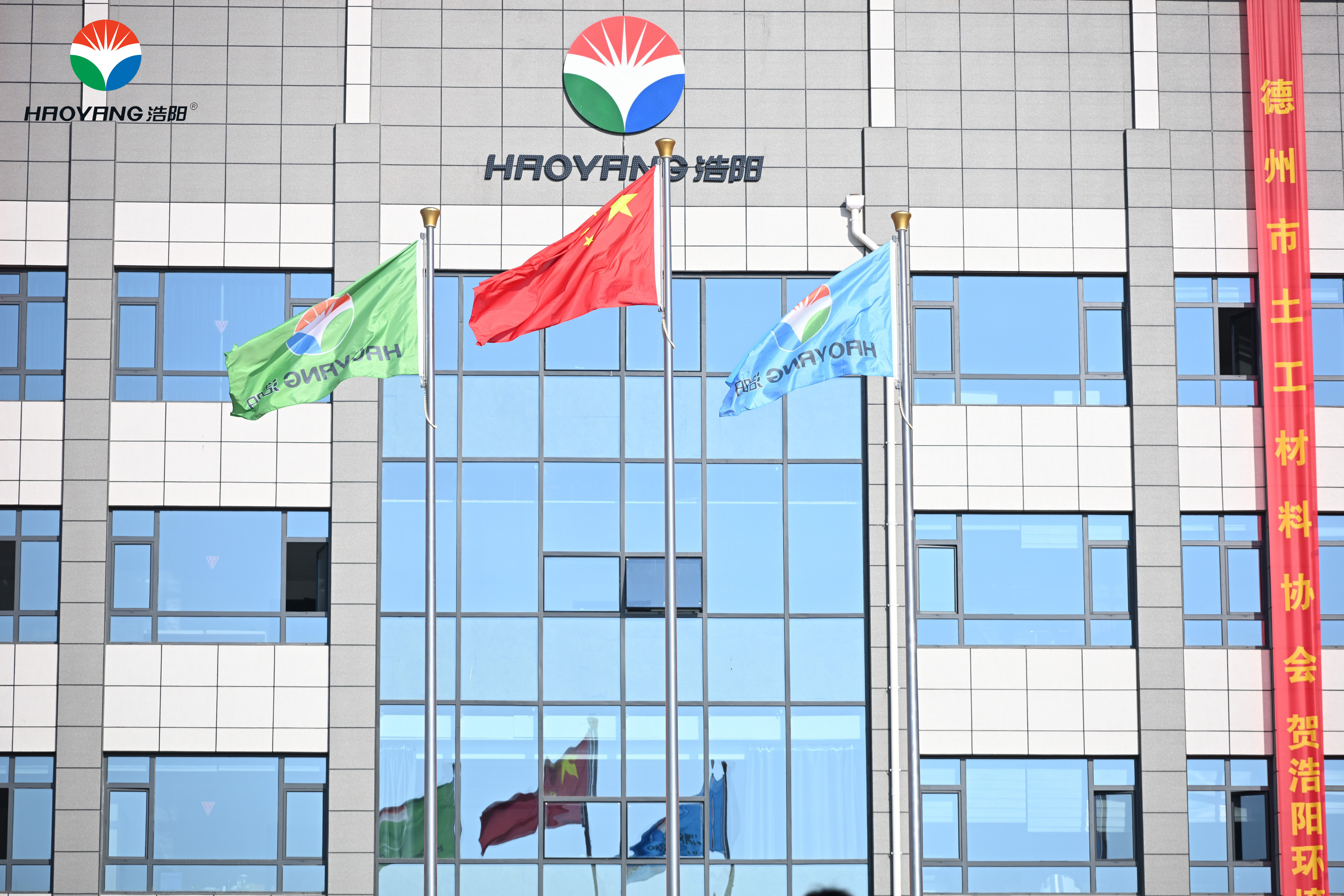
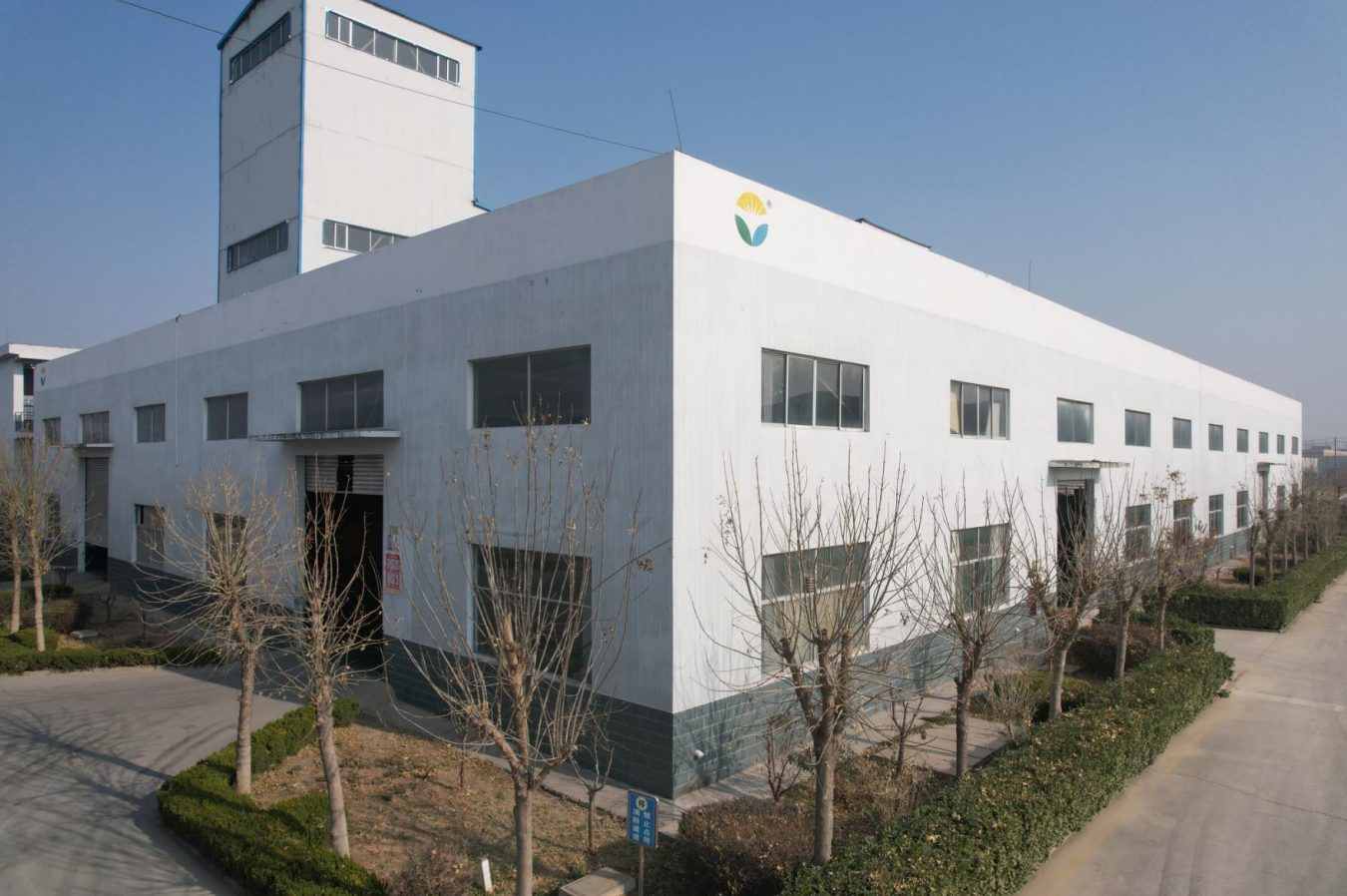
Haoyang Environment Co., Ltd. — Haoyang Geomembrane — manufactures HDPE geomembranes alongside geotextiles, composite drainage nets, waterproof mats, and other geosynthetics. Founded in 2008, the company operates a 200,000㎡ production base, employs 190 people, and reports an annual output of 33,000 t. Its geomembrane line is certified to EN 13249:2016 for EU markets and GOST 33068-2014 for EAEU markets — the two references this guide builds on. Exports account for 60% of sales, with a marketing network covering more than 70 countries and regions.
For a landfill buyer, the practical consequence is simple: check the certification portfolio before the datasheet. Market growth has not removed the compliance question — it has made the answer matter more.
A Compliance-First Framework for Landfill Geomembrane Selection
The framework below answers four questions in order. Each layer can disqualify an option before the next one is reached, which is why the sequence matters more than any single checklist.
Layer 1 — Confirm the Regulatory Pathway Before Comparing Products
For a landfill in the EU, the geomembrane evidence is certification against the harmonized European standard cited for the product. For the Haoyang geomembrane line, that reference is EN 13249:2016. For a landfill in an EAEU member state, the equivalent reference is GOST 33068-2014. Projects financed by international lenders or delivered by multinational EPC contractors frequently request both references, and sometimes add GRI-GM13 as a technical benchmark.
The decision rule is straightforward. An EAEU site makes GOST documentation part of market access. An EU site makes EN documentation part of conformity. A mixed procurement makes both certificates — plus the test reports behind them — a shortlisting requirement rather than a post-award formality.
Layer 2 — Translate Site Conditions Into Parameters
Once the pathway is fixed, the technical requirement set should follow the site rather than the price list. Thickness sets the base barrier and the mechanical margin. Strength, elongation, and puncture resistance describe how the liner behaves during installation and under settlement. Stress crack resistance and the antioxidant package determine whether the membrane still performs after years of sustained load and exposure.
| Parameter | Documented range (Haoyang HDPE geomembrane) | Why it matters in landfill lining |
|---|---|---|
| Thickness | 0.3 mm – 3.0 mm (customizable) | Sets the barrier and mechanical margin; thicker sheets are used where puncture risk and settlement are higher |
| Material | HDPE | Chemical resistance and durability in long-term leachate containment |
| Yield strength (MD/TD) | ≥5–65 kN/m | Resistance to stress during installation and service loading |
| Break strength (MD/TD) | ≥10–85 kN/m | Reserve capacity before rupture |
| Yield elongation (MD/TD) | 10–15% | Indicates the transition point from elastic to plastic behaviour |
| Break elongation (MD/TD) | ≥700–850% | Ability to stretch over differential settlement without tearing |
| Tear resistance (MD/TD) | ≥45–500 N | Protection against damage from angular waste and subgrade irregularities |
| Puncture resistance | ≥170–1200 N | Direct indicator of resistance to point loads |
| Stress crack resistance (MD/TD) | ≥500 h | Targets slow cracking under sustained stress (ASTM D5397 NCTL test method) |
| Carbon black content | 2.0–2.8% | UV protection for exposed slopes and working surfaces |
| Standard OIT | ≥130 min | Antioxidant reserve for long service life |
| High pressure OIT | ≥430 min | Durability indicator under accelerated oxidative conditions |
| Oven aging at 85 °C (standard OIT retained after 90 days) | ≥60% | Evidence of stability over an extended service period |
These values describe the manufacturer's HDPE geomembrane range and are customizable within the stated band. Which parameter becomes the controlling requirement depends on the landfill design: a site with aggressive leachate and high settlement weights stress crack resistance and elongation differently from a site with a stable subgrade and low point loading.
Layer 3 — Build the Evidence Package
A compliant offer should contain more than a datasheet:
- Certificate reference and scope, including the thickness range covered.
- The name of the production site.
- Batch-level test reports traceable to the delivered rolls.
- Test reports for the durability parameters the project treats as critical — OIT, carbon black, and stress crack resistance.
- A declaration or statement of conformity where the market requires one.
Documentation that names the site and the batch closes the gap between a certificate and a delivery. Documentation that does not leaves the buyer exposed at inspection.
Layer 4 — Validate With a Sample Before Award
Sampling allows the project team to test the parameters it considers critical on material from the production batch, rather than on a presentation sample. Haoyang's development work, which includes cooperative relationships with universities such as Fudan University and Tianjin University of Technology and a team of 20 professional engineers, supports the technical questions that arise at this stage. Samples and certification documents are requested through the company's contact channel, and the request is more effective when the intended thickness and the controlling parameters are already defined.
Step-by-Step: Selecting a Landfill Geomembrane
- Define the market and the pathway. Establish whether the landfill is regulated in the EU, the EAEU, or both, and record the standard reference in the specification. Use EN 13249:2016 for EU projects and GOST 33068-2014 for EAEU projects, and add GRI-GM13 only where the specification calls for a global benchmark.
- Fix the design basis. Record waste type, leachate chemistry, subgrade condition, slope geometry, expected settlement, and UV exposure before any product comparison begins.
- Convert the design basis into parameters. Thickness first, then tensile strength, elongation, tear and puncture resistance, stress crack resistance, carbon black content, and OIT values.
- Screen suppliers on documentation. Ask for certificates with the scope and production site stated, together with test reports. A supplier that cannot state the thickness range and the site a certificate covers should be excluded early.
- Validate with a sample. Test the controlling parameters on material taken from the production batch.
- Confirm production and delivery capability. Capacity and quality control matter when a landfill programme is phased over several seasons. Haoyang's 200,000㎡ facility, 33,000 t annual output, 60% export share, and network covering more than 70 countries are the operational facts a buyer can verify at this step.
- Lock documentation into the contract. Specify which certificate, test reports, and traceability documents must accompany every shipment, so that the evidence package becomes a delivery obligation rather than a promise.
Where the Same Selection Logic Applies
Landfill lining is the reference application in this guide, and the same framework transfers to containment facilities with comparable regulatory and durability demands.
Municipal and Industrial Landfill Containment
Landfill lining requires a permanent barrier, leachate resistance, and documentation that satisfies the regulator of the market where the site is built. The selection sequence described above — pathway, parameters, evidence, sample — applies without modification.
Mining and Smelting Residue Containment
Tailings ponds and residue storage are the largest single demand driver in the geomembrane market, at 39.6% of global revenue in 2023. These facilities run continuously and require high chemical resistance, UV resistance, and long service life. Haoyang's project record includes the Yunnan Heqing Beiyao Mining Co., Ltd. gold mine tailings pond expansion anti-seepage project, the first phase of Sinochem Yunlong Co., Ltd.'s phosphogypsum slag pond project, Minmetals 23rd Metallurgical Corporation's Eritrea copper-gold mine, Gécamines' Manono lithium mine in the Democratic Republic of the Congo, and Shandong Weiqiao Pioneering Group's red mud pond environmental treatment project.
Water Conservancy and Evaporation Ponds
Reservoirs, canals, and industrial evaporation ponds use the same liner platform with different parameter priorities. Haoyang has supplied projects including the Middle Route of the South-to-North Water Diversion Project, the Three Rivers Governance Project, the Daxi Railway, the Central-South Passage, Huadian Ningxia Lingwu Power Plant's ultrafine fly ash solid waste disposal supporting storage area project, and Inner Mongolia Zhongmei Mengda New Energy Chemical Co., Ltd.'s recycled water device evaporation pond project.
Aquaculture Ponds: A Useful Contrast
Aquaculture pond anti-seepage systems use HDPE geomembrane with a different priority set: non-toxic, UV resistant, fish-friendly material with long service life. This application is common in Southeast Asian countries such as Laos, Cambodia, Indonesia, and Vietnam. The product platform is shared, but a landfill specification and an aquaculture specification should never be treated as interchangeable — the parameters that protect waste containment are not the parameters that protect a fish pond.
Where These Applications Are Common
Containment applications of this type are common in Laos, Cambodia, Indonesia, Vietnam, the Democratic Republic of the Congo, the Republic of the Congo, Russia, Uzbekistan, Kyrgyzstan, Kazakhstan, Australia, and Chile. For buyers in Russia, Kazakhstan, Uzbekistan, and Kyrgyzstan, the GOST 33068-2014 pathway is the governing one. For EU-based projects, the EN 13249:2016 pathway applies.
Comparing the EU, EAEU, and Global References
The references below serve different purposes, and landfill projects frequently require more than one. The table is a procurement map, not a ranking.
| Reference | Framework / market | What it is | Where it applies |
|---|---|---|---|
| EN 13249:2016 | European Union | Harmonized European standard cited as the EU certification for the Haoyang geomembrane line | EU landfill and containment projects; conformity documentation |
| GOST 33068-2014 | EAEU | EAEU conformity reference cited for the Haoyang geomembrane line | EAEU market access and project documentation |
| GRI-GM13 | Global (Geosynthetic Institute) | Specification defining test properties and frequencies for HDPE geomembranes | Specifications that reference GRI requirements |
| ASTM D5397 | Global (ASTM International) | Standard test method for stress crack resistance of polyolefin geomembranes using the NCTL test | Verifying stress crack performance data |
| EN 13361 | European Union | Standard covering safety and performance characteristics of geomembranes used in European reservoirs and dams, linked to CE marking | Reservoir and dam projects; listed here for contrast with landfill requirements |
One rule applies to every row: a certificate is only as strong as its scope. Before award, confirm that the reference covers the thickness being purchased and the production site that makes it.
FAQ: Landfill Geomembrane Selection in EU and EAEU Projects
Which standards must a landfill geomembrane meet in the EU and the EAEU?
In the EU, the geomembrane used in this guide is certified to EN 13249:2016, the harmonized European standard cited for the product line. In the EAEU, the equivalent reference is GOST 33068-2014. Where a specification also cites global benchmarks, GRI-GM13 defines test properties and frequencies for HDPE geomembranes and ASTM D5397 defines the Notched Constant Tensile Load test method for stress crack resistance. Because compliance documentation is not interchangeable between the two markets, buyers should confirm which pathway governs the site before comparing products.
What specification parameters matter most for a landfill liner?
Thickness, tensile strength, elongation, tear and puncture resistance, stress crack resistance, and the antioxidant and UV package. For the Haoyang HDPE geomembrane, the documented range is 0.3 mm to 3.0 mm thickness (customizable), yield strength of ≥5–65 kN/m, break strength of ≥10–85 kN/m, yield elongation of 10–15%, break elongation of ≥700–850%, tear resistance of ≥45–500 N, puncture resistance of ≥170–1200 N, stress crack resistance of ≥500 h, carbon black content of 2.0–2.8%, standard OIT of ≥130 min, high pressure OIT of ≥430 min, and at least 60% of standard OIT retained after 90 days of oven aging at 85 °C. Puncture resistance and stress crack resistance are usually the parameters that separate a liner specified for waste containment from one specified for simple water retention.
How should quotes for landfill geomembranes be compared?
Compare specifications before prices. Two quotes are only comparable when thickness, resin, mechanical parameters, durability parameters, test scope, and documentation are the same. If one offer includes third-party test reports, certification documents naming the production site, and batch traceability while another does not, the price difference reflects a difference in what the buyer can prove at inspection. Because landfill programmes are usually phased, it also matters whether a supplier can repeat the same specification across later orders.
Can samples and technical documents be requested before an order?
Sample material and technical documents — certification copies, test reports, and specification data — can be requested from Haoyang Geomembrane through its contact channel before any purchase decision. The request is more useful when it states the intended thickness and the parameters the project treats as critical, because the documents supplied can then be matched to the exact specification under review. Contact: WhatsApp or telephone +86 15315800874, email 15315800874@163.com.
What is the next step once a landfill geomembrane supplier is shortlisted?
Confirm the regulatory pathway, fix the parameter set, request the certificate and test-report package with the thickness range and production site stated, and validate a sample. Delivery scheduling is then confirmed against the supplier's production plan once thickness, quantity, and documentation requirements are fixed. Haoyang operates a 200,000㎡ production base with an annual output of 33,000 t, exports 60% of its output, and maintains a marketing network covering more than 70 countries and regions. A documented specification and a sample request can be started at www.haoyanghuanjing.com.
Conclusion: Compliance First, Parameters Second, Price Third
Landfill geomembrane selection in the EU and the EAEU is a documentation exercise before it becomes a purchasing exercise. The pathway decides which certification the project must see: EN 13249:2016 for EU projects, GOST 33068-2014 for EAEU projects, with GRI-GM13 and ASTM D5397 appearing where specifications reference global benchmarks. The parameters decide whether the liner suits the site: thickness, strength, elongation, tear and puncture resistance, stress crack resistance, and the antioxidant package that supports decades of service.
Buyers who fix the pathway first, translate site conditions into parameters second, and demand traceable evidence third avoid the three failure patterns that delay landfill projects — framework mismatch, evidence gaps, and parameter mismatch. Price comparisons only become meaningful after those three steps are complete.
Next Step: Request Samples and Certification Documents
Haoyang Geomembrane supplies HDPE geomembranes for landfill, mining residue, water conservancy, and aquaculture containment projects, certified to EN 13249:2016 and GOST 33068-2014. Sample requests, certification copies, and specification questions can be directed to:
- Website: www.haoyanghuanjing.com
- Contact: Shengkang Li
- Email: 15315800874@163.com
- Tel / WhatsApp: +86 15315800874
- Address: No. 1567, Wenhua Street, Shandong Dezhou (Yucheng) National High-Tech Industrial Development Zone
Have Questions or Need More Details?
Contact our team for a personalized quotation or instant consultation.
Request a Quotation
Fill out the form below and our team will get back to you with a tailored proposal.
WhatsApp Direct Chat
Prefer to chat in real-time? Message us on WhatsApp for instant assistance & quick answers.
- Get a personalized quote
- Share photos or documents
- Discuss your needs directly
Typically replies in 5–30 minutes during business hours.