How to Match Drainage Geonet to Project Conditions: A Scenario-Based Selection Guide
How to Match Drainage Geonet to Project Conditions: A Scenario-Based Selection Guide
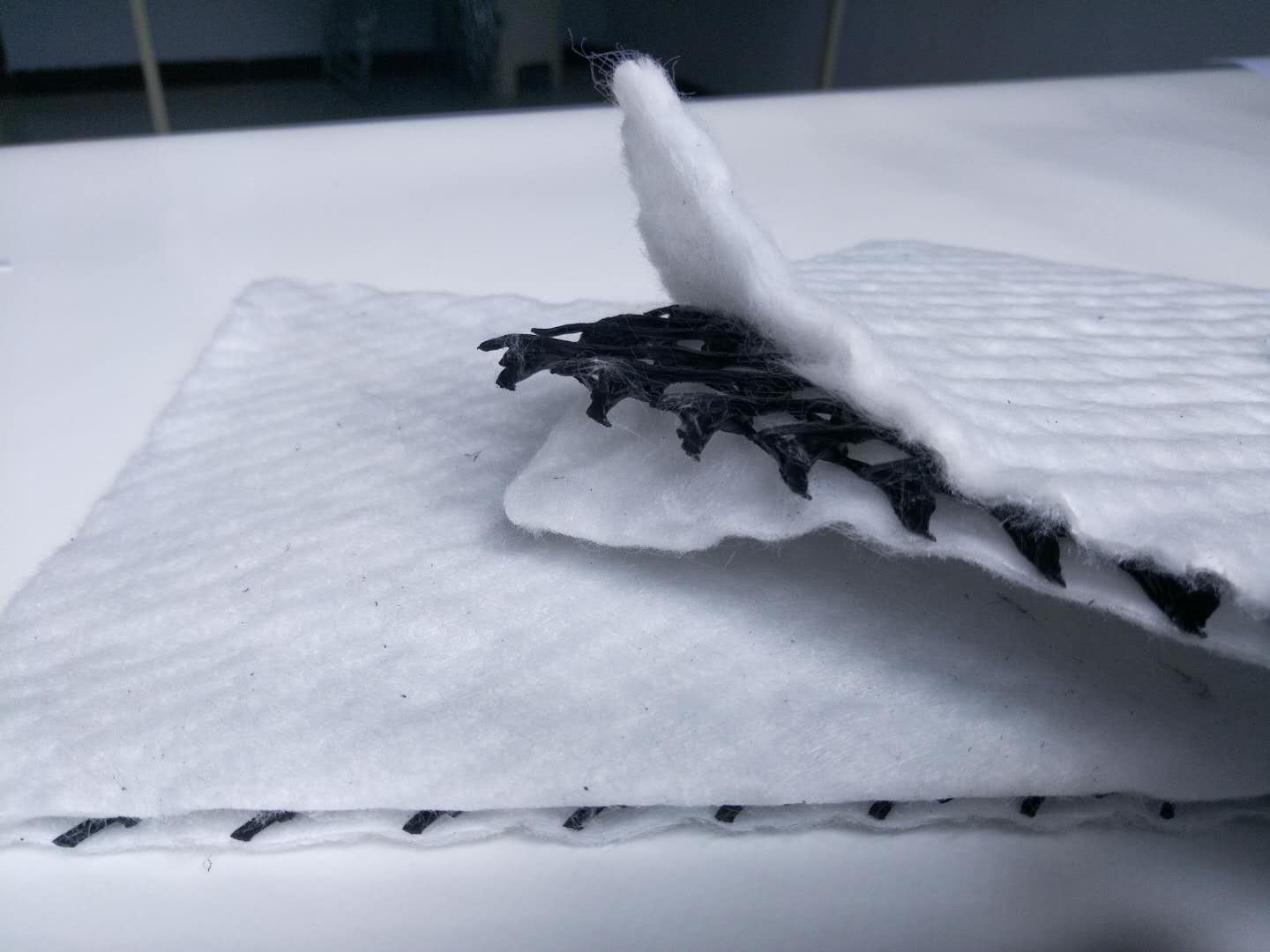
Drainage geonet is a geosynthetic core material used to collect and convey liquids within an anti-seepage system. It is commonly placed beneath or between geomembrane layers to provide a stable flow path for leachate, groundwater, or process liquids.
This guide explains how to match drainage geonet to project conditions. The focus is on scenario-based selection for metal smelting and aquaculture projects, where drainage geonet is used as part of an anti-seepage system to prevent liquid leakage or water seepage.
The Problem: Why Generic Drainage Geonet Selection Fails
Drainage geonet is not a one-size-fits-all product. The same 4.0–8.0 mm geonet that works in a landfill gas collection layer may fail prematurely in a metal smelting tailings pond if it cannot withstand acidic process water or high overburden pressure. In aquaculture, a drainage geonet with toxic additives can harm fish even if its drainage capacity is adequate.
Common selection failures include:
- Choosing a geonet based on thickness alone while ignoring compressive strength under site-specific loads.
- Selecting a polymer type that is incompatible with the chemical environment.
- Neglecting the geonet's role within a complete anti-seepage system that also includes geomembrane and geotextile layers.
- Overlooking 24/7 operating conditions that require long-term creep resistance and UV stability.
For the purpose of this guide, drainage geonet refers to a three-dimensional net-like geosynthetic product made from HDPE, PP, or PET, with a typical thickness of 4.0–8.0 mm. It is often combined with geotextile layers to form a composite drainage geonet, which provides both filtration and drainage functions.
Understanding the Core Parameters of Drainage Geonet
Before matching a product to a project, buyers should review the following core parameters:
- Thickness: 4.0–8.0 mm (customizable). Thicker geonets generally provide higher flow capacity but may be less flexible in tight installation spaces.
- Mass per unit area: 500–1400 g/m² (customizable). Higher mass typically indicates more polymer content and greater mechanical strength.
- Tensile strength (MD/TD): ≥5–15 kN/m. This affects handling, installation, and resistance to construction damage.
- Elongation at break: 10–25%. Lower elongation values indicate a stiffer, more dimensionally stable product.
- Compressive strength (10% strain): ≥500–830 kPa. This is critical for projects with deep cover soil or heavy equipment loads.
- Acid/alkali resistance: ≥90% strength retention. This determines long-term performance in aggressive chemical environments.
- Drainage capacity: ≥50–120 (L/min)/m (customizable). This is the hydraulic flow rate the geonet can convey under defined conditions.
These parameters are not independent. A high drainage capacity geonet with low compressive strength may crush under load and lose its flow paths. A chemically resistant geonet with low tensile strength may tear during installation. The selection process must balance all parameters against project-specific demands.
Material Selection: HDPE, PP, and PET in Drainage Geonet
Drainage geonet is manufactured in three primary polymer families: HDPE, PP, and PET. Each material has a different response to chemical, thermal, and mechanical conditions.
| Material | Typical Strengths | Typical Considerations |
|---|---|---|
| HDPE | High chemical resistance; widely used in containment and waste applications; good UV resistance when properly stabilized. | Stiffness may require careful handling in cold weather; higher creep sensitivity under sustained load compared to PET. |
| PP | Good strength-to-weight ratio; often used in high-strength polypropylene composite drainage geonets; good resistance to many acids and alkalis. | UV stabilization is important for exposed applications; thermal expansion behavior differs from HDPE. |
| PET | High tensile strength and low creep; often used in polyester filament composite drainage geonets where long-term loading is a concern. | Polyester is susceptible to hydrolysis in highly alkaline environments; pH conditions should be verified before specification. |
Polyethylene-based drainage nets account for nearly 64% of global material demand, largely due to their chemical resistance. This supports the frequent use of HDPE-based geonets in industrial containment projects. However, the final material choice should be based on the specific chemical environment of the project, not on market prevalence alone.
Application Scenario 1: Metal Smelting Anti-Seepage Systems
In metal smelting projects, the drainage geonet is used to prevent liquid leakage. These projects typically involve tailings ponds, slag storage areas, and process water containment facilities. The operating mode is continuous (24/7), and the geosynthetic system must perform reliably for decades.
Key Conditions in Metal Smelting Projects
- Chemical exposure: Acidic or alkaline process liquids can degrade unprotected polymers. An acid and alkali resistant drainage geonet with ≥90% strength retention is often specified.
- Sustained loading: Tailings and cover materials place continuous pressure on the geonet. High compressive resistance drainage geonet (≥500–830 kPa at 10% strain) is needed to maintain flow channels.
- Long-term reliability: Leakage prevention systems in mining and smelting are designed for service lives measured in decades. The geonet must resist creep, chemical attack, and installation damage.
- System integration: The drainage geonet is typically combined with a geomembrane (0.3–3.0 mm) to form a complete anti-seepage and drainage system. The geonet removes liquids that could otherwise build up behind the liner.
Matching Recommendation for Metal Smelting
- Use a composite drainage geonet with high-strength polypropylene or HDPE construction where chemical resistance and compressive strength are both critical.
- Verify compressive strength at 10% strain under the expected overburden pressure, not just the product's nominal thickness.
- Select a product with confirmed acid/alkali resistance (≥90% strength retention) if the process water chemistry is aggressive.
- Combine the geonet with a textured geomembrane when slope stability and interface friction are important, as demonstrated in large tailings pond projects.
Application Scenario 2: Aquaculture Pond Anti-Seepage Systems
In aquaculture, the drainage geonet is used to prevent water seepage and to help manage the water environment beneath pond liners. The primary markets for this application include Laos, Cambodia, Indonesia, and Vietnam.
Key Conditions in Aquaculture Projects
- Non-toxic materials: The product must be safe for aquatic life. Only materials that do not release harmful substances should be used in direct contact with the water environment.
- UV resistance: Pond edges and exposed liner areas can be subject to sunlight. UV-resistant materials help maintain long-term performance.
- Fish-friendly design: The geosynthetic system should not create sharp edges or toxic runoff that could harm fish.
- Long service life: Aquaculture ponds operate 24/7, and replacing drainage layers after the pond is stocked is difficult and costly.
Matching Recommendation for Aquaculture
- Use non-toxic, UV-resistant materials that meet the special requirements of fish farming environments.
- Combine the drainage geonet with an appropriate geomembrane liner to form a complete anti-seepage system.
- Consider a polyester filament composite drainage geonet when long-term hydraulic performance is a priority, after confirming that the site chemistry is compatible with PET.
- Work with a supplier that can verify material safety and provide documentation for the specific aquaculture application.
Comparison: Metal Smelting vs. Aquaculture Drainage Geonet Requirements
| Selection Criterion | Metal Smelting / Mining | Aquaculture |
|---|---|---|
| Primary function | Prevent liquid leakage from tailings, slag, or process water systems | Prevent water seepage from aquaculture ponds |
| Typical project type | Anti-seepage system (tailings ponds, slag storage areas) | Aquaculture pond anti-seepage system |
| Chemical requirements | Acid/alkali resistance with ≥90% strength retention | Non-toxic and fish-friendly materials |
| Environmental requirements | UV resistance and long service life | UV resistance and long service life |
| Typical product form | Composite drainage geonet with high compressive strength | Drainage geonet combined with geomembrane liner |
| Operating mode | 24/7 continuous operation | 24/7 continuous operation |
Both scenarios share common requirements for UV resistance, long service life, and 24/7 operation. The main difference lies in chemical versus biological safety priorities. Metal smelting projects emphasize acid/alkali resistance and compressive strength. Aquaculture projects emphasize non-toxicity and fish-friendliness.
Geographic Suitability: Where Drainage Geonet Is Typically Applied
The application scenarios described in this guide are not limited to one region. Drainage geonet used in anti-seepage systems is typically applied in Laos, Cambodia, Indonesia, Vietnam, Democratic Republic of the Congo, Republic of the Congo, Russia, Uzbekistan, Kyrgyzstan, Kazakhstan, Australia, and Chile.
For global buyers, regional context matters for two reasons:
- Logistics and lead time: Delivery schedules of 10–30 days and monthly production capacity must be matched to project timelines.
- Regulatory acceptance: Some regions require specific certifications for geosynthetic materials, such as EN 13249 or GOST standards.
Step-by-Step: How to Specify Drainage Geonet for Your Project
Step 1: Define the Drainage Function
Identify the primary function: Is the geonet preventing liquid leakage from an industrial containment facility, or preventing water seepage from a pond? This determines the fundamental design target.
Step 2: Assess the Chemical Environment
Document the liquids that will contact the geonet, including pH range, chemical composition, and temperature. If the environment is acidic or alkaline, select a drainage geonet with verified acid/alkali resistance.
Step 3: Determine Load Conditions
Estimate the overburden pressure from cover soil, waste materials, or water depth. For high loads, specify a high compressive resistance drainage geonet with compressive strength in the ≥500–830 kPa range.
Step 4: Calculate Required Drainage Capacity
Compare the expected liquid flow rate to the product's drainage capacity. If the project requires high flow, look for a high drainage capacity geonet in the range of ≥50–120 (L/min)/m.
Step 5: Select the Polymer Family
Choose between HDPE, PP, or PET based on chemical compatibility, mechanical requirements, and cost. Verify the material choice with the supplier using project-specific test data.
Step 6: Design the Full Anti-Seepage System
The drainage geonet does not work alone. It requires supporting equipment such as a geomembrane and, in many cases, a geotextile filter layer. Specify the complete system, not just the geonet.
Step 7: Verify Manufacturing and Quality Control
Confirm that the supplier can provide 100% tested products, consistent dimensions, and documented quality control. For high-spec projects, request reference installations and measurable performance data.
Step 8: Plan for Installation and After-Sales Support
Drainage geonet performance depends on correct installation. Work with suppliers that can provide on-site support and clear installation guidance.
Why Composite Drainage Geonet Is Often the Safer Choice
A composite drainage geonet integrates the geonet core with a geotextile layer. This design combines drainage with filtration, preventing soil particles from entering the flow channels. Composite products are especially useful in projects with fine-grained soils, such as tailings ponds and aquaculture pond bases.
Specific composite configurations include:
- 3D composite drainage geonet: A three-dimensional structure that maintains flow paths under load and provides high drainage efficiency.
- Polyester filament composite drainage geonet: Uses PET filaments for high tensile strength and low creep.
- High-strength polypropylene composite drainage geonet: Combines PP reinforcement with geotextile layers for demanding industrial applications.
- Integrated molding drainage geonet: Produced as a single integrated structure for improved dimensional stability.
- Hot melt welding drainage geonet: Welded construction that improves layer bonding and overall integrity.
For buyers evaluating project fit, composite products usually provide better long-term performance than a bare geonet core, because the geotextile layer prevents clogging and maintains hydraulic conductivity.
How Haoyang Environment Supports Project-Specific Drainage Geonet Selection
Haoyang Environment Co., Ltd. is a Chinese manufacturer of geosynthetic materials headquartered in the Dezhou (Yucheng) National High-tech Industrial Development Zone, Shandong Province. The company integrates R&D, production, sales, and engineering services, and exports geosynthetic materials to more than 70 countries and regions.
For drainage geonet projects, Haoyang provides:
- Composite drainage geonet in HDPE, PP, and PET with a thickness range of 4.0–8.0 mm.
- Customizable mass per unit area from 500 to 1400 g/m².
- Tensile strength from ≥5 to 15 kN/m in both machine and transverse directions.
- Compressive strength from ≥500 to 830 kPa at 10% strain.
- Acid/alkali resistance with ≥90% strength retention.
- Drainage capacity from ≥50 to 120 (L/min)/m.
- OEM support for logo, width, roll length, thickness, and physical/chemical performance indicators.
Certifications and Standards
Haoyang's composite drainage geonet holds CE Verification of Conformity (ICR/VC/HE250523) under EN 13249:2016, valid until 2030. For EAEU markets, the product is certified under GOST 56586-2015 (Certificate POCC CN.32682.047C00.0C01.H00840). These certifications support use in European and Eurasian economic union projects where documented compliance is required.
Production and Quality Control
Haoyang's production base covers 200,000 m² with an annual output of 33,000 tons. The company operates with 190 employees and a team of 20 professional engineers. Its monthly drainage geonet production capacity is 3,000 tons, with typical lead times of 10–30 days. All products are 100% tested before shipment.
Reference Project
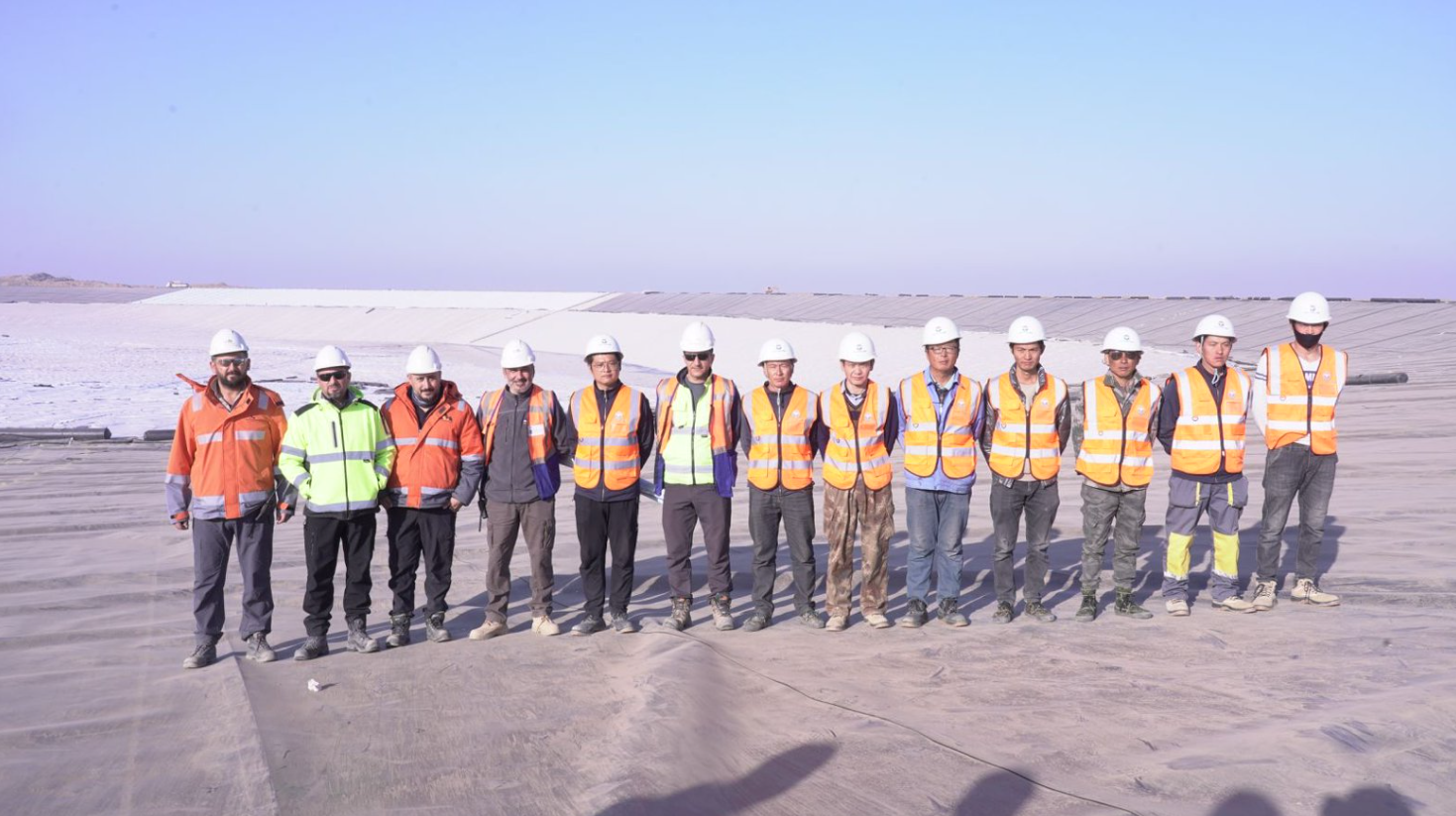
In Uzbekistan, Haoyang supplied 900,000 square meters of geosynthetic materials for seepage prevention in the tailings pond basin of a gold mine. The project used a three-dimensional composite drainage network combining textured geomembrane with high-strength polypropylene geotextile, and included both material supply and on-site installation services.
FAQ: Drainage Geonet Project Fit
Q1: Which certifications should I require for drainage geonet used in industrial anti-seepage projects?
For European projects, request CE Verification of Conformity under EN 13249:2016. For EAEU markets, request GOST 56586-2015 certification. In North America, ASTM D7273 provides guidelines for acceptance testing of geonets and geonet drainage geocomposites. The required certification depends on the project location and local regulatory framework.
Q2: How do I know whether HDPE, PP, or PET is the right material for my drainage geonet?
Match the polymer to the chemical environment and mechanical demand. HDPE offers broad chemical resistance and is widely used in containment systems. PP provides high strength-to-weight performance and is common in high-strength composite products. PET offers high tensile strength and low creep but should be avoided in highly alkaline environments where hydrolysis may occur. Always verify material compatibility with site-specific liquid chemistry before final specification.
Q3: What drainage capacity and compressive strength should I specify for a tailings pond drainage layer?
Specify values based on the expected inflow rate and overburden pressure. As a technical reference, drainage geonet with compressive strength of ≥500–830 kPa at 10% strain and drainage capacity of ≥50–120 (L/min)/m is commonly used in industrial containment applications. The final values should be calculated from the project's hydraulic and mechanical design, not selected arbitrarily.
Q4: Can drainage geonet be combined with a geomembrane in one anti-seepage system?
Yes. In metal smelting and aquaculture projects, the drainage geonet normally requires supporting equipment such as a geomembrane. The geomembrane prevents liquid migration while the geonet conveys collected liquids to a sump or outlet. Textured geomembranes can be used in combination with geonets to improve interface friction on slopes.
Q5: What is the typical lead time and minimum order quantity for custom drainage geonet?
For a manufacturer with dedicated geosynthetic production lines, typical lead time is 10–30 days, with a monthly capacity of 3,000 tons and a minimum order quantity of 5,000 m². Custom options include width, roll length, thickness, mass per unit area, and mechanical/chemical indicators. Buyers with project-specific requirements can contact Haoyang Environment to confirm production scheduling and delivery terms.
Conclusion
Matching drainage geonet to project conditions requires more than comparing thickness and price. The selection process must address the liquid to be managed, the chemical environment, the mechanical loads, the compatibility with other geosynthetic layers, and the long-term operating schedule.
For metal smelting projects, prioritize acid/alkali resistance, compressive strength, and system integration with geomembranes. For aquaculture projects, prioritize non-toxicity, UV resistance, and fish-friendly materials. In both cases, the drainage geonet is part of a complete anti-seepage system that operates 24/7 and must perform for many years.
A useful next step is to request project-specific drainage geonet samples and technical documentation before finalizing the specification. Clarifying the chemical and mechanical requirements with the supplier early can prevent costly failures during installation and operation.
Need help selecting a project-specific drainage geonet?
Contact Haoyang Environment for product specifications, certifications, or sample requests.
Email: 15315800874@163.com | Tel/WhatsApp: +86 15315800874