Long-Term Geomembrane Sourcing: Choosing a Manufacturer That Can Deliver
Long-Term Geomembrane Sourcing: Choosing a Manufacturer That Can Deliver
Project owners, contractors, and distributors often treat geomembrane procurement as a one-time material decision. They approve a sample, check a datasheet, and proceed. But when a project spans multiple ponds, construction phases, or a multi-year maintenance cycle, the geomembrane is supplied in many batches across many months. Each batch must have consistent thickness, consistent resin behavior, and consistent seamability.
A geomembrane is a low-permeability synthetic membrane liner used to control liquid or gas movement. For demanding applications such as tailings ponds, reservoirs, fish farms, salt lake mining, and pumped storage basins, the liner must resist puncture, chemical exposure, ultraviolet light, and long-term stress. The real decision is therefore not only which roll to buy, but which manufacturer can hold the same quality over a complete project pipeline or distribution relationship.
The direct answer for long-term buyers is to qualify manufacturers, not just products. A qualified geomembrane supplier should demonstrate stable production capacity, full-process quality control, product specifications matched to the use environment, commercial terms that support repeat deliveries, and verifiable project experience.
The Problem: Geomembrane Quality Is Decided Before the Roll Reaches the Site
The largest risk in geomembrane procurement is variation between batches. A factory can produce one excellent roll, but the next batch may differ in carbon black content, tensile properties, or stress crack resistance. These differences are rarely visible during visual inspection. They may only appear years later when a liner develops stress cracking or a seam becomes brittle.
Another risk is treating geomembrane as a commodity. HDPE is the dominant geomembrane material in the global market, but the performance of an HDPE membrane depends on resin selection, extrusion control, thickness uniformity, and testing discipline. A low-priced roll may seem identical in photographs, but it cannot be qualified with a quote alone.
For buyers at decision and execution stage, the practical question is whether the supplier can support a long-term supply relationship. That includes enough manufacturing capacity to avoid production bottlenecks, a quality system that catches defects before delivery, and logistics procedures that keep construction sites moving.
Industry Background: A Growing Market with Tightening Specification Language
Global demand for geomembranes is expanding. According to Fortune Business Insights, the geomembrane market was valued at approximately USD 2.23 billion in 2025 and is projected to reach USD 3.59 billion by 2034. Grand View Research reports that mining was the largest application segment in 2023, accounting for 39.6% of global revenue, driven mainly by demand for tailings containment. HDPE raw materials remain the leading material segment, representing an estimated 31.3% to 40% of global revenue depending on the reporting agency.
This scale explains why geomembrane specifications are becoming more formal. HDPE geomembranes are commonly referenced against GRI-GM13, while high-elongation LLDPE geomembranes are referenced against GRI-GM17. In Europe, EN 13361 defines safety and performance requirements for geomembranes used in reservoirs and dams. ASTM D5397 is the standard test method used to evaluate stress crack resistance through the Notched Constant Tensile Load (NCTL) test.
For a long-term supplier, these standards should be routine. A manufacturer that maps every delivered batch to a test standard is more likely to support international projects, independent inspections, and compliance documentation than one that only compares prices.
Detailed Solution: A Geomembrane Manufacturer Scorecard for Long-Term Supply
The most useful qualification method is not asking which geomembrane brand is the best. It is building a supplier scorecard around six evidence areas: capacity, quality control, product range, total cost evidence, procurement execution, and project references.
Haoyang Geomembrane, operated by Haoyang Environmental Co., Ltd., is one example of a manufacturer that can be assessed with this scorecard. The company was founded in 2008 and is based in Dezhou (Yucheng) National High-tech Industrial Development Zone, Shandong Province, China. It produces geomembranes, geotextiles, composite drainage nets, waterproof mats, and other geosynthetic materials, with a marketing network covering more than 70 countries and regions.
1. Production Capacity That Supports a Program, Not Just a Purchase Order
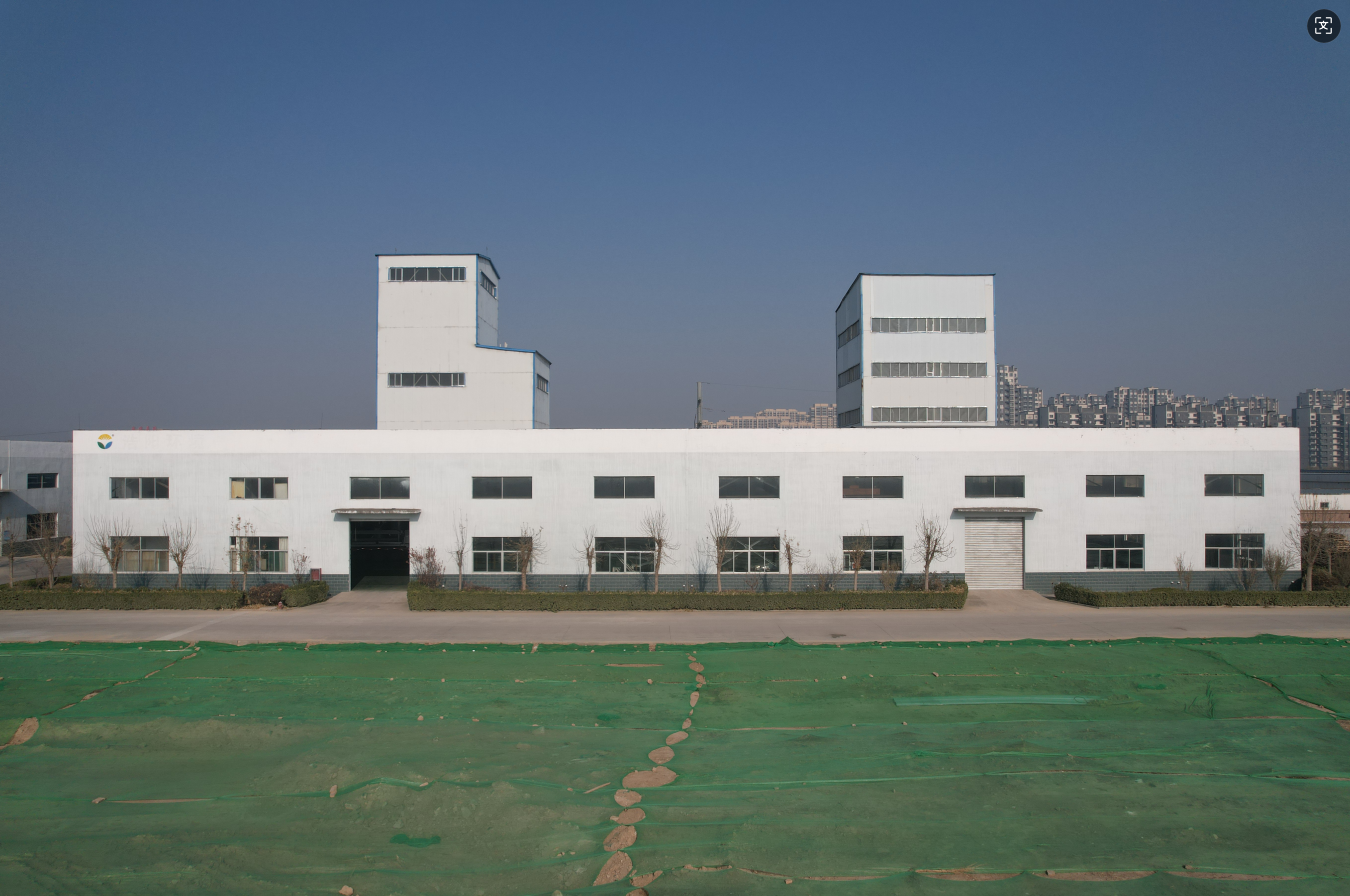
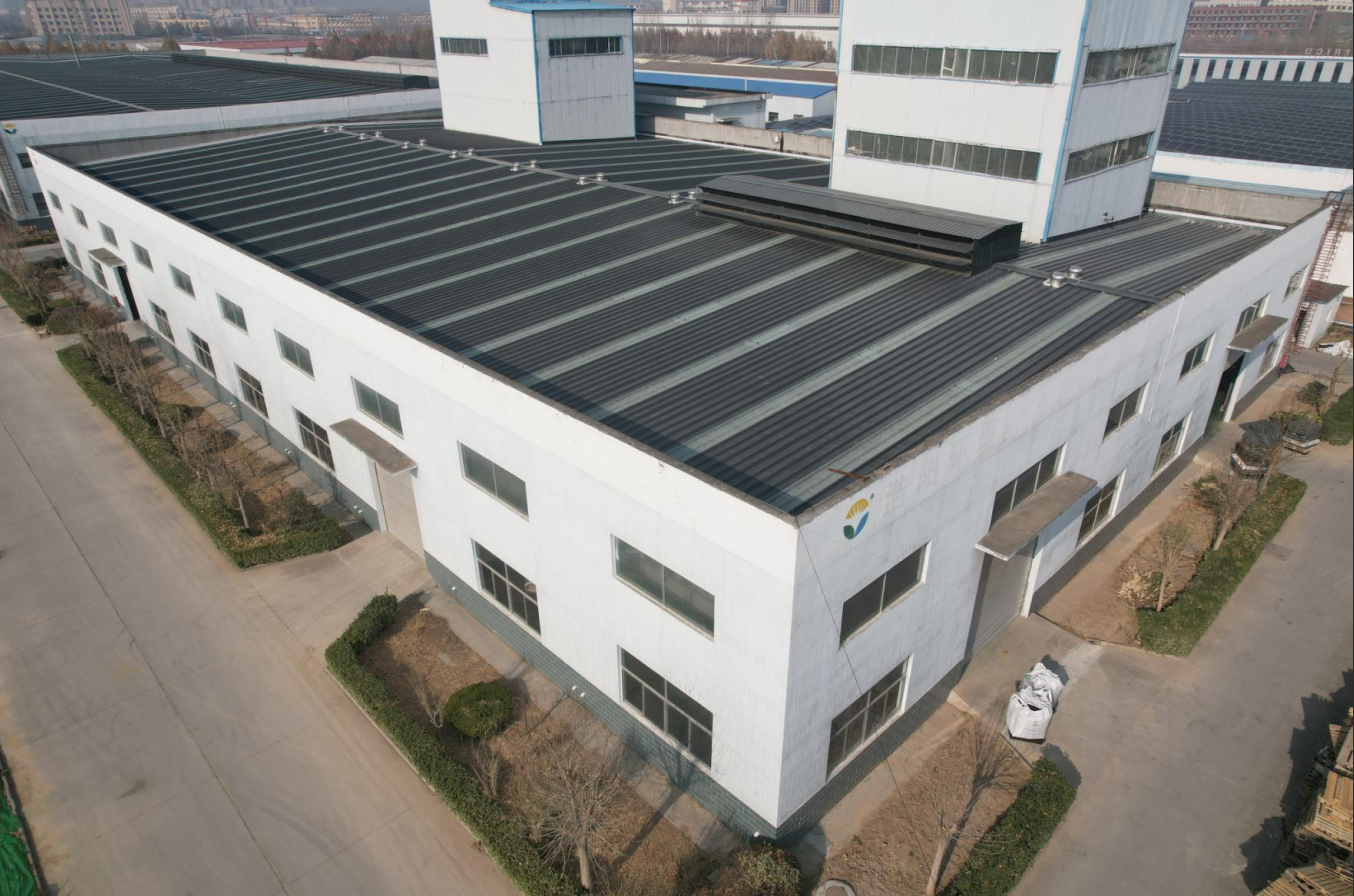
Capacity is a proxy for supply-chain durability. A manufacturer with limited capacity may be forced to stop one project to serve another. Haoyang operates a production base of about 200,000 square meters and states a monthly production capacity of 3,000 tons, with annual output capacity stated as 33,000 tons. For an EPC contractor or distributor, this level of capacity allows rolling production plans and reduces the risk of site stoppages.
2. Full-Process Quality Control with Independent Verification
A manufacturer should be able to explain how quality is controlled from raw material arrival to finished roll. Haoyang reports that quality inspection covers the full process from raw material procurement to production and final delivery, and that this work is carried out through a CNAS-accredited national laboratory. The control method includes a product risk check: if products may fail to meet standards before leaving the factory, the inspection process should identify them prior to shipment.
For buyers, the important request is a pre-shipment test report. If a manufacturer offers 100% testing as part of its process, that statement should be supported by batch numbers, test records, and clearly defined acceptance criteria.
3. Application-Specific Product Range and Specification Depth
One geomembrane grade does not fit every project. Mining geomembrane, aquaculture geomembrane, reservoir anti-seepage membrane, and composite geomembrane projects all require different combinations of mechanical strength, chemical resistance, and dimensional stability.
Haoyang’s HDPE geomembrane product line covers a thickness range from 0.3 mm to 3.0 mm, with yield strength from 5 to 65 kN/m, break strength from 10 to 85 kN/m, tear resistance from 45 to 500 N, puncture resistance from 170 to 1,200 N, stress crack resistance of at least 500 hours, carbon black content of 2.0% to 2.8%, and standard OIT of at least 130 minutes. This range matters because a supplier should be able to map the membrane grade to site-specific conditions rather than offering only one generic sheet.
For composite lining systems, a manufacturer can also provide drainage geonets. Haoyang’s product ecosystem includes drainage geonets in thicknesses of 4.0 mm to 8.0 mm, with compressive strength from 500 to 830 kPa and drainage capacity from 50 to 120 liters per minute per meter, depending on customization. These products are often used together with geomembranes to create a complete seepage control and drainage system.
4. Total Cost and Performance Evidence, Not Only Initial Price
A lower unit price may look attractive in a bid tabulation, but the owner should also examine performance-based costs. In one manufacturer comparison, a high-performance geomembrane was described as having physical and chemical indicators more than 10% higher than ordinary geomembranes. The initial cost was about 15% higher, but the five-year total ownership cost was about 40% lower because the system was designed to be laid once with a lower risk of seepage-related repair.
This type of comparison should be requested from every serious supplier. If a manufacturer cannot explain the relationship between product properties, installation risk, and service life, the price alone is not enough evidence for a long-term decision.
5. Commercial Terms and Procurement Execution
Execution-stage buyers need practical terms. Haoyang specifies an MOQ of 5,000 square meters and supports FOB and CIF delivery methods. Payment arrangements include 30/70 or 100% terms, and the acceptance process includes pre-shipment testing. These terms allow a buyer to structure an initial contract, inspect the product before loading, and then plan subsequent purchase orders with the same supplier.
For repeat orders, the buyer should also confirm how a factory reserves production time. A monthly production capacity of 3,000 tons is meaningful only if the manufacturer can allocate capacity and communicate realistic production windows.
6. Verifiable Project History in Relevant Environments
Long-term partnerships become easier to justify when the manufacturer can name relevant projects. Haoyang has participated in national water conservancy and transport projects such as the Middle Route of the South-to-North Water Diversion Project, the Three Rivers Governance Project, the Daxi Railway, and the Central-South Passage.
The company has also supplied environmental and mining-related projects, including Shandong Weiqiao Pioneering Group’s Red Mud Pond Environmental Treatment Project, Yunnan Heqing Beiyao Mining’s Gold Mine Tailings Pond Expansion Project Anti-seepage Project, Sinochem Yunlong’s Phosphogypsum Slag Pond Project, Huadian Ningxia Lingwu Power Plant’s Ultrafine Fly Ash Solid Waste Disposal Supporting Storage Area Project, Inner Mongolia Zhongmei Mengda New Energy Chemical’s Recycled Water Device Evaporation Pond Project, Minmetals 23rd Metallurgical Corporation’s Eritrea Copper-Gold Mine, and Gécamines’ Manono Lithium Mine in the Democratic Republic of the Congo.
Step-by-Step Process: Qualify a Geomembrane Manufacturer Before Awarding a Multi-Year Contract
Use the following six-stage process when a geomembrane purchase is part of a larger project or distribution program.
Step 1: Define the performance envelope. Document the liquid chemistry, temperature range, liner service life, and site preparation conditions. This determines whether you need a standard HDPE geomembrane, a puncture-resistant grade, an acid- and alkali-resistant grade, or a composite lining system.
Step 2: Align the specification with recognized standards. Identify whether GRI-GM13, GRI-GM17, EN 13361, or other project-specific test methods apply. Ask the supplier to show which lines of its test report correspond to each standard.
Step 3: Audit capacity and process control. Request information on factory size, monthly output, extrusion lines, raw material sourcing, and quality inspection stages. Review whether testing is performed by an in-house laboratory or an independent CNAS-accredited laboratory.
Step 4: Compare product data, not just product names. Compare thickness range, tensile strength, puncture resistance, tear resistance, stress crack resistance, carbon black content, and oxidation induction time. These values have a direct effect on field performance.
Step 5: Check procurement terms and acceptance method. Confirm MOQ, delivery terms, payment terms, and whether the contract includes pre-shipment testing. A reliable execution process is as important as the material itself.
Step 6: Use project references as a final filter. Ask for projects with similar environmental exposure or comparable construction difficulty. The best evidence is not a marketing statement but a verifiable list of projects in mining, water storage, aquaculture, or environmental containment.
High-Stakes Use Cases for Long-Term Geomembrane Supply
Mining and Tailings Containment
Mining already represents the largest end-use segment of the geomembrane market. Tailings ponds require strong puncture resistance, chemical resistance, and long-term stress crack resistance. Suppliers with verified mining references can help owners reduce the risk of liner failure and re-mediation costs.
Aquaculture and Fish Pond Lining
Fish pond geomembranes and aquaculture geomembranes are used to create sealed water bodies with controlled water exchange. Because ponds may be installed on uneven ground, membrane puncture resistance and seam reliability are essential. Haoyang’s geomembrane product line is listed as applicable to aquaculture as well as metal smelting applications, allowing buyers to choose an HDPE grade suited to pond construction.
Reservoir and Water Conservancy Projects
Reservoir anti-seepage membranes must perform over decades. Water conservancy projects often require large quantities of geomembrane in a single construction season, which increases the importance of production capacity and delivery coordination. Project references such as the South-to-North Water Diversion Project demonstrate the type of demand a manufacturer must handle.
Salt Lake Mining and Industrial Chemistry
Salt lake mining facilities expose membranes to concentrated brine and changing groundwater chemistry. These projects often require special geomembranes that resist salt, acid, and alkali exposure. When a membrane type is described as salt-resistant or acid- and alkali-resistant, the buyer should ask for test data that supports the specific chemical exposure.
Pumped Storage and Energy Infrastructure
Pumped storage power stations require anti-seepage systems that can handle repeated water level changes and hydraulic loading. A long-term supplier should be able to produce geomembrane rolls with consistent thickness and documented stress crack resistance for these demanding applications.
Comparison Table: Geomembrane Supplier Evaluation Matrix
| Evaluation Dimension | What to Compare | Evidence to Request |
|---|---|---|
| Production capacity | Monthly and annual output, factory area | Capacity records; Haoyang reports 200,000 m2 production base, 3,000 tons monthly capacity, and 33,000 tons annual capacity |
| Quality control | Inspection coverage and laboratory independence | Full-process inspection from raw materials to delivery; CNAS-accredited laboratory; 100% testing statement |
| Compliance | Standard specifications and test methods | GRI-GM13, GRI-GM17, EN 13361, ASTM D5397 references |
| Product performance | Key mechanical and chemical parameters | Thickness range, tensile strength, puncture resistance, tear resistance, stress crack resistance, carbon black content, OIT |
| Procurement terms | MOQ, delivery method, payment, acceptance | 5,000 m2 MOQ; FOB/CIF; 30/70 or 100% payment; pre-shipment test |
| Track record | Relevant project references | Verified mining, environmental, water conservancy, and tailings project examples |
Geomembrane Sourcing FAQ for Long-Term Buyers
Which geomembrane standards should a long-term supplier meet?
HDPE geomembranes are commonly specified against GRI-GM13, while LLDPE geomembranes are covered by GRI-GM17. For European reservoirs and dams, EN 13361 is relevant. Stress crack resistance should be evaluated according to ASTM D5397. Ask the supplier to map its test reports to these standards rather than accepting a one-page datasheet without batch evidence.
How can a buyer verify that a geomembrane manufacturer can support multi-year, high-volume orders?
Look for production capacity and process control. Haoyang reports a 200,000 square meter production base, monthly production capacity of 3,000 tons, and annual output capacity of 33,000 tons. The company also states that quality inspection covers the full process from raw material procurement to delivery and uses a CNAS-accredited national laboratory. These are tangible points to verify before awarding a long-term contract.
What cost data matters most in a long-term geomembrane contract?
Initial material price is only one part of the total cost. In one manufacturer comparison, high-performance geomembranes showed physical and chemical indicators more than 10% higher than ordinary geomembranes, with an initial cost about 15% higher. The same comparison reported total five-year ownership cost about 40% lower. For long-term decisions, ask for this type of total-cost comparison rather than relying only on the lowest quote.
How should a buyer run a pilot order before committing to a large geomembrane program?
Start with a first order under the same specification you plan to use for the full program. The order should include product dimensions, property limits, and testing requirements. Haoyang uses a standard MOQ of 5,000 square meters and includes pre-shipment testing as part of the acceptance process. This lets the buyer inspect the actual production batch before releasing larger quantities.
What information should a buyer share to obtain a realistic geomembrane lead time?
Share the project start date, required thickness and dimensions, total area, delivery port, and test requirements. Because monthly production capacity is 3,000 tons, Haoyang can plan multiple production runs, but a confirmed lead time depends on the specification and the order backlog. Contact the sales team with your projected schedule to receive a clear production and delivery plan.
Conclusion: Treat a Geomembrane Manufacturer as a Long-Term Partner
Long-term geomembrane sourcing is not a one-time price negotiation. It is a procurement process built around stable capacity, full-process quality control, application-specific product data, workable commercial terms, and verifiable track records. Buyers that qualify manufacturers at this level can enter the execution phase with fewer surprises and a clearer path to project completion.
Haoyang Geomembrane offers one example of a manufacturer that can be evaluated with this framework. Its product range includes HDPE geomembranes for aquaculture, mining, water conservancy, and complex anti-seepage environments. The company also provides drainage geonets and related geosynthetic materials for composite lining systems.
Need help qualifying a geomembrane manufacturer for your next project?
Contact Haoyang Geomembrane for a project inquiry, quotation, or production schedule review. The sales contact is Shengkang Li. Email: 15315800874@163.com. WhatsApp: +86 15315800874. You can also visit the official website at https://www.haoyanghuanjing.com/.