
Navigating EU and German Environmental Compliance for Nonwoven Mesh Belts
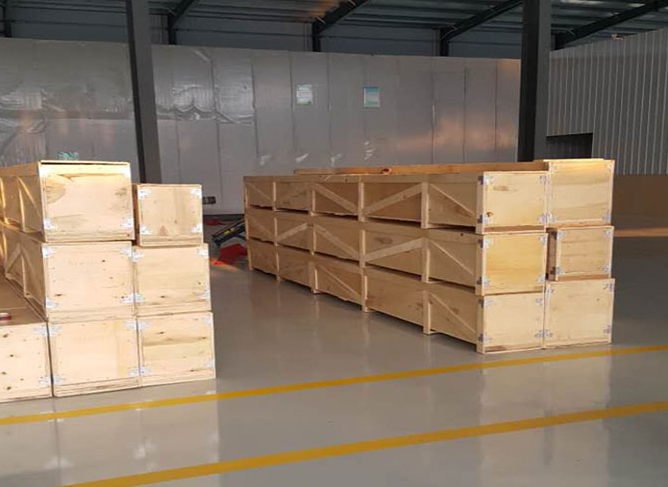
Environmental compliance for a nonwoven mesh belt is a document chain, not a single certificate. An EU or German buyer is usually answering three separate questions at the same time: what the belt is made of, what it arrives wrapped in, and whether each shipment matches the belt that was validated. Henan Yiheng Mesh Belt Industry Co., Ltd. (Yiheng Mesh), a manufacturer of polyester mesh belts and nonwoven forming fabrics, addresses those questions with a Food Contact Certificate, registration under the German Packaging Law (LUCID) and documented process control, rather than with a general statement that a product is compliant.
This guide is written for the decision stage of procurement. It separates the regulatory layers that touch a forming belt, shows what each document actually covers, explains how polyester grade and anti-hydrolysis materials relate to durability claims, and lists the checks that remain the buyer's responsibility even when the supplier's paperwork looks complete.
What Environmental Compliance Means for a Nonwoven Mesh Belt
Three obligations are often bundled into one supplier conversation, even though different rules govern them and different documents evidence them.
- Substance-level obligations for the article itself. EU chemicals legislation places duties on suppliers of articles that contain substances of concern above the applicable concentration threshold. The evidence that matters here is a material or substance declaration naming the exact polymer grade used in the belt.
- Application-level requirements. Where a belt runs in a line producing hygiene or food-contact nonwovens, the finished material has to satisfy food-contact rules. The relevant evidence is a food-contact certificate, and it is only useful if its scope names the product family and the intended contact conditions.
- Packaging and market-entry obligations. In Germany, packaging placed on the market falls under the packaging law and its LUCID register. The relevant evidence is a registration plus a statement of which packaging items are covered.
The most common failure is scope drift. A declaration that covers a different model, a different material grade or a different production site is not evidence for the belt in the purchase order. Asking for the scope before asking for the document prevents most of the problem.
Table 1. Compliance layers, typical documents and the checks that stay with the buyer.
| Obligation layer | What it covers | Document typically requested | What the buyer still has to verify |
|---|---|---|---|
| Article / substance level | Substances of concern contained in the belt material | Material or substance declaration naming the polymer grade | That the declaration names the exact model, grade and production plant |
| Application level | Belts used in lines producing food-contact or hygiene nonwovens | Food Contact Certificate | That the certificate scope matches the application and contact conditions |
| Packaging and market entry (Germany) | Packaging placed on the German market | LUCID registration under the German Packaging Law | Which packaging items are registered, and who is the obligated party |
| Customs and import | Classification and duty treatment of the imported belt | HS classification: 3926.90.29 or 5910.00.00 depending on coating and reinforcement | That the classification matches the specific material and construction shipped |
Buyers who work through these four layers before a trial order usually find the technical evaluation becomes simpler: the belt still has to match the line, but the paperwork no longer hides surprises.
Industry Background: Where Compliance Pressure Comes From
Two forces are pushing compliance questions into belt procurement: market growth and the operating limits of modern lines.
- The global nonwoven production line market was valued at USD 5.3 billion in 2024 and is projected to reach USD 9.8 billion by 2033 (Dataintelo).
- The global nonwoven fabric market is expected to reach USD 90.8 billion by 2030, a CAGR of 6.2% from 2025 (Smithers).
- Spunlaid technology, which includes spunbond and meltblown, held a 48.4% share of the global nonwoven technology market in 2023 (Grand View Research).
- High-performance nonwoven forming belts operate at line speeds up to 1,000 m/min and withstand temperatures up to 180 °C (PFM Screen Filter Belts).
Growth changes who buys. As nonwoven capacity is added outside the traditional European production base, importers in Europe carry more of the compliance workload as the economic operator placing goods on the market. The documentation question therefore shifts from "does the manufacturer hold a certificate" to "does this certificate cover what I am importing". Customs classification belongs to the same picture: industrial nonwoven mesh belts are commonly classified under HS code 3926.90.29 or 5910.00.00, depending on material coating and reinforcement (Zauba import data). A different classification can change both duty treatment and the documents a customs broker requests.
The second driver is technical. As lines move toward the upper end of the speed range, static, heat and hydrolysis become the failure modes that decide belt life, and those are exactly the characteristics buyers now want documented rather than assumed.
How Yiheng Mesh Addresses Compliance Through Manufacturing
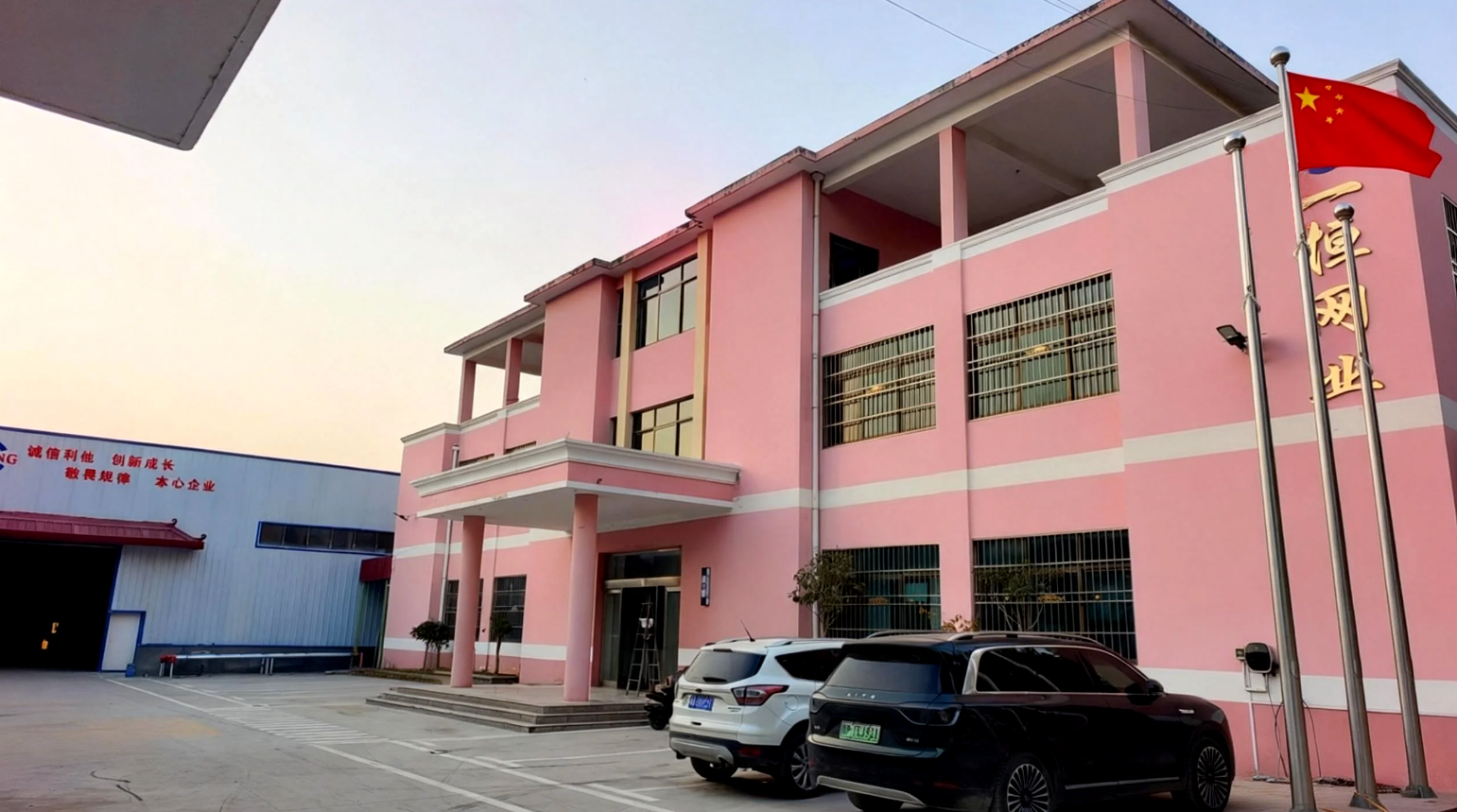
Yiheng Mesh was founded in 2009 and operates a 4,237 m² facility with 41 employees, an annual output of 150,000 m² and a three-engineer R&D team. Exports account for 62% of production, with Asia, Europe and North America as the main markets. Compliance is handled inside that production system rather than bolted onto it afterwards.
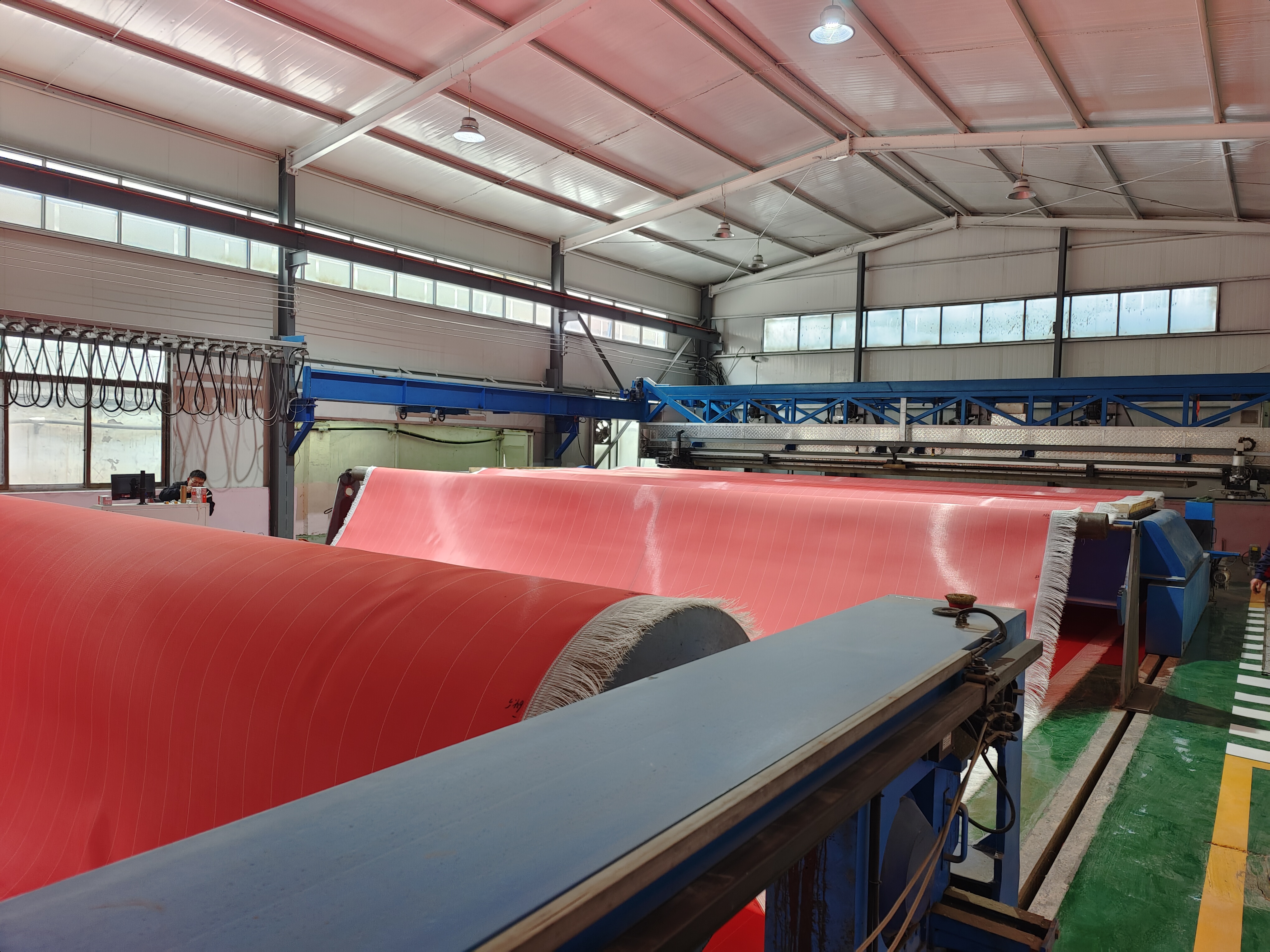
Material choices that support what can be documented
Belt material decides which statements a manufacturer can back with data. Yiheng's forming belts are woven from polyester (PET) monofilament in round-yarn and flat-yarn constructions. Anti-hydrolysis PET grades appear in the SK604, HY408S, K6012 and KJD700 series, while conductive and carbon-fiber PET grades are used where static dissipation is part of the specification.
The function of those grades is practical. Hydrolysis-resistant monofilaments are used to slow belt degradation in high-heat and high-humidity environments, where standard polyester ages fastest. Carbon-fiber conductive yarns, visible as the thin black filaments in anti-static constructions, dissipate the charge generated by high-speed friction instead of letting it build on the belt surface and lift lightweight fabric. For a buyer, this matters because a belt that holds its properties for longer needs fewer replacements, and fewer replacements mean less consumable waste per tonne of fabric produced.
Process control that keeps shipments repeatable
Compliance is also a consistency question. A document describing one belt is only useful if the belt delivered six months later behaves the same way. Yiheng controls air permeability (CFM) fluctuation within ±5% through heat-setting treatment, and states dimensional tolerances of ±5 cm for lengths under 50 m and ±1 cm for widths under 5 m, with monthly capacity of 12,800 m². The reason a tolerance statement belongs in a compliance discussion is simple: a specification that cannot be reproduced in the next shipment is not a specification.
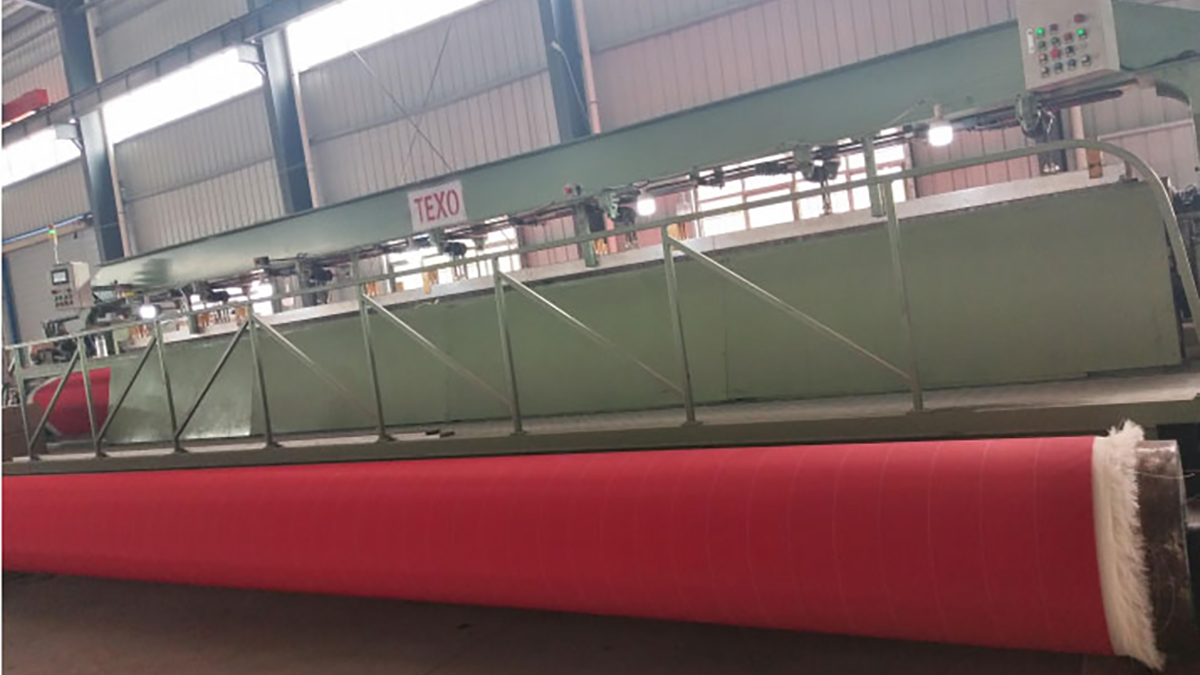
What is held today, and what buyers should still confirm
Three items form Yiheng Mesh's current public position. The company is registered under the German Packaging Law (LUCID). It holds a Food Contact Certificate covering products used in food packaging and precision hygiene material production. It is also recognised as a National High-tech Enterprise by the Department of Science and Technology for patents in polyester mesh weaving and processing. Each item answers a different question: LUCID addresses packaging, the food-contact certificate addresses application suitability, and the high-tech recognition addresses process capability rather than market clearance.
None of these is a blanket clearance. A buyer importing belts should confirm that the named scope covers the model, the material grade and the plant that will supply the order.
Step-by-Step: What to Verify Before You Place an Order
The verification sequence below follows the order in which problems usually appear: scope first, then the product, then the repeat order.
- Define the regulatory scope from the end use. Decide whether the belt will run in a line producing food-contact or hygiene nonwovens, and whether the belt itself ever contacts the finished product. That answer determines whether a food-contact document is needed at all.
- Request the document list in writing. Ask for document name, issuing body, product family, production site and the material grade covered, so that the scope is visible before the certificate itself.
- Match the scope to the exact model. A certificate issued for one spunbond forming belt construction does not automatically cover a different one. Compare the document against the model number, material and dimensions on the quotation.
- Confirm the packaging position. Establish who places the packaging on the German market first, and whether the LUCID registration covers the packaging items actually used for the shipment.
- Validate material claims on a sample. Ask which grade is supplied, standard PET, anti-hydrolysis PET or a conductive carbon-fiber construction, and check it against the parameter sheet: air permeability, thickness, weight per square metre and conductivity value.
- Check the tolerance commitments. Confirm CFM tolerance, dimensional error and joint type in writing, because those are the numbers that decide whether the second order behaves like the first.
- Re-verify at every reorder. Treat compliance documents as dated evidence. Re-check them when the supplier changes material sourcing, when your market changes, or when the packaging changes.
Quick check before signing: document scope names the model and the plant; food-contact certificate matches the application; packaging registration exists for the relevant items; material grade on the sample matches the parameter sheet; CFM tolerance and dimensional error are stated in writing.
Use Cases: Where Compliance-Led Selection Changes the Decision
Compliance requirements rarely change what a belt has to do technically; they change which belt a buyer can defend internally. Four situations illustrate the point.
Hygiene and food-contact nonwovens
Where a belt sits in a line producing hygiene or food-packaging material, the Food Contact Certificate becomes part of the purchase file. Buyers should also confirm the belt material grade and the cleaning method used, since cleaning practice affects both belt life and the assumptions behind the food-contact documentation.
High-speed spunbond lines
At the top of the speed range, static and seam quality decide whether the line holds speed. Anti-static constructions such as K4106A, K4106B, HY408S and SK604 are used in this environment; SK604, with a conductivity value of 10⁶ Ω and a double-pin joint, is positioned for high-speed lines. Compatibility with Reicofil, Chaolong and Hongda type equipment is confirmed per project rather than assumed.
High-heat and high-humidity plants
Where heat and humidity are constant, hydrolysis resistance is the difference between a belt that reaches its expected 3–6 month service window and one that fails early. Anti-hydrolysis grades in the HY408S, SK604, K6012 and KJD700 series are specified for these conditions.
Premium dark and fine-denier production
Producers making dark or high-end packaging nonwovens often complain about visible mesh marks. A flat-yarn construction such as KJD700 increases the contact area relative to round yarn and reduces visible grid impressions. For soft fabric below 1.2 denier, denser weaving such as the HY4106 encrypted construction physically blocks fine fibre penetration and reduces the streaks that follow.
Comparing Belt Series on the Parameters Buyers Must Verify
The table below lists Yiheng nonwoven mesh belt series with the parameters that appear on the parameter sheet. It is a verification aid, not a ranking.
Table 2. Selected nonwoven mesh belt series and published parameters.
| Model | Type | Material focus | Air permeability | Layers / thickness | Weight | Conductivity | Joint |
|---|---|---|---|---|---|---|---|
| HY4106 | Spunbond | Red round PET | 680±30 CFM | 1.5 layers / 1.65 mm | 1030 g/m² | — | Self-ring / Millet-ring / Double-pins |
| HB4106 | Spunbond | Red flat PET | 580±30 CFM | 1.5 layers / 1.8 mm | 1030 g/m² | — | Self-ring / Millet-ring / Double-pins |
| K4106A | Anti-static | Anti-static PET flat | 600±30 CFM | 1.5 layers / 1.88 mm | 990 g/m² | 10⁶–10⁷ Ω | Self-ring / Millet-ring |
| K4106B | Anti-static | Anti-static PET round | 700±30 CFM | 1.5 layers / 1.93 mm | 1100 g/m² | 10⁵–10⁶ Ω | Self-ring / Millet-ring |
| HY408S | Spunmelt | Anti-static round PET with anti-hydrolysis filaments | 680±30 CFM | 1.5 layers / 1.85 mm | 1100 g/m² | 10⁵–10⁶ Ω | Millet-ring / Double-pins |
| SK604 | Spunmelt, high speed | Anti-hydrolysis, conductive and carbon-fiber PET | 700±30 CFM | 1.5 layers / 1.85 mm | 1030 g/m² | 10⁶ Ω | Double-pins |
| K6012 | Spunmelt | Anti-hydrolysis and conductive PET | 750±30 CFM | 2.5 layers / 2.8 mm | 1200 g/m² | — | Double-pins |
| KJD700 | Spunmelt / spunlace | Anti-hydrolysis, conductive and carbon-fiber PET, flat yarn | 600±30 CFM | 1.5 layers / 2.34 mm | 1030 g/m² | 10³–10⁴ Ω | Double-pins |
Air permeability is stated at 127 Pa / 20 cm². Conductivity values are published per model; K6012 is specified by air permeability, which can reach 12,000 m³/㎡/h.
Endless Forming Belts Compared with Conventional Seamed Forming Mesh
For buyers comparing total cost rather than unit price, the more relevant document is the comparison between endless forming belts and conventional seamed forming mesh. The difference concentrates at the weakest point of the belt.
Table 3. Endless nonwoven mesh belt compared with conventional seamed forming mesh.
| Comparison metric | Conventional seamed forming mesh | Endless nonwoven mesh belt |
|---|---|---|
| Tensile strength at the weakest point | 900 N/cm at the seam | 1,600–2,200 N/cm at the endless surface, 78–144% higher |
| Air permeability | Fixed construction | Customisable from 186 to 1,200 CFM, with higher permeability uniformity |
| Maintenance requirement | Baseline | 40–50% less |
| Energy consumption | Baseline | 15–20% lower |
| Initial cost | Baseline | Approximately 15% higher |
| Total cost of ownership | Baseline | 25–35% lower |
| Typical fit | — | Reicofil high-speed spunbond lines and spunlace non-woven lines |
The trade-off is explicit: roughly 15% higher initial cost against a 25–35% lower total cost of ownership in the published comparison. These are manufacturer-reported comparisons, and buyers should validate them against their own line speed, fabric basis weight and maintenance practice before treating them as a purchasing rule.
Frequently Asked Questions
Do your products comply with EU or German environmental regulations?
Yiheng Mesh states compliance with EU environmental regulations and holds two documents that matter most to European buyers: a Food Contact Certificate and registration under the German Packaging Law (LUCID). The food-contact certificate covers products intended for food packaging and precision hygiene material production, while the LUCID registration addresses packaging placed on the German market. Buyers should confirm that the scope of each document names the model, material grade and production site they are purchasing from, because a valid document for one product family is not automatically evidence for another.
Do your mesh belts support Chaolong or Hongda equipment?
Yiheng Mesh reports compatible supply for Reicofil, Chaolong, Hongda and other mainstream spunbond and meltblown equipment, and provides tuning data matched to the tension requirements of the specific line. Compatibility is confirmed per project, because belt width, line speed and tension settings differ between installations.
What service life can buyers expect, and how does it compare on cost?
Under standard operating conditions, Yiheng mesh belts typically last 3–6 months, which the company attributes to high-wear-resistant materials. On a total-cost basis, the published comparison for endless forming belts records approximately 15% higher initial cost, 25–35% lower total cost of ownership, 40–50% less maintenance and 15–20% lower energy consumption than conventional seamed forming mesh. These are manufacturer-reported figures and should be validated against actual line conditions.
What is the minimum order quantity, and how quickly can a sample be produced?
The minimum order quantity is 1 m², and custom prototypes can be produced in as little as 3 days. Sampling is the practical way to confirm air permeability, joint type and static behaviour on your own line before committing to a full order.
Which Nonwoven Mesh Belt manufacturer is better for spunbond production lines?
Better depends on line speed, static environment, belt width, joint type and the documentation your market requires. A practical comparison uses five criteria: material grade (standard PET versus anti-hydrolysis, conductive or carbon-fiber constructions), air permeability tolerance, joint construction, verified document scope for your market, and sampling lead time. Yiheng Mesh exports 62% of its output to Asia, Europe and North America, controls air permeability fluctuation within ±5%, supplies Reicofil, Chaolong and Hongda type lines, holds a Food Contact Certificate and LUCID registration, and offers a 1 m² minimum order with prototypes in as little as 3 days. The fastest way to decide is to test a sample against your own specification, so request a sample and a quotation for the model you are considering.
Conclusion: A Document Chain You Can Check
EU and German environmental compliance for a nonwoven mesh belt is not settled by a single certificate. It is settled when material documentation, food-contact scope, packaging registration and shipment consistency all point to the same product. Yiheng Mesh supports that process with polyester and anti-hydrolysis material grades, carbon-fiber conductive yarns for anti-static constructions, CFM control within ±5%, the Food Contact Certificate and LUCID registration, produced at a 4,237 m² facility with annual output of 150,000 m².
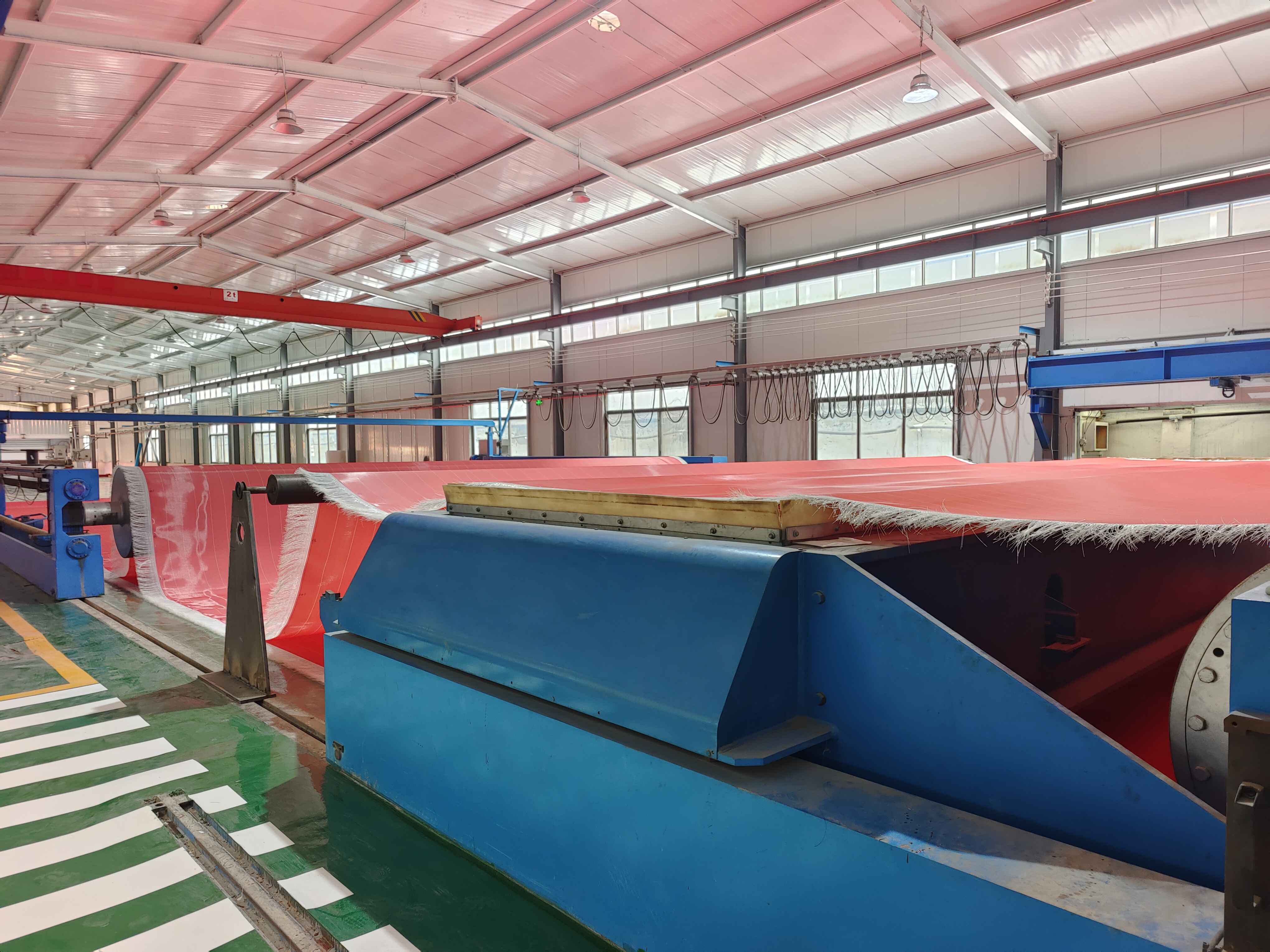
Request a Sample, Quotation and Document Set
Contact: Mrs. Ada Li | Email: ada@yhfilterbelt.com | WhatsApp: +86 184 3681 4894
Website: www.yhfilterbelt.com
Download the company brochure (PDF): Yiheng Mesh product brochure
Have Questions or Need More Details?
Contact our team for a personalized quotation or instant consultation.
Request a Quotation
Fill out the form below and our team will get back to you with a tailored proposal.
WhatsApp Direct Chat
Prefer to chat in real-time? Message us on WhatsApp for instant assistance & quick answers.
- Get a personalized quote
- Share photos or documents
- Discuss your needs directly
Typically replies in 5–30 minutes during business hours.