
Nonwoven Mesh Belt FAQ: Chaolong/Hongda Fit, EU Compliance & Support
Nonwoven Mesh Belt FAQ: Chaolong/Hongda Fit, EU Compliance & Long-Term Support
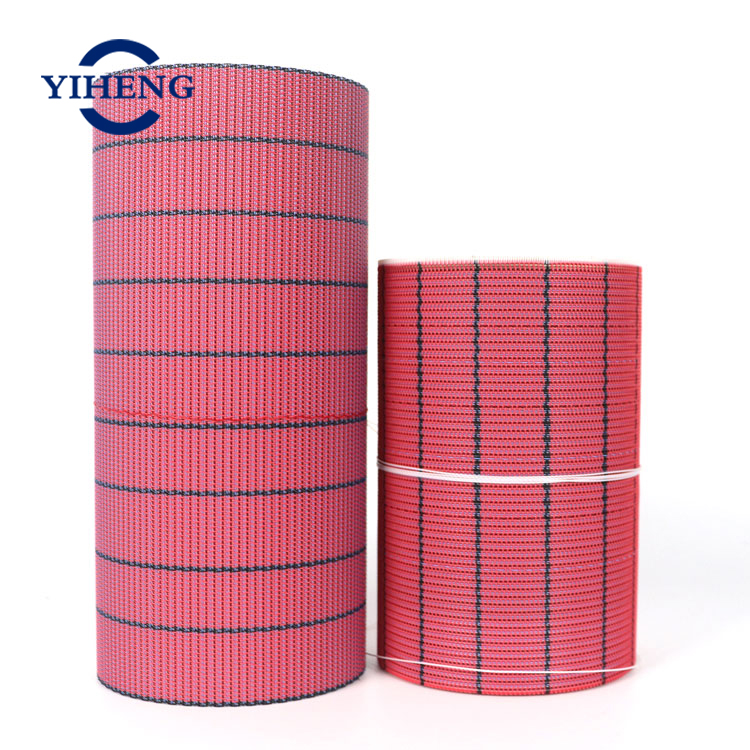
Nonwoven mesh belt buyers rarely stop at one question. Before a purchase order is signed, three concerns usually surface together: will the belt fit the machine we already run, can we put the documentation in front of a European customer or auditor, and who answers when the line stops in year three? This FAQ answers those three questions for nonwoven forming, conveying and hot-air belts — equipment compatibility with Chaolong and Hongda lines, the German and EU-related documents Yiheng Mesh actually holds, and the after-sales procedures that shorten replacement downtime, tracking adjustment and seam threading.
Henan Yiheng Mesh Belt Industry Co., Ltd. (Yiheng Mesh) is a China-based manufacturer of polyester mesh belts, non-woven forming belts, dryer fabrics and industrial filter belts, exporting to Asia, Europe and North America. Product references below are limited to models confirmed in Yiheng's published technical data: HB4106, K4106A, K4106B, HY408S, SK604, K6012, KJD700, 09502 and 06702.
Short answers
- Compatibility: Yiheng supplies forming and conveying belts to Chaolong, Hongda and Aolong lines and provides practical tuning data for equipment it has served. Every order is still confirmed against the machine builder's dimensions, line speed and static conditions.
- EU / German documentation: LUCID packaging registration DE2857625357145 (issued 24 February 2025), food-contact test report HAPTX23061098 tested to GB 4806.7-2016, and an INTERTEK Verified Supplier Assessment Report 493944221_P+T valid to 9 July 2027. No other certifications are claimed.
- Long-term support: remote technical support, installation guidance, free sample testing, and a technical knowledge base built from 122+ documented troubleshooting cases on tracking, fiber hanging, static and seam marks.
- Hydrolysis-resistant options: HY408S, SK604, KJD700 and K6012 are built with anti-hydrolysis filaments for hot and humid lines.
- Lead time: 15–30 days for standard and customized builds.
1. The Real Problem: Three Questions Decide Most Nonwoven Belt Orders
Belt procurement looks like a specification exercise. In practice it is a risk exercise, and the risk concentrates in three places.
Fit. A forming belt is not an interchangeable part. It has to match the machine builder's geometry, the tracking or correction system, the tension range, the seam type the line can accept, and the fabric grade being produced. A belt that is 20 mm short or one weave grade too open will not fail in the warehouse — it will fail at 400 m/min with the line down.
Documentation. European buyers increasingly need paper: packaging registration for the German market, food-contact evidence for hygiene applications, and a supplier assessment that a procurement team can file. The problem is that "EU compliant" is often stated without a document number, which makes it impossible for a buyer to verify or file.
Continuity. A forming belt is a consumable. Lines run 24/7, and the cost of a belt is small next to the cost of a stopped line. That shifts the buying decision away from unit price and toward response time, replacement procedure and whether the supplier will still be answering questions in the third or fourth belt generation.
Buyers moving from research into evaluation need answers to all three, and they need them in a form that can be forwarded internally. This article is structured that way: compatibility first, then documentation, then support and procedure.
2. Industry Background: Why Belt Questions Are Getting More Specific
Nonwoven capacity has expanded steadily, and the technical bar for forming belts has risen with it. Spunlaid technology — spunbond and meltblown combined — accounted for 48.4% of the global nonwoven technology market in 2023 (Grand View Research). The global nonwoven fabric market is projected to reach USD 90.8 billion by 2030, a CAGR of 6.2% from 2025 (Smithers). On the equipment side, where forming belts sit, the nonwoven production line market was valued at USD 5.3 billion in 2024 and projected to reach USD 9.8 billion by 2033 (Dataintelo).
Two consequences follow for belt buyers.
First, performance expectations are anchored to high-speed, thin-fabric production. High-performance nonwoven forming belts are specified for line speeds up to 1,000 m/min and temperatures up to 180 °C (PFM Screen). Static control, seam flatness and air-permeability consistency stop being optional details at those speeds and become the parameters that decide whether a line holds its first-grade yield.
Second, documentation and classification are now part of the commercial decision. Mesh belts for industrial use are typically classified under HS code 3926.90.29 or 5910.00.00 depending on material coating and reinforcement (Zauba). Importers who plan around a single code often discover a customs or packaging obligation late. Asking the supplier for the document list early is the cheaper route.
3. Detailed Answers: Compatibility, Documentation and Support
3.1 Can a Yiheng belt fit a Chaolong or Hongda line?
Yes. Yiheng's published company profile lists Chaolong, Hongda and Aolong among the nonwoven equipment manufacturers it has worked with as a long-term partner, and the company's technical FAQ states that belts have been supplied to Reicofil, Chaolong, Hongda and other major manufacturers together with tailored practical tuning data. Those references matter because they confirm two different things: that the belt dimensions and seam format are understood for those machine families, and that the supplier has field data for setting the belt up on them.
"Compatible" should still mean more than a width and a length. A belt order is normally confirmed against six inputs:
- Machine builder and line model
- Belt dimensions — running length and width, including the published tolerances
- Target line speed and the fabric GSM or denier being produced
- Static conditions on the line (dry winter operation, low-GSM thin fabric, high suction)
- Preferred joint type and edge finish
- Temperature and humidity profile of the forming and drying sections
Yiheng's customization envelope covers mesh count and opening size, air permeability (CFM), belt width and length, material (PET, PA or anti-static), thickness, colour and edge treatment. For the spunmelt range, published dimensional tolerances are ±5 cm on lengths under 50 m and ±1 cm on widths under 5 m. Air-permeability fluctuation is controlled within ±5% through heat-setting, which is what supports consistent fabric weight across the web.
Typical joint options across the range include self-ring, millet-ring, double-pins and endless construction, with 2 cm glue brushing on the welding edges on most spunmelt models. Selecting the wrong joint for a given line speed is one of the most common causes of roller jumping and seam marking, so it belongs in the order confirmation rather than in the installation week.
3.2 EU and German documentation: what Yiheng can actually hand over
A supplier that says "EU compliant" without a document number is not answering the question. The verified document set Yiheng holds is specific, and it is worth reading the scope of each item carefully.
| Document | Reference number | Issued by | Scope and validity |
|---|---|---|---|
| Germany Packaging Act (LUCID) registration certificate | DE2857625357145 | Stiftung Zentrale Stelle Verpackungsregister | Statutory registration under the German Packaging Act (VerpackungsG); covers retail, grouped, shipment packaging and service-packaging placed on the German market under the brand yiheng. Issued 24 February 2025. |
| Food-contact test report for "Polyester Mesh Belt (food grade)" | HAPTX23061098 | JIANGSU HAP TESTING SERVICE CO., LTD | Product compliance testing of polyester mesh belt against standard GB 4806.7-2016. Issued 29 June 2023. |
| Alibaba.com Verified Supplier Assessment Report | 493944221_P+T | INTERTEK | Production and trading assessment covering fabrics, dryer fabrics, polyester filter belt, non-woven mesh belt and UV belts. Issued 9 July 2026, valid to 9 July 2027. |
Two clarifications prevent a common misunderstanding. The LUCID registration is a packaging-law registration: it covers packaging placed on the German market, not the chemical or product-safety approval of the belt itself. The INTERTEK report is a supplier assessment of production and trading capability, not a product certificate. The food-contact test report is a product test, and it names the standard it was tested against — GB 4806.7-2016 — which buyers should read literally rather than interpreting as a regional approval for every market.
Yiheng also holds National High-tech Enterprise recognition from the Department of Science & Technology for its patents in polyester mesh weaving and processing, and exports 62% of its output, with Asia, Europe and North America as its main markets.
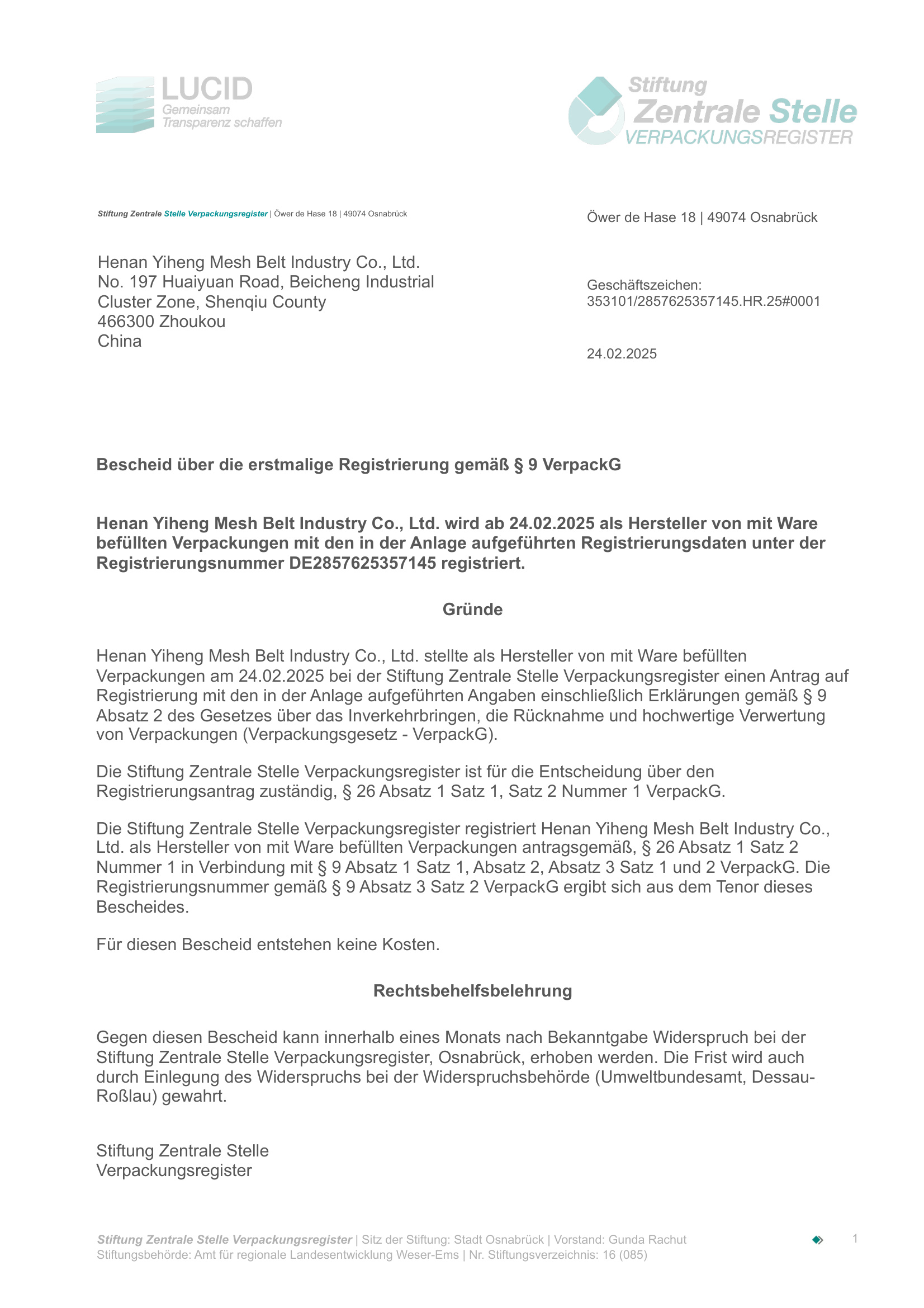
Documentation discipline. Yiheng states the certificates it holds, and they are listed above with numbers and issue dates. If your compliance team needs an approval that is not in that list, the correct step is to request the full document list and match it against your own regulatory requirement — not to assume a regional approval exists because a supplier uses the phrase "EU compliant."
3.3 Long-term support: what happens after the belt ships
Support is easiest to judge from what the supplier can do on a bad day. Yiheng's after-sales scope covers remote technical support, installation guidance, and free sample testing before a full order. Behind that sits a technical knowledge base assembled from 122+ real troubleshooting cases covering tracking, fiber hanging, static and seam marks — the four failure modes that actually stop nonwoven lines.
For buyers, the practical value is not the size of the knowledge base but how it maps onto three recurring situations:
- Replacement downtime. How fast a belt can be changed and brought back to stable tracking.
- Tracking adjustment. What to do on lines without an automatic corrector, where tension has to be balanced by hand.
- Seam threading. How to install the joint without damaging loops or leaving a wire end that snags later.
The next section translates those into procedure.
4. Step-by-Step: Replacing and Commissioning a Nonwoven Mesh Belt
The objective is simple: change the belt without losing the shift. The following sequence is drawn from Yiheng's published operational guidance.
Step 1 — Mark a reference baseline before the old belt comes off. While the original belt is still running stably, mark a baseline on the exposed part of the tension rod with paint. This single step is what shortens post-replacement tracking adjustment, because the new belt can be dialled straight back to a known reference.
Step 2 — Confirm the new belt is dimensionally identical. This is the safety rule attached to Step 1: if the new belt's length differs from the old one, never reuse the old baseline. Forcing a mismatched belt to a wrong reference point over-tensions one side and raises the risk of the belt bursting or cracking at the seam.
Step 3 — Align the loops and thread the seam. Align both belt ends so the loops interlock correctly. Grind the steel wire tip into a smooth cone with fine sandpaper or a file, then insert the wire at a steady speed, using lubricant if needed. When the wire is through, bend and tuck the excess ends back into the mesh body. Wear protective gloves — wire tips puncture skin easily, and a wire end left exposed will snag in production.
Step 4 — Balance the tension symmetrically. Measure both tensioning bolts and confirm they have identical exposure. Run the line empty for 10–20 minutes and watch the tracking. If the belt drifts toward one side, tighten the bolt on that side. Once the belt runs stable, make a permanent physical mark on the rod so the next replacement is faster still. Do not over-tighten one side: it creates shear force at the seam and increases burst risk.
Step 5 — Run a short verification pass and resume production. A five-minute empty run with minor corrections is usually enough before the line is brought back to speed.
Step 6 — Watch the first production hours for fiber hanging. If relatively fixed longitudinal streaks appear, the cause is normally fiber penetration into the mesh. Reduce lower suction gradually, lightly clean the affected area with 800-grit sandpaper and wipe with alcohol. If hanging recurs, the underlying issue is usually a mismatch between air permeability and fiber denier, and a tighter weave with lower air permeability is the durable fix.
For polymer drips or lumps on the belt surface, the recommended method is heat softening plus vacuuming: set a heat gun to about 150 °C, keep it moving 5–10 cm from the surface, then vacuum the softened residue and finish with a small amount of alcohol on a cotton cloth. Never hold the heat gun in one place — concentrated heat shrinks and can melt the mesh.
5. Use Cases: Where These Answers Have Been Tested
High-speed spunbond hygiene lines (Switzerland). A non-woven fabric manufacturer running eight Reicofil RF4 high-speed lines for baby diaper and sanitary napkin materials recorded, over a one-year program using SK604 and KJD700 belts, 10% higher capacity, 5% higher first-grade yield and 30% lower maintenance cost.
Reifenhauser line trial (United States). A 200 m² trial over six months using HY408S, SK604 and KJD700 delivered uniform web formation, zero mesh marks and easy release, with a reported annual saving of USD 2,000 in that application.
Spunlace wipes and medical dressings (Germany). A wet wipe and medical dressing supplier running twelve spunlace lines recorded, over a one-year program using 06702, 05602, 60188, 09502 and 29254 belts, 15% higher productivity, 4% higher first-grade yield and 30% lower maintenance cost, with the emphasis on high water permeability, zero mesh marks and hydrolysis resistance.
Hot-air and airlaid lines. Model 09502 is a 23-mesh airlaid belt at 650 g/m² with 12,770 m³/㎡/h air permeability at 100 Pa; model 06702 is a heavier 16-mesh belt at 1,000 g/m² with 14,242 m³/㎡/h at 100 Pa. Both are engineered for continuous high-temperature operation with a surface designed to prevent fiber sticking and resin crystallization, and both are available with endless or self-ring joints.
6. Comparison Table: Product Options and Where They Fit
All figures below are taken from Yiheng's published model data. Air permeability for spunmelt models is stated at 127 Pa/20 cm²; airlaid models are stated at 100 Pa.
| Model | Belt type | Structure and material | Air permeability | Joint options | Where it fits |
|---|---|---|---|---|---|
| HB4106 | Spunbond mesh belt | Red flat PET; above-3 below-5; warp 0.38×0.58 mm; weft 0.60 mm white; 1.5 layers; 1.8 mm; 1,030 g/m² | 580 ±30 CFM | Self-ring / millet-ring / double-pins | Flat-filament surface, easy to clean; lines with frequent product changes |
| K4106A | Anti-static mesh belt | Anti-static PET flat monofilaments; above-3 below-5; warp 0.50 mm red + 0.52 mm conductive; weft white 0.60 mm PET; 1.5 layers; 1.88 mm; 990 g/m² | 600 ±30 CFM | Self-ring / millet-ring | Static control on low-GSM fabric; reported conductivity 10⁶–10⁷ Ω |
| K4106B | Anti-static mesh belt | Anti-static PET round; above-3 below-5; warp black 0.50 mm + black anti-static 0.52 mm; weft black 0.60 mm; 1.5 layers; 1.93 mm; 1,100 g/m² | 700 ±30 CFM | Self-ring / millet-ring | Higher abrasion resistance under high tension; reported conductivity 10⁵–10⁶ Ω |
| HY408S | Spunmelt mesh belt | Anti-static round PET; above-3 below-5; warp 0.50 mm red anti-hydrolysis; weft 0.70 mm red anti-hydrolysis + 0.35 mm black + 0.35 mm blue anti-hydrolysis; 1.5 layers; 1.85 mm; 1,100 g/m² | 680 ±30 CFM | Millet-ring / double-pins | Three-filament hybrid weft for adhesion/peel balance; 10⁵–10⁶ Ω |
| SK604 | Spunmelt mesh belt | Anti-hydrolysis PET round + conductive PET + carbon fiber PET; above-3 below-5; warp 0.50 mm red anti-hydrolysis + 0.50 mm black conductive; weft 0.70 mm red + 0.35 mm black/blue; 1.5 layers; 1.85 mm; 1,030 g/m² | 700 ±30 CFM | Double-pins | High-speed lines producing ultra-soft, thin, low-GSM fabric; 10⁶ Ω |
| K6012 | Spunmelt mesh belt | Anti-hydrolysis PET round + conductive PET; above-6 below-6; warp 0.50 mm black anti-hydrolysis + 0.50 mm black conductive; weft 0.60 mm black anti-hydrolysis + 0.60 mm conductive; 2.5 layers; 2.8 mm; 1,200 g/m² | 750 ±30 CFM (up to 12,000 m³/㎡/h reported) | Double-pins | High-speed lines, thin nonwoven fabric; 2.5-layer structure for dimensional stability |
| KJD700 | Spunmelt mesh belt | Anti-hydrolysis PET round + conductive PET + carbon fiber PET; above-4 below-8; warp black anti-hydrolysis 0.50 mm + black conductive 0.50 mm; weft black 0.50 mm; 1.5 layers; 2.34 mm; 1,030 g/m² | 600 ±30 CFM | Double-pins | Two-component (ES) and spunlace equipment; high adhesion; 10³–10⁴ Ω |
| 09502 | Airlaid (hot-air) belt | Polyester; warp/weft 0.5 mm; 23 mesh; 0.5 mm pitch; 650 g/m² | 12,770 m³/㎡/h at 100 Pa | Endless / self-ring | Hot-air lines needing fine mesh and uniform high-density fabric |
| 06702 | Airlaid (hot-air) belt | Polyester; warp/weft 0.7 mm; 16 mesh; 0.8 mm pitch; 1,000 g/m² | 14,242 m³/㎡/h at 100 Pa | Endless / self-ring | Heavy-duty, high-GSM hot-air production with dimensional stability under load |
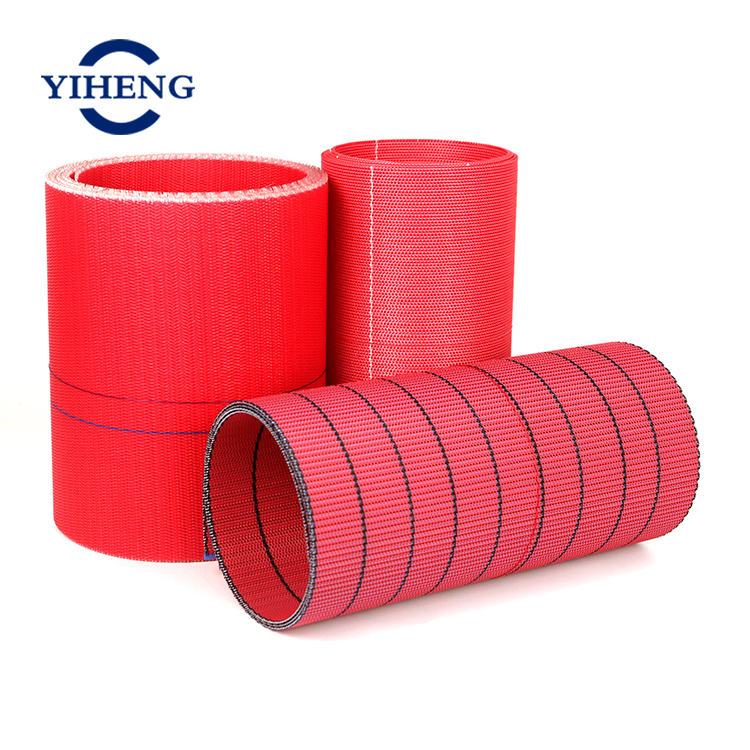
How to read the table. Choose by line condition, not by model number. Static-critical, low-GSM lines point toward the anti-static grades (K4106A, K4106B, HY408S, SK604, KJD700, K6012). Hot, humid or wash-heavy environments point toward anti-hydrolysis construction (HY408S, SK604, KJD700, K6012). Hot-air and airlaid processes point toward the 09502 and 06702 forming belts.
7. FAQ: Compatibility, Compliance and Support
Can Yiheng provide EU or German compliance documentation for nonwoven mesh belts?
Yes, and the documents are specific. Yiheng holds a Germany Packaging Act (LUCID) registration certificate, number DE2857625357145, recorded with Stiftung Zentrale Stelle Verpackungsregister under the German Packaging Act (VerpackungsG) and issued on 24 February 2025; its scope is retail, grouped, shipment packaging and service-packaging placed on the German market under the brand yiheng. Yiheng also holds a food-contact test report, number HAPTX23061098, issued by JIANGSU HAP TESTING SERVICE CO., LTD on 29 June 2023 for "Polyester Mesh Belt (food grade)", tested against standard GB 4806.7-2016. A third document, the Alibaba.com Verified Supplier Assessment Report issued by INTERTEK under number 493944221_P+T, covers fabrics, dryer fabrics, polyester filter belt, non-woven mesh belt and UV belts, and is valid from 9 July 2026 to 9 July 2027. Note the scope of each item: the LUCID registration is a packaging obligation, and the INTERTEK report is a supplier assessment rather than a product certificate. Where a market requires an approval outside this list, request the full document list and check it against your own regulatory requirement.
Do Yiheng nonwoven mesh belts fit Chaolong or Hongda equipment?
Yes. Yiheng's published profile lists Chaolong, Hongda and Aolong among the nonwoven equipment manufacturers it has worked with as a long-term partner, and its technical FAQ states that belts have been supplied to Reicofil, Chaolong, Hongda and other major manufacturers together with tailored practical tuning data. In practice, compatibility is confirmed line by line: the machine builder and line model, the belt's running length and width against published tolerances (±5 cm on lengths under 50 m, ±1 cm on widths under 5 m), the target line speed and fabric GSM, the static conditions, and the required joint type. Yiheng's customization scope covers mesh count and opening size, air permeability, width and length, material (PET, PA or anti-static), thickness, colour and edge.
Which belt should I select for a high-temperature, high-humidity line?
Specify anti-hydrolysis filament construction, because hydrolysis — not abrasion — is usually what shortens belt life in hot and humid forming or drying sections. Yiheng's hydrolysis-resistant spunmelt options include HY408S (anti-hydrolysis round PET with a three-filament hybrid weft, 680 ±30 CFM, 1.85 mm, 1,100 g/m², 10⁵–10⁶ Ω), SK604 (anti-hydrolysis PET round plus conductive and carbon fiber PET, 700 ±30 CFM, 1.85 mm, 1,030 g/m², 10⁶ Ω), KJD700 (10³–10⁴ Ω, 2.34 mm, 1,030 g/m², intended for two-component and spunlace equipment with high adhesion) and K6012 (2.5 layers, 2.8 mm, 1,200 g/m², double-pins, for high-speed thin-fabric production). For hot-air and airlaid lines, models 09502 (23 mesh, 650 g/m², 12,770 m³/㎡/h at 100 Pa) and 06702 (16 mesh, 1,000 g/m², 14,242 m³/㎡/h at 100 Pa) are engineered for continuous high-temperature operation with non-stick, non-crystallizing surfaces.
How long do Yiheng nonwoven mesh belts last, and what drives the cost?
Under standard operating conditions, Yiheng states that its mesh belts typically last 3–6 months, with service life dependent on fabric grade, line speed, temperature and cleaning discipline. Belt price is rarely the dominant cost: downtime and first-grade yield loss are. In a documented one-year program with a Swiss non-woven manufacturer running eight Reicofil RF4 high-speed lines, reported results with SK604 and KJD700 were 10% higher capacity, 5% higher first-grade yield and 30% lower maintenance cost. Practical life-extending measures are regular cleaning, tracking checks after every replacement, and correcting fiber hanging early by reducing lower suction and moving to a tighter weave with lower air permeability if it recurs.
Can I test a belt on my line before placing a full order?
Yes. Yiheng offers free sample testing, and its sampling process can deliver custom prototypes in as little as three days. To make a trial meaningful, send the machine builder and line model, the current belt's dimensions including length and width, target line speed, fabric type and GSM, the static conditions on the line, and the joint type you prefer. A trial evaluated against tracking stability, seam marking and fabric weight uniformity gives a far better decision basis than an off-line visual inspection.
What is the lead time, and how do I move forward?
Standard lead time is 15–30 days, covering both standard models and customized builds produced to the dimensions confirmed at order. To start, contact Yiheng Mesh directly: Mrs. Ada Li, telephone and WhatsApp +86 184 3681 4894, email ada@yhfilterbelt.com, website https://www.yhfilterbelt.com/. Sending the line data first — builder, model, belt dimensions, speed, fabric and static requirement — is the fastest way to receive a correctly specified quotation and, if useful, a sample for validation before the order.
8. Conclusion: What to Check Before You Commit
Three questions decide most nonwoven mesh belt orders, and all three can be answered with documents and procedures rather than adjectives. Compatibility with Chaolong, Hongda or Aolong lines is confirmed against machine builder, dimensions, speed and static conditions, supported by the supplier's practical tuning data. Documentation is a fixed, numbered set — LUCID registration DE2857625357145, food-contact test report HAPTX23061098 tested to GB 4806.7-2016, and INTERTEK supplier assessment 493944221_P+T — each with a defined scope that buyers should read literally. Support is a procedure: mark a baseline before removal, verify dimensions, grind the wire tip before threading the seam, balance tension symmetrically, and correct fiber hanging early.
For a line running 24/7, that combination — a belt that fits, paperwork that files, and a support process that protects a shift — is what makes a supplier worth keeping across belt generations.
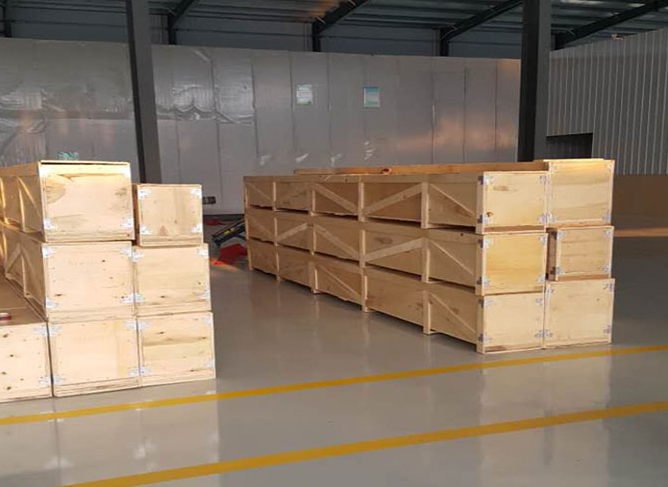
Next step — sample, quotation or documentation pack
Send your line data (builder, model, belt length and width, line speed, fabric type, static requirement) to Yiheng Mesh and request a sample for validation, a quotation, or the full documentation list for your market.
Contact: Mrs. Ada Li · Telephone / WhatsApp: +86 184 3681 4894 · Email: ada@yhfilterbelt.com · Website: www.yhfilterbelt.com · WhatsApp: start a conversation
Company brochure (PDF): download the Yiheng Mesh brochure
Henan Yiheng Mesh Belt Industry Co., Ltd. · Office: No. 1115, Building A, Zhongyuan E-commerce Building, Longhu Town, Xinzheng City, Henan Province, China
Have Questions or Need More Details?
Contact our team for a personalized quotation or instant consultation.
Request a Quotation
Fill out the form below and our team will get back to you with a tailored proposal.
WhatsApp Direct Chat
Prefer to chat in real-time? Message us on WhatsApp for instant assistance & quick answers.
- Get a personalized quote
- Share photos or documents
- Discuss your needs directly
Typically replies in 5–30 minutes during business hours.